The threat of negative balances does not disappear because ESMA wills it - it merely shifts to someone else
Bloomberg
Investing in an ICO (initial-coin offering) - all the rage just a few months ago - required those running the ICO to follow strict KYC (Know Your Client) laws. Before you could buy the latest coin on offer, you needed to hand over sensitive details, including passport copies and proof of address to the firm offering the coin.
Security is of the utmost importance, after all.
Fast forward a couple of months and the crypto-market is in trouble. Bitcoin’s future is uncertain. Many coins, now post-ICO, are trading at near zero value and as the euphoria collapses into despair, some ICO firms will end up broke and bankrupt.
Broke and bankrupt, but with servers full of sensitive client data. Just how secure will that data be? The unintended consequence of following KYC laws, ironically, might create the very security threat they were meant to avoid.
What does this have to do with ESMA?
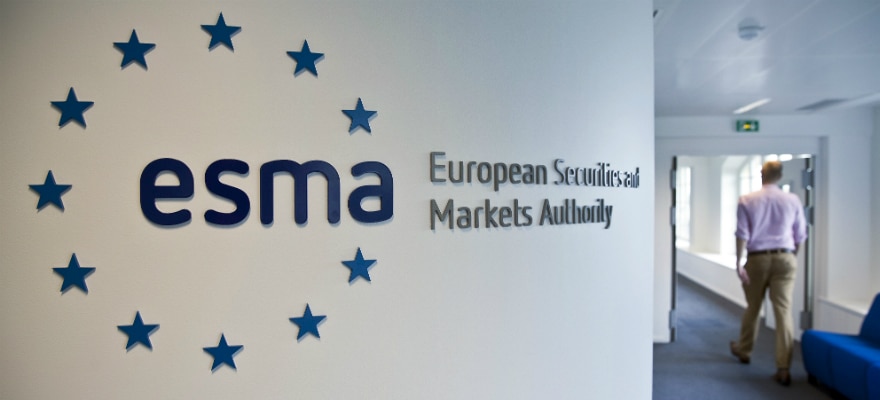
The European Securities and Market Authority (ESMA), has decided to implement “negative balance protection,” amongst a few other items we will look at, for retail forex traders, specifically on CFD products.
If clients were trading without leverage, they would not run the risk of owing their broker money. However, without leverage, the vast majority of retail traders could not afford to trade at all.
So, leverage creates the risk of owing brokers money, but it is also essential to enable the retail trader to trade. You cannot have one without the other.
Except, ESMA thinks that you can.
Moreover, ESMA might be creating an asymmetrical risk/reward relationship that represents both a moral hazard and quite possibly might cause more of what they are trying to avoid – the unintended consequence of producing riskier trading.
Moral hazard
The threat of negative balances does not disappear because ESMA wills it. The risk merely shifts to someone else. Should a client find themselves owing their broker money, their account will be reset to zero, and they can start again, having lost only the initial deposit. If the broker was passing the client’s trades along into the market, perhaps through a liquidity provider, there is still a hole to be filled. The broker’s liquidity provider will demand payment to fill that hole, and the broker is obliged to pay it on behalf of the client.
The first unintended consequence
Financial markets are susceptible to “grey swan” events. Grey swan events are things that we are not at all sure of, but they do not catch us completely off guard. We might know the “when” of a grey swan, but we do not know how the market is going to react, and we have no idea how severe the market reaction might be. Brexit is a good example – we knew the vote was happening, we did not know who would win, and we did not know how the market would behave. However, we all suspected that it was going to be big.
Imagine a scenario where we have a grey swan event coming up. A resourceful trader, with the confidence of having negative balance protection behind him, decides to pile into a market that is likely going to be affected. He deposits money with broker A, and goes long, 1:30 leverage (we will get to that) fully extended. He deposits the same amount with broker B, maxes out the same leverage available and goes short.
Our grey swan flaps into view and the market moves. Prices collapse, there is no liquidity, stops get jumped, and those who were net long get wiped out. The trading account held by broker A goes to zero; because its losses are limited. The trading account held by broker B shows a massive profit. The trader is happy – he has used negative balance protection as a guaranteed stop-loss. He has exploited an asymmetrical risk situation to his advantage.
As ESMA puts it, 74-89% of retail accounts typically lose money on their investments, with average losses per client ranging from €1,600 to €29,000. Will we see riskier behavior when traders realize that the downside is capped?
Asymmetrical reward to risk is, after all, the essence of what trading is about.
The second unintended consequence
Many retail traders despise the idea that they are being b-booked by their broker; when their broker is taking the other side of their trades, a common occurrence in an OTC (Over The Counter) market like forex. If the broker is taking the other side, the belief is that there must be a conflict of interest – the trader’s loss is the broker’s win.
As a result, traders opt for brokers offering “STP/ECN” accounts, pushing trades through to the real market (or at least, the broker’s liquidity provider). Traders reason that these brokers earn a commission on trades and want to see their clients do well. It is a win-win. What many retail traders fail to realize is that often, when they insist on an STP/ECN broker, all that is happening is that their trades are still being b-booked – further downstream, by the broker’s liquidity provider.
Kim Fournais
As negative balance protection becomes legislation, brokers will naturally focus more on the b-book model. To understand why one has to follow the money: Ii a broker is taking the other side of his client’s position, and that client digs himself a hole which the broker has to fill, the broker does not owe anyone anything – the trade went no further than the broker’s book.
To avoid the possibility of owing a liquidity provider sizable sums, brokers need to simply move their customers fully over to the b-book model.
FXCM realized that the negative market perception they would have to endure if they asked their clients for money would spell the end. Furthermore, the logistics and legal costs of challenging thousands of clients dispersed globally, many of whom would have had accounts no larger than a few thousand dollars at the time, would have been practically impossible.
As Omar Arnaout, CEO of XTB put it: “The changes proposed by ESMA are seen by a big part of the industry as an obstacle […], while we at XTB also believe in this to some extent but more importantly we see those proposals as an opportunity.
We believe that this may be the start of a market consolidation where only the best remain and feel confident that we will be part of this new reality.”
Kim Fournais, CEO of Saxo Bank shared a similar sentiment, “Saxo strongly welcomes and supports the measures set forth by ESMA and believes that consistent, harmonized regulation at a European level will be positive for clients and the industry as a whole.”
The third unintended consequence
The leverage available to retail forex traders on the major pairs is now limited to 30:1, 20:1 for non-majors and 10:1 for commodities.
Omar Arnaout
XBT’s Arnaout raised an excellent point in response, quoted in full “In our opinion, ESMA’s proposal is too harsh and more importantly lacks data-based evidence showing the impact of leverage on client profitability. Both our data and available market data do not prove that leverage influences profitability. Lowering the leverage to the proposed ratios will increase transaction costs for retail customers because they will have to maintain a higher margin per position, thus putting more funds at risk of loss.
On the other hand, after the proposed caps are implemented, we expect that many EU clients who seek higher leverage will consider trading with offshore brokers in significantly less regulated regions, thus receiving less protection. It may be a choice of higher leverage and lower safety or lower leverage and higher safety, and we hope that investors will choose the latter.”
Does a reduction in leverage automatically produce more responsible trading on behalf of the average retail trader? As Arnaout points out, the very same retail trader now risks more of his own money to take the same trades that were previously ten times cheaper. With more skin in the game, is the average retail trader expected to perform better, or worse?
Margin, marketing, and risk warnings
ESMA also introduced a margin closeout rule at 50% of open positions, at which providers are required to close one or more retail client’s open CFDs, a move supported almost unanimously by EU brokers in aiding client protection. However, ESMA’s restrictions around marketing and client incentives to trade CFDs need more clarification. For example, would incentives that could be argued as being in the client’s best interest still be restricted, like rebates on trades which would reduce the cost of trading? The answer is unclear.
Finally, ESMA’s risk warning requirement comes as news to some, and old-hat to others. Explicitly, it states that brokers must provide “a standardized risk warning, including the percentage of losses on a CFD provider’s retail investor accounts.” XBT has been publishing this data since 2016 (as required by the Polish Supervision Authority). Increased transparency is indeed welcome in the industry.
Conclusion: The industry makes subtle shifts
In response to ESMA, we can expect a broader push to the market-maker model.
Brokers will also be forced to compete in areas other than leverage: “For the benefit of its long-term survival, the industry should welcome the move away from competition on leverage and embrace competition on quality of platform, price, product, and service”, said Kim Fournais in Saxo’s press release in response to ESMA.
We would add transparency and education to that list. Successfully educating clients to the benefits and protection ESMA offers will be vital to ensure traders do not simply attempt to flee to less regulated jurisdictions. By positioning guarantees like negative balance protection and transparent reporting as significant advantages over non-EU brokers, those affected by ESMA may develop a strategic advantage.
As those same brokers are forced to publish what percentage of their clients win and lose, the impact of ESMA’s regulations will become known and can be judged objectively. Will ESMA’s changes have the desired effect? Time will tell.
Investing in an ICO (initial-coin offering) - all the rage just a few months ago - required those running the ICO to follow strict KYC (Know Your Client) laws. Before you could buy the latest coin on offer, you needed to hand over sensitive details, including passport copies and proof of address to the firm offering the coin.
Security is of the utmost importance, after all.
Fast forward a couple of months and the crypto-market is in trouble. Bitcoin’s future is uncertain. Many coins, now post-ICO, are trading at near zero value and as the euphoria collapses into despair, some ICO firms will end up broke and bankrupt.
Broke and bankrupt, but with servers full of sensitive client data. Just how secure will that data be? The unintended consequence of following KYC laws, ironically, might create the very security threat they were meant to avoid.
What does this have to do with ESMA?
The European Securities and Market Authority (ESMA), has decided to implement “negative balance protection,” amongst a few other items we will look at, for retail forex traders, specifically on CFD products.
If clients were trading without leverage, they would not run the risk of owing their broker money. However, without leverage, the vast majority of retail traders could not afford to trade at all.
So, leverage creates the risk of owing brokers money, but it is also essential to enable the retail trader to trade. You cannot have one without the other.
Except, ESMA thinks that you can.
Moreover, ESMA might be creating an asymmetrical risk/reward relationship that represents both a moral hazard and quite possibly might cause more of what they are trying to avoid – the unintended consequence of producing riskier trading.
Moral hazard
The threat of negative balances does not disappear because ESMA wills it. The risk merely shifts to someone else. Should a client find themselves owing their broker money, their account will be reset to zero, and they can start again, having lost only the initial deposit. If the broker was passing the client’s trades along into the market, perhaps through a liquidity provider, there is still a hole to be filled. The broker’s liquidity provider will demand payment to fill that hole, and the broker is obliged to pay it on behalf of the client.
The first unintended consequence
Financial markets are susceptible to “grey swan” events. Grey swan events are things that we are not at all sure of, but they do not catch us completely off guard. We might know the “when” of a grey swan, but we do not know how the market is going to react, and we have no idea how severe the market reaction might be. Brexit is a good example – we knew the vote was happening, we did not know who would win, and we did not know how the market would behave. However, we all suspected that it was going to be big.
Imagine a scenario where we have a grey swan event coming up. A resourceful trader, with the confidence of having negative balance protection behind him, decides to pile into a market that is likely going to be affected. He deposits money with broker A, and goes long, 1:30 leverage (we will get to that) fully extended. He deposits the same amount with broker B, maxes out the same leverage available and goes short.
Our grey swan flaps into view and the market moves. Prices collapse, there is no liquidity, stops get jumped, and those who were net long get wiped out. The trading account held by broker A goes to zero; because its losses are limited. The trading account held by broker B shows a massive profit. The trader is happy – he has used negative balance protection as a guaranteed stop-loss. He has exploited an asymmetrical risk situation to his advantage.
As ESMA puts it, 74-89% of retail accounts typically lose money on their investments, with average losses per client ranging from €1,600 to €29,000. Will we see riskier behavior when traders realize that the downside is capped?
Asymmetrical reward to risk is, after all, the essence of what trading is about.
The second unintended consequence
Many retail traders despise the idea that they are being b-booked by their broker; when their broker is taking the other side of their trades, a common occurrence in an OTC (Over The Counter) market like forex. If the broker is taking the other side, the belief is that there must be a conflict of interest – the trader’s loss is the broker’s win.
As a result, traders opt for brokers offering “STP/ECN” accounts, pushing trades through to the real market (or at least, the broker’s liquidity provider). Traders reason that these brokers earn a commission on trades and want to see their clients do well. It is a win-win. What many retail traders fail to realize is that often, when they insist on an STP/ECN broker, all that is happening is that their trades are still being b-booked – further downstream, by the broker’s liquidity provider.
Kim Fournais
As negative balance protection becomes legislation, brokers will naturally focus more on the b-book model. To understand why one has to follow the money: Ii a broker is taking the other side of his client’s position, and that client digs himself a hole which the broker has to fill, the broker does not owe anyone anything – the trade went no further than the broker’s book.
To avoid the possibility of owing a liquidity provider sizable sums, brokers need to simply move their customers fully over to the b-book model.
FXCM realized that the negative market perception they would have to endure if they asked their clients for money would spell the end. Furthermore, the logistics and legal costs of challenging thousands of clients dispersed globally, many of whom would have had accounts no larger than a few thousand dollars at the time, would have been practically impossible.
As Omar Arnaout, CEO of XTB put it: “The changes proposed by ESMA are seen by a big part of the industry as an obstacle […], while we at XTB also believe in this to some extent but more importantly we see those proposals as an opportunity.
We believe that this may be the start of a market consolidation where only the best remain and feel confident that we will be part of this new reality.”
Kim Fournais, CEO of Saxo Bank shared a similar sentiment, “Saxo strongly welcomes and supports the measures set forth by ESMA and believes that consistent, harmonized regulation at a European level will be positive for clients and the industry as a whole.”
The third unintended consequence
The leverage available to retail forex traders on the major pairs is now limited to 30:1, 20:1 for non-majors and 10:1 for commodities.
Omar Arnaout
XBT’s Arnaout raised an excellent point in response, quoted in full “In our opinion, ESMA’s proposal is too harsh and more importantly lacks data-based evidence showing the impact of leverage on client profitability. Both our data and available market data do not prove that leverage influences profitability. Lowering the leverage to the proposed ratios will increase transaction costs for retail customers because they will have to maintain a higher margin per position, thus putting more funds at risk of loss.
On the other hand, after the proposed caps are implemented, we expect that many EU clients who seek higher leverage will consider trading with offshore brokers in significantly less regulated regions, thus receiving less protection. It may be a choice of higher leverage and lower safety or lower leverage and higher safety, and we hope that investors will choose the latter.”
Does a reduction in leverage automatically produce more responsible trading on behalf of the average retail trader? As Arnaout points out, the very same retail trader now risks more of his own money to take the same trades that were previously ten times cheaper. With more skin in the game, is the average retail trader expected to perform better, or worse?
Margin, marketing, and risk warnings
ESMA also introduced a margin closeout rule at 50% of open positions, at which providers are required to close one or more retail client’s open CFDs, a move supported almost unanimously by EU brokers in aiding client protection. However, ESMA’s restrictions around marketing and client incentives to trade CFDs need more clarification. For example, would incentives that could be argued as being in the client’s best interest still be restricted, like rebates on trades which would reduce the cost of trading? The answer is unclear.
Finally, ESMA’s risk warning requirement comes as news to some, and old-hat to others. Explicitly, it states that brokers must provide “a standardized risk warning, including the percentage of losses on a CFD provider’s retail investor accounts.” XBT has been publishing this data since 2016 (as required by the Polish Supervision Authority). Increased transparency is indeed welcome in the industry.
Conclusion: The industry makes subtle shifts
In response to ESMA, we can expect a broader push to the market-maker model.
Brokers will also be forced to compete in areas other than leverage: “For the benefit of its long-term survival, the industry should welcome the move away from competition on leverage and embrace competition on quality of platform, price, product, and service”, said Kim Fournais in Saxo’s press release in response to ESMA.
We would add transparency and education to that list. Successfully educating clients to the benefits and protection ESMA offers will be vital to ensure traders do not simply attempt to flee to less regulated jurisdictions. By positioning guarantees like negative balance protection and transparent reporting as significant advantages over non-EU brokers, those affected by ESMA may develop a strategic advantage.
As those same brokers are forced to publish what percentage of their clients win and lose, the impact of ESMA’s regulations will become known and can be judged objectively. Will ESMA’s changes have the desired effect? Time will tell.
42% of Swiss Financial Firms Have No Digital Fraud Policy, FINMA Finds
Featured Videos
FP Markets Winner Spotlight 🏆 | Global Broker of the Year 2025 #Trading #Broker #Innovation #Shorts
FP Markets Winner Spotlight 🏆 | Global Broker of the Year 2025 #Trading #Broker #Innovation #Shorts
FP Markets Winner Spotlight 🏆 | Global Broker of the Year 2025 #Trading #Broker #Innovation #Shorts
FP Markets Winner Spotlight 🏆 | Global Broker of the Year 2025 #Trading #Broker #Innovation #Shorts
FP Markets takes the spotlight as Global Broker of the Year 2025 at the Finance Magnates Awards.
Martin Stoilov, Head of Client Experience, shares that trust, innovation, and people played a key role in the company’s success, supported by a strong foundation of integrity and client-centricity.
Following this milestone, FP Markets continues to focus on growth, technology investment, and its core values of transparency and excellence.
👉 Be part of FM Awards 2026: https://awards.financemagnates.com/#nominate
FP Markets takes the spotlight as Global Broker of the Year 2025 at the Finance Magnates Awards.
Martin Stoilov, Head of Client Experience, shares that trust, innovation, and people played a key role in the company’s success, supported by a strong foundation of integrity and client-centricity.
Following this milestone, FP Markets continues to focus on growth, technology investment, and its core values of transparency and excellence.
👉 Be part of FM Awards 2026: https://awards.financemagnates.com/#nominate
FP Markets takes the spotlight as Global Broker of the Year 2025 at the Finance Magnates Awards.
Martin Stoilov, Head of Client Experience, shares that trust, innovation, and people played a key role in the company’s success, supported by a strong foundation of integrity and client-centricity.
Following this milestone, FP Markets continues to focus on growth, technology investment, and its core values of transparency and excellence.
👉 Be part of FM Awards 2026: https://awards.financemagnates.com/#nominate
FP Markets takes the spotlight as Global Broker of the Year 2025 at the Finance Magnates Awards.
Martin Stoilov, Head of Client Experience, shares that trust, innovation, and people played a key role in the company’s success, supported by a strong foundation of integrity and client-centricity.
Following this milestone, FP Markets continues to focus on growth, technology investment, and its core values of transparency and excellence.
👉 Be part of FM Awards 2026: https://awards.financemagnates.com/#nominate
In this video, we review @HolaPrimeMarketsOfficial, a multi-asset forex and CFDs broker offering different account types, trading platforms, and flexible trading conditions.
We cover the broker’s overall offering, including account options, trading environment, platforms like MT4 and MT5, and additional services such as managed accounts and fast withdrawals.
Watch the full video to see if Hola Prime Markets fits your trading needs.
📣 Stay up to date with the latest in finance and trading. Follow Finance Magnates for industry news, insights, and global event coverage.
Connect with us:
🔗 LinkedIn: /financemagnates
👍 Facebook: /financemagnates
📸 Instagram: https://www.instagram.com/financemagnates
🐦 X: https://x.com/financemagnates
🎥 TikTok: https://www.tiktok.com/tag/financemagnates
▶️ YouTube: /@financemagnates_official
#HolaPrime #ForexBroker #CFDTrading #FinanceMagnates #Trading #Forex #BrokerReview
In this video, we review @HolaPrimeMarketsOfficial, a multi-asset forex and CFDs broker offering different account types, trading platforms, and flexible trading conditions.
We cover the broker’s overall offering, including account options, trading environment, platforms like MT4 and MT5, and additional services such as managed accounts and fast withdrawals.
Watch the full video to see if Hola Prime Markets fits your trading needs.
📣 Stay up to date with the latest in finance and trading. Follow Finance Magnates for industry news, insights, and global event coverage.
Connect with us:
🔗 LinkedIn: /financemagnates
👍 Facebook: /financemagnates
📸 Instagram: https://www.instagram.com/financemagnates
🐦 X: https://x.com/financemagnates
🎥 TikTok: https://www.tiktok.com/tag/financemagnates
▶️ YouTube: /@financemagnates_official
#HolaPrime #ForexBroker #CFDTrading #FinanceMagnates #Trading #Forex #BrokerReview
In this video, we review @HolaPrimeMarketsOfficial, a multi-asset forex and CFDs broker offering different account types, trading platforms, and flexible trading conditions.
We cover the broker’s overall offering, including account options, trading environment, platforms like MT4 and MT5, and additional services such as managed accounts and fast withdrawals.
Watch the full video to see if Hola Prime Markets fits your trading needs.
📣 Stay up to date with the latest in finance and trading. Follow Finance Magnates for industry news, insights, and global event coverage.
Connect with us:
🔗 LinkedIn: /financemagnates
👍 Facebook: /financemagnates
📸 Instagram: https://www.instagram.com/financemagnates
🐦 X: https://x.com/financemagnates
🎥 TikTok: https://www.tiktok.com/tag/financemagnates
▶️ YouTube: /@financemagnates_official
#HolaPrime #ForexBroker #CFDTrading #FinanceMagnates #Trading #Forex #BrokerReview
In this video, we review @HolaPrimeMarketsOfficial, a multi-asset forex and CFDs broker offering different account types, trading platforms, and flexible trading conditions.
We cover the broker’s overall offering, including account options, trading environment, platforms like MT4 and MT5, and additional services such as managed accounts and fast withdrawals.
Watch the full video to see if Hola Prime Markets fits your trading needs.
📣 Stay up to date with the latest in finance and trading. Follow Finance Magnates for industry news, insights, and global event coverage.
Connect with us:
🔗 LinkedIn: /financemagnates
👍 Facebook: /financemagnates
📸 Instagram: https://www.instagram.com/financemagnates
🐦 X: https://x.com/financemagnates
🎥 TikTok: https://www.tiktok.com/tag/financemagnates
▶️ YouTube: /@financemagnates_official
#HolaPrime #ForexBroker #CFDTrading #FinanceMagnates #Trading #Forex #BrokerReview
In this video, we review @HolaPrimeMarketsOfficial, a multi-asset forex and CFDs broker offering different account types, trading platforms, and flexible trading conditions.
We cover the broker’s overall offering, including account options, trading environment, platforms like MT4 and MT5, and additional services such as managed accounts and fast withdrawals.
Watch the full video to see if Hola Prime Markets fits your trading needs.
📣 Stay up to date with the latest in finance and trading. Follow Finance Magnates for industry news, insights, and global event coverage.
Connect with us:
🔗 LinkedIn: /financemagnates
👍 Facebook: /financemagnates
📸 Instagram: https://www.instagram.com/financemagnates
🐦 X: https://x.com/financemagnates
🎥 TikTok: https://www.tiktok.com/tag/financemagnates
▶️ YouTube: /@financemagnates_official
#HolaPrime #ForexBroker #CFDTrading #FinanceMagnates #Trading #Forex #BrokerReview
In this video, we review @HolaPrimeMarketsOfficial, a multi-asset forex and CFDs broker offering different account types, trading platforms, and flexible trading conditions.
We cover the broker’s overall offering, including account options, trading environment, platforms like MT4 and MT5, and additional services such as managed accounts and fast withdrawals.
Watch the full video to see if Hola Prime Markets fits your trading needs.
📣 Stay up to date with the latest in finance and trading. Follow Finance Magnates for industry news, insights, and global event coverage.
Connect with us:
🔗 LinkedIn: /financemagnates
👍 Facebook: /financemagnates
📸 Instagram: https://www.instagram.com/financemagnates
🐦 X: https://x.com/financemagnates
🎥 TikTok: https://www.tiktok.com/tag/financemagnates
▶️ YouTube: /@financemagnates_official
#HolaPrime #ForexBroker #CFDTrading #FinanceMagnates #Trading #Forex #BrokerReview
Hola Prime Review: What You Need to Know | Full Breakdown by Finance Magnates
Hola Prime Review: What You Need to Know | Full Breakdown by Finance Magnates
Hola Prime Review: What You Need to Know | Full Breakdown by Finance Magnates
Hola Prime Review: What You Need to Know | Full Breakdown by Finance Magnates
Hola Prime Review: What You Need to Know | Full Breakdown by Finance Magnates
Hola Prime Review: What You Need to Know | Full Breakdown by Finance Magnates
In this video, we review @HolaPrime_Global, a proprietary trading firm offering evaluation programs and performance-based payouts in simulated market environments.
We cover how the challenge model works, including account types, profit splits (up to 95%), trading rules, and what it takes to reach a funded account. You’ll also learn about available platforms like MT4, MT5, cTrader, and more, along with insights into payouts, support, and trading conditions.
Watch the full video to see if Hola Prime fits your trading style.
📣 Stay up to date with the latest in finance and trading. Follow Finance Magnates for industry news, insights, and global event coverage.
Connect with us:
🔗 LinkedIn: /financemagnates
👍 Facebook: /financemagnates
📸 Instagram: https://www.instagram.com/financemagnates
🐦 X: https://x.com/financemagnates
🎥 TikTok: https://www.tiktok.com/tag/financemagnates
▶️ YouTube: /@financemagnates_official
#HolaPrime #PropFirm #Trading #FinanceMagnates #Forex #FuturesTrading #TradingReview #PropFirmReview
In this video, we review @HolaPrime_Global, a proprietary trading firm offering evaluation programs and performance-based payouts in simulated market environments.
We cover how the challenge model works, including account types, profit splits (up to 95%), trading rules, and what it takes to reach a funded account. You’ll also learn about available platforms like MT4, MT5, cTrader, and more, along with insights into payouts, support, and trading conditions.
Watch the full video to see if Hola Prime fits your trading style.
📣 Stay up to date with the latest in finance and trading. Follow Finance Magnates for industry news, insights, and global event coverage.
Connect with us:
🔗 LinkedIn: /financemagnates
👍 Facebook: /financemagnates
📸 Instagram: https://www.instagram.com/financemagnates
🐦 X: https://x.com/financemagnates
🎥 TikTok: https://www.tiktok.com/tag/financemagnates
▶️ YouTube: /@financemagnates_official
#HolaPrime #PropFirm #Trading #FinanceMagnates #Forex #FuturesTrading #TradingReview #PropFirmReview
In this video, we review @HolaPrime_Global, a proprietary trading firm offering evaluation programs and performance-based payouts in simulated market environments.
We cover how the challenge model works, including account types, profit splits (up to 95%), trading rules, and what it takes to reach a funded account. You’ll also learn about available platforms like MT4, MT5, cTrader, and more, along with insights into payouts, support, and trading conditions.
Watch the full video to see if Hola Prime fits your trading style.
📣 Stay up to date with the latest in finance and trading. Follow Finance Magnates for industry news, insights, and global event coverage.
Connect with us:
🔗 LinkedIn: /financemagnates
👍 Facebook: /financemagnates
📸 Instagram: https://www.instagram.com/financemagnates
🐦 X: https://x.com/financemagnates
🎥 TikTok: https://www.tiktok.com/tag/financemagnates
▶️ YouTube: /@financemagnates_official
#HolaPrime #PropFirm #Trading #FinanceMagnates #Forex #FuturesTrading #TradingReview #PropFirmReview
In this video, we review @HolaPrime_Global, a proprietary trading firm offering evaluation programs and performance-based payouts in simulated market environments.
We cover how the challenge model works, including account types, profit splits (up to 95%), trading rules, and what it takes to reach a funded account. You’ll also learn about available platforms like MT4, MT5, cTrader, and more, along with insights into payouts, support, and trading conditions.
Watch the full video to see if Hola Prime fits your trading style.
📣 Stay up to date with the latest in finance and trading. Follow Finance Magnates for industry news, insights, and global event coverage.
Connect with us:
🔗 LinkedIn: /financemagnates
👍 Facebook: /financemagnates
📸 Instagram: https://www.instagram.com/financemagnates
🐦 X: https://x.com/financemagnates
🎥 TikTok: https://www.tiktok.com/tag/financemagnates
▶️ YouTube: /@financemagnates_official
#HolaPrime #PropFirm #Trading #FinanceMagnates #Forex #FuturesTrading #TradingReview #PropFirmReview
In this video, we review @HolaPrime_Global, a proprietary trading firm offering evaluation programs and performance-based payouts in simulated market environments.
We cover how the challenge model works, including account types, profit splits (up to 95%), trading rules, and what it takes to reach a funded account. You’ll also learn about available platforms like MT4, MT5, cTrader, and more, along with insights into payouts, support, and trading conditions.
Watch the full video to see if Hola Prime fits your trading style.
📣 Stay up to date with the latest in finance and trading. Follow Finance Magnates for industry news, insights, and global event coverage.
Connect with us:
🔗 LinkedIn: /financemagnates
👍 Facebook: /financemagnates
📸 Instagram: https://www.instagram.com/financemagnates
🐦 X: https://x.com/financemagnates
🎥 TikTok: https://www.tiktok.com/tag/financemagnates
▶️ YouTube: /@financemagnates_official
#HolaPrime #PropFirm #Trading #FinanceMagnates #Forex #FuturesTrading #TradingReview #PropFirmReview
In this video, we review @HolaPrime_Global, a proprietary trading firm offering evaluation programs and performance-based payouts in simulated market environments.
We cover how the challenge model works, including account types, profit splits (up to 95%), trading rules, and what it takes to reach a funded account. You’ll also learn about available platforms like MT4, MT5, cTrader, and more, along with insights into payouts, support, and trading conditions.
Watch the full video to see if Hola Prime fits your trading style.
📣 Stay up to date with the latest in finance and trading. Follow Finance Magnates for industry news, insights, and global event coverage.
Connect with us:
🔗 LinkedIn: /financemagnates
👍 Facebook: /financemagnates
📸 Instagram: https://www.instagram.com/financemagnates
🐦 X: https://x.com/financemagnates
🎥 TikTok: https://www.tiktok.com/tag/financemagnates
▶️ YouTube: /@financemagnates_official
#HolaPrime #PropFirm #Trading #FinanceMagnates #Forex #FuturesTrading #TradingReview #PropFirmReview
Axi Winner Spotlight 🏆 | Global Most Innovative Broker 2025 #Innovation #Trading #Fintech #Broker
Axi Winner Spotlight 🏆 | Global Most Innovative Broker 2025 #Innovation #Trading #Fintech #Broker
Axi Winner Spotlight 🏆 | Global Most Innovative Broker 2025 #Innovation #Trading #Fintech #Broker
Axi Winner Spotlight 🏆 | Global Most Innovative Broker 2025 #Innovation #Trading #Fintech #Broker
Axi Winner Spotlight 🏆 | Global Most Innovative Broker 2025 #Innovation #Trading #Fintech #Broker
Axi Winner Spotlight 🏆 | Global Most Innovative Broker 2025 #Innovation #Trading #Fintech #Broker
Axi takes the spotlight at the Finance Magnates Awards, winning Global Most Innovative Broker 2025.
Olivia Xenofontos and Ivanna Openko share how the team will feel: proud, motivated, and ready to keep delivering.
They also describe the night as well-organized, focused, and enjoyable for all.
👉 Be part of FM Awards 2026.
Axi takes the spotlight at the Finance Magnates Awards, winning Global Most Innovative Broker 2025.
Olivia Xenofontos and Ivanna Openko share how the team will feel: proud, motivated, and ready to keep delivering.
They also describe the night as well-organized, focused, and enjoyable for all.
👉 Be part of FM Awards 2026.
Axi takes the spotlight at the Finance Magnates Awards, winning Global Most Innovative Broker 2025.
Olivia Xenofontos and Ivanna Openko share how the team will feel: proud, motivated, and ready to keep delivering.
They also describe the night as well-organized, focused, and enjoyable for all.
👉 Be part of FM Awards 2026.
Axi takes the spotlight at the Finance Magnates Awards, winning Global Most Innovative Broker 2025.
Olivia Xenofontos and Ivanna Openko share how the team will feel: proud, motivated, and ready to keep delivering.
They also describe the night as well-organized, focused, and enjoyable for all.
👉 Be part of FM Awards 2026.
Axi takes the spotlight at the Finance Magnates Awards, winning Global Most Innovative Broker 2025.
Olivia Xenofontos and Ivanna Openko share how the team will feel: proud, motivated, and ready to keep delivering.
They also describe the night as well-organized, focused, and enjoyable for all.
👉 Be part of FM Awards 2026.
Axi takes the spotlight at the Finance Magnates Awards, winning Global Most Innovative Broker 2025.
Olivia Xenofontos and Ivanna Openko share how the team will feel: proud, motivated, and ready to keep delivering.
They also describe the night as well-organized, focused, and enjoyable for all.
👉 Be part of FM Awards 2026.
Recognition that matters.
Built on transparency.
Driven by the industry.
The Finance Magnates Awards 2026.
Nominations are now open.
🔗 https://awards.financemagnates.com/?utm_source=SM&utm_medium=social&utm_campaign=recognition-matters
Recognition that matters.
Built on transparency.
Driven by the industry.
The Finance Magnates Awards 2026.
Nominations are now open.
🔗 https://awards.financemagnates.com/?utm_source=SM&utm_medium=social&utm_campaign=recognition-matters
Recognition that matters.
Built on transparency.
Driven by the industry.
The Finance Magnates Awards 2026.
Nominations are now open.
🔗 https://awards.financemagnates.com/?utm_source=SM&utm_medium=social&utm_campaign=recognition-matters
Recognition that matters.
Built on transparency.
Driven by the industry.
The Finance Magnates Awards 2026.
Nominations are now open.
🔗 https://awards.financemagnates.com/?utm_source=SM&utm_medium=social&utm_campaign=recognition-matters
Recognition that matters.
Built on transparency.
Driven by the industry.
The Finance Magnates Awards 2026.
Nominations are now open.
🔗 https://awards.financemagnates.com/?utm_source=SM&utm_medium=social&utm_campaign=recognition-matters
Recognition that matters.
Built on transparency.
Driven by the industry.
The Finance Magnates Awards 2026.
Nominations are now open.
🔗 https://awards.financemagnates.com/?utm_source=SM&utm_medium=social&utm_campaign=recognition-matters