41% of Gen Z Trust AI With Their Finances - Why it's a Wake-Up Call for Brokers

Thursday, 15/01/2026 | 09:58 GMT by Tanya Chepkova
  • Gen Z is redefining trust in investing, shifting it away from institutions toward technology, usability, and social validation.
  • As younger investors adopt AI and always-on platforms, brokers face pressure to rethink product design, education, and engagement models.
gen z

A new generation of investors is reshaping how trust is built in financial services, forcing brokers and asset managers to rethink product design, distribution, and client engagement.

According to new research from the World Economic Forum, the investment behaviour patterns of Gen Z investors differ substantially from prior generations.

Self-Directed, Digital, and Skeptical

The WEF report identifies a growing sense of “financial nihilism” among parts of Gen Z, driven by frustration with traditional wealth-building paths such as home ownership.

For Gen Z investors, credibility is increasingly social and experiential rather than institutional. Recommendations from peers, online communities, and finfluencers often carry more weight than traditional financial advice.

At the same time, comfort with technology runs deeper. Over 40% of Gen Z respondents say they are willing to trust AI with managing investments or handling financial information — nearly three times the level seen among Baby Boomers.
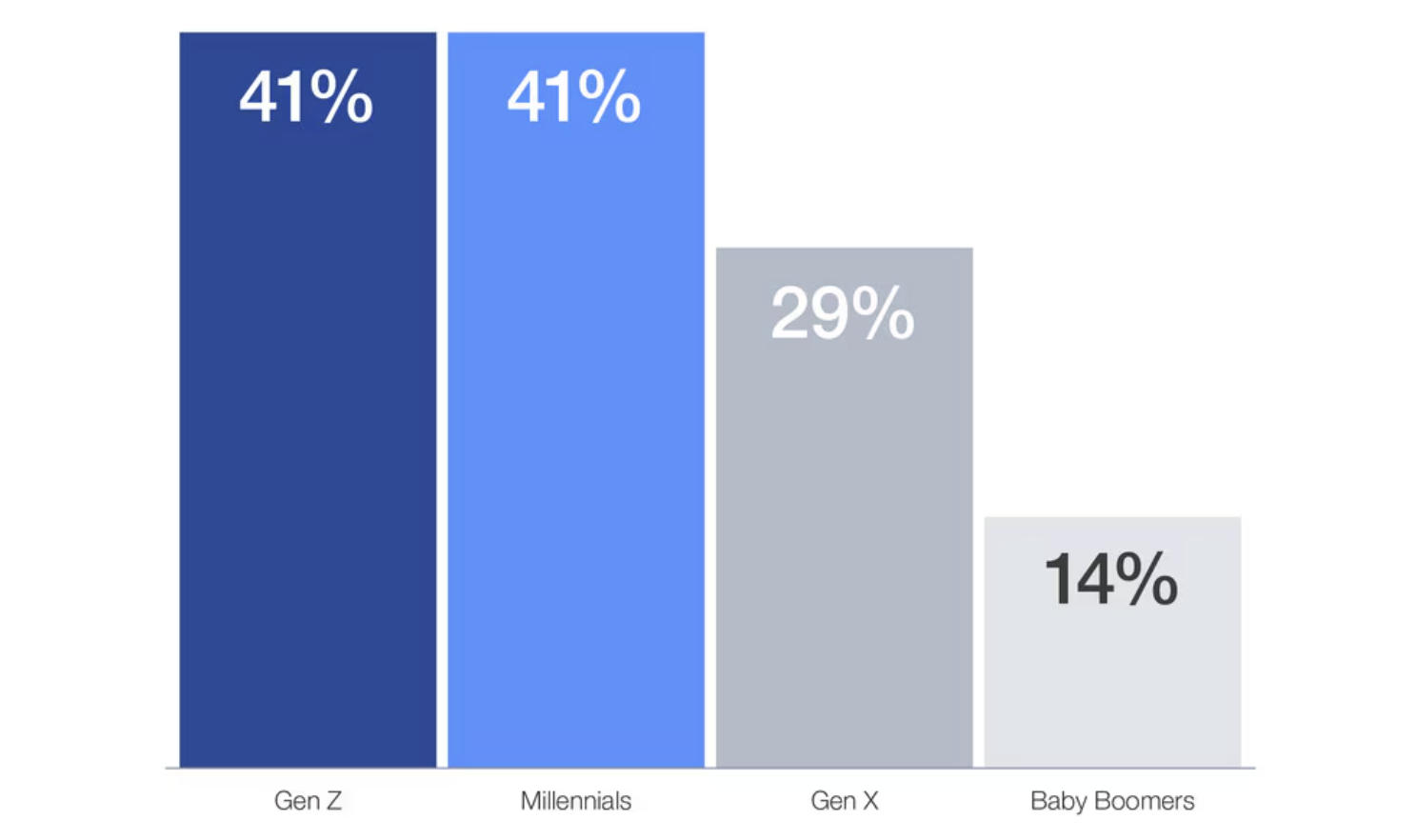
41% of Gen Z trust Ai with their investments. Source: WEF

This openness to automation is reflected in portfolio construction as well, with crypto and other non-traditional assets taking up a far larger share of Gen Z portfolios than in older cohorts.

According to the WEF, crypto accounts for more than one-third of portfolios for 71% of Gen Z investors. Separate Coinbase research supports this trend, showing younger cohorts allocate roughly 25% of their portfolios to non-traditional assets — around three times the level seen among older investors.

What This Means for Brokers

For brokers and asset managers, the implications are operational rather than theoretical. Trust-building increasingly depends on transparency, clear pricing, and the integration of AI-enabled advisory tools into everyday workflows.

Education is also shifting from static content to in-product guidance, as younger investors prefer learning through interaction rather than formal advice. Finally, user experience is becoming a competitive differentiator, with platforms expected to feel as intuitive and responsive as the consumer apps Gen Z uses daily.

At the same time, firms face new compliance and governance questions. Gen Z investors show greater willingness to share data with fintech apps, AI tools, and social platforms, challenging privacy frameworks that were designed around more risk-averse client profiles.

A Shift in Trust Foundations

The Edelman Trust Barometer adds an important clarification: Gen Z does not distrust financial services more than older generations overall. Instead, the divergence lies in how trust is formed. While older investors tend to prioritise regulatory oversight and institutional longevity, younger cohorts place greater weight on usability, peer validation, and technological sophistication.

For the financial services industry, this distinction matters. Firms that continue to rely on legacy trust signals risk misalignment with a demographic that is entering markets earlier, allocating capital differently, and evaluating platforms through a fundamentally new lens.

The research from the WEF and Coinbase points to a shared conclusion: the future of investing is multi-asset, always-on, digitally native, and socially informed.

Whether traditional finance can adapt its trust-building mechanisms to that reality will help determine who wins — and who fades — as the next generation of investors comes of age.

A new generation of investors is reshaping how trust is built in financial services, forcing brokers and asset managers to rethink product design, distribution, and client engagement.

According to new research from the World Economic Forum, the investment behaviour patterns of Gen Z investors differ substantially from prior generations.

Self-Directed, Digital, and Skeptical

The WEF report identifies a growing sense of “financial nihilism” among parts of Gen Z, driven by frustration with traditional wealth-building paths such as home ownership.

For Gen Z investors, credibility is increasingly social and experiential rather than institutional. Recommendations from peers, online communities, and finfluencers often carry more weight than traditional financial advice.

At the same time, comfort with technology runs deeper. Over 40% of Gen Z respondents say they are willing to trust AI with managing investments or handling financial information — nearly three times the level seen among Baby Boomers.

41% of Gen Z trust Ai with their investments. Source: WEF

This openness to automation is reflected in portfolio construction as well, with crypto and other non-traditional assets taking up a far larger share of Gen Z portfolios than in older cohorts.

According to the WEF, crypto accounts for more than one-third of portfolios for 71% of Gen Z investors. Separate Coinbase research supports this trend, showing younger cohorts allocate roughly 25% of their portfolios to non-traditional assets — around three times the level seen among older investors.

What This Means for Brokers

For brokers and asset managers, the implications are operational rather than theoretical. Trust-building increasingly depends on transparency, clear pricing, and the integration of AI-enabled advisory tools into everyday workflows.

Education is also shifting from static content to in-product guidance, as younger investors prefer learning through interaction rather than formal advice. Finally, user experience is becoming a competitive differentiator, with platforms expected to feel as intuitive and responsive as the consumer apps Gen Z uses daily.

At the same time, firms face new compliance and governance questions. Gen Z investors show greater willingness to share data with fintech apps, AI tools, and social platforms, challenging privacy frameworks that were designed around more risk-averse client profiles.

A Shift in Trust Foundations

The Edelman Trust Barometer adds an important clarification: Gen Z does not distrust financial services more than older generations overall. Instead, the divergence lies in how trust is formed. While older investors tend to prioritise regulatory oversight and institutional longevity, younger cohorts place greater weight on usability, peer validation, and technological sophistication.

For the financial services industry, this distinction matters. Firms that continue to rely on legacy trust signals risk misalignment with a demographic that is entering markets earlier, allocating capital differently, and evaluating platforms through a fundamentally new lens.

The research from the WEF and Coinbase points to a shared conclusion: the future of investing is multi-asset, always-on, digitally native, and socially informed.

Whether traditional finance can adapt its trust-building mechanisms to that reality will help determine who wins — and who fades — as the next generation of investors comes of age.

About the Author: Tanya Chepkova
Tanya Chepkova
  • 65 Articles
About the Author: Tanya Chepkova
  • 65 Articles

More from the Author

Retail FX

!"#$%&'()*+,-./0123456789:;<=>?@ABCDEFGHIJKLMNOPQRSTUVWXYZ[\]^_`abcdefghijklmnopqrstuvwxyz{|} !"#$%&'()*+,-./0123456789:;<=>?@ABCDEFGHIJKLMNOPQRSTUVWXYZ[\]^_`abcdefghijklmnopqrstuvwxyz{|}