During a panel discussion, it emerged that the cost and complexity of building a brokerage from scratch—especially with regulatory, technological, and liquidity challenges—remain high.
The expo hosts panel discussions on trading, payments, and financial regulation, featuring a lineup of industry experts and thought leaders. Catch live updates here!
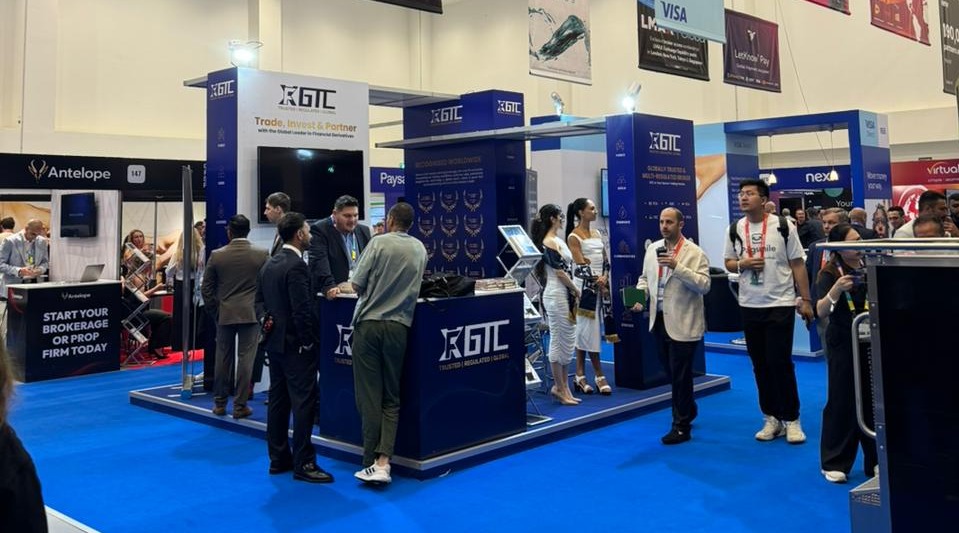
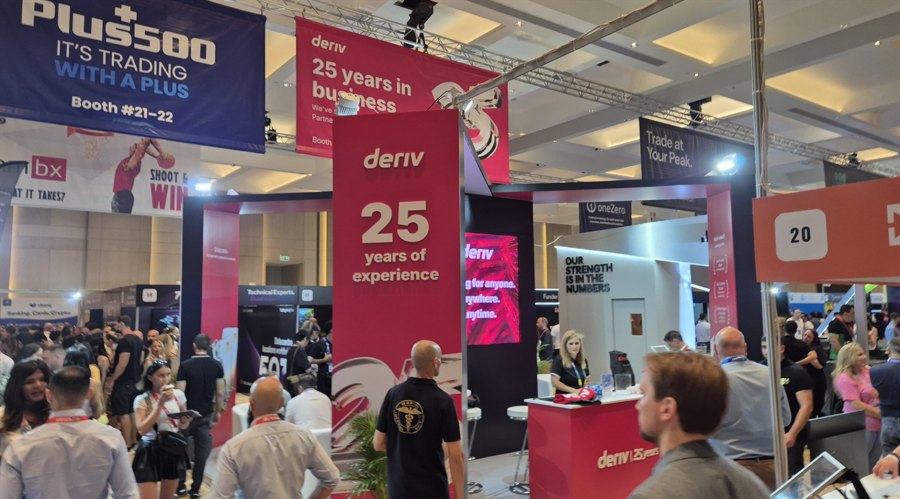
Attendees at iFX EXPO International event floor
The floors of iFX Expo International opened today. This time, held at the City of Dreams Mediterranean Integrated Resort, the two-day expo brings the entire retail trading industry together once again.
This annual event attracts the entire retail trading sector — regulators, C-level executives, marketers, sales representatives, and even traders — all under one roof. It provides the ideal setting for reconnecting with existing clients and onboarding new ones.
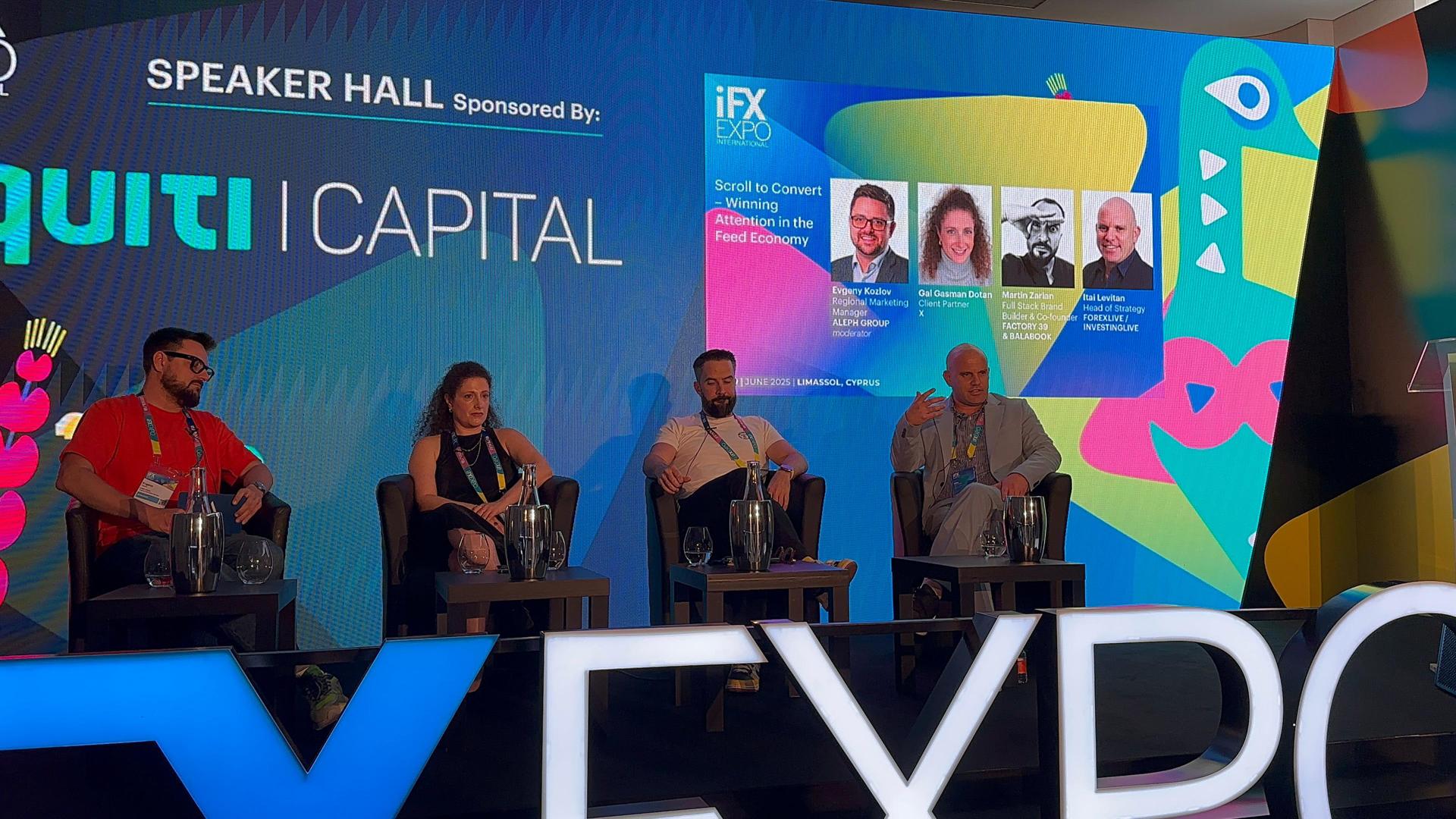
Scroll to Convert – Winning Attention in the Feed Economy
Today’s traders and clients are no longer engaging with emails; they are consuming 15-second videos and following financial memes. Financial brands, from brokers to payment apps, are competing to stay relevant in the spaces where attention actually resides: TikTok, X, and other creator-driven platforms.
This discussion dominated the panel discussion at the Speaker Hall session during the IFX EXPO,
where the panelists examined whether regulated financial firms can communicate
effectively with Gen Z without compromising their credibility.
Speakers explored what works and what clearly doesn’t when it comes to short-form
content in the financial services industry.
"There Are Many Use Cases of Crypto"
"People sketch the definition of a hedge to traditional finance as low correlation, combining different asset classes," Andreas Vlachos, Community Operations Manager at Bitget, said. "And crypto is much more than just an investment. It has so many use cases—on DeFi, on NFTs, or even on new coins with different purposes."
"So what is, let’s say, somehow meaningful is that it’s not just additional finance—it’s improving it. It’s providing an alternative payment method. Let’s say traditional finance—crypto is mimicking it, but also, you know, exchanges can provide interest rates, higher interest rates than usual. Exchanges provide crypto loans, or even, indeed, you can acquire crypto loans.
So there are many use cases—different ones—that can be more efficient, faster, less costly than traditional finance. And I think this is the attraction point for new countries. They want to see—why should I just keep my money in a bank? Why can’t I just stay on with USDC and enjoy a higher interest rate."
His comments come as many emerging markets turn to crypto out of necessity. Inflation, weak currencies, and slow banks push people to look elsewhere.
In Argentina, nearly 60% of crypto users prefer stablecoins like USDC to escape inflation topping 270%. In Nigeria, over 47% of adults use crypto regularly, often to bypass currency controls. Platforms like Aave and Compound now hold over $10 billion in total value locked. The appeal? Faster, cheaper, and often more rewarding. That’s the context—why keep money in a bank when crypto offers more?
Vlachos was a part of the iFX panel on "In Crypto We Hedge - The Smart Money Strategy for 2025." he was joined by Andrey Stoychev, CEO at VS Capital; Anton Golub, Chief Business Officer at Freedx; and Tom Higgins, Founder & CEO at Gold-i.
"It Does Not Make Sense to Build Everything Yourself"
“Businesses need to generate revenue as fast as possible," said Luka Knezic, Co-Founder of TradeLocker, while discussing the benefits of white label solutions. "So you find a solution, rent it, and run the business. If you do not have much time or many resources, it does not make sense to build everything yourself."
As global trading volumes continue to rise and more retail investors enter the markets, the demand for brokerage services has grown beyond traditional financial hubs. At the same time, the cost and complexity of building a brokerage from scratch—especially with regulatory, technological, and liquidity challenges—remain high.
Against this backdrop, white label solutions have become an increasingly attractive route for new entrants. These setups allow businesses to bypass the need for in-house infrastructure, offering ready-made trading platforms and support systems that drastically cut time to market.
The comments reflect a growing trend in the financial services space: companies from outside the forex or derivatives world—such as payment firms, tech startups, and even marketing agencies—are leveraging white label models to tap into the trading market. The appeal lies in speed and simplicity.
For firms with limited resources or technical staff, renting an end-to-end solution enables immediate operation and revenue generation, without the delays and risks of building proprietary systems. This shift is expanding the competitive landscape, opening up brokerage opportunities to a much wider range of players.
Knezic was part of the panel discussion on "Creating Your Brokerage Canvas with White Label Solutions". He was joined by Andrew Saks, Chief Product Officer at TraderEvolution Global (moderator), and Aliaksei Melets, Head of Partners Acquisition at Quadcode.
"Real-Time, Security, and Transparency"
"For Visa to be fast and flexible, [the company] is addressing three categories," said Michael Ioannides, Visa Country Manager Cyprus at Visa Europe. "The first one is, as we said earlier, real-time — real funds, real-time, market-wide speed, to the destination of the user, without any reductions, without any unnecessary technology. It’s crucial.
Secondly is security. Because nowadays, it really is a very important element in digital transactions.
And I would say the third element, which is very, very important, is transparency."
His remarks come at a time when global financial markets are undergoing a rapid shift toward instant, digital-first infrastructure. The demand for real-time payments has surged, driven by consumer expectations shaped by fintech apps and digital wallets. Central banks and regulators across major economies—from the U.S. FedNow to the EU’s push for instant SEPA payments—are accelerating initiatives to modernise payment rails.
For banks and financial institutions, failing to support real-time settlement is no longer just a technical shortcoming—it’s a competitive liability. Ioannides's emphasis on "real funds, real-time" directly reflects this growing pressure on traditional players to keep pace with faster-moving fintechs and embedded finance platforms.
Ioannides was the part of a iFX panel that discussed on the topic "Fast & Flexible: Payments on the Edge." Other participants were Ugne Buraciene, Group CEO of payabl (moderator); Ran Yehud, SVP Commercial Middle East & Africa at Nuvei; Matthijs Boon, CRO EqualsMoney; and Rafaela Aprahamyan, Sales Manager at PayRetailers.
"US Equities Are Now Unpredictable"
Michalis Persianis, Chairman of the Fiscal Council of Cyprus, kicked off the event with a keynote. "US equities are now unpredictable and entail unknown risks," he said. "All of this is being partially replaced by alternative hedges, including crypto."
His comments came as the US market has swung sharply in 2025. After President Trump announced sweeping tariffs on 2 April, the S&P 500 fell almost 10 % in two sessions and the VIX spiked into the mid-50s—levels last seen during the Covid-19 crash.
Capital has been moving out of equity funds and into vehicles seen as inflation or policy hedges. Crypto funds attracted a record $7.05 billion of net inflows in May, lifting their assets under management to an all-time high of $167 billion. U.S. spot-Bitcoin ETFs booked a five-day $1.3 billion streak of inflows (9-13 June) even while Middle-East tensions rattled markets, underscoring their appeal as portfolio insurance.
Key Highlights from the iFX Floor
What can you expect today?
The day is packed with keynote speeches, panel discussions, fireside chats, and informal meetings on the sidelines. As always, the floor is lively with booths where company representatives are ready to present their services and products.
The crowd has already gathered on the event floor, with booth visits and networking activities in full swing. There's a lively atmosphere as attendees engage with exhibitors and connect with fellow participants.
Attendees are flooding the iFX EXPO floor
Do you want to drive a Lambo? You can do it at the iFX EXPO International.
A Lamborghini car parked at the IC Markets booth at iFX EXPO International
Are you more into 2 wheelers? You have got an option too.
A Ducati motorbike at one of the booths at iFX
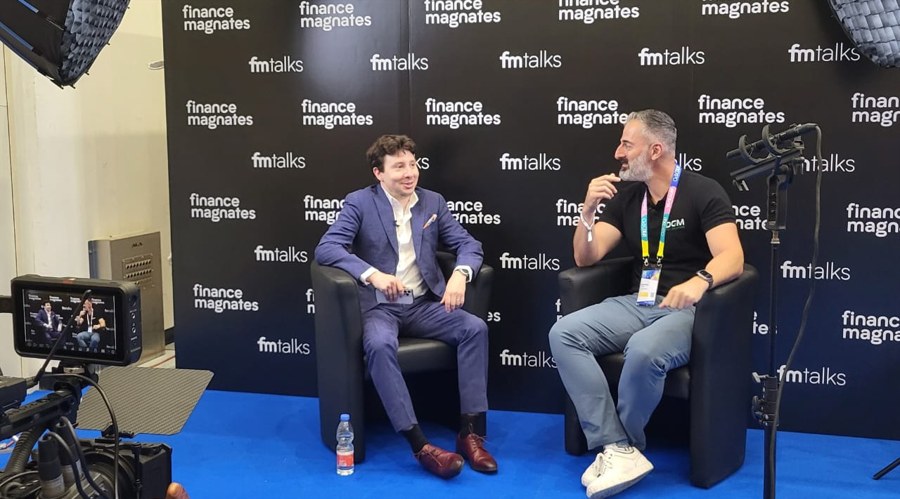
The Finance Magnates team is ready to talk to industry executives.
Industry representatives are already chatting at the Finance Magnates booth at iFX
If you are attending the event, drop by booth number 155 to meet the Finance Magnates team.
The floors of iFX Expo International opened today. This time, held at the City of Dreams Mediterranean Integrated Resort, the two-day expo brings the entire retail trading industry together once again.
This annual event attracts the entire retail trading sector — regulators, C-level executives, marketers, sales representatives, and even traders — all under one roof. It provides the ideal setting for reconnecting with existing clients and onboarding new ones.
Scroll to Convert – Winning Attention in the Feed Economy
Today’s traders and clients are no longer engaging with emails; they are consuming 15-second videos and following financial memes. Financial brands, from brokers to payment apps, are competing to stay relevant in the spaces where attention actually resides: TikTok, X, and other creator-driven platforms.
This discussion dominated the panel discussion at the Speaker Hall session during the IFX EXPO,
where the panelists examined whether regulated financial firms can communicate
effectively with Gen Z without compromising their credibility.
Speakers explored what works and what clearly doesn’t when it comes to short-form
content in the financial services industry.
"There Are Many Use Cases of Crypto"
"People sketch the definition of a hedge to traditional finance as low correlation, combining different asset classes," Andreas Vlachos, Community Operations Manager at Bitget, said. "And crypto is much more than just an investment. It has so many use cases—on DeFi, on NFTs, or even on new coins with different purposes."
"So what is, let’s say, somehow meaningful is that it’s not just additional finance—it’s improving it. It’s providing an alternative payment method. Let’s say traditional finance—crypto is mimicking it, but also, you know, exchanges can provide interest rates, higher interest rates than usual. Exchanges provide crypto loans, or even, indeed, you can acquire crypto loans.
So there are many use cases—different ones—that can be more efficient, faster, less costly than traditional finance. And I think this is the attraction point for new countries. They want to see—why should I just keep my money in a bank? Why can’t I just stay on with USDC and enjoy a higher interest rate."
His comments come as many emerging markets turn to crypto out of necessity. Inflation, weak currencies, and slow banks push people to look elsewhere.
In Argentina, nearly 60% of crypto users prefer stablecoins like USDC to escape inflation topping 270%. In Nigeria, over 47% of adults use crypto regularly, often to bypass currency controls. Platforms like Aave and Compound now hold over $10 billion in total value locked. The appeal? Faster, cheaper, and often more rewarding. That’s the context—why keep money in a bank when crypto offers more?
Vlachos was a part of the iFX panel on "In Crypto We Hedge - The Smart Money Strategy for 2025." he was joined by Andrey Stoychev, CEO at VS Capital; Anton Golub, Chief Business Officer at Freedx; and Tom Higgins, Founder & CEO at Gold-i.
"It Does Not Make Sense to Build Everything Yourself"
“Businesses need to generate revenue as fast as possible," said Luka Knezic, Co-Founder of TradeLocker, while discussing the benefits of white label solutions. "So you find a solution, rent it, and run the business. If you do not have much time or many resources, it does not make sense to build everything yourself."
As global trading volumes continue to rise and more retail investors enter the markets, the demand for brokerage services has grown beyond traditional financial hubs. At the same time, the cost and complexity of building a brokerage from scratch—especially with regulatory, technological, and liquidity challenges—remain high.
Against this backdrop, white label solutions have become an increasingly attractive route for new entrants. These setups allow businesses to bypass the need for in-house infrastructure, offering ready-made trading platforms and support systems that drastically cut time to market.
The comments reflect a growing trend in the financial services space: companies from outside the forex or derivatives world—such as payment firms, tech startups, and even marketing agencies—are leveraging white label models to tap into the trading market. The appeal lies in speed and simplicity.
For firms with limited resources or technical staff, renting an end-to-end solution enables immediate operation and revenue generation, without the delays and risks of building proprietary systems. This shift is expanding the competitive landscape, opening up brokerage opportunities to a much wider range of players.
Knezic was part of the panel discussion on "Creating Your Brokerage Canvas with White Label Solutions". He was joined by Andrew Saks, Chief Product Officer at TraderEvolution Global (moderator), and Aliaksei Melets, Head of Partners Acquisition at Quadcode.
"Real-Time, Security, and Transparency"
"For Visa to be fast and flexible, [the company] is addressing three categories," said Michael Ioannides, Visa Country Manager Cyprus at Visa Europe. "The first one is, as we said earlier, real-time — real funds, real-time, market-wide speed, to the destination of the user, without any reductions, without any unnecessary technology. It’s crucial.
Secondly is security. Because nowadays, it really is a very important element in digital transactions.
And I would say the third element, which is very, very important, is transparency."
His remarks come at a time when global financial markets are undergoing a rapid shift toward instant, digital-first infrastructure. The demand for real-time payments has surged, driven by consumer expectations shaped by fintech apps and digital wallets. Central banks and regulators across major economies—from the U.S. FedNow to the EU’s push for instant SEPA payments—are accelerating initiatives to modernise payment rails.
For banks and financial institutions, failing to support real-time settlement is no longer just a technical shortcoming—it’s a competitive liability. Ioannides's emphasis on "real funds, real-time" directly reflects this growing pressure on traditional players to keep pace with faster-moving fintechs and embedded finance platforms.
Ioannides was the part of a iFX panel that discussed on the topic "Fast & Flexible: Payments on the Edge." Other participants were Ugne Buraciene, Group CEO of payabl (moderator); Ran Yehud, SVP Commercial Middle East & Africa at Nuvei; Matthijs Boon, CRO EqualsMoney; and Rafaela Aprahamyan, Sales Manager at PayRetailers.
"US Equities Are Now Unpredictable"
Michalis Persianis, Chairman of the Fiscal Council of Cyprus, kicked off the event with a keynote. "US equities are now unpredictable and entail unknown risks," he said. "All of this is being partially replaced by alternative hedges, including crypto."
His comments came as the US market has swung sharply in 2025. After President Trump announced sweeping tariffs on 2 April, the S&P 500 fell almost 10 % in two sessions and the VIX spiked into the mid-50s—levels last seen during the Covid-19 crash.
Capital has been moving out of equity funds and into vehicles seen as inflation or policy hedges. Crypto funds attracted a record $7.05 billion of net inflows in May, lifting their assets under management to an all-time high of $167 billion. U.S. spot-Bitcoin ETFs booked a five-day $1.3 billion streak of inflows (9-13 June) even while Middle-East tensions rattled markets, underscoring their appeal as portfolio insurance.
Key Highlights from the iFX Floor
What can you expect today?
The day is packed with keynote speeches, panel discussions, fireside chats, and informal meetings on the sidelines. As always, the floor is lively with booths where company representatives are ready to present their services and products.
The crowd has already gathered on the event floor, with booth visits and networking activities in full swing. There's a lively atmosphere as attendees engage with exhibitors and connect with fellow participants.
Attendees are flooding the iFX EXPO floor
Do you want to drive a Lambo? You can do it at the iFX EXPO International.
A Lamborghini car parked at the IC Markets booth at iFX EXPO International
Are you more into 2 wheelers? You have got an option too.
A Ducati motorbike at one of the booths at iFX
The Finance Magnates team is ready to talk to industry executives.
Industry representatives are already chatting at the Finance Magnates booth at iFX
If you are attending the event, drop by booth number 155 to meet the Finance Magnates team.
FMLS:25 Kicks Off With Networking Blitz at The Folly in London
FP Markets Winner Spotlight 🏆 | Global Broker of the Year 2025 #Trading #Broker #Innovation #Shorts
FP Markets Winner Spotlight 🏆 | Global Broker of the Year 2025 #Trading #Broker #Innovation #Shorts
FP Markets takes the spotlight as Global Broker of the Year 2025 at the Finance Magnates Awards.
Martin Stoilov, Head of Client Experience, shares that trust, innovation, and people played a key role in the company’s success, supported by a strong foundation of integrity and client-centricity.
Following this milestone, FP Markets continues to focus on growth, technology investment, and its core values of transparency and excellence.
👉 Be part of FM Awards 2026: https://awards.financemagnates.com/#nominate
FP Markets takes the spotlight as Global Broker of the Year 2025 at the Finance Magnates Awards.
Martin Stoilov, Head of Client Experience, shares that trust, innovation, and people played a key role in the company’s success, supported by a strong foundation of integrity and client-centricity.
Following this milestone, FP Markets continues to focus on growth, technology investment, and its core values of transparency and excellence.
👉 Be part of FM Awards 2026: https://awards.financemagnates.com/#nominate
In this video, we review @HolaPrimeMarketsOfficial, a multi-asset forex and CFDs broker offering different account types, trading platforms, and flexible trading conditions.
We cover the broker’s overall offering, including account options, trading environment, platforms like MT4 and MT5, and additional services such as managed accounts and fast withdrawals.
Watch the full video to see if Hola Prime Markets fits your trading needs.
📣 Stay up to date with the latest in finance and trading. Follow Finance Magnates for industry news, insights, and global event coverage.
Connect with us:
🔗 LinkedIn: /financemagnates
👍 Facebook: /financemagnates
📸 Instagram: https://www.instagram.com/financemagnates
🐦 X: https://x.com/financemagnates
🎥 TikTok: https://www.tiktok.com/tag/financemagnates
▶️ YouTube: /@financemagnates_official
#HolaPrime #ForexBroker #CFDTrading #FinanceMagnates #Trading #Forex #BrokerReview
In this video, we review @HolaPrimeMarketsOfficial, a multi-asset forex and CFDs broker offering different account types, trading platforms, and flexible trading conditions.
We cover the broker’s overall offering, including account options, trading environment, platforms like MT4 and MT5, and additional services such as managed accounts and fast withdrawals.
Watch the full video to see if Hola Prime Markets fits your trading needs.
📣 Stay up to date with the latest in finance and trading. Follow Finance Magnates for industry news, insights, and global event coverage.
Connect with us:
🔗 LinkedIn: /financemagnates
👍 Facebook: /financemagnates
📸 Instagram: https://www.instagram.com/financemagnates
🐦 X: https://x.com/financemagnates
🎥 TikTok: https://www.tiktok.com/tag/financemagnates
▶️ YouTube: /@financemagnates_official
#HolaPrime #ForexBroker #CFDTrading #FinanceMagnates #Trading #Forex #BrokerReview
Hola Prime Review: What You Need to Know | Full Breakdown by Finance Magnates
Hola Prime Review: What You Need to Know | Full Breakdown by Finance Magnates
In this video, we review @HolaPrime_Global, a proprietary trading firm offering evaluation programs and performance-based payouts in simulated market environments.
We cover how the challenge model works, including account types, profit splits (up to 95%), trading rules, and what it takes to reach a funded account. You’ll also learn about available platforms like MT4, MT5, cTrader, and more, along with insights into payouts, support, and trading conditions.
Watch the full video to see if Hola Prime fits your trading style.
📣 Stay up to date with the latest in finance and trading. Follow Finance Magnates for industry news, insights, and global event coverage.
Connect with us:
🔗 LinkedIn: /financemagnates
👍 Facebook: /financemagnates
📸 Instagram: https://www.instagram.com/financemagnates
🐦 X: https://x.com/financemagnates
🎥 TikTok: https://www.tiktok.com/tag/financemagnates
▶️ YouTube: /@financemagnates_official
#HolaPrime #PropFirm #Trading #FinanceMagnates #Forex #FuturesTrading #TradingReview #PropFirmReview
In this video, we review @HolaPrime_Global, a proprietary trading firm offering evaluation programs and performance-based payouts in simulated market environments.
We cover how the challenge model works, including account types, profit splits (up to 95%), trading rules, and what it takes to reach a funded account. You’ll also learn about available platforms like MT4, MT5, cTrader, and more, along with insights into payouts, support, and trading conditions.
Watch the full video to see if Hola Prime fits your trading style.
📣 Stay up to date with the latest in finance and trading. Follow Finance Magnates for industry news, insights, and global event coverage.
Connect with us:
🔗 LinkedIn: /financemagnates
👍 Facebook: /financemagnates
📸 Instagram: https://www.instagram.com/financemagnates
🐦 X: https://x.com/financemagnates
🎥 TikTok: https://www.tiktok.com/tag/financemagnates
▶️ YouTube: /@financemagnates_official
#HolaPrime #PropFirm #Trading #FinanceMagnates #Forex #FuturesTrading #TradingReview #PropFirmReview
Axi Winner Spotlight 🏆 | Global Most Innovative Broker 2025 #Innovation #Trading #Fintech #Broker
Axi Winner Spotlight 🏆 | Global Most Innovative Broker 2025 #Innovation #Trading #Fintech #Broker
Axi takes the spotlight at the Finance Magnates Awards, winning Global Most Innovative Broker 2025.
Olivia Xenofontos and Ivanna Openko share how the team will feel: proud, motivated, and ready to keep delivering.
They also describe the night as well-organized, focused, and enjoyable for all.
👉 Be part of FM Awards 2026.
Axi takes the spotlight at the Finance Magnates Awards, winning Global Most Innovative Broker 2025.
Olivia Xenofontos and Ivanna Openko share how the team will feel: proud, motivated, and ready to keep delivering.
They also describe the night as well-organized, focused, and enjoyable for all.
👉 Be part of FM Awards 2026.
Recognition that matters.
Built on transparency.
Driven by the industry.
The Finance Magnates Awards 2026.
Nominations are now open.
🔗 https://awards.financemagnates.com/?utm_source=SM&utm_medium=social&utm_campaign=recognition-matters
Recognition that matters.
Built on transparency.
Driven by the industry.
The Finance Magnates Awards 2026.
Nominations are now open.
🔗 https://awards.financemagnates.com/?utm_source=SM&utm_medium=social&utm_campaign=recognition-matters