Investor focus in the global IPO market shifts from growth to value as liquidity tightens.
Emerging markets dominate in number and value, while unicorn IPOs face a significant decline.
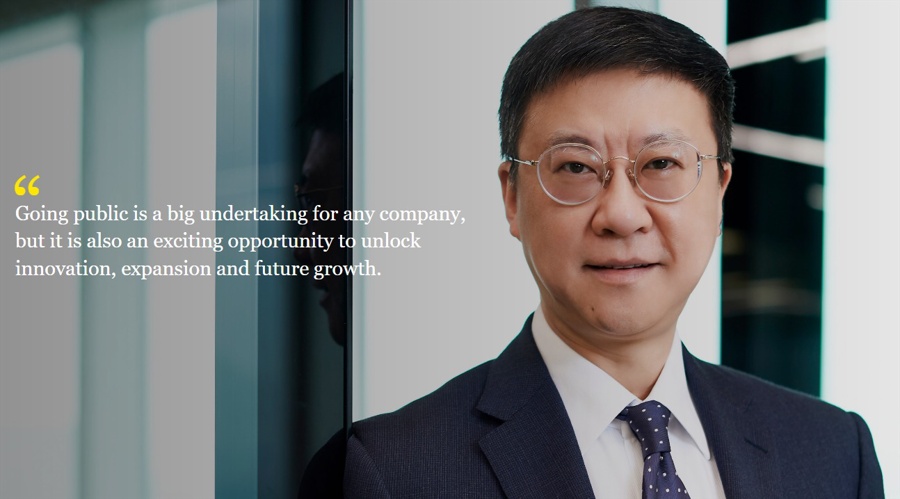
George Chan from EY speaks with Finance Magnates about global IPO trends.
The first
three quarters of 2023 have shown a notable shift in the global initial public
offering (IPO) market. With a decline of 5% in IPO volumes and a decrease of 32% in
proceeds year-over-year (YoY), investor appetite is changing. According to the
newest EY Global IPO Trends report, factors such as tightening
liquidity, evolving interest in emerging markets, and declining unicorn IPOs
are reshaping the landscape.
Finance
Magnates discussed
the report's findings with the Global EY IPO Leader, George Chan. According to Chan,
the decline in the number and value of IPOs was caused by regulatory factors, a
decrease in investor confidence, and a decline in materials companies.
IPO Market Records a
Decline in Q3, EY Report Finds
The global
IPO scene witnessed 968 IPOs with a capital of $101.2 billion, marking a drop of 5% and
32% YoY. In the Asia-Pacific region, Mainland China's IPO market has
slowed due to regulatory measures, while Hong Kong has seen less activity owing
to higher interest rates and dwindling investor confidence.
Australia's
IPO issuance has plummeted, especially in the materials sector. Although
the US experienced a slight uptick in IPO numbers, Canada saw its IPO volume
more than halve, mainly because of a drop in materials companies.
The decline
in IPO proceeds is even more significant. The number of mega-deals has halved
compared to last year, contributing to weaker post-IPO share price performance.
Landmark IPOs from last year in sectors like energy and luxury cars have not
been matched this year. The top IPOs for 2023 are only about half the size of
2022's largest offerings.
Challenging market conditions continue to dampen listing activity on the London IPO market in Q3 2023:
"As
there were no mega Chinese Foreign Private Issuers (FPIs) returning from the US
this year, both the average deal size and total deal value decreased," Chan
commented in an interview with Finance Magnates. "In contrast, last
year saw two blockbuster Chinese FPIs with proceeds of US$8.2b and US$5.1b,
respectively, delisted from the US and re-joined the A-share market."
Markets in
the Middle East, particularly Saudi Arabia and the UAE, showed reduced IPO
activity compared to when energy prices were high last year.
Better Perspectives in
Emerging Markets
Despite
these setbacks, Q3 brought signs of improved post-IPO share performance. The
market is currently influenced by a variety of elements, including robust
activity in emerging markets and a more restrained China IPO sector.
Over the
past decade, emerging markets have seen an increase of more than 30% in IPO numbers
and proceeds, primarily due to faster economic growth compared to developed
nations. In 2023 alone, these markets accounted for 77% of the global share by
number and 75% by value. New entrants like Turkey and Romania are joining the
already active markets like Indonesia, Malaysia, and India.
"Turkish
stock buyers are flocking to new share offerings, driven by the potential for
substantial returns and the need to safeguard against rising inflation,"
Chan commented. Around 40 companies have gone public recently, all of which
have yielded impressive returns in the after-market.
The IPO
activity surge is driven by investor demand and smaller companies seeking
alternative financing channels in light of Turkey's credit tightening.
"This
trend mirrors patterns observed in other high-inflation countries with weakened
currencies and could potentially continue to attract new entrants, provided the
country's fiscal backdrop remains unchanged," the Global EY IPO Leader added.
"Software,
semiconductor, and electronics are the top 3 IPO sub-sectors that have
dominated the IPO issuance in the technology sector for over a decade," Chan
revealed.
The 3Q 2023 #IPO market built on improvement seen in the 2nd quarter but the upward trend is still uncertain. Cautious optimism is the watchward. More in my free-to-read Analysis piece. @bloomberglawhttps://t.co/0hHbRHrg0g
While most
sub-sectors declined within the technology sector in a YoY
comparison, the electronics sub-sector demonstrated growth in deal number and
value, with companies involved in diverse electronic component production and
distribution aspects.
"In
the context of the 159% growth rate in IPO proceeds in the Americas, the US has
experienced an increase of over 160%, while Canada has a decrease of over 40%.
The surge in the US IPO proceeds is primarily attributable to the three large
technology IPOs listed in September, along with a mega consumer product
carve-out in May," Chan added.
Despite
holding nearly 60% of the global market share, Asia-Pacific has seen a YOY decrease of 8% and
41% in IPO volume and proceeds, respectively. Yet, optimism
remains for large deals in the pipeline. In addition, With 286 IPOs and $21.9
billion raised, EMEIA markets have adapted well to tighter financial
conditions. There's a rising trend in the energy sector and ESG-related IPOs.
What the Future Holds
The global
IPO market is in flux, influenced by various economic and sectoral factors.
Investors are increasingly looking for value over growth, a trend likely to
continue given the current economic conditions. Companies looking to go public
will need to be agile, financially healthy, and open to technological
advancements to succeed in this evolving landscape.
"Investors
are now focusing on companies with strong fundamentals due to tighter liquidity
and higher capital costs," Chan commented.
The change
from an era of "cheap money" to a setting of sustained higher
interest rates is causing investors to adjust their investment strategies. The
focus has shifted towards high-quality IPO opportunities that offer compelling
equity narratives, strong management teams, and the potential for long-term
growth and value creation. Investors are now more selective, prioritizing
companies that demonstrate sustainable profitability.
In tune
with the evolving investment landscape, several high-profile companies have
indicated their plans to go public, effectively serving as a barometer for
investor appetite in the European and US markets. As Chan forecasted, these
companies' movements are closely watched as they could trigger the next wave of
IPOs and provide valuable insights into market valuations and demand.
The first
three quarters of 2023 have shown a notable shift in the global initial public
offering (IPO) market. With a decline of 5% in IPO volumes and a decrease of 32% in
proceeds year-over-year (YoY), investor appetite is changing. According to the
newest EY Global IPO Trends report, factors such as tightening
liquidity, evolving interest in emerging markets, and declining unicorn IPOs
are reshaping the landscape.
Finance
Magnates discussed
the report's findings with the Global EY IPO Leader, George Chan. According to Chan,
the decline in the number and value of IPOs was caused by regulatory factors, a
decrease in investor confidence, and a decline in materials companies.
IPO Market Records a
Decline in Q3, EY Report Finds
The global
IPO scene witnessed 968 IPOs with a capital of $101.2 billion, marking a drop of 5% and
32% YoY. In the Asia-Pacific region, Mainland China's IPO market has
slowed due to regulatory measures, while Hong Kong has seen less activity owing
to higher interest rates and dwindling investor confidence.
Australia's
IPO issuance has plummeted, especially in the materials sector. Although
the US experienced a slight uptick in IPO numbers, Canada saw its IPO volume
more than halve, mainly because of a drop in materials companies.
The decline
in IPO proceeds is even more significant. The number of mega-deals has halved
compared to last year, contributing to weaker post-IPO share price performance.
Landmark IPOs from last year in sectors like energy and luxury cars have not
been matched this year. The top IPOs for 2023 are only about half the size of
2022's largest offerings.
Challenging market conditions continue to dampen listing activity on the London IPO market in Q3 2023:
"As
there were no mega Chinese Foreign Private Issuers (FPIs) returning from the US
this year, both the average deal size and total deal value decreased," Chan
commented in an interview with Finance Magnates. "In contrast, last
year saw two blockbuster Chinese FPIs with proceeds of US$8.2b and US$5.1b,
respectively, delisted from the US and re-joined the A-share market."
Markets in
the Middle East, particularly Saudi Arabia and the UAE, showed reduced IPO
activity compared to when energy prices were high last year.
Better Perspectives in
Emerging Markets
Despite
these setbacks, Q3 brought signs of improved post-IPO share performance. The
market is currently influenced by a variety of elements, including robust
activity in emerging markets and a more restrained China IPO sector.
Over the
past decade, emerging markets have seen an increase of more than 30% in IPO numbers
and proceeds, primarily due to faster economic growth compared to developed
nations. In 2023 alone, these markets accounted for 77% of the global share by
number and 75% by value. New entrants like Turkey and Romania are joining the
already active markets like Indonesia, Malaysia, and India.
"Turkish
stock buyers are flocking to new share offerings, driven by the potential for
substantial returns and the need to safeguard against rising inflation,"
Chan commented. Around 40 companies have gone public recently, all of which
have yielded impressive returns in the after-market.
The IPO
activity surge is driven by investor demand and smaller companies seeking
alternative financing channels in light of Turkey's credit tightening.
"This
trend mirrors patterns observed in other high-inflation countries with weakened
currencies and could potentially continue to attract new entrants, provided the
country's fiscal backdrop remains unchanged," the Global EY IPO Leader added.
"Software,
semiconductor, and electronics are the top 3 IPO sub-sectors that have
dominated the IPO issuance in the technology sector for over a decade," Chan
revealed.
The 3Q 2023 #IPO market built on improvement seen in the 2nd quarter but the upward trend is still uncertain. Cautious optimism is the watchward. More in my free-to-read Analysis piece. @bloomberglawhttps://t.co/0hHbRHrg0g
While most
sub-sectors declined within the technology sector in a YoY
comparison, the electronics sub-sector demonstrated growth in deal number and
value, with companies involved in diverse electronic component production and
distribution aspects.
"In
the context of the 159% growth rate in IPO proceeds in the Americas, the US has
experienced an increase of over 160%, while Canada has a decrease of over 40%.
The surge in the US IPO proceeds is primarily attributable to the three large
technology IPOs listed in September, along with a mega consumer product
carve-out in May," Chan added.
Despite
holding nearly 60% of the global market share, Asia-Pacific has seen a YOY decrease of 8% and
41% in IPO volume and proceeds, respectively. Yet, optimism
remains for large deals in the pipeline. In addition, With 286 IPOs and $21.9
billion raised, EMEIA markets have adapted well to tighter financial
conditions. There's a rising trend in the energy sector and ESG-related IPOs.
What the Future Holds
The global
IPO market is in flux, influenced by various economic and sectoral factors.
Investors are increasingly looking for value over growth, a trend likely to
continue given the current economic conditions. Companies looking to go public
will need to be agile, financially healthy, and open to technological
advancements to succeed in this evolving landscape.
"Investors
are now focusing on companies with strong fundamentals due to tighter liquidity
and higher capital costs," Chan commented.
The change
from an era of "cheap money" to a setting of sustained higher
interest rates is causing investors to adjust their investment strategies. The
focus has shifted towards high-quality IPO opportunities that offer compelling
equity narratives, strong management teams, and the potential for long-term
growth and value creation. Investors are now more selective, prioritizing
companies that demonstrate sustainable profitability.
In tune
with the evolving investment landscape, several high-profile companies have
indicated their plans to go public, effectively serving as a barometer for
investor appetite in the European and US markets. As Chan forecasted, these
companies' movements are closely watched as they could trigger the next wave of
IPOs and provide valuable insights into market valuations and demand.
Damian Chmiel is a Senior Analyst & Editor at Finance Magnates with more than 15 years of experience in the CFD and online trading industry. Active as both a trader and journalist since 2010, he focuses on broker coverage, fintech innovation, and regulatory developments across Europe, the Middle East, and Asia.
His work includes interviews with C-level leaders at major brokerages and fintech platforms, as well as co-authoring Finance Magnates’ quarterly industry benchmarking reports. Damian’s reporting is data-driven, market-aware, and grounded in direct industry engagement. His analysis and commentary have also been cited by external media outlets, including Investing.com, Binance, The Asset, Stockhead, and Dispatch.
Education:
MA in Finance and Accounting, Cracow University of Economics
Polymarket Replaces Bridged USDC Aiming for a U.S. Relaunch
Featured Videos
FP Markets Winner Spotlight 🏆 | Global Broker of the Year 2025 #Trading #Broker #Innovation #Shorts
FP Markets Winner Spotlight 🏆 | Global Broker of the Year 2025 #Trading #Broker #Innovation #Shorts
FP Markets Winner Spotlight 🏆 | Global Broker of the Year 2025 #Trading #Broker #Innovation #Shorts
FP Markets Winner Spotlight 🏆 | Global Broker of the Year 2025 #Trading #Broker #Innovation #Shorts
FP Markets takes the spotlight as Global Broker of the Year 2025 at the Finance Magnates Awards.
Martin Stoilov, Head of Client Experience, shares that trust, innovation, and people played a key role in the company’s success, supported by a strong foundation of integrity and client-centricity.
Following this milestone, FP Markets continues to focus on growth, technology investment, and its core values of transparency and excellence.
👉 Be part of FM Awards 2026: https://awards.financemagnates.com/#nominate
FP Markets takes the spotlight as Global Broker of the Year 2025 at the Finance Magnates Awards.
Martin Stoilov, Head of Client Experience, shares that trust, innovation, and people played a key role in the company’s success, supported by a strong foundation of integrity and client-centricity.
Following this milestone, FP Markets continues to focus on growth, technology investment, and its core values of transparency and excellence.
👉 Be part of FM Awards 2026: https://awards.financemagnates.com/#nominate
FP Markets takes the spotlight as Global Broker of the Year 2025 at the Finance Magnates Awards.
Martin Stoilov, Head of Client Experience, shares that trust, innovation, and people played a key role in the company’s success, supported by a strong foundation of integrity and client-centricity.
Following this milestone, FP Markets continues to focus on growth, technology investment, and its core values of transparency and excellence.
👉 Be part of FM Awards 2026: https://awards.financemagnates.com/#nominate
FP Markets takes the spotlight as Global Broker of the Year 2025 at the Finance Magnates Awards.
Martin Stoilov, Head of Client Experience, shares that trust, innovation, and people played a key role in the company’s success, supported by a strong foundation of integrity and client-centricity.
Following this milestone, FP Markets continues to focus on growth, technology investment, and its core values of transparency and excellence.
👉 Be part of FM Awards 2026: https://awards.financemagnates.com/#nominate
In this video, we review @HolaPrimeMarketsOfficial, a multi-asset forex and CFDs broker offering different account types, trading platforms, and flexible trading conditions.
We cover the broker’s overall offering, including account options, trading environment, platforms like MT4 and MT5, and additional services such as managed accounts and fast withdrawals.
Watch the full video to see if Hola Prime Markets fits your trading needs.
📣 Stay up to date with the latest in finance and trading. Follow Finance Magnates for industry news, insights, and global event coverage.
Connect with us:
🔗 LinkedIn: /financemagnates
👍 Facebook: /financemagnates
📸 Instagram: https://www.instagram.com/financemagnates
🐦 X: https://x.com/financemagnates
🎥 TikTok: https://www.tiktok.com/tag/financemagnates
▶️ YouTube: /@financemagnates_official
#HolaPrime #ForexBroker #CFDTrading #FinanceMagnates #Trading #Forex #BrokerReview
In this video, we review @HolaPrimeMarketsOfficial, a multi-asset forex and CFDs broker offering different account types, trading platforms, and flexible trading conditions.
We cover the broker’s overall offering, including account options, trading environment, platforms like MT4 and MT5, and additional services such as managed accounts and fast withdrawals.
Watch the full video to see if Hola Prime Markets fits your trading needs.
📣 Stay up to date with the latest in finance and trading. Follow Finance Magnates for industry news, insights, and global event coverage.
Connect with us:
🔗 LinkedIn: /financemagnates
👍 Facebook: /financemagnates
📸 Instagram: https://www.instagram.com/financemagnates
🐦 X: https://x.com/financemagnates
🎥 TikTok: https://www.tiktok.com/tag/financemagnates
▶️ YouTube: /@financemagnates_official
#HolaPrime #ForexBroker #CFDTrading #FinanceMagnates #Trading #Forex #BrokerReview
In this video, we review @HolaPrimeMarketsOfficial, a multi-asset forex and CFDs broker offering different account types, trading platforms, and flexible trading conditions.
We cover the broker’s overall offering, including account options, trading environment, platforms like MT4 and MT5, and additional services such as managed accounts and fast withdrawals.
Watch the full video to see if Hola Prime Markets fits your trading needs.
📣 Stay up to date with the latest in finance and trading. Follow Finance Magnates for industry news, insights, and global event coverage.
Connect with us:
🔗 LinkedIn: /financemagnates
👍 Facebook: /financemagnates
📸 Instagram: https://www.instagram.com/financemagnates
🐦 X: https://x.com/financemagnates
🎥 TikTok: https://www.tiktok.com/tag/financemagnates
▶️ YouTube: /@financemagnates_official
#HolaPrime #ForexBroker #CFDTrading #FinanceMagnates #Trading #Forex #BrokerReview
In this video, we review @HolaPrimeMarketsOfficial, a multi-asset forex and CFDs broker offering different account types, trading platforms, and flexible trading conditions.
We cover the broker’s overall offering, including account options, trading environment, platforms like MT4 and MT5, and additional services such as managed accounts and fast withdrawals.
Watch the full video to see if Hola Prime Markets fits your trading needs.
📣 Stay up to date with the latest in finance and trading. Follow Finance Magnates for industry news, insights, and global event coverage.
Connect with us:
🔗 LinkedIn: /financemagnates
👍 Facebook: /financemagnates
📸 Instagram: https://www.instagram.com/financemagnates
🐦 X: https://x.com/financemagnates
🎥 TikTok: https://www.tiktok.com/tag/financemagnates
▶️ YouTube: /@financemagnates_official
#HolaPrime #ForexBroker #CFDTrading #FinanceMagnates #Trading #Forex #BrokerReview
In this video, we review @HolaPrimeMarketsOfficial, a multi-asset forex and CFDs broker offering different account types, trading platforms, and flexible trading conditions.
We cover the broker’s overall offering, including account options, trading environment, platforms like MT4 and MT5, and additional services such as managed accounts and fast withdrawals.
Watch the full video to see if Hola Prime Markets fits your trading needs.
📣 Stay up to date with the latest in finance and trading. Follow Finance Magnates for industry news, insights, and global event coverage.
Connect with us:
🔗 LinkedIn: /financemagnates
👍 Facebook: /financemagnates
📸 Instagram: https://www.instagram.com/financemagnates
🐦 X: https://x.com/financemagnates
🎥 TikTok: https://www.tiktok.com/tag/financemagnates
▶️ YouTube: /@financemagnates_official
#HolaPrime #ForexBroker #CFDTrading #FinanceMagnates #Trading #Forex #BrokerReview
In this video, we review @HolaPrimeMarketsOfficial, a multi-asset forex and CFDs broker offering different account types, trading platforms, and flexible trading conditions.
We cover the broker’s overall offering, including account options, trading environment, platforms like MT4 and MT5, and additional services such as managed accounts and fast withdrawals.
Watch the full video to see if Hola Prime Markets fits your trading needs.
📣 Stay up to date with the latest in finance and trading. Follow Finance Magnates for industry news, insights, and global event coverage.
Connect with us:
🔗 LinkedIn: /financemagnates
👍 Facebook: /financemagnates
📸 Instagram: https://www.instagram.com/financemagnates
🐦 X: https://x.com/financemagnates
🎥 TikTok: https://www.tiktok.com/tag/financemagnates
▶️ YouTube: /@financemagnates_official
#HolaPrime #ForexBroker #CFDTrading #FinanceMagnates #Trading #Forex #BrokerReview
Hola Prime Review: What You Need to Know | Full Breakdown by Finance Magnates
Hola Prime Review: What You Need to Know | Full Breakdown by Finance Magnates
Hola Prime Review: What You Need to Know | Full Breakdown by Finance Magnates
Hola Prime Review: What You Need to Know | Full Breakdown by Finance Magnates
Hola Prime Review: What You Need to Know | Full Breakdown by Finance Magnates
Hola Prime Review: What You Need to Know | Full Breakdown by Finance Magnates
In this video, we review @HolaPrime_Global, a proprietary trading firm offering evaluation programs and performance-based payouts in simulated market environments.
We cover how the challenge model works, including account types, profit splits (up to 95%), trading rules, and what it takes to reach a funded account. You’ll also learn about available platforms like MT4, MT5, cTrader, and more, along with insights into payouts, support, and trading conditions.
Watch the full video to see if Hola Prime fits your trading style.
📣 Stay up to date with the latest in finance and trading. Follow Finance Magnates for industry news, insights, and global event coverage.
Connect with us:
🔗 LinkedIn: /financemagnates
👍 Facebook: /financemagnates
📸 Instagram: https://www.instagram.com/financemagnates
🐦 X: https://x.com/financemagnates
🎥 TikTok: https://www.tiktok.com/tag/financemagnates
▶️ YouTube: /@financemagnates_official
#HolaPrime #PropFirm #Trading #FinanceMagnates #Forex #FuturesTrading #TradingReview #PropFirmReview
In this video, we review @HolaPrime_Global, a proprietary trading firm offering evaluation programs and performance-based payouts in simulated market environments.
We cover how the challenge model works, including account types, profit splits (up to 95%), trading rules, and what it takes to reach a funded account. You’ll also learn about available platforms like MT4, MT5, cTrader, and more, along with insights into payouts, support, and trading conditions.
Watch the full video to see if Hola Prime fits your trading style.
📣 Stay up to date with the latest in finance and trading. Follow Finance Magnates for industry news, insights, and global event coverage.
Connect with us:
🔗 LinkedIn: /financemagnates
👍 Facebook: /financemagnates
📸 Instagram: https://www.instagram.com/financemagnates
🐦 X: https://x.com/financemagnates
🎥 TikTok: https://www.tiktok.com/tag/financemagnates
▶️ YouTube: /@financemagnates_official
#HolaPrime #PropFirm #Trading #FinanceMagnates #Forex #FuturesTrading #TradingReview #PropFirmReview
In this video, we review @HolaPrime_Global, a proprietary trading firm offering evaluation programs and performance-based payouts in simulated market environments.
We cover how the challenge model works, including account types, profit splits (up to 95%), trading rules, and what it takes to reach a funded account. You’ll also learn about available platforms like MT4, MT5, cTrader, and more, along with insights into payouts, support, and trading conditions.
Watch the full video to see if Hola Prime fits your trading style.
📣 Stay up to date with the latest in finance and trading. Follow Finance Magnates for industry news, insights, and global event coverage.
Connect with us:
🔗 LinkedIn: /financemagnates
👍 Facebook: /financemagnates
📸 Instagram: https://www.instagram.com/financemagnates
🐦 X: https://x.com/financemagnates
🎥 TikTok: https://www.tiktok.com/tag/financemagnates
▶️ YouTube: /@financemagnates_official
#HolaPrime #PropFirm #Trading #FinanceMagnates #Forex #FuturesTrading #TradingReview #PropFirmReview
In this video, we review @HolaPrime_Global, a proprietary trading firm offering evaluation programs and performance-based payouts in simulated market environments.
We cover how the challenge model works, including account types, profit splits (up to 95%), trading rules, and what it takes to reach a funded account. You’ll also learn about available platforms like MT4, MT5, cTrader, and more, along with insights into payouts, support, and trading conditions.
Watch the full video to see if Hola Prime fits your trading style.
📣 Stay up to date with the latest in finance and trading. Follow Finance Magnates for industry news, insights, and global event coverage.
Connect with us:
🔗 LinkedIn: /financemagnates
👍 Facebook: /financemagnates
📸 Instagram: https://www.instagram.com/financemagnates
🐦 X: https://x.com/financemagnates
🎥 TikTok: https://www.tiktok.com/tag/financemagnates
▶️ YouTube: /@financemagnates_official
#HolaPrime #PropFirm #Trading #FinanceMagnates #Forex #FuturesTrading #TradingReview #PropFirmReview
In this video, we review @HolaPrime_Global, a proprietary trading firm offering evaluation programs and performance-based payouts in simulated market environments.
We cover how the challenge model works, including account types, profit splits (up to 95%), trading rules, and what it takes to reach a funded account. You’ll also learn about available platforms like MT4, MT5, cTrader, and more, along with insights into payouts, support, and trading conditions.
Watch the full video to see if Hola Prime fits your trading style.
📣 Stay up to date with the latest in finance and trading. Follow Finance Magnates for industry news, insights, and global event coverage.
Connect with us:
🔗 LinkedIn: /financemagnates
👍 Facebook: /financemagnates
📸 Instagram: https://www.instagram.com/financemagnates
🐦 X: https://x.com/financemagnates
🎥 TikTok: https://www.tiktok.com/tag/financemagnates
▶️ YouTube: /@financemagnates_official
#HolaPrime #PropFirm #Trading #FinanceMagnates #Forex #FuturesTrading #TradingReview #PropFirmReview
In this video, we review @HolaPrime_Global, a proprietary trading firm offering evaluation programs and performance-based payouts in simulated market environments.
We cover how the challenge model works, including account types, profit splits (up to 95%), trading rules, and what it takes to reach a funded account. You’ll also learn about available platforms like MT4, MT5, cTrader, and more, along with insights into payouts, support, and trading conditions.
Watch the full video to see if Hola Prime fits your trading style.
📣 Stay up to date with the latest in finance and trading. Follow Finance Magnates for industry news, insights, and global event coverage.
Connect with us:
🔗 LinkedIn: /financemagnates
👍 Facebook: /financemagnates
📸 Instagram: https://www.instagram.com/financemagnates
🐦 X: https://x.com/financemagnates
🎥 TikTok: https://www.tiktok.com/tag/financemagnates
▶️ YouTube: /@financemagnates_official
#HolaPrime #PropFirm #Trading #FinanceMagnates #Forex #FuturesTrading #TradingReview #PropFirmReview
Axi Winner Spotlight 🏆 | Global Most Innovative Broker 2025 #Innovation #Trading #Fintech #Broker
Axi Winner Spotlight 🏆 | Global Most Innovative Broker 2025 #Innovation #Trading #Fintech #Broker
Axi Winner Spotlight 🏆 | Global Most Innovative Broker 2025 #Innovation #Trading #Fintech #Broker
Axi Winner Spotlight 🏆 | Global Most Innovative Broker 2025 #Innovation #Trading #Fintech #Broker
Axi Winner Spotlight 🏆 | Global Most Innovative Broker 2025 #Innovation #Trading #Fintech #Broker
Axi Winner Spotlight 🏆 | Global Most Innovative Broker 2025 #Innovation #Trading #Fintech #Broker
Axi takes the spotlight at the Finance Magnates Awards, winning Global Most Innovative Broker 2025.
Olivia Xenofontos and Ivanna Openko share how the team will feel: proud, motivated, and ready to keep delivering.
They also describe the night as well-organized, focused, and enjoyable for all.
👉 Be part of FM Awards 2026.
Axi takes the spotlight at the Finance Magnates Awards, winning Global Most Innovative Broker 2025.
Olivia Xenofontos and Ivanna Openko share how the team will feel: proud, motivated, and ready to keep delivering.
They also describe the night as well-organized, focused, and enjoyable for all.
👉 Be part of FM Awards 2026.
Axi takes the spotlight at the Finance Magnates Awards, winning Global Most Innovative Broker 2025.
Olivia Xenofontos and Ivanna Openko share how the team will feel: proud, motivated, and ready to keep delivering.
They also describe the night as well-organized, focused, and enjoyable for all.
👉 Be part of FM Awards 2026.
Axi takes the spotlight at the Finance Magnates Awards, winning Global Most Innovative Broker 2025.
Olivia Xenofontos and Ivanna Openko share how the team will feel: proud, motivated, and ready to keep delivering.
They also describe the night as well-organized, focused, and enjoyable for all.
👉 Be part of FM Awards 2026.
Axi takes the spotlight at the Finance Magnates Awards, winning Global Most Innovative Broker 2025.
Olivia Xenofontos and Ivanna Openko share how the team will feel: proud, motivated, and ready to keep delivering.
They also describe the night as well-organized, focused, and enjoyable for all.
👉 Be part of FM Awards 2026.
Axi takes the spotlight at the Finance Magnates Awards, winning Global Most Innovative Broker 2025.
Olivia Xenofontos and Ivanna Openko share how the team will feel: proud, motivated, and ready to keep delivering.
They also describe the night as well-organized, focused, and enjoyable for all.
👉 Be part of FM Awards 2026.
Recognition that matters.
Built on transparency.
Driven by the industry.
The Finance Magnates Awards 2026.
Nominations are now open.
🔗 https://awards.financemagnates.com/?utm_source=SM&utm_medium=social&utm_campaign=recognition-matters
Recognition that matters.
Built on transparency.
Driven by the industry.
The Finance Magnates Awards 2026.
Nominations are now open.
🔗 https://awards.financemagnates.com/?utm_source=SM&utm_medium=social&utm_campaign=recognition-matters
Recognition that matters.
Built on transparency.
Driven by the industry.
The Finance Magnates Awards 2026.
Nominations are now open.
🔗 https://awards.financemagnates.com/?utm_source=SM&utm_medium=social&utm_campaign=recognition-matters
Recognition that matters.
Built on transparency.
Driven by the industry.
The Finance Magnates Awards 2026.
Nominations are now open.
🔗 https://awards.financemagnates.com/?utm_source=SM&utm_medium=social&utm_campaign=recognition-matters
Recognition that matters.
Built on transparency.
Driven by the industry.
The Finance Magnates Awards 2026.
Nominations are now open.
🔗 https://awards.financemagnates.com/?utm_source=SM&utm_medium=social&utm_campaign=recognition-matters
Recognition that matters.
Built on transparency.
Driven by the industry.
The Finance Magnates Awards 2026.
Nominations are now open.
🔗 https://awards.financemagnates.com/?utm_source=SM&utm_medium=social&utm_campaign=recognition-matters