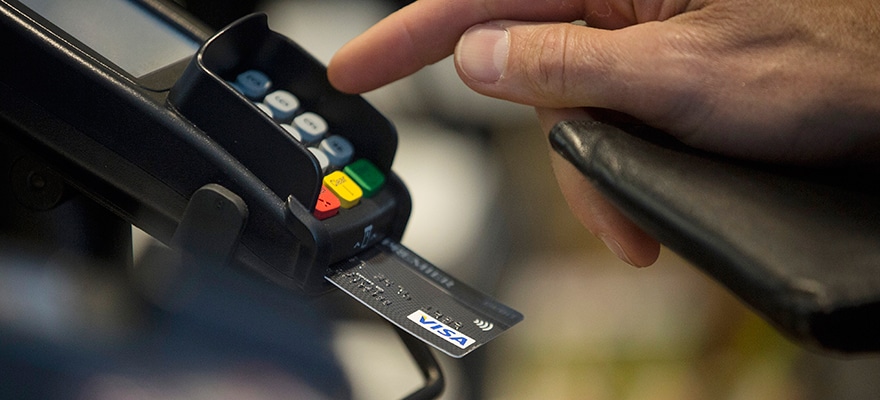
Despite becoming commonplace for newly issued cards in the UK and Europe from the mid-2000’s, EMV standards have been slow to be adopted in the US. Among the major sources of friction is the requirement of merchants to update their point of sale (POS) terminals from standard magnetic strip readers, to allow for card dipping and PIN entering. Nonetheless, the adoption of EMV in the US is getting a huge boost with the Payment Networks’ Liability Shift that goes into effect today, October 1st.
With the new liability guidelines, card issuers and payment networks will be able to shift responsibility of fraudulent magnetic stripe-based transactions to merchants; thus providing merchants a strong reason to update their terminals.
To learn more about these changes in the US, and how it could affect the overall payments industry and propel other technologies beyond just chip readers like mobile payments, in this week’s Fintech Spotlight, Finance Magnates connected with Nuno Sebastiao, CEO of Feedzai, a data science firm specializing in providing fraud prevention solutions to merchants, banks and payment providers.
Calls for Change
At the heart of the issue in the US is the aging magnetic stripe readers used to process card-based transactions. Sebastiao explained that the biggest problem with stripe readers is that they are easy to copy. Therefore, for less than $100, a thief can purchase a magnetic swipe duplicator that allows them to copy and mimic the swipe of another credit card. Due to this problem, it has led to a situation where there is an abundance of petty fraud taking place at merchants from these swipe duplicators.
As a result of this problem, and the emergence of more secure standards like EMV which require users to dip their cards into card readers and enter a PIN to complete the transaction, it has led banks and payment networks to require merchants to update their POS technology. In this regard, the liability shift rules were created as a process to cause merchants to become more vigilant in fighting card fraud at the physical store level.
Retail Industry Friction
Nuno Sebastiao, CEO of Feedzai
While the evolvement to EMV makes sense, there are several barriers that have inhibited the penetration of EMV standards in the US. Arguably the biggest issue is the costs involved for merchants to update their POS terminals. Typically, merchants have reserved POS terminal updates to situations when they are already in the market for new devices such as for store expansions of replacing defected terminals.
In addition, while most store-based POS devices can be easily replaced with new terminals, fixed hardware poses a greater challenge. These cases include vending machines or gas stations that include card reading technology that is fixed within a larger unit.
Another point of friction is the increased time needed to process a transaction with EMV standards. Unlike many other evolvements in technology which improve consumer efficiency, swiping cards on their magnetic strip is faster than dipping a card and entering a PIN code. As a result, merchants are worried that EMV adoption will slow down the in-store shopping experience.
According to Sebastiao, the prevalent opinion in the payment industry is that, yes, there will be shopping related delays to EMV, but consumers are expected to quickly understand and evolve to the new technology. The precedence for this belief are other markets such as Europe and the UK which have made the switch from magnetic readers to EMV without lasting negative effects.
Online Fraud Growth
Sebastiao also explained that merchants have countered that by making it more difficult to execute credit card fraud in physical stores, it will cause thieves to move their activity online. This has already become a large problem with fraudsters targeting databases of banks and retail sites to steal customer credit card information.
People don’t steal wallets or credit cards, but databases of bits and bytes of millions of consumer data
In this regard, Sebastiao described that as the world is becoming more digital, sectors such as fintech are becoming ‘cooler’, as they deal with the financial world’s shift from physical to digital. However, the same evolvement is taking place with payment fraud as Sebastiao explained: “People don’t steal wallets or credit cards, but databases of bits and bytes of millions of consumer data.” As a result, merchants believe that growth of the implementation of EMV standards will increase online fraud.
The counterargument to merchants though, is that cybercrime is already growing at a high rate, and is independent of petty magnetic stripe copying fraud. Sebastiao summed up this problem by stating that the reality is that fraudsters are going to use the newest the newest technology and “you have to use the same or better tools than what the fraudsters are doing.” Sebastiao added that examples of tools being used include “machine learning algorithms that use artificial intelligence to block fraudsters.”
One of the interesting offshoots of the increase of EMV standards is that it is expected to increase adoption of mobile payments. As a new generation of POS terminals are purchased and come online, beyond just chip readers, they also include integration of technology to enable payments from NFC- enabled mobile devices. The result is that mobile payment solutions such as Apple Pay, Samsung Pay and Android Pay will become easier to use as merchants update their terminals to new technology.
On this phenomena, Sebastiao explained that it has led to a debate within the industry of whether the inclusion of NFC technology in POS terminals will ultimately cause smartcards to be quickly skipped over in favor of mobile devices. For retailers though, having the ability to upgrade once, and become compliant to both EMV and mobile, does provide them a hedge to changing consumer habits in the future.
Is the Retail Industry Ready?
Despite merchants having over a year's notice for the October 1st liability shift beginning to take effect, according to statistics shared by Feedzai, a majority of small businesses weren’t aware of the coming changes, yet alone had updated their POS terminals. Nonetheless, awareness could be expected to increase as new credit cards being issued come standard with the smartcard chips.
Overall, while for many merchants it may seem that EMV standards are only now arriving to the US, the reality is that the technology has been around for a while, with the question being how quickly it will be adopted by merchants and consumers.
Fintech Spotlight is a new column on Finance Magnates devoted to reviewing innovative financial technology companies and sector trends.
Despite becoming commonplace for newly issued cards in the UK and Europe from the mid-2000’s, EMV standards have been slow to be adopted in the US. Among the major sources of friction is the requirement of merchants to update their point of sale (POS) terminals from standard magnetic strip readers, to allow for card dipping and PIN entering. Nonetheless, the adoption of EMV in the US is getting a huge boost with the Payment Networks’ Liability Shift that goes into effect today, October 1st.
With the new liability guidelines, card issuers and payment networks will be able to shift responsibility of fraudulent magnetic stripe-based transactions to merchants; thus providing merchants a strong reason to update their terminals.
To learn more about these changes in the US, and how it could affect the overall payments industry and propel other technologies beyond just chip readers like mobile payments, in this week’s Fintech Spotlight, Finance Magnates connected with Nuno Sebastiao, CEO of Feedzai, a data science firm specializing in providing fraud prevention solutions to merchants, banks and payment providers.
Calls for Change
At the heart of the issue in the US is the aging magnetic stripe readers used to process card-based transactions. Sebastiao explained that the biggest problem with stripe readers is that they are easy to copy. Therefore, for less than $100, a thief can purchase a magnetic swipe duplicator that allows them to copy and mimic the swipe of another credit card. Due to this problem, it has led to a situation where there is an abundance of petty fraud taking place at merchants from these swipe duplicators.
As a result of this problem, and the emergence of more secure standards like EMV which require users to dip their cards into card readers and enter a PIN to complete the transaction, it has led banks and payment networks to require merchants to update their POS technology. In this regard, the liability shift rules were created as a process to cause merchants to become more vigilant in fighting card fraud at the physical store level.
Retail Industry Friction
Nuno Sebastiao, CEO of Feedzai
While the evolvement to EMV makes sense, there are several barriers that have inhibited the penetration of EMV standards in the US. Arguably the biggest issue is the costs involved for merchants to update their POS terminals. Typically, merchants have reserved POS terminal updates to situations when they are already in the market for new devices such as for store expansions of replacing defected terminals.
In addition, while most store-based POS devices can be easily replaced with new terminals, fixed hardware poses a greater challenge. These cases include vending machines or gas stations that include card reading technology that is fixed within a larger unit.
Another point of friction is the increased time needed to process a transaction with EMV standards. Unlike many other evolvements in technology which improve consumer efficiency, swiping cards on their magnetic strip is faster than dipping a card and entering a PIN code. As a result, merchants are worried that EMV adoption will slow down the in-store shopping experience.
According to Sebastiao, the prevalent opinion in the payment industry is that, yes, there will be shopping related delays to EMV, but consumers are expected to quickly understand and evolve to the new technology. The precedence for this belief are other markets such as Europe and the UK which have made the switch from magnetic readers to EMV without lasting negative effects.
Online Fraud Growth
Sebastiao also explained that merchants have countered that by making it more difficult to execute credit card fraud in physical stores, it will cause thieves to move their activity online. This has already become a large problem with fraudsters targeting databases of banks and retail sites to steal customer credit card information.
People don’t steal wallets or credit cards, but databases of bits and bytes of millions of consumer data
In this regard, Sebastiao described that as the world is becoming more digital, sectors such as fintech are becoming ‘cooler’, as they deal with the financial world’s shift from physical to digital. However, the same evolvement is taking place with payment fraud as Sebastiao explained: “People don’t steal wallets or credit cards, but databases of bits and bytes of millions of consumer data.” As a result, merchants believe that growth of the implementation of EMV standards will increase online fraud.
The counterargument to merchants though, is that cybercrime is already growing at a high rate, and is independent of petty magnetic stripe copying fraud. Sebastiao summed up this problem by stating that the reality is that fraudsters are going to use the newest the newest technology and “you have to use the same or better tools than what the fraudsters are doing.” Sebastiao added that examples of tools being used include “machine learning algorithms that use artificial intelligence to block fraudsters.”
One of the interesting offshoots of the increase of EMV standards is that it is expected to increase adoption of mobile payments. As a new generation of POS terminals are purchased and come online, beyond just chip readers, they also include integration of technology to enable payments from NFC- enabled mobile devices. The result is that mobile payment solutions such as Apple Pay, Samsung Pay and Android Pay will become easier to use as merchants update their terminals to new technology.
On this phenomena, Sebastiao explained that it has led to a debate within the industry of whether the inclusion of NFC technology in POS terminals will ultimately cause smartcards to be quickly skipped over in favor of mobile devices. For retailers though, having the ability to upgrade once, and become compliant to both EMV and mobile, does provide them a hedge to changing consumer habits in the future.
Is the Retail Industry Ready?
Despite merchants having over a year's notice for the October 1st liability shift beginning to take effect, according to statistics shared by Feedzai, a majority of small businesses weren’t aware of the coming changes, yet alone had updated their POS terminals. Nonetheless, awareness could be expected to increase as new credit cards being issued come standard with the smartcard chips.
Overall, while for many merchants it may seem that EMV standards are only now arriving to the US, the reality is that the technology has been around for a while, with the question being how quickly it will be adopted by merchants and consumers.
Fintech Spotlight is a new column on Finance Magnates devoted to reviewing innovative financial technology companies and sector trends.
After Coinbase, Gemini and Kalshi, New York Takes Its Prediction Market Fight to Polymarket
Featured Videos
The5ers Connects Trading Accounts to AI; EC Markets Doubles UK Revenue
The5ers Connects Trading Accounts to AI; EC Markets Doubles UK Revenue
The5ers Connects Trading Accounts to AI; EC Markets Doubles UK Revenue
The5ers Connects Trading Accounts to AI; EC Markets Doubles UK Revenue
Today’s financial news recap covers The5ers connects trading accounts to ChatGPT and Claude, EC Markets doubles UK revenue, ThinkMarkets returns to profit, and Alpaca advances its Southeast Asia expansion.
Finance Magnates Daily Recap brings you the latest news from forex and CFD brokers, fintech, payments, cryptocurrency, digital assets, trading platforms, financial regulation and global markets.
Get the key company news, executive moves, deals, regulatory updates and market developments of the day, in just a few minutes. New episodes published every weekday.
Read more: https://www.financemagnates.com
#FinanceMagnates #ForexNews #FintechNews
Today’s financial news recap covers The5ers connects trading accounts to ChatGPT and Claude, EC Markets doubles UK revenue, ThinkMarkets returns to profit, and Alpaca advances its Southeast Asia expansion.
Finance Magnates Daily Recap brings you the latest news from forex and CFD brokers, fintech, payments, cryptocurrency, digital assets, trading platforms, financial regulation and global markets.
Get the key company news, executive moves, deals, regulatory updates and market developments of the day, in just a few minutes. New episodes published every weekday.
Read more: https://www.financemagnates.com
#FinanceMagnates #ForexNews #FintechNews
Today’s financial news recap covers The5ers connects trading accounts to ChatGPT and Claude, EC Markets doubles UK revenue, ThinkMarkets returns to profit, and Alpaca advances its Southeast Asia expansion.
Finance Magnates Daily Recap brings you the latest news from forex and CFD brokers, fintech, payments, cryptocurrency, digital assets, trading platforms, financial regulation and global markets.
Get the key company news, executive moves, deals, regulatory updates and market developments of the day, in just a few minutes. New episodes published every weekday.
Read more: https://www.financemagnates.com
#FinanceMagnates #ForexNews #FintechNews
Today’s financial news recap covers The5ers connects trading accounts to ChatGPT and Claude, EC Markets doubles UK revenue, ThinkMarkets returns to profit, and Alpaca advances its Southeast Asia expansion.
Finance Magnates Daily Recap brings you the latest news from forex and CFD brokers, fintech, payments, cryptocurrency, digital assets, trading platforms, financial regulation and global markets.
Get the key company news, executive moves, deals, regulatory updates and market developments of the day, in just a few minutes. New episodes published every weekday.
Read more: https://www.financemagnates.com
#FinanceMagnates #ForexNews #FintechNews
Today’s financial news recap covers MyForexFunds' brand assets are sold to a Dubai-based firm, FundedSeat closes, Valbury adds DXtrade, and Germany expands its fight against trading fraud.
Finance Magnates Daily Recap brings you the latest news from forex and CFD brokers, fintech, payments, cryptocurrency, digital assets, trading platforms, financial regulation and global markets.
Get the key company news, executive moves, deals, regulatory updates and market developments of the day, in just a few minutes. New episodes published every weekday.
Read more: https://www.financemagnates.com
#FinanceMagnates #ForexNews #FintechNews
Today’s financial news recap covers MyForexFunds' brand assets are sold to a Dubai-based firm, FundedSeat closes, Valbury adds DXtrade, and Germany expands its fight against trading fraud.
Finance Magnates Daily Recap brings you the latest news from forex and CFD brokers, fintech, payments, cryptocurrency, digital assets, trading platforms, financial regulation and global markets.
Get the key company news, executive moves, deals, regulatory updates and market developments of the day, in just a few minutes. New episodes published every weekday.
Read more: https://www.financemagnates.com
#FinanceMagnates #ForexNews #FintechNews
Today’s financial news recap covers MyForexFunds' brand assets are sold to a Dubai-based firm, FundedSeat closes, Valbury adds DXtrade, and Germany expands its fight against trading fraud.
Finance Magnates Daily Recap brings you the latest news from forex and CFD brokers, fintech, payments, cryptocurrency, digital assets, trading platforms, financial regulation and global markets.
Get the key company news, executive moves, deals, regulatory updates and market developments of the day, in just a few minutes. New episodes published every weekday.
Read more: https://www.financemagnates.com
#FinanceMagnates #ForexNews #FintechNews
Today’s financial news recap covers MyForexFunds' brand assets are sold to a Dubai-based firm, FundedSeat closes, Valbury adds DXtrade, and Germany expands its fight against trading fraud.
Finance Magnates Daily Recap brings you the latest news from forex and CFD brokers, fintech, payments, cryptocurrency, digital assets, trading platforms, financial regulation and global markets.
Get the key company news, executive moves, deals, regulatory updates and market developments of the day, in just a few minutes. New episodes published every weekday.
Read more: https://www.financemagnates.com
#FinanceMagnates #ForexNews #FintechNews
Today’s financial news recap covers MyForexFunds' brand assets are sold to a Dubai-based firm, FundedSeat closes, Valbury adds DXtrade, and Germany expands its fight against trading fraud.
Finance Magnates Daily Recap brings you the latest news from forex and CFD brokers, fintech, payments, cryptocurrency, digital assets, trading platforms, financial regulation and global markets.
Get the key company news, executive moves, deals, regulatory updates and market developments of the day, in just a few minutes. New episodes published every weekday.
Read more: https://www.financemagnates.com
#FinanceMagnates #ForexNews #FintechNews
Today’s financial news recap covers MyForexFunds' brand assets are sold to a Dubai-based firm, FundedSeat closes, Valbury adds DXtrade, and Germany expands its fight against trading fraud.
Finance Magnates Daily Recap brings you the latest news from forex and CFD brokers, fintech, payments, cryptocurrency, digital assets, trading platforms, financial regulation and global markets.
Get the key company news, executive moves, deals, regulatory updates and market developments of the day, in just a few minutes. New episodes published every weekday.
Read more: https://www.financemagnates.com
#FinanceMagnates #ForexNews #FintechNews
Learn from people who actually work in the industry.
Learn from people who actually work in the industry.
Learn from people who actually work in the industry.
Learn from people who actually work in the industry.
Learn from people who actually work in the industry.
Learn from people who actually work in the industry.
The value of learning from active professionals is the perspective they bring from dealing with real challenges every day.
That first-hand experience can turn concepts into practical, actionable insights.
Discover the people behind FM Academy’s courses and the industry experience they bring to professional education.
#FMAcademy #FinanceMagnates #Fintech #FinanceCareers #ProfessionalDevelopment
The value of learning from active professionals is the perspective they bring from dealing with real challenges every day.
That first-hand experience can turn concepts into practical, actionable insights.
Discover the people behind FM Academy’s courses and the industry experience they bring to professional education.
#FMAcademy #FinanceMagnates #Fintech #FinanceCareers #ProfessionalDevelopment
The value of learning from active professionals is the perspective they bring from dealing with real challenges every day.
That first-hand experience can turn concepts into practical, actionable insights.
Discover the people behind FM Academy’s courses and the industry experience they bring to professional education.
#FMAcademy #FinanceMagnates #Fintech #FinanceCareers #ProfessionalDevelopment
The value of learning from active professionals is the perspective they bring from dealing with real challenges every day.
That first-hand experience can turn concepts into practical, actionable insights.
Discover the people behind FM Academy’s courses and the industry experience they bring to professional education.
#FMAcademy #FinanceMagnates #Fintech #FinanceCareers #ProfessionalDevelopment
The value of learning from active professionals is the perspective they bring from dealing with real challenges every day.
That first-hand experience can turn concepts into practical, actionable insights.
Discover the people behind FM Academy’s courses and the industry experience they bring to professional education.
#FMAcademy #FinanceMagnates #Fintech #FinanceCareers #ProfessionalDevelopment
The value of learning from active professionals is the perspective they bring from dealing with real challenges every day.
That first-hand experience can turn concepts into practical, actionable insights.
Discover the people behind FM Academy’s courses and the industry experience they bring to professional education.
#FMAcademy #FinanceMagnates #Fintech #FinanceCareers #ProfessionalDevelopment
Top 1% of Winning Accounts Take 66.5% of Profit; Capital.com Adds Stocks, ETFs
Top 1% of Winning Accounts Take 66.5% of Profit; Capital.com Adds Stocks, ETFs
Top 1% of Winning Accounts Take 66.5% of Profit; Capital.com Adds Stocks, ETFs
Top 1% of Winning Accounts Take 66.5% of Profit; Capital.com Adds Stocks, ETFs
Top 1% of Winning Accounts Take 66.5% of Profit; Capital.com Adds Stocks, ETFs
Top 1% of Winning Accounts Take 66.5% of Profit; Capital.com Adds Stocks, ETFs
Today’s financial news recap covers top retail traders drive broker losses, Capital.com adds stocks, ETFs, the CFTC sues Cash FX, and Revolut moves into Argentina.
Finance Magnates Daily Recap brings you the latest news from forex and CFD brokers, fintech, payments, cryptocurrency, digital assets, trading platforms, financial regulation and global markets.
Get the key company news, executive moves, deals, regulatory updates and market developments of the day, in just a few minutes. New episodes published every weekday.
Read more: https://www.financemagnates.com
#FinanceMagnates #ForexNews #FintechNews
Today’s financial news recap covers top retail traders drive broker losses, Capital.com adds stocks, ETFs, the CFTC sues Cash FX, and Revolut moves into Argentina.
Finance Magnates Daily Recap brings you the latest news from forex and CFD brokers, fintech, payments, cryptocurrency, digital assets, trading platforms, financial regulation and global markets.
Get the key company news, executive moves, deals, regulatory updates and market developments of the day, in just a few minutes. New episodes published every weekday.
Read more: https://www.financemagnates.com
#FinanceMagnates #ForexNews #FintechNews
Today’s financial news recap covers top retail traders drive broker losses, Capital.com adds stocks, ETFs, the CFTC sues Cash FX, and Revolut moves into Argentina.
Finance Magnates Daily Recap brings you the latest news from forex and CFD brokers, fintech, payments, cryptocurrency, digital assets, trading platforms, financial regulation and global markets.
Get the key company news, executive moves, deals, regulatory updates and market developments of the day, in just a few minutes. New episodes published every weekday.
Read more: https://www.financemagnates.com
#FinanceMagnates #ForexNews #FintechNews
Today’s financial news recap covers top retail traders drive broker losses, Capital.com adds stocks, ETFs, the CFTC sues Cash FX, and Revolut moves into Argentina.
Finance Magnates Daily Recap brings you the latest news from forex and CFD brokers, fintech, payments, cryptocurrency, digital assets, trading platforms, financial regulation and global markets.
Get the key company news, executive moves, deals, regulatory updates and market developments of the day, in just a few minutes. New episodes published every weekday.
Read more: https://www.financemagnates.com
#FinanceMagnates #ForexNews #FintechNews
Today’s financial news recap covers top retail traders drive broker losses, Capital.com adds stocks, ETFs, the CFTC sues Cash FX, and Revolut moves into Argentina.
Finance Magnates Daily Recap brings you the latest news from forex and CFD brokers, fintech, payments, cryptocurrency, digital assets, trading platforms, financial regulation and global markets.
Get the key company news, executive moves, deals, regulatory updates and market developments of the day, in just a few minutes. New episodes published every weekday.
Read more: https://www.financemagnates.com
#FinanceMagnates #ForexNews #FintechNews
Today’s financial news recap covers top retail traders drive broker losses, Capital.com adds stocks, ETFs, the CFTC sues Cash FX, and Revolut moves into Argentina.
Finance Magnates Daily Recap brings you the latest news from forex and CFD brokers, fintech, payments, cryptocurrency, digital assets, trading platforms, financial regulation and global markets.
Get the key company news, executive moves, deals, regulatory updates and market developments of the day, in just a few minutes. New episodes published every weekday.
Read more: https://www.financemagnates.com
#FinanceMagnates #ForexNews #FintechNews
FCA Shuts 21 CFD Firms; Revolut Customer Data Exposed Again
FCA Shuts 21 CFD Firms; Revolut Customer Data Exposed Again
FCA Shuts 21 CFD Firms; Revolut Customer Data Exposed Again
FCA Shuts 21 CFD Firms; Revolut Customer Data Exposed Again
FCA Shuts 21 CFD Firms; Revolut Customer Data Exposed Again
FCA Shuts 21 CFD Firms; Revolut Customer Data Exposed Again
Today’s financial news recap covers the FCA shuts down 21 CFD firms, a DriveWealth security incident exposes customer data, New York takes aim at Polymarket, and DeFi faces a regulatory path beyond Congress.
Finance Magnates Daily Recap brings you the latest news from forex and CFD brokers, fintech, payments, cryptocurrency, digital assets, trading platforms, financial regulation and global markets.
Get the key company news, executive moves, deals, regulatory updates and market developments of the day, in just a few minutes. New episodes published every weekday.
Read more: https://www.financemagnates.com
#FinanceMagnates #ForexNews #FintechNews
Today’s financial news recap covers the FCA shuts down 21 CFD firms, a DriveWealth security incident exposes customer data, New York takes aim at Polymarket, and DeFi faces a regulatory path beyond Congress.
Finance Magnates Daily Recap brings you the latest news from forex and CFD brokers, fintech, payments, cryptocurrency, digital assets, trading platforms, financial regulation and global markets.
Get the key company news, executive moves, deals, regulatory updates and market developments of the day, in just a few minutes. New episodes published every weekday.
Read more: https://www.financemagnates.com
#FinanceMagnates #ForexNews #FintechNews
Today’s financial news recap covers the FCA shuts down 21 CFD firms, a DriveWealth security incident exposes customer data, New York takes aim at Polymarket, and DeFi faces a regulatory path beyond Congress.
Finance Magnates Daily Recap brings you the latest news from forex and CFD brokers, fintech, payments, cryptocurrency, digital assets, trading platforms, financial regulation and global markets.
Get the key company news, executive moves, deals, regulatory updates and market developments of the day, in just a few minutes. New episodes published every weekday.
Read more: https://www.financemagnates.com
#FinanceMagnates #ForexNews #FintechNews
Today’s financial news recap covers the FCA shuts down 21 CFD firms, a DriveWealth security incident exposes customer data, New York takes aim at Polymarket, and DeFi faces a regulatory path beyond Congress.
Finance Magnates Daily Recap brings you the latest news from forex and CFD brokers, fintech, payments, cryptocurrency, digital assets, trading platforms, financial regulation and global markets.
Get the key company news, executive moves, deals, regulatory updates and market developments of the day, in just a few minutes. New episodes published every weekday.
Read more: https://www.financemagnates.com
#FinanceMagnates #ForexNews #FintechNews
Today’s financial news recap covers the FCA shuts down 21 CFD firms, a DriveWealth security incident exposes customer data, New York takes aim at Polymarket, and DeFi faces a regulatory path beyond Congress.
Finance Magnates Daily Recap brings you the latest news from forex and CFD brokers, fintech, payments, cryptocurrency, digital assets, trading platforms, financial regulation and global markets.
Get the key company news, executive moves, deals, regulatory updates and market developments of the day, in just a few minutes. New episodes published every weekday.
Read more: https://www.financemagnates.com
#FinanceMagnates #ForexNews #FintechNews
Today’s financial news recap covers the FCA shuts down 21 CFD firms, a DriveWealth security incident exposes customer data, New York takes aim at Polymarket, and DeFi faces a regulatory path beyond Congress.
Finance Magnates Daily Recap brings you the latest news from forex and CFD brokers, fintech, payments, cryptocurrency, digital assets, trading platforms, financial regulation and global markets.
Get the key company news, executive moves, deals, regulatory updates and market developments of the day, in just a few minutes. New episodes published every weekday.
Read more: https://www.financemagnates.com
#FinanceMagnates #ForexNews #FintechNews