“Fast Payments Only Work When Security Stays Invisible”: Key Takeaways from FMLS:25 on the Future of Payments

Monday, 05/01/2026 | 11:51 GMT by Tanya Chepkova
  • The panel titled "Ready, Settle, Go Rewiring Payments for Speed, Scale & Security" discussed the shift from frictionless ideals to smart, invisible security mechanisms in payments.
  • Payments have shifted from a technical process to a user behaviour, with programmable money, AI-driven fraud prevention and interoperability shaping the next phase of payments.
  • Watch the full video from Finance Magnates London Summit 2025.

Payments work best when they fade into the background. Yet, over the past decade, they have quietly migrated from the periphery of infrastructure to the very center of product design, customer experience, and regulatory debate.

At a recent industry panel, executives from Weaver, Visa, Edenred, and regulatory advisory firms reflected on this evolution, exploring why the industry’s "frictionless" ideal remains more of a strategic aspiration than a day-to-day reality.

The Shift: From Technical Process to Human Behavior

The most significant transformation of the last decade isn't just the decline of cash, but the shift in how payments are perceived. Karin Martinez, Head of Sales at Edenred Payment Solutions, notes that payments have evolved from a purely technical process into a core user behavior.

Today’s ecosystem is driven by an end-user demand for a triad of requirements: speed, safety, and minimal friction. However, the industry is moving away from the "zero friction" dogma. Regina Lau, CFO/COO at Weaver, argues that some friction is not only helpful but essential. The challenge lies in making friction context-sensitive.

"If there’s low risk, let’s make it easy," she suggests. "But when something unusual occurs, that’s when friction must step in." This approach mirrors the "arms race" between fintechs and fraudsters, where both sides are constantly testing the limits of seamlessness.
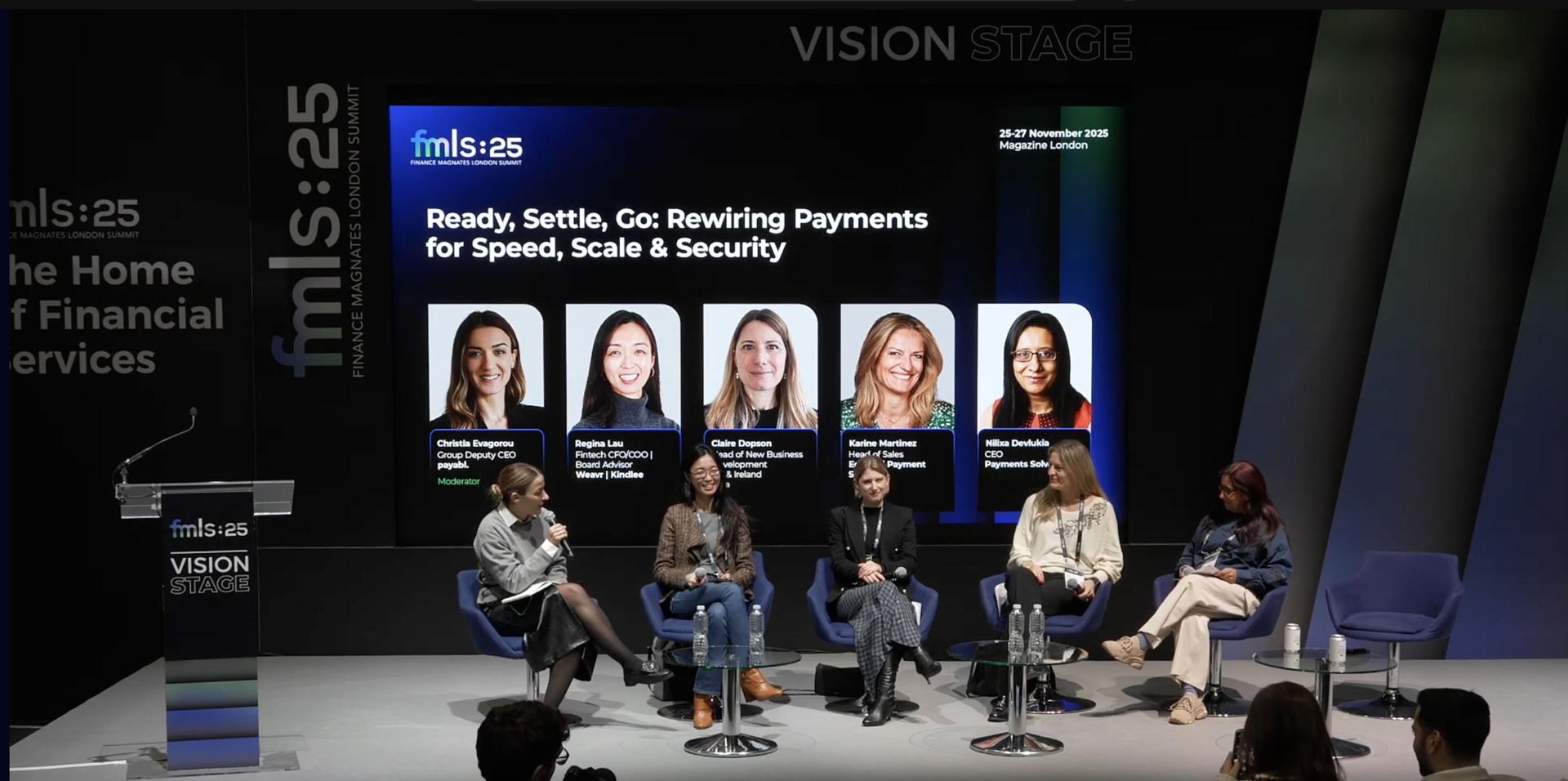
From left: Christina Evagorou, Regina Lau, Clait Dopson, Katrin Martinez, Nilixa Devlukia

Invisible Security: Tokenization and AI

For global giants like Visa, the last decade has been defined by the rise of alternatives to traditional card rails—specifically open banking and account-to-account (A2A) payments.

Claire Dobson, Business Development Lead at Visa (UK & Ireland), highlights the surge in "pay-by-bank" solutions, which offer built-in strong customer authentication (SCA), making the deposit journey intuitive for users on trading and investment platforms.

To balance transparency with security, Visa is leaning heavily into tokenization. By encrypting card credentials into unique tokens, the industry can eliminate the clunky one-time password (OTP) process while building biometric identification on top. This moves security into the background, turning checkout into a one-click experience without compromising safety.

While AI is the primary weapon in this defense strategy, speakers cautioned against treating it as a panacea. Visa’s scam disruption tools have already blocked over a billion dollars in potential fraud, yet the human element remains a vulnerability.

Lau pointed out that AI-driven transaction monitoring cannot fully replace the "human touch" required to protect vulnerable populations or handle complex, non-automated cases.

The Liability Gap and "Smart" Regulation

A recurring theme in the discussion was the structural imbalance in fraud prevention—specifically regarding social media. Panelists noted an "asymmetric liability" where a vast amount of fraud originates on social platforms that carry no financial responsibility, leaving banks and payment firms to play a reactive game of "whack-a-mole."

To solve this, the panel advocated for treating fraud protection as a utility rather than a competitive advantage. Collaborative knowledge sharing and cleaner data governance are seen as the only ways to stay ahead of AI-equipped fraudsters.

Furthermore, Martinez distinguished between "smart" and "bad" friction. While regulatory AML and KYC checks are protective necessities, the bureaucratic "paperwork purgatory" that many SMEs face during onboarding is a failure of innovation. The goal is to embed these checks so deeply into the technology that they become invisible to the legitimate user.

The Frontier: Programmable Money and Global Interoperability

Looking toward 2030, the industry is eyeing programmable money as the next major leap, with Nilixa DevLukia, CEO of regulatory consultancy Payments Solved, pointing to the convergence of central bank digital currencies (CBDCs), stablecoins, and tokenized deposits as the foundation of that shift.

Combined with distributed ledger technology, programmable money could automate complex settlements. However, Devlukia also cautioned that without true interoperability and aligned regulatory frameworks, these capabilities risk remaining confined to domestic or siloed use cases rather than delivering global impact.

Lau observed that global travel still requires a "fragmented wallet" of different apps for every jurisdiction. Extending local systems across borders is not just a technical challenge but a requirement for true financial inclusion.

A Transition, Not an Endpoint

The consensus was clear: the industry is in a state of negotiation rather than completion. Payments are faster and more embedded than ever, but friction has not been eradicated—it has simply been re-engineered into the layers of security and compliance.

As the panel concluded, the focus for the next decade will not be on removing controls, but on designing "smart, invisible friction"—systems that protect the user without ever getting in their way.

Payments work best when they fade into the background. Yet, over the past decade, they have quietly migrated from the periphery of infrastructure to the very center of product design, customer experience, and regulatory debate.

At a recent industry panel, executives from Weaver, Visa, Edenred, and regulatory advisory firms reflected on this evolution, exploring why the industry’s "frictionless" ideal remains more of a strategic aspiration than a day-to-day reality.

The Shift: From Technical Process to Human Behavior

The most significant transformation of the last decade isn't just the decline of cash, but the shift in how payments are perceived. Karin Martinez, Head of Sales at Edenred Payment Solutions, notes that payments have evolved from a purely technical process into a core user behavior.

Today’s ecosystem is driven by an end-user demand for a triad of requirements: speed, safety, and minimal friction. However, the industry is moving away from the "zero friction" dogma. Regina Lau, CFO/COO at Weaver, argues that some friction is not only helpful but essential. The challenge lies in making friction context-sensitive.

"If there’s low risk, let’s make it easy," she suggests. "But when something unusual occurs, that’s when friction must step in." This approach mirrors the "arms race" between fintechs and fraudsters, where both sides are constantly testing the limits of seamlessness.

From left: Christina Evagorou, Regina Lau, Clait Dopson, Katrin Martinez, Nilixa Devlukia

Invisible Security: Tokenization and AI

For global giants like Visa, the last decade has been defined by the rise of alternatives to traditional card rails—specifically open banking and account-to-account (A2A) payments.

Claire Dobson, Business Development Lead at Visa (UK & Ireland), highlights the surge in "pay-by-bank" solutions, which offer built-in strong customer authentication (SCA), making the deposit journey intuitive for users on trading and investment platforms.

To balance transparency with security, Visa is leaning heavily into tokenization. By encrypting card credentials into unique tokens, the industry can eliminate the clunky one-time password (OTP) process while building biometric identification on top. This moves security into the background, turning checkout into a one-click experience without compromising safety.

While AI is the primary weapon in this defense strategy, speakers cautioned against treating it as a panacea. Visa’s scam disruption tools have already blocked over a billion dollars in potential fraud, yet the human element remains a vulnerability.

Lau pointed out that AI-driven transaction monitoring cannot fully replace the "human touch" required to protect vulnerable populations or handle complex, non-automated cases.

The Liability Gap and "Smart" Regulation

A recurring theme in the discussion was the structural imbalance in fraud prevention—specifically regarding social media. Panelists noted an "asymmetric liability" where a vast amount of fraud originates on social platforms that carry no financial responsibility, leaving banks and payment firms to play a reactive game of "whack-a-mole."

To solve this, the panel advocated for treating fraud protection as a utility rather than a competitive advantage. Collaborative knowledge sharing and cleaner data governance are seen as the only ways to stay ahead of AI-equipped fraudsters.

Furthermore, Martinez distinguished between "smart" and "bad" friction. While regulatory AML and KYC checks are protective necessities, the bureaucratic "paperwork purgatory" that many SMEs face during onboarding is a failure of innovation. The goal is to embed these checks so deeply into the technology that they become invisible to the legitimate user.

The Frontier: Programmable Money and Global Interoperability

Looking toward 2030, the industry is eyeing programmable money as the next major leap, with Nilixa DevLukia, CEO of regulatory consultancy Payments Solved, pointing to the convergence of central bank digital currencies (CBDCs), stablecoins, and tokenized deposits as the foundation of that shift.

Combined with distributed ledger technology, programmable money could automate complex settlements. However, Devlukia also cautioned that without true interoperability and aligned regulatory frameworks, these capabilities risk remaining confined to domestic or siloed use cases rather than delivering global impact.

Lau observed that global travel still requires a "fragmented wallet" of different apps for every jurisdiction. Extending local systems across borders is not just a technical challenge but a requirement for true financial inclusion.

A Transition, Not an Endpoint

The consensus was clear: the industry is in a state of negotiation rather than completion. Payments are faster and more embedded than ever, but friction has not been eradicated—it has simply been re-engineered into the layers of security and compliance.

As the panel concluded, the focus for the next decade will not be on removing controls, but on designing "smart, invisible friction"—systems that protect the user without ever getting in their way.

About the Author: Tanya Chepkova
Tanya Chepkova
  • 49 Articles
About the Author: Tanya Chepkova
  • 49 Articles

More from the Author

FinTech

!"#$%&'()*+,-./0123456789:;<=>?@ABCDEFGHIJKLMNOPQRSTUVWXYZ[\]^_`abcdefghijklmnopqrstuvwxyz{|} !"#$%&'()*+,-./0123456789:;<=>?@ABCDEFGHIJKLMNOPQRSTUVWXYZ[\]^_`abcdefghijklmnopqrstuvwxyz{|}