"Pressure Test" Over Veto: How CFI’s Independent Chairman Defines His Job

Tuesday, 10/11/2026 | 09:40 GMT by Arnab Shome and Adonis Adoni
  • CFI Chairman Federico Cirulli, who is likely the only independent Chair in a privately-held CFD broker, says the board’s job is to pressure-test management, and that growth in licences, systems and clients must wait for controls to keep pace.
  • A founder “is extremely effective early on because they can act fast and rely on instinct, but more stakeholders, a more complex offering and heavier regulation can call for a different structure.”
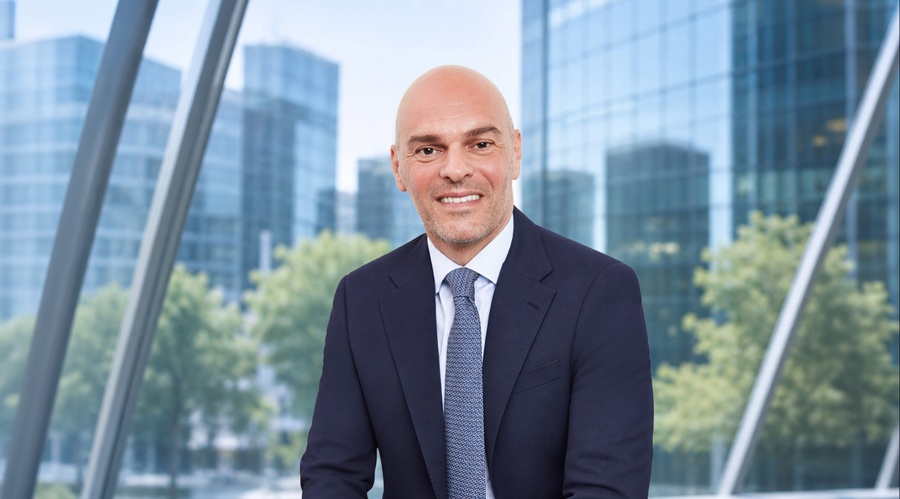
Federico Cirulli, Independent Chairman of CFI Financial Group

“The industry democratised access way faster than understanding,” said Federico Cirulli, the independent chairman of CFI Financial Group. In his view, brokers still use education as a marketing funnel to push promotions and win clients, when it should help people understand how markets and financial products work, including leverage, costs and risks, so they can make informed decisions about whether and how to participate. Financial markets should be accessible to all, he said, "but trading is not for everyone unless they have the knowledge and understanding needed to make informed decisions".

London's trading industry is coming home!

Cirulli told Finance Magnates that the brokers winning the most clients are the ones that earn trust. But what is trust? He defined trust as reliable support, particularly when markets are volatile; safeguarding client funds; timely and reliable deposits and withdrawals; transparency; and operating to consistently high regulatory standards. Regulation provides the foundation, he said, but trust is earned through how a firm behaves when clients need it most. “Today, offering access to a wide range of products and markets is relatively easy. Earning clients’ trust is much more difficult,” he said.
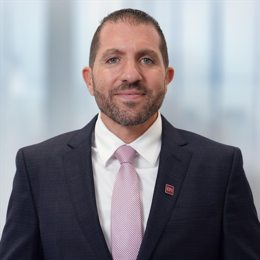
Hisham Mansour, CFI
Hisham Mansour, Co-Founder at CFI Financial Group; Source: CFI

Cirulli joined CFI’s Board in November 2025 as an independent director and became Chairman in September 2026 as part of a governance evolution in which co-founders Hisham Mansour and Eduardo Fakhoury transitioned to Non-Executive Director roles. He now describes his role as leading the governance, information flow, debate and effectiveness of the Board.

He previously served as CEO of ActivTrades, which operated globally at the time, and Swissquote UK, formerly MIG Capital, and held senior roles at CMC Markets, where he was responsible for the UK and several European markets, including Italy, Spain and France.
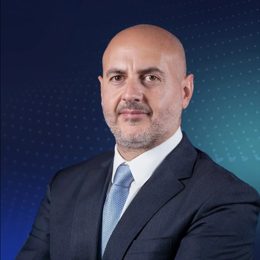
Eduardo Fakhoury, Co-Founder at CFI Financial Group; Source: CFI

CFI Group, which he oversees, reported $3.45 trillion in third-quarter volume, about 123% higher than a year earlier. Nine-month volume reached $8.8 trillion, above its $6.4 trillion for all of 2025. The figures are company-reported.

Independent Directors Are There to “Pressure Test”, Not to Object

Cirulli said the responsibility split between chairman and chief executive is clearly defined at CFI. He leads the board, Group CEO Ziad Melhem leads the business.

He stressed that the board should not run the company from the boardroom. It should set direction and risk appetite, challenge management constructively and hold it accountable for execution

Independence, he said, lets him challenge decisions more objectively.

Asked why CFI appears to be nearly alone in the industry in using an independent chairman, he declined to judge other firms. He said the model suits CFI because the Group is management-led, founder-supported and independently chaired.

The strongest model, in his opinion, is not founders versus independent directors; it is founder knowledge and commitment combined with independent judgement.

Independent directors, he said, are not there to object to everything. “They can pressure test these decisions and proposals from different angles,” he said, citing commercial, governance and IT perspectives.

Founders Mansour and Fakhoury stepped down as managing directors in June 2025, when Melhem became CEO. Cirulli said they remain shareholders and board members, bringing the vision that built CFI, deep knowledge of the business and a long-term perspective, while executive management remains responsible for running the business.

"Founder-led models can be extremely effective during the early stage of a company because they combine speed, instinct and conviction,” Cirulli said. “As a business becomes more complex, independent governance can complement, not replace, that strength"

CFI’s founders built deep client trust and a strong regional presence over more than 25 years, Cirulli highlighted. “Institutionalising” the Group, according to him, is not about replacing that entrepreneurial strength; it is about giving that ambition the governance and infrastructure to scale internationally.

Read more: Why Are CFD Brokers Going “Insti”?

“Growth Is Credible Only When Governance, Compliance and Operational Resilience Grow with It”

On CFI’s regulatory footprint of over 15 licences, Cirulli rejected the suggestion that licences are simply a ‘flex’. “Technology globalises distribution, but regulatory responsibility remains local. A global brand must earn trust market by market through local knowledge, local management and the appropriate regulatory framework,” he said.

In Colombia, CFI received regulatory authorisation to establish an office before launching its operations. In Brazil, where it secured a brokerage licence in April, it is now building its local operation.

Cirulli said the Board tests whether compliance, risk and operational systems can keep pace with expansion. “Growth is credible only when governance, compliance and operational resilience grow with it. If controls cannot support the growth, growth must slow, not our standards,” he said.

He said this assessment extends beyond trading volume to systems, clients, regulatory permissions and the ability to meet both Group standards and local requirements.

Across its established MENA markets, Cirulli said CFI has adopted a local approach, supported by local offices, local management, local teams and market-specific regulatory arrangements.

He clarified that by “local execution” he meant the local implementation of strategy through management, sales, marketing and compliance, not that every client order is executed locally. Trading and legal entity arrangements vary by market.

He said regulatory approaches also differ across the region and continue to evolve.

On setting up in Dubai, Cirulli said he could not comment on other firms but stressed that building a regulated operation requires robust processes and strong governance. CFI’s global headquarters are in Dubai.

Asked how CFI handled last year’s gold rally, which strained some brokers, Cirulli said the group came through it well. He pointed to the company’s continued expansion and said CFI stress tests in advance rather than reacting to events. Gold, he added, is one of the most traded products among CFI clients. Metals led activity in the second quarter, and CFI launched a seven-day gold CFD on 1 October.

“Regulators Will See the Substance”: AI, Perpetuals and Prediction Markets

On artificial intelligence, Cirulli said the board sets the ambition and risk appetite, while management chooses the tools and brings the strategy to the board for approval. Oversight, he said, should be proportional. Using AI to review presentations or draft marketing needs a light touch. As AI starts to influence clients or interact with their trading decisions, the controls must get stricter, including “clear accountability, effective human oversight and the ability to stop or override a system when necessary.”

“Technology can be outsourced, but ultimately, as a regulated operation, accountability cannot,” he said.

Asked whether the lack of rules on agentic trading complicates this, he said gray areas attract operators who try to fit into them, and that it is a firm’s responsibility to act in clients’ best interest. He named AI and cross-border digital distribution as areas where he expects regulatory pressure soon.

The same logic applies to newer products, he said. Whether a product is called a funded challenge, a perpetual or a prediction market, regulators will ask the same questions. “Regulators will see the substance of this product regardless of the label,” he said. Is it a derivative? How much can a client lose? He recalled an industry discussion about whether a perpetual contract was not a derivative and materially different from a CFD. His point, he said, was that the substance of the product, its risks and its impact on clients matter more than the label attached to it.

On prediction markets in Europe, where ESMA has recently flagged that some contracts may be binary and others may fall under different rulebooks, Cirulli said he would prefer a well-defined landscape to a gray area in which unregulated brokers come and go. Regulators, he said, should settle whether a product is gambling or a derivative, so clients know who can offer it and what protection applies. Most prediction market volume, he said, is still in sports and political events rather than financial products. “If at the end the value will be 0 or 1, by definition it is a digital option or a binary contract,” he said.

He said that when a new product comes to the Board, it is assessed from commercial, technical and regulatory perspectives, including any applicable reporting requirements. Regulators usually communicate through published papers, he said, and CFI’s compliance department tracks them across every jurisdiction where the group operates. A product must pass that compliance test before launch.

Asked whether CFI plans to offer prediction markets or prop trading, he said it was neither a total no nor a total yes. CFI is monitoring client demand, regulation and its own systems, and he said he could not say it is close to launching either.

Looking two years ahead, Cirulli said CFI remains focused on advancing its technology and infrastructure, broadening its capabilities and offering, and deepening its presence across key markets. Having achieved significant scale, the Group’s next step is to translate that scale into lasting competitive strength by improving the client experience and creating new opportunities for clients.

He also sees considerable opportunity to expand internationally with the same standards that have underpinned CFI’s growth in MENA, including further development in Latin America, South Africa and other regions. He declined to disclose specific two-year KPIs at this stage.

“The industry democratised access way faster than understanding,” said Federico Cirulli, the independent chairman of CFI Financial Group. In his view, brokers still use education as a marketing funnel to push promotions and win clients, when it should help people understand how markets and financial products work, including leverage, costs and risks, so they can make informed decisions about whether and how to participate. Financial markets should be accessible to all, he said, "but trading is not for everyone unless they have the knowledge and understanding needed to make informed decisions".

London's trading industry is coming home!

Cirulli told Finance Magnates that the brokers winning the most clients are the ones that earn trust. But what is trust? He defined trust as reliable support, particularly when markets are volatile; safeguarding client funds; timely and reliable deposits and withdrawals; transparency; and operating to consistently high regulatory standards. Regulation provides the foundation, he said, but trust is earned through how a firm behaves when clients need it most. “Today, offering access to a wide range of products and markets is relatively easy. Earning clients’ trust is much more difficult,” he said.

Hisham Mansour, CFI
Hisham Mansour, Co-Founder at CFI Financial Group; Source: CFI

Cirulli joined CFI’s Board in November 2025 as an independent director and became Chairman in September 2026 as part of a governance evolution in which co-founders Hisham Mansour and Eduardo Fakhoury transitioned to Non-Executive Director roles. He now describes his role as leading the governance, information flow, debate and effectiveness of the Board.

He previously served as CEO of ActivTrades, which operated globally at the time, and Swissquote UK, formerly MIG Capital, and held senior roles at CMC Markets, where he was responsible for the UK and several European markets, including Italy, Spain and France.

Eduardo Fakhoury, Co-Founder at CFI Financial Group; Source: CFI

CFI Group, which he oversees, reported $3.45 trillion in third-quarter volume, about 123% higher than a year earlier. Nine-month volume reached $8.8 trillion, above its $6.4 trillion for all of 2025. The figures are company-reported.

Independent Directors Are There to “Pressure Test”, Not to Object

Cirulli said the responsibility split between chairman and chief executive is clearly defined at CFI. He leads the board, Group CEO Ziad Melhem leads the business.

He stressed that the board should not run the company from the boardroom. It should set direction and risk appetite, challenge management constructively and hold it accountable for execution

Independence, he said, lets him challenge decisions more objectively.

Asked why CFI appears to be nearly alone in the industry in using an independent chairman, he declined to judge other firms. He said the model suits CFI because the Group is management-led, founder-supported and independently chaired.

The strongest model, in his opinion, is not founders versus independent directors; it is founder knowledge and commitment combined with independent judgement.

Independent directors, he said, are not there to object to everything. “They can pressure test these decisions and proposals from different angles,” he said, citing commercial, governance and IT perspectives.

Founders Mansour and Fakhoury stepped down as managing directors in June 2025, when Melhem became CEO. Cirulli said they remain shareholders and board members, bringing the vision that built CFI, deep knowledge of the business and a long-term perspective, while executive management remains responsible for running the business.

"Founder-led models can be extremely effective during the early stage of a company because they combine speed, instinct and conviction,” Cirulli said. “As a business becomes more complex, independent governance can complement, not replace, that strength"

CFI’s founders built deep client trust and a strong regional presence over more than 25 years, Cirulli highlighted. “Institutionalising” the Group, according to him, is not about replacing that entrepreneurial strength; it is about giving that ambition the governance and infrastructure to scale internationally.

Read more: Why Are CFD Brokers Going “Insti”?

“Growth Is Credible Only When Governance, Compliance and Operational Resilience Grow with It”

On CFI’s regulatory footprint of over 15 licences, Cirulli rejected the suggestion that licences are simply a ‘flex’. “Technology globalises distribution, but regulatory responsibility remains local. A global brand must earn trust market by market through local knowledge, local management and the appropriate regulatory framework,” he said.

In Colombia, CFI received regulatory authorisation to establish an office before launching its operations. In Brazil, where it secured a brokerage licence in April, it is now building its local operation.

Cirulli said the Board tests whether compliance, risk and operational systems can keep pace with expansion. “Growth is credible only when governance, compliance and operational resilience grow with it. If controls cannot support the growth, growth must slow, not our standards,” he said.

He said this assessment extends beyond trading volume to systems, clients, regulatory permissions and the ability to meet both Group standards and local requirements.

Across its established MENA markets, Cirulli said CFI has adopted a local approach, supported by local offices, local management, local teams and market-specific regulatory arrangements.

He clarified that by “local execution” he meant the local implementation of strategy through management, sales, marketing and compliance, not that every client order is executed locally. Trading and legal entity arrangements vary by market.

He said regulatory approaches also differ across the region and continue to evolve.

On setting up in Dubai, Cirulli said he could not comment on other firms but stressed that building a regulated operation requires robust processes and strong governance. CFI’s global headquarters are in Dubai.

Asked how CFI handled last year’s gold rally, which strained some brokers, Cirulli said the group came through it well. He pointed to the company’s continued expansion and said CFI stress tests in advance rather than reacting to events. Gold, he added, is one of the most traded products among CFI clients. Metals led activity in the second quarter, and CFI launched a seven-day gold CFD on 1 October.

“Regulators Will See the Substance”: AI, Perpetuals and Prediction Markets

On artificial intelligence, Cirulli said the board sets the ambition and risk appetite, while management chooses the tools and brings the strategy to the board for approval. Oversight, he said, should be proportional. Using AI to review presentations or draft marketing needs a light touch. As AI starts to influence clients or interact with their trading decisions, the controls must get stricter, including “clear accountability, effective human oversight and the ability to stop or override a system when necessary.”

“Technology can be outsourced, but ultimately, as a regulated operation, accountability cannot,” he said.

Asked whether the lack of rules on agentic trading complicates this, he said gray areas attract operators who try to fit into them, and that it is a firm’s responsibility to act in clients’ best interest. He named AI and cross-border digital distribution as areas where he expects regulatory pressure soon.

The same logic applies to newer products, he said. Whether a product is called a funded challenge, a perpetual or a prediction market, regulators will ask the same questions. “Regulators will see the substance of this product regardless of the label,” he said. Is it a derivative? How much can a client lose? He recalled an industry discussion about whether a perpetual contract was not a derivative and materially different from a CFD. His point, he said, was that the substance of the product, its risks and its impact on clients matter more than the label attached to it.

On prediction markets in Europe, where ESMA has recently flagged that some contracts may be binary and others may fall under different rulebooks, Cirulli said he would prefer a well-defined landscape to a gray area in which unregulated brokers come and go. Regulators, he said, should settle whether a product is gambling or a derivative, so clients know who can offer it and what protection applies. Most prediction market volume, he said, is still in sports and political events rather than financial products. “If at the end the value will be 0 or 1, by definition it is a digital option or a binary contract,” he said.

He said that when a new product comes to the Board, it is assessed from commercial, technical and regulatory perspectives, including any applicable reporting requirements. Regulators usually communicate through published papers, he said, and CFI’s compliance department tracks them across every jurisdiction where the group operates. A product must pass that compliance test before launch.

Asked whether CFI plans to offer prediction markets or prop trading, he said it was neither a total no nor a total yes. CFI is monitoring client demand, regulation and its own systems, and he said he could not say it is close to launching either.

Looking two years ahead, Cirulli said CFI remains focused on advancing its technology and infrastructure, broadening its capabilities and offering, and deepening its presence across key markets. Having achieved significant scale, the Group’s next step is to translate that scale into lasting competitive strength by improving the client experience and creating new opportunities for clients.

He also sees considerable opportunity to expand internationally with the same standards that have underpinned CFI’s growth in MENA, including further development in Latin America, South Africa and other regions. He declined to disclose specific two-year KPIs at this stage.

About the Author: Arnab Shome
Arnab Shome
  • 7485 Articles
  • 146 Followers
About the Author: Arnab Shome
Arnab Shome is an electronics engineer-turned-financial editor. He holds a Bachelor of Technology from the National Institute of Technology, Agartala. He entered the retail trading industry about a decade ago, covering the cryptocurrency market for Finance Magnates, and later expanded his coverage to include forex and CFDs as well. His work at Finance Magnates includes C-level interviews, data-driven analysis, opinion pieces, and scoops of industry exclusives. He also contributes to Finance Magnates’ quarterly industry report. Area of coverage: 1. CFD broker-related news 2. Industry-related Regulatory updates and developments 3. New retail trading trends 4. Prop trading industry updates 5. Executive interviews Education: Bachelor of Technology - National Institute of Technology, Agartala (India)
  • 7485 Articles
  • 146 Followers
About the Author: Adonis Adoni
Adonis Adoni
  • 149 Articles
  • 4 Followers
About the Author: Adonis Adoni
Adonis Adoni is a News Editor at Finance Magnates, with more than six years of experience covering the financial services industry, technology, and their intersection. His work includes C-suite interviews with leading technology and fintech companies across Europe, the US and Asia, exclusive coverage of M&A activity and capital raising, and data-driven industry reporting, with a strong emphasis on engagement and clear storytelling. Areas of Coverage: Online trading industry news Fintech companies Digital assets and crypto markets Regulatory and compliance developments Executive interviews Education: BA in Law – Nottingham Trent University LLM in Health Law – Nottingham Trent University
  • 149 Articles
  • 4 Followers

More from the Authors

Executives

!"#$%&'()*+,-./0123456789:;<=>?@ABCDEFGHIJKLMNOPQRSTUVWXYZ[\]^_`abcdefghijklmnopqrstuvwxyz{|} !"#$%&'()*+,-./0123456789:;<=>?@ABCDEFGHIJKLMNOPQRSTUVWXYZ[\]^_`abcdefghijklmnopqrstuvwxyz{|}