

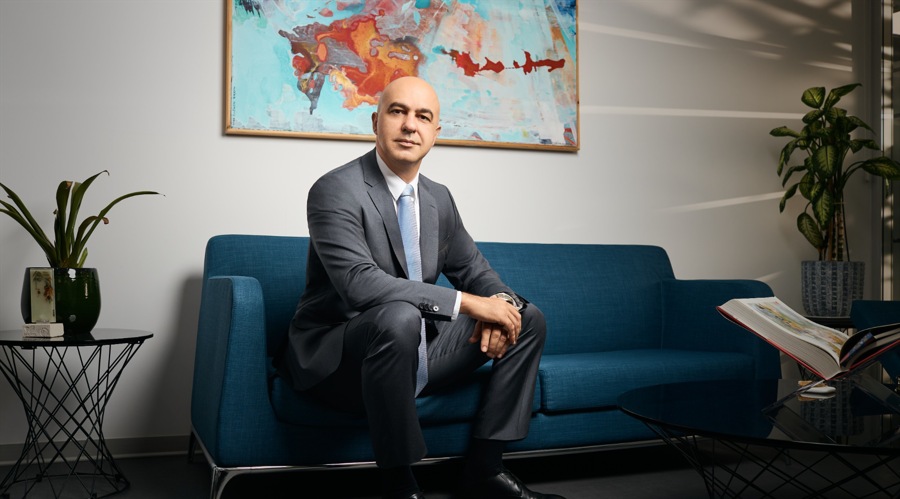
Dr. George Theocharides is not promising simple endings. Speaking to FinanceMagnates.com ahead of 2026, the Chair of the Cyprus Securities and Exchange Commission (CySEC) said the European Union’s AI Act is “only the beginning.” He confirmed that CySEC is closely monitoring the use of artificial intelligence within regulated investment firms (CIFs).
The regulator is also reviewing multiple applications under the Markets in Crypto-Assets Regulation (MiCA), but without rushing approvals. Prop trading, meanwhile, is “on the radar,” and any future rules would likely follow a gradual, copy-trading-style process rather than an abrupt clampdown.
On scams, Theocharides was blunt. “No matter what regulators do, there will always be someone who finds new ways to deceive investors.”
Now in his fifth year as CySEC Chair, with a possible mandate renewal on the horizon of September 2026, Theocharides has become one of Europe’s more measured regulatory voices, and certainly one of the busiest – especially in the AI era.
“I expect to see more specific guidelines and frameworks on the use of AI, likely issued in the near future by the supervisory bodies,” he told FinanceMagnates.com. “These would essentially fall under what we call Level 2 and Level 3 measures – since the Act, as it stands, is a Level 1 measure.”
“We Are Not in a Rush”
For CySEC, MiCA is no longer an abstract regulatory project but a live licensing process – one that, according to its Chair, demands patience as much as speed.
Revolut was among the first firms in Cyprus to obtain authorisation as a crypto-asset service provider (CASP) – a status now transitioning into the MiCA regime. eToro recently became one of the first platforms to secure a MiCA permit through an extension of its existing MiFID licence.
“Both eToro and Revolut went through extensive scrutiny,” Theocharides added. “We also have several more applications currently in the pipeline, but we are not in a rush. It’s important to ensure we get things right and that all entities are properly vetted. Frequently, we ask them to make a number of changes before we can grant a licence. For all these reasons, we must take our time.”
Theocharides explained that if a company already holds a MiFID II licence, it becomes easier to receive an approval under MiCA. “Once you have a MiFID licence, it means you have already gone through all the rigorous assessments required to obtain one,” he said. “MiFID is a very mature regulatory framework, and once an entity has a MiFID licence, extending it to include a MiCA licence is indeed a simpler process. It still involves a notification and some additional checks from our side, but overall, it is easier.”
This week, MiCA, the EU’s comprehensive crypto laws went into effect, representing a massive step forward for the digital asset industry.
— Circle (@circle) July 2, 2024
The US has a massive opportunity to act now to get stablecoin legislation right, instead of being left behind by other major markets. pic.twitter.com/AiNcNZEgWv
Stablecoins Are (Also) a Risk
Theocharides stressed that stablecoins are another priority for the Cypriot and European regulators. This came as the stablecoin market reached over $200 billion in value. But for regulators, the issue is not just growth, but how that growth is distributed across the market. “There is a strong concentration around two major stablecoins – Tether and USDC (USD Coin) – which together hold the majority of the market,” he said. “One of them is MiCA-compliant, while the other is not, primarily due to its management of the reserve pool.”
“We recognise the benefits of stablecoins, but we must also remain cautious because they pose certain risks – particularly to financial stability – due to their structure and scale,” continued Theocharides, adding that “there are still important financial-stability concerns that we must understand and mitigate.”
Interestingly, the focus shifted towards stablecoins when the United States passed the GENUIS Act. That timing raised the question of whether US legislative moves are influencing Europe’s approach.
“I wouldn’t say so,” the Chair said when asked about the possible influence. “The way Europe is affected by the United States is mainly in the competitiveness of its capital markets, which is, of course, a broader issue, but an important one.”
However, he highlighted that when it comes to digital assets, he does not believe that “Europe is directly affected by developments in the US,” adding, “it’s important for us to monitor what happens there and identify any potential risks that might have implications for Europe. But in terms of the pace, Europe’s progress is not dependent on or constrained by what’s happening there.”

“A Natural Development in Both the Industry and Regulation”
Cyprus has established itself as a hub for CFD brokers. However, over the past few years, many have closed their services to retail traders in Europe; Exness, IronFX, FXTM, and RoboMarkets are just a few examples. Another group, on the other hand, which includes prominent names such as Plus500, XTB, and Capital.com, has established a presence in Dubai.
Read more: 52% of Capital.com’s H1 Trading Volume Came from MENA, UAE Traders Lead
“I wouldn’t say there’s been a sudden shift, but rather a natural development in both the industry and regulation,” the CySEC Chair said. “Every jurisdiction is different, and European regulation is known for being strong, solid, and strict. Good companies value this type of regulatory environment.”
“Naturally, there are offshore jurisdictions with looser regulations – but the level of investor protection there is very different to that which is provided in Europe,” he observed.
Further highlighting the “narrow target market” for CFD, he said that brokers should not only offer CFD, but provide a multi-asset platform with a catalogue of “a range of products tailored to their clients’ needs – whether traditional assets such as stocks and bonds, derivatives, digital assets, ETFs, and so on.”
“We have seen that many reputable brokers have already taken this path, diversifying their asset portfolios so that they don’t rely solely on one speculative product with a narrow target market.”
- CySEC Warns Against 21 Fraudulent Websites, Including Clones of AvaTrade and OneRoyal
- CySEC Pulls Certification Registers as Scammers Exploit Licensing Details
- “If Something Sounds Too Good To Be True, It Probably Isn't”: Cyprus Market Chief Warns on Finfluencers and AI Frauds
Earlier, CySEC also fined at least two CFD brokers, BDSwiss and IC Markets, for routing clients to their offshore units.
“There’s always the possibility that some investors, even when fully aware of the risks, still choose to take on higher levels of exposure,” the CySEC Chair added. “They can do so on their own – reverse solicitation is allowed; it’s not prohibited. But when investors go to companies based in third-country jurisdictions where there are no such restrictions, they face greater risks.”
That tension between risk appetite, regulation, and market structure continues to define Europe’s trading landscape – a point echoed by industry participants calling for change.
In a recent interview with FinanceMagnates.com, Tajinder Virk, CEO of Finvasia, expressed his concerns about the existing brokerage model, specifically addressing the appeal of zero commission and B-book execution. Virk asserted, “We are here to question why the system looks the way it does,” and advocated for a complete “overhaul,” citing a “fundamental disconnect between traders and brokers.”
“Market makers, after all, are the ones providing liquidity – they make the market function,” Theocharides reacts. “Without market makers, there would be no market. So if conflicts of interest exist, we have to examine what measures these companies are taking to manage and reduce and mitigate those conflicts.
“This is exactly what we look at during our supervisory work and during the authorisation assessment process,” he explained. “If conflicts are present, we assess how the companies mitigate them to ensure that the services they provide to clients are clear, fair, and not misleading – which is precisely what MiFID requires.”
“Potentially Giving ESMA a Larger Supervisory Role”
Broadening the scope of the macro issue across financial services in Europe, Theocharides pointed out that “one of the key discussions happening in Europe right now is around the Savings and Investments Union, or SIU.”
“There are several positive initiatives under that umbrella that we, as a member state, fully support,” he said, adding that these initiatives are efforts to revive the EU securitisation framework, introduce pension reforms to make investment products more accessible to pension funds, and pursue insolvency reforms to promote greater convergence across Europe.
“Overall, the goal is to make Europe more competitive,” said the CySEC Chair.
“There’s also an ongoing discussion about centralising supervision in Europe, potentially giving ESMA a larger supervisory role across several sectors, similar to the structure of the Banking Union. All these developments are very important and will have a major impact on how the European securities and capital markets evolve in the years ahead.”
Great to be back in Copenhagen, Denmark this week with the Vice-Chairman to participate at the ESMA’s Board of Supervisors meeting.
— George Theocharides (@Theocharides_G) October 12, 2025
We had lots of interesting discussions on various topics ranging from digital assets, costs on funds, use of transaction data, union strategic… pic.twitter.com/qYuC993G9S
Will Europe Regulate Finfluencers and Prop?
Financial services regulators worldwide are increasingly concerned about the impact of “finfluencers.” The UK's Financial Conduct Authority (FCA) took significant action against them, including coordinating police arrests, filing charges, and mandating the removal of unauthorized and misleading financial promotions. Dubai's regulator has gone a step further, requiring all finfluencers to be licensed.
When asked if CySEC also has plans to regulate influencers, Theocharides said: “Not for the time being.”
“Any new regulatory framework usually comes directly from Europe,” he stressed. “At this stage, I don’t have any information about any specific regulation aimed at monitoring finfluencers. Yes, there is growing awareness and discussion around the issue, but no concrete regulation has been introduced so far.”
However, Theocharides highlighted that individuals and entities that directly or indirectly give advice or ideas about financial products or services to media outlets, including on social media, are being warned that they may be violating the EU Market Abuse Regulation. Firms that are working with finfluencers need to take more responsibility for how their financial promotions are being communicated, the Regulator said. Such cases constitute serious offences in Cyprus, as in other EU member states, and may result in administrative fines of up to €5 million for natural persons and up to €15 million for legal entities, as well as criminal prosecutions.
CySEC expects that any recommendations and other information related to investments are neutral, clear and disclose any conflict of interest. Individuals that use digital channels and social media platforms to influence financial behaviour and investment decisions (financial influencers or finfluencers) must also comply with the criteria for investment advice under the regulatory framework.
The Cypriot watchdog has also launched an Investor's Guide entitled “Unveiling the World of Finfluencers” to empower investors to critically evaluate financial content online. This explains how finfluencers work, and the potential risks associated with following unauthorised advisors on social media.
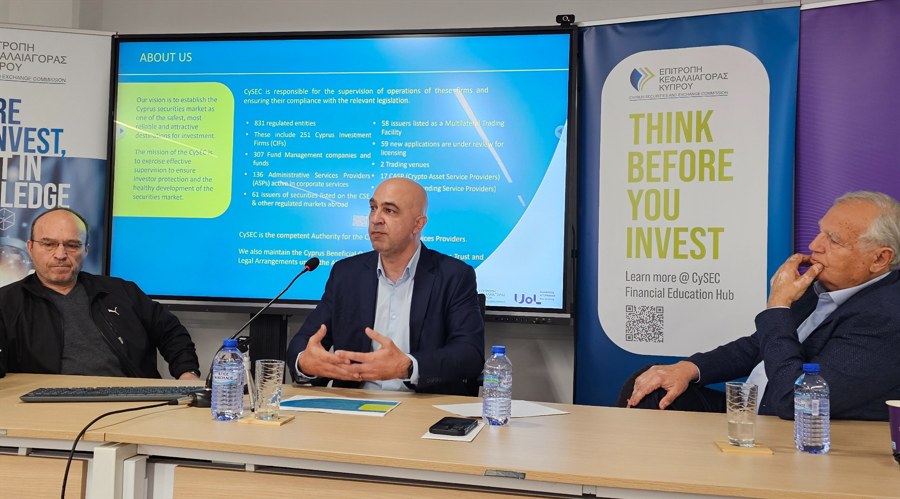
Regulation of prop trading platforms is another hot topic in the industry. FinanceMagnates.com earlier reported that the pan-European markets supervisor conducted initial checks around prop trading firms and also discussed possible regulations for the industry. Since then, several prop firms have been in direct contact with regulators, discussing possible requirement models.
“I know it’s on the radar, but there’s nothing concrete at the moment in terms of regulatory initiatives from Europe regarding prop trading,” said Theocharides. “We have reviewed some of the firms under our remit and carried out an exercise to determine whether any of them are engaged in prop trading. We haven’t found much activity in this area. If it does exist, it might be within entities that are part of the same group as our regulated firms, rather than within the regulated entities themselves.”
“I understand there are potential risks related to prop trading and its possible impact on investors, but right now, we have no concrete information or indication of any forthcoming regulation addressing it,” he shared.
However, he pointed out that if prop trading “continues to gain traction – attracting more interest and participation – at some point, it will become a focus for ESMA. When the time comes, I think it would have to go through a process similar to copy trading.”
Although there are no specific regulations, the CFTC lawsuit against My Forex Funds has demonstrated that prop trading platforms are not beyond the reach of regulators. The lawsuit was ultimately dismissed after the court found misconduct by the regulator, leading to the cancellation of the trial and the lifting of the asset freeze. Is such conduct also possible within CySEC's jurisdiction?
“If we impose an enforcement decision, such as a sanction, a fine, or a settlement, the regulated entity has the right to appeal it in court. And this has happened in the past,” Theocharides said. “In some cases, we’ve lost court cases – not because of the substance of the case, but due to procedural irregularities that had nothing to do with the merits. That’s the reality.”
Another big issue for regulators globally, including CySEC, is tackling the menace of scammers. The Cypriot agency is actively issuing warnings and flagging shady investment platforms to protect investors. Still, people lose billions of dollars each year to financial fraud. Will scammers always be one step ahead of regulators?
“Honestly, at least for now, no matter what we do, there will always be someone who finds new ways to deceive investors. Our responsibility is to make it as difficult as possible for them to do so. But will the problem ever completely disappear? No, it won’t. There will always be sophisticated scammers and fraudsters who find ways to exploit the system.”


