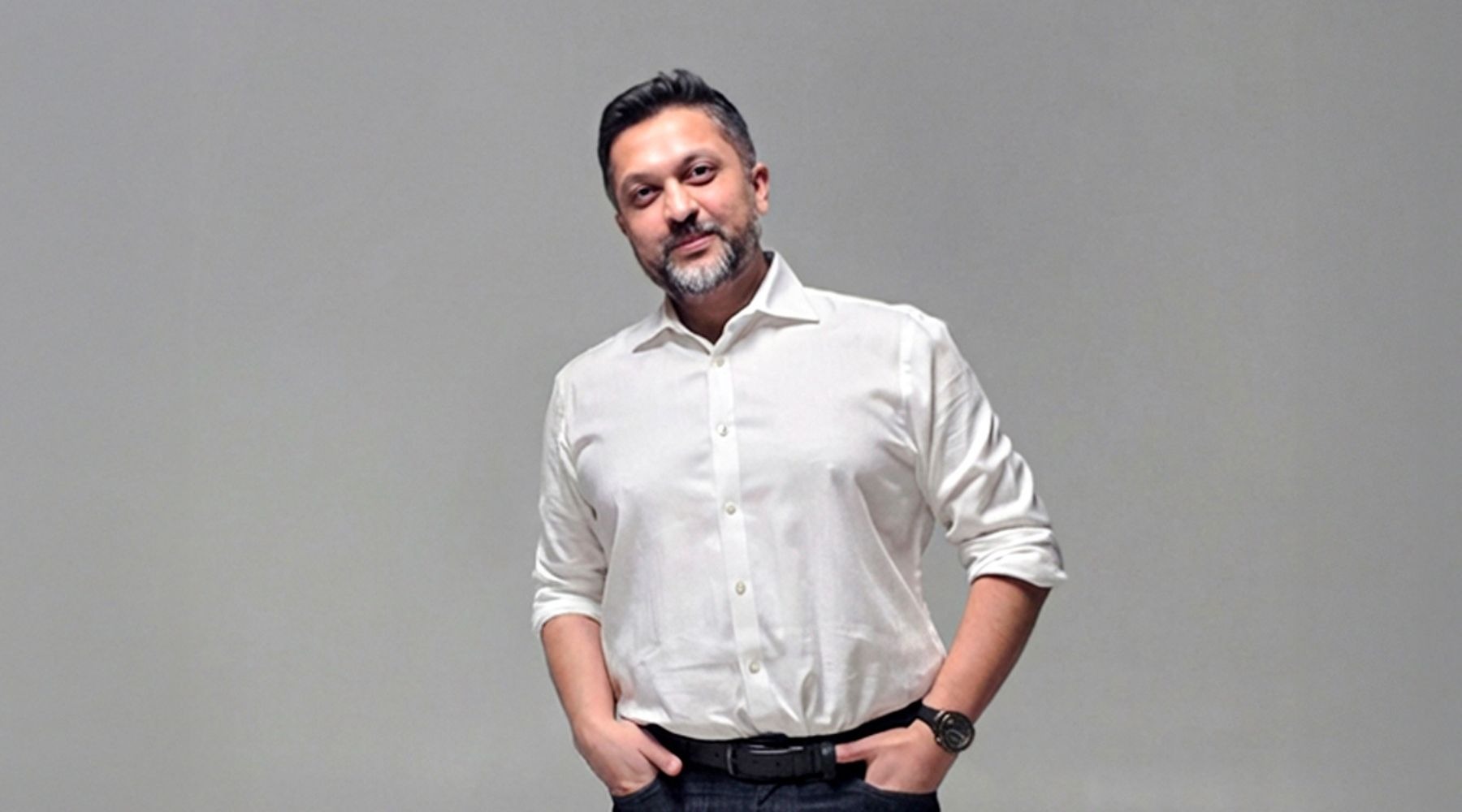
“We just launched our non-custodial crypto wallet, which also includes prediction markets,” Yoni Assia revealed to Finance Magnates during a conversation at eToro’s Limassol office, adding that his company is “currently working with Polymarket but also talking with Kalshi.”
Prediction Markets Are “Still in a Very Initial State”
The entry to the prediction markets, however, did not come as a surprise, as Assia had earlier revealed his plans to enter these trending markets. The offering, meanwhile, is specifically under the newly launched non-custodial crypto wallet.
Interestingly, this came at a time when eToro had been moving towards being a wealth management platform rather than only a short-term trading-centric one. It now appears to be keeping the two roles distinct.
“One reason we placed it inside a non-custodial wallet, within the crypto ecosystem, is to keep it somewhat separate from where users manage most of their money and investments,” Assia said on the placement of the prediction markets. “Anyone who knows how to manage a crypto wallet, by definition, tends to have a higher risk appetite.”
But he stressed that prediction markets are “still in very initial stages” and can’t say whether eToro customers want to trade in them. “We do know it is interesting and meaningful, but we still don’t know how significant it will be for customers.”
- eToro Posted Record Revenue. So Why Is the Stock Struggling?
- eToro's Record Year Sends Shares Soaring, But Crypto Cracks Emerge
- Nearly 8 in 10 Retail Investors Invest Monthly as Gen‑Z Leads the Charge, Study Shows
“We Are in a Very Good Position Right Now to Double Down on Crypto”
eToro, meanwhile, became one of the first brokers to dive into crypto, and now a significant portion of its revenue comes from digital asset trading. However, in the fourth quarter of 2024, the platform's crypto revenue dropped 72 per cent due to a decline in trading.
“It's very similar to the whole industry,” Assia highlighted. “Every time crypto goes down, something interesting happens. Crypto behaves very differently from stocks or commodities. People who are in crypto tend to be very attached to it. When prices drop, the reaction is often: I’m not selling now. But at the same time, if an asset has just fallen 40%, many people also feel nervous about buying more. We see this pattern again and again.”
“When crypto prices fall, activity in what we call 'crypto investing' drops sharply.”
“It’s the opposite with stocks. When stocks go down, trading activity usually increases,” he added.
Indeed, other crypto-heavy public platforms, including Robinhood and Coinbase, also reported declines in trading volume.
“I think we are in a very good position right now to double down on crypto,” the eToro CEO added. “To double down and take market share. Crypto-only companies are currently in a much weaker position. This creates an opportunity for us right now.”
eToro's new services and offerings around crypto also show how the company is increasing its bets in the niche
“We have launched a wallet and added crypto services, and we are rolling out more crypto products and additional coins. We are also offering incentives. For example, if someone transfers their crypto from another crypto company to eToro and moves $100,000, they receive a $1,000 gift in stocks.”
“I also believe that people who are deeply involved in crypto should hold some stocks as well. Stocks tend to rise over time. Many people in the crypto space do not like hearing that, but I believe in stocks at least as much as I believe in crypto, if not more.”
eToro also made a timely push to penetrate the European crypto market. It appears to have made Cyprus its base for its European operations, including both legacy products and crypto, and received a Markets in Crypto-Assets Regulation (MiCA) license last year.
“We are regulated by CySEC and have a very good relationship with them,” said Avi Sela, Chief Operating Officer at eToro, who has been with the company since 2007. “In fact, we were among the first companies to receive a MiFID licence and the first to obtain a MiCA licence.”
With AI, “3 People Can Do 20 People’s Jobs in a Week”
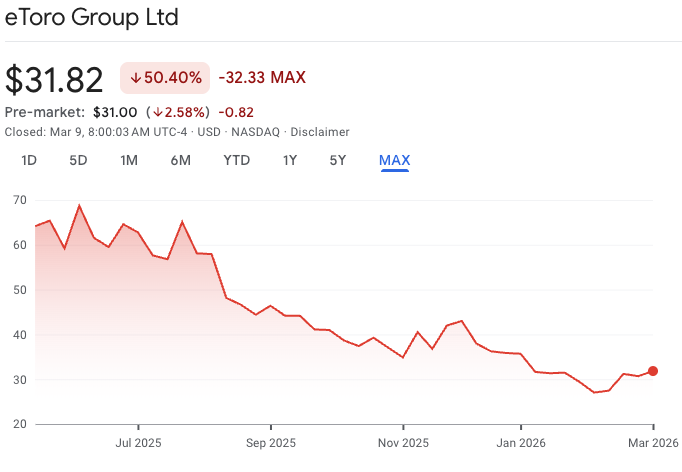
eToro itself went public last year, but the company's stock has lost about 50 per cent of its value since listing. In January, the company also announced it would lay off 7 per cent of its global workforce, citing the impact of automation and artificial intelligence (AI).
Meanwhile, eToro was not alone in citing AI as the driver of the workforce reduction. Another big brokerage operator also blamed the technology after taking similar decisions.
Read more: AI Takes Center Stage in Brokers’ Layoff Narratives
“AI is restructuring every company,” Assia continued, “I also see it with us.”
While speaking, Assia played around with the newest AI tools, and behind him in the meeting room was a diagram of eToro and how it may fit into the company’s structure.
“At the development level, we see how this allows us to move much faster with much smaller teams," he added. "What used to take 20 people three months might now take three people a week.”
Assia further revealed that building all of this requires a lot of infrastructure and “there are entire frameworks for how you build the structure and the systems so that AI can write in your style. The level of investment needed to get AI to write at the standard of the best developer in a company, within a specific infrastructure, is very high.”
“I expect this investment will fall over time,” he said. “But right now, we have made a huge number of investments to build our infrastructure so AI can help us move faster.”
Indeed, eToro has already launched its AI companion, Tori, and will also roll out its App Store soon. According to the firm, it has more than 800 of its Pro Investors (PIs) who have developed over 1,000 apps, some of which will be housed in the forthcoming App Store.
“The second point, which in my view will take a bit more time, is that certain roles will start to change,” Assia added. “Traditionally, companies have separate functions: marketing, sales, product, and development. Now one person can potentially do much more. A single person can create the product, build the marketing around it, and connect it to the systems.”