Russia is home to some of the industry's top talent--but does it have the legal infrastructure to be a hub?
FM
In May of last year, an article from Quartz posed the question: why are there so many Russians in crypto?
“Even if there’s no central hub for crypto development, Russian programmers have an outsize presence in the world of virtual assets,” the article stated. “In particular, they are deeply involved in markets for initial coin offerings (ICOs), which allow firms to raise money in exchange for digital tokens.”
And indeed, Russian companies and individuals seem to be peppered liberally throughout the industry, including Pavel Durov, founder of messaging app Telegram--the same messaging app that held a $1.7 billion token sale last year, one of the largest in history.
Indeed, “Russian accents are commonplace at ICO pitch competitions, where the people behind projects seeking financing try to entice investors,” Quartz said, adding that the prevalence of Russian participation isn’t necessarily reflected in “the numbers”--at the time of the article, the US, Singapore, Switzerland, and the UK were the leaders in capital raised through ICOs.
Still, it seems that with the right kind of legal environment, the prevalence of Russian talent in the crypto industry could point to Russia’s potential as a major tech hub for the crypto industry.
However, Russia is often left out of the conversation when it comes to the development of potential hotspots for crypto. Most experts blame this on a lack of proper legal infrastructure--but is it possible that national interest in crypto, as well as the adoption of crypto by Russian citizens, could eventually transform the country into a bonafide industry hub?
What about cryptocurrency adoption in Russia?
Eric Benz, CEO of cryptocurrency exchange Changelly, told Finance Magnates that “the future of cryptocurrencies in Russia and other countries has perspectives. The technology has been applied and adopted by masses and has begun to bring people benefits.”
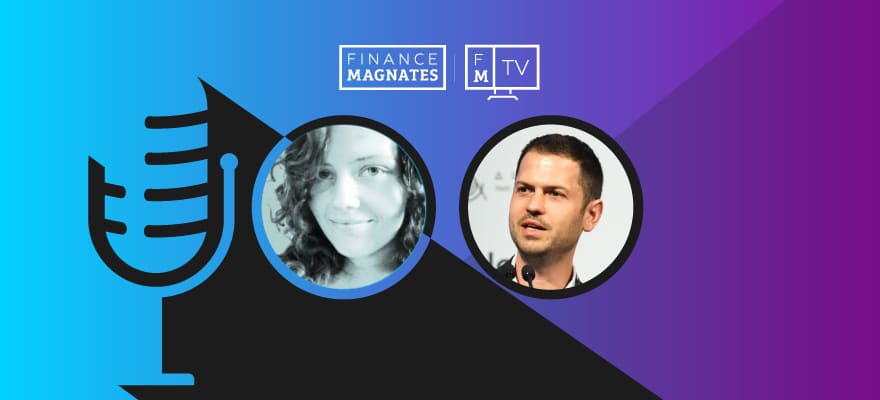
Eric Benz, CEO of cryptocurrency exchange Changelly.
Benz added that Russians “use cryptocurrencies for online shopping and investment opportunities.”
Indeed, a poll by Kaspersky Labs conducted in late 2018 showed that 13 percent of Russian citizens use cryptocurrency in their online purchases; the 2019 Statista Global Consumer Survey found that 9% of Russian citizens said that they had used or owned crypto at some point in time.
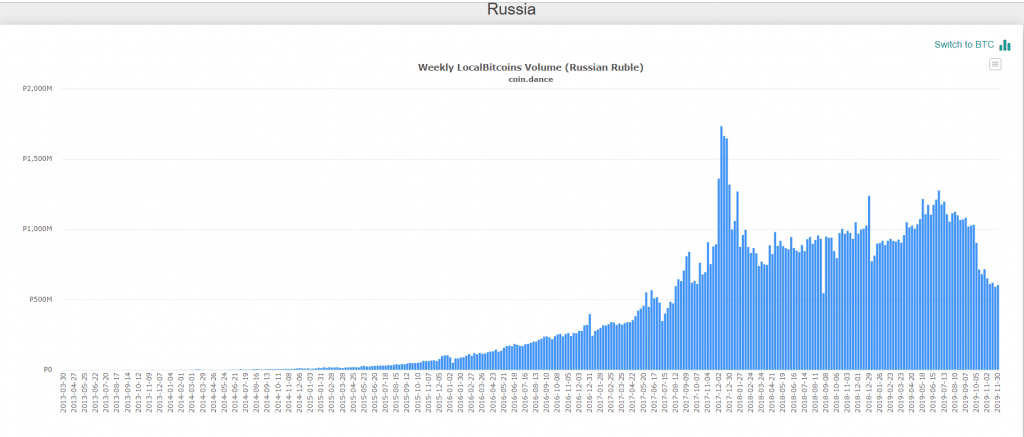
Nikita Akimov, CEO of freelance video platform Eristica, also pointed out to Finance Magnates that currently, “Russia represents 27% of the turnover of the most popular cryptocurrency exchange service LocalBitcoins.”
Source: coin.dance.
Nikita Akimov, CEO of freelance video platform Eristica.
Addtionally, Akimov pointed to the launch of rouble trading pairs and RUB deposit and withdrawal features on Binance last month, saying that “this is a clear indication of the growing popularity of cryptocurrencies among Russian citizens.”
Russia’s attitude toward crypto has been largely unclear
However, Eric Benz said that while “Russia has positioned itself as an active supporter of blockchain technology,” that “regulators share different opinions when it comes to crypto-assets.”
However, at the current moment, crypto in Russia has existed in a sort of legal “grey zone”, Johnathan Swerdlow, CMO of cryptocurrency liquidity provider and blockchain advisory firm Enigma Securities and a native Russian himself, told Finance Magnates that “the regulatory framework for cryptocurrencies in Russia is not defined. It is neither adopted nor banned.”
The lack of clarity surrounding crypto regulations in Russia is a factor that Benz sees as a possible source of governmental negativity toward crypto: “Without proper legislation, Russian authorities can’t govern how cryptocurrencies move inside the country, which has created a negative attitude towards the use of cryptocurrencies,” he said.
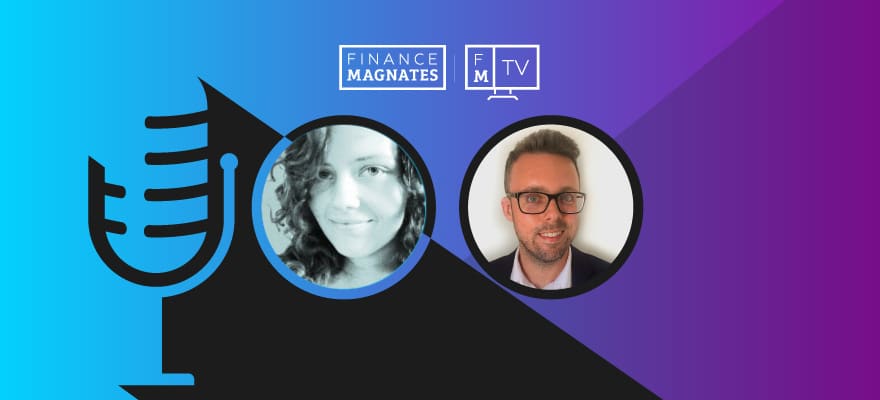
Jonathan Swerdlow, CMO of Enigma Securities, a cyptocurrency liquidity provider and blockchain advisory firm.
However, this era of uncertainty may soon come to an end: “we might call in the grey area for now, but Russian lawmakers are aiming to legally implement the definition of digital assets and related topics onto the federal level of legislation,” Swerdlow said.
Indeed, Benz explained that crypto regulation in Russia is posed for a major shift. “The cryptocurrency market in Russia is about to change drastically,” he said. “Russia’s Finance Ministry has proposed new cryptocurrency regulations, in which crypto-assets will be classified under three separate legal categories. These three tiers include ‘Virtual Assets,’ ‘Technical Tokens,’ and ‘Digital Finance Assets.’”
An October report on the three-tiered system from Yahoo! Finance explained that in addition to the three-tiered system, “Russia has a series of crypto-related laws in its pipeline for the coming months. From digital rights to smart contracts and crowdfunding, nothing will be left outside of legal protection.”
Steps have been taken toward developing a procedure for crypto seizure
At the same time, however, there are two pieces of news regarding the legal realm of crypto that could prove to have important implications for the future.
The first is has to do with plans to develop protocols for crypto confiscation. Russian news source RBCreported last month that by the end of 2021, The Ministry of Internal Affairs of the Russian Federation, along with a number of other government organizations must prepare proposals for procedures regarding the seizure of cryptocurrency.
Jonathan Swerdlow said that the decision behind the motion to prepare the procedures seems to have been motivated “by the fact that the growing popularity of virtual assets is also followed by an increase in financial crimes with their use.”
Indeed, RBC cited Alena Zelenovskaya, head of the criminal and administrative law practice at NSA Amuleks, who said that “the trend of a constant increase in the number of crimes using virtual assets, the insecurity of individuals from this type of criminal encroachment, of course, dictates the need to develop mechanisms for legal regulation and control over the circulation of virtual assets.” (Translated quote.)
”If law enforcement agencies begin to discuss the forfeiture of cryptocurrency,” they are “launching a mechanism for legalizing cryptocurrency”
Konstantin Golikov, co-owner and CEO of the Dailyrich.ru platform, told RBC that “if law enforcement agencies begin to discuss the forfeiture of cryptocurrency, then in fact they are launching a mechanism for legalizing cryptocurrency on the territory of Russia.” (Translated quote.)
Jonathan Swerdlow added that these seizure procedures may be difficult to enforce based on where users keep their funds. “in the case of crypto exchanges, it is more or less clear, theoretically speaking, law enforcement agencies can write an official request to the representative with a request to block the funds of a particular client or, alternatively, transfer them to a special account.”
However, “as for the wallet, it is accompanied by the anonymous status of the owner, so the security services first must prove that the specific wallet belongs to this exact person, and then they will need an access to a private digital key that not only the owners of the wallet themselves know, but more that they do not have any legally binding obligation to disclose such information.”
Therefore, “the decision, if implemented fully, will only affect citizens who break the law so they wouldn’t be able to conceal digital assets.”
Will the decision be implemented, and effectively grant legal status to crypto in Russia along the way? RBC says perhaps not--that there are a number of legal precedents that could allow authorities to seize crypto based on court decisions; this may allow the government to seize crypto and interact with cryptocurrency in other ways without bringing crypto out of its legal grey area.
The Russian central bank would support a ban if one was proposed
The second piece of news came out of the Bank of Russia, the country’s national financial institution.
Russian news agency Tassreported in November that, Elvira Nabiullina, the head of the bank, said that “we are for financial technologies to develop. But we do not support private money in any form, digitally or not. If they replace public money, they will destroy both monetary policy and financial stability.”
However, Nabiullina said that “at the same time, we are studying, like many countries, the digital currency of central banks. But this is a process of studying, and we need to look at what we will get from this digital money. What will be an additional advantage, compared to the fact that we are developing an electronic money transfer system.” (Translated quote.)
And indeed, what Russia could “get” from the issuance of a central bank digital currency (CBDC) could be of particular interest to parts of the government that wish to operate outside of the bounds of international law; in early 2018,
Speaking at a meeting in early 2018, Sergei Glazev, an economic advisor to Russian President Vladimir Putin, said that the issuance of a ‘CryptoRuble’ (a Russian CBC) “[could] suit us very well for sensitive activity on behalf of the state. We can settle accounts with our counterparties all over the world with no regard for sanctions.” (Translated quote.)
However, there are still no concrete plans to develop a CBDC.
Russian crypto companies have to walk the reputational line
Finally, there’s the conundrum surrounding Russia’s global political status. In an article for CoinDesk, journalist Anna Baydakova wrote that while ties to Russia can be a positive thing in some parts of the world, they can be troublesome elsewhere.
So, Russian companies are left with a tight line to walk--for example, when Vostok--the enterprise branch of blockchain startup Waves (which is based in Russia)--launched last year, it partnered with Rostec, which Badyakova described as “a state-owned mega-corporation with ties to many hi-tech industries.”
However, while the association with Rostec generally regarded as a positive thing in Russia, the partnership could be a source of controversy for companies who wish to do business with Vostok. This is because Rostec was sanctioned by the United States in 2014 following the Russian annexation of Crimea and the war that followed.
“There were risks for promoting our brand on the West,” said Waves CEO Sasha Ivanov in an interview; Waves made the decision to take a few steps back from Vostok, and--by proxy--from Rostec.
However, “we can’t totally separate from our Russian roots, even if they might impede the business a bit,” Ivanov said. “I think we should become the main blockchain tech advocate in Russia.”
What do you think about the current state of the crypto industry? Leave us your thoughts in the comments below.
In May of last year, an article from Quartz posed the question: why are there so many Russians in crypto?
“Even if there’s no central hub for crypto development, Russian programmers have an outsize presence in the world of virtual assets,” the article stated. “In particular, they are deeply involved in markets for initial coin offerings (ICOs), which allow firms to raise money in exchange for digital tokens.”
And indeed, Russian companies and individuals seem to be peppered liberally throughout the industry, including Pavel Durov, founder of messaging app Telegram--the same messaging app that held a $1.7 billion token sale last year, one of the largest in history.
Indeed, “Russian accents are commonplace at ICO pitch competitions, where the people behind projects seeking financing try to entice investors,” Quartz said, adding that the prevalence of Russian participation isn’t necessarily reflected in “the numbers”--at the time of the article, the US, Singapore, Switzerland, and the UK were the leaders in capital raised through ICOs.
Still, it seems that with the right kind of legal environment, the prevalence of Russian talent in the crypto industry could point to Russia’s potential as a major tech hub for the crypto industry.
However, Russia is often left out of the conversation when it comes to the development of potential hotspots for crypto. Most experts blame this on a lack of proper legal infrastructure--but is it possible that national interest in crypto, as well as the adoption of crypto by Russian citizens, could eventually transform the country into a bonafide industry hub?
What about cryptocurrency adoption in Russia?
Eric Benz, CEO of cryptocurrency exchange Changelly, told Finance Magnates that “the future of cryptocurrencies in Russia and other countries has perspectives. The technology has been applied and adopted by masses and has begun to bring people benefits.”
Eric Benz, CEO of cryptocurrency exchange Changelly.
Benz added that Russians “use cryptocurrencies for online shopping and investment opportunities.”
Indeed, a poll by Kaspersky Labs conducted in late 2018 showed that 13 percent of Russian citizens use cryptocurrency in their online purchases; the 2019 Statista Global Consumer Survey found that 9% of Russian citizens said that they had used or owned crypto at some point in time.
Nikita Akimov, CEO of freelance video platform Eristica, also pointed out to Finance Magnates that currently, “Russia represents 27% of the turnover of the most popular cryptocurrency exchange service LocalBitcoins.”
Source: coin.dance.
Nikita Akimov, CEO of freelance video platform Eristica.
Addtionally, Akimov pointed to the launch of rouble trading pairs and RUB deposit and withdrawal features on Binance last month, saying that “this is a clear indication of the growing popularity of cryptocurrencies among Russian citizens.”
Russia’s attitude toward crypto has been largely unclear
However, Eric Benz said that while “Russia has positioned itself as an active supporter of blockchain technology,” that “regulators share different opinions when it comes to crypto-assets.”
However, at the current moment, crypto in Russia has existed in a sort of legal “grey zone”, Johnathan Swerdlow, CMO of cryptocurrency liquidity provider and blockchain advisory firm Enigma Securities and a native Russian himself, told Finance Magnates that “the regulatory framework for cryptocurrencies in Russia is not defined. It is neither adopted nor banned.”
The lack of clarity surrounding crypto regulations in Russia is a factor that Benz sees as a possible source of governmental negativity toward crypto: “Without proper legislation, Russian authorities can’t govern how cryptocurrencies move inside the country, which has created a negative attitude towards the use of cryptocurrencies,” he said.
Jonathan Swerdlow, CMO of Enigma Securities, a cyptocurrency liquidity provider and blockchain advisory firm.
However, this era of uncertainty may soon come to an end: “we might call in the grey area for now, but Russian lawmakers are aiming to legally implement the definition of digital assets and related topics onto the federal level of legislation,” Swerdlow said.
Indeed, Benz explained that crypto regulation in Russia is posed for a major shift. “The cryptocurrency market in Russia is about to change drastically,” he said. “Russia’s Finance Ministry has proposed new cryptocurrency regulations, in which crypto-assets will be classified under three separate legal categories. These three tiers include ‘Virtual Assets,’ ‘Technical Tokens,’ and ‘Digital Finance Assets.’”
An October report on the three-tiered system from Yahoo! Finance explained that in addition to the three-tiered system, “Russia has a series of crypto-related laws in its pipeline for the coming months. From digital rights to smart contracts and crowdfunding, nothing will be left outside of legal protection.”
Steps have been taken toward developing a procedure for crypto seizure
At the same time, however, there are two pieces of news regarding the legal realm of crypto that could prove to have important implications for the future.
The first is has to do with plans to develop protocols for crypto confiscation. Russian news source RBCreported last month that by the end of 2021, The Ministry of Internal Affairs of the Russian Federation, along with a number of other government organizations must prepare proposals for procedures regarding the seizure of cryptocurrency.
Jonathan Swerdlow said that the decision behind the motion to prepare the procedures seems to have been motivated “by the fact that the growing popularity of virtual assets is also followed by an increase in financial crimes with their use.”
Indeed, RBC cited Alena Zelenovskaya, head of the criminal and administrative law practice at NSA Amuleks, who said that “the trend of a constant increase in the number of crimes using virtual assets, the insecurity of individuals from this type of criminal encroachment, of course, dictates the need to develop mechanisms for legal regulation and control over the circulation of virtual assets.” (Translated quote.)
”If law enforcement agencies begin to discuss the forfeiture of cryptocurrency,” they are “launching a mechanism for legalizing cryptocurrency”
Konstantin Golikov, co-owner and CEO of the Dailyrich.ru platform, told RBC that “if law enforcement agencies begin to discuss the forfeiture of cryptocurrency, then in fact they are launching a mechanism for legalizing cryptocurrency on the territory of Russia.” (Translated quote.)
Jonathan Swerdlow added that these seizure procedures may be difficult to enforce based on where users keep their funds. “in the case of crypto exchanges, it is more or less clear, theoretically speaking, law enforcement agencies can write an official request to the representative with a request to block the funds of a particular client or, alternatively, transfer them to a special account.”
However, “as for the wallet, it is accompanied by the anonymous status of the owner, so the security services first must prove that the specific wallet belongs to this exact person, and then they will need an access to a private digital key that not only the owners of the wallet themselves know, but more that they do not have any legally binding obligation to disclose such information.”
Therefore, “the decision, if implemented fully, will only affect citizens who break the law so they wouldn’t be able to conceal digital assets.”
Will the decision be implemented, and effectively grant legal status to crypto in Russia along the way? RBC says perhaps not--that there are a number of legal precedents that could allow authorities to seize crypto based on court decisions; this may allow the government to seize crypto and interact with cryptocurrency in other ways without bringing crypto out of its legal grey area.
The Russian central bank would support a ban if one was proposed
The second piece of news came out of the Bank of Russia, the country’s national financial institution.
Russian news agency Tassreported in November that, Elvira Nabiullina, the head of the bank, said that “we are for financial technologies to develop. But we do not support private money in any form, digitally or not. If they replace public money, they will destroy both monetary policy and financial stability.”
However, Nabiullina said that “at the same time, we are studying, like many countries, the digital currency of central banks. But this is a process of studying, and we need to look at what we will get from this digital money. What will be an additional advantage, compared to the fact that we are developing an electronic money transfer system.” (Translated quote.)
And indeed, what Russia could “get” from the issuance of a central bank digital currency (CBDC) could be of particular interest to parts of the government that wish to operate outside of the bounds of international law; in early 2018,
Speaking at a meeting in early 2018, Sergei Glazev, an economic advisor to Russian President Vladimir Putin, said that the issuance of a ‘CryptoRuble’ (a Russian CBC) “[could] suit us very well for sensitive activity on behalf of the state. We can settle accounts with our counterparties all over the world with no regard for sanctions.” (Translated quote.)
However, there are still no concrete plans to develop a CBDC.
Russian crypto companies have to walk the reputational line
Finally, there’s the conundrum surrounding Russia’s global political status. In an article for CoinDesk, journalist Anna Baydakova wrote that while ties to Russia can be a positive thing in some parts of the world, they can be troublesome elsewhere.
So, Russian companies are left with a tight line to walk--for example, when Vostok--the enterprise branch of blockchain startup Waves (which is based in Russia)--launched last year, it partnered with Rostec, which Badyakova described as “a state-owned mega-corporation with ties to many hi-tech industries.”
However, while the association with Rostec generally regarded as a positive thing in Russia, the partnership could be a source of controversy for companies who wish to do business with Vostok. This is because Rostec was sanctioned by the United States in 2014 following the Russian annexation of Crimea and the war that followed.
“There were risks for promoting our brand on the West,” said Waves CEO Sasha Ivanov in an interview; Waves made the decision to take a few steps back from Vostok, and--by proxy--from Rostec.
However, “we can’t totally separate from our Russian roots, even if they might impede the business a bit,” Ivanov said. “I think we should become the main blockchain tech advocate in Russia.”
What do you think about the current state of the crypto industry? Leave us your thoughts in the comments below.
Rachel is a self-taught crypto geek and a passionate writer. She believes in the power that the written word has to educate, connect and empower individuals to make positive and powerful financial choices. She is the Podcast Host and a Cryptocurrency Editor at Finance Magnates.
Crypto Built More Rails, but the Next Battle Is Over How Much Work a Dollar Can Do
Featured Videos
FP Markets Winner Spotlight 🏆 | Global Broker of the Year 2025 #Trading #Broker #Innovation #Shorts
FP Markets Winner Spotlight 🏆 | Global Broker of the Year 2025 #Trading #Broker #Innovation #Shorts
FP Markets Winner Spotlight 🏆 | Global Broker of the Year 2025 #Trading #Broker #Innovation #Shorts
FP Markets Winner Spotlight 🏆 | Global Broker of the Year 2025 #Trading #Broker #Innovation #Shorts
FP Markets takes the spotlight as Global Broker of the Year 2025 at the Finance Magnates Awards.
Martin Stoilov, Head of Client Experience, shares that trust, innovation, and people played a key role in the company’s success, supported by a strong foundation of integrity and client-centricity.
Following this milestone, FP Markets continues to focus on growth, technology investment, and its core values of transparency and excellence.
👉 Be part of FM Awards 2026: https://awards.financemagnates.com/#nominate
FP Markets takes the spotlight as Global Broker of the Year 2025 at the Finance Magnates Awards.
Martin Stoilov, Head of Client Experience, shares that trust, innovation, and people played a key role in the company’s success, supported by a strong foundation of integrity and client-centricity.
Following this milestone, FP Markets continues to focus on growth, technology investment, and its core values of transparency and excellence.
👉 Be part of FM Awards 2026: https://awards.financemagnates.com/#nominate
FP Markets takes the spotlight as Global Broker of the Year 2025 at the Finance Magnates Awards.
Martin Stoilov, Head of Client Experience, shares that trust, innovation, and people played a key role in the company’s success, supported by a strong foundation of integrity and client-centricity.
Following this milestone, FP Markets continues to focus on growth, technology investment, and its core values of transparency and excellence.
👉 Be part of FM Awards 2026: https://awards.financemagnates.com/#nominate
FP Markets takes the spotlight as Global Broker of the Year 2025 at the Finance Magnates Awards.
Martin Stoilov, Head of Client Experience, shares that trust, innovation, and people played a key role in the company’s success, supported by a strong foundation of integrity and client-centricity.
Following this milestone, FP Markets continues to focus on growth, technology investment, and its core values of transparency and excellence.
👉 Be part of FM Awards 2026: https://awards.financemagnates.com/#nominate
In this video, we review @HolaPrimeMarketsOfficial, a multi-asset forex and CFDs broker offering different account types, trading platforms, and flexible trading conditions.
We cover the broker’s overall offering, including account options, trading environment, platforms like MT4 and MT5, and additional services such as managed accounts and fast withdrawals.
Watch the full video to see if Hola Prime Markets fits your trading needs.
📣 Stay up to date with the latest in finance and trading. Follow Finance Magnates for industry news, insights, and global event coverage.
Connect with us:
🔗 LinkedIn: /financemagnates
👍 Facebook: /financemagnates
📸 Instagram: https://www.instagram.com/financemagnates
🐦 X: https://x.com/financemagnates
🎥 TikTok: https://www.tiktok.com/tag/financemagnates
▶️ YouTube: /@financemagnates_official
#HolaPrime #ForexBroker #CFDTrading #FinanceMagnates #Trading #Forex #BrokerReview
In this video, we review @HolaPrimeMarketsOfficial, a multi-asset forex and CFDs broker offering different account types, trading platforms, and flexible trading conditions.
We cover the broker’s overall offering, including account options, trading environment, platforms like MT4 and MT5, and additional services such as managed accounts and fast withdrawals.
Watch the full video to see if Hola Prime Markets fits your trading needs.
📣 Stay up to date with the latest in finance and trading. Follow Finance Magnates for industry news, insights, and global event coverage.
Connect with us:
🔗 LinkedIn: /financemagnates
👍 Facebook: /financemagnates
📸 Instagram: https://www.instagram.com/financemagnates
🐦 X: https://x.com/financemagnates
🎥 TikTok: https://www.tiktok.com/tag/financemagnates
▶️ YouTube: /@financemagnates_official
#HolaPrime #ForexBroker #CFDTrading #FinanceMagnates #Trading #Forex #BrokerReview
In this video, we review @HolaPrimeMarketsOfficial, a multi-asset forex and CFDs broker offering different account types, trading platforms, and flexible trading conditions.
We cover the broker’s overall offering, including account options, trading environment, platforms like MT4 and MT5, and additional services such as managed accounts and fast withdrawals.
Watch the full video to see if Hola Prime Markets fits your trading needs.
📣 Stay up to date with the latest in finance and trading. Follow Finance Magnates for industry news, insights, and global event coverage.
Connect with us:
🔗 LinkedIn: /financemagnates
👍 Facebook: /financemagnates
📸 Instagram: https://www.instagram.com/financemagnates
🐦 X: https://x.com/financemagnates
🎥 TikTok: https://www.tiktok.com/tag/financemagnates
▶️ YouTube: /@financemagnates_official
#HolaPrime #ForexBroker #CFDTrading #FinanceMagnates #Trading #Forex #BrokerReview
In this video, we review @HolaPrimeMarketsOfficial, a multi-asset forex and CFDs broker offering different account types, trading platforms, and flexible trading conditions.
We cover the broker’s overall offering, including account options, trading environment, platforms like MT4 and MT5, and additional services such as managed accounts and fast withdrawals.
Watch the full video to see if Hola Prime Markets fits your trading needs.
📣 Stay up to date with the latest in finance and trading. Follow Finance Magnates for industry news, insights, and global event coverage.
Connect with us:
🔗 LinkedIn: /financemagnates
👍 Facebook: /financemagnates
📸 Instagram: https://www.instagram.com/financemagnates
🐦 X: https://x.com/financemagnates
🎥 TikTok: https://www.tiktok.com/tag/financemagnates
▶️ YouTube: /@financemagnates_official
#HolaPrime #ForexBroker #CFDTrading #FinanceMagnates #Trading #Forex #BrokerReview
In this video, we review @HolaPrimeMarketsOfficial, a multi-asset forex and CFDs broker offering different account types, trading platforms, and flexible trading conditions.
We cover the broker’s overall offering, including account options, trading environment, platforms like MT4 and MT5, and additional services such as managed accounts and fast withdrawals.
Watch the full video to see if Hola Prime Markets fits your trading needs.
📣 Stay up to date with the latest in finance and trading. Follow Finance Magnates for industry news, insights, and global event coverage.
Connect with us:
🔗 LinkedIn: /financemagnates
👍 Facebook: /financemagnates
📸 Instagram: https://www.instagram.com/financemagnates
🐦 X: https://x.com/financemagnates
🎥 TikTok: https://www.tiktok.com/tag/financemagnates
▶️ YouTube: /@financemagnates_official
#HolaPrime #ForexBroker #CFDTrading #FinanceMagnates #Trading #Forex #BrokerReview
In this video, we review @HolaPrimeMarketsOfficial, a multi-asset forex and CFDs broker offering different account types, trading platforms, and flexible trading conditions.
We cover the broker’s overall offering, including account options, trading environment, platforms like MT4 and MT5, and additional services such as managed accounts and fast withdrawals.
Watch the full video to see if Hola Prime Markets fits your trading needs.
📣 Stay up to date with the latest in finance and trading. Follow Finance Magnates for industry news, insights, and global event coverage.
Connect with us:
🔗 LinkedIn: /financemagnates
👍 Facebook: /financemagnates
📸 Instagram: https://www.instagram.com/financemagnates
🐦 X: https://x.com/financemagnates
🎥 TikTok: https://www.tiktok.com/tag/financemagnates
▶️ YouTube: /@financemagnates_official
#HolaPrime #ForexBroker #CFDTrading #FinanceMagnates #Trading #Forex #BrokerReview
Hola Prime Review: What You Need to Know | Full Breakdown by Finance Magnates
Hola Prime Review: What You Need to Know | Full Breakdown by Finance Magnates
Hola Prime Review: What You Need to Know | Full Breakdown by Finance Magnates
Hola Prime Review: What You Need to Know | Full Breakdown by Finance Magnates
Hola Prime Review: What You Need to Know | Full Breakdown by Finance Magnates
Hola Prime Review: What You Need to Know | Full Breakdown by Finance Magnates
In this video, we review @HolaPrime_Global, a proprietary trading firm offering evaluation programs and performance-based payouts in simulated market environments.
We cover how the challenge model works, including account types, profit splits (up to 95%), trading rules, and what it takes to reach a funded account. You’ll also learn about available platforms like MT4, MT5, cTrader, and more, along with insights into payouts, support, and trading conditions.
Watch the full video to see if Hola Prime fits your trading style.
📣 Stay up to date with the latest in finance and trading. Follow Finance Magnates for industry news, insights, and global event coverage.
Connect with us:
🔗 LinkedIn: /financemagnates
👍 Facebook: /financemagnates
📸 Instagram: https://www.instagram.com/financemagnates
🐦 X: https://x.com/financemagnates
🎥 TikTok: https://www.tiktok.com/tag/financemagnates
▶️ YouTube: /@financemagnates_official
#HolaPrime #PropFirm #Trading #FinanceMagnates #Forex #FuturesTrading #TradingReview #PropFirmReview
In this video, we review @HolaPrime_Global, a proprietary trading firm offering evaluation programs and performance-based payouts in simulated market environments.
We cover how the challenge model works, including account types, profit splits (up to 95%), trading rules, and what it takes to reach a funded account. You’ll also learn about available platforms like MT4, MT5, cTrader, and more, along with insights into payouts, support, and trading conditions.
Watch the full video to see if Hola Prime fits your trading style.
📣 Stay up to date with the latest in finance and trading. Follow Finance Magnates for industry news, insights, and global event coverage.
Connect with us:
🔗 LinkedIn: /financemagnates
👍 Facebook: /financemagnates
📸 Instagram: https://www.instagram.com/financemagnates
🐦 X: https://x.com/financemagnates
🎥 TikTok: https://www.tiktok.com/tag/financemagnates
▶️ YouTube: /@financemagnates_official
#HolaPrime #PropFirm #Trading #FinanceMagnates #Forex #FuturesTrading #TradingReview #PropFirmReview
In this video, we review @HolaPrime_Global, a proprietary trading firm offering evaluation programs and performance-based payouts in simulated market environments.
We cover how the challenge model works, including account types, profit splits (up to 95%), trading rules, and what it takes to reach a funded account. You’ll also learn about available platforms like MT4, MT5, cTrader, and more, along with insights into payouts, support, and trading conditions.
Watch the full video to see if Hola Prime fits your trading style.
📣 Stay up to date with the latest in finance and trading. Follow Finance Magnates for industry news, insights, and global event coverage.
Connect with us:
🔗 LinkedIn: /financemagnates
👍 Facebook: /financemagnates
📸 Instagram: https://www.instagram.com/financemagnates
🐦 X: https://x.com/financemagnates
🎥 TikTok: https://www.tiktok.com/tag/financemagnates
▶️ YouTube: /@financemagnates_official
#HolaPrime #PropFirm #Trading #FinanceMagnates #Forex #FuturesTrading #TradingReview #PropFirmReview
In this video, we review @HolaPrime_Global, a proprietary trading firm offering evaluation programs and performance-based payouts in simulated market environments.
We cover how the challenge model works, including account types, profit splits (up to 95%), trading rules, and what it takes to reach a funded account. You’ll also learn about available platforms like MT4, MT5, cTrader, and more, along with insights into payouts, support, and trading conditions.
Watch the full video to see if Hola Prime fits your trading style.
📣 Stay up to date with the latest in finance and trading. Follow Finance Magnates for industry news, insights, and global event coverage.
Connect with us:
🔗 LinkedIn: /financemagnates
👍 Facebook: /financemagnates
📸 Instagram: https://www.instagram.com/financemagnates
🐦 X: https://x.com/financemagnates
🎥 TikTok: https://www.tiktok.com/tag/financemagnates
▶️ YouTube: /@financemagnates_official
#HolaPrime #PropFirm #Trading #FinanceMagnates #Forex #FuturesTrading #TradingReview #PropFirmReview
In this video, we review @HolaPrime_Global, a proprietary trading firm offering evaluation programs and performance-based payouts in simulated market environments.
We cover how the challenge model works, including account types, profit splits (up to 95%), trading rules, and what it takes to reach a funded account. You’ll also learn about available platforms like MT4, MT5, cTrader, and more, along with insights into payouts, support, and trading conditions.
Watch the full video to see if Hola Prime fits your trading style.
📣 Stay up to date with the latest in finance and trading. Follow Finance Magnates for industry news, insights, and global event coverage.
Connect with us:
🔗 LinkedIn: /financemagnates
👍 Facebook: /financemagnates
📸 Instagram: https://www.instagram.com/financemagnates
🐦 X: https://x.com/financemagnates
🎥 TikTok: https://www.tiktok.com/tag/financemagnates
▶️ YouTube: /@financemagnates_official
#HolaPrime #PropFirm #Trading #FinanceMagnates #Forex #FuturesTrading #TradingReview #PropFirmReview
In this video, we review @HolaPrime_Global, a proprietary trading firm offering evaluation programs and performance-based payouts in simulated market environments.
We cover how the challenge model works, including account types, profit splits (up to 95%), trading rules, and what it takes to reach a funded account. You’ll also learn about available platforms like MT4, MT5, cTrader, and more, along with insights into payouts, support, and trading conditions.
Watch the full video to see if Hola Prime fits your trading style.
📣 Stay up to date with the latest in finance and trading. Follow Finance Magnates for industry news, insights, and global event coverage.
Connect with us:
🔗 LinkedIn: /financemagnates
👍 Facebook: /financemagnates
📸 Instagram: https://www.instagram.com/financemagnates
🐦 X: https://x.com/financemagnates
🎥 TikTok: https://www.tiktok.com/tag/financemagnates
▶️ YouTube: /@financemagnates_official
#HolaPrime #PropFirm #Trading #FinanceMagnates #Forex #FuturesTrading #TradingReview #PropFirmReview
Axi Winner Spotlight 🏆 | Global Most Innovative Broker 2025 #Innovation #Trading #Fintech #Broker
Axi Winner Spotlight 🏆 | Global Most Innovative Broker 2025 #Innovation #Trading #Fintech #Broker
Axi Winner Spotlight 🏆 | Global Most Innovative Broker 2025 #Innovation #Trading #Fintech #Broker
Axi Winner Spotlight 🏆 | Global Most Innovative Broker 2025 #Innovation #Trading #Fintech #Broker
Axi Winner Spotlight 🏆 | Global Most Innovative Broker 2025 #Innovation #Trading #Fintech #Broker
Axi Winner Spotlight 🏆 | Global Most Innovative Broker 2025 #Innovation #Trading #Fintech #Broker
Axi takes the spotlight at the Finance Magnates Awards, winning Global Most Innovative Broker 2025.
Olivia Xenofontos and Ivanna Openko share how the team will feel: proud, motivated, and ready to keep delivering.
They also describe the night as well-organized, focused, and enjoyable for all.
👉 Be part of FM Awards 2026.
Axi takes the spotlight at the Finance Magnates Awards, winning Global Most Innovative Broker 2025.
Olivia Xenofontos and Ivanna Openko share how the team will feel: proud, motivated, and ready to keep delivering.
They also describe the night as well-organized, focused, and enjoyable for all.
👉 Be part of FM Awards 2026.
Axi takes the spotlight at the Finance Magnates Awards, winning Global Most Innovative Broker 2025.
Olivia Xenofontos and Ivanna Openko share how the team will feel: proud, motivated, and ready to keep delivering.
They also describe the night as well-organized, focused, and enjoyable for all.
👉 Be part of FM Awards 2026.
Axi takes the spotlight at the Finance Magnates Awards, winning Global Most Innovative Broker 2025.
Olivia Xenofontos and Ivanna Openko share how the team will feel: proud, motivated, and ready to keep delivering.
They also describe the night as well-organized, focused, and enjoyable for all.
👉 Be part of FM Awards 2026.
Axi takes the spotlight at the Finance Magnates Awards, winning Global Most Innovative Broker 2025.
Olivia Xenofontos and Ivanna Openko share how the team will feel: proud, motivated, and ready to keep delivering.
They also describe the night as well-organized, focused, and enjoyable for all.
👉 Be part of FM Awards 2026.
Axi takes the spotlight at the Finance Magnates Awards, winning Global Most Innovative Broker 2025.
Olivia Xenofontos and Ivanna Openko share how the team will feel: proud, motivated, and ready to keep delivering.
They also describe the night as well-organized, focused, and enjoyable for all.
👉 Be part of FM Awards 2026.
Recognition that matters.
Built on transparency.
Driven by the industry.
The Finance Magnates Awards 2026.
Nominations are now open.
🔗 https://awards.financemagnates.com/?utm_source=SM&utm_medium=social&utm_campaign=recognition-matters
Recognition that matters.
Built on transparency.
Driven by the industry.
The Finance Magnates Awards 2026.
Nominations are now open.
🔗 https://awards.financemagnates.com/?utm_source=SM&utm_medium=social&utm_campaign=recognition-matters
Recognition that matters.
Built on transparency.
Driven by the industry.
The Finance Magnates Awards 2026.
Nominations are now open.
🔗 https://awards.financemagnates.com/?utm_source=SM&utm_medium=social&utm_campaign=recognition-matters
Recognition that matters.
Built on transparency.
Driven by the industry.
The Finance Magnates Awards 2026.
Nominations are now open.
🔗 https://awards.financemagnates.com/?utm_source=SM&utm_medium=social&utm_campaign=recognition-matters
Recognition that matters.
Built on transparency.
Driven by the industry.
The Finance Magnates Awards 2026.
Nominations are now open.
🔗 https://awards.financemagnates.com/?utm_source=SM&utm_medium=social&utm_campaign=recognition-matters
Recognition that matters.
Built on transparency.
Driven by the industry.
The Finance Magnates Awards 2026.
Nominations are now open.
🔗 https://awards.financemagnates.com/?utm_source=SM&utm_medium=social&utm_campaign=recognition-matters