Indeed, many of these headlines point out that the Bitcoin network’s carbon footprint is comparable to the energy consumption of some countries. Most recently, BTC’s carbon footprint has been compared with that of New Zealand, Switzerland and the Netherlands, among others.
This is an excerpt that has been edited for clarity and length. To hear Finance Magnates’ full interview with Monica Long, visit us on Soundcloud or Youtube.
How does RippleX fit into Ripple’s multi-pronged business model? “What we do at RippleX is enabling and supporting the developer community around XRP and the XRP ledger, which includes everything from building tools and SDKs to support their use cases, as well as developing programs and other support infrastructure for them.”
We asked Monica about Ripple’s recent decision to become carbon-neutral by 2030. “What brought us to that commitment was really about opening our eyes and understanding the extent of the carbon impact of the crypto space.”
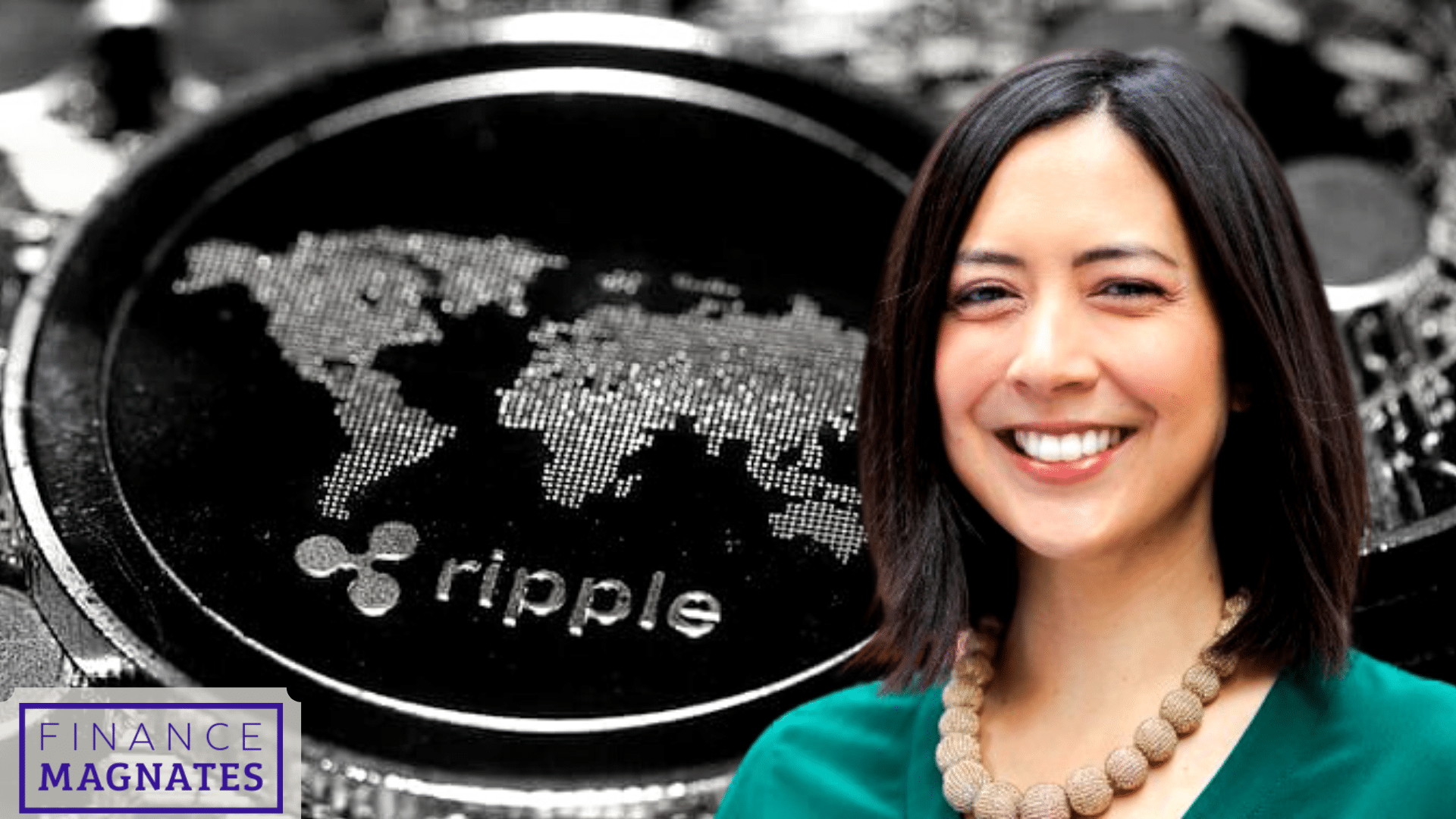
Monica Long, General Manager of RippleX.
A “Paris Agreement” for Crypto?
“When you look at crypto more broadly, the predominant method of transaction confirmation is mining,” Monica said. This is part of the Proof-of-Work algorithms that are used to run the Bitcoin network as well as a number of other popular cryptocurrency networks.
“Mining is really energy-intensive,” Monica explained. “What brought us to making a commitment and leading in this space is the understanding that as cryptocurrency really does become the future of money, this issue of carbon emissions from systems like mining is just going to increase more and more.”
“And so, we wanted to take the lead on the commitment to being carbon neutral,” Monica said, “but also to bring the industry along; we want to partner with others on this, and so we also worked with the Rocky Mountain Institute and the energy web foundation to develop an open-source tool where other blockchains can also commit to decarbonize and take action,” a bit like a “Paris Agreement” for the blockchain space.
The Carbon Footprint of a Single Bitcoin Transaction May Be Higher Than Burning an Entire Tank of Gasoline
Monica said that creating a pathway for other companies in the industry to start speaking about sustainability in blockchain is the most important step forward: “I think that the first step is having a conversation about it,” she said. “It’s good that we’re starting to see a light shine on what the issue is through media attention.”
“2020 was a huge year for crypto generally,” Monica said. “Bitcoin alone grew four times over in its market cap, and with that, mining doubled last year. To put the climate impact of mining in perspective, mining currently consumes about 0.05% of global energy consumption.”
“To bring that down to a ‘per Bitcoin transaction’ level, right now it’s equivalent to burning about 75 gallons of gas [to send one Bitcoin transaction],” Monica explained.
Of course, the exact environmental impact of sending one BTC transaction (or indeed, the Bitcoin network as a whole) is debated: some estimates have shown that the environmental impact of one Bitcoin transaction is closer to 35 gallons of gas. Still, the fact remains that as Bitcoin is an energy-intensive entity, and as it grows, it will become even more power-hungry.
“What’s awesome is that Bitcoin really reached a ‘watershed’ moment last year with institutional adoption picking up,” Monica said. “We saw companies like Paypal and Square, as well as large corporates like MicroStrategy, and some really large funds getting into Bitcoin, Tesla being the biggest headline, of course, just this year.”
”The First Step Is to Have a Conversation about It: Let’s Recognize That [Sustainability] Is a Problem” for Crypto
“This kind of ‘tipping of the scales’” brought about by institutional adoption has been great for the industry in many ways. However, “that means that there’s a greater stress on the hash rate and the amount of energy needed to mine Bitcoin,” Monica said.
“So, the first step is to have a conversation about it: let’s recognize that it’s a problem, that we’re all better off if we address it now,” Monica said. “Crypto is a very innovative tech space, so we can solve this problem together. Let’s get ahead of it so that we don’t have to solve it later,” as has been the case in a number of other industries, including the automotive industry.
This is going to be increasingly important as regulators across the globe are focusing on climate change prevention. In the United States, the Biden administration has placed climate change at the forefront of many of its policy initiatives; elsewhere in the world, governments are also upping the ante against the climate crisis.
Monica explained that as the various branches of Ripple and XRP continue to expand, sustainability could play an increasingly important role with regulators: “there’s a new administration in the US, and in other geographies around the world. Climate is rising on the list of what they would like to address through policy.”
“The finance industry and the crypto industry will have to follow policy as well, which I think is definitely going to come into the picture in the next year.”
”We in the Financial Industry Need to Play Our Part to Serve This Broader Global Initiative around the Paris [Climate] Agreement.”
What has Ripple been doing to make its own operations as a company and XRP carbon neutral?
Monica explained that the XRP network is already considerably less energy-intensive than the Bitcoin network: “when you’re looking at different blockchain systems and energy consumption, what it comes down to is what the confirmation method is,” she said.
“XRP Ledger uses its own ‘flavor’ of consensus mechanism, and that process is really energy-light. So, it’s about 120,000 times more energy-efficient than Proof-of-Work (PoW), and even if you look at other types of money (like physical cash), XRP is a ‘greener’ form of currency.”
Additionally, “Ripple as a company has also pledged to be carbon neutral: we’re looking at our company’s carbon footprint from our offices and people and all of our infrastructure, and purchasing carbon offsets and renewables,” Monica said.
Of course, there is action being taken within the traditional financial world to make traditional finance ‘greener’: for example, “Visa recently hired a chief sustainability officer, and Rocky Mountain Institute has also brought together major banks to agree to divest in carbon-intense industries, and instead capitalize in green and future-forward industries.”
“So, I think that people are waking up to it. They’re recognizing that we in the financial industry need to play our part to serve this broader global initiative around the Paris [Climate] Agreement.”
“There’s Still a Long Way to Go.”
While sustainability will likely become increasingly important to the blockchain industry because of regulatory efforts like the Paris Agreement in the coming years, Monica said that sustainability does not seem to have been top-of-mind for most crypto industry firms in the past.
“It felt like we were kind of out there in front of it; we hadn’t really seen others coming out on the issue last year,” Monica said, naming Sello as an exception. Sello Sol describes itself as a blockchain-based platform “for certification and traceability of decentralized and public solar energy.”
However, “the tides are turning,” Monica said. “Elon Musk and Tesla making such a big, bold statement in the future of crypto as part of their business, and obviously, a core piece of Tesla’s mission is sustainability, and as part of that, either Tesla or Musk individually has pledged $100 million to a fund to innovate in this space on greener alternatives. “
Indeed, Space.com recently reported that “the billionaire SpaceX and Tesla Chief and his Musk Foundation are funding a new Carbon Removal X Prize to the tune of $100 million — the richest incentive prize in history.”
Therefore, Musk could potentially use his platform to develop initiatives that might make Bitcoin and other cryptocurrencies more energy-efficient.
However, in the meantime, “there’s still a long way to go,” Monica said. “[...] There’s still a lot of folks in the space who aren’t really ‘on-board’ with coming up with solutions for the future. But, I think where we get early traction with other companies, hopefully, we can get pointed in the right direction.”
Of course, sustainability is not the only goal that Ripple is working on in the near and intermediate future. Additionally, Monica mentioned that RippleNet is continuing to grow: “we’re continuing to build that network and that offering, launching on-demand liquidity into new corridors, and increasing the size of the network,” she said.
“On the RippleX side, we’re really just getting started, our team was formed late last year, and our mission is to enable and support a developer community around XRP and XRP Ledger,” Monica said. “I think the sustainability piece will attract conscientious developers who care about building for the future and being mindful about the carbon output of the blockchain industry.”
This is an excerpt that has been edited for clarity and length. To hear Finance Magnates’ full interview with Monica Long, visit us on Soundcloud or Youtube.
Indeed, many of these headlines point out that the Bitcoin network’s carbon footprint is comparable to the energy consumption of some countries. Most recently, BTC’s carbon footprint has been compared with that of New Zealand, Switzerland and the Netherlands, among others.
This is an excerpt that has been edited for clarity and length. To hear Finance Magnates’ full interview with Monica Long, visit us on Soundcloud or Youtube.
How does RippleX fit into Ripple’s multi-pronged business model? “What we do at RippleX is enabling and supporting the developer community around XRP and the XRP ledger, which includes everything from building tools and SDKs to support their use cases, as well as developing programs and other support infrastructure for them.”
We asked Monica about Ripple’s recent decision to become carbon-neutral by 2030. “What brought us to that commitment was really about opening our eyes and understanding the extent of the carbon impact of the crypto space.”
Monica Long, General Manager of RippleX.
A “Paris Agreement” for Crypto?
“When you look at crypto more broadly, the predominant method of transaction confirmation is mining,” Monica said. This is part of the Proof-of-Work algorithms that are used to run the Bitcoin network as well as a number of other popular cryptocurrency networks.
“Mining is really energy-intensive,” Monica explained. “What brought us to making a commitment and leading in this space is the understanding that as cryptocurrency really does become the future of money, this issue of carbon emissions from systems like mining is just going to increase more and more.”
“And so, we wanted to take the lead on the commitment to being carbon neutral,” Monica said, “but also to bring the industry along; we want to partner with others on this, and so we also worked with the Rocky Mountain Institute and the energy web foundation to develop an open-source tool where other blockchains can also commit to decarbonize and take action,” a bit like a “Paris Agreement” for the blockchain space.
The Carbon Footprint of a Single Bitcoin Transaction May Be Higher Than Burning an Entire Tank of Gasoline
Monica said that creating a pathway for other companies in the industry to start speaking about sustainability in blockchain is the most important step forward: “I think that the first step is having a conversation about it,” she said. “It’s good that we’re starting to see a light shine on what the issue is through media attention.”
“2020 was a huge year for crypto generally,” Monica said. “Bitcoin alone grew four times over in its market cap, and with that, mining doubled last year. To put the climate impact of mining in perspective, mining currently consumes about 0.05% of global energy consumption.”
“To bring that down to a ‘per Bitcoin transaction’ level, right now it’s equivalent to burning about 75 gallons of gas [to send one Bitcoin transaction],” Monica explained.
Of course, the exact environmental impact of sending one BTC transaction (or indeed, the Bitcoin network as a whole) is debated: some estimates have shown that the environmental impact of one Bitcoin transaction is closer to 35 gallons of gas. Still, the fact remains that as Bitcoin is an energy-intensive entity, and as it grows, it will become even more power-hungry.
“What’s awesome is that Bitcoin really reached a ‘watershed’ moment last year with institutional adoption picking up,” Monica said. “We saw companies like Paypal and Square, as well as large corporates like MicroStrategy, and some really large funds getting into Bitcoin, Tesla being the biggest headline, of course, just this year.”
”The First Step Is to Have a Conversation about It: Let’s Recognize That [Sustainability] Is a Problem” for Crypto
“This kind of ‘tipping of the scales’” brought about by institutional adoption has been great for the industry in many ways. However, “that means that there’s a greater stress on the hash rate and the amount of energy needed to mine Bitcoin,” Monica said.
“So, the first step is to have a conversation about it: let’s recognize that it’s a problem, that we’re all better off if we address it now,” Monica said. “Crypto is a very innovative tech space, so we can solve this problem together. Let’s get ahead of it so that we don’t have to solve it later,” as has been the case in a number of other industries, including the automotive industry.
This is going to be increasingly important as regulators across the globe are focusing on climate change prevention. In the United States, the Biden administration has placed climate change at the forefront of many of its policy initiatives; elsewhere in the world, governments are also upping the ante against the climate crisis.
Monica explained that as the various branches of Ripple and XRP continue to expand, sustainability could play an increasingly important role with regulators: “there’s a new administration in the US, and in other geographies around the world. Climate is rising on the list of what they would like to address through policy.”
“The finance industry and the crypto industry will have to follow policy as well, which I think is definitely going to come into the picture in the next year.”
”We in the Financial Industry Need to Play Our Part to Serve This Broader Global Initiative around the Paris [Climate] Agreement.”
What has Ripple been doing to make its own operations as a company and XRP carbon neutral?
Monica explained that the XRP network is already considerably less energy-intensive than the Bitcoin network: “when you’re looking at different blockchain systems and energy consumption, what it comes down to is what the confirmation method is,” she said.
“XRP Ledger uses its own ‘flavor’ of consensus mechanism, and that process is really energy-light. So, it’s about 120,000 times more energy-efficient than Proof-of-Work (PoW), and even if you look at other types of money (like physical cash), XRP is a ‘greener’ form of currency.”
Additionally, “Ripple as a company has also pledged to be carbon neutral: we’re looking at our company’s carbon footprint from our offices and people and all of our infrastructure, and purchasing carbon offsets and renewables,” Monica said.
Of course, there is action being taken within the traditional financial world to make traditional finance ‘greener’: for example, “Visa recently hired a chief sustainability officer, and Rocky Mountain Institute has also brought together major banks to agree to divest in carbon-intense industries, and instead capitalize in green and future-forward industries.”
“So, I think that people are waking up to it. They’re recognizing that we in the financial industry need to play our part to serve this broader global initiative around the Paris [Climate] Agreement.”
“There’s Still a Long Way to Go.”
While sustainability will likely become increasingly important to the blockchain industry because of regulatory efforts like the Paris Agreement in the coming years, Monica said that sustainability does not seem to have been top-of-mind for most crypto industry firms in the past.
“It felt like we were kind of out there in front of it; we hadn’t really seen others coming out on the issue last year,” Monica said, naming Sello as an exception. Sello Sol describes itself as a blockchain-based platform “for certification and traceability of decentralized and public solar energy.”
However, “the tides are turning,” Monica said. “Elon Musk and Tesla making such a big, bold statement in the future of crypto as part of their business, and obviously, a core piece of Tesla’s mission is sustainability, and as part of that, either Tesla or Musk individually has pledged $100 million to a fund to innovate in this space on greener alternatives. “
Indeed, Space.com recently reported that “the billionaire SpaceX and Tesla Chief and his Musk Foundation are funding a new Carbon Removal X Prize to the tune of $100 million — the richest incentive prize in history.”
Therefore, Musk could potentially use his platform to develop initiatives that might make Bitcoin and other cryptocurrencies more energy-efficient.
However, in the meantime, “there’s still a long way to go,” Monica said. “[...] There’s still a lot of folks in the space who aren’t really ‘on-board’ with coming up with solutions for the future. But, I think where we get early traction with other companies, hopefully, we can get pointed in the right direction.”
Of course, sustainability is not the only goal that Ripple is working on in the near and intermediate future. Additionally, Monica mentioned that RippleNet is continuing to grow: “we’re continuing to build that network and that offering, launching on-demand liquidity into new corridors, and increasing the size of the network,” she said.
“On the RippleX side, we’re really just getting started, our team was formed late last year, and our mission is to enable and support a developer community around XRP and XRP Ledger,” Monica said. “I think the sustainability piece will attract conscientious developers who care about building for the future and being mindful about the carbon output of the blockchain industry.”
This is an excerpt that has been edited for clarity and length. To hear Finance Magnates’ full interview with Monica Long, visit us on Soundcloud or Youtube.
Rachel is a self-taught crypto geek and a passionate writer. She believes in the power that the written word has to educate, connect and empower individuals to make positive and powerful financial choices. She is the Podcast Host and a Cryptocurrency Editor at Finance Magnates.
Crypto Built More Rails, but the Next Battle Is Over How Much Work a Dollar Can Do
Featured Videos
FP Markets Winner Spotlight 🏆 | Global Broker of the Year 2025 #Trading #Broker #Innovation #Shorts
FP Markets Winner Spotlight 🏆 | Global Broker of the Year 2025 #Trading #Broker #Innovation #Shorts
FP Markets Winner Spotlight 🏆 | Global Broker of the Year 2025 #Trading #Broker #Innovation #Shorts
FP Markets Winner Spotlight 🏆 | Global Broker of the Year 2025 #Trading #Broker #Innovation #Shorts
FP Markets takes the spotlight as Global Broker of the Year 2025 at the Finance Magnates Awards.
Martin Stoilov, Head of Client Experience, shares that trust, innovation, and people played a key role in the company’s success, supported by a strong foundation of integrity and client-centricity.
Following this milestone, FP Markets continues to focus on growth, technology investment, and its core values of transparency and excellence.
👉 Be part of FM Awards 2026: https://awards.financemagnates.com/#nominate
FP Markets takes the spotlight as Global Broker of the Year 2025 at the Finance Magnates Awards.
Martin Stoilov, Head of Client Experience, shares that trust, innovation, and people played a key role in the company’s success, supported by a strong foundation of integrity and client-centricity.
Following this milestone, FP Markets continues to focus on growth, technology investment, and its core values of transparency and excellence.
👉 Be part of FM Awards 2026: https://awards.financemagnates.com/#nominate
FP Markets takes the spotlight as Global Broker of the Year 2025 at the Finance Magnates Awards.
Martin Stoilov, Head of Client Experience, shares that trust, innovation, and people played a key role in the company’s success, supported by a strong foundation of integrity and client-centricity.
Following this milestone, FP Markets continues to focus on growth, technology investment, and its core values of transparency and excellence.
👉 Be part of FM Awards 2026: https://awards.financemagnates.com/#nominate
FP Markets takes the spotlight as Global Broker of the Year 2025 at the Finance Magnates Awards.
Martin Stoilov, Head of Client Experience, shares that trust, innovation, and people played a key role in the company’s success, supported by a strong foundation of integrity and client-centricity.
Following this milestone, FP Markets continues to focus on growth, technology investment, and its core values of transparency and excellence.
👉 Be part of FM Awards 2026: https://awards.financemagnates.com/#nominate
In this video, we review @HolaPrimeMarketsOfficial, a multi-asset forex and CFDs broker offering different account types, trading platforms, and flexible trading conditions.
We cover the broker’s overall offering, including account options, trading environment, platforms like MT4 and MT5, and additional services such as managed accounts and fast withdrawals.
Watch the full video to see if Hola Prime Markets fits your trading needs.
📣 Stay up to date with the latest in finance and trading. Follow Finance Magnates for industry news, insights, and global event coverage.
Connect with us:
🔗 LinkedIn: /financemagnates
👍 Facebook: /financemagnates
📸 Instagram: https://www.instagram.com/financemagnates
🐦 X: https://x.com/financemagnates
🎥 TikTok: https://www.tiktok.com/tag/financemagnates
▶️ YouTube: /@financemagnates_official
#HolaPrime #ForexBroker #CFDTrading #FinanceMagnates #Trading #Forex #BrokerReview
In this video, we review @HolaPrimeMarketsOfficial, a multi-asset forex and CFDs broker offering different account types, trading platforms, and flexible trading conditions.
We cover the broker’s overall offering, including account options, trading environment, platforms like MT4 and MT5, and additional services such as managed accounts and fast withdrawals.
Watch the full video to see if Hola Prime Markets fits your trading needs.
📣 Stay up to date with the latest in finance and trading. Follow Finance Magnates for industry news, insights, and global event coverage.
Connect with us:
🔗 LinkedIn: /financemagnates
👍 Facebook: /financemagnates
📸 Instagram: https://www.instagram.com/financemagnates
🐦 X: https://x.com/financemagnates
🎥 TikTok: https://www.tiktok.com/tag/financemagnates
▶️ YouTube: /@financemagnates_official
#HolaPrime #ForexBroker #CFDTrading #FinanceMagnates #Trading #Forex #BrokerReview
In this video, we review @HolaPrimeMarketsOfficial, a multi-asset forex and CFDs broker offering different account types, trading platforms, and flexible trading conditions.
We cover the broker’s overall offering, including account options, trading environment, platforms like MT4 and MT5, and additional services such as managed accounts and fast withdrawals.
Watch the full video to see if Hola Prime Markets fits your trading needs.
📣 Stay up to date with the latest in finance and trading. Follow Finance Magnates for industry news, insights, and global event coverage.
Connect with us:
🔗 LinkedIn: /financemagnates
👍 Facebook: /financemagnates
📸 Instagram: https://www.instagram.com/financemagnates
🐦 X: https://x.com/financemagnates
🎥 TikTok: https://www.tiktok.com/tag/financemagnates
▶️ YouTube: /@financemagnates_official
#HolaPrime #ForexBroker #CFDTrading #FinanceMagnates #Trading #Forex #BrokerReview
In this video, we review @HolaPrimeMarketsOfficial, a multi-asset forex and CFDs broker offering different account types, trading platforms, and flexible trading conditions.
We cover the broker’s overall offering, including account options, trading environment, platforms like MT4 and MT5, and additional services such as managed accounts and fast withdrawals.
Watch the full video to see if Hola Prime Markets fits your trading needs.
📣 Stay up to date with the latest in finance and trading. Follow Finance Magnates for industry news, insights, and global event coverage.
Connect with us:
🔗 LinkedIn: /financemagnates
👍 Facebook: /financemagnates
📸 Instagram: https://www.instagram.com/financemagnates
🐦 X: https://x.com/financemagnates
🎥 TikTok: https://www.tiktok.com/tag/financemagnates
▶️ YouTube: /@financemagnates_official
#HolaPrime #ForexBroker #CFDTrading #FinanceMagnates #Trading #Forex #BrokerReview
In this video, we review @HolaPrimeMarketsOfficial, a multi-asset forex and CFDs broker offering different account types, trading platforms, and flexible trading conditions.
We cover the broker’s overall offering, including account options, trading environment, platforms like MT4 and MT5, and additional services such as managed accounts and fast withdrawals.
Watch the full video to see if Hola Prime Markets fits your trading needs.
📣 Stay up to date with the latest in finance and trading. Follow Finance Magnates for industry news, insights, and global event coverage.
Connect with us:
🔗 LinkedIn: /financemagnates
👍 Facebook: /financemagnates
📸 Instagram: https://www.instagram.com/financemagnates
🐦 X: https://x.com/financemagnates
🎥 TikTok: https://www.tiktok.com/tag/financemagnates
▶️ YouTube: /@financemagnates_official
#HolaPrime #ForexBroker #CFDTrading #FinanceMagnates #Trading #Forex #BrokerReview
In this video, we review @HolaPrimeMarketsOfficial, a multi-asset forex and CFDs broker offering different account types, trading platforms, and flexible trading conditions.
We cover the broker’s overall offering, including account options, trading environment, platforms like MT4 and MT5, and additional services such as managed accounts and fast withdrawals.
Watch the full video to see if Hola Prime Markets fits your trading needs.
📣 Stay up to date with the latest in finance and trading. Follow Finance Magnates for industry news, insights, and global event coverage.
Connect with us:
🔗 LinkedIn: /financemagnates
👍 Facebook: /financemagnates
📸 Instagram: https://www.instagram.com/financemagnates
🐦 X: https://x.com/financemagnates
🎥 TikTok: https://www.tiktok.com/tag/financemagnates
▶️ YouTube: /@financemagnates_official
#HolaPrime #ForexBroker #CFDTrading #FinanceMagnates #Trading #Forex #BrokerReview
Hola Prime Review: What You Need to Know | Full Breakdown by Finance Magnates
Hola Prime Review: What You Need to Know | Full Breakdown by Finance Magnates
Hola Prime Review: What You Need to Know | Full Breakdown by Finance Magnates
Hola Prime Review: What You Need to Know | Full Breakdown by Finance Magnates
Hola Prime Review: What You Need to Know | Full Breakdown by Finance Magnates
Hola Prime Review: What You Need to Know | Full Breakdown by Finance Magnates
In this video, we review @HolaPrime_Global, a proprietary trading firm offering evaluation programs and performance-based payouts in simulated market environments.
We cover how the challenge model works, including account types, profit splits (up to 95%), trading rules, and what it takes to reach a funded account. You’ll also learn about available platforms like MT4, MT5, cTrader, and more, along with insights into payouts, support, and trading conditions.
Watch the full video to see if Hola Prime fits your trading style.
📣 Stay up to date with the latest in finance and trading. Follow Finance Magnates for industry news, insights, and global event coverage.
Connect with us:
🔗 LinkedIn: /financemagnates
👍 Facebook: /financemagnates
📸 Instagram: https://www.instagram.com/financemagnates
🐦 X: https://x.com/financemagnates
🎥 TikTok: https://www.tiktok.com/tag/financemagnates
▶️ YouTube: /@financemagnates_official
#HolaPrime #PropFirm #Trading #FinanceMagnates #Forex #FuturesTrading #TradingReview #PropFirmReview
In this video, we review @HolaPrime_Global, a proprietary trading firm offering evaluation programs and performance-based payouts in simulated market environments.
We cover how the challenge model works, including account types, profit splits (up to 95%), trading rules, and what it takes to reach a funded account. You’ll also learn about available platforms like MT4, MT5, cTrader, and more, along with insights into payouts, support, and trading conditions.
Watch the full video to see if Hola Prime fits your trading style.
📣 Stay up to date with the latest in finance and trading. Follow Finance Magnates for industry news, insights, and global event coverage.
Connect with us:
🔗 LinkedIn: /financemagnates
👍 Facebook: /financemagnates
📸 Instagram: https://www.instagram.com/financemagnates
🐦 X: https://x.com/financemagnates
🎥 TikTok: https://www.tiktok.com/tag/financemagnates
▶️ YouTube: /@financemagnates_official
#HolaPrime #PropFirm #Trading #FinanceMagnates #Forex #FuturesTrading #TradingReview #PropFirmReview
In this video, we review @HolaPrime_Global, a proprietary trading firm offering evaluation programs and performance-based payouts in simulated market environments.
We cover how the challenge model works, including account types, profit splits (up to 95%), trading rules, and what it takes to reach a funded account. You’ll also learn about available platforms like MT4, MT5, cTrader, and more, along with insights into payouts, support, and trading conditions.
Watch the full video to see if Hola Prime fits your trading style.
📣 Stay up to date with the latest in finance and trading. Follow Finance Magnates for industry news, insights, and global event coverage.
Connect with us:
🔗 LinkedIn: /financemagnates
👍 Facebook: /financemagnates
📸 Instagram: https://www.instagram.com/financemagnates
🐦 X: https://x.com/financemagnates
🎥 TikTok: https://www.tiktok.com/tag/financemagnates
▶️ YouTube: /@financemagnates_official
#HolaPrime #PropFirm #Trading #FinanceMagnates #Forex #FuturesTrading #TradingReview #PropFirmReview
In this video, we review @HolaPrime_Global, a proprietary trading firm offering evaluation programs and performance-based payouts in simulated market environments.
We cover how the challenge model works, including account types, profit splits (up to 95%), trading rules, and what it takes to reach a funded account. You’ll also learn about available platforms like MT4, MT5, cTrader, and more, along with insights into payouts, support, and trading conditions.
Watch the full video to see if Hola Prime fits your trading style.
📣 Stay up to date with the latest in finance and trading. Follow Finance Magnates for industry news, insights, and global event coverage.
Connect with us:
🔗 LinkedIn: /financemagnates
👍 Facebook: /financemagnates
📸 Instagram: https://www.instagram.com/financemagnates
🐦 X: https://x.com/financemagnates
🎥 TikTok: https://www.tiktok.com/tag/financemagnates
▶️ YouTube: /@financemagnates_official
#HolaPrime #PropFirm #Trading #FinanceMagnates #Forex #FuturesTrading #TradingReview #PropFirmReview
In this video, we review @HolaPrime_Global, a proprietary trading firm offering evaluation programs and performance-based payouts in simulated market environments.
We cover how the challenge model works, including account types, profit splits (up to 95%), trading rules, and what it takes to reach a funded account. You’ll also learn about available platforms like MT4, MT5, cTrader, and more, along with insights into payouts, support, and trading conditions.
Watch the full video to see if Hola Prime fits your trading style.
📣 Stay up to date with the latest in finance and trading. Follow Finance Magnates for industry news, insights, and global event coverage.
Connect with us:
🔗 LinkedIn: /financemagnates
👍 Facebook: /financemagnates
📸 Instagram: https://www.instagram.com/financemagnates
🐦 X: https://x.com/financemagnates
🎥 TikTok: https://www.tiktok.com/tag/financemagnates
▶️ YouTube: /@financemagnates_official
#HolaPrime #PropFirm #Trading #FinanceMagnates #Forex #FuturesTrading #TradingReview #PropFirmReview
In this video, we review @HolaPrime_Global, a proprietary trading firm offering evaluation programs and performance-based payouts in simulated market environments.
We cover how the challenge model works, including account types, profit splits (up to 95%), trading rules, and what it takes to reach a funded account. You’ll also learn about available platforms like MT4, MT5, cTrader, and more, along with insights into payouts, support, and trading conditions.
Watch the full video to see if Hola Prime fits your trading style.
📣 Stay up to date with the latest in finance and trading. Follow Finance Magnates for industry news, insights, and global event coverage.
Connect with us:
🔗 LinkedIn: /financemagnates
👍 Facebook: /financemagnates
📸 Instagram: https://www.instagram.com/financemagnates
🐦 X: https://x.com/financemagnates
🎥 TikTok: https://www.tiktok.com/tag/financemagnates
▶️ YouTube: /@financemagnates_official
#HolaPrime #PropFirm #Trading #FinanceMagnates #Forex #FuturesTrading #TradingReview #PropFirmReview
Axi Winner Spotlight 🏆 | Global Most Innovative Broker 2025 #Innovation #Trading #Fintech #Broker
Axi Winner Spotlight 🏆 | Global Most Innovative Broker 2025 #Innovation #Trading #Fintech #Broker
Axi Winner Spotlight 🏆 | Global Most Innovative Broker 2025 #Innovation #Trading #Fintech #Broker
Axi Winner Spotlight 🏆 | Global Most Innovative Broker 2025 #Innovation #Trading #Fintech #Broker
Axi Winner Spotlight 🏆 | Global Most Innovative Broker 2025 #Innovation #Trading #Fintech #Broker
Axi Winner Spotlight 🏆 | Global Most Innovative Broker 2025 #Innovation #Trading #Fintech #Broker
Axi takes the spotlight at the Finance Magnates Awards, winning Global Most Innovative Broker 2025.
Olivia Xenofontos and Ivanna Openko share how the team will feel: proud, motivated, and ready to keep delivering.
They also describe the night as well-organized, focused, and enjoyable for all.
👉 Be part of FM Awards 2026.
Axi takes the spotlight at the Finance Magnates Awards, winning Global Most Innovative Broker 2025.
Olivia Xenofontos and Ivanna Openko share how the team will feel: proud, motivated, and ready to keep delivering.
They also describe the night as well-organized, focused, and enjoyable for all.
👉 Be part of FM Awards 2026.
Axi takes the spotlight at the Finance Magnates Awards, winning Global Most Innovative Broker 2025.
Olivia Xenofontos and Ivanna Openko share how the team will feel: proud, motivated, and ready to keep delivering.
They also describe the night as well-organized, focused, and enjoyable for all.
👉 Be part of FM Awards 2026.
Axi takes the spotlight at the Finance Magnates Awards, winning Global Most Innovative Broker 2025.
Olivia Xenofontos and Ivanna Openko share how the team will feel: proud, motivated, and ready to keep delivering.
They also describe the night as well-organized, focused, and enjoyable for all.
👉 Be part of FM Awards 2026.
Axi takes the spotlight at the Finance Magnates Awards, winning Global Most Innovative Broker 2025.
Olivia Xenofontos and Ivanna Openko share how the team will feel: proud, motivated, and ready to keep delivering.
They also describe the night as well-organized, focused, and enjoyable for all.
👉 Be part of FM Awards 2026.
Axi takes the spotlight at the Finance Magnates Awards, winning Global Most Innovative Broker 2025.
Olivia Xenofontos and Ivanna Openko share how the team will feel: proud, motivated, and ready to keep delivering.
They also describe the night as well-organized, focused, and enjoyable for all.
👉 Be part of FM Awards 2026.
Recognition that matters.
Built on transparency.
Driven by the industry.
The Finance Magnates Awards 2026.
Nominations are now open.
🔗 https://awards.financemagnates.com/?utm_source=SM&utm_medium=social&utm_campaign=recognition-matters
Recognition that matters.
Built on transparency.
Driven by the industry.
The Finance Magnates Awards 2026.
Nominations are now open.
🔗 https://awards.financemagnates.com/?utm_source=SM&utm_medium=social&utm_campaign=recognition-matters
Recognition that matters.
Built on transparency.
Driven by the industry.
The Finance Magnates Awards 2026.
Nominations are now open.
🔗 https://awards.financemagnates.com/?utm_source=SM&utm_medium=social&utm_campaign=recognition-matters
Recognition that matters.
Built on transparency.
Driven by the industry.
The Finance Magnates Awards 2026.
Nominations are now open.
🔗 https://awards.financemagnates.com/?utm_source=SM&utm_medium=social&utm_campaign=recognition-matters
Recognition that matters.
Built on transparency.
Driven by the industry.
The Finance Magnates Awards 2026.
Nominations are now open.
🔗 https://awards.financemagnates.com/?utm_source=SM&utm_medium=social&utm_campaign=recognition-matters
Recognition that matters.
Built on transparency.
Driven by the industry.
The Finance Magnates Awards 2026.
Nominations are now open.
🔗 https://awards.financemagnates.com/?utm_source=SM&utm_medium=social&utm_campaign=recognition-matters