NFTs are changing the definition of 'ownership' in the digital world. What does this mean for gaming?
NFT
The boom of non-fungible usage in the art world has garnered its fair share of criticism. If it is not the environmental issues that NFT critics are concerned about, there are plenty of other things to point the finger at. After all, the NFT art world is still grappling with how to deal with fraud and security risks, among other things. In other words, NFTs are still relatively new in the professional art world. Therefore, they still have a ways to go.
However, non-fungible tokens are bigger and older than the world of art and music. While much of the world’s attention has been focused on the adoption of NFTs by the artistic world, NFTs have been gaining ground elsewhere. Namely, in the world of electronic gaming.
Digital Ownership Is Not a New Concept for the Gaming Industry
In a way, NFTs and gaming are almost a perfect marriage.
After all, one of the tricky things about the concept of NFT ownership is the fact that 'owning' an NFT is such an abstract concept in the artistic world. After all, art investors are used to the concept of owning a physical product. When one owns an NFT, it is not always completely clear what one actually owns.
Of course, non-fungible tokens in the gaming world still face many of the same criticisms that NFTs in the art world also do. However, in the gaming world, the concept of digital collectables has been around for quite some time.
For example, in a wide variety of gaming ecosystems, players have the ability to unlock special accessories that can be added to their characters or to the worlds that they live in. In certain games, these digital items can even be sold for real-world cash and large amounts of it.
Ed McCormack, chief executive of Dchained,
Indeed, Ed McCormack, Chief Executive of Dchained, told Finance Magnates that: “the practice of creating digital items that are unique and can be traded based on their utility or scarcity, has become a sizable economy in the gaming industry for years.”
The problem with this sort of digital ownership in the gaming world is that it is very platform-dependent. Gamers who have invested their time and hard-earned money into the virtual worlds they occupy are at the mercy of the game’s operators. Errors, hacks or discontinuation of a game could essentially erase the ownership of valuable digital items. Additionally, a lack of clear legislation to delineate what ‘ownership’ really means in the world of in-game property could mean that players have no recourse when bad things happen.
For example, Stefan von Imhof, Co-Founder of the Alternative Assets Club (AAC), told Finance Magnates that: “when game items are made into NFTs, the entire premise of ownership is changed. Non-NFT game items have real value since players value how they look or perform within the game,” he said.
Stefan von Imhof, Co-Founder of the Alternative Assets Club (AAC).
“For example, ‘skins’ from Counter-Strike sell on the Steam marketplace for thousands of dollars. The downside for these players is that their account can get banned at any time, and if they want to sell items for real money outside of the closed game ecosystem they face a high risk of getting scammed.”
By contrast, “NFT game items mean that the game owner can never take the item away from the player and items can be freely sold for real money, without the high risk of loss to scams.”
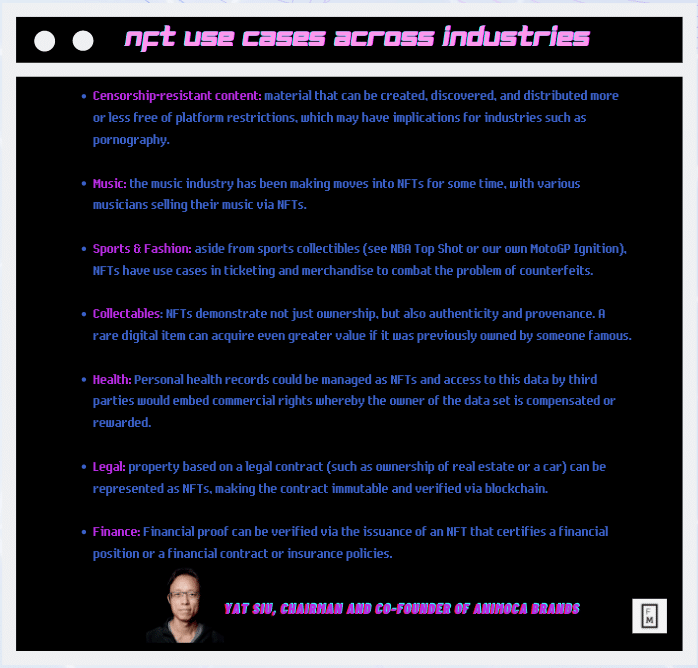
Yat Siu, Chairman and Co-Founder of Animoca Brands, explained that (in other words), “NFTs represent property rights - something that gamers have not really enjoyed before because in traditional games the publisher owns the game assets and merely licenses them to the player.”
“Licenses can be revoked or suspended at any time and for a variety of reasons, regardless of the amount of money a gamer puts into a game. That's not ownership - at best it's rental,” Siu explained.
“If you truly own something, then you have control over it. So, when we say that any game asset can be an NFT, that means it can be yours to do with, and to benefit from, as you see fit. And it's not just about selling it for a profit, it's about doing things that are not possible with traditional game assets: you might want to use your NFT in a different game, or you could ‘stake’ it to passively generate revenue over time.”
“Any in-Game Asset Can Be an NFT.”
As such, video game creators and companies seem to be viewing NFT technology as the gateway to create robust in-game economies.
Nine Chronicles, a game created by open-source gaming platform, Planetarium, is exploring how NFT ownership can play a role in its own digital world. Planetarium Chief Executive, Kijun Seo told Finance Magnates that: “because Nine Chronicles doesn’t have a server and players’ data lives on the blockchain, any item inside the game is already a non-fungible token, by definition.”
Planetarium chief executive Kijun Seo.
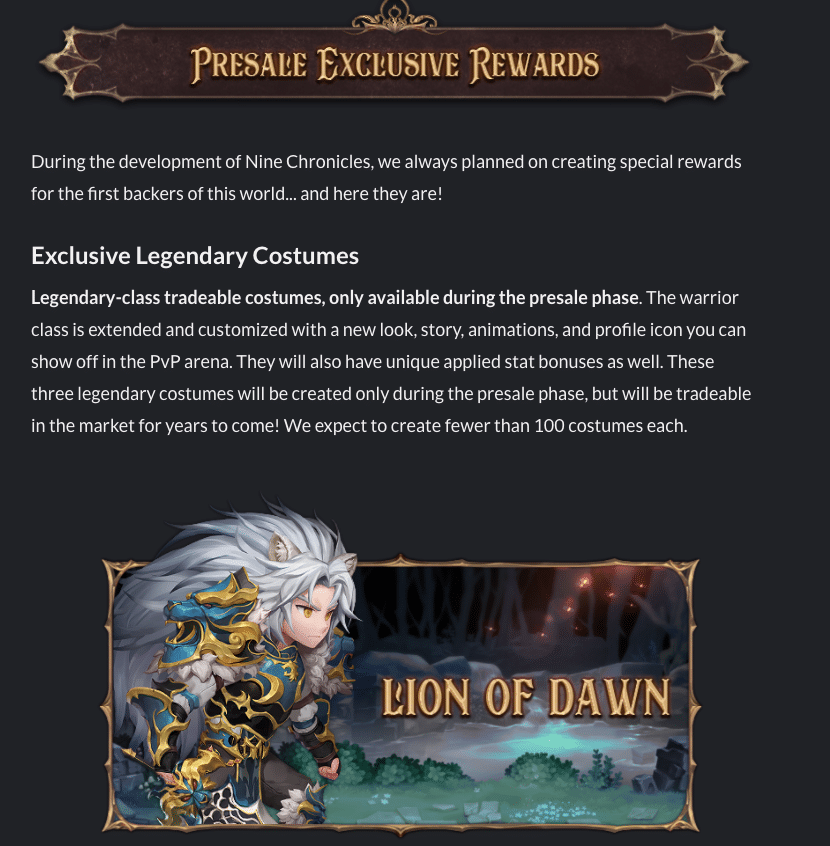
“Currently we have two different types of NFTs: Limited edition costumes (company created NFT): fleshed out NFT costumes with custom animations and bonus stats. Sold only during presale, tradeable in the P2P market. There are only 240 legendary-grade costumes, and 9 mythical-grade costumes in total.”
Nine Chronicles' "exclusive legendary costumes."
Similarly, Yat Siu, Chairman and Co-Founder of Animoca Brands, told Finance Magnates that: “any in-game asset can be an NFT.”
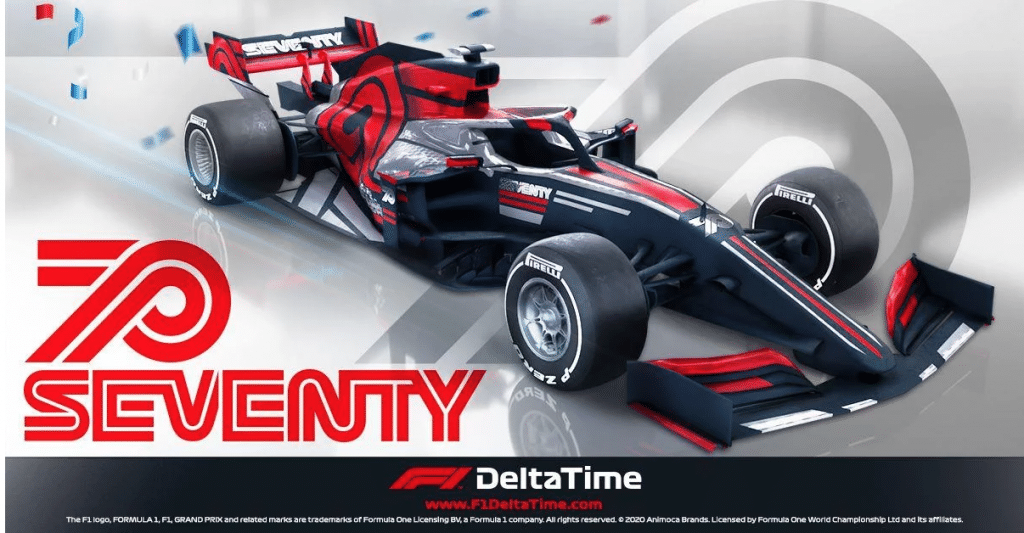
“For example, in our game F1 Delta Time all the assets are NFTs,” including “cars, drivers, car parts (suspension, brakes, et cetera), tyres, driver gear (helmet, gloves, et cetera).”
“Even the tracks and events are made up of NFTs,” Siu explained to Finance Magnates. “This allows the owner to have true ownership over those assets and consequently to trade the assets in secondary markets.”
In March, Animonica's “Australia Edition 2020” car NFT was acquired second hand for 1,221,221 REVV, worth approximately US$288,000 at the time of sale.
NFTs Can Create Robust Secondary Markets for Gaming
Siu told FM that: “there is a brisk trade of F1 Delta Time NFTs on the OpenSea marketplace.”
“One of the most impressive aftermarket transactions for one of our products is the “Australia Edition 2020” car NFT acquired second hand for 1,221,221 REVV, worth approximately US$288,000 at time of sale.”
AAC’s Stefan von Imhof explained that in this way, “NFTs can change the revenue model for games that choose to integrate them.”
“Since players would be able to resell the items that they buy or earn, the number of primary market sales may decrease. To compensate for this, the developers can create the NFT in a way that a portion of all secondary market sales goes to the developers.”
Von Imhof pointed to an upcoming blockchain-based game called Embersword. The game “will have an open world in which much of the land is owned by players. Those owners can choose what they want to put on the land (like a marketplace or an enemy spawn point) and in doing so shape the way the game world forms. They can then earn real money as players interact with their land.”
And, of course, there is the simple fact that NFTs allow game developers to sell their products directly to players without the use of third-party intermediaries.
Ed McCormack explained that in this way, “NFTs also make it possible for creators in video game worlds to sell directly to other users. The allure of NFTs is that they create a situation where content creators, whether they be game developers or musical artists, can sell directly to customers.”
It Ain’t All Sunshine and Roses
While there may be many positives for integrating non-fungible token technology into the gaming economy, there are some drawbacks.
For example, Animoca Brand’s Yat Siu explained that: “the current biggest disadvantage is the non-recoverable nature of NFTs.” In other words, “if you lose the wallet where the NFT is stored, if your NFT gets stolen because you were hacked, or if you transfer the NFT to someone else by mistake, there is very little recourse.”
Yat Siu, Chairman and Co-Founder of Animoca Brands,
“This is why you have to treat NFTs responsibly like a real-life asset of value. You keep your jewelry in a secure lockbox, and you park your car in a safe and sheltered spot,” he said. “Likewise, you need to ensure that your digital assets are well taken care of and protected as NFTs can represent substantial value.”
In addition to the possibility of permanent loss, “the other drawback of involving NFTs in gaming is the friction (in the form of transaction fees and costs) that engaging in a real digital economy can create.”
“Fortunately,” he added, “there are many Layer 1 or Layer 2 blockchain solutions that can significantly reduce gas fees.”
Inside and outside of Gaming, Non-fungible Tokens Can Balance the Relationship between Corporations and Creators
But even with these drawbacks in mind, many analysts agree that NFTs are coming for gaming in a big way, and possibly for the rest of the world.
For example, Robbie Ferguson, Co-Founder of Immutable, told Finance Magnates that his company is in conversations with a number of “super interesting projects across Music NFT and Fashion NFT verticals.”
However, Ferguson explained that a non-fungible token tech can be used in any industry that is plagued by an imbalance of power between creators and market intermediaries.
“The characteristics of industries that NFTs could disrupt are: a) intellectual property locked in restrictive ecosystems owned by companies; b) creator economics weighted in the favour of big corporations, not in favour of emerging creators,” Ferguson explained.
“NFTs present artists everywhere (musicians, fashion designers, artists game developers, et cetera) with a recourse to get paid for their otherwise copy-pastable work,” he said. “NFTs also allow creators to attach rare properties to their work and extract more value. NFT marketplaces provide limitless economic opportunities from selling creations at scale, reducing acquisition costs to near zero.”
“NFTs Will Do to Digital Property What Open Source Has Done to Coding.”
Many analysts believe that NFTs are here to stay.
Animonica’s Yat Siu told Finance Magnates that: “in recent months, everyone has been focused on the sensational performance of NFTs in the art world, but the story is even larger.”
“Imagine what the auto industry would be like if you needed permission from the car manufacturer to change the color of your car or install a new sound system - or if you were simply not allowed to make any such modifications,” he said. “That is the state of digital gaming and data until the arrival of blockchain and NFTs.”
“NFTs will do to digital property what open source has done to coding: provide substantial opportunities for creation and economic expansion. For example, NFTs already have the ability to be financed on platforms such as NFTfi, or fractionalized on platforms such as Unic.ly. These third-party providers developed exciting new services that benefit the owners of NFTs and do not require participation from the publishers and creators - much like how we engage with our property in the real world.”
The boom of non-fungible usage in the art world has garnered its fair share of criticism. If it is not the environmental issues that NFT critics are concerned about, there are plenty of other things to point the finger at. After all, the NFT art world is still grappling with how to deal with fraud and security risks, among other things. In other words, NFTs are still relatively new in the professional art world. Therefore, they still have a ways to go.
However, non-fungible tokens are bigger and older than the world of art and music. While much of the world’s attention has been focused on the adoption of NFTs by the artistic world, NFTs have been gaining ground elsewhere. Namely, in the world of electronic gaming.
Digital Ownership Is Not a New Concept for the Gaming Industry
In a way, NFTs and gaming are almost a perfect marriage.
After all, one of the tricky things about the concept of NFT ownership is the fact that 'owning' an NFT is such an abstract concept in the artistic world. After all, art investors are used to the concept of owning a physical product. When one owns an NFT, it is not always completely clear what one actually owns.
Of course, non-fungible tokens in the gaming world still face many of the same criticisms that NFTs in the art world also do. However, in the gaming world, the concept of digital collectables has been around for quite some time.
For example, in a wide variety of gaming ecosystems, players have the ability to unlock special accessories that can be added to their characters or to the worlds that they live in. In certain games, these digital items can even be sold for real-world cash and large amounts of it.
Ed McCormack, chief executive of Dchained,
Indeed, Ed McCormack, Chief Executive of Dchained, told Finance Magnates that: “the practice of creating digital items that are unique and can be traded based on their utility or scarcity, has become a sizable economy in the gaming industry for years.”
The problem with this sort of digital ownership in the gaming world is that it is very platform-dependent. Gamers who have invested their time and hard-earned money into the virtual worlds they occupy are at the mercy of the game’s operators. Errors, hacks or discontinuation of a game could essentially erase the ownership of valuable digital items. Additionally, a lack of clear legislation to delineate what ‘ownership’ really means in the world of in-game property could mean that players have no recourse when bad things happen.
For example, Stefan von Imhof, Co-Founder of the Alternative Assets Club (AAC), told Finance Magnates that: “when game items are made into NFTs, the entire premise of ownership is changed. Non-NFT game items have real value since players value how they look or perform within the game,” he said.
Stefan von Imhof, Co-Founder of the Alternative Assets Club (AAC).
“For example, ‘skins’ from Counter-Strike sell on the Steam marketplace for thousands of dollars. The downside for these players is that their account can get banned at any time, and if they want to sell items for real money outside of the closed game ecosystem they face a high risk of getting scammed.”
By contrast, “NFT game items mean that the game owner can never take the item away from the player and items can be freely sold for real money, without the high risk of loss to scams.”
Yat Siu, Chairman and Co-Founder of Animoca Brands, explained that (in other words), “NFTs represent property rights - something that gamers have not really enjoyed before because in traditional games the publisher owns the game assets and merely licenses them to the player.”
“Licenses can be revoked or suspended at any time and for a variety of reasons, regardless of the amount of money a gamer puts into a game. That's not ownership - at best it's rental,” Siu explained.
“If you truly own something, then you have control over it. So, when we say that any game asset can be an NFT, that means it can be yours to do with, and to benefit from, as you see fit. And it's not just about selling it for a profit, it's about doing things that are not possible with traditional game assets: you might want to use your NFT in a different game, or you could ‘stake’ it to passively generate revenue over time.”
“Any in-Game Asset Can Be an NFT.”
As such, video game creators and companies seem to be viewing NFT technology as the gateway to create robust in-game economies.
Nine Chronicles, a game created by open-source gaming platform, Planetarium, is exploring how NFT ownership can play a role in its own digital world. Planetarium Chief Executive, Kijun Seo told Finance Magnates that: “because Nine Chronicles doesn’t have a server and players’ data lives on the blockchain, any item inside the game is already a non-fungible token, by definition.”
Planetarium chief executive Kijun Seo.
“Currently we have two different types of NFTs: Limited edition costumes (company created NFT): fleshed out NFT costumes with custom animations and bonus stats. Sold only during presale, tradeable in the P2P market. There are only 240 legendary-grade costumes, and 9 mythical-grade costumes in total.”
Nine Chronicles' "exclusive legendary costumes."
Similarly, Yat Siu, Chairman and Co-Founder of Animoca Brands, told Finance Magnates that: “any in-game asset can be an NFT.”
“For example, in our game F1 Delta Time all the assets are NFTs,” including “cars, drivers, car parts (suspension, brakes, et cetera), tyres, driver gear (helmet, gloves, et cetera).”
“Even the tracks and events are made up of NFTs,” Siu explained to Finance Magnates. “This allows the owner to have true ownership over those assets and consequently to trade the assets in secondary markets.”
In March, Animonica's “Australia Edition 2020” car NFT was acquired second hand for 1,221,221 REVV, worth approximately US$288,000 at the time of sale.
NFTs Can Create Robust Secondary Markets for Gaming
Siu told FM that: “there is a brisk trade of F1 Delta Time NFTs on the OpenSea marketplace.”
“One of the most impressive aftermarket transactions for one of our products is the “Australia Edition 2020” car NFT acquired second hand for 1,221,221 REVV, worth approximately US$288,000 at time of sale.”
AAC’s Stefan von Imhof explained that in this way, “NFTs can change the revenue model for games that choose to integrate them.”
“Since players would be able to resell the items that they buy or earn, the number of primary market sales may decrease. To compensate for this, the developers can create the NFT in a way that a portion of all secondary market sales goes to the developers.”
Von Imhof pointed to an upcoming blockchain-based game called Embersword. The game “will have an open world in which much of the land is owned by players. Those owners can choose what they want to put on the land (like a marketplace or an enemy spawn point) and in doing so shape the way the game world forms. They can then earn real money as players interact with their land.”
And, of course, there is the simple fact that NFTs allow game developers to sell their products directly to players without the use of third-party intermediaries.
Ed McCormack explained that in this way, “NFTs also make it possible for creators in video game worlds to sell directly to other users. The allure of NFTs is that they create a situation where content creators, whether they be game developers or musical artists, can sell directly to customers.”
It Ain’t All Sunshine and Roses
While there may be many positives for integrating non-fungible token technology into the gaming economy, there are some drawbacks.
For example, Animoca Brand’s Yat Siu explained that: “the current biggest disadvantage is the non-recoverable nature of NFTs.” In other words, “if you lose the wallet where the NFT is stored, if your NFT gets stolen because you were hacked, or if you transfer the NFT to someone else by mistake, there is very little recourse.”
Yat Siu, Chairman and Co-Founder of Animoca Brands,
“This is why you have to treat NFTs responsibly like a real-life asset of value. You keep your jewelry in a secure lockbox, and you park your car in a safe and sheltered spot,” he said. “Likewise, you need to ensure that your digital assets are well taken care of and protected as NFTs can represent substantial value.”
In addition to the possibility of permanent loss, “the other drawback of involving NFTs in gaming is the friction (in the form of transaction fees and costs) that engaging in a real digital economy can create.”
“Fortunately,” he added, “there are many Layer 1 or Layer 2 blockchain solutions that can significantly reduce gas fees.”
Inside and outside of Gaming, Non-fungible Tokens Can Balance the Relationship between Corporations and Creators
But even with these drawbacks in mind, many analysts agree that NFTs are coming for gaming in a big way, and possibly for the rest of the world.
For example, Robbie Ferguson, Co-Founder of Immutable, told Finance Magnates that his company is in conversations with a number of “super interesting projects across Music NFT and Fashion NFT verticals.”
However, Ferguson explained that a non-fungible token tech can be used in any industry that is plagued by an imbalance of power between creators and market intermediaries.
“The characteristics of industries that NFTs could disrupt are: a) intellectual property locked in restrictive ecosystems owned by companies; b) creator economics weighted in the favour of big corporations, not in favour of emerging creators,” Ferguson explained.
“NFTs present artists everywhere (musicians, fashion designers, artists game developers, et cetera) with a recourse to get paid for their otherwise copy-pastable work,” he said. “NFTs also allow creators to attach rare properties to their work and extract more value. NFT marketplaces provide limitless economic opportunities from selling creations at scale, reducing acquisition costs to near zero.”
“NFTs Will Do to Digital Property What Open Source Has Done to Coding.”
Many analysts believe that NFTs are here to stay.
Animonica’s Yat Siu told Finance Magnates that: “in recent months, everyone has been focused on the sensational performance of NFTs in the art world, but the story is even larger.”
“Imagine what the auto industry would be like if you needed permission from the car manufacturer to change the color of your car or install a new sound system - or if you were simply not allowed to make any such modifications,” he said. “That is the state of digital gaming and data until the arrival of blockchain and NFTs.”
“NFTs will do to digital property what open source has done to coding: provide substantial opportunities for creation and economic expansion. For example, NFTs already have the ability to be financed on platforms such as NFTfi, or fractionalized on platforms such as Unic.ly. These third-party providers developed exciting new services that benefit the owners of NFTs and do not require participation from the publishers and creators - much like how we engage with our property in the real world.”
Rachel is a self-taught crypto geek and a passionate writer. She believes in the power that the written word has to educate, connect and empower individuals to make positive and powerful financial choices. She is the Podcast Host and a Cryptocurrency Editor at Finance Magnates.
In this video, we review @HolaPrimeMarketsOfficial, a multi-asset forex and CFDs broker offering different account types, trading platforms, and flexible trading conditions.
We cover the broker’s overall offering, including account options, trading environment, platforms like MT4 and MT5, and additional services such as managed accounts and fast withdrawals.
Watch the full video to see if Hola Prime Markets fits your trading needs.
📣 Stay up to date with the latest in finance and trading. Follow Finance Magnates for industry news, insights, and global event coverage.
Connect with us:
🔗 LinkedIn: /financemagnates
👍 Facebook: /financemagnates
📸 Instagram: https://www.instagram.com/financemagnates
🐦 X: https://x.com/financemagnates
🎥 TikTok: https://www.tiktok.com/tag/financemagnates
▶️ YouTube: /@financemagnates_official
#HolaPrime #ForexBroker #CFDTrading #FinanceMagnates #Trading #Forex #BrokerReview
In this video, we review @HolaPrimeMarketsOfficial, a multi-asset forex and CFDs broker offering different account types, trading platforms, and flexible trading conditions.
We cover the broker’s overall offering, including account options, trading environment, platforms like MT4 and MT5, and additional services such as managed accounts and fast withdrawals.
Watch the full video to see if Hola Prime Markets fits your trading needs.
📣 Stay up to date with the latest in finance and trading. Follow Finance Magnates for industry news, insights, and global event coverage.
Connect with us:
🔗 LinkedIn: /financemagnates
👍 Facebook: /financemagnates
📸 Instagram: https://www.instagram.com/financemagnates
🐦 X: https://x.com/financemagnates
🎥 TikTok: https://www.tiktok.com/tag/financemagnates
▶️ YouTube: /@financemagnates_official
#HolaPrime #ForexBroker #CFDTrading #FinanceMagnates #Trading #Forex #BrokerReview
In this video, we review @HolaPrimeMarketsOfficial, a multi-asset forex and CFDs broker offering different account types, trading platforms, and flexible trading conditions.
We cover the broker’s overall offering, including account options, trading environment, platforms like MT4 and MT5, and additional services such as managed accounts and fast withdrawals.
Watch the full video to see if Hola Prime Markets fits your trading needs.
📣 Stay up to date with the latest in finance and trading. Follow Finance Magnates for industry news, insights, and global event coverage.
Connect with us:
🔗 LinkedIn: /financemagnates
👍 Facebook: /financemagnates
📸 Instagram: https://www.instagram.com/financemagnates
🐦 X: https://x.com/financemagnates
🎥 TikTok: https://www.tiktok.com/tag/financemagnates
▶️ YouTube: /@financemagnates_official
#HolaPrime #ForexBroker #CFDTrading #FinanceMagnates #Trading #Forex #BrokerReview
In this video, we review @HolaPrimeMarketsOfficial, a multi-asset forex and CFDs broker offering different account types, trading platforms, and flexible trading conditions.
We cover the broker’s overall offering, including account options, trading environment, platforms like MT4 and MT5, and additional services such as managed accounts and fast withdrawals.
Watch the full video to see if Hola Prime Markets fits your trading needs.
📣 Stay up to date with the latest in finance and trading. Follow Finance Magnates for industry news, insights, and global event coverage.
Connect with us:
🔗 LinkedIn: /financemagnates
👍 Facebook: /financemagnates
📸 Instagram: https://www.instagram.com/financemagnates
🐦 X: https://x.com/financemagnates
🎥 TikTok: https://www.tiktok.com/tag/financemagnates
▶️ YouTube: /@financemagnates_official
#HolaPrime #ForexBroker #CFDTrading #FinanceMagnates #Trading #Forex #BrokerReview
Hola Prime Review: What You Need to Know | Full Breakdown by Finance Magnates
Hola Prime Review: What You Need to Know | Full Breakdown by Finance Magnates
Hola Prime Review: What You Need to Know | Full Breakdown by Finance Magnates
Hola Prime Review: What You Need to Know | Full Breakdown by Finance Magnates
Hola Prime Review: What You Need to Know | Full Breakdown by Finance Magnates
Hola Prime Review: What You Need to Know | Full Breakdown by Finance Magnates
In this video, we review @HolaPrime_Global, a proprietary trading firm offering evaluation programs and performance-based payouts in simulated market environments.
We cover how the challenge model works, including account types, profit splits (up to 95%), trading rules, and what it takes to reach a funded account. You’ll also learn about available platforms like MT4, MT5, cTrader, and more, along with insights into payouts, support, and trading conditions.
Watch the full video to see if Hola Prime fits your trading style.
📣 Stay up to date with the latest in finance and trading. Follow Finance Magnates for industry news, insights, and global event coverage.
Connect with us:
🔗 LinkedIn: /financemagnates
👍 Facebook: /financemagnates
📸 Instagram: https://www.instagram.com/financemagnates
🐦 X: https://x.com/financemagnates
🎥 TikTok: https://www.tiktok.com/tag/financemagnates
▶️ YouTube: /@financemagnates_official
#HolaPrime #PropFirm #Trading #FinanceMagnates #Forex #FuturesTrading #TradingReview #PropFirmReview
In this video, we review @HolaPrime_Global, a proprietary trading firm offering evaluation programs and performance-based payouts in simulated market environments.
We cover how the challenge model works, including account types, profit splits (up to 95%), trading rules, and what it takes to reach a funded account. You’ll also learn about available platforms like MT4, MT5, cTrader, and more, along with insights into payouts, support, and trading conditions.
Watch the full video to see if Hola Prime fits your trading style.
📣 Stay up to date with the latest in finance and trading. Follow Finance Magnates for industry news, insights, and global event coverage.
Connect with us:
🔗 LinkedIn: /financemagnates
👍 Facebook: /financemagnates
📸 Instagram: https://www.instagram.com/financemagnates
🐦 X: https://x.com/financemagnates
🎥 TikTok: https://www.tiktok.com/tag/financemagnates
▶️ YouTube: /@financemagnates_official
#HolaPrime #PropFirm #Trading #FinanceMagnates #Forex #FuturesTrading #TradingReview #PropFirmReview
In this video, we review @HolaPrime_Global, a proprietary trading firm offering evaluation programs and performance-based payouts in simulated market environments.
We cover how the challenge model works, including account types, profit splits (up to 95%), trading rules, and what it takes to reach a funded account. You’ll also learn about available platforms like MT4, MT5, cTrader, and more, along with insights into payouts, support, and trading conditions.
Watch the full video to see if Hola Prime fits your trading style.
📣 Stay up to date with the latest in finance and trading. Follow Finance Magnates for industry news, insights, and global event coverage.
Connect with us:
🔗 LinkedIn: /financemagnates
👍 Facebook: /financemagnates
📸 Instagram: https://www.instagram.com/financemagnates
🐦 X: https://x.com/financemagnates
🎥 TikTok: https://www.tiktok.com/tag/financemagnates
▶️ YouTube: /@financemagnates_official
#HolaPrime #PropFirm #Trading #FinanceMagnates #Forex #FuturesTrading #TradingReview #PropFirmReview
In this video, we review @HolaPrime_Global, a proprietary trading firm offering evaluation programs and performance-based payouts in simulated market environments.
We cover how the challenge model works, including account types, profit splits (up to 95%), trading rules, and what it takes to reach a funded account. You’ll also learn about available platforms like MT4, MT5, cTrader, and more, along with insights into payouts, support, and trading conditions.
Watch the full video to see if Hola Prime fits your trading style.
📣 Stay up to date with the latest in finance and trading. Follow Finance Magnates for industry news, insights, and global event coverage.
Connect with us:
🔗 LinkedIn: /financemagnates
👍 Facebook: /financemagnates
📸 Instagram: https://www.instagram.com/financemagnates
🐦 X: https://x.com/financemagnates
🎥 TikTok: https://www.tiktok.com/tag/financemagnates
▶️ YouTube: /@financemagnates_official
#HolaPrime #PropFirm #Trading #FinanceMagnates #Forex #FuturesTrading #TradingReview #PropFirmReview
In this video, we review @HolaPrime_Global, a proprietary trading firm offering evaluation programs and performance-based payouts in simulated market environments.
We cover how the challenge model works, including account types, profit splits (up to 95%), trading rules, and what it takes to reach a funded account. You’ll also learn about available platforms like MT4, MT5, cTrader, and more, along with insights into payouts, support, and trading conditions.
Watch the full video to see if Hola Prime fits your trading style.
📣 Stay up to date with the latest in finance and trading. Follow Finance Magnates for industry news, insights, and global event coverage.
Connect with us:
🔗 LinkedIn: /financemagnates
👍 Facebook: /financemagnates
📸 Instagram: https://www.instagram.com/financemagnates
🐦 X: https://x.com/financemagnates
🎥 TikTok: https://www.tiktok.com/tag/financemagnates
▶️ YouTube: /@financemagnates_official
#HolaPrime #PropFirm #Trading #FinanceMagnates #Forex #FuturesTrading #TradingReview #PropFirmReview
In this video, we review @HolaPrime_Global, a proprietary trading firm offering evaluation programs and performance-based payouts in simulated market environments.
We cover how the challenge model works, including account types, profit splits (up to 95%), trading rules, and what it takes to reach a funded account. You’ll also learn about available platforms like MT4, MT5, cTrader, and more, along with insights into payouts, support, and trading conditions.
Watch the full video to see if Hola Prime fits your trading style.
📣 Stay up to date with the latest in finance and trading. Follow Finance Magnates for industry news, insights, and global event coverage.
Connect with us:
🔗 LinkedIn: /financemagnates
👍 Facebook: /financemagnates
📸 Instagram: https://www.instagram.com/financemagnates
🐦 X: https://x.com/financemagnates
🎥 TikTok: https://www.tiktok.com/tag/financemagnates
▶️ YouTube: /@financemagnates_official
#HolaPrime #PropFirm #Trading #FinanceMagnates #Forex #FuturesTrading #TradingReview #PropFirmReview
Axi Winner Spotlight 🏆 | Global Most Innovative Broker 2025 #Innovation #Trading #Fintech #Broker
Axi Winner Spotlight 🏆 | Global Most Innovative Broker 2025 #Innovation #Trading #Fintech #Broker
Axi Winner Spotlight 🏆 | Global Most Innovative Broker 2025 #Innovation #Trading #Fintech #Broker
Axi Winner Spotlight 🏆 | Global Most Innovative Broker 2025 #Innovation #Trading #Fintech #Broker
Axi Winner Spotlight 🏆 | Global Most Innovative Broker 2025 #Innovation #Trading #Fintech #Broker
Axi Winner Spotlight 🏆 | Global Most Innovative Broker 2025 #Innovation #Trading #Fintech #Broker
Axi takes the spotlight at the Finance Magnates Awards, winning Global Most Innovative Broker 2025.
Olivia Xenofontos and Ivanna Openko share how the team will feel: proud, motivated, and ready to keep delivering.
They also describe the night as well-organized, focused, and enjoyable for all.
👉 Be part of FM Awards 2026.
Axi takes the spotlight at the Finance Magnates Awards, winning Global Most Innovative Broker 2025.
Olivia Xenofontos and Ivanna Openko share how the team will feel: proud, motivated, and ready to keep delivering.
They also describe the night as well-organized, focused, and enjoyable for all.
👉 Be part of FM Awards 2026.
Axi takes the spotlight at the Finance Magnates Awards, winning Global Most Innovative Broker 2025.
Olivia Xenofontos and Ivanna Openko share how the team will feel: proud, motivated, and ready to keep delivering.
They also describe the night as well-organized, focused, and enjoyable for all.
👉 Be part of FM Awards 2026.
Axi takes the spotlight at the Finance Magnates Awards, winning Global Most Innovative Broker 2025.
Olivia Xenofontos and Ivanna Openko share how the team will feel: proud, motivated, and ready to keep delivering.
They also describe the night as well-organized, focused, and enjoyable for all.
👉 Be part of FM Awards 2026.
Axi takes the spotlight at the Finance Magnates Awards, winning Global Most Innovative Broker 2025.
Olivia Xenofontos and Ivanna Openko share how the team will feel: proud, motivated, and ready to keep delivering.
They also describe the night as well-organized, focused, and enjoyable for all.
👉 Be part of FM Awards 2026.
Axi takes the spotlight at the Finance Magnates Awards, winning Global Most Innovative Broker 2025.
Olivia Xenofontos and Ivanna Openko share how the team will feel: proud, motivated, and ready to keep delivering.
They also describe the night as well-organized, focused, and enjoyable for all.
👉 Be part of FM Awards 2026.
Recognition that matters.
Built on transparency.
Driven by the industry.
The Finance Magnates Awards 2026.
Nominations are now open.
🔗 https://awards.financemagnates.com/?utm_source=SM&utm_medium=social&utm_campaign=recognition-matters
Recognition that matters.
Built on transparency.
Driven by the industry.
The Finance Magnates Awards 2026.
Nominations are now open.
🔗 https://awards.financemagnates.com/?utm_source=SM&utm_medium=social&utm_campaign=recognition-matters
Recognition that matters.
Built on transparency.
Driven by the industry.
The Finance Magnates Awards 2026.
Nominations are now open.
🔗 https://awards.financemagnates.com/?utm_source=SM&utm_medium=social&utm_campaign=recognition-matters
Recognition that matters.
Built on transparency.
Driven by the industry.
The Finance Magnates Awards 2026.
Nominations are now open.
🔗 https://awards.financemagnates.com/?utm_source=SM&utm_medium=social&utm_campaign=recognition-matters
Recognition that matters.
Built on transparency.
Driven by the industry.
The Finance Magnates Awards 2026.
Nominations are now open.
🔗 https://awards.financemagnates.com/?utm_source=SM&utm_medium=social&utm_campaign=recognition-matters
Recognition that matters.
Built on transparency.
Driven by the industry.
The Finance Magnates Awards 2026.
Nominations are now open.
🔗 https://awards.financemagnates.com/?utm_source=SM&utm_medium=social&utm_campaign=recognition-matters
Tickmill Winner Spotlight | Broker of the Year 2025 (LATAM) 🏆 | Finance Magnates Awards #Trading
Tickmill Winner Spotlight | Broker of the Year 2025 (LATAM) 🏆 | Finance Magnates Awards #Trading
Tickmill Winner Spotlight | Broker of the Year 2025 (LATAM) 🏆 | Finance Magnates Awards #Trading
Tickmill Winner Spotlight | Broker of the Year 2025 (LATAM) 🏆 | Finance Magnates Awards #Trading
Tickmill Winner Spotlight | Broker of the Year 2025 (LATAM) 🏆 | Finance Magnates Awards #Trading
Tickmill Winner Spotlight | Broker of the Year 2025 (LATAM) 🏆 | Finance Magnates Awards #Trading
What helped Tickmill stand out this year?
In this Winner Spotlight, Johnny Khalil, Executive Director at Tickmill Europe, shares how listening closely to clients and delivering strong trading conditions made the difference.
A big thank you to the community whose support continues to drive progress every day.
👉 Think your brand has what it takes? Nominate for the 2026 Finance Magnates Awards: https://awards.financemagnates.com/#nominate
What helped Tickmill stand out this year?
In this Winner Spotlight, Johnny Khalil, Executive Director at Tickmill Europe, shares how listening closely to clients and delivering strong trading conditions made the difference.
A big thank you to the community whose support continues to drive progress every day.
👉 Think your brand has what it takes? Nominate for the 2026 Finance Magnates Awards: https://awards.financemagnates.com/#nominate
What helped Tickmill stand out this year?
In this Winner Spotlight, Johnny Khalil, Executive Director at Tickmill Europe, shares how listening closely to clients and delivering strong trading conditions made the difference.
A big thank you to the community whose support continues to drive progress every day.
👉 Think your brand has what it takes? Nominate for the 2026 Finance Magnates Awards: https://awards.financemagnates.com/#nominate
What helped Tickmill stand out this year?
In this Winner Spotlight, Johnny Khalil, Executive Director at Tickmill Europe, shares how listening closely to clients and delivering strong trading conditions made the difference.
A big thank you to the community whose support continues to drive progress every day.
👉 Think your brand has what it takes? Nominate for the 2026 Finance Magnates Awards: https://awards.financemagnates.com/#nominate
What helped Tickmill stand out this year?
In this Winner Spotlight, Johnny Khalil, Executive Director at Tickmill Europe, shares how listening closely to clients and delivering strong trading conditions made the difference.
A big thank you to the community whose support continues to drive progress every day.
👉 Think your brand has what it takes? Nominate for the 2026 Finance Magnates Awards: https://awards.financemagnates.com/#nominate
What helped Tickmill stand out this year?
In this Winner Spotlight, Johnny Khalil, Executive Director at Tickmill Europe, shares how listening closely to clients and delivering strong trading conditions made the difference.
A big thank you to the community whose support continues to drive progress every day.
👉 Think your brand has what it takes? Nominate for the 2026 Finance Magnates Awards: https://awards.financemagnates.com/#nominate