Finance Magnates headed to the Next Block conference to see what the industry expects in the coming 12 months.
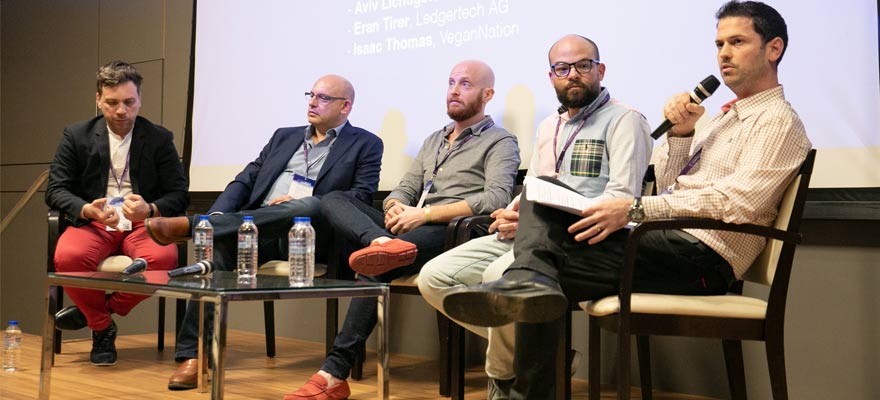
From Left to Right: Sandris Murins, Strategy Director, Index Protocol; Eran Tirer, Founder, Ledgertech; Isaac Thomas, CEO, Vegan Nation; Aviv Lichtigstein, CEO, 101 Blockchains; Michael Pearl, Head of Content & Intelligence, Finance Magnates
Remember the video of that crazy guy screaming about BitConnect at a conference in Thailand? It may seem like a lifetime ago but that short clip, which epitomises everything that was wrongheaded in the cryptocurrency craze which swept the globe at the end of 2017, is barely a year old.
But though there may have been no screaming about 10000 percent returns and Bitcoin hitting $1 million by the end of the year, most speakers were, strange as it may seem, positive about the current state of the cryptocurrency market.
Fewer scammers
With fewer scammers and traders, banking on the greater fool theory paying off, looking to make a quick buck, the market is maturing and we’re being left with the serious companies and investors. That’s the theory anyway. Things were best summed up by the founder and CEO of loans company Celsius, Alexander Mashinsky.
“We’re seeing more sellers than buyers and that’s a good [development],” he said. “We don’t want those people. They were not here for the long run, they just wanted to make some instant cash.”
One of the best sessions of the day was hosted by Finance Magnates’ very own Michael Pearl. With the CEO of a vegan cryptocurrency project, a blockchain educator, the founder of an enterprise technology company, and the Strategic Director of a cryptocurrency derivatives firm all on one panel, there was an array of different perspectives and, consequently, some interesting disagreements.
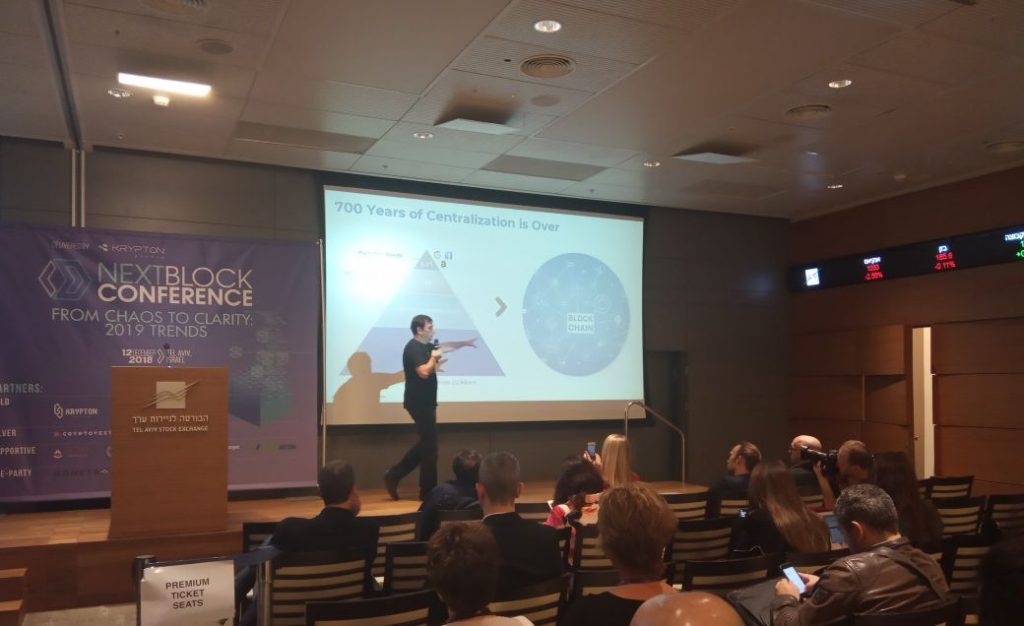
Celsius CEO Alexander Mashinsky gives his presentation
Regarding the perception that the cryptocurrency market is comprised of a bunch of fraudsters, Isaac Thomas, co-founder and CEO of Vegan Nation, said that even legitimate companies were partially to blame.
It is in large part because of this reputation that the ICO market has tapered off in recent months. Unlike at the start of this year, not everyone is trying to sell their services in tokenized form.
“People are waking up to the bullshit,” said Eran Tirer, a former IBM executive and the founder of insurance technology company Ledgertech. “When the market was hyped, and everybody who said ‘blockchain’ or ‘crypto could sell whatever they wanted, companies that would have never passed the first round at a venture capital fund started to raise money. That doesn’t make any sense for the long run.”
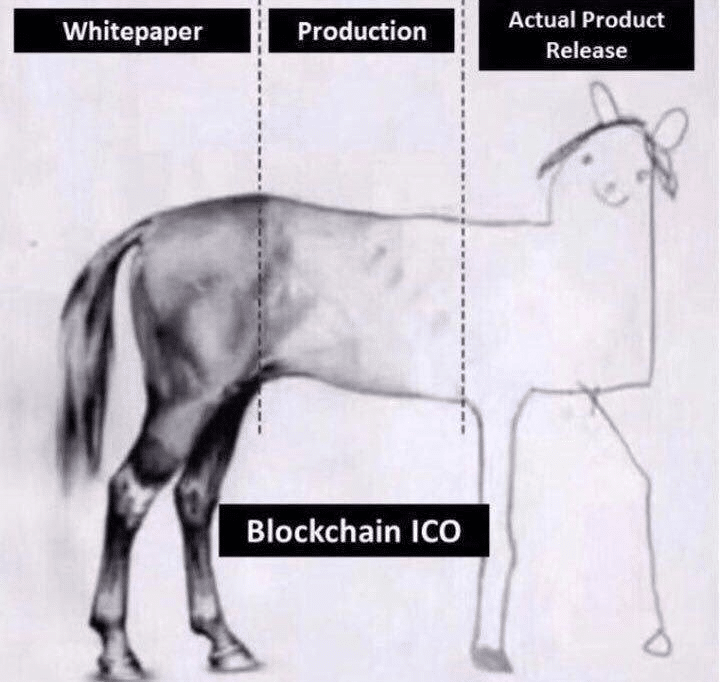
A key component of these crappy companies’ plans was providing a ‘whitepaper’ detailing what they would do with any of the money they raised. Many of these papers were total rubbish and some, when run by the real scam artists, were just copied and pasted from other startups.
More products, fewer papers
“That’s something I see changing in the industry,” said Aviv Lichtigstein, founder of blockchain education company 101 Blockchains. “We’re going to see more companies building technology before publishing a whitepaper. There need to be more working products and fewer papers.”
Artist's depiction of the ICO process
Isaac’s Vegan Nation is one company that has done just that. Though the company, which hopes to create a cryptocurrency for vegans across the world, has been around for over a year, it is yet to launch its ICO.
“We could have done it back in February and probably raised a $100 million,” said Isaac, “but if the coin lost 90 percent of its value then, in the long run, we would lose the trust of our community. So, instead of that, we built all the infrastructure and products - things most companies are talking about doing two or three years after the ICO - in order to launch with a token that is backed by everyone in the vegan community.”
Consolidation
All of the above may give you the impression that cryptocurrency executives are turning into cynics. That isn’t the case. After all, everyone who was at Krypton’s event is still working in cryptocurrency or blockchain.
Instead, people seem to believe that the market is maturing. As noted already, the get-rich-quick traders and fraudsters are filtering out and leaving behind serious companies and genuine entrepreneurs.
“We’re going to see a lot of coins delisting,” said Sandris. “A lot of exchanges and projects will be going bankrupt too but we’ll see more mergers and acquisitions like the Bithumb or Poloniex buys that we saw this year. I think there will also be more segmentation in the cryptocurrency market. Security tokens and utility tokens are two very different things but we are yet to see that in the market itself.”
Back at the beginning of October, we here at Finance Magnates said that a decline in interest would, paradoxically, be good for the cryptocurrency industry. That view seems to be popular not just amongst us hacks but the people working in the industry itself.
True, a more mature, subdued industry is less exciting than someone running around on a stage in South-East Asia screaming about impossible returns, but it is a sign that we can start taking the blockchain industry more seriously. Isn’t that what the cryptocurrency fanboys have always wanted?
Remember the video of that crazy guy screaming about BitConnect at a conference in Thailand? It may seem like a lifetime ago but that short clip, which epitomises everything that was wrongheaded in the cryptocurrency craze which swept the globe at the end of 2017, is barely a year old.
But though there may have been no screaming about 10000 percent returns and Bitcoin hitting $1 million by the end of the year, most speakers were, strange as it may seem, positive about the current state of the cryptocurrency market.
Fewer scammers
With fewer scammers and traders, banking on the greater fool theory paying off, looking to make a quick buck, the market is maturing and we’re being left with the serious companies and investors. That’s the theory anyway. Things were best summed up by the founder and CEO of loans company Celsius, Alexander Mashinsky.
“We’re seeing more sellers than buyers and that’s a good [development],” he said. “We don’t want those people. They were not here for the long run, they just wanted to make some instant cash.”
One of the best sessions of the day was hosted by Finance Magnates’ very own Michael Pearl. With the CEO of a vegan cryptocurrency project, a blockchain educator, the founder of an enterprise technology company, and the Strategic Director of a cryptocurrency derivatives firm all on one panel, there was an array of different perspectives and, consequently, some interesting disagreements.
Celsius CEO Alexander Mashinsky gives his presentation
Regarding the perception that the cryptocurrency market is comprised of a bunch of fraudsters, Isaac Thomas, co-founder and CEO of Vegan Nation, said that even legitimate companies were partially to blame.
It is in large part because of this reputation that the ICO market has tapered off in recent months. Unlike at the start of this year, not everyone is trying to sell their services in tokenized form.
“People are waking up to the bullshit,” said Eran Tirer, a former IBM executive and the founder of insurance technology company Ledgertech. “When the market was hyped, and everybody who said ‘blockchain’ or ‘crypto could sell whatever they wanted, companies that would have never passed the first round at a venture capital fund started to raise money. That doesn’t make any sense for the long run.”
A key component of these crappy companies’ plans was providing a ‘whitepaper’ detailing what they would do with any of the money they raised. Many of these papers were total rubbish and some, when run by the real scam artists, were just copied and pasted from other startups.
More products, fewer papers
“That’s something I see changing in the industry,” said Aviv Lichtigstein, founder of blockchain education company 101 Blockchains. “We’re going to see more companies building technology before publishing a whitepaper. There need to be more working products and fewer papers.”
Artist's depiction of the ICO process
Isaac’s Vegan Nation is one company that has done just that. Though the company, which hopes to create a cryptocurrency for vegans across the world, has been around for over a year, it is yet to launch its ICO.
“We could have done it back in February and probably raised a $100 million,” said Isaac, “but if the coin lost 90 percent of its value then, in the long run, we would lose the trust of our community. So, instead of that, we built all the infrastructure and products - things most companies are talking about doing two or three years after the ICO - in order to launch with a token that is backed by everyone in the vegan community.”
Consolidation
All of the above may give you the impression that cryptocurrency executives are turning into cynics. That isn’t the case. After all, everyone who was at Krypton’s event is still working in cryptocurrency or blockchain.
Instead, people seem to believe that the market is maturing. As noted already, the get-rich-quick traders and fraudsters are filtering out and leaving behind serious companies and genuine entrepreneurs.
“We’re going to see a lot of coins delisting,” said Sandris. “A lot of exchanges and projects will be going bankrupt too but we’ll see more mergers and acquisitions like the Bithumb or Poloniex buys that we saw this year. I think there will also be more segmentation in the cryptocurrency market. Security tokens and utility tokens are two very different things but we are yet to see that in the market itself.”
Back at the beginning of October, we here at Finance Magnates said that a decline in interest would, paradoxically, be good for the cryptocurrency industry. That view seems to be popular not just amongst us hacks but the people working in the industry itself.
True, a more mature, subdued industry is less exciting than someone running around on a stage in South-East Asia screaming about impossible returns, but it is a sign that we can start taking the blockchain industry more seriously. Isn’t that what the cryptocurrency fanboys have always wanted?
Crypto Built More Rails, but the Next Battle Is Over How Much Work a Dollar Can Do
Featured Videos
FP Markets Winner Spotlight 🏆 | Global Broker of the Year 2025 #Trading #Broker #Innovation #Shorts
FP Markets Winner Spotlight 🏆 | Global Broker of the Year 2025 #Trading #Broker #Innovation #Shorts
FP Markets Winner Spotlight 🏆 | Global Broker of the Year 2025 #Trading #Broker #Innovation #Shorts
FP Markets Winner Spotlight 🏆 | Global Broker of the Year 2025 #Trading #Broker #Innovation #Shorts
FP Markets takes the spotlight as Global Broker of the Year 2025 at the Finance Magnates Awards.
Martin Stoilov, Head of Client Experience, shares that trust, innovation, and people played a key role in the company’s success, supported by a strong foundation of integrity and client-centricity.
Following this milestone, FP Markets continues to focus on growth, technology investment, and its core values of transparency and excellence.
👉 Be part of FM Awards 2026: https://awards.financemagnates.com/#nominate
FP Markets takes the spotlight as Global Broker of the Year 2025 at the Finance Magnates Awards.
Martin Stoilov, Head of Client Experience, shares that trust, innovation, and people played a key role in the company’s success, supported by a strong foundation of integrity and client-centricity.
Following this milestone, FP Markets continues to focus on growth, technology investment, and its core values of transparency and excellence.
👉 Be part of FM Awards 2026: https://awards.financemagnates.com/#nominate
FP Markets takes the spotlight as Global Broker of the Year 2025 at the Finance Magnates Awards.
Martin Stoilov, Head of Client Experience, shares that trust, innovation, and people played a key role in the company’s success, supported by a strong foundation of integrity and client-centricity.
Following this milestone, FP Markets continues to focus on growth, technology investment, and its core values of transparency and excellence.
👉 Be part of FM Awards 2026: https://awards.financemagnates.com/#nominate
FP Markets takes the spotlight as Global Broker of the Year 2025 at the Finance Magnates Awards.
Martin Stoilov, Head of Client Experience, shares that trust, innovation, and people played a key role in the company’s success, supported by a strong foundation of integrity and client-centricity.
Following this milestone, FP Markets continues to focus on growth, technology investment, and its core values of transparency and excellence.
👉 Be part of FM Awards 2026: https://awards.financemagnates.com/#nominate
In this video, we review @HolaPrimeMarketsOfficial, a multi-asset forex and CFDs broker offering different account types, trading platforms, and flexible trading conditions.
We cover the broker’s overall offering, including account options, trading environment, platforms like MT4 and MT5, and additional services such as managed accounts and fast withdrawals.
Watch the full video to see if Hola Prime Markets fits your trading needs.
📣 Stay up to date with the latest in finance and trading. Follow Finance Magnates for industry news, insights, and global event coverage.
Connect with us:
🔗 LinkedIn: /financemagnates
👍 Facebook: /financemagnates
📸 Instagram: https://www.instagram.com/financemagnates
🐦 X: https://x.com/financemagnates
🎥 TikTok: https://www.tiktok.com/tag/financemagnates
▶️ YouTube: /@financemagnates_official
#HolaPrime #ForexBroker #CFDTrading #FinanceMagnates #Trading #Forex #BrokerReview
In this video, we review @HolaPrimeMarketsOfficial, a multi-asset forex and CFDs broker offering different account types, trading platforms, and flexible trading conditions.
We cover the broker’s overall offering, including account options, trading environment, platforms like MT4 and MT5, and additional services such as managed accounts and fast withdrawals.
Watch the full video to see if Hola Prime Markets fits your trading needs.
📣 Stay up to date with the latest in finance and trading. Follow Finance Magnates for industry news, insights, and global event coverage.
Connect with us:
🔗 LinkedIn: /financemagnates
👍 Facebook: /financemagnates
📸 Instagram: https://www.instagram.com/financemagnates
🐦 X: https://x.com/financemagnates
🎥 TikTok: https://www.tiktok.com/tag/financemagnates
▶️ YouTube: /@financemagnates_official
#HolaPrime #ForexBroker #CFDTrading #FinanceMagnates #Trading #Forex #BrokerReview
In this video, we review @HolaPrimeMarketsOfficial, a multi-asset forex and CFDs broker offering different account types, trading platforms, and flexible trading conditions.
We cover the broker’s overall offering, including account options, trading environment, platforms like MT4 and MT5, and additional services such as managed accounts and fast withdrawals.
Watch the full video to see if Hola Prime Markets fits your trading needs.
📣 Stay up to date with the latest in finance and trading. Follow Finance Magnates for industry news, insights, and global event coverage.
Connect with us:
🔗 LinkedIn: /financemagnates
👍 Facebook: /financemagnates
📸 Instagram: https://www.instagram.com/financemagnates
🐦 X: https://x.com/financemagnates
🎥 TikTok: https://www.tiktok.com/tag/financemagnates
▶️ YouTube: /@financemagnates_official
#HolaPrime #ForexBroker #CFDTrading #FinanceMagnates #Trading #Forex #BrokerReview
In this video, we review @HolaPrimeMarketsOfficial, a multi-asset forex and CFDs broker offering different account types, trading platforms, and flexible trading conditions.
We cover the broker’s overall offering, including account options, trading environment, platforms like MT4 and MT5, and additional services such as managed accounts and fast withdrawals.
Watch the full video to see if Hola Prime Markets fits your trading needs.
📣 Stay up to date with the latest in finance and trading. Follow Finance Magnates for industry news, insights, and global event coverage.
Connect with us:
🔗 LinkedIn: /financemagnates
👍 Facebook: /financemagnates
📸 Instagram: https://www.instagram.com/financemagnates
🐦 X: https://x.com/financemagnates
🎥 TikTok: https://www.tiktok.com/tag/financemagnates
▶️ YouTube: /@financemagnates_official
#HolaPrime #ForexBroker #CFDTrading #FinanceMagnates #Trading #Forex #BrokerReview
In this video, we review @HolaPrimeMarketsOfficial, a multi-asset forex and CFDs broker offering different account types, trading platforms, and flexible trading conditions.
We cover the broker’s overall offering, including account options, trading environment, platforms like MT4 and MT5, and additional services such as managed accounts and fast withdrawals.
Watch the full video to see if Hola Prime Markets fits your trading needs.
📣 Stay up to date with the latest in finance and trading. Follow Finance Magnates for industry news, insights, and global event coverage.
Connect with us:
🔗 LinkedIn: /financemagnates
👍 Facebook: /financemagnates
📸 Instagram: https://www.instagram.com/financemagnates
🐦 X: https://x.com/financemagnates
🎥 TikTok: https://www.tiktok.com/tag/financemagnates
▶️ YouTube: /@financemagnates_official
#HolaPrime #ForexBroker #CFDTrading #FinanceMagnates #Trading #Forex #BrokerReview
In this video, we review @HolaPrimeMarketsOfficial, a multi-asset forex and CFDs broker offering different account types, trading platforms, and flexible trading conditions.
We cover the broker’s overall offering, including account options, trading environment, platforms like MT4 and MT5, and additional services such as managed accounts and fast withdrawals.
Watch the full video to see if Hola Prime Markets fits your trading needs.
📣 Stay up to date with the latest in finance and trading. Follow Finance Magnates for industry news, insights, and global event coverage.
Connect with us:
🔗 LinkedIn: /financemagnates
👍 Facebook: /financemagnates
📸 Instagram: https://www.instagram.com/financemagnates
🐦 X: https://x.com/financemagnates
🎥 TikTok: https://www.tiktok.com/tag/financemagnates
▶️ YouTube: /@financemagnates_official
#HolaPrime #ForexBroker #CFDTrading #FinanceMagnates #Trading #Forex #BrokerReview
Hola Prime Review: What You Need to Know | Full Breakdown by Finance Magnates
Hola Prime Review: What You Need to Know | Full Breakdown by Finance Magnates
Hola Prime Review: What You Need to Know | Full Breakdown by Finance Magnates
Hola Prime Review: What You Need to Know | Full Breakdown by Finance Magnates
Hola Prime Review: What You Need to Know | Full Breakdown by Finance Magnates
Hola Prime Review: What You Need to Know | Full Breakdown by Finance Magnates
In this video, we review @HolaPrime_Global, a proprietary trading firm offering evaluation programs and performance-based payouts in simulated market environments.
We cover how the challenge model works, including account types, profit splits (up to 95%), trading rules, and what it takes to reach a funded account. You’ll also learn about available platforms like MT4, MT5, cTrader, and more, along with insights into payouts, support, and trading conditions.
Watch the full video to see if Hola Prime fits your trading style.
📣 Stay up to date with the latest in finance and trading. Follow Finance Magnates for industry news, insights, and global event coverage.
Connect with us:
🔗 LinkedIn: /financemagnates
👍 Facebook: /financemagnates
📸 Instagram: https://www.instagram.com/financemagnates
🐦 X: https://x.com/financemagnates
🎥 TikTok: https://www.tiktok.com/tag/financemagnates
▶️ YouTube: /@financemagnates_official
#HolaPrime #PropFirm #Trading #FinanceMagnates #Forex #FuturesTrading #TradingReview #PropFirmReview
In this video, we review @HolaPrime_Global, a proprietary trading firm offering evaluation programs and performance-based payouts in simulated market environments.
We cover how the challenge model works, including account types, profit splits (up to 95%), trading rules, and what it takes to reach a funded account. You’ll also learn about available platforms like MT4, MT5, cTrader, and more, along with insights into payouts, support, and trading conditions.
Watch the full video to see if Hola Prime fits your trading style.
📣 Stay up to date with the latest in finance and trading. Follow Finance Magnates for industry news, insights, and global event coverage.
Connect with us:
🔗 LinkedIn: /financemagnates
👍 Facebook: /financemagnates
📸 Instagram: https://www.instagram.com/financemagnates
🐦 X: https://x.com/financemagnates
🎥 TikTok: https://www.tiktok.com/tag/financemagnates
▶️ YouTube: /@financemagnates_official
#HolaPrime #PropFirm #Trading #FinanceMagnates #Forex #FuturesTrading #TradingReview #PropFirmReview
In this video, we review @HolaPrime_Global, a proprietary trading firm offering evaluation programs and performance-based payouts in simulated market environments.
We cover how the challenge model works, including account types, profit splits (up to 95%), trading rules, and what it takes to reach a funded account. You’ll also learn about available platforms like MT4, MT5, cTrader, and more, along with insights into payouts, support, and trading conditions.
Watch the full video to see if Hola Prime fits your trading style.
📣 Stay up to date with the latest in finance and trading. Follow Finance Magnates for industry news, insights, and global event coverage.
Connect with us:
🔗 LinkedIn: /financemagnates
👍 Facebook: /financemagnates
📸 Instagram: https://www.instagram.com/financemagnates
🐦 X: https://x.com/financemagnates
🎥 TikTok: https://www.tiktok.com/tag/financemagnates
▶️ YouTube: /@financemagnates_official
#HolaPrime #PropFirm #Trading #FinanceMagnates #Forex #FuturesTrading #TradingReview #PropFirmReview
In this video, we review @HolaPrime_Global, a proprietary trading firm offering evaluation programs and performance-based payouts in simulated market environments.
We cover how the challenge model works, including account types, profit splits (up to 95%), trading rules, and what it takes to reach a funded account. You’ll also learn about available platforms like MT4, MT5, cTrader, and more, along with insights into payouts, support, and trading conditions.
Watch the full video to see if Hola Prime fits your trading style.
📣 Stay up to date with the latest in finance and trading. Follow Finance Magnates for industry news, insights, and global event coverage.
Connect with us:
🔗 LinkedIn: /financemagnates
👍 Facebook: /financemagnates
📸 Instagram: https://www.instagram.com/financemagnates
🐦 X: https://x.com/financemagnates
🎥 TikTok: https://www.tiktok.com/tag/financemagnates
▶️ YouTube: /@financemagnates_official
#HolaPrime #PropFirm #Trading #FinanceMagnates #Forex #FuturesTrading #TradingReview #PropFirmReview
In this video, we review @HolaPrime_Global, a proprietary trading firm offering evaluation programs and performance-based payouts in simulated market environments.
We cover how the challenge model works, including account types, profit splits (up to 95%), trading rules, and what it takes to reach a funded account. You’ll also learn about available platforms like MT4, MT5, cTrader, and more, along with insights into payouts, support, and trading conditions.
Watch the full video to see if Hola Prime fits your trading style.
📣 Stay up to date with the latest in finance and trading. Follow Finance Magnates for industry news, insights, and global event coverage.
Connect with us:
🔗 LinkedIn: /financemagnates
👍 Facebook: /financemagnates
📸 Instagram: https://www.instagram.com/financemagnates
🐦 X: https://x.com/financemagnates
🎥 TikTok: https://www.tiktok.com/tag/financemagnates
▶️ YouTube: /@financemagnates_official
#HolaPrime #PropFirm #Trading #FinanceMagnates #Forex #FuturesTrading #TradingReview #PropFirmReview
In this video, we review @HolaPrime_Global, a proprietary trading firm offering evaluation programs and performance-based payouts in simulated market environments.
We cover how the challenge model works, including account types, profit splits (up to 95%), trading rules, and what it takes to reach a funded account. You’ll also learn about available platforms like MT4, MT5, cTrader, and more, along with insights into payouts, support, and trading conditions.
Watch the full video to see if Hola Prime fits your trading style.
📣 Stay up to date with the latest in finance and trading. Follow Finance Magnates for industry news, insights, and global event coverage.
Connect with us:
🔗 LinkedIn: /financemagnates
👍 Facebook: /financemagnates
📸 Instagram: https://www.instagram.com/financemagnates
🐦 X: https://x.com/financemagnates
🎥 TikTok: https://www.tiktok.com/tag/financemagnates
▶️ YouTube: /@financemagnates_official
#HolaPrime #PropFirm #Trading #FinanceMagnates #Forex #FuturesTrading #TradingReview #PropFirmReview
Axi Winner Spotlight 🏆 | Global Most Innovative Broker 2025 #Innovation #Trading #Fintech #Broker
Axi Winner Spotlight 🏆 | Global Most Innovative Broker 2025 #Innovation #Trading #Fintech #Broker
Axi Winner Spotlight 🏆 | Global Most Innovative Broker 2025 #Innovation #Trading #Fintech #Broker
Axi Winner Spotlight 🏆 | Global Most Innovative Broker 2025 #Innovation #Trading #Fintech #Broker
Axi Winner Spotlight 🏆 | Global Most Innovative Broker 2025 #Innovation #Trading #Fintech #Broker
Axi Winner Spotlight 🏆 | Global Most Innovative Broker 2025 #Innovation #Trading #Fintech #Broker
Axi takes the spotlight at the Finance Magnates Awards, winning Global Most Innovative Broker 2025.
Olivia Xenofontos and Ivanna Openko share how the team will feel: proud, motivated, and ready to keep delivering.
They also describe the night as well-organized, focused, and enjoyable for all.
👉 Be part of FM Awards 2026.
Axi takes the spotlight at the Finance Magnates Awards, winning Global Most Innovative Broker 2025.
Olivia Xenofontos and Ivanna Openko share how the team will feel: proud, motivated, and ready to keep delivering.
They also describe the night as well-organized, focused, and enjoyable for all.
👉 Be part of FM Awards 2026.
Axi takes the spotlight at the Finance Magnates Awards, winning Global Most Innovative Broker 2025.
Olivia Xenofontos and Ivanna Openko share how the team will feel: proud, motivated, and ready to keep delivering.
They also describe the night as well-organized, focused, and enjoyable for all.
👉 Be part of FM Awards 2026.
Axi takes the spotlight at the Finance Magnates Awards, winning Global Most Innovative Broker 2025.
Olivia Xenofontos and Ivanna Openko share how the team will feel: proud, motivated, and ready to keep delivering.
They also describe the night as well-organized, focused, and enjoyable for all.
👉 Be part of FM Awards 2026.
Axi takes the spotlight at the Finance Magnates Awards, winning Global Most Innovative Broker 2025.
Olivia Xenofontos and Ivanna Openko share how the team will feel: proud, motivated, and ready to keep delivering.
They also describe the night as well-organized, focused, and enjoyable for all.
👉 Be part of FM Awards 2026.
Axi takes the spotlight at the Finance Magnates Awards, winning Global Most Innovative Broker 2025.
Olivia Xenofontos and Ivanna Openko share how the team will feel: proud, motivated, and ready to keep delivering.
They also describe the night as well-organized, focused, and enjoyable for all.
👉 Be part of FM Awards 2026.
Recognition that matters.
Built on transparency.
Driven by the industry.
The Finance Magnates Awards 2026.
Nominations are now open.
🔗 https://awards.financemagnates.com/?utm_source=SM&utm_medium=social&utm_campaign=recognition-matters
Recognition that matters.
Built on transparency.
Driven by the industry.
The Finance Magnates Awards 2026.
Nominations are now open.
🔗 https://awards.financemagnates.com/?utm_source=SM&utm_medium=social&utm_campaign=recognition-matters
Recognition that matters.
Built on transparency.
Driven by the industry.
The Finance Magnates Awards 2026.
Nominations are now open.
🔗 https://awards.financemagnates.com/?utm_source=SM&utm_medium=social&utm_campaign=recognition-matters
Recognition that matters.
Built on transparency.
Driven by the industry.
The Finance Magnates Awards 2026.
Nominations are now open.
🔗 https://awards.financemagnates.com/?utm_source=SM&utm_medium=social&utm_campaign=recognition-matters
Recognition that matters.
Built on transparency.
Driven by the industry.
The Finance Magnates Awards 2026.
Nominations are now open.
🔗 https://awards.financemagnates.com/?utm_source=SM&utm_medium=social&utm_campaign=recognition-matters
Recognition that matters.
Built on transparency.
Driven by the industry.
The Finance Magnates Awards 2026.
Nominations are now open.
🔗 https://awards.financemagnates.com/?utm_source=SM&utm_medium=social&utm_campaign=recognition-matters