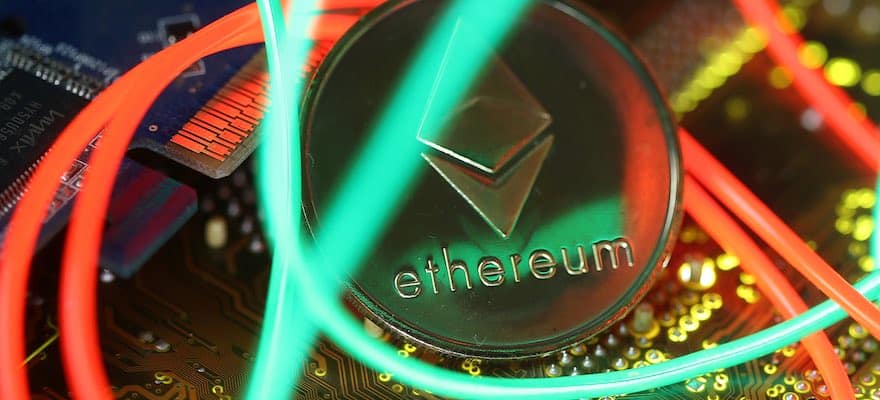
However, the face that governance happens in a decentralized manner on blockchain networks can also mean that changes are, at times, happen slowly; because there isn’t just one small group of individuals making decisions about the future of a network from the top down, it can take time to gather support, for example, to changes in a network’s protocol.
On the Ethereum network, these issues have manifested in other ways: while transaction speed may not be much of a concern on Ethereum as it is on Bitcoin, there has been quite a bit of chatter about another aspect of Ethereum’s protocol: the ability to manually set transaction fees.
What kinds of problems does this cause? And can Ethereum’s governance system efficiently implement a mechanism that will stop the problem from taking place in the future?
In June, an Ethereum users $5.2 million in fees on two ETH transactions--the reasons are unclear
Transaction fees on the Ethereum network are referred to as “gas”, which is Priced in sub-units of the cryptocurrency ether, known as 'gwei'. Users can manually set the price of gas on each transaction.
The ability to manually set transaction fees was included in the Ethereum protocol as a way for users to be able to have a higher degree of control over the speed of their transactions. However, this can go awry.
The next day, the same user paid the same amount of fees on a transaction worth $86,400.
(To be clear, many Bitcoin wallets also allow transaction senders to manually set their fees; as such, there have been incidents on the Bitcoin network in which, for example, a transaction sender paid a $137,081.31 fee on a transaction that amounted to $5.)
However, regarding the most recent Ethereum incident--it was later theorized that the massive fees may have either been accidental or the result of a malfunction in the users’ digital wallet; others theorized that the massive fees could have been an attempt at money laundering or some other kind of foul play.
The mining pools that receive the fees are working toward solutions
The transaction fees were sent to two mining pools: Bitfly and Sparkpool. Both of the companies announced on twitter that they were working to seek a solution from the transaction sender, presumably so that the funds could be returned.
“We believe that this was an accident and in order to resolve this issue the tx sender should contact us at via DM or our support portal at https://support.bitfly.at immediately!,” Bitfly wrote.
Today our Ethermine ETH pool mined a transaction with a ~10.000 ETH fee (https://t.co/B5gRWOrcPf). We believe that this was an accident and in order to resolve this issue the tx sender should contact us at via DM or our support portal at https://t.co/JgwX4tGYr4 immediately! pic.twitter.com/sWxVRx5muv
SparkPool tweeted that it was “further investigating the incident of unusually high tx fee, and you are welcome to provide clues to support@sparkpool.com.”
“[...] There will be a solution in the end,” the mining pool said.
We are further investigating the incident of unusually high tx fee, and you are welcome to provide clues to support@sparkpool.com. SparkPool has had the experience of handling similar issues properly. There will be a solution in the end. https://t.co/mZc49Q0Y4r
Getting into the belly of the beast: Ethereum's protocol may need to change
While it certainly may be positive to see these mining pools exhibiting such ethical behavior, the fact remains that the mechanism that allowed the incident to happen in the first place is still there.
Indeed, Evgen Verzun, cybersecurity expert, inventor, serial entrepreneur and founder of HyperSphere.ai, explained to Finance Magnates that “the main issues are connected to the current transaction inclusion system.”
Evgen Verzun, cybersecurity expert, inventor, serial entrepreneur and founder of HyperSphere.ai.
“Users are able to encourage miners to add their transactions to the next block,” and thereby speeding up their transaction time, “by increasing the gasPrice parameter, identified as the ‘price of transaction’.”
“Miners, being rational, will always try to fill the new blocks with transactions that make more money, that's why transactions with higher than average gasPrice parameters are usually included in the first available block (auction model),” Verzun explained.
EIP-1559 can make mass-exit games viable because it is the first secure oracle for on-chain congestion. https://t.co/rKun24a0Aj
This can lead to confusion. Even if users don’t go so far as to accidentally set their gas price to $2.6 million, “in times of high network congestion, especially when blocks are close to full, required gasPrice may spike dramatically as users try to out-bid each other for inclusion,” Verzun said.
When this happens, “even if your wallet uses some transaction pricing algorithms, users still may pay too much to get their transaction into an almost full next block.”
In other words, “currently, wallets do their best to calculate the estimated gas fee on the spot, which isn’t always 100% accurate, resulting in overpayment on fees,” explained Olivia Lovenmark, Director of Content at cryptocurrency exchange OKCoin.
Olivia Lovenmark, Director of Content at cryptocurrency exchange OKCoin.
However, the Ethereum community is working on a solution. Vitalik Buterin, the creator of the Ethereum network, said that the massive transaction fees were “definitely a mistake”, and that Ethereum Improvement Proposal (EIP) 1559 should “greatly reduce the rate of things like this happening by reducing the need for users to try to set fees manually.”
While it’s not clear whether or not EIP 1559 will be adopted yet, many in the Ethereum community believe that it could be integral to the future of the network. Ari Paul, co-founder and CIO of BlockTower Capital, tweeted that the proposal was “make or break” for the network.
“To date, gas fees have been determined based on an inefficient auction process,”OKCoin’s Olivia Lovenmark explained. to Finance Magnates.
“EIP 1559 would improve this by making it clear what fees are with an automated system that is comparable to Bitcoin's difficulty adjustment in the sense that both adjust based on network volume and usage.”
Indeed, “EIP 1159 proposes a ‘BASEFEE,’ which automatically adjusts to the network’s congestion level of transactions, providing a ‘market rate’ instead of users referencing prices paid.”
Evgen Verzun explained to Finance Magnates that on a practical level, if EIP 1559 was to be implemented, “transaction sending would stay easy for users, allowing them to manage two parameters: gasPremium--a ‘tip’ to miners for the inclusion of your transaction into the next block--and feeCap,” which is also optional.
‘feeCap’ is a mechanism that allows Ethereum users to set a “maximum price users agree to pay as transaction fee,” Verzun explained. At the same time, “the ‘BaseFee’ parameter, meaning a fee to perform transactions, is proposed to stay common for all users in a single moment, be calculated by the system and unable to change by users.”
The end result is that “such parameters may give ETH users better control of their transaction fees spending. Also some researchers are sure that EIP 1559 would let the system to improve the estimation of the fee, except for the times when there is congestion in the price for short periods,” he continued. “In these cases, the previous auction-based model may still be used, increasing the basic transaction fee.”
EIP 1559 would also add a deflationary mechanism
The proposal also is also slated to implement a change to the economics of Ethereum.
Indeed, Alon Muroch, chief executive and co-founder of Blox, explained to Finance Magnates that “EIP 1559 also represents a significant monetary policy change to Ethereum, with a deflationary mechanism being added to Ethereum.”
“The burning of fees, combined with a future reduction of the rate at which ETH is burned could eventually lead to a deflationary environment,” he said.
It is possible that within a couple years, ETH may not only be the most useful asset in crypto given its on-chain economy, but also crypto’s most credibly scarce asset given ETH 2.0 and EIP 1559.
This seems to be the primary reason that BlockTower’s Ari Paul believes that EIP 1559 is essential to the future of Ethereum: “reducing supply as a function of usage is a simple and convincing narrative as to why all sorts of activity on the platform will long-term benefit investors in L1,” he wrote on Twitter, addressing Vitalik Buterin.
“That narrative will be necessary for the next order of magnitude of growth in diverse ethereum holders.”
6/ Reducing supply as a function of usage is a simple and convincing narrative as to why all sorts of activity on the platform will long-term benefit investors in L1. That narrative will be necessary for the next order of magnitude of growth in diverse ethereum holders,
However, Evgen Verzun explained to Finance Magnates that “the baseFee denominated in ETH is proposed to be burnt as ‘payment to the network’, decreasing the outstanding supply of Ethereum over the long run.”
“This may affect ETH price, making it more scarce, but we should remember that EIP 1559 relates to current Proof-of-Work-based ETH 1.x network” that is not supposed to be permanent, Verzun said. Proof-of-Work refers to the mining-powered algorithm that powers the Ethereum network.
Alon Muroch, CEO of Blox.io.
Additionally, “even if EIP 1559 would be accepted, and assuming ETH 1.x runs adjacent to ETH 2.0 for several years,” Verzun believes that the amount of ETH burned as a result of EIP 1559 may be insignificant in light of the forthcoming ETH 2.0 release, since the new Ethereum algorithm will be “based on a Proof-of-Stake consensus algorithm and a completely new mining principle.”
No guarantees, and no timeline
Of course, EIP 1559 won’t fix everything: “as with anything new proposed to the Ethereum system, there are security concerns around edge cases,” Alon Muroch pointed out.
Additionally, the proposal is still in a fairly early stage of development; there’s still no guarantee that EIP 1559 will be adopted by the Ethereum network--or, if it will be implemented, there’s no clear timeline for when.
For now, a group Ethereum developers are seeking funding from the community to continue working on the proposal, and have opened a request for funding on Gitcoin.
“This grant will support the research and development of blockspace & fee market improvements for Ethereum, in particular of EIP-1559,” the fund’s description reads, adding that “the Gitcoin Grant will *not* cover all of the costs associated with this work.”
The subtlety is that this is a second-order claim about where the *risks* (ie. variance) get shifted, and not a claim that EIP 1559 introduces new possibilities in terms of *expected values*.
“ConsenSys, through their hiring of implementers in PegaSys and the Ethereum Foundation, through their hiring of various researchers and implementers, are already covering the bulk of the development costs for this EIP,” the description explains.
Funding will be used for client implementations, specification audits, bug bounties, and other testing and development work: the description says that “changing the fee market on Ethereum is one of the largest changes being planned for Eth1 to date. It will require extensive testing, including potentially new testnets and/or private ‘ephemeral testnets.’”
However, the face that governance happens in a decentralized manner on blockchain networks can also mean that changes are, at times, happen slowly; because there isn’t just one small group of individuals making decisions about the future of a network from the top down, it can take time to gather support, for example, to changes in a network’s protocol.
On the Ethereum network, these issues have manifested in other ways: while transaction speed may not be much of a concern on Ethereum as it is on Bitcoin, there has been quite a bit of chatter about another aspect of Ethereum’s protocol: the ability to manually set transaction fees.
What kinds of problems does this cause? And can Ethereum’s governance system efficiently implement a mechanism that will stop the problem from taking place in the future?
In June, an Ethereum users $5.2 million in fees on two ETH transactions--the reasons are unclear
Transaction fees on the Ethereum network are referred to as “gas”, which is Priced in sub-units of the cryptocurrency ether, known as 'gwei'. Users can manually set the price of gas on each transaction.
The ability to manually set transaction fees was included in the Ethereum protocol as a way for users to be able to have a higher degree of control over the speed of their transactions. However, this can go awry.
The next day, the same user paid the same amount of fees on a transaction worth $86,400.
(To be clear, many Bitcoin wallets also allow transaction senders to manually set their fees; as such, there have been incidents on the Bitcoin network in which, for example, a transaction sender paid a $137,081.31 fee on a transaction that amounted to $5.)
However, regarding the most recent Ethereum incident--it was later theorized that the massive fees may have either been accidental or the result of a malfunction in the users’ digital wallet; others theorized that the massive fees could have been an attempt at money laundering or some other kind of foul play.
The mining pools that receive the fees are working toward solutions
The transaction fees were sent to two mining pools: Bitfly and Sparkpool. Both of the companies announced on twitter that they were working to seek a solution from the transaction sender, presumably so that the funds could be returned.
“We believe that this was an accident and in order to resolve this issue the tx sender should contact us at via DM or our support portal at https://support.bitfly.at immediately!,” Bitfly wrote.
Today our Ethermine ETH pool mined a transaction with a ~10.000 ETH fee (https://t.co/B5gRWOrcPf). We believe that this was an accident and in order to resolve this issue the tx sender should contact us at via DM or our support portal at https://t.co/JgwX4tGYr4 immediately! pic.twitter.com/sWxVRx5muv
SparkPool tweeted that it was “further investigating the incident of unusually high tx fee, and you are welcome to provide clues to support@sparkpool.com.”
“[...] There will be a solution in the end,” the mining pool said.
We are further investigating the incident of unusually high tx fee, and you are welcome to provide clues to support@sparkpool.com. SparkPool has had the experience of handling similar issues properly. There will be a solution in the end. https://t.co/mZc49Q0Y4r
Getting into the belly of the beast: Ethereum's protocol may need to change
While it certainly may be positive to see these mining pools exhibiting such ethical behavior, the fact remains that the mechanism that allowed the incident to happen in the first place is still there.
Indeed, Evgen Verzun, cybersecurity expert, inventor, serial entrepreneur and founder of HyperSphere.ai, explained to Finance Magnates that “the main issues are connected to the current transaction inclusion system.”
Evgen Verzun, cybersecurity expert, inventor, serial entrepreneur and founder of HyperSphere.ai.
“Users are able to encourage miners to add their transactions to the next block,” and thereby speeding up their transaction time, “by increasing the gasPrice parameter, identified as the ‘price of transaction’.”
“Miners, being rational, will always try to fill the new blocks with transactions that make more money, that's why transactions with higher than average gasPrice parameters are usually included in the first available block (auction model),” Verzun explained.
EIP-1559 can make mass-exit games viable because it is the first secure oracle for on-chain congestion. https://t.co/rKun24a0Aj
This can lead to confusion. Even if users don’t go so far as to accidentally set their gas price to $2.6 million, “in times of high network congestion, especially when blocks are close to full, required gasPrice may spike dramatically as users try to out-bid each other for inclusion,” Verzun said.
When this happens, “even if your wallet uses some transaction pricing algorithms, users still may pay too much to get their transaction into an almost full next block.”
In other words, “currently, wallets do their best to calculate the estimated gas fee on the spot, which isn’t always 100% accurate, resulting in overpayment on fees,” explained Olivia Lovenmark, Director of Content at cryptocurrency exchange OKCoin.
Olivia Lovenmark, Director of Content at cryptocurrency exchange OKCoin.
However, the Ethereum community is working on a solution. Vitalik Buterin, the creator of the Ethereum network, said that the massive transaction fees were “definitely a mistake”, and that Ethereum Improvement Proposal (EIP) 1559 should “greatly reduce the rate of things like this happening by reducing the need for users to try to set fees manually.”
While it’s not clear whether or not EIP 1559 will be adopted yet, many in the Ethereum community believe that it could be integral to the future of the network. Ari Paul, co-founder and CIO of BlockTower Capital, tweeted that the proposal was “make or break” for the network.
“To date, gas fees have been determined based on an inefficient auction process,”OKCoin’s Olivia Lovenmark explained. to Finance Magnates.
“EIP 1559 would improve this by making it clear what fees are with an automated system that is comparable to Bitcoin's difficulty adjustment in the sense that both adjust based on network volume and usage.”
Indeed, “EIP 1159 proposes a ‘BASEFEE,’ which automatically adjusts to the network’s congestion level of transactions, providing a ‘market rate’ instead of users referencing prices paid.”
Evgen Verzun explained to Finance Magnates that on a practical level, if EIP 1559 was to be implemented, “transaction sending would stay easy for users, allowing them to manage two parameters: gasPremium--a ‘tip’ to miners for the inclusion of your transaction into the next block--and feeCap,” which is also optional.
‘feeCap’ is a mechanism that allows Ethereum users to set a “maximum price users agree to pay as transaction fee,” Verzun explained. At the same time, “the ‘BaseFee’ parameter, meaning a fee to perform transactions, is proposed to stay common for all users in a single moment, be calculated by the system and unable to change by users.”
The end result is that “such parameters may give ETH users better control of their transaction fees spending. Also some researchers are sure that EIP 1559 would let the system to improve the estimation of the fee, except for the times when there is congestion in the price for short periods,” he continued. “In these cases, the previous auction-based model may still be used, increasing the basic transaction fee.”
EIP 1559 would also add a deflationary mechanism
The proposal also is also slated to implement a change to the economics of Ethereum.
Indeed, Alon Muroch, chief executive and co-founder of Blox, explained to Finance Magnates that “EIP 1559 also represents a significant monetary policy change to Ethereum, with a deflationary mechanism being added to Ethereum.”
“The burning of fees, combined with a future reduction of the rate at which ETH is burned could eventually lead to a deflationary environment,” he said.
It is possible that within a couple years, ETH may not only be the most useful asset in crypto given its on-chain economy, but also crypto’s most credibly scarce asset given ETH 2.0 and EIP 1559.
This seems to be the primary reason that BlockTower’s Ari Paul believes that EIP 1559 is essential to the future of Ethereum: “reducing supply as a function of usage is a simple and convincing narrative as to why all sorts of activity on the platform will long-term benefit investors in L1,” he wrote on Twitter, addressing Vitalik Buterin.
“That narrative will be necessary for the next order of magnitude of growth in diverse ethereum holders.”
6/ Reducing supply as a function of usage is a simple and convincing narrative as to why all sorts of activity on the platform will long-term benefit investors in L1. That narrative will be necessary for the next order of magnitude of growth in diverse ethereum holders,
However, Evgen Verzun explained to Finance Magnates that “the baseFee denominated in ETH is proposed to be burnt as ‘payment to the network’, decreasing the outstanding supply of Ethereum over the long run.”
“This may affect ETH price, making it more scarce, but we should remember that EIP 1559 relates to current Proof-of-Work-based ETH 1.x network” that is not supposed to be permanent, Verzun said. Proof-of-Work refers to the mining-powered algorithm that powers the Ethereum network.
Alon Muroch, CEO of Blox.io.
Additionally, “even if EIP 1559 would be accepted, and assuming ETH 1.x runs adjacent to ETH 2.0 for several years,” Verzun believes that the amount of ETH burned as a result of EIP 1559 may be insignificant in light of the forthcoming ETH 2.0 release, since the new Ethereum algorithm will be “based on a Proof-of-Stake consensus algorithm and a completely new mining principle.”
No guarantees, and no timeline
Of course, EIP 1559 won’t fix everything: “as with anything new proposed to the Ethereum system, there are security concerns around edge cases,” Alon Muroch pointed out.
Additionally, the proposal is still in a fairly early stage of development; there’s still no guarantee that EIP 1559 will be adopted by the Ethereum network--or, if it will be implemented, there’s no clear timeline for when.
For now, a group Ethereum developers are seeking funding from the community to continue working on the proposal, and have opened a request for funding on Gitcoin.
“This grant will support the research and development of blockspace & fee market improvements for Ethereum, in particular of EIP-1559,” the fund’s description reads, adding that “the Gitcoin Grant will *not* cover all of the costs associated with this work.”
The subtlety is that this is a second-order claim about where the *risks* (ie. variance) get shifted, and not a claim that EIP 1559 introduces new possibilities in terms of *expected values*.
“ConsenSys, through their hiring of implementers in PegaSys and the Ethereum Foundation, through their hiring of various researchers and implementers, are already covering the bulk of the development costs for this EIP,” the description explains.
Funding will be used for client implementations, specification audits, bug bounties, and other testing and development work: the description says that “changing the fee market on Ethereum is one of the largest changes being planned for Eth1 to date. It will require extensive testing, including potentially new testnets and/or private ‘ephemeral testnets.’”
Rachel is a self-taught crypto geek and a passionate writer. She believes in the power that the written word has to educate, connect and empower individuals to make positive and powerful financial choices. She is the Podcast Host and a Cryptocurrency Editor at Finance Magnates.
Binance Launches Retail AI Assistant, Repackages Existing Trading Tools
Featured Videos
AvaTrade to Acquire Most of FXCM; NAGA Raises $8M
AvaTrade to Acquire Most of FXCM; NAGA Raises $8M
AvaTrade to Acquire Most of FXCM; NAGA Raises $8M
AvaTrade to Acquire Most of FXCM; NAGA Raises $8M
Today’s financial news recap covers AvaTrade agrees to acquire most of FXCM, NAGA secures eight million dollars in new financing, and Wise seeks a tax settlement in the UK.
Finance Magnates Daily Recap brings you the latest news from forex and CFD brokers, fintech, payments, cryptocurrency, digital assets, trading platforms, financial regulation and global markets.
Get the key company news, executive moves, deals, regulatory updates and market developments of the day, in just a few minutes. New episodes published every weekday.
Read more: https://www.financemagnates.com
#FinanceMagnates #ForexNews #FintechNews
Today’s financial news recap covers AvaTrade agrees to acquire most of FXCM, NAGA secures eight million dollars in new financing, and Wise seeks a tax settlement in the UK.
Finance Magnates Daily Recap brings you the latest news from forex and CFD brokers, fintech, payments, cryptocurrency, digital assets, trading platforms, financial regulation and global markets.
Get the key company news, executive moves, deals, regulatory updates and market developments of the day, in just a few minutes. New episodes published every weekday.
Read more: https://www.financemagnates.com
#FinanceMagnates #ForexNews #FintechNews
Today’s financial news recap covers AvaTrade agrees to acquire most of FXCM, NAGA secures eight million dollars in new financing, and Wise seeks a tax settlement in the UK.
Finance Magnates Daily Recap brings you the latest news from forex and CFD brokers, fintech, payments, cryptocurrency, digital assets, trading platforms, financial regulation and global markets.
Get the key company news, executive moves, deals, regulatory updates and market developments of the day, in just a few minutes. New episodes published every weekday.
Read more: https://www.financemagnates.com
#FinanceMagnates #ForexNews #FintechNews
Today’s financial news recap covers AvaTrade agrees to acquire most of FXCM, NAGA secures eight million dollars in new financing, and Wise seeks a tax settlement in the UK.
Finance Magnates Daily Recap brings you the latest news from forex and CFD brokers, fintech, payments, cryptocurrency, digital assets, trading platforms, financial regulation and global markets.
Get the key company news, executive moves, deals, regulatory updates and market developments of the day, in just a few minutes. New episodes published every weekday.
Read more: https://www.financemagnates.com
#FinanceMagnates #ForexNews #FintechNews
XTB Adds Overnight US Stock Trading; Nasdaq Ventures Invests in One Trading
XTB Adds Overnight US Stock Trading; Nasdaq Ventures Invests in One Trading
XTB Adds Overnight US Stock Trading; Nasdaq Ventures Invests in One Trading
XTB Adds Overnight US Stock Trading; Nasdaq Ventures Invests in One Trading
XTB Adds Overnight US Stock Trading; Nasdaq Ventures Invests in One Trading
XTB Adds Overnight US Stock Trading; Nasdaq Ventures Invests in One Trading
Today’s financial news recap covers XTB expands overnight US stock trading, Fortrade reports higher revenue, Nasdaq backs One Trading, and Vest Labs raises 13 million dollars.
Finance Magnates Daily Recap brings you the latest news from forex and CFD brokers, fintech, payments, cryptocurrency, digital assets, trading platforms, financial regulation and global markets.
Get the key company news, executive moves, deals, regulatory updates and market developments of the day, in just a few minutes. New episodes published every weekday.
Read more: https://www.financemagnates.com
#FinanceMagnates #ForexNews #FintechNews
Today’s financial news recap covers XTB expands overnight US stock trading, Fortrade reports higher revenue, Nasdaq backs One Trading, and Vest Labs raises 13 million dollars.
Finance Magnates Daily Recap brings you the latest news from forex and CFD brokers, fintech, payments, cryptocurrency, digital assets, trading platforms, financial regulation and global markets.
Get the key company news, executive moves, deals, regulatory updates and market developments of the day, in just a few minutes. New episodes published every weekday.
Read more: https://www.financemagnates.com
#FinanceMagnates #ForexNews #FintechNews
Today’s financial news recap covers XTB expands overnight US stock trading, Fortrade reports higher revenue, Nasdaq backs One Trading, and Vest Labs raises 13 million dollars.
Finance Magnates Daily Recap brings you the latest news from forex and CFD brokers, fintech, payments, cryptocurrency, digital assets, trading platforms, financial regulation and global markets.
Get the key company news, executive moves, deals, regulatory updates and market developments of the day, in just a few minutes. New episodes published every weekday.
Read more: https://www.financemagnates.com
#FinanceMagnates #ForexNews #FintechNews
Today’s financial news recap covers XTB expands overnight US stock trading, Fortrade reports higher revenue, Nasdaq backs One Trading, and Vest Labs raises 13 million dollars.
Finance Magnates Daily Recap brings you the latest news from forex and CFD brokers, fintech, payments, cryptocurrency, digital assets, trading platforms, financial regulation and global markets.
Get the key company news, executive moves, deals, regulatory updates and market developments of the day, in just a few minutes. New episodes published every weekday.
Read more: https://www.financemagnates.com
#FinanceMagnates #ForexNews #FintechNews
Today’s financial news recap covers XTB expands overnight US stock trading, Fortrade reports higher revenue, Nasdaq backs One Trading, and Vest Labs raises 13 million dollars.
Finance Magnates Daily Recap brings you the latest news from forex and CFD brokers, fintech, payments, cryptocurrency, digital assets, trading platforms, financial regulation and global markets.
Get the key company news, executive moves, deals, regulatory updates and market developments of the day, in just a few minutes. New episodes published every weekday.
Read more: https://www.financemagnates.com
#FinanceMagnates #ForexNews #FintechNews
Today’s financial news recap covers XTB expands overnight US stock trading, Fortrade reports higher revenue, Nasdaq backs One Trading, and Vest Labs raises 13 million dollars.
Finance Magnates Daily Recap brings you the latest news from forex and CFD brokers, fintech, payments, cryptocurrency, digital assets, trading platforms, financial regulation and global markets.
Get the key company news, executive moves, deals, regulatory updates and market developments of the day, in just a few minutes. New episodes published every weekday.
Read more: https://www.financemagnates.com
#FinanceMagnates #ForexNews #FintechNews
CMC Founder Downplays Volatility Hit; Devexperts Names CEO
CMC Founder Downplays Volatility Hit; Devexperts Names CEO
CMC Founder Downplays Volatility Hit; Devexperts Names CEO
CMC Founder Downplays Volatility Hit; Devexperts Names CEO
CMC Founder Downplays Volatility Hit; Devexperts Names CEO
CMC Founder Downplays Volatility Hit; Devexperts Names CEO
Today’s financial news recap covers low volatility pressures brokers, Devexperts names a new CEO, Saxo cuts onboarding time, and OKX reaches a 25 billion dollar valuation.
Finance Magnates Daily Recap brings you the latest news from forex and CFD brokers, fintech, payments, cryptocurrency, digital assets, trading platforms, financial regulation and global markets.
Get the key company news, executive moves, deals, regulatory updates and market developments of the day, in just a few minutes. New episodes published every weekday.
Read more: https://www.financemagnates.com
#FinanceMagnates #ForexNews #FintechNews
Today’s financial news recap covers low volatility pressures brokers, Devexperts names a new CEO, Saxo cuts onboarding time, and OKX reaches a 25 billion dollar valuation.
Finance Magnates Daily Recap brings you the latest news from forex and CFD brokers, fintech, payments, cryptocurrency, digital assets, trading platforms, financial regulation and global markets.
Get the key company news, executive moves, deals, regulatory updates and market developments of the day, in just a few minutes. New episodes published every weekday.
Read more: https://www.financemagnates.com
#FinanceMagnates #ForexNews #FintechNews
Today’s financial news recap covers low volatility pressures brokers, Devexperts names a new CEO, Saxo cuts onboarding time, and OKX reaches a 25 billion dollar valuation.
Finance Magnates Daily Recap brings you the latest news from forex and CFD brokers, fintech, payments, cryptocurrency, digital assets, trading platforms, financial regulation and global markets.
Get the key company news, executive moves, deals, regulatory updates and market developments of the day, in just a few minutes. New episodes published every weekday.
Read more: https://www.financemagnates.com
#FinanceMagnates #ForexNews #FintechNews
Today’s financial news recap covers low volatility pressures brokers, Devexperts names a new CEO, Saxo cuts onboarding time, and OKX reaches a 25 billion dollar valuation.
Finance Magnates Daily Recap brings you the latest news from forex and CFD brokers, fintech, payments, cryptocurrency, digital assets, trading platforms, financial regulation and global markets.
Get the key company news, executive moves, deals, regulatory updates and market developments of the day, in just a few minutes. New episodes published every weekday.
Read more: https://www.financemagnates.com
#FinanceMagnates #ForexNews #FintechNews
Today’s financial news recap covers low volatility pressures brokers, Devexperts names a new CEO, Saxo cuts onboarding time, and OKX reaches a 25 billion dollar valuation.
Finance Magnates Daily Recap brings you the latest news from forex and CFD brokers, fintech, payments, cryptocurrency, digital assets, trading platforms, financial regulation and global markets.
Get the key company news, executive moves, deals, regulatory updates and market developments of the day, in just a few minutes. New episodes published every weekday.
Read more: https://www.financemagnates.com
#FinanceMagnates #ForexNews #FintechNews
Today’s financial news recap covers low volatility pressures brokers, Devexperts names a new CEO, Saxo cuts onboarding time, and OKX reaches a 25 billion dollar valuation.
Finance Magnates Daily Recap brings you the latest news from forex and CFD brokers, fintech, payments, cryptocurrency, digital assets, trading platforms, financial regulation and global markets.
Get the key company news, executive moves, deals, regulatory updates and market developments of the day, in just a few minutes. New episodes published every weekday.
Read more: https://www.financemagnates.com
#FinanceMagnates #ForexNews #FintechNews
Today’s financial news recap covers Trade Nation buys FXCM's UK client book, Trading 212 reports higher revenue, the CFTC's move to allow perpetual index futures.
Finance Magnates Daily Recap brings you the latest news from forex and CFD brokers, fintech, payments, cryptocurrency, digital assets, trading platforms, financial regulation and global markets.
Get the key company news, executive moves, deals, regulatory updates and market developments of the day, in just a few minutes. New episodes published every weekday.
Read more: https://www.financemagnates.com
#FinanceMagnates #ForexNews #FintechNews
Today’s financial news recap covers Trade Nation buys FXCM's UK client book, Trading 212 reports higher revenue, the CFTC's move to allow perpetual index futures.
Finance Magnates Daily Recap brings you the latest news from forex and CFD brokers, fintech, payments, cryptocurrency, digital assets, trading platforms, financial regulation and global markets.
Get the key company news, executive moves, deals, regulatory updates and market developments of the day, in just a few minutes. New episodes published every weekday.
Read more: https://www.financemagnates.com
#FinanceMagnates #ForexNews #FintechNews
Today’s financial news recap covers Trade Nation buys FXCM's UK client book, Trading 212 reports higher revenue, the CFTC's move to allow perpetual index futures.
Finance Magnates Daily Recap brings you the latest news from forex and CFD brokers, fintech, payments, cryptocurrency, digital assets, trading platforms, financial regulation and global markets.
Get the key company news, executive moves, deals, regulatory updates and market developments of the day, in just a few minutes. New episodes published every weekday.
Read more: https://www.financemagnates.com
#FinanceMagnates #ForexNews #FintechNews
Today’s financial news recap covers Trade Nation buys FXCM's UK client book, Trading 212 reports higher revenue, the CFTC's move to allow perpetual index futures.
Finance Magnates Daily Recap brings you the latest news from forex and CFD brokers, fintech, payments, cryptocurrency, digital assets, trading platforms, financial regulation and global markets.
Get the key company news, executive moves, deals, regulatory updates and market developments of the day, in just a few minutes. New episodes published every weekday.
Read more: https://www.financemagnates.com
#FinanceMagnates #ForexNews #FintechNews
Today’s financial news recap covers Trade Nation buys FXCM's UK client book, Trading 212 reports higher revenue, the CFTC's move to allow perpetual index futures.
Finance Magnates Daily Recap brings you the latest news from forex and CFD brokers, fintech, payments, cryptocurrency, digital assets, trading platforms, financial regulation and global markets.
Get the key company news, executive moves, deals, regulatory updates and market developments of the day, in just a few minutes. New episodes published every weekday.
Read more: https://www.financemagnates.com
#FinanceMagnates #ForexNews #FintechNews
Today’s financial news recap covers Trade Nation buys FXCM's UK client book, Trading 212 reports higher revenue, the CFTC's move to allow perpetual index futures.
Finance Magnates Daily Recap brings you the latest news from forex and CFD brokers, fintech, payments, cryptocurrency, digital assets, trading platforms, financial regulation and global markets.
Get the key company news, executive moves, deals, regulatory updates and market developments of the day, in just a few minutes. New episodes published every weekday.
Read more: https://www.financemagnates.com
#FinanceMagnates #ForexNews #FintechNews
Your career isn’t a linear path.
Your career isn’t a linear path.
Your career isn’t a linear path.
Your career isn’t a linear path.
Your career isn’t a linear path.
Your career isn’t a linear path.
Roles change. Career goals change. Sometimes you want a completely new challenge.
But the skills and knowledge you build along the way can stay with you and give you something to build on.
For Jeff Patterson, that continued growth is key to long-term career development.
You bring the skills. FM Academy helps you build the knowledge.
#FMAcademy #FinanceMagnates #FinanceCareers #ProfessionalDevelopment #Fintech
Roles change. Career goals change. Sometimes you want a completely new challenge.
But the skills and knowledge you build along the way can stay with you and give you something to build on.
For Jeff Patterson, that continued growth is key to long-term career development.
You bring the skills. FM Academy helps you build the knowledge.
#FMAcademy #FinanceMagnates #FinanceCareers #ProfessionalDevelopment #Fintech
Roles change. Career goals change. Sometimes you want a completely new challenge.
But the skills and knowledge you build along the way can stay with you and give you something to build on.
For Jeff Patterson, that continued growth is key to long-term career development.
You bring the skills. FM Academy helps you build the knowledge.
#FMAcademy #FinanceMagnates #FinanceCareers #ProfessionalDevelopment #Fintech
Roles change. Career goals change. Sometimes you want a completely new challenge.
But the skills and knowledge you build along the way can stay with you and give you something to build on.
For Jeff Patterson, that continued growth is key to long-term career development.
You bring the skills. FM Academy helps you build the knowledge.
#FMAcademy #FinanceMagnates #FinanceCareers #ProfessionalDevelopment #Fintech
Roles change. Career goals change. Sometimes you want a completely new challenge.
But the skills and knowledge you build along the way can stay with you and give you something to build on.
For Jeff Patterson, that continued growth is key to long-term career development.
You bring the skills. FM Academy helps you build the knowledge.
#FMAcademy #FinanceMagnates #FinanceCareers #ProfessionalDevelopment #Fintech
Roles change. Career goals change. Sometimes you want a completely new challenge.
But the skills and knowledge you build along the way can stay with you and give you something to build on.
For Jeff Patterson, that continued growth is key to long-term career development.
You bring the skills. FM Academy helps you build the knowledge.
#FMAcademy #FinanceMagnates #FinanceCareers #ProfessionalDevelopment #Fintech