As the USD continues to drop in value, Bitcoin hodlers believe that BTC could be up for an increase.
Finance Magnates
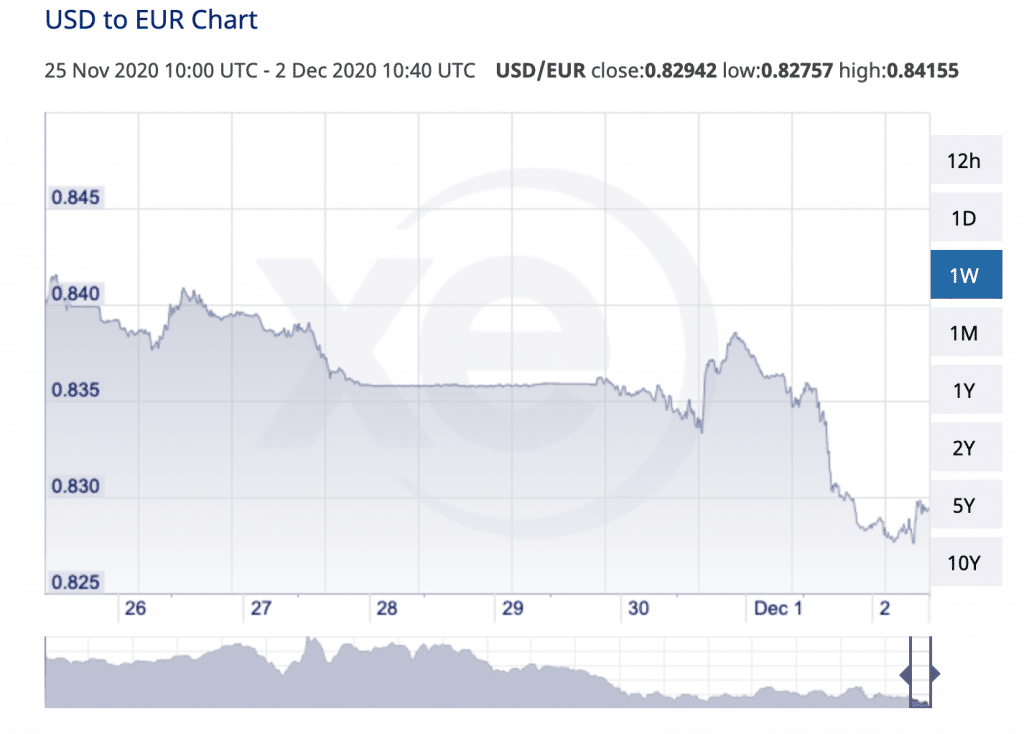
Reports have emerged throughout the week that the United States dollar has reached its lowest point in more than two and a half years. The social, political and macro-economic consequences of prolonged weakness in the dollar could be severe. However, in the short term, there is one group of people that seems to be looking on the bright side of a weakened USD: Bitcoin hodlers.
In one respect, the reasons for this seem to be quite clear: in a recent note to clients, MUFG currency analyst, Lee Hardman wrote that “the improving outlook for global growth combined with strong signals from the Fed that it will maintain loose monetary policy well into the economic recovery has been encouraging a weaker U.S. dollar.”
Indeed, after COVID-19 began to wreck the United States economy earlier in the year, the Federal government responded with quantitative easing (QE). As more dollars are 'printed' and added into the economy, the more that many economists believe that the dollar was on the path to possible inflation and weakening over the long term.
While it is too early to say exactly where the dollar will go from here, some analysts believe this moment of weakness could be the first sign of what is to come.
”A Weak Dollar Is a Dream Scenario for Crypto.”
Indeed, “a weak Dollar is a dream scenario for crypto,” said Bill Noble, the Chief Technical Analyst at Token Metrics, to Finance Magnates. Bitcoin and other cryptocurrencies “are a legitimate component of the foreign exchange market, and it's like any other currency. It rises as the Dollar falls.”
Bill Noble, Chief Technical Analyst at Token Metrics.
Noble pointed out that the forces currently at play in the United States market do not signal a USD recovery anytime soon: “The price of food and housing are rising, and people are losing purchasing power. If the image of the dollar continues to deteriorate, inflation will become more prominent,” he said.
Therefore, he believes that consumers in the United States will eventually be forced to turn to Bitcoin as a safe haven for their savings, just as many in Venezuela, Turkey, Iran, and other countries have done when their nations were stricken with hyperinflation or other economic crises.
“Consumers will be forced to own crypto in their PayPal account to protect their purchasing power,” Noble said. “Consumers will need crypto to rise as the Dollar falls. The rising crypto can be sold to be used to buy higher-priced goods like food and housing.”
“It Would Be a Mistake to Assume That Bitcoin's Price Can Only Go up If the US Dollar Weakens.”
“However, Bitcoin has historically not shown a consistent correlation with the movement of the US dollar, or other asset classes for that matter,” Hileman explained. “Given the broad range of uses for Bitcoin, including some non-monetary uses like Microsoft's digital identity system, it would be a mistake to assume that Bitcoin's price can only go up if the US dollar weakens.”
Dr. Garrick Hileman, Head of Research at Blockchain.com.
Still, many analysts believe that, good for Bitcoin or not, further stimulus efforts are likely to continue to weaken the USD.
“Nobody believes that the negative impact of the virus will end anytime soon,” Token Metric’s Bill Noble told Finance Magnates. “The new Treasury Secretary, Janet Yellen, is a former Fed chairman. QE is in her blood.”
“Yes and no,” Garrick Hileman said. “The US dollar has a path to recovery against other major fiat currencies, particularly if events like a no-deal BREXIT or a major European debt sustainability crisis were to unfold.”
Additionally, “USD-backed stablecoins and a well designed official US digital dollar launched in the not-too-distant future could also help boost demand and use.”
Still, Hileman pointed out that the dollar’s days may be numbered: “many feel any recovery by the US dollar against a crypto asset like Bitcoin will be relatively short-lived,” he said. Though, this view is likely relatively insular within the Bitcoin community.
In any case, “a growing number of people would prefer to store value in something scarce like Bitcoin, with an algorithmically hard-capped total supply, than something with a supply growing in perpetuity like the US dollar,” Hileman said.
And indeed, Bitcoin is increasingly being added to the portfolios of multi-billion dollar corporations.
At the end of the day, Bitcoin and the dollar (or any other fiat currency, for that matter) share an inextricable bond: the value of Bitcoin is still denominated in dollars or euros or yen; we have not reached a point in which Bitcoins are valuable in and of themselves. In almost all settings, Bitcoin must be converted into fiat currency before it can be used to purchase just about anything.
Of course, there is a possibility that this could change. Many will point to the letter from the US Office of the Comptroller of the Currency that permitted US banks to offer custody services for cryptocurrencies earlier in the year. Still, the world seems to be a long way from measuring Bitcoin alone, without bringing fiat currencies into the mix of measuring BTC’s value.
Other Factors Have Also Been Driving Bitcoin up
And, even if the point at which Bitcoin will no longer be measured in fiat currency is in the distant future, Zac Prince, Chief Executive of BlockFi, believes that “the narrative of Bitcoin as a hedge against devaluation, as a portfolio diversifier and as an asset with the potential for outperformance has finally stuck.”
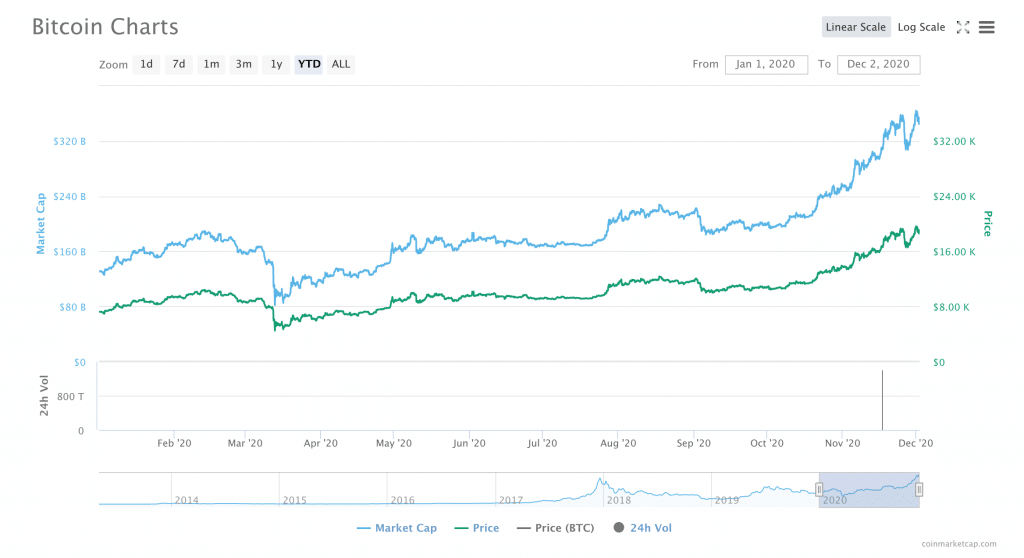
“Seeing is believing, and 150%+ growth year-to-date has clearly been enough for the curious to take the plunge,” he said.
Zac Prince, Chief Executive of NYC-based cryptocurrency lending firm, BlockFi.
Prince pointed out that both institutional and retail investors have been contributing to the rally, and, as such, the members of both groups may increasingly see Bitcoin as a hedge against a weakening dollar.
“Institutional inflows may have been much of the driving force behind this rally, but it’s been retail investors that have helped Bitcoin pick up steam in recent weeks,” he said. However, data from his own company shows that “balances on BlockFi’s retail accounts have grown over 25% in the last 30 days, compared to just under 10% for institutional.”
“That said, we’ve seen a 145% growth in institutional activity over the last three months, which is exponentially higher than what we saw in retail,” he explained. “This aligns with how institutional sentiment has grown over the last three months, as notable hedge fund managers and CEOs disclosed their investment and their support for Bitcoin.”
As for Bitcoin’s next move, Prince believes that “a fresh wave of retail activity may be what finally pushes Bitcoin past $20,000. Some of these traders may be willing to take some profit and walk away after that point, but there’s a much larger contingent of retail investors that are going to take every chance possible to add to their holdings,” he said. “The runway to $25,000 is looking clearer by the day.”
What’s Next?
Still, while an increase in the price of Bitcoin is a positive side-effect of a weakening US dollar, Alex Mashinsky pointed out to Finance Magnates in October that “as plans for big government spending continue, combined with the Fed continuing to do whatever it takes to keep the safety net under the US economy, you can see how a mountain of debt, greater than all the debt anyone had in history, will come bearing down on the US dollar.”
Alex Mashinsky, Founder and CEO of Celsius.
Over the long term, this could seriously degrade the Dollar’s position as the world’s most popular currency: “we may be able to hold back the debt for a while, but each passing day we deplete the trust the entire world has in the dollar and soon enough we will be left holding the bag with all these worthless dollars,” Mashinsky explained.
In other words, it is possible that we could be staring down the barrel of the end of the dollar’s status as the world’s dominant currency.
Indeed, Steve Ehrlich, Chief Executive and Founder of Voyager Digital told Finance Magnates that the end of the dollar as the world’s reserve currency is “most certainly possible.”
‘History tells us that World dominant currencies are always temporary cycles which only last 100 to 200 years,” he said.
But, the US still has a chance to turn things around: “for the sake of the American economy though, we hope this isn't the case, that we find a new era ushered in by American innovation in combination with digital currencies,” Ehrlich said.
Steve Ehrlich, Chief Executive Officer and Co-founder of crypto trading platform, Voyager.
Reports have emerged throughout the week that the United States dollar has reached its lowest point in more than two and a half years. The social, political and macro-economic consequences of prolonged weakness in the dollar could be severe. However, in the short term, there is one group of people that seems to be looking on the bright side of a weakened USD: Bitcoin hodlers.
In one respect, the reasons for this seem to be quite clear: in a recent note to clients, MUFG currency analyst, Lee Hardman wrote that “the improving outlook for global growth combined with strong signals from the Fed that it will maintain loose monetary policy well into the economic recovery has been encouraging a weaker U.S. dollar.”
Indeed, after COVID-19 began to wreck the United States economy earlier in the year, the Federal government responded with quantitative easing (QE). As more dollars are 'printed' and added into the economy, the more that many economists believe that the dollar was on the path to possible inflation and weakening over the long term.
While it is too early to say exactly where the dollar will go from here, some analysts believe this moment of weakness could be the first sign of what is to come.
”A Weak Dollar Is a Dream Scenario for Crypto.”
Indeed, “a weak Dollar is a dream scenario for crypto,” said Bill Noble, the Chief Technical Analyst at Token Metrics, to Finance Magnates. Bitcoin and other cryptocurrencies “are a legitimate component of the foreign exchange market, and it's like any other currency. It rises as the Dollar falls.”
Bill Noble, Chief Technical Analyst at Token Metrics.
Noble pointed out that the forces currently at play in the United States market do not signal a USD recovery anytime soon: “The price of food and housing are rising, and people are losing purchasing power. If the image of the dollar continues to deteriorate, inflation will become more prominent,” he said.
Therefore, he believes that consumers in the United States will eventually be forced to turn to Bitcoin as a safe haven for their savings, just as many in Venezuela, Turkey, Iran, and other countries have done when their nations were stricken with hyperinflation or other economic crises.
“Consumers will be forced to own crypto in their PayPal account to protect their purchasing power,” Noble said. “Consumers will need crypto to rise as the Dollar falls. The rising crypto can be sold to be used to buy higher-priced goods like food and housing.”
“It Would Be a Mistake to Assume That Bitcoin's Price Can Only Go up If the US Dollar Weakens.”
“However, Bitcoin has historically not shown a consistent correlation with the movement of the US dollar, or other asset classes for that matter,” Hileman explained. “Given the broad range of uses for Bitcoin, including some non-monetary uses like Microsoft's digital identity system, it would be a mistake to assume that Bitcoin's price can only go up if the US dollar weakens.”
Dr. Garrick Hileman, Head of Research at Blockchain.com.
Still, many analysts believe that, good for Bitcoin or not, further stimulus efforts are likely to continue to weaken the USD.
“Nobody believes that the negative impact of the virus will end anytime soon,” Token Metric’s Bill Noble told Finance Magnates. “The new Treasury Secretary, Janet Yellen, is a former Fed chairman. QE is in her blood.”
“Yes and no,” Garrick Hileman said. “The US dollar has a path to recovery against other major fiat currencies, particularly if events like a no-deal BREXIT or a major European debt sustainability crisis were to unfold.”
Additionally, “USD-backed stablecoins and a well designed official US digital dollar launched in the not-too-distant future could also help boost demand and use.”
Still, Hileman pointed out that the dollar’s days may be numbered: “many feel any recovery by the US dollar against a crypto asset like Bitcoin will be relatively short-lived,” he said. Though, this view is likely relatively insular within the Bitcoin community.
In any case, “a growing number of people would prefer to store value in something scarce like Bitcoin, with an algorithmically hard-capped total supply, than something with a supply growing in perpetuity like the US dollar,” Hileman said.
And indeed, Bitcoin is increasingly being added to the portfolios of multi-billion dollar corporations.
At the end of the day, Bitcoin and the dollar (or any other fiat currency, for that matter) share an inextricable bond: the value of Bitcoin is still denominated in dollars or euros or yen; we have not reached a point in which Bitcoins are valuable in and of themselves. In almost all settings, Bitcoin must be converted into fiat currency before it can be used to purchase just about anything.
Of course, there is a possibility that this could change. Many will point to the letter from the US Office of the Comptroller of the Currency that permitted US banks to offer custody services for cryptocurrencies earlier in the year. Still, the world seems to be a long way from measuring Bitcoin alone, without bringing fiat currencies into the mix of measuring BTC’s value.
Other Factors Have Also Been Driving Bitcoin up
And, even if the point at which Bitcoin will no longer be measured in fiat currency is in the distant future, Zac Prince, Chief Executive of BlockFi, believes that “the narrative of Bitcoin as a hedge against devaluation, as a portfolio diversifier and as an asset with the potential for outperformance has finally stuck.”
“Seeing is believing, and 150%+ growth year-to-date has clearly been enough for the curious to take the plunge,” he said.
Zac Prince, Chief Executive of NYC-based cryptocurrency lending firm, BlockFi.
Prince pointed out that both institutional and retail investors have been contributing to the rally, and, as such, the members of both groups may increasingly see Bitcoin as a hedge against a weakening dollar.
“Institutional inflows may have been much of the driving force behind this rally, but it’s been retail investors that have helped Bitcoin pick up steam in recent weeks,” he said. However, data from his own company shows that “balances on BlockFi’s retail accounts have grown over 25% in the last 30 days, compared to just under 10% for institutional.”
“That said, we’ve seen a 145% growth in institutional activity over the last three months, which is exponentially higher than what we saw in retail,” he explained. “This aligns with how institutional sentiment has grown over the last three months, as notable hedge fund managers and CEOs disclosed their investment and their support for Bitcoin.”
As for Bitcoin’s next move, Prince believes that “a fresh wave of retail activity may be what finally pushes Bitcoin past $20,000. Some of these traders may be willing to take some profit and walk away after that point, but there’s a much larger contingent of retail investors that are going to take every chance possible to add to their holdings,” he said. “The runway to $25,000 is looking clearer by the day.”
What’s Next?
Still, while an increase in the price of Bitcoin is a positive side-effect of a weakening US dollar, Alex Mashinsky pointed out to Finance Magnates in October that “as plans for big government spending continue, combined with the Fed continuing to do whatever it takes to keep the safety net under the US economy, you can see how a mountain of debt, greater than all the debt anyone had in history, will come bearing down on the US dollar.”
Alex Mashinsky, Founder and CEO of Celsius.
Over the long term, this could seriously degrade the Dollar’s position as the world’s most popular currency: “we may be able to hold back the debt for a while, but each passing day we deplete the trust the entire world has in the dollar and soon enough we will be left holding the bag with all these worthless dollars,” Mashinsky explained.
In other words, it is possible that we could be staring down the barrel of the end of the dollar’s status as the world’s dominant currency.
Indeed, Steve Ehrlich, Chief Executive and Founder of Voyager Digital told Finance Magnates that the end of the dollar as the world’s reserve currency is “most certainly possible.”
‘History tells us that World dominant currencies are always temporary cycles which only last 100 to 200 years,” he said.
But, the US still has a chance to turn things around: “for the sake of the American economy though, we hope this isn't the case, that we find a new era ushered in by American innovation in combination with digital currencies,” Ehrlich said.
Steve Ehrlich, Chief Executive Officer and Co-founder of crypto trading platform, Voyager.
Rachel is a self-taught crypto geek and a passionate writer. She believes in the power that the written word has to educate, connect and empower individuals to make positive and powerful financial choices. She is the Podcast Host and a Cryptocurrency Editor at Finance Magnates.
Crypto Built More Rails, but the Next Battle Is Over How Much Work a Dollar Can Do
Featured Videos
FP Markets Winner Spotlight 🏆 | Global Broker of the Year 2025 #Trading #Broker #Innovation #Shorts
FP Markets Winner Spotlight 🏆 | Global Broker of the Year 2025 #Trading #Broker #Innovation #Shorts
FP Markets Winner Spotlight 🏆 | Global Broker of the Year 2025 #Trading #Broker #Innovation #Shorts
FP Markets Winner Spotlight 🏆 | Global Broker of the Year 2025 #Trading #Broker #Innovation #Shorts
FP Markets takes the spotlight as Global Broker of the Year 2025 at the Finance Magnates Awards.
Martin Stoilov, Head of Client Experience, shares that trust, innovation, and people played a key role in the company’s success, supported by a strong foundation of integrity and client-centricity.
Following this milestone, FP Markets continues to focus on growth, technology investment, and its core values of transparency and excellence.
👉 Be part of FM Awards 2026: https://awards.financemagnates.com/#nominate
FP Markets takes the spotlight as Global Broker of the Year 2025 at the Finance Magnates Awards.
Martin Stoilov, Head of Client Experience, shares that trust, innovation, and people played a key role in the company’s success, supported by a strong foundation of integrity and client-centricity.
Following this milestone, FP Markets continues to focus on growth, technology investment, and its core values of transparency and excellence.
👉 Be part of FM Awards 2026: https://awards.financemagnates.com/#nominate
FP Markets takes the spotlight as Global Broker of the Year 2025 at the Finance Magnates Awards.
Martin Stoilov, Head of Client Experience, shares that trust, innovation, and people played a key role in the company’s success, supported by a strong foundation of integrity and client-centricity.
Following this milestone, FP Markets continues to focus on growth, technology investment, and its core values of transparency and excellence.
👉 Be part of FM Awards 2026: https://awards.financemagnates.com/#nominate
FP Markets takes the spotlight as Global Broker of the Year 2025 at the Finance Magnates Awards.
Martin Stoilov, Head of Client Experience, shares that trust, innovation, and people played a key role in the company’s success, supported by a strong foundation of integrity and client-centricity.
Following this milestone, FP Markets continues to focus on growth, technology investment, and its core values of transparency and excellence.
👉 Be part of FM Awards 2026: https://awards.financemagnates.com/#nominate
In this video, we review @HolaPrimeMarketsOfficial, a multi-asset forex and CFDs broker offering different account types, trading platforms, and flexible trading conditions.
We cover the broker’s overall offering, including account options, trading environment, platforms like MT4 and MT5, and additional services such as managed accounts and fast withdrawals.
Watch the full video to see if Hola Prime Markets fits your trading needs.
📣 Stay up to date with the latest in finance and trading. Follow Finance Magnates for industry news, insights, and global event coverage.
Connect with us:
🔗 LinkedIn: /financemagnates
👍 Facebook: /financemagnates
📸 Instagram: https://www.instagram.com/financemagnates
🐦 X: https://x.com/financemagnates
🎥 TikTok: https://www.tiktok.com/tag/financemagnates
▶️ YouTube: /@financemagnates_official
#HolaPrime #ForexBroker #CFDTrading #FinanceMagnates #Trading #Forex #BrokerReview
In this video, we review @HolaPrimeMarketsOfficial, a multi-asset forex and CFDs broker offering different account types, trading platforms, and flexible trading conditions.
We cover the broker’s overall offering, including account options, trading environment, platforms like MT4 and MT5, and additional services such as managed accounts and fast withdrawals.
Watch the full video to see if Hola Prime Markets fits your trading needs.
📣 Stay up to date with the latest in finance and trading. Follow Finance Magnates for industry news, insights, and global event coverage.
Connect with us:
🔗 LinkedIn: /financemagnates
👍 Facebook: /financemagnates
📸 Instagram: https://www.instagram.com/financemagnates
🐦 X: https://x.com/financemagnates
🎥 TikTok: https://www.tiktok.com/tag/financemagnates
▶️ YouTube: /@financemagnates_official
#HolaPrime #ForexBroker #CFDTrading #FinanceMagnates #Trading #Forex #BrokerReview
In this video, we review @HolaPrimeMarketsOfficial, a multi-asset forex and CFDs broker offering different account types, trading platforms, and flexible trading conditions.
We cover the broker’s overall offering, including account options, trading environment, platforms like MT4 and MT5, and additional services such as managed accounts and fast withdrawals.
Watch the full video to see if Hola Prime Markets fits your trading needs.
📣 Stay up to date with the latest in finance and trading. Follow Finance Magnates for industry news, insights, and global event coverage.
Connect with us:
🔗 LinkedIn: /financemagnates
👍 Facebook: /financemagnates
📸 Instagram: https://www.instagram.com/financemagnates
🐦 X: https://x.com/financemagnates
🎥 TikTok: https://www.tiktok.com/tag/financemagnates
▶️ YouTube: /@financemagnates_official
#HolaPrime #ForexBroker #CFDTrading #FinanceMagnates #Trading #Forex #BrokerReview
In this video, we review @HolaPrimeMarketsOfficial, a multi-asset forex and CFDs broker offering different account types, trading platforms, and flexible trading conditions.
We cover the broker’s overall offering, including account options, trading environment, platforms like MT4 and MT5, and additional services such as managed accounts and fast withdrawals.
Watch the full video to see if Hola Prime Markets fits your trading needs.
📣 Stay up to date with the latest in finance and trading. Follow Finance Magnates for industry news, insights, and global event coverage.
Connect with us:
🔗 LinkedIn: /financemagnates
👍 Facebook: /financemagnates
📸 Instagram: https://www.instagram.com/financemagnates
🐦 X: https://x.com/financemagnates
🎥 TikTok: https://www.tiktok.com/tag/financemagnates
▶️ YouTube: /@financemagnates_official
#HolaPrime #ForexBroker #CFDTrading #FinanceMagnates #Trading #Forex #BrokerReview
In this video, we review @HolaPrimeMarketsOfficial, a multi-asset forex and CFDs broker offering different account types, trading platforms, and flexible trading conditions.
We cover the broker’s overall offering, including account options, trading environment, platforms like MT4 and MT5, and additional services such as managed accounts and fast withdrawals.
Watch the full video to see if Hola Prime Markets fits your trading needs.
📣 Stay up to date with the latest in finance and trading. Follow Finance Magnates for industry news, insights, and global event coverage.
Connect with us:
🔗 LinkedIn: /financemagnates
👍 Facebook: /financemagnates
📸 Instagram: https://www.instagram.com/financemagnates
🐦 X: https://x.com/financemagnates
🎥 TikTok: https://www.tiktok.com/tag/financemagnates
▶️ YouTube: /@financemagnates_official
#HolaPrime #ForexBroker #CFDTrading #FinanceMagnates #Trading #Forex #BrokerReview
In this video, we review @HolaPrimeMarketsOfficial, a multi-asset forex and CFDs broker offering different account types, trading platforms, and flexible trading conditions.
We cover the broker’s overall offering, including account options, trading environment, platforms like MT4 and MT5, and additional services such as managed accounts and fast withdrawals.
Watch the full video to see if Hola Prime Markets fits your trading needs.
📣 Stay up to date with the latest in finance and trading. Follow Finance Magnates for industry news, insights, and global event coverage.
Connect with us:
🔗 LinkedIn: /financemagnates
👍 Facebook: /financemagnates
📸 Instagram: https://www.instagram.com/financemagnates
🐦 X: https://x.com/financemagnates
🎥 TikTok: https://www.tiktok.com/tag/financemagnates
▶️ YouTube: /@financemagnates_official
#HolaPrime #ForexBroker #CFDTrading #FinanceMagnates #Trading #Forex #BrokerReview
Hola Prime Review: What You Need to Know | Full Breakdown by Finance Magnates
Hola Prime Review: What You Need to Know | Full Breakdown by Finance Magnates
Hola Prime Review: What You Need to Know | Full Breakdown by Finance Magnates
Hola Prime Review: What You Need to Know | Full Breakdown by Finance Magnates
Hola Prime Review: What You Need to Know | Full Breakdown by Finance Magnates
Hola Prime Review: What You Need to Know | Full Breakdown by Finance Magnates
In this video, we review @HolaPrime_Global, a proprietary trading firm offering evaluation programs and performance-based payouts in simulated market environments.
We cover how the challenge model works, including account types, profit splits (up to 95%), trading rules, and what it takes to reach a funded account. You’ll also learn about available platforms like MT4, MT5, cTrader, and more, along with insights into payouts, support, and trading conditions.
Watch the full video to see if Hola Prime fits your trading style.
📣 Stay up to date with the latest in finance and trading. Follow Finance Magnates for industry news, insights, and global event coverage.
Connect with us:
🔗 LinkedIn: /financemagnates
👍 Facebook: /financemagnates
📸 Instagram: https://www.instagram.com/financemagnates
🐦 X: https://x.com/financemagnates
🎥 TikTok: https://www.tiktok.com/tag/financemagnates
▶️ YouTube: /@financemagnates_official
#HolaPrime #PropFirm #Trading #FinanceMagnates #Forex #FuturesTrading #TradingReview #PropFirmReview
In this video, we review @HolaPrime_Global, a proprietary trading firm offering evaluation programs and performance-based payouts in simulated market environments.
We cover how the challenge model works, including account types, profit splits (up to 95%), trading rules, and what it takes to reach a funded account. You’ll also learn about available platforms like MT4, MT5, cTrader, and more, along with insights into payouts, support, and trading conditions.
Watch the full video to see if Hola Prime fits your trading style.
📣 Stay up to date with the latest in finance and trading. Follow Finance Magnates for industry news, insights, and global event coverage.
Connect with us:
🔗 LinkedIn: /financemagnates
👍 Facebook: /financemagnates
📸 Instagram: https://www.instagram.com/financemagnates
🐦 X: https://x.com/financemagnates
🎥 TikTok: https://www.tiktok.com/tag/financemagnates
▶️ YouTube: /@financemagnates_official
#HolaPrime #PropFirm #Trading #FinanceMagnates #Forex #FuturesTrading #TradingReview #PropFirmReview
In this video, we review @HolaPrime_Global, a proprietary trading firm offering evaluation programs and performance-based payouts in simulated market environments.
We cover how the challenge model works, including account types, profit splits (up to 95%), trading rules, and what it takes to reach a funded account. You’ll also learn about available platforms like MT4, MT5, cTrader, and more, along with insights into payouts, support, and trading conditions.
Watch the full video to see if Hola Prime fits your trading style.
📣 Stay up to date with the latest in finance and trading. Follow Finance Magnates for industry news, insights, and global event coverage.
Connect with us:
🔗 LinkedIn: /financemagnates
👍 Facebook: /financemagnates
📸 Instagram: https://www.instagram.com/financemagnates
🐦 X: https://x.com/financemagnates
🎥 TikTok: https://www.tiktok.com/tag/financemagnates
▶️ YouTube: /@financemagnates_official
#HolaPrime #PropFirm #Trading #FinanceMagnates #Forex #FuturesTrading #TradingReview #PropFirmReview
In this video, we review @HolaPrime_Global, a proprietary trading firm offering evaluation programs and performance-based payouts in simulated market environments.
We cover how the challenge model works, including account types, profit splits (up to 95%), trading rules, and what it takes to reach a funded account. You’ll also learn about available platforms like MT4, MT5, cTrader, and more, along with insights into payouts, support, and trading conditions.
Watch the full video to see if Hola Prime fits your trading style.
📣 Stay up to date with the latest in finance and trading. Follow Finance Magnates for industry news, insights, and global event coverage.
Connect with us:
🔗 LinkedIn: /financemagnates
👍 Facebook: /financemagnates
📸 Instagram: https://www.instagram.com/financemagnates
🐦 X: https://x.com/financemagnates
🎥 TikTok: https://www.tiktok.com/tag/financemagnates
▶️ YouTube: /@financemagnates_official
#HolaPrime #PropFirm #Trading #FinanceMagnates #Forex #FuturesTrading #TradingReview #PropFirmReview
In this video, we review @HolaPrime_Global, a proprietary trading firm offering evaluation programs and performance-based payouts in simulated market environments.
We cover how the challenge model works, including account types, profit splits (up to 95%), trading rules, and what it takes to reach a funded account. You’ll also learn about available platforms like MT4, MT5, cTrader, and more, along with insights into payouts, support, and trading conditions.
Watch the full video to see if Hola Prime fits your trading style.
📣 Stay up to date with the latest in finance and trading. Follow Finance Magnates for industry news, insights, and global event coverage.
Connect with us:
🔗 LinkedIn: /financemagnates
👍 Facebook: /financemagnates
📸 Instagram: https://www.instagram.com/financemagnates
🐦 X: https://x.com/financemagnates
🎥 TikTok: https://www.tiktok.com/tag/financemagnates
▶️ YouTube: /@financemagnates_official
#HolaPrime #PropFirm #Trading #FinanceMagnates #Forex #FuturesTrading #TradingReview #PropFirmReview
In this video, we review @HolaPrime_Global, a proprietary trading firm offering evaluation programs and performance-based payouts in simulated market environments.
We cover how the challenge model works, including account types, profit splits (up to 95%), trading rules, and what it takes to reach a funded account. You’ll also learn about available platforms like MT4, MT5, cTrader, and more, along with insights into payouts, support, and trading conditions.
Watch the full video to see if Hola Prime fits your trading style.
📣 Stay up to date with the latest in finance and trading. Follow Finance Magnates for industry news, insights, and global event coverage.
Connect with us:
🔗 LinkedIn: /financemagnates
👍 Facebook: /financemagnates
📸 Instagram: https://www.instagram.com/financemagnates
🐦 X: https://x.com/financemagnates
🎥 TikTok: https://www.tiktok.com/tag/financemagnates
▶️ YouTube: /@financemagnates_official
#HolaPrime #PropFirm #Trading #FinanceMagnates #Forex #FuturesTrading #TradingReview #PropFirmReview
Axi Winner Spotlight 🏆 | Global Most Innovative Broker 2025 #Innovation #Trading #Fintech #Broker
Axi Winner Spotlight 🏆 | Global Most Innovative Broker 2025 #Innovation #Trading #Fintech #Broker
Axi Winner Spotlight 🏆 | Global Most Innovative Broker 2025 #Innovation #Trading #Fintech #Broker
Axi Winner Spotlight 🏆 | Global Most Innovative Broker 2025 #Innovation #Trading #Fintech #Broker
Axi Winner Spotlight 🏆 | Global Most Innovative Broker 2025 #Innovation #Trading #Fintech #Broker
Axi Winner Spotlight 🏆 | Global Most Innovative Broker 2025 #Innovation #Trading #Fintech #Broker
Axi takes the spotlight at the Finance Magnates Awards, winning Global Most Innovative Broker 2025.
Olivia Xenofontos and Ivanna Openko share how the team will feel: proud, motivated, and ready to keep delivering.
They also describe the night as well-organized, focused, and enjoyable for all.
👉 Be part of FM Awards 2026.
Axi takes the spotlight at the Finance Magnates Awards, winning Global Most Innovative Broker 2025.
Olivia Xenofontos and Ivanna Openko share how the team will feel: proud, motivated, and ready to keep delivering.
They also describe the night as well-organized, focused, and enjoyable for all.
👉 Be part of FM Awards 2026.
Axi takes the spotlight at the Finance Magnates Awards, winning Global Most Innovative Broker 2025.
Olivia Xenofontos and Ivanna Openko share how the team will feel: proud, motivated, and ready to keep delivering.
They also describe the night as well-organized, focused, and enjoyable for all.
👉 Be part of FM Awards 2026.
Axi takes the spotlight at the Finance Magnates Awards, winning Global Most Innovative Broker 2025.
Olivia Xenofontos and Ivanna Openko share how the team will feel: proud, motivated, and ready to keep delivering.
They also describe the night as well-organized, focused, and enjoyable for all.
👉 Be part of FM Awards 2026.
Axi takes the spotlight at the Finance Magnates Awards, winning Global Most Innovative Broker 2025.
Olivia Xenofontos and Ivanna Openko share how the team will feel: proud, motivated, and ready to keep delivering.
They also describe the night as well-organized, focused, and enjoyable for all.
👉 Be part of FM Awards 2026.
Axi takes the spotlight at the Finance Magnates Awards, winning Global Most Innovative Broker 2025.
Olivia Xenofontos and Ivanna Openko share how the team will feel: proud, motivated, and ready to keep delivering.
They also describe the night as well-organized, focused, and enjoyable for all.
👉 Be part of FM Awards 2026.
Recognition that matters.
Built on transparency.
Driven by the industry.
The Finance Magnates Awards 2026.
Nominations are now open.
🔗 https://awards.financemagnates.com/?utm_source=SM&utm_medium=social&utm_campaign=recognition-matters
Recognition that matters.
Built on transparency.
Driven by the industry.
The Finance Magnates Awards 2026.
Nominations are now open.
🔗 https://awards.financemagnates.com/?utm_source=SM&utm_medium=social&utm_campaign=recognition-matters
Recognition that matters.
Built on transparency.
Driven by the industry.
The Finance Magnates Awards 2026.
Nominations are now open.
🔗 https://awards.financemagnates.com/?utm_source=SM&utm_medium=social&utm_campaign=recognition-matters
Recognition that matters.
Built on transparency.
Driven by the industry.
The Finance Magnates Awards 2026.
Nominations are now open.
🔗 https://awards.financemagnates.com/?utm_source=SM&utm_medium=social&utm_campaign=recognition-matters
Recognition that matters.
Built on transparency.
Driven by the industry.
The Finance Magnates Awards 2026.
Nominations are now open.
🔗 https://awards.financemagnates.com/?utm_source=SM&utm_medium=social&utm_campaign=recognition-matters
Recognition that matters.
Built on transparency.
Driven by the industry.
The Finance Magnates Awards 2026.
Nominations are now open.
🔗 https://awards.financemagnates.com/?utm_source=SM&utm_medium=social&utm_campaign=recognition-matters