The creator of Dogecoin says that 50% of ICOs are created by fraudsters from a marketing background.
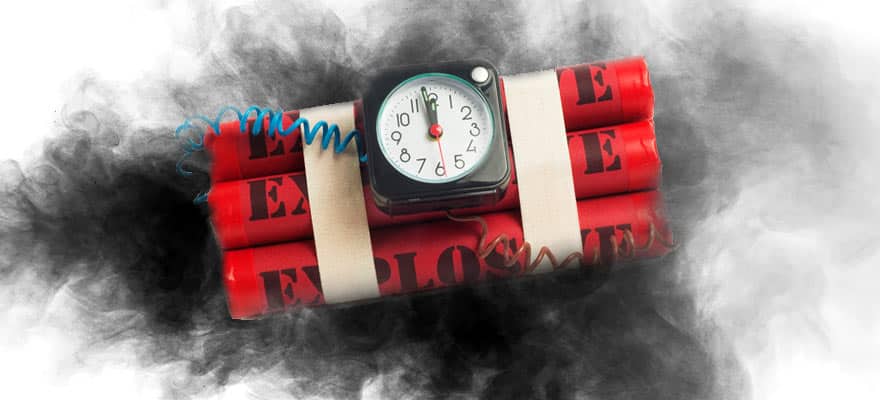
Serge Melki, A picture of a bubble
Jackson Palmer is the creator of Dogecoin - a cryptocurrency that started out as a joke but is today worth about $126 million. He since left, and now sounds very concerned about the current state of the crypto community.
"When you look at the currencies (or 'tokens') that these companies issue, you find that their only case of use today is people who bet on them to make a profit. These people have no interest in the technology they fund. All they care about is how much money they can make within a few weeks of the issue."
"Ethereum allows you to create your own currency with very little knowledge, instead of working a few days on Bitcoin's code, with Ethereum you can simply click on a few lines and you have a coin. There were a few people who understood this, and started an ICO, the idea is like a kickstarter, but, these ICOs raise huge amounts of money, in the order of hundreds of millions of dollars. And there's another difference: when you invest in a product in Kickstarter, you do not expect to earn, but people who invested in these projects found that the amount of money they invested doubled because the value of the tokens raised after the investment period was over.”
"New people have entered the field, people who do not come from crypto backgrounds, but from a marketing and sales background, because with Ethereum it is easy to click and create a new currency. These people were able, without much technical knowledge or ability to realize the product that they promote, make hundreds and hundreds of ICOs, and raise such money. "
"This creates a dynamic in which on the business side there are people who, if they tried to raise funds in the traditional manner, from a venture capital fund, they would not receive any funding because they do not have the skills or the experience to succeed in raising the projects they are talking about. There are many people who have not invested in anything before, who see it as a way to get rich quickly.”
"They are ordinary people who may take their retirement savings and put them in one of these ICOs, they are not experienced investors, they do not do due diligence, they do not know what to look for in a good investment. There's a lot of 'stupid money' around. "
"Here in the US, if you want to invest in a company you need to be an authorized investor. You have to have enough money so if you lose a little, it will not hurt you. But probably the poor people who put up their retirement money cannot afford to lose it. And in the end, if the bubble explodes, there will be a lot of people who will be left with nothing. "
Jackson Palmer, Dogecoin Creator
"I think there are people who have no malicious intent, people who are salespeople or third-level marketers who have no experience in building businesses, but they are very optimistic, they have a medium idea and they raise a lot of money. But they do not have enough experience to pick up the business. And there are also some malicious people who charge for it all, and there are about 100 new ICOs every week, and many of them, maybe even half, have no intention of building a product. They ride the wave of cryptocoins."
"The problem is that because fraudsters come from a marketing and sales background, they're very good at public relations, and they're very good at creating a professional image, and my guess is 50 percent."
"If you take traditional technology stratagems, the rule of thumb is that nine out of ten will fail in their first year, and I do not think there is any reason to assume that cryptocoins will be immune to it. I estimate that 99.9% of the ICOs will fail, not only nine out of ten. And even if it is a ratio of one tenth, then in projects that fail, a huge amount of money is invested, and it will simply disappear overnight. "
"If you look at previous bubbles, like the dot-com bubble, or even the real estate bubble in the US, which caused the subprime crisis, you can see that these bubbles can continue and continue until they reach critical mass."
"Historically, cryptocurrencies are progressing rapidly, and everything, including technology, is developing faster than the ordinary market. I think there will not necessarily be one thing that will ruin the field but a domino effect, and I think it will start as soon as 12 months pass for many of these ICO companies.”
"You have to remember that the rush in the field started in June 2017. It's only four months old, and many of the companies made big promises about the product they are going to supply. The entrepreneurs said, 'We're going to build all these things,' and raised $100 million. When things happen, investors will start asking questions, and as soon as people say, 'I'm getting out of the story, because you do not deliver the goods', there will be a chain effect and there will be a correction in the market.”
"That's what happens in any Ponzi scheme. When there are a lot of sellers, the price drops, and people who invested a thousand dollars in these companies may stay with a hundred, and when ordinary people who put their savings are losing money, panic begins, legal proceedings begin, and regulators come in. We may not see this domino effect until the beginning of next year, because these things are new and people are giving them the benefit of the doubt."
"During the dot-com bubble, the internet was a very immature technological platform, which was much harder to operate, and it was hard to do much of what can be done today. Crypto technology, and more widely distributed technology, is 5-10 years from this point where you can run on everyone's phones, and everyone will use it as part of their daily routine. "
"I'm very excited about the technology, because I think we need it, but like in the dot-com bubble, there are a lot of people trying to cut a coupon, and these companies will disappear, and in 5-10 years the technology will still be around. These ICOs will be around or not, the technology that drives them and the theory behind them will still be here, and it will be the engine of new and better things."
"We do not use Netscape today, and it's a good analogy, things come and go, and in exactly the same way Bitcoin and Ethereum can fade, there's nothing to prevent a better technology from leaping over them, building on the same ideas. In the current situation, valuations are far too high.”
Jackson Palmer is the creator of Dogecoin - a cryptocurrency that started out as a joke but is today worth about $126 million. He since left, and now sounds very concerned about the current state of the crypto community.
"When you look at the currencies (or 'tokens') that these companies issue, you find that their only case of use today is people who bet on them to make a profit. These people have no interest in the technology they fund. All they care about is how much money they can make within a few weeks of the issue."
"Ethereum allows you to create your own currency with very little knowledge, instead of working a few days on Bitcoin's code, with Ethereum you can simply click on a few lines and you have a coin. There were a few people who understood this, and started an ICO, the idea is like a kickstarter, but, these ICOs raise huge amounts of money, in the order of hundreds of millions of dollars. And there's another difference: when you invest in a product in Kickstarter, you do not expect to earn, but people who invested in these projects found that the amount of money they invested doubled because the value of the tokens raised after the investment period was over.”
"New people have entered the field, people who do not come from crypto backgrounds, but from a marketing and sales background, because with Ethereum it is easy to click and create a new currency. These people were able, without much technical knowledge or ability to realize the product that they promote, make hundreds and hundreds of ICOs, and raise such money. "
"This creates a dynamic in which on the business side there are people who, if they tried to raise funds in the traditional manner, from a venture capital fund, they would not receive any funding because they do not have the skills or the experience to succeed in raising the projects they are talking about. There are many people who have not invested in anything before, who see it as a way to get rich quickly.”
"They are ordinary people who may take their retirement savings and put them in one of these ICOs, they are not experienced investors, they do not do due diligence, they do not know what to look for in a good investment. There's a lot of 'stupid money' around. "
"Here in the US, if you want to invest in a company you need to be an authorized investor. You have to have enough money so if you lose a little, it will not hurt you. But probably the poor people who put up their retirement money cannot afford to lose it. And in the end, if the bubble explodes, there will be a lot of people who will be left with nothing. "
Jackson Palmer, Dogecoin Creator
"I think there are people who have no malicious intent, people who are salespeople or third-level marketers who have no experience in building businesses, but they are very optimistic, they have a medium idea and they raise a lot of money. But they do not have enough experience to pick up the business. And there are also some malicious people who charge for it all, and there are about 100 new ICOs every week, and many of them, maybe even half, have no intention of building a product. They ride the wave of cryptocoins."
"The problem is that because fraudsters come from a marketing and sales background, they're very good at public relations, and they're very good at creating a professional image, and my guess is 50 percent."
"If you take traditional technology stratagems, the rule of thumb is that nine out of ten will fail in their first year, and I do not think there is any reason to assume that cryptocoins will be immune to it. I estimate that 99.9% of the ICOs will fail, not only nine out of ten. And even if it is a ratio of one tenth, then in projects that fail, a huge amount of money is invested, and it will simply disappear overnight. "
"If you look at previous bubbles, like the dot-com bubble, or even the real estate bubble in the US, which caused the subprime crisis, you can see that these bubbles can continue and continue until they reach critical mass."
"Historically, cryptocurrencies are progressing rapidly, and everything, including technology, is developing faster than the ordinary market. I think there will not necessarily be one thing that will ruin the field but a domino effect, and I think it will start as soon as 12 months pass for many of these ICO companies.”
"You have to remember that the rush in the field started in June 2017. It's only four months old, and many of the companies made big promises about the product they are going to supply. The entrepreneurs said, 'We're going to build all these things,' and raised $100 million. When things happen, investors will start asking questions, and as soon as people say, 'I'm getting out of the story, because you do not deliver the goods', there will be a chain effect and there will be a correction in the market.”
"That's what happens in any Ponzi scheme. When there are a lot of sellers, the price drops, and people who invested a thousand dollars in these companies may stay with a hundred, and when ordinary people who put their savings are losing money, panic begins, legal proceedings begin, and regulators come in. We may not see this domino effect until the beginning of next year, because these things are new and people are giving them the benefit of the doubt."
"During the dot-com bubble, the internet was a very immature technological platform, which was much harder to operate, and it was hard to do much of what can be done today. Crypto technology, and more widely distributed technology, is 5-10 years from this point where you can run on everyone's phones, and everyone will use it as part of their daily routine. "
"I'm very excited about the technology, because I think we need it, but like in the dot-com bubble, there are a lot of people trying to cut a coupon, and these companies will disappear, and in 5-10 years the technology will still be around. These ICOs will be around or not, the technology that drives them and the theory behind them will still be here, and it will be the engine of new and better things."
"We do not use Netscape today, and it's a good analogy, things come and go, and in exactly the same way Bitcoin and Ethereum can fade, there's nothing to prevent a better technology from leaping over them, building on the same ideas. In the current situation, valuations are far too high.”
Crypto Built More Rails, but the Next Battle Is Over How Much Work a Dollar Can Do
Featured Videos
FP Markets Winner Spotlight 🏆 | Global Broker of the Year 2025 #Trading #Broker #Innovation #Shorts
FP Markets Winner Spotlight 🏆 | Global Broker of the Year 2025 #Trading #Broker #Innovation #Shorts
FP Markets Winner Spotlight 🏆 | Global Broker of the Year 2025 #Trading #Broker #Innovation #Shorts
FP Markets Winner Spotlight 🏆 | Global Broker of the Year 2025 #Trading #Broker #Innovation #Shorts
FP Markets takes the spotlight as Global Broker of the Year 2025 at the Finance Magnates Awards.
Martin Stoilov, Head of Client Experience, shares that trust, innovation, and people played a key role in the company’s success, supported by a strong foundation of integrity and client-centricity.
Following this milestone, FP Markets continues to focus on growth, technology investment, and its core values of transparency and excellence.
👉 Be part of FM Awards 2026: https://awards.financemagnates.com/#nominate
FP Markets takes the spotlight as Global Broker of the Year 2025 at the Finance Magnates Awards.
Martin Stoilov, Head of Client Experience, shares that trust, innovation, and people played a key role in the company’s success, supported by a strong foundation of integrity and client-centricity.
Following this milestone, FP Markets continues to focus on growth, technology investment, and its core values of transparency and excellence.
👉 Be part of FM Awards 2026: https://awards.financemagnates.com/#nominate
FP Markets takes the spotlight as Global Broker of the Year 2025 at the Finance Magnates Awards.
Martin Stoilov, Head of Client Experience, shares that trust, innovation, and people played a key role in the company’s success, supported by a strong foundation of integrity and client-centricity.
Following this milestone, FP Markets continues to focus on growth, technology investment, and its core values of transparency and excellence.
👉 Be part of FM Awards 2026: https://awards.financemagnates.com/#nominate
FP Markets takes the spotlight as Global Broker of the Year 2025 at the Finance Magnates Awards.
Martin Stoilov, Head of Client Experience, shares that trust, innovation, and people played a key role in the company’s success, supported by a strong foundation of integrity and client-centricity.
Following this milestone, FP Markets continues to focus on growth, technology investment, and its core values of transparency and excellence.
👉 Be part of FM Awards 2026: https://awards.financemagnates.com/#nominate
In this video, we review @HolaPrimeMarketsOfficial, a multi-asset forex and CFDs broker offering different account types, trading platforms, and flexible trading conditions.
We cover the broker’s overall offering, including account options, trading environment, platforms like MT4 and MT5, and additional services such as managed accounts and fast withdrawals.
Watch the full video to see if Hola Prime Markets fits your trading needs.
📣 Stay up to date with the latest in finance and trading. Follow Finance Magnates for industry news, insights, and global event coverage.
Connect with us:
🔗 LinkedIn: /financemagnates
👍 Facebook: /financemagnates
📸 Instagram: https://www.instagram.com/financemagnates
🐦 X: https://x.com/financemagnates
🎥 TikTok: https://www.tiktok.com/tag/financemagnates
▶️ YouTube: /@financemagnates_official
#HolaPrime #ForexBroker #CFDTrading #FinanceMagnates #Trading #Forex #BrokerReview
In this video, we review @HolaPrimeMarketsOfficial, a multi-asset forex and CFDs broker offering different account types, trading platforms, and flexible trading conditions.
We cover the broker’s overall offering, including account options, trading environment, platforms like MT4 and MT5, and additional services such as managed accounts and fast withdrawals.
Watch the full video to see if Hola Prime Markets fits your trading needs.
📣 Stay up to date with the latest in finance and trading. Follow Finance Magnates for industry news, insights, and global event coverage.
Connect with us:
🔗 LinkedIn: /financemagnates
👍 Facebook: /financemagnates
📸 Instagram: https://www.instagram.com/financemagnates
🐦 X: https://x.com/financemagnates
🎥 TikTok: https://www.tiktok.com/tag/financemagnates
▶️ YouTube: /@financemagnates_official
#HolaPrime #ForexBroker #CFDTrading #FinanceMagnates #Trading #Forex #BrokerReview
In this video, we review @HolaPrimeMarketsOfficial, a multi-asset forex and CFDs broker offering different account types, trading platforms, and flexible trading conditions.
We cover the broker’s overall offering, including account options, trading environment, platforms like MT4 and MT5, and additional services such as managed accounts and fast withdrawals.
Watch the full video to see if Hola Prime Markets fits your trading needs.
📣 Stay up to date with the latest in finance and trading. Follow Finance Magnates for industry news, insights, and global event coverage.
Connect with us:
🔗 LinkedIn: /financemagnates
👍 Facebook: /financemagnates
📸 Instagram: https://www.instagram.com/financemagnates
🐦 X: https://x.com/financemagnates
🎥 TikTok: https://www.tiktok.com/tag/financemagnates
▶️ YouTube: /@financemagnates_official
#HolaPrime #ForexBroker #CFDTrading #FinanceMagnates #Trading #Forex #BrokerReview
In this video, we review @HolaPrimeMarketsOfficial, a multi-asset forex and CFDs broker offering different account types, trading platforms, and flexible trading conditions.
We cover the broker’s overall offering, including account options, trading environment, platforms like MT4 and MT5, and additional services such as managed accounts and fast withdrawals.
Watch the full video to see if Hola Prime Markets fits your trading needs.
📣 Stay up to date with the latest in finance and trading. Follow Finance Magnates for industry news, insights, and global event coverage.
Connect with us:
🔗 LinkedIn: /financemagnates
👍 Facebook: /financemagnates
📸 Instagram: https://www.instagram.com/financemagnates
🐦 X: https://x.com/financemagnates
🎥 TikTok: https://www.tiktok.com/tag/financemagnates
▶️ YouTube: /@financemagnates_official
#HolaPrime #ForexBroker #CFDTrading #FinanceMagnates #Trading #Forex #BrokerReview
In this video, we review @HolaPrimeMarketsOfficial, a multi-asset forex and CFDs broker offering different account types, trading platforms, and flexible trading conditions.
We cover the broker’s overall offering, including account options, trading environment, platforms like MT4 and MT5, and additional services such as managed accounts and fast withdrawals.
Watch the full video to see if Hola Prime Markets fits your trading needs.
📣 Stay up to date with the latest in finance and trading. Follow Finance Magnates for industry news, insights, and global event coverage.
Connect with us:
🔗 LinkedIn: /financemagnates
👍 Facebook: /financemagnates
📸 Instagram: https://www.instagram.com/financemagnates
🐦 X: https://x.com/financemagnates
🎥 TikTok: https://www.tiktok.com/tag/financemagnates
▶️ YouTube: /@financemagnates_official
#HolaPrime #ForexBroker #CFDTrading #FinanceMagnates #Trading #Forex #BrokerReview
In this video, we review @HolaPrimeMarketsOfficial, a multi-asset forex and CFDs broker offering different account types, trading platforms, and flexible trading conditions.
We cover the broker’s overall offering, including account options, trading environment, platforms like MT4 and MT5, and additional services such as managed accounts and fast withdrawals.
Watch the full video to see if Hola Prime Markets fits your trading needs.
📣 Stay up to date with the latest in finance and trading. Follow Finance Magnates for industry news, insights, and global event coverage.
Connect with us:
🔗 LinkedIn: /financemagnates
👍 Facebook: /financemagnates
📸 Instagram: https://www.instagram.com/financemagnates
🐦 X: https://x.com/financemagnates
🎥 TikTok: https://www.tiktok.com/tag/financemagnates
▶️ YouTube: /@financemagnates_official
#HolaPrime #ForexBroker #CFDTrading #FinanceMagnates #Trading #Forex #BrokerReview
Hola Prime Review: What You Need to Know | Full Breakdown by Finance Magnates
Hola Prime Review: What You Need to Know | Full Breakdown by Finance Magnates
Hola Prime Review: What You Need to Know | Full Breakdown by Finance Magnates
Hola Prime Review: What You Need to Know | Full Breakdown by Finance Magnates
Hola Prime Review: What You Need to Know | Full Breakdown by Finance Magnates
Hola Prime Review: What You Need to Know | Full Breakdown by Finance Magnates
In this video, we review @HolaPrime_Global, a proprietary trading firm offering evaluation programs and performance-based payouts in simulated market environments.
We cover how the challenge model works, including account types, profit splits (up to 95%), trading rules, and what it takes to reach a funded account. You’ll also learn about available platforms like MT4, MT5, cTrader, and more, along with insights into payouts, support, and trading conditions.
Watch the full video to see if Hola Prime fits your trading style.
📣 Stay up to date with the latest in finance and trading. Follow Finance Magnates for industry news, insights, and global event coverage.
Connect with us:
🔗 LinkedIn: /financemagnates
👍 Facebook: /financemagnates
📸 Instagram: https://www.instagram.com/financemagnates
🐦 X: https://x.com/financemagnates
🎥 TikTok: https://www.tiktok.com/tag/financemagnates
▶️ YouTube: /@financemagnates_official
#HolaPrime #PropFirm #Trading #FinanceMagnates #Forex #FuturesTrading #TradingReview #PropFirmReview
In this video, we review @HolaPrime_Global, a proprietary trading firm offering evaluation programs and performance-based payouts in simulated market environments.
We cover how the challenge model works, including account types, profit splits (up to 95%), trading rules, and what it takes to reach a funded account. You’ll also learn about available platforms like MT4, MT5, cTrader, and more, along with insights into payouts, support, and trading conditions.
Watch the full video to see if Hola Prime fits your trading style.
📣 Stay up to date with the latest in finance and trading. Follow Finance Magnates for industry news, insights, and global event coverage.
Connect with us:
🔗 LinkedIn: /financemagnates
👍 Facebook: /financemagnates
📸 Instagram: https://www.instagram.com/financemagnates
🐦 X: https://x.com/financemagnates
🎥 TikTok: https://www.tiktok.com/tag/financemagnates
▶️ YouTube: /@financemagnates_official
#HolaPrime #PropFirm #Trading #FinanceMagnates #Forex #FuturesTrading #TradingReview #PropFirmReview
In this video, we review @HolaPrime_Global, a proprietary trading firm offering evaluation programs and performance-based payouts in simulated market environments.
We cover how the challenge model works, including account types, profit splits (up to 95%), trading rules, and what it takes to reach a funded account. You’ll also learn about available platforms like MT4, MT5, cTrader, and more, along with insights into payouts, support, and trading conditions.
Watch the full video to see if Hola Prime fits your trading style.
📣 Stay up to date with the latest in finance and trading. Follow Finance Magnates for industry news, insights, and global event coverage.
Connect with us:
🔗 LinkedIn: /financemagnates
👍 Facebook: /financemagnates
📸 Instagram: https://www.instagram.com/financemagnates
🐦 X: https://x.com/financemagnates
🎥 TikTok: https://www.tiktok.com/tag/financemagnates
▶️ YouTube: /@financemagnates_official
#HolaPrime #PropFirm #Trading #FinanceMagnates #Forex #FuturesTrading #TradingReview #PropFirmReview
In this video, we review @HolaPrime_Global, a proprietary trading firm offering evaluation programs and performance-based payouts in simulated market environments.
We cover how the challenge model works, including account types, profit splits (up to 95%), trading rules, and what it takes to reach a funded account. You’ll also learn about available platforms like MT4, MT5, cTrader, and more, along with insights into payouts, support, and trading conditions.
Watch the full video to see if Hola Prime fits your trading style.
📣 Stay up to date with the latest in finance and trading. Follow Finance Magnates for industry news, insights, and global event coverage.
Connect with us:
🔗 LinkedIn: /financemagnates
👍 Facebook: /financemagnates
📸 Instagram: https://www.instagram.com/financemagnates
🐦 X: https://x.com/financemagnates
🎥 TikTok: https://www.tiktok.com/tag/financemagnates
▶️ YouTube: /@financemagnates_official
#HolaPrime #PropFirm #Trading #FinanceMagnates #Forex #FuturesTrading #TradingReview #PropFirmReview
In this video, we review @HolaPrime_Global, a proprietary trading firm offering evaluation programs and performance-based payouts in simulated market environments.
We cover how the challenge model works, including account types, profit splits (up to 95%), trading rules, and what it takes to reach a funded account. You’ll also learn about available platforms like MT4, MT5, cTrader, and more, along with insights into payouts, support, and trading conditions.
Watch the full video to see if Hola Prime fits your trading style.
📣 Stay up to date with the latest in finance and trading. Follow Finance Magnates for industry news, insights, and global event coverage.
Connect with us:
🔗 LinkedIn: /financemagnates
👍 Facebook: /financemagnates
📸 Instagram: https://www.instagram.com/financemagnates
🐦 X: https://x.com/financemagnates
🎥 TikTok: https://www.tiktok.com/tag/financemagnates
▶️ YouTube: /@financemagnates_official
#HolaPrime #PropFirm #Trading #FinanceMagnates #Forex #FuturesTrading #TradingReview #PropFirmReview
In this video, we review @HolaPrime_Global, a proprietary trading firm offering evaluation programs and performance-based payouts in simulated market environments.
We cover how the challenge model works, including account types, profit splits (up to 95%), trading rules, and what it takes to reach a funded account. You’ll also learn about available platforms like MT4, MT5, cTrader, and more, along with insights into payouts, support, and trading conditions.
Watch the full video to see if Hola Prime fits your trading style.
📣 Stay up to date with the latest in finance and trading. Follow Finance Magnates for industry news, insights, and global event coverage.
Connect with us:
🔗 LinkedIn: /financemagnates
👍 Facebook: /financemagnates
📸 Instagram: https://www.instagram.com/financemagnates
🐦 X: https://x.com/financemagnates
🎥 TikTok: https://www.tiktok.com/tag/financemagnates
▶️ YouTube: /@financemagnates_official
#HolaPrime #PropFirm #Trading #FinanceMagnates #Forex #FuturesTrading #TradingReview #PropFirmReview
Axi Winner Spotlight 🏆 | Global Most Innovative Broker 2025 #Innovation #Trading #Fintech #Broker
Axi Winner Spotlight 🏆 | Global Most Innovative Broker 2025 #Innovation #Trading #Fintech #Broker
Axi Winner Spotlight 🏆 | Global Most Innovative Broker 2025 #Innovation #Trading #Fintech #Broker
Axi Winner Spotlight 🏆 | Global Most Innovative Broker 2025 #Innovation #Trading #Fintech #Broker
Axi Winner Spotlight 🏆 | Global Most Innovative Broker 2025 #Innovation #Trading #Fintech #Broker
Axi Winner Spotlight 🏆 | Global Most Innovative Broker 2025 #Innovation #Trading #Fintech #Broker
Axi takes the spotlight at the Finance Magnates Awards, winning Global Most Innovative Broker 2025.
Olivia Xenofontos and Ivanna Openko share how the team will feel: proud, motivated, and ready to keep delivering.
They also describe the night as well-organized, focused, and enjoyable for all.
👉 Be part of FM Awards 2026.
Axi takes the spotlight at the Finance Magnates Awards, winning Global Most Innovative Broker 2025.
Olivia Xenofontos and Ivanna Openko share how the team will feel: proud, motivated, and ready to keep delivering.
They also describe the night as well-organized, focused, and enjoyable for all.
👉 Be part of FM Awards 2026.
Axi takes the spotlight at the Finance Magnates Awards, winning Global Most Innovative Broker 2025.
Olivia Xenofontos and Ivanna Openko share how the team will feel: proud, motivated, and ready to keep delivering.
They also describe the night as well-organized, focused, and enjoyable for all.
👉 Be part of FM Awards 2026.
Axi takes the spotlight at the Finance Magnates Awards, winning Global Most Innovative Broker 2025.
Olivia Xenofontos and Ivanna Openko share how the team will feel: proud, motivated, and ready to keep delivering.
They also describe the night as well-organized, focused, and enjoyable for all.
👉 Be part of FM Awards 2026.
Axi takes the spotlight at the Finance Magnates Awards, winning Global Most Innovative Broker 2025.
Olivia Xenofontos and Ivanna Openko share how the team will feel: proud, motivated, and ready to keep delivering.
They also describe the night as well-organized, focused, and enjoyable for all.
👉 Be part of FM Awards 2026.
Axi takes the spotlight at the Finance Magnates Awards, winning Global Most Innovative Broker 2025.
Olivia Xenofontos and Ivanna Openko share how the team will feel: proud, motivated, and ready to keep delivering.
They also describe the night as well-organized, focused, and enjoyable for all.
👉 Be part of FM Awards 2026.
Recognition that matters.
Built on transparency.
Driven by the industry.
The Finance Magnates Awards 2026.
Nominations are now open.
🔗 https://awards.financemagnates.com/?utm_source=SM&utm_medium=social&utm_campaign=recognition-matters
Recognition that matters.
Built on transparency.
Driven by the industry.
The Finance Magnates Awards 2026.
Nominations are now open.
🔗 https://awards.financemagnates.com/?utm_source=SM&utm_medium=social&utm_campaign=recognition-matters
Recognition that matters.
Built on transparency.
Driven by the industry.
The Finance Magnates Awards 2026.
Nominations are now open.
🔗 https://awards.financemagnates.com/?utm_source=SM&utm_medium=social&utm_campaign=recognition-matters
Recognition that matters.
Built on transparency.
Driven by the industry.
The Finance Magnates Awards 2026.
Nominations are now open.
🔗 https://awards.financemagnates.com/?utm_source=SM&utm_medium=social&utm_campaign=recognition-matters
Recognition that matters.
Built on transparency.
Driven by the industry.
The Finance Magnates Awards 2026.
Nominations are now open.
🔗 https://awards.financemagnates.com/?utm_source=SM&utm_medium=social&utm_campaign=recognition-matters
Recognition that matters.
Built on transparency.
Driven by the industry.
The Finance Magnates Awards 2026.
Nominations are now open.
🔗 https://awards.financemagnates.com/?utm_source=SM&utm_medium=social&utm_campaign=recognition-matters