DeFi is exploding in 2021. Is the current level of interest and capital influx sustainable?
FM
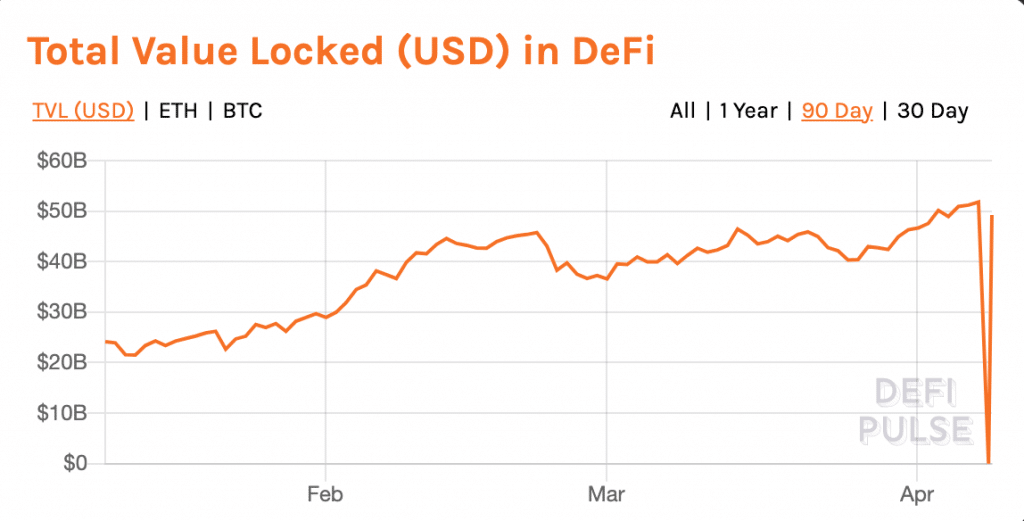
The first quarter of 2021 was an eventful period for the DeFI world. From January 1st to the end of March, the 'Total Value Locked' (TVL), the amount of capital that is being stored in DeFi protocols, rose from roughly $16 billion to more than $49 billion.
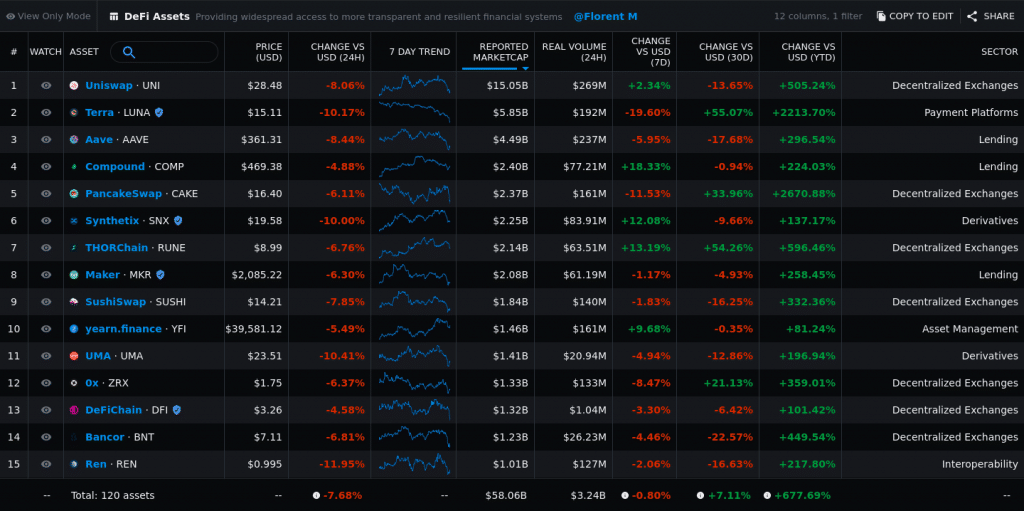
Simultaneously, a number of DeFi assets have continued to perform incredibly well. According to Data from Messari, at least 74 DeFi assets have increased their value by more than 100% since the beginning of the year. Seven of these assets have increased their value by more than 1000%.
The high performance of the DeFi space as a whole seems to have created a sort of 'snowball effect': the more money that comes into DeFi, the more new investors and users it seems to attract. And so, the cycle continues, or at least, that is what has been happening.
As we enter into Q2 of 2021, what’s next for DeFi?
"Some Want to Ensure They Don’t Miss Out on an Opportunity to Make Money, While Others Believe in the Defi Mission and See It as the Future of Finance.”
Nishank Khanna, Chief Financial Officer of Clarify Capital, told Finance Magnates that one of the most important trends that will develop this year is the continual entrance of corporate investors into crypto assets, including DeFi assets.
Nishank Khanna, Chief Financial Officer of Clarify Capital.
“There is more and more buy-in from stakeholders who are impactful decision-makers and industry leaders, including those at enterprise corporations,” Khanna explained to Finance Magnates.
Is DeFi Showing Signs of Market Maturity?
As more of these large investors enter into DeFi, the ecosystem could also begin to show signs of market maturity.
Konstantin Richter, CEO and Founder of Blockdaemon, explained to Finance Magnates that: “there are growing signs that it is already beginning to enter a phase of maturation with central banks and large businesses studying its potential economic impact.”
“Although there are still kinks to be ironed out, particularly in regards its complex UX and attracting a wider demographic of retail users, DeFi is a tangible and ready for market use-case which has genuine potential to revolutionize our financial system.”
How exactly can DeFi revolutionize the financial system as we know it? Clayton Weir, Chief Strategy Officer of FISPAN, explained that on a baseline level, “decentralized finance (De-Fi) has transformed banking for the future and will be here to stay long after the pandemic subsides.”
Clayton Weir, Chief Strategy Officer of FISPAN.
“While this technology is commonly viewed from only a cryptocurrency lense, it goes beyond this use case,” he continued. “I consider decentralized finance to be a form of finance that successfully cuts out intermediaries to streamline transactions. This is a part of the wider ‘Open Finance movement’ that is working towards a globally accessible alternative to every financial service we use today from savings to loans to insurance and more.”
In other words, DeFi provides many of the same financial services that banks do, but in a decentralized, autonomous fashion. For example, “banks traditionally accept deposits and provide loans to both individual and business customers as their lead offering, but De-Fi enables the borrowing and lending of money on an even larger scale between unknown participants and without the middleman,” Weir explained.
Indeed, the term 'inclusive' and the concept of inclusivity has been an important part of the ethos of the DeFi world. However, as more institutional and corporate investors have continued to enter into the DeFi space, critics have pointed out that DeFi may be a tool to make the “rich get richer.”
For example, Chainflow’s Chris Remus wrote a piece on TheDefiant.io about how Proof-of-Stake (PoS) algorithms, on which many DeFi protocols run, contribute to centralization and make “the rich get richer.” In the tagline for a CoinDesk article, Crypto Writer and Analyst, Leigh Cuen called DeFi “a whale’s game.”
Still, as Cuen wrote, that does not mean that “normies” are making “life-changing amount[s] of money” from participating in the DeFi universe.
Indeed, Nishank Khanna told Finance Magnates that: “while DeFi is arguably helping the rich get richer, there’s a lower barrier to entry when it comes to investing in coins.”
“Lower-wealth individuals and communities have the opportunity to purchase cryptocurrencies and build wealth too,” he said.
And indeed, while DeFi “whales” and large institutional investors may have more capital to play with, there is virtually no barrier to enter into the DeFi ecosystem.
Nick Pappageorge, Senior Analyst at Delphi Digital, told Finance Magnates that: “everyone using these protocol-based services is on even footing, so it's not a rich-getting-richer story.”
“DeFi is more inclusive than the traditional system because a low-income individual gets treated the same as a large corporation,” he said.
Nick Pappageorge, Senior Analyst at Delphi Digital.
Still, there is a learning curve when it comes to participating in and earning from DeFi: “the initial cohort of DeFi users probably tend to be crypto-native and well-resourced,” Pappageorge said.
“Little is in the way for lower-wealth individuals and communities to take advantage of these services especially when gas fees (a barrier to adoption that can mean every ‘click’ within the DeFi app costs $10+) get lowered significantly with the upcoming upgrade to Ethereum.”
Accessibility & Inclusivity in DeFi
Therefore, DeFi is indeed much more inclusive, or at least, has the potential to be much more inclusive, than the traditional financial system as we know it.
“DeFi is trustless and permissionless by default, meaning that anyone can use the services,” Pappageorge explained. “In theory, this is much more inclusive than the traditional financial system where the realities of credit scoring, regulations, and profit motive mean certain user groups get better terms than others.”
There are also practical and logistical things that make DeFi potentially more accessible to wider groups of users. “DeFi is also digitally-native and 24/7, so you don't need to wait for business hours to get access to a loan,” Pappageorge said.
Will DeFi Intersect with Traditional Banking?
And indeed, this kind of accessibility toward lending and other kinds of financial services is what Pappageorge believes has contributed so heavily to DeFi’s success.
“The most important things being done right now are arguably in trading and lending...Decentralized trading and lending have become the backbone of the DeFi economy,” he said. “Projects like Uniswap and Aave, for example, mimic the services of real-world companies such as Coinbase and BlockFi respectively, except with all these added benefits. The ability to borrow and trade is now opening up many new opportunities in the space.”
FISPAN’s Clayton Weir told Finance Magnates that: “banks, in particular, are at an advantage when it comes to taking advantage of DeFi because they already hold a large amount of data about their clients.”
“This is a large opportunity for banks, as their role is evolving from storing money to distributing it, and they are increasingly acting as a validator between various decentralized ledgers using the data they already have access to,” he said.
“For example, a bank has insights into a client’s entire payment network, which means that they are then able to rationalize and contextualize those insights to later provide them back to the client in the form of an incredibly powerful user experience to the client for future profits.”
Therefore, DeFi-powered financial services could one day become the norm. “A large number of global banks will become connected by this very highly permissioned and secure network where they can communicate to each other about a wide range of data points. But in the short term, account validation is where the bank is key. In the future, that is what will change the ease, the openness, the time and the execution costs of how we move money internationally.”
“There is a big effort around the client/user experience, and it’s not just related to providing traditional banking services. It is about providing guidance, advice and decision-making tools — and the best decision-making tools are those that are driven by data.”
The first quarter of 2021 was an eventful period for the DeFI world. From January 1st to the end of March, the 'Total Value Locked' (TVL), the amount of capital that is being stored in DeFi protocols, rose from roughly $16 billion to more than $49 billion.
Simultaneously, a number of DeFi assets have continued to perform incredibly well. According to Data from Messari, at least 74 DeFi assets have increased their value by more than 100% since the beginning of the year. Seven of these assets have increased their value by more than 1000%.
The high performance of the DeFi space as a whole seems to have created a sort of 'snowball effect': the more money that comes into DeFi, the more new investors and users it seems to attract. And so, the cycle continues, or at least, that is what has been happening.
As we enter into Q2 of 2021, what’s next for DeFi?
"Some Want to Ensure They Don’t Miss Out on an Opportunity to Make Money, While Others Believe in the Defi Mission and See It as the Future of Finance.”
Nishank Khanna, Chief Financial Officer of Clarify Capital, told Finance Magnates that one of the most important trends that will develop this year is the continual entrance of corporate investors into crypto assets, including DeFi assets.
Nishank Khanna, Chief Financial Officer of Clarify Capital.
“There is more and more buy-in from stakeholders who are impactful decision-makers and industry leaders, including those at enterprise corporations,” Khanna explained to Finance Magnates.
Is DeFi Showing Signs of Market Maturity?
As more of these large investors enter into DeFi, the ecosystem could also begin to show signs of market maturity.
Konstantin Richter, CEO and Founder of Blockdaemon, explained to Finance Magnates that: “there are growing signs that it is already beginning to enter a phase of maturation with central banks and large businesses studying its potential economic impact.”
“Although there are still kinks to be ironed out, particularly in regards its complex UX and attracting a wider demographic of retail users, DeFi is a tangible and ready for market use-case which has genuine potential to revolutionize our financial system.”
How exactly can DeFi revolutionize the financial system as we know it? Clayton Weir, Chief Strategy Officer of FISPAN, explained that on a baseline level, “decentralized finance (De-Fi) has transformed banking for the future and will be here to stay long after the pandemic subsides.”
Clayton Weir, Chief Strategy Officer of FISPAN.
“While this technology is commonly viewed from only a cryptocurrency lense, it goes beyond this use case,” he continued. “I consider decentralized finance to be a form of finance that successfully cuts out intermediaries to streamline transactions. This is a part of the wider ‘Open Finance movement’ that is working towards a globally accessible alternative to every financial service we use today from savings to loans to insurance and more.”
In other words, DeFi provides many of the same financial services that banks do, but in a decentralized, autonomous fashion. For example, “banks traditionally accept deposits and provide loans to both individual and business customers as their lead offering, but De-Fi enables the borrowing and lending of money on an even larger scale between unknown participants and without the middleman,” Weir explained.
Indeed, the term 'inclusive' and the concept of inclusivity has been an important part of the ethos of the DeFi world. However, as more institutional and corporate investors have continued to enter into the DeFi space, critics have pointed out that DeFi may be a tool to make the “rich get richer.”
For example, Chainflow’s Chris Remus wrote a piece on TheDefiant.io about how Proof-of-Stake (PoS) algorithms, on which many DeFi protocols run, contribute to centralization and make “the rich get richer.” In the tagline for a CoinDesk article, Crypto Writer and Analyst, Leigh Cuen called DeFi “a whale’s game.”
Still, as Cuen wrote, that does not mean that “normies” are making “life-changing amount[s] of money” from participating in the DeFi universe.
Indeed, Nishank Khanna told Finance Magnates that: “while DeFi is arguably helping the rich get richer, there’s a lower barrier to entry when it comes to investing in coins.”
“Lower-wealth individuals and communities have the opportunity to purchase cryptocurrencies and build wealth too,” he said.
And indeed, while DeFi “whales” and large institutional investors may have more capital to play with, there is virtually no barrier to enter into the DeFi ecosystem.
Nick Pappageorge, Senior Analyst at Delphi Digital, told Finance Magnates that: “everyone using these protocol-based services is on even footing, so it's not a rich-getting-richer story.”
“DeFi is more inclusive than the traditional system because a low-income individual gets treated the same as a large corporation,” he said.
Nick Pappageorge, Senior Analyst at Delphi Digital.
Still, there is a learning curve when it comes to participating in and earning from DeFi: “the initial cohort of DeFi users probably tend to be crypto-native and well-resourced,” Pappageorge said.
“Little is in the way for lower-wealth individuals and communities to take advantage of these services especially when gas fees (a barrier to adoption that can mean every ‘click’ within the DeFi app costs $10+) get lowered significantly with the upcoming upgrade to Ethereum.”
Accessibility & Inclusivity in DeFi
Therefore, DeFi is indeed much more inclusive, or at least, has the potential to be much more inclusive, than the traditional financial system as we know it.
“DeFi is trustless and permissionless by default, meaning that anyone can use the services,” Pappageorge explained. “In theory, this is much more inclusive than the traditional financial system where the realities of credit scoring, regulations, and profit motive mean certain user groups get better terms than others.”
There are also practical and logistical things that make DeFi potentially more accessible to wider groups of users. “DeFi is also digitally-native and 24/7, so you don't need to wait for business hours to get access to a loan,” Pappageorge said.
Will DeFi Intersect with Traditional Banking?
And indeed, this kind of accessibility toward lending and other kinds of financial services is what Pappageorge believes has contributed so heavily to DeFi’s success.
“The most important things being done right now are arguably in trading and lending...Decentralized trading and lending have become the backbone of the DeFi economy,” he said. “Projects like Uniswap and Aave, for example, mimic the services of real-world companies such as Coinbase and BlockFi respectively, except with all these added benefits. The ability to borrow and trade is now opening up many new opportunities in the space.”
FISPAN’s Clayton Weir told Finance Magnates that: “banks, in particular, are at an advantage when it comes to taking advantage of DeFi because they already hold a large amount of data about their clients.”
“This is a large opportunity for banks, as their role is evolving from storing money to distributing it, and they are increasingly acting as a validator between various decentralized ledgers using the data they already have access to,” he said.
“For example, a bank has insights into a client’s entire payment network, which means that they are then able to rationalize and contextualize those insights to later provide them back to the client in the form of an incredibly powerful user experience to the client for future profits.”
Therefore, DeFi-powered financial services could one day become the norm. “A large number of global banks will become connected by this very highly permissioned and secure network where they can communicate to each other about a wide range of data points. But in the short term, account validation is where the bank is key. In the future, that is what will change the ease, the openness, the time and the execution costs of how we move money internationally.”
“There is a big effort around the client/user experience, and it’s not just related to providing traditional banking services. It is about providing guidance, advice and decision-making tools — and the best decision-making tools are those that are driven by data.”
Rachel is a self-taught crypto geek and a passionate writer. She believes in the power that the written word has to educate, connect and empower individuals to make positive and powerful financial choices. She is the Podcast Host and a Cryptocurrency Editor at Finance Magnates.
Crypto Built More Rails, but the Next Battle Is Over How Much Work a Dollar Can Do
Featured Videos
FP Markets Winner Spotlight 🏆 | Global Broker of the Year 2025 #Trading #Broker #Innovation #Shorts
FP Markets Winner Spotlight 🏆 | Global Broker of the Year 2025 #Trading #Broker #Innovation #Shorts
FP Markets Winner Spotlight 🏆 | Global Broker of the Year 2025 #Trading #Broker #Innovation #Shorts
FP Markets Winner Spotlight 🏆 | Global Broker of the Year 2025 #Trading #Broker #Innovation #Shorts
FP Markets takes the spotlight as Global Broker of the Year 2025 at the Finance Magnates Awards.
Martin Stoilov, Head of Client Experience, shares that trust, innovation, and people played a key role in the company’s success, supported by a strong foundation of integrity and client-centricity.
Following this milestone, FP Markets continues to focus on growth, technology investment, and its core values of transparency and excellence.
👉 Be part of FM Awards 2026: https://awards.financemagnates.com/#nominate
FP Markets takes the spotlight as Global Broker of the Year 2025 at the Finance Magnates Awards.
Martin Stoilov, Head of Client Experience, shares that trust, innovation, and people played a key role in the company’s success, supported by a strong foundation of integrity and client-centricity.
Following this milestone, FP Markets continues to focus on growth, technology investment, and its core values of transparency and excellence.
👉 Be part of FM Awards 2026: https://awards.financemagnates.com/#nominate
FP Markets takes the spotlight as Global Broker of the Year 2025 at the Finance Magnates Awards.
Martin Stoilov, Head of Client Experience, shares that trust, innovation, and people played a key role in the company’s success, supported by a strong foundation of integrity and client-centricity.
Following this milestone, FP Markets continues to focus on growth, technology investment, and its core values of transparency and excellence.
👉 Be part of FM Awards 2026: https://awards.financemagnates.com/#nominate
FP Markets takes the spotlight as Global Broker of the Year 2025 at the Finance Magnates Awards.
Martin Stoilov, Head of Client Experience, shares that trust, innovation, and people played a key role in the company’s success, supported by a strong foundation of integrity and client-centricity.
Following this milestone, FP Markets continues to focus on growth, technology investment, and its core values of transparency and excellence.
👉 Be part of FM Awards 2026: https://awards.financemagnates.com/#nominate
In this video, we review @HolaPrimeMarketsOfficial, a multi-asset forex and CFDs broker offering different account types, trading platforms, and flexible trading conditions.
We cover the broker’s overall offering, including account options, trading environment, platforms like MT4 and MT5, and additional services such as managed accounts and fast withdrawals.
Watch the full video to see if Hola Prime Markets fits your trading needs.
📣 Stay up to date with the latest in finance and trading. Follow Finance Magnates for industry news, insights, and global event coverage.
Connect with us:
🔗 LinkedIn: /financemagnates
👍 Facebook: /financemagnates
📸 Instagram: https://www.instagram.com/financemagnates
🐦 X: https://x.com/financemagnates
🎥 TikTok: https://www.tiktok.com/tag/financemagnates
▶️ YouTube: /@financemagnates_official
#HolaPrime #ForexBroker #CFDTrading #FinanceMagnates #Trading #Forex #BrokerReview
In this video, we review @HolaPrimeMarketsOfficial, a multi-asset forex and CFDs broker offering different account types, trading platforms, and flexible trading conditions.
We cover the broker’s overall offering, including account options, trading environment, platforms like MT4 and MT5, and additional services such as managed accounts and fast withdrawals.
Watch the full video to see if Hola Prime Markets fits your trading needs.
📣 Stay up to date with the latest in finance and trading. Follow Finance Magnates for industry news, insights, and global event coverage.
Connect with us:
🔗 LinkedIn: /financemagnates
👍 Facebook: /financemagnates
📸 Instagram: https://www.instagram.com/financemagnates
🐦 X: https://x.com/financemagnates
🎥 TikTok: https://www.tiktok.com/tag/financemagnates
▶️ YouTube: /@financemagnates_official
#HolaPrime #ForexBroker #CFDTrading #FinanceMagnates #Trading #Forex #BrokerReview
In this video, we review @HolaPrimeMarketsOfficial, a multi-asset forex and CFDs broker offering different account types, trading platforms, and flexible trading conditions.
We cover the broker’s overall offering, including account options, trading environment, platforms like MT4 and MT5, and additional services such as managed accounts and fast withdrawals.
Watch the full video to see if Hola Prime Markets fits your trading needs.
📣 Stay up to date with the latest in finance and trading. Follow Finance Magnates for industry news, insights, and global event coverage.
Connect with us:
🔗 LinkedIn: /financemagnates
👍 Facebook: /financemagnates
📸 Instagram: https://www.instagram.com/financemagnates
🐦 X: https://x.com/financemagnates
🎥 TikTok: https://www.tiktok.com/tag/financemagnates
▶️ YouTube: /@financemagnates_official
#HolaPrime #ForexBroker #CFDTrading #FinanceMagnates #Trading #Forex #BrokerReview
In this video, we review @HolaPrimeMarketsOfficial, a multi-asset forex and CFDs broker offering different account types, trading platforms, and flexible trading conditions.
We cover the broker’s overall offering, including account options, trading environment, platforms like MT4 and MT5, and additional services such as managed accounts and fast withdrawals.
Watch the full video to see if Hola Prime Markets fits your trading needs.
📣 Stay up to date with the latest in finance and trading. Follow Finance Magnates for industry news, insights, and global event coverage.
Connect with us:
🔗 LinkedIn: /financemagnates
👍 Facebook: /financemagnates
📸 Instagram: https://www.instagram.com/financemagnates
🐦 X: https://x.com/financemagnates
🎥 TikTok: https://www.tiktok.com/tag/financemagnates
▶️ YouTube: /@financemagnates_official
#HolaPrime #ForexBroker #CFDTrading #FinanceMagnates #Trading #Forex #BrokerReview
In this video, we review @HolaPrimeMarketsOfficial, a multi-asset forex and CFDs broker offering different account types, trading platforms, and flexible trading conditions.
We cover the broker’s overall offering, including account options, trading environment, platforms like MT4 and MT5, and additional services such as managed accounts and fast withdrawals.
Watch the full video to see if Hola Prime Markets fits your trading needs.
📣 Stay up to date with the latest in finance and trading. Follow Finance Magnates for industry news, insights, and global event coverage.
Connect with us:
🔗 LinkedIn: /financemagnates
👍 Facebook: /financemagnates
📸 Instagram: https://www.instagram.com/financemagnates
🐦 X: https://x.com/financemagnates
🎥 TikTok: https://www.tiktok.com/tag/financemagnates
▶️ YouTube: /@financemagnates_official
#HolaPrime #ForexBroker #CFDTrading #FinanceMagnates #Trading #Forex #BrokerReview
In this video, we review @HolaPrimeMarketsOfficial, a multi-asset forex and CFDs broker offering different account types, trading platforms, and flexible trading conditions.
We cover the broker’s overall offering, including account options, trading environment, platforms like MT4 and MT5, and additional services such as managed accounts and fast withdrawals.
Watch the full video to see if Hola Prime Markets fits your trading needs.
📣 Stay up to date with the latest in finance and trading. Follow Finance Magnates for industry news, insights, and global event coverage.
Connect with us:
🔗 LinkedIn: /financemagnates
👍 Facebook: /financemagnates
📸 Instagram: https://www.instagram.com/financemagnates
🐦 X: https://x.com/financemagnates
🎥 TikTok: https://www.tiktok.com/tag/financemagnates
▶️ YouTube: /@financemagnates_official
#HolaPrime #ForexBroker #CFDTrading #FinanceMagnates #Trading #Forex #BrokerReview
Hola Prime Review: What You Need to Know | Full Breakdown by Finance Magnates
Hola Prime Review: What You Need to Know | Full Breakdown by Finance Magnates
Hola Prime Review: What You Need to Know | Full Breakdown by Finance Magnates
Hola Prime Review: What You Need to Know | Full Breakdown by Finance Magnates
Hola Prime Review: What You Need to Know | Full Breakdown by Finance Magnates
Hola Prime Review: What You Need to Know | Full Breakdown by Finance Magnates
In this video, we review @HolaPrime_Global, a proprietary trading firm offering evaluation programs and performance-based payouts in simulated market environments.
We cover how the challenge model works, including account types, profit splits (up to 95%), trading rules, and what it takes to reach a funded account. You’ll also learn about available platforms like MT4, MT5, cTrader, and more, along with insights into payouts, support, and trading conditions.
Watch the full video to see if Hola Prime fits your trading style.
📣 Stay up to date with the latest in finance and trading. Follow Finance Magnates for industry news, insights, and global event coverage.
Connect with us:
🔗 LinkedIn: /financemagnates
👍 Facebook: /financemagnates
📸 Instagram: https://www.instagram.com/financemagnates
🐦 X: https://x.com/financemagnates
🎥 TikTok: https://www.tiktok.com/tag/financemagnates
▶️ YouTube: /@financemagnates_official
#HolaPrime #PropFirm #Trading #FinanceMagnates #Forex #FuturesTrading #TradingReview #PropFirmReview
In this video, we review @HolaPrime_Global, a proprietary trading firm offering evaluation programs and performance-based payouts in simulated market environments.
We cover how the challenge model works, including account types, profit splits (up to 95%), trading rules, and what it takes to reach a funded account. You’ll also learn about available platforms like MT4, MT5, cTrader, and more, along with insights into payouts, support, and trading conditions.
Watch the full video to see if Hola Prime fits your trading style.
📣 Stay up to date with the latest in finance and trading. Follow Finance Magnates for industry news, insights, and global event coverage.
Connect with us:
🔗 LinkedIn: /financemagnates
👍 Facebook: /financemagnates
📸 Instagram: https://www.instagram.com/financemagnates
🐦 X: https://x.com/financemagnates
🎥 TikTok: https://www.tiktok.com/tag/financemagnates
▶️ YouTube: /@financemagnates_official
#HolaPrime #PropFirm #Trading #FinanceMagnates #Forex #FuturesTrading #TradingReview #PropFirmReview
In this video, we review @HolaPrime_Global, a proprietary trading firm offering evaluation programs and performance-based payouts in simulated market environments.
We cover how the challenge model works, including account types, profit splits (up to 95%), trading rules, and what it takes to reach a funded account. You’ll also learn about available platforms like MT4, MT5, cTrader, and more, along with insights into payouts, support, and trading conditions.
Watch the full video to see if Hola Prime fits your trading style.
📣 Stay up to date with the latest in finance and trading. Follow Finance Magnates for industry news, insights, and global event coverage.
Connect with us:
🔗 LinkedIn: /financemagnates
👍 Facebook: /financemagnates
📸 Instagram: https://www.instagram.com/financemagnates
🐦 X: https://x.com/financemagnates
🎥 TikTok: https://www.tiktok.com/tag/financemagnates
▶️ YouTube: /@financemagnates_official
#HolaPrime #PropFirm #Trading #FinanceMagnates #Forex #FuturesTrading #TradingReview #PropFirmReview
In this video, we review @HolaPrime_Global, a proprietary trading firm offering evaluation programs and performance-based payouts in simulated market environments.
We cover how the challenge model works, including account types, profit splits (up to 95%), trading rules, and what it takes to reach a funded account. You’ll also learn about available platforms like MT4, MT5, cTrader, and more, along with insights into payouts, support, and trading conditions.
Watch the full video to see if Hola Prime fits your trading style.
📣 Stay up to date with the latest in finance and trading. Follow Finance Magnates for industry news, insights, and global event coverage.
Connect with us:
🔗 LinkedIn: /financemagnates
👍 Facebook: /financemagnates
📸 Instagram: https://www.instagram.com/financemagnates
🐦 X: https://x.com/financemagnates
🎥 TikTok: https://www.tiktok.com/tag/financemagnates
▶️ YouTube: /@financemagnates_official
#HolaPrime #PropFirm #Trading #FinanceMagnates #Forex #FuturesTrading #TradingReview #PropFirmReview
In this video, we review @HolaPrime_Global, a proprietary trading firm offering evaluation programs and performance-based payouts in simulated market environments.
We cover how the challenge model works, including account types, profit splits (up to 95%), trading rules, and what it takes to reach a funded account. You’ll also learn about available platforms like MT4, MT5, cTrader, and more, along with insights into payouts, support, and trading conditions.
Watch the full video to see if Hola Prime fits your trading style.
📣 Stay up to date with the latest in finance and trading. Follow Finance Magnates for industry news, insights, and global event coverage.
Connect with us:
🔗 LinkedIn: /financemagnates
👍 Facebook: /financemagnates
📸 Instagram: https://www.instagram.com/financemagnates
🐦 X: https://x.com/financemagnates
🎥 TikTok: https://www.tiktok.com/tag/financemagnates
▶️ YouTube: /@financemagnates_official
#HolaPrime #PropFirm #Trading #FinanceMagnates #Forex #FuturesTrading #TradingReview #PropFirmReview
In this video, we review @HolaPrime_Global, a proprietary trading firm offering evaluation programs and performance-based payouts in simulated market environments.
We cover how the challenge model works, including account types, profit splits (up to 95%), trading rules, and what it takes to reach a funded account. You’ll also learn about available platforms like MT4, MT5, cTrader, and more, along with insights into payouts, support, and trading conditions.
Watch the full video to see if Hola Prime fits your trading style.
📣 Stay up to date with the latest in finance and trading. Follow Finance Magnates for industry news, insights, and global event coverage.
Connect with us:
🔗 LinkedIn: /financemagnates
👍 Facebook: /financemagnates
📸 Instagram: https://www.instagram.com/financemagnates
🐦 X: https://x.com/financemagnates
🎥 TikTok: https://www.tiktok.com/tag/financemagnates
▶️ YouTube: /@financemagnates_official
#HolaPrime #PropFirm #Trading #FinanceMagnates #Forex #FuturesTrading #TradingReview #PropFirmReview
Axi Winner Spotlight 🏆 | Global Most Innovative Broker 2025 #Innovation #Trading #Fintech #Broker
Axi Winner Spotlight 🏆 | Global Most Innovative Broker 2025 #Innovation #Trading #Fintech #Broker
Axi Winner Spotlight 🏆 | Global Most Innovative Broker 2025 #Innovation #Trading #Fintech #Broker
Axi Winner Spotlight 🏆 | Global Most Innovative Broker 2025 #Innovation #Trading #Fintech #Broker
Axi Winner Spotlight 🏆 | Global Most Innovative Broker 2025 #Innovation #Trading #Fintech #Broker
Axi Winner Spotlight 🏆 | Global Most Innovative Broker 2025 #Innovation #Trading #Fintech #Broker
Axi takes the spotlight at the Finance Magnates Awards, winning Global Most Innovative Broker 2025.
Olivia Xenofontos and Ivanna Openko share how the team will feel: proud, motivated, and ready to keep delivering.
They also describe the night as well-organized, focused, and enjoyable for all.
👉 Be part of FM Awards 2026.
Axi takes the spotlight at the Finance Magnates Awards, winning Global Most Innovative Broker 2025.
Olivia Xenofontos and Ivanna Openko share how the team will feel: proud, motivated, and ready to keep delivering.
They also describe the night as well-organized, focused, and enjoyable for all.
👉 Be part of FM Awards 2026.
Axi takes the spotlight at the Finance Magnates Awards, winning Global Most Innovative Broker 2025.
Olivia Xenofontos and Ivanna Openko share how the team will feel: proud, motivated, and ready to keep delivering.
They also describe the night as well-organized, focused, and enjoyable for all.
👉 Be part of FM Awards 2026.
Axi takes the spotlight at the Finance Magnates Awards, winning Global Most Innovative Broker 2025.
Olivia Xenofontos and Ivanna Openko share how the team will feel: proud, motivated, and ready to keep delivering.
They also describe the night as well-organized, focused, and enjoyable for all.
👉 Be part of FM Awards 2026.
Axi takes the spotlight at the Finance Magnates Awards, winning Global Most Innovative Broker 2025.
Olivia Xenofontos and Ivanna Openko share how the team will feel: proud, motivated, and ready to keep delivering.
They also describe the night as well-organized, focused, and enjoyable for all.
👉 Be part of FM Awards 2026.
Axi takes the spotlight at the Finance Magnates Awards, winning Global Most Innovative Broker 2025.
Olivia Xenofontos and Ivanna Openko share how the team will feel: proud, motivated, and ready to keep delivering.
They also describe the night as well-organized, focused, and enjoyable for all.
👉 Be part of FM Awards 2026.
Recognition that matters.
Built on transparency.
Driven by the industry.
The Finance Magnates Awards 2026.
Nominations are now open.
🔗 https://awards.financemagnates.com/?utm_source=SM&utm_medium=social&utm_campaign=recognition-matters
Recognition that matters.
Built on transparency.
Driven by the industry.
The Finance Magnates Awards 2026.
Nominations are now open.
🔗 https://awards.financemagnates.com/?utm_source=SM&utm_medium=social&utm_campaign=recognition-matters
Recognition that matters.
Built on transparency.
Driven by the industry.
The Finance Magnates Awards 2026.
Nominations are now open.
🔗 https://awards.financemagnates.com/?utm_source=SM&utm_medium=social&utm_campaign=recognition-matters
Recognition that matters.
Built on transparency.
Driven by the industry.
The Finance Magnates Awards 2026.
Nominations are now open.
🔗 https://awards.financemagnates.com/?utm_source=SM&utm_medium=social&utm_campaign=recognition-matters
Recognition that matters.
Built on transparency.
Driven by the industry.
The Finance Magnates Awards 2026.
Nominations are now open.
🔗 https://awards.financemagnates.com/?utm_source=SM&utm_medium=social&utm_campaign=recognition-matters
Recognition that matters.
Built on transparency.
Driven by the industry.
The Finance Magnates Awards 2026.
Nominations are now open.
🔗 https://awards.financemagnates.com/?utm_source=SM&utm_medium=social&utm_campaign=recognition-matters