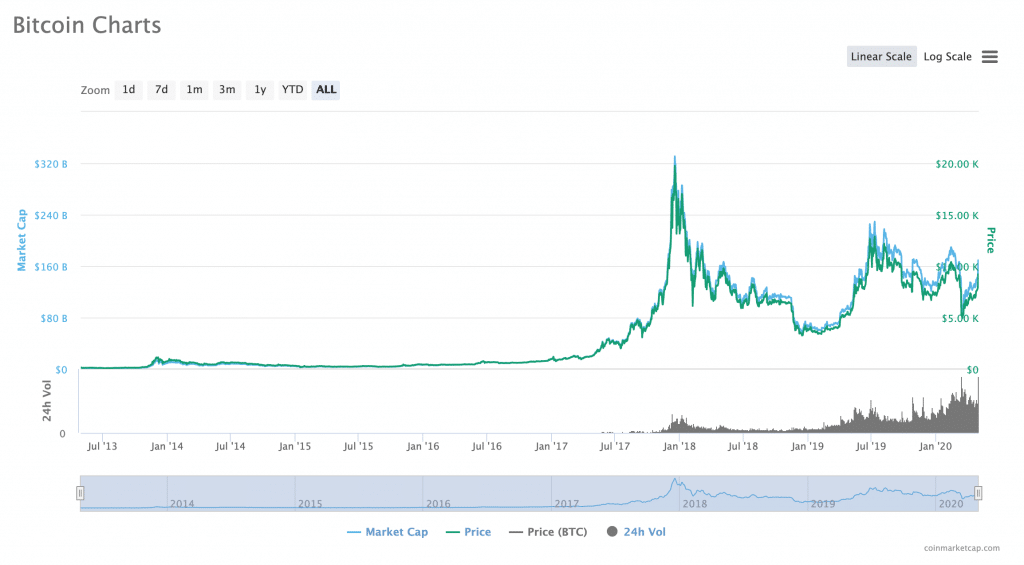
In the wake of the coronavirus, some altcoins have bounced back quicker than Bitcoin. Why is this?
FM
Much of the discussion on the economic fallout that the coronavirus has caused in the cryptosphere has been focused around Bitcoin--perhaps rightfully so. After all, as the largest cryptocurrency by market cap and the coin with the largest share of institutional cash, BTC is arguably the most 'visible' crypto asset.
However, the rise of the coronavirus has also had a number of striking effects on other cryptocurrency assets, and unlike Bitcoin, not all of them have been negative.
For example, in the stablecoin sphere, the market cap of Binance USD (BUSD) has more than doubled, rising from $68 million to roughly $190 million at press time. Similarly, Circle's USD stablecoin jumped from roughly $440 million to $727 million over the same time period; Paxos Standard (PAX) grew from $200 million to $246 million.
"Currently, Tether's 24-hour trading volume is close to $80 billion; on March 13th, while stocks were plummeting, Tether reached an all-time high for trading volume at $94 billion," he said. "Tether reserves are also sitting at ATHs."
However, beyond stablecoins, the coronavirus has also had varied and unique effects on the altcoin sphere.
"Everything was down."
What, exactly, have these effects been?
"In the past, you've seen altcoins follow along pretty closely with bitcoin's ebbs and flows, with certain decoupling here and there," said David Waslen, chief executive of HedgeTrade, to Finance Magnates. "Leading up to 2020 and continuing today, there have been some altcoins that have taken a more divergent path."
However, the economic fallout of the coronavirus seems to have had an effect on the relationship between Bitcoin and altcoins: Waslen explained that since early March, "they have correlated somewhat."
Indeed, "Bitcoin took a 50% plunge but has steadily come back--without massive cash infusions, I might add," Waslen said, while "altcoins, for the most part, fell at the same time; everything was down."
Bitcoin's market movements were also correlated with movements outside of the cryptosphere: "Bitcoin fell almost in tandem with the DOW and other traditional indices (although it has since picked up the pace against most stocks)," Waslen said.
Then, "when the stimulus packages rolled out, stocks came back a little, as did virtual assets," he continued. "But it's in the recovery where both bitcoin and altcoins have shown promise over traditional stocks, which are still struggling (down 14% YTD) despite heavy corporate welfare."
Altcoin prices have largely been correlated with BTC, but some have recovered quicker
Throughout this period, "most altcoins fell at the same time," Waslen explained, "but there were definitely some that had a quicker comeback than bitcoin during a time when stocks were bottoming."
David Waslen, chief executive and founder of HedgeTrade.
"Between ample on and off ramps and a steady flux of new investors, many altcoins were already showing strength going into the start of COVID-19. Many have rallied back faster and more strongly than bitcoin, and, of course, stocks."
Waslen specifically pointed to Chainlink (LINK), "which began a steep price climb on April 5th, one that diverged from most other coins at the time." Indeed, "since Black Thursday, LINK has more than doubled its price."
Waslen also mentioned Ethereum, which he said: "is getting ever closer to a staking method conversion that is designed to help the Network scale."
"Many of today's most promising crypto projects are built on Ethereum, and the upcoming ETH 2.0 upgrade could be an impetus for mass adoption of cryptocurrencies," he said, adding that "on the year, ETH is up 39%, as opposed to BTC's rise of 17%."
A number of altcoins have outperformed BTC since the beginning of the year
Two additional assets that have warranted attention are Monero and Zcash, which Waslen said: "have taken on an 'outlier' status."
Both of these assets, which are two of the crypto industry's most popular privacy-focused coins, have seen substantial increases in price since the beginning of the year: "Monero is up 30% YTD with Zcash up 40%, "he said. "With regulations on crypto tightening and people feeling financial privacy (and security) is a right, we see a corresponding interest in privacy coins, even more so since Black Thursday."
Additionally, "you have cryptocurrencies like Binance (BNB) and HedgeTrade (HEDG), both of which are up over 22 % YTD, and Stellar (XLM) reaching over 37% on the year," Waslen said.
Indeed, "all of these altcoins have outperformed bitcoin since the pandemic took hold," he continued. "They also will likely ride on the laurels of a potential bull market triggered by bitcoin's stock to flow and scarcity levels after the halving."
" Crypto is too young to be deeply integrated into the economy."
But why exactly are certain altcoins doing so well?
David Zeiler, cryptocurrency expert and associate editor of Money Morning, explained to Finance Magnates that while "it's true most cryptocurrencies sold off during the initial shock to the global markets," it wasn't necessarily because of any design flaw or lack of faith in crypto: "[the sell-off] was due to a scramble for cash as investors got hit by margin calls in their leveraged stock holdings," Zeiler said.
"People weren't selling BTC or altcoins because of any direct link to the coronavirus."
Zeiler explained that indeed, "the fact is that crypto is too young to be deeply integrated into the economy."
"Most projects are still in various stages of development," he said. "While they have the potential to be disruptive in the future, for now, no industries depend on crypto for anything critical."
In his view, this is precisely what has allowed many altcoins to have fared so well: "that's what has allowed the altcoins to bounce back as quickly as they have," he explained. "Once the initial shock passed, people saw the bargain prices and started buying crypto again."
Altcoin projects may have lost access to VC funding because of the coronavirus
Of course, "this isn't to say the coronavirus has had no impact on the altcoins. The biggest issue is the shortage of venture capital (VC), which many young crypto projects need to maintain development."
Indeed, while altcoin prices may not be hurting as badly as other financial markets in the short-term, lost opportunities for connections to funding may hurt altcoin firms--and innovation more generally--in the longer-term.
For example, coronavirus has caused delays and cancellations in the many crypto conferences held throughout the world: "one of the largest conferences, Consensus New York scheduled for mid-May, will take place entirely online."
Therefore, "attendees will be able to watch the session, but will miss out on the opportunities for networking that are the life-blood of such conferences." Several of Finance Magnates' events have also been postponed or moved online.
At the same time, however, "the widespread lockdowns haven't had much effect on the developers working on the altcoin code because they're often spread out across the globe and are used to collaborating online."
As such, it could very well be that "overall, crypto is getting off easy in this crisis."
What are your thoughts? Let us know in the comments below.
Much of the discussion on the economic fallout that the coronavirus has caused in the cryptosphere has been focused around Bitcoin--perhaps rightfully so. After all, as the largest cryptocurrency by market cap and the coin with the largest share of institutional cash, BTC is arguably the most 'visible' crypto asset.
However, the rise of the coronavirus has also had a number of striking effects on other cryptocurrency assets, and unlike Bitcoin, not all of them have been negative.
For example, in the stablecoin sphere, the market cap of Binance USD (BUSD) has more than doubled, rising from $68 million to roughly $190 million at press time. Similarly, Circle's USD stablecoin jumped from roughly $440 million to $727 million over the same time period; Paxos Standard (PAX) grew from $200 million to $246 million.
"Currently, Tether's 24-hour trading volume is close to $80 billion; on March 13th, while stocks were plummeting, Tether reached an all-time high for trading volume at $94 billion," he said. "Tether reserves are also sitting at ATHs."
However, beyond stablecoins, the coronavirus has also had varied and unique effects on the altcoin sphere.
"Everything was down."
What, exactly, have these effects been?
"In the past, you've seen altcoins follow along pretty closely with bitcoin's ebbs and flows, with certain decoupling here and there," said David Waslen, chief executive of HedgeTrade, to Finance Magnates. "Leading up to 2020 and continuing today, there have been some altcoins that have taken a more divergent path."
However, the economic fallout of the coronavirus seems to have had an effect on the relationship between Bitcoin and altcoins: Waslen explained that since early March, "they have correlated somewhat."
Indeed, "Bitcoin took a 50% plunge but has steadily come back--without massive cash infusions, I might add," Waslen said, while "altcoins, for the most part, fell at the same time; everything was down."
Bitcoin's market movements were also correlated with movements outside of the cryptosphere: "Bitcoin fell almost in tandem with the DOW and other traditional indices (although it has since picked up the pace against most stocks)," Waslen said.
Then, "when the stimulus packages rolled out, stocks came back a little, as did virtual assets," he continued. "But it's in the recovery where both bitcoin and altcoins have shown promise over traditional stocks, which are still struggling (down 14% YTD) despite heavy corporate welfare."
Altcoin prices have largely been correlated with BTC, but some have recovered quicker
Throughout this period, "most altcoins fell at the same time," Waslen explained, "but there were definitely some that had a quicker comeback than bitcoin during a time when stocks were bottoming."
David Waslen, chief executive and founder of HedgeTrade.
"Between ample on and off ramps and a steady flux of new investors, many altcoins were already showing strength going into the start of COVID-19. Many have rallied back faster and more strongly than bitcoin, and, of course, stocks."
Waslen specifically pointed to Chainlink (LINK), "which began a steep price climb on April 5th, one that diverged from most other coins at the time." Indeed, "since Black Thursday, LINK has more than doubled its price."
Waslen also mentioned Ethereum, which he said: "is getting ever closer to a staking method conversion that is designed to help the Network scale."
"Many of today's most promising crypto projects are built on Ethereum, and the upcoming ETH 2.0 upgrade could be an impetus for mass adoption of cryptocurrencies," he said, adding that "on the year, ETH is up 39%, as opposed to BTC's rise of 17%."
A number of altcoins have outperformed BTC since the beginning of the year
Two additional assets that have warranted attention are Monero and Zcash, which Waslen said: "have taken on an 'outlier' status."
Both of these assets, which are two of the crypto industry's most popular privacy-focused coins, have seen substantial increases in price since the beginning of the year: "Monero is up 30% YTD with Zcash up 40%, "he said. "With regulations on crypto tightening and people feeling financial privacy (and security) is a right, we see a corresponding interest in privacy coins, even more so since Black Thursday."
Additionally, "you have cryptocurrencies like Binance (BNB) and HedgeTrade (HEDG), both of which are up over 22 % YTD, and Stellar (XLM) reaching over 37% on the year," Waslen said.
Indeed, "all of these altcoins have outperformed bitcoin since the pandemic took hold," he continued. "They also will likely ride on the laurels of a potential bull market triggered by bitcoin's stock to flow and scarcity levels after the halving."
" Crypto is too young to be deeply integrated into the economy."
But why exactly are certain altcoins doing so well?
David Zeiler, cryptocurrency expert and associate editor of Money Morning, explained to Finance Magnates that while "it's true most cryptocurrencies sold off during the initial shock to the global markets," it wasn't necessarily because of any design flaw or lack of faith in crypto: "[the sell-off] was due to a scramble for cash as investors got hit by margin calls in their leveraged stock holdings," Zeiler said.
"People weren't selling BTC or altcoins because of any direct link to the coronavirus."
Zeiler explained that indeed, "the fact is that crypto is too young to be deeply integrated into the economy."
"Most projects are still in various stages of development," he said. "While they have the potential to be disruptive in the future, for now, no industries depend on crypto for anything critical."
In his view, this is precisely what has allowed many altcoins to have fared so well: "that's what has allowed the altcoins to bounce back as quickly as they have," he explained. "Once the initial shock passed, people saw the bargain prices and started buying crypto again."
Altcoin projects may have lost access to VC funding because of the coronavirus
Of course, "this isn't to say the coronavirus has had no impact on the altcoins. The biggest issue is the shortage of venture capital (VC), which many young crypto projects need to maintain development."
Indeed, while altcoin prices may not be hurting as badly as other financial markets in the short-term, lost opportunities for connections to funding may hurt altcoin firms--and innovation more generally--in the longer-term.
For example, coronavirus has caused delays and cancellations in the many crypto conferences held throughout the world: "one of the largest conferences, Consensus New York scheduled for mid-May, will take place entirely online."
Therefore, "attendees will be able to watch the session, but will miss out on the opportunities for networking that are the life-blood of such conferences." Several of Finance Magnates' events have also been postponed or moved online.
At the same time, however, "the widespread lockdowns haven't had much effect on the developers working on the altcoin code because they're often spread out across the globe and are used to collaborating online."
As such, it could very well be that "overall, crypto is getting off easy in this crisis."
What are your thoughts? Let us know in the comments below.
Rachel is a self-taught crypto geek and a passionate writer. She believes in the power that the written word has to educate, connect and empower individuals to make positive and powerful financial choices. She is the Podcast Host and a Cryptocurrency Editor at Finance Magnates.
Crypto Built More Rails, but the Next Battle Is Over How Much Work a Dollar Can Do
Featured Videos
FP Markets Winner Spotlight 🏆 | Global Broker of the Year 2025 #Trading #Broker #Innovation #Shorts
FP Markets Winner Spotlight 🏆 | Global Broker of the Year 2025 #Trading #Broker #Innovation #Shorts
FP Markets Winner Spotlight 🏆 | Global Broker of the Year 2025 #Trading #Broker #Innovation #Shorts
FP Markets Winner Spotlight 🏆 | Global Broker of the Year 2025 #Trading #Broker #Innovation #Shorts
FP Markets takes the spotlight as Global Broker of the Year 2025 at the Finance Magnates Awards.
Martin Stoilov, Head of Client Experience, shares that trust, innovation, and people played a key role in the company’s success, supported by a strong foundation of integrity and client-centricity.
Following this milestone, FP Markets continues to focus on growth, technology investment, and its core values of transparency and excellence.
👉 Be part of FM Awards 2026: https://awards.financemagnates.com/#nominate
FP Markets takes the spotlight as Global Broker of the Year 2025 at the Finance Magnates Awards.
Martin Stoilov, Head of Client Experience, shares that trust, innovation, and people played a key role in the company’s success, supported by a strong foundation of integrity and client-centricity.
Following this milestone, FP Markets continues to focus on growth, technology investment, and its core values of transparency and excellence.
👉 Be part of FM Awards 2026: https://awards.financemagnates.com/#nominate
FP Markets takes the spotlight as Global Broker of the Year 2025 at the Finance Magnates Awards.
Martin Stoilov, Head of Client Experience, shares that trust, innovation, and people played a key role in the company’s success, supported by a strong foundation of integrity and client-centricity.
Following this milestone, FP Markets continues to focus on growth, technology investment, and its core values of transparency and excellence.
👉 Be part of FM Awards 2026: https://awards.financemagnates.com/#nominate
FP Markets takes the spotlight as Global Broker of the Year 2025 at the Finance Magnates Awards.
Martin Stoilov, Head of Client Experience, shares that trust, innovation, and people played a key role in the company’s success, supported by a strong foundation of integrity and client-centricity.
Following this milestone, FP Markets continues to focus on growth, technology investment, and its core values of transparency and excellence.
👉 Be part of FM Awards 2026: https://awards.financemagnates.com/#nominate
In this video, we review @HolaPrimeMarketsOfficial, a multi-asset forex and CFDs broker offering different account types, trading platforms, and flexible trading conditions.
We cover the broker’s overall offering, including account options, trading environment, platforms like MT4 and MT5, and additional services such as managed accounts and fast withdrawals.
Watch the full video to see if Hola Prime Markets fits your trading needs.
📣 Stay up to date with the latest in finance and trading. Follow Finance Magnates for industry news, insights, and global event coverage.
Connect with us:
🔗 LinkedIn: /financemagnates
👍 Facebook: /financemagnates
📸 Instagram: https://www.instagram.com/financemagnates
🐦 X: https://x.com/financemagnates
🎥 TikTok: https://www.tiktok.com/tag/financemagnates
▶️ YouTube: /@financemagnates_official
#HolaPrime #ForexBroker #CFDTrading #FinanceMagnates #Trading #Forex #BrokerReview
In this video, we review @HolaPrimeMarketsOfficial, a multi-asset forex and CFDs broker offering different account types, trading platforms, and flexible trading conditions.
We cover the broker’s overall offering, including account options, trading environment, platforms like MT4 and MT5, and additional services such as managed accounts and fast withdrawals.
Watch the full video to see if Hola Prime Markets fits your trading needs.
📣 Stay up to date with the latest in finance and trading. Follow Finance Magnates for industry news, insights, and global event coverage.
Connect with us:
🔗 LinkedIn: /financemagnates
👍 Facebook: /financemagnates
📸 Instagram: https://www.instagram.com/financemagnates
🐦 X: https://x.com/financemagnates
🎥 TikTok: https://www.tiktok.com/tag/financemagnates
▶️ YouTube: /@financemagnates_official
#HolaPrime #ForexBroker #CFDTrading #FinanceMagnates #Trading #Forex #BrokerReview
In this video, we review @HolaPrimeMarketsOfficial, a multi-asset forex and CFDs broker offering different account types, trading platforms, and flexible trading conditions.
We cover the broker’s overall offering, including account options, trading environment, platforms like MT4 and MT5, and additional services such as managed accounts and fast withdrawals.
Watch the full video to see if Hola Prime Markets fits your trading needs.
📣 Stay up to date with the latest in finance and trading. Follow Finance Magnates for industry news, insights, and global event coverage.
Connect with us:
🔗 LinkedIn: /financemagnates
👍 Facebook: /financemagnates
📸 Instagram: https://www.instagram.com/financemagnates
🐦 X: https://x.com/financemagnates
🎥 TikTok: https://www.tiktok.com/tag/financemagnates
▶️ YouTube: /@financemagnates_official
#HolaPrime #ForexBroker #CFDTrading #FinanceMagnates #Trading #Forex #BrokerReview
In this video, we review @HolaPrimeMarketsOfficial, a multi-asset forex and CFDs broker offering different account types, trading platforms, and flexible trading conditions.
We cover the broker’s overall offering, including account options, trading environment, platforms like MT4 and MT5, and additional services such as managed accounts and fast withdrawals.
Watch the full video to see if Hola Prime Markets fits your trading needs.
📣 Stay up to date with the latest in finance and trading. Follow Finance Magnates for industry news, insights, and global event coverage.
Connect with us:
🔗 LinkedIn: /financemagnates
👍 Facebook: /financemagnates
📸 Instagram: https://www.instagram.com/financemagnates
🐦 X: https://x.com/financemagnates
🎥 TikTok: https://www.tiktok.com/tag/financemagnates
▶️ YouTube: /@financemagnates_official
#HolaPrime #ForexBroker #CFDTrading #FinanceMagnates #Trading #Forex #BrokerReview
In this video, we review @HolaPrimeMarketsOfficial, a multi-asset forex and CFDs broker offering different account types, trading platforms, and flexible trading conditions.
We cover the broker’s overall offering, including account options, trading environment, platforms like MT4 and MT5, and additional services such as managed accounts and fast withdrawals.
Watch the full video to see if Hola Prime Markets fits your trading needs.
📣 Stay up to date with the latest in finance and trading. Follow Finance Magnates for industry news, insights, and global event coverage.
Connect with us:
🔗 LinkedIn: /financemagnates
👍 Facebook: /financemagnates
📸 Instagram: https://www.instagram.com/financemagnates
🐦 X: https://x.com/financemagnates
🎥 TikTok: https://www.tiktok.com/tag/financemagnates
▶️ YouTube: /@financemagnates_official
#HolaPrime #ForexBroker #CFDTrading #FinanceMagnates #Trading #Forex #BrokerReview
In this video, we review @HolaPrimeMarketsOfficial, a multi-asset forex and CFDs broker offering different account types, trading platforms, and flexible trading conditions.
We cover the broker’s overall offering, including account options, trading environment, platforms like MT4 and MT5, and additional services such as managed accounts and fast withdrawals.
Watch the full video to see if Hola Prime Markets fits your trading needs.
📣 Stay up to date with the latest in finance and trading. Follow Finance Magnates for industry news, insights, and global event coverage.
Connect with us:
🔗 LinkedIn: /financemagnates
👍 Facebook: /financemagnates
📸 Instagram: https://www.instagram.com/financemagnates
🐦 X: https://x.com/financemagnates
🎥 TikTok: https://www.tiktok.com/tag/financemagnates
▶️ YouTube: /@financemagnates_official
#HolaPrime #ForexBroker #CFDTrading #FinanceMagnates #Trading #Forex #BrokerReview
Hola Prime Review: What You Need to Know | Full Breakdown by Finance Magnates
Hola Prime Review: What You Need to Know | Full Breakdown by Finance Magnates
Hola Prime Review: What You Need to Know | Full Breakdown by Finance Magnates
Hola Prime Review: What You Need to Know | Full Breakdown by Finance Magnates
Hola Prime Review: What You Need to Know | Full Breakdown by Finance Magnates
Hola Prime Review: What You Need to Know | Full Breakdown by Finance Magnates
In this video, we review @HolaPrime_Global, a proprietary trading firm offering evaluation programs and performance-based payouts in simulated market environments.
We cover how the challenge model works, including account types, profit splits (up to 95%), trading rules, and what it takes to reach a funded account. You’ll also learn about available platforms like MT4, MT5, cTrader, and more, along with insights into payouts, support, and trading conditions.
Watch the full video to see if Hola Prime fits your trading style.
📣 Stay up to date with the latest in finance and trading. Follow Finance Magnates for industry news, insights, and global event coverage.
Connect with us:
🔗 LinkedIn: /financemagnates
👍 Facebook: /financemagnates
📸 Instagram: https://www.instagram.com/financemagnates
🐦 X: https://x.com/financemagnates
🎥 TikTok: https://www.tiktok.com/tag/financemagnates
▶️ YouTube: /@financemagnates_official
#HolaPrime #PropFirm #Trading #FinanceMagnates #Forex #FuturesTrading #TradingReview #PropFirmReview
In this video, we review @HolaPrime_Global, a proprietary trading firm offering evaluation programs and performance-based payouts in simulated market environments.
We cover how the challenge model works, including account types, profit splits (up to 95%), trading rules, and what it takes to reach a funded account. You’ll also learn about available platforms like MT4, MT5, cTrader, and more, along with insights into payouts, support, and trading conditions.
Watch the full video to see if Hola Prime fits your trading style.
📣 Stay up to date with the latest in finance and trading. Follow Finance Magnates for industry news, insights, and global event coverage.
Connect with us:
🔗 LinkedIn: /financemagnates
👍 Facebook: /financemagnates
📸 Instagram: https://www.instagram.com/financemagnates
🐦 X: https://x.com/financemagnates
🎥 TikTok: https://www.tiktok.com/tag/financemagnates
▶️ YouTube: /@financemagnates_official
#HolaPrime #PropFirm #Trading #FinanceMagnates #Forex #FuturesTrading #TradingReview #PropFirmReview
In this video, we review @HolaPrime_Global, a proprietary trading firm offering evaluation programs and performance-based payouts in simulated market environments.
We cover how the challenge model works, including account types, profit splits (up to 95%), trading rules, and what it takes to reach a funded account. You’ll also learn about available platforms like MT4, MT5, cTrader, and more, along with insights into payouts, support, and trading conditions.
Watch the full video to see if Hola Prime fits your trading style.
📣 Stay up to date with the latest in finance and trading. Follow Finance Magnates for industry news, insights, and global event coverage.
Connect with us:
🔗 LinkedIn: /financemagnates
👍 Facebook: /financemagnates
📸 Instagram: https://www.instagram.com/financemagnates
🐦 X: https://x.com/financemagnates
🎥 TikTok: https://www.tiktok.com/tag/financemagnates
▶️ YouTube: /@financemagnates_official
#HolaPrime #PropFirm #Trading #FinanceMagnates #Forex #FuturesTrading #TradingReview #PropFirmReview
In this video, we review @HolaPrime_Global, a proprietary trading firm offering evaluation programs and performance-based payouts in simulated market environments.
We cover how the challenge model works, including account types, profit splits (up to 95%), trading rules, and what it takes to reach a funded account. You’ll also learn about available platforms like MT4, MT5, cTrader, and more, along with insights into payouts, support, and trading conditions.
Watch the full video to see if Hola Prime fits your trading style.
📣 Stay up to date with the latest in finance and trading. Follow Finance Magnates for industry news, insights, and global event coverage.
Connect with us:
🔗 LinkedIn: /financemagnates
👍 Facebook: /financemagnates
📸 Instagram: https://www.instagram.com/financemagnates
🐦 X: https://x.com/financemagnates
🎥 TikTok: https://www.tiktok.com/tag/financemagnates
▶️ YouTube: /@financemagnates_official
#HolaPrime #PropFirm #Trading #FinanceMagnates #Forex #FuturesTrading #TradingReview #PropFirmReview
In this video, we review @HolaPrime_Global, a proprietary trading firm offering evaluation programs and performance-based payouts in simulated market environments.
We cover how the challenge model works, including account types, profit splits (up to 95%), trading rules, and what it takes to reach a funded account. You’ll also learn about available platforms like MT4, MT5, cTrader, and more, along with insights into payouts, support, and trading conditions.
Watch the full video to see if Hola Prime fits your trading style.
📣 Stay up to date with the latest in finance and trading. Follow Finance Magnates for industry news, insights, and global event coverage.
Connect with us:
🔗 LinkedIn: /financemagnates
👍 Facebook: /financemagnates
📸 Instagram: https://www.instagram.com/financemagnates
🐦 X: https://x.com/financemagnates
🎥 TikTok: https://www.tiktok.com/tag/financemagnates
▶️ YouTube: /@financemagnates_official
#HolaPrime #PropFirm #Trading #FinanceMagnates #Forex #FuturesTrading #TradingReview #PropFirmReview
In this video, we review @HolaPrime_Global, a proprietary trading firm offering evaluation programs and performance-based payouts in simulated market environments.
We cover how the challenge model works, including account types, profit splits (up to 95%), trading rules, and what it takes to reach a funded account. You’ll also learn about available platforms like MT4, MT5, cTrader, and more, along with insights into payouts, support, and trading conditions.
Watch the full video to see if Hola Prime fits your trading style.
📣 Stay up to date with the latest in finance and trading. Follow Finance Magnates for industry news, insights, and global event coverage.
Connect with us:
🔗 LinkedIn: /financemagnates
👍 Facebook: /financemagnates
📸 Instagram: https://www.instagram.com/financemagnates
🐦 X: https://x.com/financemagnates
🎥 TikTok: https://www.tiktok.com/tag/financemagnates
▶️ YouTube: /@financemagnates_official
#HolaPrime #PropFirm #Trading #FinanceMagnates #Forex #FuturesTrading #TradingReview #PropFirmReview
Axi Winner Spotlight 🏆 | Global Most Innovative Broker 2025 #Innovation #Trading #Fintech #Broker
Axi Winner Spotlight 🏆 | Global Most Innovative Broker 2025 #Innovation #Trading #Fintech #Broker
Axi Winner Spotlight 🏆 | Global Most Innovative Broker 2025 #Innovation #Trading #Fintech #Broker
Axi Winner Spotlight 🏆 | Global Most Innovative Broker 2025 #Innovation #Trading #Fintech #Broker
Axi Winner Spotlight 🏆 | Global Most Innovative Broker 2025 #Innovation #Trading #Fintech #Broker
Axi Winner Spotlight 🏆 | Global Most Innovative Broker 2025 #Innovation #Trading #Fintech #Broker
Axi takes the spotlight at the Finance Magnates Awards, winning Global Most Innovative Broker 2025.
Olivia Xenofontos and Ivanna Openko share how the team will feel: proud, motivated, and ready to keep delivering.
They also describe the night as well-organized, focused, and enjoyable for all.
👉 Be part of FM Awards 2026.
Axi takes the spotlight at the Finance Magnates Awards, winning Global Most Innovative Broker 2025.
Olivia Xenofontos and Ivanna Openko share how the team will feel: proud, motivated, and ready to keep delivering.
They also describe the night as well-organized, focused, and enjoyable for all.
👉 Be part of FM Awards 2026.
Axi takes the spotlight at the Finance Magnates Awards, winning Global Most Innovative Broker 2025.
Olivia Xenofontos and Ivanna Openko share how the team will feel: proud, motivated, and ready to keep delivering.
They also describe the night as well-organized, focused, and enjoyable for all.
👉 Be part of FM Awards 2026.
Axi takes the spotlight at the Finance Magnates Awards, winning Global Most Innovative Broker 2025.
Olivia Xenofontos and Ivanna Openko share how the team will feel: proud, motivated, and ready to keep delivering.
They also describe the night as well-organized, focused, and enjoyable for all.
👉 Be part of FM Awards 2026.
Axi takes the spotlight at the Finance Magnates Awards, winning Global Most Innovative Broker 2025.
Olivia Xenofontos and Ivanna Openko share how the team will feel: proud, motivated, and ready to keep delivering.
They also describe the night as well-organized, focused, and enjoyable for all.
👉 Be part of FM Awards 2026.
Axi takes the spotlight at the Finance Magnates Awards, winning Global Most Innovative Broker 2025.
Olivia Xenofontos and Ivanna Openko share how the team will feel: proud, motivated, and ready to keep delivering.
They also describe the night as well-organized, focused, and enjoyable for all.
👉 Be part of FM Awards 2026.
Recognition that matters.
Built on transparency.
Driven by the industry.
The Finance Magnates Awards 2026.
Nominations are now open.
🔗 https://awards.financemagnates.com/?utm_source=SM&utm_medium=social&utm_campaign=recognition-matters
Recognition that matters.
Built on transparency.
Driven by the industry.
The Finance Magnates Awards 2026.
Nominations are now open.
🔗 https://awards.financemagnates.com/?utm_source=SM&utm_medium=social&utm_campaign=recognition-matters
Recognition that matters.
Built on transparency.
Driven by the industry.
The Finance Magnates Awards 2026.
Nominations are now open.
🔗 https://awards.financemagnates.com/?utm_source=SM&utm_medium=social&utm_campaign=recognition-matters
Recognition that matters.
Built on transparency.
Driven by the industry.
The Finance Magnates Awards 2026.
Nominations are now open.
🔗 https://awards.financemagnates.com/?utm_source=SM&utm_medium=social&utm_campaign=recognition-matters
Recognition that matters.
Built on transparency.
Driven by the industry.
The Finance Magnates Awards 2026.
Nominations are now open.
🔗 https://awards.financemagnates.com/?utm_source=SM&utm_medium=social&utm_campaign=recognition-matters
Recognition that matters.
Built on transparency.
Driven by the industry.
The Finance Magnates Awards 2026.
Nominations are now open.
🔗 https://awards.financemagnates.com/?utm_source=SM&utm_medium=social&utm_campaign=recognition-matters