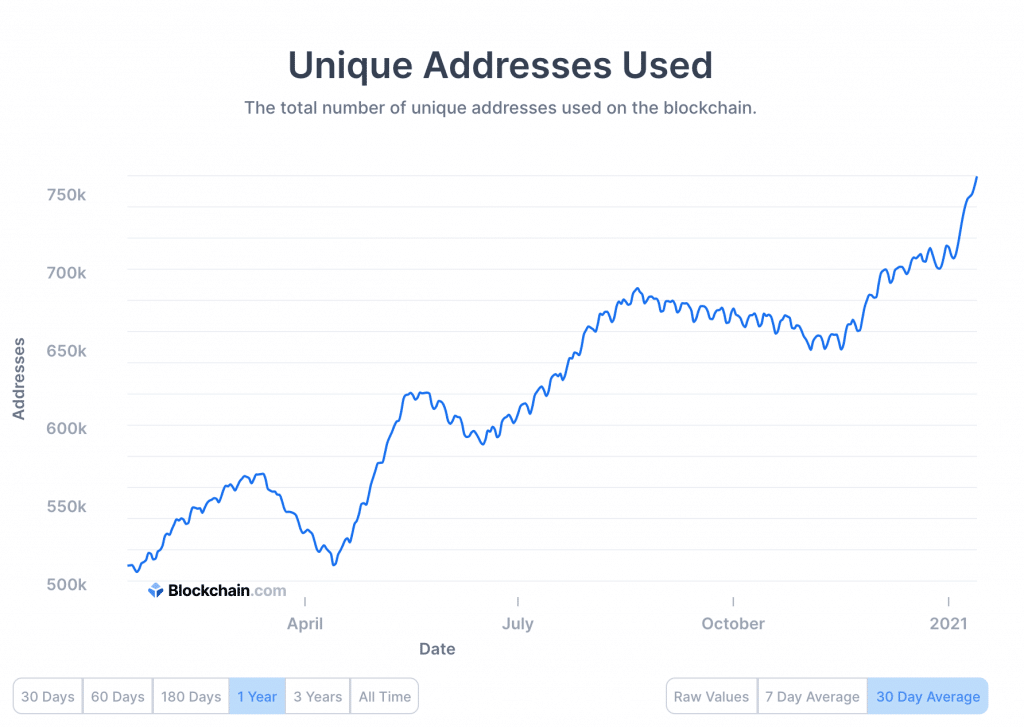
Bitcoin's retail user base is growing. But, will retail users stick around if the going gets rough?
FM
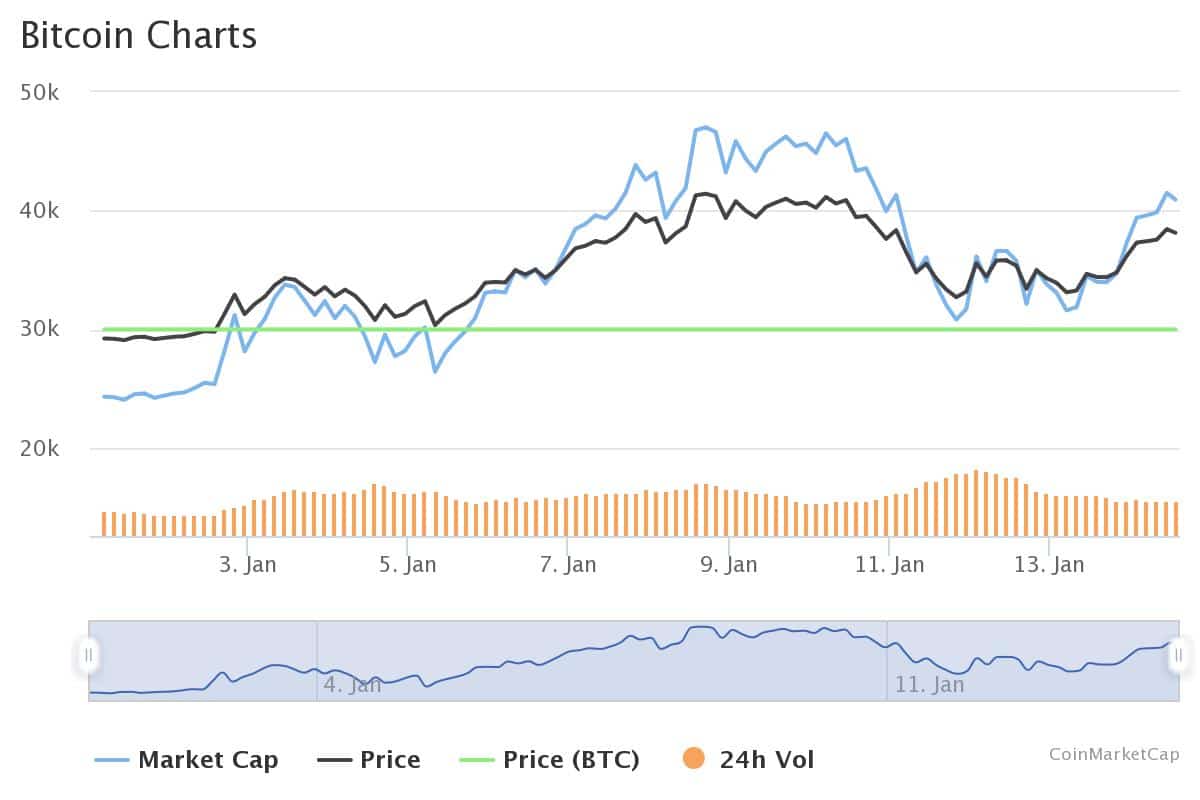
Bitcoin seems to be on the road to recovery after a dip earlier this week. After several days of uncertainty, some analysts believe the price of Bitcoin seemed to be making stronger movements towards rebounding over $40K.
However, even if Bitcoin is in for another dip, many analysts seem to believe that in the worst-case scenario, Bitcoin would still manage to stay over $20K, which is higher than it was throughout almost all of last year (and the rest of its lifecycle, for that matter.)
While it is clear that increased institutional investors are contributing to Bitcoin’s new, higher price levels in a big way, the role of retail investors in Bitcoin’s growth can not be underestimated.
Additionally, throughout 2020, the number of users of services like Coinbase, which perform custody services for their users, has exploded. Coinbase reports that it currently serves over 35 million users spread across more than 100 countries. Crypto lending and earning companies like Celsius, BlockFi and Crypto.com have also reported increased revenues and higher numbers of new users.
Now that the Bitcoin price has increased at such a fast pace, and BTC is all over the news as a result, the pace of new retail users coming into Bitcoin has undoubtedly increased right alongside it.
But, how does Bitcoin get these people to stay?
“The Newfound Scarcity Tends to Drive up BTC Price and Attract Speculators.”
Indeed, Bitcoin seems to have a bit of a commitment problem.
Ben Perrin, host of the YouTube series BTC Sessions, told Finance Magnates that Bitcoin seems to gain and lose large groups of new users in cycles: “the Bitcoin market seems to fluctuate in four-year epochs based around the supply halving of Bitcoin (when issuance of new coins is cut in half).”
Matthew Goeckel, Chief Executive of trading algorithm provider, LunaVulcan
“The newfound scarcity tends to drive up the price and attract speculators,” Perrin explained. “Some of those speculators read deeply enough to see the long term value proposition and stick around through the bear markets.”
Ben Perrin, Host of BTC Sessions
But, let us back up for a moment. What role do retail users play in the Bitcoin ecosystem, and why might it be important for them to stick around after the hype dies down?
“Retail Users Are Part of the ‘Users’ Stakeholder Group and Are Very Important to the Longevity of Crypto."
“Retail users are part of the ‘Users’ stakeholders and are very important to the longevity of crypto,” Goeckel said.
Part of this is, of course, because of price: “Retails users play a large role in terms of price,” he explained. “From past experience in 2017 during the last cryptocurrency bull run, retail investors brought millions of dollars to the overall market cap of cryptocurrencies and helped push prices of multiple cryptocurrencies upwards to record highs.”
“1000 new users that bring $1,000 USD each add $1,000,000 USD to the market cap of a cryptocurrency. That might not sound like a lot of new capital, but considering the total market cap of all cryptocurrencies $970 billion USD and cryptocurrencies are owned by users all over the world, new users coming onboard can drive up the prices significantly over time.”
Beyond that, users play a significant role in Bitcoin’s continuing technological relevance: “without users of the cryptocurrency, there is no reason to improve a crypto's development. If transactions are not happening on the blockchain, then miners have no incentive to buy or build mining equipment to validate the transactions. The more users that can be brought into the crypto ecosystem, the more likely the cryptocurrency ecosystem will survive and thrive.”
Bitcoin’s Shifting Narrative
However, historically speaking, when Bitcoin has seen a major run in the past, many of the new users that it has accumulated over the short term are purged when Bitcoin sees a major market correction. Many of them are unlikely to return.
How could the public narrative around Bitcoin be changed to attract users who may be able to stick it out for the long haul?
Of course, the narrative around Bitcoin has largely shifted over several years. During the Bitcoin price explosion of late 2017, the narrative seemed to be divided between several groups of people:
Cypherpunk anarcho-capitalists who were interested in privacy, sticking it to The Man, and 'magic internet money'
Tech philanthropists who replied with 'Bitcoin fixes this' as an answer to every single one of the world’s problems
BTC bulls who shouted 'lambos to the moon' as soon as Bitcoin was mentioned in any setting
Old-school investors who referred to Bitcoin as a 'scam', a 'fraud', 'rat poison', 'rat poison squared', and so on
Now, the narrative is quite different. In the past, Bitcoin was rarely spoken of in the context of this final group. The words 'Bitcoin' and 'institutional investors' were often connected by the phrase 'may someday be embraced by'.
The Marriage of BTC and Financial Institutions
However, today institutional investors play an increasingly large role in the Bitcoin world, both in terms of Bitcoin price and in terms of the way that Bitcoin is publicly seen and discussed.
Perrin told Finance Magnates that: “it seems that retail investors largely drove the bull market of 2017, but this year has moved quickly without the types of manias on a retail level we saw last epoch.”
“Larger institutions like Microstrategy, Mass Mutual, Guggenheim, and others have deep pockets and have begun moving BTC off exchanges. This is notable because the mania of 2017 saw coins moving ON to exchanges for altcoin trading and further speculation. The retail FOMO will likely come, but I believe we're in the very early stages.”
“In my opinion, traditional finance is about to endure a massive overhaul in how it operates, especially if they incorporate Bitcoin - a scarce asset that cannot be printed to bail them out,” he said. “There is now a real cost to mismanagement of money.”
"Blazing Trails Comes with Unpredictable Obstacles and Hardships, beyond Just Price Volatility.”
Indeed, Bitcoin is increasingly spoken about as a 'portfolio optimizer', a 'hedge against inflation', and a 'tool for economic growth', particularly for high-volume institutional investors. At the same time, more and more infrastructure – trading platforms, custodial services, et cetera – are more prolific than ever.
As such, Bitcoin seems to have taken big steps away from the anti-establishment roots that it was born from. While some OG Bitcoiners believe that this is antithetical to Bitcoin’s originally intended purpose, others believe that Bitcoin becoming a part of the institutional financial world is an important step toward a true financial revolution.
However, there will be bumps along the road, and in order to get people to come into Bitcoin and stay for the long haul, it is important to acknowledge that.
Jason Wu, Chief Executive and Founder of DeFiner, told Finance Magnates that: “first, as an industry, we need to be open and honest with newcomers.”
Jason Wu, Chief Executive and Founder of DeFiner
“This technology is truly a socio-economic revolution,” Wu said. “But, blazing trails comes with unpredictable obstacles and hardships, beyond just price volatility.”
“Second, the more of a trail we blaze for newcomers, the easier it will be for them to proceed,” he continued. “This is what all the crypto infrastructure will help with. Security will also take center stage as decentralized finance companies will need auditing.”
“Third, the industry needs to do as much as possible to reduce hazards like scammers, who prey on newcomers. Stopping scammers will also include a lot of design for UI and UX to make the process and custodianship seamless.”
They Come for the Bitcoin, They Stay for the Bitcoin
Additionally, Perrin told Finance Magnates that continuing to reframe Bitcoin as a long-term store of value rather than a volatile trading instrument is important for building BTC’s user base over the long term.
“We should focus on asserting bitcoin as a long term store of value firstly,” he said.
“While I don't think it's necessary to ensure everyone sticks around in the current cycle, I think we'll be successful by focusing messaging on longer-term thinking and generational wealth preservation rather than high time preference activities like trading for more dollars.”
”When People Value Bitcoin More Than the Dollars in Their Bank Accounts That Are Being Inflated Away, a Retail Base Will Develop.”
Indeed, Perrin believes that: “when people value Bitcoin more than the dollars in their bank accounts that are being inflated away, a retail base will develop.” In other words, BTC must build its reputation as something that is just as valuable, or even more valuable than gold.
Perrin said that Bitcoin’s value and its growing user base are ”from consumers wanting to spend their bitcoin, but from merchants who value BTC so much that they are willing to offer incentives for those that spend with them or they simply refuse to accept dollars anymore.” Ben added that he personally “would fall into this category, as I earn and live on Bitcoin currently, and charge a premium if someone wants to pay me in dollars.”
Still, Perrin believes that there is much progress to be made in terms of getting the average person to see Bitcoin this way, or anything close to it.
“#1: Low-income individuals living under regimes with hyperinflation: they recognize the absolute necessity of being able to opt-out. #2: High net worth individuals and institutions that realize their wealth is eroding beneath them as central banks print at unprecedented levels. They are realizing that holding cash is now irresponsible, and are looking for alternatives.”
“Main street and retail investors seem to still not realize the true utility here, and will likely continue to treat this as a speculative plan instead of the scarcest asset humanity has ever seen, and an ideal candidate for a world reserve currency," Perrin said.
Bitcoin seems to be on the road to recovery after a dip earlier this week. After several days of uncertainty, some analysts believe the price of Bitcoin seemed to be making stronger movements towards rebounding over $40K.
However, even if Bitcoin is in for another dip, many analysts seem to believe that in the worst-case scenario, Bitcoin would still manage to stay over $20K, which is higher than it was throughout almost all of last year (and the rest of its lifecycle, for that matter.)
While it is clear that increased institutional investors are contributing to Bitcoin’s new, higher price levels in a big way, the role of retail investors in Bitcoin’s growth can not be underestimated.
Additionally, throughout 2020, the number of users of services like Coinbase, which perform custody services for their users, has exploded. Coinbase reports that it currently serves over 35 million users spread across more than 100 countries. Crypto lending and earning companies like Celsius, BlockFi and Crypto.com have also reported increased revenues and higher numbers of new users.
Now that the Bitcoin price has increased at such a fast pace, and BTC is all over the news as a result, the pace of new retail users coming into Bitcoin has undoubtedly increased right alongside it.
But, how does Bitcoin get these people to stay?
“The Newfound Scarcity Tends to Drive up BTC Price and Attract Speculators.”
Indeed, Bitcoin seems to have a bit of a commitment problem.
Ben Perrin, host of the YouTube series BTC Sessions, told Finance Magnates that Bitcoin seems to gain and lose large groups of new users in cycles: “the Bitcoin market seems to fluctuate in four-year epochs based around the supply halving of Bitcoin (when issuance of new coins is cut in half).”
Matthew Goeckel, Chief Executive of trading algorithm provider, LunaVulcan
“The newfound scarcity tends to drive up the price and attract speculators,” Perrin explained. “Some of those speculators read deeply enough to see the long term value proposition and stick around through the bear markets.”
Ben Perrin, Host of BTC Sessions
But, let us back up for a moment. What role do retail users play in the Bitcoin ecosystem, and why might it be important for them to stick around after the hype dies down?
“Retail Users Are Part of the ‘Users’ Stakeholder Group and Are Very Important to the Longevity of Crypto."
“Retail users are part of the ‘Users’ stakeholders and are very important to the longevity of crypto,” Goeckel said.
Part of this is, of course, because of price: “Retails users play a large role in terms of price,” he explained. “From past experience in 2017 during the last cryptocurrency bull run, retail investors brought millions of dollars to the overall market cap of cryptocurrencies and helped push prices of multiple cryptocurrencies upwards to record highs.”
“1000 new users that bring $1,000 USD each add $1,000,000 USD to the market cap of a cryptocurrency. That might not sound like a lot of new capital, but considering the total market cap of all cryptocurrencies $970 billion USD and cryptocurrencies are owned by users all over the world, new users coming onboard can drive up the prices significantly over time.”
Beyond that, users play a significant role in Bitcoin’s continuing technological relevance: “without users of the cryptocurrency, there is no reason to improve a crypto's development. If transactions are not happening on the blockchain, then miners have no incentive to buy or build mining equipment to validate the transactions. The more users that can be brought into the crypto ecosystem, the more likely the cryptocurrency ecosystem will survive and thrive.”
Bitcoin’s Shifting Narrative
However, historically speaking, when Bitcoin has seen a major run in the past, many of the new users that it has accumulated over the short term are purged when Bitcoin sees a major market correction. Many of them are unlikely to return.
How could the public narrative around Bitcoin be changed to attract users who may be able to stick it out for the long haul?
Of course, the narrative around Bitcoin has largely shifted over several years. During the Bitcoin price explosion of late 2017, the narrative seemed to be divided between several groups of people:
Cypherpunk anarcho-capitalists who were interested in privacy, sticking it to The Man, and 'magic internet money'
Tech philanthropists who replied with 'Bitcoin fixes this' as an answer to every single one of the world’s problems
BTC bulls who shouted 'lambos to the moon' as soon as Bitcoin was mentioned in any setting
Old-school investors who referred to Bitcoin as a 'scam', a 'fraud', 'rat poison', 'rat poison squared', and so on
Now, the narrative is quite different. In the past, Bitcoin was rarely spoken of in the context of this final group. The words 'Bitcoin' and 'institutional investors' were often connected by the phrase 'may someday be embraced by'.
The Marriage of BTC and Financial Institutions
However, today institutional investors play an increasingly large role in the Bitcoin world, both in terms of Bitcoin price and in terms of the way that Bitcoin is publicly seen and discussed.
Perrin told Finance Magnates that: “it seems that retail investors largely drove the bull market of 2017, but this year has moved quickly without the types of manias on a retail level we saw last epoch.”
“Larger institutions like Microstrategy, Mass Mutual, Guggenheim, and others have deep pockets and have begun moving BTC off exchanges. This is notable because the mania of 2017 saw coins moving ON to exchanges for altcoin trading and further speculation. The retail FOMO will likely come, but I believe we're in the very early stages.”
“In my opinion, traditional finance is about to endure a massive overhaul in how it operates, especially if they incorporate Bitcoin - a scarce asset that cannot be printed to bail them out,” he said. “There is now a real cost to mismanagement of money.”
"Blazing Trails Comes with Unpredictable Obstacles and Hardships, beyond Just Price Volatility.”
Indeed, Bitcoin is increasingly spoken about as a 'portfolio optimizer', a 'hedge against inflation', and a 'tool for economic growth', particularly for high-volume institutional investors. At the same time, more and more infrastructure – trading platforms, custodial services, et cetera – are more prolific than ever.
As such, Bitcoin seems to have taken big steps away from the anti-establishment roots that it was born from. While some OG Bitcoiners believe that this is antithetical to Bitcoin’s originally intended purpose, others believe that Bitcoin becoming a part of the institutional financial world is an important step toward a true financial revolution.
However, there will be bumps along the road, and in order to get people to come into Bitcoin and stay for the long haul, it is important to acknowledge that.
Jason Wu, Chief Executive and Founder of DeFiner, told Finance Magnates that: “first, as an industry, we need to be open and honest with newcomers.”
Jason Wu, Chief Executive and Founder of DeFiner
“This technology is truly a socio-economic revolution,” Wu said. “But, blazing trails comes with unpredictable obstacles and hardships, beyond just price volatility.”
“Second, the more of a trail we blaze for newcomers, the easier it will be for them to proceed,” he continued. “This is what all the crypto infrastructure will help with. Security will also take center stage as decentralized finance companies will need auditing.”
“Third, the industry needs to do as much as possible to reduce hazards like scammers, who prey on newcomers. Stopping scammers will also include a lot of design for UI and UX to make the process and custodianship seamless.”
They Come for the Bitcoin, They Stay for the Bitcoin
Additionally, Perrin told Finance Magnates that continuing to reframe Bitcoin as a long-term store of value rather than a volatile trading instrument is important for building BTC’s user base over the long term.
“We should focus on asserting bitcoin as a long term store of value firstly,” he said.
“While I don't think it's necessary to ensure everyone sticks around in the current cycle, I think we'll be successful by focusing messaging on longer-term thinking and generational wealth preservation rather than high time preference activities like trading for more dollars.”
”When People Value Bitcoin More Than the Dollars in Their Bank Accounts That Are Being Inflated Away, a Retail Base Will Develop.”
Indeed, Perrin believes that: “when people value Bitcoin more than the dollars in their bank accounts that are being inflated away, a retail base will develop.” In other words, BTC must build its reputation as something that is just as valuable, or even more valuable than gold.
Perrin said that Bitcoin’s value and its growing user base are ”from consumers wanting to spend their bitcoin, but from merchants who value BTC so much that they are willing to offer incentives for those that spend with them or they simply refuse to accept dollars anymore.” Ben added that he personally “would fall into this category, as I earn and live on Bitcoin currently, and charge a premium if someone wants to pay me in dollars.”
Still, Perrin believes that there is much progress to be made in terms of getting the average person to see Bitcoin this way, or anything close to it.
“#1: Low-income individuals living under regimes with hyperinflation: they recognize the absolute necessity of being able to opt-out. #2: High net worth individuals and institutions that realize their wealth is eroding beneath them as central banks print at unprecedented levels. They are realizing that holding cash is now irresponsible, and are looking for alternatives.”
“Main street and retail investors seem to still not realize the true utility here, and will likely continue to treat this as a speculative plan instead of the scarcest asset humanity has ever seen, and an ideal candidate for a world reserve currency," Perrin said.
Rachel is a self-taught crypto geek and a passionate writer. She believes in the power that the written word has to educate, connect and empower individuals to make positive and powerful financial choices. She is the Podcast Host and a Cryptocurrency Editor at Finance Magnates.
Crypto Built More Rails, but the Next Battle Is Over How Much Work a Dollar Can Do
Featured Videos
FP Markets Winner Spotlight 🏆 | Global Broker of the Year 2025 #Trading #Broker #Innovation #Shorts
FP Markets Winner Spotlight 🏆 | Global Broker of the Year 2025 #Trading #Broker #Innovation #Shorts
FP Markets Winner Spotlight 🏆 | Global Broker of the Year 2025 #Trading #Broker #Innovation #Shorts
FP Markets Winner Spotlight 🏆 | Global Broker of the Year 2025 #Trading #Broker #Innovation #Shorts
FP Markets takes the spotlight as Global Broker of the Year 2025 at the Finance Magnates Awards.
Martin Stoilov, Head of Client Experience, shares that trust, innovation, and people played a key role in the company’s success, supported by a strong foundation of integrity and client-centricity.
Following this milestone, FP Markets continues to focus on growth, technology investment, and its core values of transparency and excellence.
👉 Be part of FM Awards 2026: https://awards.financemagnates.com/#nominate
FP Markets takes the spotlight as Global Broker of the Year 2025 at the Finance Magnates Awards.
Martin Stoilov, Head of Client Experience, shares that trust, innovation, and people played a key role in the company’s success, supported by a strong foundation of integrity and client-centricity.
Following this milestone, FP Markets continues to focus on growth, technology investment, and its core values of transparency and excellence.
👉 Be part of FM Awards 2026: https://awards.financemagnates.com/#nominate
FP Markets takes the spotlight as Global Broker of the Year 2025 at the Finance Magnates Awards.
Martin Stoilov, Head of Client Experience, shares that trust, innovation, and people played a key role in the company’s success, supported by a strong foundation of integrity and client-centricity.
Following this milestone, FP Markets continues to focus on growth, technology investment, and its core values of transparency and excellence.
👉 Be part of FM Awards 2026: https://awards.financemagnates.com/#nominate
FP Markets takes the spotlight as Global Broker of the Year 2025 at the Finance Magnates Awards.
Martin Stoilov, Head of Client Experience, shares that trust, innovation, and people played a key role in the company’s success, supported by a strong foundation of integrity and client-centricity.
Following this milestone, FP Markets continues to focus on growth, technology investment, and its core values of transparency and excellence.
👉 Be part of FM Awards 2026: https://awards.financemagnates.com/#nominate
In this video, we review @HolaPrimeMarketsOfficial, a multi-asset forex and CFDs broker offering different account types, trading platforms, and flexible trading conditions.
We cover the broker’s overall offering, including account options, trading environment, platforms like MT4 and MT5, and additional services such as managed accounts and fast withdrawals.
Watch the full video to see if Hola Prime Markets fits your trading needs.
📣 Stay up to date with the latest in finance and trading. Follow Finance Magnates for industry news, insights, and global event coverage.
Connect with us:
🔗 LinkedIn: /financemagnates
👍 Facebook: /financemagnates
📸 Instagram: https://www.instagram.com/financemagnates
🐦 X: https://x.com/financemagnates
🎥 TikTok: https://www.tiktok.com/tag/financemagnates
▶️ YouTube: /@financemagnates_official
#HolaPrime #ForexBroker #CFDTrading #FinanceMagnates #Trading #Forex #BrokerReview
In this video, we review @HolaPrimeMarketsOfficial, a multi-asset forex and CFDs broker offering different account types, trading platforms, and flexible trading conditions.
We cover the broker’s overall offering, including account options, trading environment, platforms like MT4 and MT5, and additional services such as managed accounts and fast withdrawals.
Watch the full video to see if Hola Prime Markets fits your trading needs.
📣 Stay up to date with the latest in finance and trading. Follow Finance Magnates for industry news, insights, and global event coverage.
Connect with us:
🔗 LinkedIn: /financemagnates
👍 Facebook: /financemagnates
📸 Instagram: https://www.instagram.com/financemagnates
🐦 X: https://x.com/financemagnates
🎥 TikTok: https://www.tiktok.com/tag/financemagnates
▶️ YouTube: /@financemagnates_official
#HolaPrime #ForexBroker #CFDTrading #FinanceMagnates #Trading #Forex #BrokerReview
In this video, we review @HolaPrimeMarketsOfficial, a multi-asset forex and CFDs broker offering different account types, trading platforms, and flexible trading conditions.
We cover the broker’s overall offering, including account options, trading environment, platforms like MT4 and MT5, and additional services such as managed accounts and fast withdrawals.
Watch the full video to see if Hola Prime Markets fits your trading needs.
📣 Stay up to date with the latest in finance and trading. Follow Finance Magnates for industry news, insights, and global event coverage.
Connect with us:
🔗 LinkedIn: /financemagnates
👍 Facebook: /financemagnates
📸 Instagram: https://www.instagram.com/financemagnates
🐦 X: https://x.com/financemagnates
🎥 TikTok: https://www.tiktok.com/tag/financemagnates
▶️ YouTube: /@financemagnates_official
#HolaPrime #ForexBroker #CFDTrading #FinanceMagnates #Trading #Forex #BrokerReview
In this video, we review @HolaPrimeMarketsOfficial, a multi-asset forex and CFDs broker offering different account types, trading platforms, and flexible trading conditions.
We cover the broker’s overall offering, including account options, trading environment, platforms like MT4 and MT5, and additional services such as managed accounts and fast withdrawals.
Watch the full video to see if Hola Prime Markets fits your trading needs.
📣 Stay up to date with the latest in finance and trading. Follow Finance Magnates for industry news, insights, and global event coverage.
Connect with us:
🔗 LinkedIn: /financemagnates
👍 Facebook: /financemagnates
📸 Instagram: https://www.instagram.com/financemagnates
🐦 X: https://x.com/financemagnates
🎥 TikTok: https://www.tiktok.com/tag/financemagnates
▶️ YouTube: /@financemagnates_official
#HolaPrime #ForexBroker #CFDTrading #FinanceMagnates #Trading #Forex #BrokerReview
In this video, we review @HolaPrimeMarketsOfficial, a multi-asset forex and CFDs broker offering different account types, trading platforms, and flexible trading conditions.
We cover the broker’s overall offering, including account options, trading environment, platforms like MT4 and MT5, and additional services such as managed accounts and fast withdrawals.
Watch the full video to see if Hola Prime Markets fits your trading needs.
📣 Stay up to date with the latest in finance and trading. Follow Finance Magnates for industry news, insights, and global event coverage.
Connect with us:
🔗 LinkedIn: /financemagnates
👍 Facebook: /financemagnates
📸 Instagram: https://www.instagram.com/financemagnates
🐦 X: https://x.com/financemagnates
🎥 TikTok: https://www.tiktok.com/tag/financemagnates
▶️ YouTube: /@financemagnates_official
#HolaPrime #ForexBroker #CFDTrading #FinanceMagnates #Trading #Forex #BrokerReview
In this video, we review @HolaPrimeMarketsOfficial, a multi-asset forex and CFDs broker offering different account types, trading platforms, and flexible trading conditions.
We cover the broker’s overall offering, including account options, trading environment, platforms like MT4 and MT5, and additional services such as managed accounts and fast withdrawals.
Watch the full video to see if Hola Prime Markets fits your trading needs.
📣 Stay up to date with the latest in finance and trading. Follow Finance Magnates for industry news, insights, and global event coverage.
Connect with us:
🔗 LinkedIn: /financemagnates
👍 Facebook: /financemagnates
📸 Instagram: https://www.instagram.com/financemagnates
🐦 X: https://x.com/financemagnates
🎥 TikTok: https://www.tiktok.com/tag/financemagnates
▶️ YouTube: /@financemagnates_official
#HolaPrime #ForexBroker #CFDTrading #FinanceMagnates #Trading #Forex #BrokerReview
Hola Prime Review: What You Need to Know | Full Breakdown by Finance Magnates
Hola Prime Review: What You Need to Know | Full Breakdown by Finance Magnates
Hola Prime Review: What You Need to Know | Full Breakdown by Finance Magnates
Hola Prime Review: What You Need to Know | Full Breakdown by Finance Magnates
Hola Prime Review: What You Need to Know | Full Breakdown by Finance Magnates
Hola Prime Review: What You Need to Know | Full Breakdown by Finance Magnates
In this video, we review @HolaPrime_Global, a proprietary trading firm offering evaluation programs and performance-based payouts in simulated market environments.
We cover how the challenge model works, including account types, profit splits (up to 95%), trading rules, and what it takes to reach a funded account. You’ll also learn about available platforms like MT4, MT5, cTrader, and more, along with insights into payouts, support, and trading conditions.
Watch the full video to see if Hola Prime fits your trading style.
📣 Stay up to date with the latest in finance and trading. Follow Finance Magnates for industry news, insights, and global event coverage.
Connect with us:
🔗 LinkedIn: /financemagnates
👍 Facebook: /financemagnates
📸 Instagram: https://www.instagram.com/financemagnates
🐦 X: https://x.com/financemagnates
🎥 TikTok: https://www.tiktok.com/tag/financemagnates
▶️ YouTube: /@financemagnates_official
#HolaPrime #PropFirm #Trading #FinanceMagnates #Forex #FuturesTrading #TradingReview #PropFirmReview
In this video, we review @HolaPrime_Global, a proprietary trading firm offering evaluation programs and performance-based payouts in simulated market environments.
We cover how the challenge model works, including account types, profit splits (up to 95%), trading rules, and what it takes to reach a funded account. You’ll also learn about available platforms like MT4, MT5, cTrader, and more, along with insights into payouts, support, and trading conditions.
Watch the full video to see if Hola Prime fits your trading style.
📣 Stay up to date with the latest in finance and trading. Follow Finance Magnates for industry news, insights, and global event coverage.
Connect with us:
🔗 LinkedIn: /financemagnates
👍 Facebook: /financemagnates
📸 Instagram: https://www.instagram.com/financemagnates
🐦 X: https://x.com/financemagnates
🎥 TikTok: https://www.tiktok.com/tag/financemagnates
▶️ YouTube: /@financemagnates_official
#HolaPrime #PropFirm #Trading #FinanceMagnates #Forex #FuturesTrading #TradingReview #PropFirmReview
In this video, we review @HolaPrime_Global, a proprietary trading firm offering evaluation programs and performance-based payouts in simulated market environments.
We cover how the challenge model works, including account types, profit splits (up to 95%), trading rules, and what it takes to reach a funded account. You’ll also learn about available platforms like MT4, MT5, cTrader, and more, along with insights into payouts, support, and trading conditions.
Watch the full video to see if Hola Prime fits your trading style.
📣 Stay up to date with the latest in finance and trading. Follow Finance Magnates for industry news, insights, and global event coverage.
Connect with us:
🔗 LinkedIn: /financemagnates
👍 Facebook: /financemagnates
📸 Instagram: https://www.instagram.com/financemagnates
🐦 X: https://x.com/financemagnates
🎥 TikTok: https://www.tiktok.com/tag/financemagnates
▶️ YouTube: /@financemagnates_official
#HolaPrime #PropFirm #Trading #FinanceMagnates #Forex #FuturesTrading #TradingReview #PropFirmReview
In this video, we review @HolaPrime_Global, a proprietary trading firm offering evaluation programs and performance-based payouts in simulated market environments.
We cover how the challenge model works, including account types, profit splits (up to 95%), trading rules, and what it takes to reach a funded account. You’ll also learn about available platforms like MT4, MT5, cTrader, and more, along with insights into payouts, support, and trading conditions.
Watch the full video to see if Hola Prime fits your trading style.
📣 Stay up to date with the latest in finance and trading. Follow Finance Magnates for industry news, insights, and global event coverage.
Connect with us:
🔗 LinkedIn: /financemagnates
👍 Facebook: /financemagnates
📸 Instagram: https://www.instagram.com/financemagnates
🐦 X: https://x.com/financemagnates
🎥 TikTok: https://www.tiktok.com/tag/financemagnates
▶️ YouTube: /@financemagnates_official
#HolaPrime #PropFirm #Trading #FinanceMagnates #Forex #FuturesTrading #TradingReview #PropFirmReview
In this video, we review @HolaPrime_Global, a proprietary trading firm offering evaluation programs and performance-based payouts in simulated market environments.
We cover how the challenge model works, including account types, profit splits (up to 95%), trading rules, and what it takes to reach a funded account. You’ll also learn about available platforms like MT4, MT5, cTrader, and more, along with insights into payouts, support, and trading conditions.
Watch the full video to see if Hola Prime fits your trading style.
📣 Stay up to date with the latest in finance and trading. Follow Finance Magnates for industry news, insights, and global event coverage.
Connect with us:
🔗 LinkedIn: /financemagnates
👍 Facebook: /financemagnates
📸 Instagram: https://www.instagram.com/financemagnates
🐦 X: https://x.com/financemagnates
🎥 TikTok: https://www.tiktok.com/tag/financemagnates
▶️ YouTube: /@financemagnates_official
#HolaPrime #PropFirm #Trading #FinanceMagnates #Forex #FuturesTrading #TradingReview #PropFirmReview
In this video, we review @HolaPrime_Global, a proprietary trading firm offering evaluation programs and performance-based payouts in simulated market environments.
We cover how the challenge model works, including account types, profit splits (up to 95%), trading rules, and what it takes to reach a funded account. You’ll also learn about available platforms like MT4, MT5, cTrader, and more, along with insights into payouts, support, and trading conditions.
Watch the full video to see if Hola Prime fits your trading style.
📣 Stay up to date with the latest in finance and trading. Follow Finance Magnates for industry news, insights, and global event coverage.
Connect with us:
🔗 LinkedIn: /financemagnates
👍 Facebook: /financemagnates
📸 Instagram: https://www.instagram.com/financemagnates
🐦 X: https://x.com/financemagnates
🎥 TikTok: https://www.tiktok.com/tag/financemagnates
▶️ YouTube: /@financemagnates_official
#HolaPrime #PropFirm #Trading #FinanceMagnates #Forex #FuturesTrading #TradingReview #PropFirmReview
Axi Winner Spotlight 🏆 | Global Most Innovative Broker 2025 #Innovation #Trading #Fintech #Broker
Axi Winner Spotlight 🏆 | Global Most Innovative Broker 2025 #Innovation #Trading #Fintech #Broker
Axi Winner Spotlight 🏆 | Global Most Innovative Broker 2025 #Innovation #Trading #Fintech #Broker
Axi Winner Spotlight 🏆 | Global Most Innovative Broker 2025 #Innovation #Trading #Fintech #Broker
Axi Winner Spotlight 🏆 | Global Most Innovative Broker 2025 #Innovation #Trading #Fintech #Broker
Axi Winner Spotlight 🏆 | Global Most Innovative Broker 2025 #Innovation #Trading #Fintech #Broker
Axi takes the spotlight at the Finance Magnates Awards, winning Global Most Innovative Broker 2025.
Olivia Xenofontos and Ivanna Openko share how the team will feel: proud, motivated, and ready to keep delivering.
They also describe the night as well-organized, focused, and enjoyable for all.
👉 Be part of FM Awards 2026.
Axi takes the spotlight at the Finance Magnates Awards, winning Global Most Innovative Broker 2025.
Olivia Xenofontos and Ivanna Openko share how the team will feel: proud, motivated, and ready to keep delivering.
They also describe the night as well-organized, focused, and enjoyable for all.
👉 Be part of FM Awards 2026.
Axi takes the spotlight at the Finance Magnates Awards, winning Global Most Innovative Broker 2025.
Olivia Xenofontos and Ivanna Openko share how the team will feel: proud, motivated, and ready to keep delivering.
They also describe the night as well-organized, focused, and enjoyable for all.
👉 Be part of FM Awards 2026.
Axi takes the spotlight at the Finance Magnates Awards, winning Global Most Innovative Broker 2025.
Olivia Xenofontos and Ivanna Openko share how the team will feel: proud, motivated, and ready to keep delivering.
They also describe the night as well-organized, focused, and enjoyable for all.
👉 Be part of FM Awards 2026.
Axi takes the spotlight at the Finance Magnates Awards, winning Global Most Innovative Broker 2025.
Olivia Xenofontos and Ivanna Openko share how the team will feel: proud, motivated, and ready to keep delivering.
They also describe the night as well-organized, focused, and enjoyable for all.
👉 Be part of FM Awards 2026.
Axi takes the spotlight at the Finance Magnates Awards, winning Global Most Innovative Broker 2025.
Olivia Xenofontos and Ivanna Openko share how the team will feel: proud, motivated, and ready to keep delivering.
They also describe the night as well-organized, focused, and enjoyable for all.
👉 Be part of FM Awards 2026.
Recognition that matters.
Built on transparency.
Driven by the industry.
The Finance Magnates Awards 2026.
Nominations are now open.
🔗 https://awards.financemagnates.com/?utm_source=SM&utm_medium=social&utm_campaign=recognition-matters
Recognition that matters.
Built on transparency.
Driven by the industry.
The Finance Magnates Awards 2026.
Nominations are now open.
🔗 https://awards.financemagnates.com/?utm_source=SM&utm_medium=social&utm_campaign=recognition-matters
Recognition that matters.
Built on transparency.
Driven by the industry.
The Finance Magnates Awards 2026.
Nominations are now open.
🔗 https://awards.financemagnates.com/?utm_source=SM&utm_medium=social&utm_campaign=recognition-matters
Recognition that matters.
Built on transparency.
Driven by the industry.
The Finance Magnates Awards 2026.
Nominations are now open.
🔗 https://awards.financemagnates.com/?utm_source=SM&utm_medium=social&utm_campaign=recognition-matters
Recognition that matters.
Built on transparency.
Driven by the industry.
The Finance Magnates Awards 2026.
Nominations are now open.
🔗 https://awards.financemagnates.com/?utm_source=SM&utm_medium=social&utm_campaign=recognition-matters
Recognition that matters.
Built on transparency.
Driven by the industry.
The Finance Magnates Awards 2026.
Nominations are now open.
🔗 https://awards.financemagnates.com/?utm_source=SM&utm_medium=social&utm_campaign=recognition-matters