Elon Musk brought some positive news to Bitcoin markets this week. Will the good feelings last?
FM
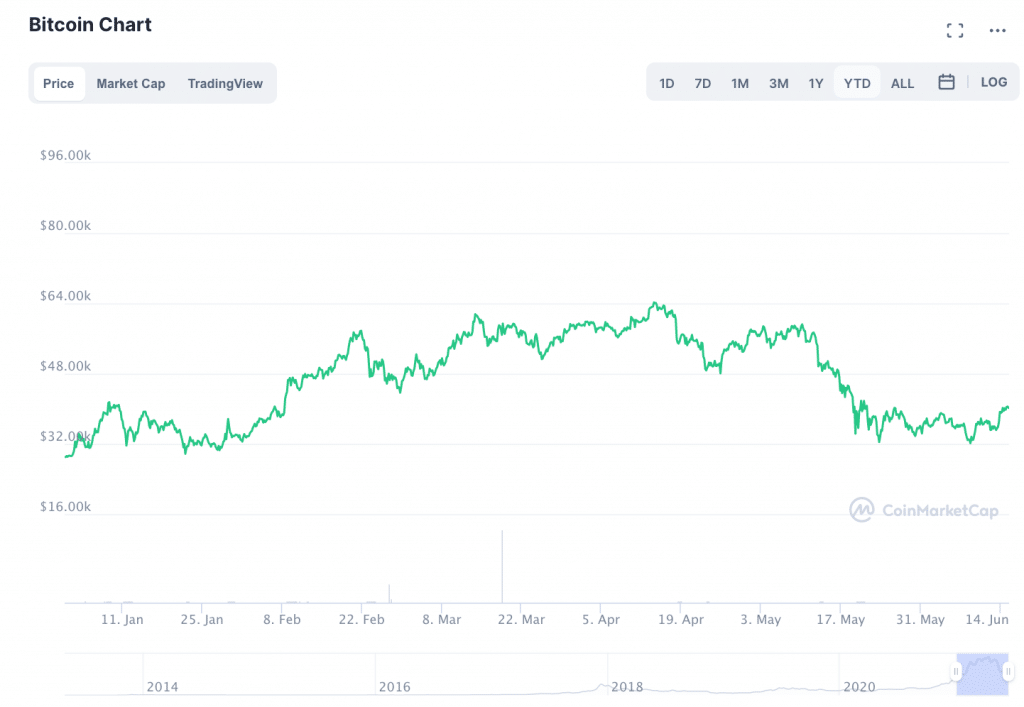
The price of Bitcoin has climbed back above $40K for the first time in roughly three weeks.
The passage over $40K may not have been exactly unexpected. However, after questions arose about whether or not the price of BTC would need to fall below $30K before a meaningful recovery was possible, the rise above $40K is certainly a sign that things are looking up. Some analysts are even eyeing $50K.
One of the most significant pieces of news was, yet again, brought about by Elon Musk. Last month, Musk’s announcement that Tesla would no longer be accepting Bitcoin payments sent shockwaves through the market. Some analysts believe that the announcement contributed to market movements that triggered more than $12 billion in liquidations of leveraged positions.
However, on Sunday, Elon took a step back toward Bitcoin.
True to style, the announcement came in a tweet: “When there’s confirmation of reasonable (~50%) clean energy usage by miners with a positive future trend, Tesla will resume allowing Bitcoin transactions,” Musk wrote.
This is inaccurate. Tesla only sold ~10% of holdings to confirm BTC could be liquidated easily without moving market.
When there’s confirmation of reasonable (~50%) clean energy usage by miners with positive future trend, Tesla will resume allowing Bitcoin transactions.
Musk was responding to a CoinTelegraph tweet linking to an article in which Magda Wierzycka, the Chief Executive of Sygnia, accused Musk of Bitcoin market manipulation. “What we have seen with Bitcoin is price manipulation by one very powerful and influential individual," Wierzycka said in an interview with Bruce Whitfield at the Money Show this week, per CoinTelegraph’s report.
Musk responded by saying that: “this is inaccurate. Tesla only sold ~10% of holdings to confirm BTC could be liquidated easily without moving market,” and then going on to say that Tesla will begin accepting payments when the Bitcoin mining industry is confirmed at 50% clean energy.
“Elon Musk’s Irresponsible Tweets Have Caused More People to Get Liquidated than Any Other Crypto Event in History.”
The markets certainly seem to have responded to Musk’s announcement that Tesla has a theoretical path toward accepting Bitcoin payments in the future. On Sunday, before the tweet went out, the price of Bitcoin was hovering below $35K. After the tweet was posted, Bitcoin’s price shot to nearly $37K and has continued building momentum ever since.
However, not every member of the cryptocurrency community seems to be thrilled that Elon Musk is back. After announcing that Tesla would quit accepting Bitcoin last month, Musk drew ire from across the crypto industry.
For example, on June 5th, Ran Neuner, the creator and host of CNBC’s crypto trader, tweeted that: “Elon Musk’s irresponsible tweets have caused more people to get liquidated than any other Crypto event in history. Over 1 MILLION people have been liquidated, some losing their entire savings. These are the stats.”
Elon Musk’s irresponsible tweets have caused more people to get liquidated than any other Crypto event in history. Over 1 MILLION people have been liquidated, some losing their entire savings. These are the stats.
Even hacking group, Anonymous took aim at Elon, accusing him of 'playing dumb' with regards to Bitcoin’s carbon footprint. Why? So that Tesla could continue earning energy subsidy payments from the US government.
“The energy use argument about proof-of-work mining is a very nuanced conversation that requires a fairly complex understanding of how power grids work and how excess energy is wasted by power companies and sought out by crypto miners,” an anonymous representative said in a video that was posted last week.
“This is a conversation that you have been having for over a year and were intimately aware of,” the rep said, going on to imply that Musk’s 'divorce' from crypto may have had hidden motives: ultimately, to “...centralize the industry and take it under your control.”
Hidden Motivations?
Now that Musk and Tesla appear to be taking a step back toward crypto, some crypto market participants appear to be skeptical.
For example, Blockstream CTO and Pixelmatic CEO, Samson Mow wrote in reply to Musk’s tweet about returning to BTC payments that: “So if we setup mining farms close to all Tesla Supercharging stations, we should be fine right? (sic)”
So if we setup mining farms close to all Tesla Supercharging stations, we should be fine right?
In other words, there is some belief that Musk could be trying to position Tesla’s clean energy production as a possible source of energy needed for Bitcoin mining. However, there does not appear to be any hard evidence that this is the case.
“Bitcoin Is Resurgent Today as Markets React Positively to the Words of a Celebrity Seeking to Associate Himself with the Space.”
Ultimately, some analysts believe that Musk’s latest crypto-related comments are nothing more than an attention-grab.
In a statement shared with Finance Magnates, Bitfinex CTO, Paolo Ardoino said that: “Bitcoin is resurgent today as markets react positively to the words of a celebrity seeking to associate himself with the space,” Ardoino wrote. “The king of crypto is carrying cryptocurrency markets higher amid hopes that bitcoin miners will move towards a higher usage of renewables as their primary energy source.”
However, Ardoino, and many others, ultimately believe that Musk’s antics are a distraction from more meaningful growth happening in the Bitcoin and cryptocurrency sphere at large. “Meanwhile, bitcoin’s utility and use cases such as the Lightning Network continue to strengthen and grow,” Ardoino wrote. “While it is important to always take a long-term view with this incredible technology, we’re seeing a quiet optimism return to the market.”
Still, it is undeniable that Musk’s involvement in crypto will continue to have some effect on the crypto space for the foreseeable future.
However, Haber believes that Musk’s greatest influence on Bitcoin has to do with the narrative: “By far the biggest impact it will have is Elon educating the new users they introduce to the network about Bitcoin’s electricity use and his push for sustainability in the Bitcoin network.”
Paul Haber, the CEO of Graph Blockchain Inc.
Bitcoin’s Environmental Reckoning Continues
And, regardless of whether Tesla provides the energy or not, Bitcoin is facing a serious reckoning about its carbon footprint. The New York Times is among a myriad of news sources that have published countless articles highlighting Bitcoin’s environmental impact, particularly as its price rose throughout the course of 2021.
While Bitcoin advocates argue, as Anonymous did, that the conversation about exactly how much energy Bitcoin uses is 'nuanced', the fact remains that, at best, there is quite a bit of ambiguity surrounding the amount of carbon that Bitcoin releases into the atmosphere.
Industry leaders have taken up the issue with the creation of the Bitcoin Mining Council, which Musk is definitively not a part of. According to Business Insider, the current participants include business intelligence provider, MicroStrategy, investment management firm, Galaxy Digital, blockchain mining company, Argo, technology firm, Hive and mining company, Riot.
El Salvador, Taproot May Also Be Boosting the Price of BTC
Beyond Elon Musk and renewable energy, Bitcoin’s price may also be enjoying a boost from several other pieces of positive news that have hit the airwaves this week.
Earlier this month, the Central American country of El Salvador became the first nation ever to accept bitcoin as legal tender. According to The Guardian, the decision came “as part of its technology-loving president’s proposals to use the cryptocurrency to promote ‘financial inclusion’, investment and economic development.”
Additionally, the Australian Financial Review reported today that Bitcoin’s price could be riding high off of the Taproot upgrade, “which was approved by the majority of bitcoin developers at the weekend.” Taproot was designed to improve privacy, efficiency and “most importantly, unlock the ability for smart contracts to take place on the bitcoin blockchain.” The upgrade is set to be completed by November.
The price of Bitcoin has climbed back above $40K for the first time in roughly three weeks.
The passage over $40K may not have been exactly unexpected. However, after questions arose about whether or not the price of BTC would need to fall below $30K before a meaningful recovery was possible, the rise above $40K is certainly a sign that things are looking up. Some analysts are even eyeing $50K.
One of the most significant pieces of news was, yet again, brought about by Elon Musk. Last month, Musk’s announcement that Tesla would no longer be accepting Bitcoin payments sent shockwaves through the market. Some analysts believe that the announcement contributed to market movements that triggered more than $12 billion in liquidations of leveraged positions.
However, on Sunday, Elon took a step back toward Bitcoin.
True to style, the announcement came in a tweet: “When there’s confirmation of reasonable (~50%) clean energy usage by miners with a positive future trend, Tesla will resume allowing Bitcoin transactions,” Musk wrote.
This is inaccurate. Tesla only sold ~10% of holdings to confirm BTC could be liquidated easily without moving market.
When there’s confirmation of reasonable (~50%) clean energy usage by miners with positive future trend, Tesla will resume allowing Bitcoin transactions.
Musk was responding to a CoinTelegraph tweet linking to an article in which Magda Wierzycka, the Chief Executive of Sygnia, accused Musk of Bitcoin market manipulation. “What we have seen with Bitcoin is price manipulation by one very powerful and influential individual," Wierzycka said in an interview with Bruce Whitfield at the Money Show this week, per CoinTelegraph’s report.
Musk responded by saying that: “this is inaccurate. Tesla only sold ~10% of holdings to confirm BTC could be liquidated easily without moving market,” and then going on to say that Tesla will begin accepting payments when the Bitcoin mining industry is confirmed at 50% clean energy.
“Elon Musk’s Irresponsible Tweets Have Caused More People to Get Liquidated than Any Other Crypto Event in History.”
The markets certainly seem to have responded to Musk’s announcement that Tesla has a theoretical path toward accepting Bitcoin payments in the future. On Sunday, before the tweet went out, the price of Bitcoin was hovering below $35K. After the tweet was posted, Bitcoin’s price shot to nearly $37K and has continued building momentum ever since.
However, not every member of the cryptocurrency community seems to be thrilled that Elon Musk is back. After announcing that Tesla would quit accepting Bitcoin last month, Musk drew ire from across the crypto industry.
For example, on June 5th, Ran Neuner, the creator and host of CNBC’s crypto trader, tweeted that: “Elon Musk’s irresponsible tweets have caused more people to get liquidated than any other Crypto event in history. Over 1 MILLION people have been liquidated, some losing their entire savings. These are the stats.”
Elon Musk’s irresponsible tweets have caused more people to get liquidated than any other Crypto event in history. Over 1 MILLION people have been liquidated, some losing their entire savings. These are the stats.
Even hacking group, Anonymous took aim at Elon, accusing him of 'playing dumb' with regards to Bitcoin’s carbon footprint. Why? So that Tesla could continue earning energy subsidy payments from the US government.
“The energy use argument about proof-of-work mining is a very nuanced conversation that requires a fairly complex understanding of how power grids work and how excess energy is wasted by power companies and sought out by crypto miners,” an anonymous representative said in a video that was posted last week.
“This is a conversation that you have been having for over a year and were intimately aware of,” the rep said, going on to imply that Musk’s 'divorce' from crypto may have had hidden motives: ultimately, to “...centralize the industry and take it under your control.”
Hidden Motivations?
Now that Musk and Tesla appear to be taking a step back toward crypto, some crypto market participants appear to be skeptical.
For example, Blockstream CTO and Pixelmatic CEO, Samson Mow wrote in reply to Musk’s tweet about returning to BTC payments that: “So if we setup mining farms close to all Tesla Supercharging stations, we should be fine right? (sic)”
So if we setup mining farms close to all Tesla Supercharging stations, we should be fine right?
In other words, there is some belief that Musk could be trying to position Tesla’s clean energy production as a possible source of energy needed for Bitcoin mining. However, there does not appear to be any hard evidence that this is the case.
“Bitcoin Is Resurgent Today as Markets React Positively to the Words of a Celebrity Seeking to Associate Himself with the Space.”
Ultimately, some analysts believe that Musk’s latest crypto-related comments are nothing more than an attention-grab.
In a statement shared with Finance Magnates, Bitfinex CTO, Paolo Ardoino said that: “Bitcoin is resurgent today as markets react positively to the words of a celebrity seeking to associate himself with the space,” Ardoino wrote. “The king of crypto is carrying cryptocurrency markets higher amid hopes that bitcoin miners will move towards a higher usage of renewables as their primary energy source.”
However, Ardoino, and many others, ultimately believe that Musk’s antics are a distraction from more meaningful growth happening in the Bitcoin and cryptocurrency sphere at large. “Meanwhile, bitcoin’s utility and use cases such as the Lightning Network continue to strengthen and grow,” Ardoino wrote. “While it is important to always take a long-term view with this incredible technology, we’re seeing a quiet optimism return to the market.”
Still, it is undeniable that Musk’s involvement in crypto will continue to have some effect on the crypto space for the foreseeable future.
However, Haber believes that Musk’s greatest influence on Bitcoin has to do with the narrative: “By far the biggest impact it will have is Elon educating the new users they introduce to the network about Bitcoin’s electricity use and his push for sustainability in the Bitcoin network.”
Paul Haber, the CEO of Graph Blockchain Inc.
Bitcoin’s Environmental Reckoning Continues
And, regardless of whether Tesla provides the energy or not, Bitcoin is facing a serious reckoning about its carbon footprint. The New York Times is among a myriad of news sources that have published countless articles highlighting Bitcoin’s environmental impact, particularly as its price rose throughout the course of 2021.
While Bitcoin advocates argue, as Anonymous did, that the conversation about exactly how much energy Bitcoin uses is 'nuanced', the fact remains that, at best, there is quite a bit of ambiguity surrounding the amount of carbon that Bitcoin releases into the atmosphere.
Industry leaders have taken up the issue with the creation of the Bitcoin Mining Council, which Musk is definitively not a part of. According to Business Insider, the current participants include business intelligence provider, MicroStrategy, investment management firm, Galaxy Digital, blockchain mining company, Argo, technology firm, Hive and mining company, Riot.
El Salvador, Taproot May Also Be Boosting the Price of BTC
Beyond Elon Musk and renewable energy, Bitcoin’s price may also be enjoying a boost from several other pieces of positive news that have hit the airwaves this week.
Earlier this month, the Central American country of El Salvador became the first nation ever to accept bitcoin as legal tender. According to The Guardian, the decision came “as part of its technology-loving president’s proposals to use the cryptocurrency to promote ‘financial inclusion’, investment and economic development.”
Additionally, the Australian Financial Review reported today that Bitcoin’s price could be riding high off of the Taproot upgrade, “which was approved by the majority of bitcoin developers at the weekend.” Taproot was designed to improve privacy, efficiency and “most importantly, unlock the ability for smart contracts to take place on the bitcoin blockchain.” The upgrade is set to be completed by November.
Rachel is a self-taught crypto geek and a passionate writer. She believes in the power that the written word has to educate, connect and empower individuals to make positive and powerful financial choices. She is the Podcast Host and a Cryptocurrency Editor at Finance Magnates.
Crypto Built More Rails, but the Next Battle Is Over How Much Work a Dollar Can Do
Featured Videos
FP Markets Winner Spotlight 🏆 | Global Broker of the Year 2025 #Trading #Broker #Innovation #Shorts
FP Markets Winner Spotlight 🏆 | Global Broker of the Year 2025 #Trading #Broker #Innovation #Shorts
FP Markets Winner Spotlight 🏆 | Global Broker of the Year 2025 #Trading #Broker #Innovation #Shorts
FP Markets Winner Spotlight 🏆 | Global Broker of the Year 2025 #Trading #Broker #Innovation #Shorts
FP Markets takes the spotlight as Global Broker of the Year 2025 at the Finance Magnates Awards.
Martin Stoilov, Head of Client Experience, shares that trust, innovation, and people played a key role in the company’s success, supported by a strong foundation of integrity and client-centricity.
Following this milestone, FP Markets continues to focus on growth, technology investment, and its core values of transparency and excellence.
👉 Be part of FM Awards 2026: https://awards.financemagnates.com/#nominate
FP Markets takes the spotlight as Global Broker of the Year 2025 at the Finance Magnates Awards.
Martin Stoilov, Head of Client Experience, shares that trust, innovation, and people played a key role in the company’s success, supported by a strong foundation of integrity and client-centricity.
Following this milestone, FP Markets continues to focus on growth, technology investment, and its core values of transparency and excellence.
👉 Be part of FM Awards 2026: https://awards.financemagnates.com/#nominate
FP Markets takes the spotlight as Global Broker of the Year 2025 at the Finance Magnates Awards.
Martin Stoilov, Head of Client Experience, shares that trust, innovation, and people played a key role in the company’s success, supported by a strong foundation of integrity and client-centricity.
Following this milestone, FP Markets continues to focus on growth, technology investment, and its core values of transparency and excellence.
👉 Be part of FM Awards 2026: https://awards.financemagnates.com/#nominate
FP Markets takes the spotlight as Global Broker of the Year 2025 at the Finance Magnates Awards.
Martin Stoilov, Head of Client Experience, shares that trust, innovation, and people played a key role in the company’s success, supported by a strong foundation of integrity and client-centricity.
Following this milestone, FP Markets continues to focus on growth, technology investment, and its core values of transparency and excellence.
👉 Be part of FM Awards 2026: https://awards.financemagnates.com/#nominate
In this video, we review @HolaPrimeMarketsOfficial, a multi-asset forex and CFDs broker offering different account types, trading platforms, and flexible trading conditions.
We cover the broker’s overall offering, including account options, trading environment, platforms like MT4 and MT5, and additional services such as managed accounts and fast withdrawals.
Watch the full video to see if Hola Prime Markets fits your trading needs.
📣 Stay up to date with the latest in finance and trading. Follow Finance Magnates for industry news, insights, and global event coverage.
Connect with us:
🔗 LinkedIn: /financemagnates
👍 Facebook: /financemagnates
📸 Instagram: https://www.instagram.com/financemagnates
🐦 X: https://x.com/financemagnates
🎥 TikTok: https://www.tiktok.com/tag/financemagnates
▶️ YouTube: /@financemagnates_official
#HolaPrime #ForexBroker #CFDTrading #FinanceMagnates #Trading #Forex #BrokerReview
In this video, we review @HolaPrimeMarketsOfficial, a multi-asset forex and CFDs broker offering different account types, trading platforms, and flexible trading conditions.
We cover the broker’s overall offering, including account options, trading environment, platforms like MT4 and MT5, and additional services such as managed accounts and fast withdrawals.
Watch the full video to see if Hola Prime Markets fits your trading needs.
📣 Stay up to date with the latest in finance and trading. Follow Finance Magnates for industry news, insights, and global event coverage.
Connect with us:
🔗 LinkedIn: /financemagnates
👍 Facebook: /financemagnates
📸 Instagram: https://www.instagram.com/financemagnates
🐦 X: https://x.com/financemagnates
🎥 TikTok: https://www.tiktok.com/tag/financemagnates
▶️ YouTube: /@financemagnates_official
#HolaPrime #ForexBroker #CFDTrading #FinanceMagnates #Trading #Forex #BrokerReview
In this video, we review @HolaPrimeMarketsOfficial, a multi-asset forex and CFDs broker offering different account types, trading platforms, and flexible trading conditions.
We cover the broker’s overall offering, including account options, trading environment, platforms like MT4 and MT5, and additional services such as managed accounts and fast withdrawals.
Watch the full video to see if Hola Prime Markets fits your trading needs.
📣 Stay up to date with the latest in finance and trading. Follow Finance Magnates for industry news, insights, and global event coverage.
Connect with us:
🔗 LinkedIn: /financemagnates
👍 Facebook: /financemagnates
📸 Instagram: https://www.instagram.com/financemagnates
🐦 X: https://x.com/financemagnates
🎥 TikTok: https://www.tiktok.com/tag/financemagnates
▶️ YouTube: /@financemagnates_official
#HolaPrime #ForexBroker #CFDTrading #FinanceMagnates #Trading #Forex #BrokerReview
In this video, we review @HolaPrimeMarketsOfficial, a multi-asset forex and CFDs broker offering different account types, trading platforms, and flexible trading conditions.
We cover the broker’s overall offering, including account options, trading environment, platforms like MT4 and MT5, and additional services such as managed accounts and fast withdrawals.
Watch the full video to see if Hola Prime Markets fits your trading needs.
📣 Stay up to date with the latest in finance and trading. Follow Finance Magnates for industry news, insights, and global event coverage.
Connect with us:
🔗 LinkedIn: /financemagnates
👍 Facebook: /financemagnates
📸 Instagram: https://www.instagram.com/financemagnates
🐦 X: https://x.com/financemagnates
🎥 TikTok: https://www.tiktok.com/tag/financemagnates
▶️ YouTube: /@financemagnates_official
#HolaPrime #ForexBroker #CFDTrading #FinanceMagnates #Trading #Forex #BrokerReview
In this video, we review @HolaPrimeMarketsOfficial, a multi-asset forex and CFDs broker offering different account types, trading platforms, and flexible trading conditions.
We cover the broker’s overall offering, including account options, trading environment, platforms like MT4 and MT5, and additional services such as managed accounts and fast withdrawals.
Watch the full video to see if Hola Prime Markets fits your trading needs.
📣 Stay up to date with the latest in finance and trading. Follow Finance Magnates for industry news, insights, and global event coverage.
Connect with us:
🔗 LinkedIn: /financemagnates
👍 Facebook: /financemagnates
📸 Instagram: https://www.instagram.com/financemagnates
🐦 X: https://x.com/financemagnates
🎥 TikTok: https://www.tiktok.com/tag/financemagnates
▶️ YouTube: /@financemagnates_official
#HolaPrime #ForexBroker #CFDTrading #FinanceMagnates #Trading #Forex #BrokerReview
In this video, we review @HolaPrimeMarketsOfficial, a multi-asset forex and CFDs broker offering different account types, trading platforms, and flexible trading conditions.
We cover the broker’s overall offering, including account options, trading environment, platforms like MT4 and MT5, and additional services such as managed accounts and fast withdrawals.
Watch the full video to see if Hola Prime Markets fits your trading needs.
📣 Stay up to date with the latest in finance and trading. Follow Finance Magnates for industry news, insights, and global event coverage.
Connect with us:
🔗 LinkedIn: /financemagnates
👍 Facebook: /financemagnates
📸 Instagram: https://www.instagram.com/financemagnates
🐦 X: https://x.com/financemagnates
🎥 TikTok: https://www.tiktok.com/tag/financemagnates
▶️ YouTube: /@financemagnates_official
#HolaPrime #ForexBroker #CFDTrading #FinanceMagnates #Trading #Forex #BrokerReview
Hola Prime Review: What You Need to Know | Full Breakdown by Finance Magnates
Hola Prime Review: What You Need to Know | Full Breakdown by Finance Magnates
Hola Prime Review: What You Need to Know | Full Breakdown by Finance Magnates
Hola Prime Review: What You Need to Know | Full Breakdown by Finance Magnates
Hola Prime Review: What You Need to Know | Full Breakdown by Finance Magnates
Hola Prime Review: What You Need to Know | Full Breakdown by Finance Magnates
In this video, we review @HolaPrime_Global, a proprietary trading firm offering evaluation programs and performance-based payouts in simulated market environments.
We cover how the challenge model works, including account types, profit splits (up to 95%), trading rules, and what it takes to reach a funded account. You’ll also learn about available platforms like MT4, MT5, cTrader, and more, along with insights into payouts, support, and trading conditions.
Watch the full video to see if Hola Prime fits your trading style.
📣 Stay up to date with the latest in finance and trading. Follow Finance Magnates for industry news, insights, and global event coverage.
Connect with us:
🔗 LinkedIn: /financemagnates
👍 Facebook: /financemagnates
📸 Instagram: https://www.instagram.com/financemagnates
🐦 X: https://x.com/financemagnates
🎥 TikTok: https://www.tiktok.com/tag/financemagnates
▶️ YouTube: /@financemagnates_official
#HolaPrime #PropFirm #Trading #FinanceMagnates #Forex #FuturesTrading #TradingReview #PropFirmReview
In this video, we review @HolaPrime_Global, a proprietary trading firm offering evaluation programs and performance-based payouts in simulated market environments.
We cover how the challenge model works, including account types, profit splits (up to 95%), trading rules, and what it takes to reach a funded account. You’ll also learn about available platforms like MT4, MT5, cTrader, and more, along with insights into payouts, support, and trading conditions.
Watch the full video to see if Hola Prime fits your trading style.
📣 Stay up to date with the latest in finance and trading. Follow Finance Magnates for industry news, insights, and global event coverage.
Connect with us:
🔗 LinkedIn: /financemagnates
👍 Facebook: /financemagnates
📸 Instagram: https://www.instagram.com/financemagnates
🐦 X: https://x.com/financemagnates
🎥 TikTok: https://www.tiktok.com/tag/financemagnates
▶️ YouTube: /@financemagnates_official
#HolaPrime #PropFirm #Trading #FinanceMagnates #Forex #FuturesTrading #TradingReview #PropFirmReview
In this video, we review @HolaPrime_Global, a proprietary trading firm offering evaluation programs and performance-based payouts in simulated market environments.
We cover how the challenge model works, including account types, profit splits (up to 95%), trading rules, and what it takes to reach a funded account. You’ll also learn about available platforms like MT4, MT5, cTrader, and more, along with insights into payouts, support, and trading conditions.
Watch the full video to see if Hola Prime fits your trading style.
📣 Stay up to date with the latest in finance and trading. Follow Finance Magnates for industry news, insights, and global event coverage.
Connect with us:
🔗 LinkedIn: /financemagnates
👍 Facebook: /financemagnates
📸 Instagram: https://www.instagram.com/financemagnates
🐦 X: https://x.com/financemagnates
🎥 TikTok: https://www.tiktok.com/tag/financemagnates
▶️ YouTube: /@financemagnates_official
#HolaPrime #PropFirm #Trading #FinanceMagnates #Forex #FuturesTrading #TradingReview #PropFirmReview
In this video, we review @HolaPrime_Global, a proprietary trading firm offering evaluation programs and performance-based payouts in simulated market environments.
We cover how the challenge model works, including account types, profit splits (up to 95%), trading rules, and what it takes to reach a funded account. You’ll also learn about available platforms like MT4, MT5, cTrader, and more, along with insights into payouts, support, and trading conditions.
Watch the full video to see if Hola Prime fits your trading style.
📣 Stay up to date with the latest in finance and trading. Follow Finance Magnates for industry news, insights, and global event coverage.
Connect with us:
🔗 LinkedIn: /financemagnates
👍 Facebook: /financemagnates
📸 Instagram: https://www.instagram.com/financemagnates
🐦 X: https://x.com/financemagnates
🎥 TikTok: https://www.tiktok.com/tag/financemagnates
▶️ YouTube: /@financemagnates_official
#HolaPrime #PropFirm #Trading #FinanceMagnates #Forex #FuturesTrading #TradingReview #PropFirmReview
In this video, we review @HolaPrime_Global, a proprietary trading firm offering evaluation programs and performance-based payouts in simulated market environments.
We cover how the challenge model works, including account types, profit splits (up to 95%), trading rules, and what it takes to reach a funded account. You’ll also learn about available platforms like MT4, MT5, cTrader, and more, along with insights into payouts, support, and trading conditions.
Watch the full video to see if Hola Prime fits your trading style.
📣 Stay up to date with the latest in finance and trading. Follow Finance Magnates for industry news, insights, and global event coverage.
Connect with us:
🔗 LinkedIn: /financemagnates
👍 Facebook: /financemagnates
📸 Instagram: https://www.instagram.com/financemagnates
🐦 X: https://x.com/financemagnates
🎥 TikTok: https://www.tiktok.com/tag/financemagnates
▶️ YouTube: /@financemagnates_official
#HolaPrime #PropFirm #Trading #FinanceMagnates #Forex #FuturesTrading #TradingReview #PropFirmReview
In this video, we review @HolaPrime_Global, a proprietary trading firm offering evaluation programs and performance-based payouts in simulated market environments.
We cover how the challenge model works, including account types, profit splits (up to 95%), trading rules, and what it takes to reach a funded account. You’ll also learn about available platforms like MT4, MT5, cTrader, and more, along with insights into payouts, support, and trading conditions.
Watch the full video to see if Hola Prime fits your trading style.
📣 Stay up to date with the latest in finance and trading. Follow Finance Magnates for industry news, insights, and global event coverage.
Connect with us:
🔗 LinkedIn: /financemagnates
👍 Facebook: /financemagnates
📸 Instagram: https://www.instagram.com/financemagnates
🐦 X: https://x.com/financemagnates
🎥 TikTok: https://www.tiktok.com/tag/financemagnates
▶️ YouTube: /@financemagnates_official
#HolaPrime #PropFirm #Trading #FinanceMagnates #Forex #FuturesTrading #TradingReview #PropFirmReview
Axi Winner Spotlight 🏆 | Global Most Innovative Broker 2025 #Innovation #Trading #Fintech #Broker
Axi Winner Spotlight 🏆 | Global Most Innovative Broker 2025 #Innovation #Trading #Fintech #Broker
Axi Winner Spotlight 🏆 | Global Most Innovative Broker 2025 #Innovation #Trading #Fintech #Broker
Axi Winner Spotlight 🏆 | Global Most Innovative Broker 2025 #Innovation #Trading #Fintech #Broker
Axi Winner Spotlight 🏆 | Global Most Innovative Broker 2025 #Innovation #Trading #Fintech #Broker
Axi Winner Spotlight 🏆 | Global Most Innovative Broker 2025 #Innovation #Trading #Fintech #Broker
Axi takes the spotlight at the Finance Magnates Awards, winning Global Most Innovative Broker 2025.
Olivia Xenofontos and Ivanna Openko share how the team will feel: proud, motivated, and ready to keep delivering.
They also describe the night as well-organized, focused, and enjoyable for all.
👉 Be part of FM Awards 2026.
Axi takes the spotlight at the Finance Magnates Awards, winning Global Most Innovative Broker 2025.
Olivia Xenofontos and Ivanna Openko share how the team will feel: proud, motivated, and ready to keep delivering.
They also describe the night as well-organized, focused, and enjoyable for all.
👉 Be part of FM Awards 2026.
Axi takes the spotlight at the Finance Magnates Awards, winning Global Most Innovative Broker 2025.
Olivia Xenofontos and Ivanna Openko share how the team will feel: proud, motivated, and ready to keep delivering.
They also describe the night as well-organized, focused, and enjoyable for all.
👉 Be part of FM Awards 2026.
Axi takes the spotlight at the Finance Magnates Awards, winning Global Most Innovative Broker 2025.
Olivia Xenofontos and Ivanna Openko share how the team will feel: proud, motivated, and ready to keep delivering.
They also describe the night as well-organized, focused, and enjoyable for all.
👉 Be part of FM Awards 2026.
Axi takes the spotlight at the Finance Magnates Awards, winning Global Most Innovative Broker 2025.
Olivia Xenofontos and Ivanna Openko share how the team will feel: proud, motivated, and ready to keep delivering.
They also describe the night as well-organized, focused, and enjoyable for all.
👉 Be part of FM Awards 2026.
Axi takes the spotlight at the Finance Magnates Awards, winning Global Most Innovative Broker 2025.
Olivia Xenofontos and Ivanna Openko share how the team will feel: proud, motivated, and ready to keep delivering.
They also describe the night as well-organized, focused, and enjoyable for all.
👉 Be part of FM Awards 2026.
Recognition that matters.
Built on transparency.
Driven by the industry.
The Finance Magnates Awards 2026.
Nominations are now open.
🔗 https://awards.financemagnates.com/?utm_source=SM&utm_medium=social&utm_campaign=recognition-matters
Recognition that matters.
Built on transparency.
Driven by the industry.
The Finance Magnates Awards 2026.
Nominations are now open.
🔗 https://awards.financemagnates.com/?utm_source=SM&utm_medium=social&utm_campaign=recognition-matters
Recognition that matters.
Built on transparency.
Driven by the industry.
The Finance Magnates Awards 2026.
Nominations are now open.
🔗 https://awards.financemagnates.com/?utm_source=SM&utm_medium=social&utm_campaign=recognition-matters
Recognition that matters.
Built on transparency.
Driven by the industry.
The Finance Magnates Awards 2026.
Nominations are now open.
🔗 https://awards.financemagnates.com/?utm_source=SM&utm_medium=social&utm_campaign=recognition-matters
Recognition that matters.
Built on transparency.
Driven by the industry.
The Finance Magnates Awards 2026.
Nominations are now open.
🔗 https://awards.financemagnates.com/?utm_source=SM&utm_medium=social&utm_campaign=recognition-matters
Recognition that matters.
Built on transparency.
Driven by the industry.
The Finance Magnates Awards 2026.
Nominations are now open.
🔗 https://awards.financemagnates.com/?utm_source=SM&utm_medium=social&utm_campaign=recognition-matters