As a result, more and more companies and individuals are beginning to think of the dollar as less of an asset and more of a liability. Simultaneously, assets like Bitcoin may be gaining ground as possible antidotes to an inflationary economic environment.
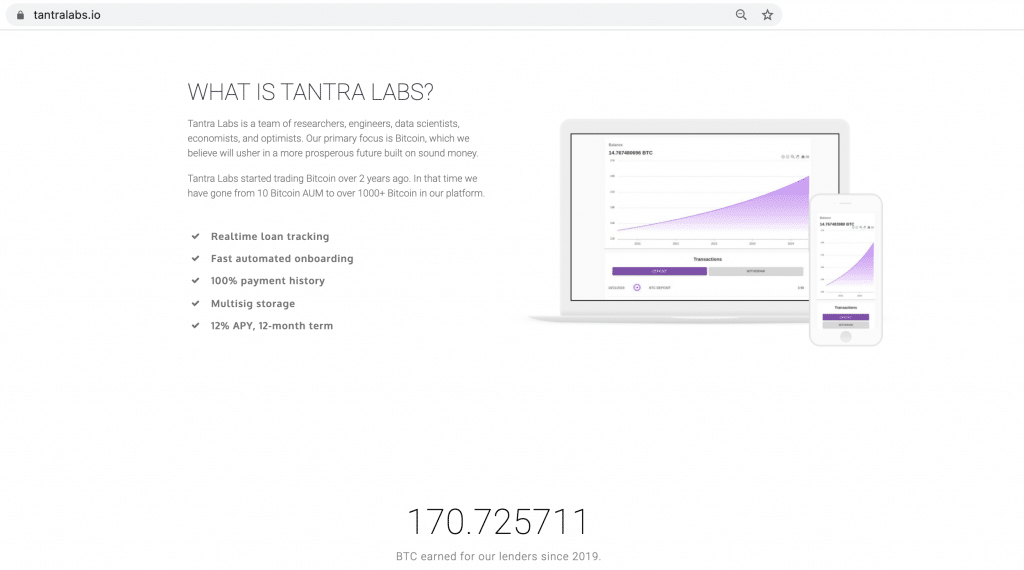
Finance Magnates recently spoke to Russell Lacour, Chief Technology Officer of Tantra Labs, an algorithmic research and development platform built for generating Bitcoin alpha. Russell spoke with us about the effects of USD inflation on wealth inequality, about Bitcoin in this current moment, and about the future of alternative assets.
This is an excerpt that has been edited for clarity and length. To hear Finance Magnates’ full interview with Tantra Labs’ Russell Lacour, visit us on Soundcloud or Youtube. This is a sponsored piece.
“Making Money Is Sexy”: The Origins of Tantra Labs
Who is Russell Lacour?
“I’m a conscious software engineer who is working to create financial algorithms that allow people to denominate themselves in an asset other than the dollar,” Russell said. Therefore, Tantra Labs’ work is “primarily focused on Bitcoin and Ethereum, and allowing investors to earn returns in BTC and ETH,” rather than offering returns in dollars.
Russell explained the meaning behind Tantra Labs’ rather unusual name. “Many westerners are familiar with the concept of tantric sex, and with the concept of ‘tantra’ being this sexual thing, and honestly, making money is sexy,” he said. “But ‘tantra’ actually means technology.”
“So, we named our company Tantra Labs because we’re a technology company that’s all about transforming finance. We want to allow people to denominate in the asset of their choice, especially as it becomes more and more toxic to hold assets like the dollar.”
Why is the dollar so “toxic”? Russell explained that the COVID-19 pandemic, and the economic fallout that ensued, exacerbated an important issue. “We have zero control over the USD or any government-issued fiat currency.”
USD Inflation & “Poverty Wages”
Additionally, “we have a lot of ‘poverty wages in the world today, which has resulted in the formation of a group of people who are basically ‘slaves’ to the financial system,” Russell said.
“It’s been going on for decades now, we have a low-income population and a poverty wage that keeps people in that population. They have almost zero say in that; these are people that will live their entire lives without ever having the chance to invest in an asset, that will rent from the day that they’re born to the day that they die, and they’ll never escape slavery to the system that they have absolutely no say in.”
Russell Lacour, Chief Technology Officer of Tantra Labs.
Russell explained that the past 18 months have been a prime example of what can happen when this kind of destructive system goes into overdrive. “We’ve injected trillions of dollars into the economy,” he said. “In the US in particular, many of us recently received a $1400 stimulus check. However, for that $1400, the Fed actually printed $5000.”
“The remaining $3600 actually went to your local government or to unemployment, a bunch of people that you’ll never meet or hear from, and will never directly help you,” he said. “To me, that’s a symptom of a broken system.”
“Not only did the US government inject all of this capital into the market, but those who work minimum wage jobs are directly affected, but perhaps unaware of exactly how affected they were because of inflation, because of real estate prices going up, and more,” he said.
“Now, when you look at the buying power that people have with the cash that they hold, it’s gone down tremendously. If you wanted to buy real estate two years ago, it was literally half the price that it is today...we’re not taught about this in school, even though money literally rules most of our lives.”
“No one ever tells us that the dollar isn’t an asset. It’s a liability.”
How Does Tantra Labs Work?
What is Tantra Labs doing to fight against this dollar “toxicity”?
“I started writing algorithms for stock trading about six years ago,” Russell explained. “I created bots that would work for me.”
“Over time, I saw that what I was doing was basically animating a simple set of rules, for example, ‘if the 10-day crosses over the 20-day, I want to buy. If it crosses under, I want to sell.’ You can automate that entire process,” he said. AI-powered “genetic algorithms” can also be created to improve their own performance.
“At Tantra Labs, we developed a system that is written in Golang, a programming language that is developed by Google. It’s extremely fast, and it has enabled us to run about 50 algorithms in our portfolio. Each of these algorithms constantly evolves and updates itself based on market conditions.”
“We’ve automated the entire process, which would allow us to open ourselves to retail investors, if we could.”
“Everything That [Tantra Labs Is] Doing Today Is Working Towards Either Educating Individual Investors, Or Pushing Forward to a New Paradigm of Money:”
Unfortunately, “another aspect of this broken financial system means that we are only available to accredited investors in the United States” and investors outside of the US, Russell said. In the US, accredited investors are those with a net worth of at least $1,000,000 (excluding the value of one's primary residence) or those that have an income of at least $200,000 per year for the last two years (or $300,000 in combined income if married).
The problem with opening these options to retail investors at the moment is that there is not much precedent. “No one has done what we’re trying to do [and has been engaged with a regulator],” Russell explained. Therefore, “we fall into a strange, legal gray area, but there are no straight answers” with regards to whether offering investment products to non-accredited investors would be crossing any legal lines.
In the meantime, “Everything that we’re doing today is working towards either educating individual investors, or pushing forward to a new paradigm of money: toward living in a world that is asset-backed instead of living in a world that’s liability-backed.”
The Future of Bitcoin
What are Russell’s thoughts on the future of Bitcoin? “I see Bitcoin becoming a world reserve asset that governments will use,” he said. “I have one reason for this: do you think that China wants to use the USD to settle its transactions? Do you think that the United Nations would use the yuan instead of the dollar?”
Therefore, “the easiest settlement layer for all of the countries in the world would be a neutral third-party,” he said. “It would be something that no single country controls, but that all of them agree on. That is Bitcoin today.”
“The most logical step would be for the governments of the world to say, the dollar is toxic because we don’t control it, the US Federal Reserve does, and we can’t really trust them. China’s throwing a fit, Russia’s throwing a fit, the US is throwing a fit, so let’s pick a neutral third-party that no one can control.”
“That’s decades away. I don’t see that happening anytime soon,” Russell added. “But, if that happens, you’ll see a $50 trillion or $100 trillion-dollar market cap on Bitcoin; you’ll have BTC at $10 million apiece. That’s my price target. It’s on sale today for $50K-60K apiece.”
This is an excerpt that has been edited for clarity and length. To hear Finance Magnates’ full interview with Tantra Labs’ Russell Lacour, visit us on Soundcloud or Youtube. This is a sponsored piece.
As a result, more and more companies and individuals are beginning to think of the dollar as less of an asset and more of a liability. Simultaneously, assets like Bitcoin may be gaining ground as possible antidotes to an inflationary economic environment.
Finance Magnates recently spoke to Russell Lacour, Chief Technology Officer of Tantra Labs, an algorithmic research and development platform built for generating Bitcoin alpha. Russell spoke with us about the effects of USD inflation on wealth inequality, about Bitcoin in this current moment, and about the future of alternative assets.
This is an excerpt that has been edited for clarity and length. To hear Finance Magnates’ full interview with Tantra Labs’ Russell Lacour, visit us on Soundcloud or Youtube. This is a sponsored piece.
“Making Money Is Sexy”: The Origins of Tantra Labs
Who is Russell Lacour?
“I’m a conscious software engineer who is working to create financial algorithms that allow people to denominate themselves in an asset other than the dollar,” Russell said. Therefore, Tantra Labs’ work is “primarily focused on Bitcoin and Ethereum, and allowing investors to earn returns in BTC and ETH,” rather than offering returns in dollars.
Russell explained the meaning behind Tantra Labs’ rather unusual name. “Many westerners are familiar with the concept of tantric sex, and with the concept of ‘tantra’ being this sexual thing, and honestly, making money is sexy,” he said. “But ‘tantra’ actually means technology.”
“So, we named our company Tantra Labs because we’re a technology company that’s all about transforming finance. We want to allow people to denominate in the asset of their choice, especially as it becomes more and more toxic to hold assets like the dollar.”
Why is the dollar so “toxic”? Russell explained that the COVID-19 pandemic, and the economic fallout that ensued, exacerbated an important issue. “We have zero control over the USD or any government-issued fiat currency.”
USD Inflation & “Poverty Wages”
Additionally, “we have a lot of ‘poverty wages in the world today, which has resulted in the formation of a group of people who are basically ‘slaves’ to the financial system,” Russell said.
“It’s been going on for decades now, we have a low-income population and a poverty wage that keeps people in that population. They have almost zero say in that; these are people that will live their entire lives without ever having the chance to invest in an asset, that will rent from the day that they’re born to the day that they die, and they’ll never escape slavery to the system that they have absolutely no say in.”
Russell Lacour, Chief Technology Officer of Tantra Labs.
Russell explained that the past 18 months have been a prime example of what can happen when this kind of destructive system goes into overdrive. “We’ve injected trillions of dollars into the economy,” he said. “In the US in particular, many of us recently received a $1400 stimulus check. However, for that $1400, the Fed actually printed $5000.”
“The remaining $3600 actually went to your local government or to unemployment, a bunch of people that you’ll never meet or hear from, and will never directly help you,” he said. “To me, that’s a symptom of a broken system.”
“Not only did the US government inject all of this capital into the market, but those who work minimum wage jobs are directly affected, but perhaps unaware of exactly how affected they were because of inflation, because of real estate prices going up, and more,” he said.
“Now, when you look at the buying power that people have with the cash that they hold, it’s gone down tremendously. If you wanted to buy real estate two years ago, it was literally half the price that it is today...we’re not taught about this in school, even though money literally rules most of our lives.”
“No one ever tells us that the dollar isn’t an asset. It’s a liability.”
How Does Tantra Labs Work?
What is Tantra Labs doing to fight against this dollar “toxicity”?
“I started writing algorithms for stock trading about six years ago,” Russell explained. “I created bots that would work for me.”
“Over time, I saw that what I was doing was basically animating a simple set of rules, for example, ‘if the 10-day crosses over the 20-day, I want to buy. If it crosses under, I want to sell.’ You can automate that entire process,” he said. AI-powered “genetic algorithms” can also be created to improve their own performance.
“At Tantra Labs, we developed a system that is written in Golang, a programming language that is developed by Google. It’s extremely fast, and it has enabled us to run about 50 algorithms in our portfolio. Each of these algorithms constantly evolves and updates itself based on market conditions.”
“We’ve automated the entire process, which would allow us to open ourselves to retail investors, if we could.”
“Everything That [Tantra Labs Is] Doing Today Is Working Towards Either Educating Individual Investors, Or Pushing Forward to a New Paradigm of Money:”
Unfortunately, “another aspect of this broken financial system means that we are only available to accredited investors in the United States” and investors outside of the US, Russell said. In the US, accredited investors are those with a net worth of at least $1,000,000 (excluding the value of one's primary residence) or those that have an income of at least $200,000 per year for the last two years (or $300,000 in combined income if married).
The problem with opening these options to retail investors at the moment is that there is not much precedent. “No one has done what we’re trying to do [and has been engaged with a regulator],” Russell explained. Therefore, “we fall into a strange, legal gray area, but there are no straight answers” with regards to whether offering investment products to non-accredited investors would be crossing any legal lines.
In the meantime, “Everything that we’re doing today is working towards either educating individual investors, or pushing forward to a new paradigm of money: toward living in a world that is asset-backed instead of living in a world that’s liability-backed.”
The Future of Bitcoin
What are Russell’s thoughts on the future of Bitcoin? “I see Bitcoin becoming a world reserve asset that governments will use,” he said. “I have one reason for this: do you think that China wants to use the USD to settle its transactions? Do you think that the United Nations would use the yuan instead of the dollar?”
Therefore, “the easiest settlement layer for all of the countries in the world would be a neutral third-party,” he said. “It would be something that no single country controls, but that all of them agree on. That is Bitcoin today.”
“The most logical step would be for the governments of the world to say, the dollar is toxic because we don’t control it, the US Federal Reserve does, and we can’t really trust them. China’s throwing a fit, Russia’s throwing a fit, the US is throwing a fit, so let’s pick a neutral third-party that no one can control.”
“That’s decades away. I don’t see that happening anytime soon,” Russell added. “But, if that happens, you’ll see a $50 trillion or $100 trillion-dollar market cap on Bitcoin; you’ll have BTC at $10 million apiece. That’s my price target. It’s on sale today for $50K-60K apiece.”
This is an excerpt that has been edited for clarity and length. To hear Finance Magnates’ full interview with Tantra Labs’ Russell Lacour, visit us on Soundcloud or Youtube. This is a sponsored piece.
Rachel is a self-taught crypto geek and a passionate writer. She believes in the power that the written word has to educate, connect and empower individuals to make positive and powerful financial choices. She is the Podcast Host and a Cryptocurrency Editor at Finance Magnates.
Binance Launches Retail AI Assistant, Repackages Existing Trading Tools
Featured Videos
AvaTrade to Acquire Most of FXCM; NAGA Raises $8M
AvaTrade to Acquire Most of FXCM; NAGA Raises $8M
AvaTrade to Acquire Most of FXCM; NAGA Raises $8M
AvaTrade to Acquire Most of FXCM; NAGA Raises $8M
Today’s financial news recap covers AvaTrade agrees to acquire most of FXCM, NAGA secures eight million dollars in new financing, and Wise seeks a tax settlement in the UK.
Finance Magnates Daily Recap brings you the latest news from forex and CFD brokers, fintech, payments, cryptocurrency, digital assets, trading platforms, financial regulation and global markets.
Get the key company news, executive moves, deals, regulatory updates and market developments of the day, in just a few minutes. New episodes published every weekday.
Read more: https://www.financemagnates.com
#FinanceMagnates #ForexNews #FintechNews
Today’s financial news recap covers AvaTrade agrees to acquire most of FXCM, NAGA secures eight million dollars in new financing, and Wise seeks a tax settlement in the UK.
Finance Magnates Daily Recap brings you the latest news from forex and CFD brokers, fintech, payments, cryptocurrency, digital assets, trading platforms, financial regulation and global markets.
Get the key company news, executive moves, deals, regulatory updates and market developments of the day, in just a few minutes. New episodes published every weekday.
Read more: https://www.financemagnates.com
#FinanceMagnates #ForexNews #FintechNews
Today’s financial news recap covers AvaTrade agrees to acquire most of FXCM, NAGA secures eight million dollars in new financing, and Wise seeks a tax settlement in the UK.
Finance Magnates Daily Recap brings you the latest news from forex and CFD brokers, fintech, payments, cryptocurrency, digital assets, trading platforms, financial regulation and global markets.
Get the key company news, executive moves, deals, regulatory updates and market developments of the day, in just a few minutes. New episodes published every weekday.
Read more: https://www.financemagnates.com
#FinanceMagnates #ForexNews #FintechNews
Today’s financial news recap covers AvaTrade agrees to acquire most of FXCM, NAGA secures eight million dollars in new financing, and Wise seeks a tax settlement in the UK.
Finance Magnates Daily Recap brings you the latest news from forex and CFD brokers, fintech, payments, cryptocurrency, digital assets, trading platforms, financial regulation and global markets.
Get the key company news, executive moves, deals, regulatory updates and market developments of the day, in just a few minutes. New episodes published every weekday.
Read more: https://www.financemagnates.com
#FinanceMagnates #ForexNews #FintechNews
XTB Adds Overnight US Stock Trading; Nasdaq Ventures Invests in One Trading
XTB Adds Overnight US Stock Trading; Nasdaq Ventures Invests in One Trading
XTB Adds Overnight US Stock Trading; Nasdaq Ventures Invests in One Trading
XTB Adds Overnight US Stock Trading; Nasdaq Ventures Invests in One Trading
XTB Adds Overnight US Stock Trading; Nasdaq Ventures Invests in One Trading
XTB Adds Overnight US Stock Trading; Nasdaq Ventures Invests in One Trading
Today’s financial news recap covers XTB expands overnight US stock trading, Fortrade reports higher revenue, Nasdaq backs One Trading, and Vest Labs raises 13 million dollars.
Finance Magnates Daily Recap brings you the latest news from forex and CFD brokers, fintech, payments, cryptocurrency, digital assets, trading platforms, financial regulation and global markets.
Get the key company news, executive moves, deals, regulatory updates and market developments of the day, in just a few minutes. New episodes published every weekday.
Read more: https://www.financemagnates.com
#FinanceMagnates #ForexNews #FintechNews
Today’s financial news recap covers XTB expands overnight US stock trading, Fortrade reports higher revenue, Nasdaq backs One Trading, and Vest Labs raises 13 million dollars.
Finance Magnates Daily Recap brings you the latest news from forex and CFD brokers, fintech, payments, cryptocurrency, digital assets, trading platforms, financial regulation and global markets.
Get the key company news, executive moves, deals, regulatory updates and market developments of the day, in just a few minutes. New episodes published every weekday.
Read more: https://www.financemagnates.com
#FinanceMagnates #ForexNews #FintechNews
Today’s financial news recap covers XTB expands overnight US stock trading, Fortrade reports higher revenue, Nasdaq backs One Trading, and Vest Labs raises 13 million dollars.
Finance Magnates Daily Recap brings you the latest news from forex and CFD brokers, fintech, payments, cryptocurrency, digital assets, trading platforms, financial regulation and global markets.
Get the key company news, executive moves, deals, regulatory updates and market developments of the day, in just a few minutes. New episodes published every weekday.
Read more: https://www.financemagnates.com
#FinanceMagnates #ForexNews #FintechNews
Today’s financial news recap covers XTB expands overnight US stock trading, Fortrade reports higher revenue, Nasdaq backs One Trading, and Vest Labs raises 13 million dollars.
Finance Magnates Daily Recap brings you the latest news from forex and CFD brokers, fintech, payments, cryptocurrency, digital assets, trading platforms, financial regulation and global markets.
Get the key company news, executive moves, deals, regulatory updates and market developments of the day, in just a few minutes. New episodes published every weekday.
Read more: https://www.financemagnates.com
#FinanceMagnates #ForexNews #FintechNews
Today’s financial news recap covers XTB expands overnight US stock trading, Fortrade reports higher revenue, Nasdaq backs One Trading, and Vest Labs raises 13 million dollars.
Finance Magnates Daily Recap brings you the latest news from forex and CFD brokers, fintech, payments, cryptocurrency, digital assets, trading platforms, financial regulation and global markets.
Get the key company news, executive moves, deals, regulatory updates and market developments of the day, in just a few minutes. New episodes published every weekday.
Read more: https://www.financemagnates.com
#FinanceMagnates #ForexNews #FintechNews
Today’s financial news recap covers XTB expands overnight US stock trading, Fortrade reports higher revenue, Nasdaq backs One Trading, and Vest Labs raises 13 million dollars.
Finance Magnates Daily Recap brings you the latest news from forex and CFD brokers, fintech, payments, cryptocurrency, digital assets, trading platforms, financial regulation and global markets.
Get the key company news, executive moves, deals, regulatory updates and market developments of the day, in just a few minutes. New episodes published every weekday.
Read more: https://www.financemagnates.com
#FinanceMagnates #ForexNews #FintechNews
CMC Founder Downplays Volatility Hit; Devexperts Names CEO
CMC Founder Downplays Volatility Hit; Devexperts Names CEO
CMC Founder Downplays Volatility Hit; Devexperts Names CEO
CMC Founder Downplays Volatility Hit; Devexperts Names CEO
CMC Founder Downplays Volatility Hit; Devexperts Names CEO
CMC Founder Downplays Volatility Hit; Devexperts Names CEO
Today’s financial news recap covers low volatility pressures brokers, Devexperts names a new CEO, Saxo cuts onboarding time, and OKX reaches a 25 billion dollar valuation.
Finance Magnates Daily Recap brings you the latest news from forex and CFD brokers, fintech, payments, cryptocurrency, digital assets, trading platforms, financial regulation and global markets.
Get the key company news, executive moves, deals, regulatory updates and market developments of the day, in just a few minutes. New episodes published every weekday.
Read more: https://www.financemagnates.com
#FinanceMagnates #ForexNews #FintechNews
Today’s financial news recap covers low volatility pressures brokers, Devexperts names a new CEO, Saxo cuts onboarding time, and OKX reaches a 25 billion dollar valuation.
Finance Magnates Daily Recap brings you the latest news from forex and CFD brokers, fintech, payments, cryptocurrency, digital assets, trading platforms, financial regulation and global markets.
Get the key company news, executive moves, deals, regulatory updates and market developments of the day, in just a few minutes. New episodes published every weekday.
Read more: https://www.financemagnates.com
#FinanceMagnates #ForexNews #FintechNews
Today’s financial news recap covers low volatility pressures brokers, Devexperts names a new CEO, Saxo cuts onboarding time, and OKX reaches a 25 billion dollar valuation.
Finance Magnates Daily Recap brings you the latest news from forex and CFD brokers, fintech, payments, cryptocurrency, digital assets, trading platforms, financial regulation and global markets.
Get the key company news, executive moves, deals, regulatory updates and market developments of the day, in just a few minutes. New episodes published every weekday.
Read more: https://www.financemagnates.com
#FinanceMagnates #ForexNews #FintechNews
Today’s financial news recap covers low volatility pressures brokers, Devexperts names a new CEO, Saxo cuts onboarding time, and OKX reaches a 25 billion dollar valuation.
Finance Magnates Daily Recap brings you the latest news from forex and CFD brokers, fintech, payments, cryptocurrency, digital assets, trading platforms, financial regulation and global markets.
Get the key company news, executive moves, deals, regulatory updates and market developments of the day, in just a few minutes. New episodes published every weekday.
Read more: https://www.financemagnates.com
#FinanceMagnates #ForexNews #FintechNews
Today’s financial news recap covers low volatility pressures brokers, Devexperts names a new CEO, Saxo cuts onboarding time, and OKX reaches a 25 billion dollar valuation.
Finance Magnates Daily Recap brings you the latest news from forex and CFD brokers, fintech, payments, cryptocurrency, digital assets, trading platforms, financial regulation and global markets.
Get the key company news, executive moves, deals, regulatory updates and market developments of the day, in just a few minutes. New episodes published every weekday.
Read more: https://www.financemagnates.com
#FinanceMagnates #ForexNews #FintechNews
Today’s financial news recap covers low volatility pressures brokers, Devexperts names a new CEO, Saxo cuts onboarding time, and OKX reaches a 25 billion dollar valuation.
Finance Magnates Daily Recap brings you the latest news from forex and CFD brokers, fintech, payments, cryptocurrency, digital assets, trading platforms, financial regulation and global markets.
Get the key company news, executive moves, deals, regulatory updates and market developments of the day, in just a few minutes. New episodes published every weekday.
Read more: https://www.financemagnates.com
#FinanceMagnates #ForexNews #FintechNews
Today’s financial news recap covers Trade Nation buys FXCM's UK client book, Trading 212 reports higher revenue, the CFTC's move to allow perpetual index futures.
Finance Magnates Daily Recap brings you the latest news from forex and CFD brokers, fintech, payments, cryptocurrency, digital assets, trading platforms, financial regulation and global markets.
Get the key company news, executive moves, deals, regulatory updates and market developments of the day, in just a few minutes. New episodes published every weekday.
Read more: https://www.financemagnates.com
#FinanceMagnates #ForexNews #FintechNews
Today’s financial news recap covers Trade Nation buys FXCM's UK client book, Trading 212 reports higher revenue, the CFTC's move to allow perpetual index futures.
Finance Magnates Daily Recap brings you the latest news from forex and CFD brokers, fintech, payments, cryptocurrency, digital assets, trading platforms, financial regulation and global markets.
Get the key company news, executive moves, deals, regulatory updates and market developments of the day, in just a few minutes. New episodes published every weekday.
Read more: https://www.financemagnates.com
#FinanceMagnates #ForexNews #FintechNews
Today’s financial news recap covers Trade Nation buys FXCM's UK client book, Trading 212 reports higher revenue, the CFTC's move to allow perpetual index futures.
Finance Magnates Daily Recap brings you the latest news from forex and CFD brokers, fintech, payments, cryptocurrency, digital assets, trading platforms, financial regulation and global markets.
Get the key company news, executive moves, deals, regulatory updates and market developments of the day, in just a few minutes. New episodes published every weekday.
Read more: https://www.financemagnates.com
#FinanceMagnates #ForexNews #FintechNews
Today’s financial news recap covers Trade Nation buys FXCM's UK client book, Trading 212 reports higher revenue, the CFTC's move to allow perpetual index futures.
Finance Magnates Daily Recap brings you the latest news from forex and CFD brokers, fintech, payments, cryptocurrency, digital assets, trading platforms, financial regulation and global markets.
Get the key company news, executive moves, deals, regulatory updates and market developments of the day, in just a few minutes. New episodes published every weekday.
Read more: https://www.financemagnates.com
#FinanceMagnates #ForexNews #FintechNews
Today’s financial news recap covers Trade Nation buys FXCM's UK client book, Trading 212 reports higher revenue, the CFTC's move to allow perpetual index futures.
Finance Magnates Daily Recap brings you the latest news from forex and CFD brokers, fintech, payments, cryptocurrency, digital assets, trading platforms, financial regulation and global markets.
Get the key company news, executive moves, deals, regulatory updates and market developments of the day, in just a few minutes. New episodes published every weekday.
Read more: https://www.financemagnates.com
#FinanceMagnates #ForexNews #FintechNews
Today’s financial news recap covers Trade Nation buys FXCM's UK client book, Trading 212 reports higher revenue, the CFTC's move to allow perpetual index futures.
Finance Magnates Daily Recap brings you the latest news from forex and CFD brokers, fintech, payments, cryptocurrency, digital assets, trading platforms, financial regulation and global markets.
Get the key company news, executive moves, deals, regulatory updates and market developments of the day, in just a few minutes. New episodes published every weekday.
Read more: https://www.financemagnates.com
#FinanceMagnates #ForexNews #FintechNews
Your career isn’t a linear path.
Your career isn’t a linear path.
Your career isn’t a linear path.
Your career isn’t a linear path.
Your career isn’t a linear path.
Your career isn’t a linear path.
Roles change. Career goals change. Sometimes you want a completely new challenge.
But the skills and knowledge you build along the way can stay with you and give you something to build on.
For Jeff Patterson, that continued growth is key to long-term career development.
You bring the skills. FM Academy helps you build the knowledge.
#FMAcademy #FinanceMagnates #FinanceCareers #ProfessionalDevelopment #Fintech
Roles change. Career goals change. Sometimes you want a completely new challenge.
But the skills and knowledge you build along the way can stay with you and give you something to build on.
For Jeff Patterson, that continued growth is key to long-term career development.
You bring the skills. FM Academy helps you build the knowledge.
#FMAcademy #FinanceMagnates #FinanceCareers #ProfessionalDevelopment #Fintech
Roles change. Career goals change. Sometimes you want a completely new challenge.
But the skills and knowledge you build along the way can stay with you and give you something to build on.
For Jeff Patterson, that continued growth is key to long-term career development.
You bring the skills. FM Academy helps you build the knowledge.
#FMAcademy #FinanceMagnates #FinanceCareers #ProfessionalDevelopment #Fintech
Roles change. Career goals change. Sometimes you want a completely new challenge.
But the skills and knowledge you build along the way can stay with you and give you something to build on.
For Jeff Patterson, that continued growth is key to long-term career development.
You bring the skills. FM Academy helps you build the knowledge.
#FMAcademy #FinanceMagnates #FinanceCareers #ProfessionalDevelopment #Fintech
Roles change. Career goals change. Sometimes you want a completely new challenge.
But the skills and knowledge you build along the way can stay with you and give you something to build on.
For Jeff Patterson, that continued growth is key to long-term career development.
You bring the skills. FM Academy helps you build the knowledge.
#FMAcademy #FinanceMagnates #FinanceCareers #ProfessionalDevelopment #Fintech
Roles change. Career goals change. Sometimes you want a completely new challenge.
But the skills and knowledge you build along the way can stay with you and give you something to build on.
For Jeff Patterson, that continued growth is key to long-term career development.
You bring the skills. FM Academy helps you build the knowledge.
#FMAcademy #FinanceMagnates #FinanceCareers #ProfessionalDevelopment #Fintech