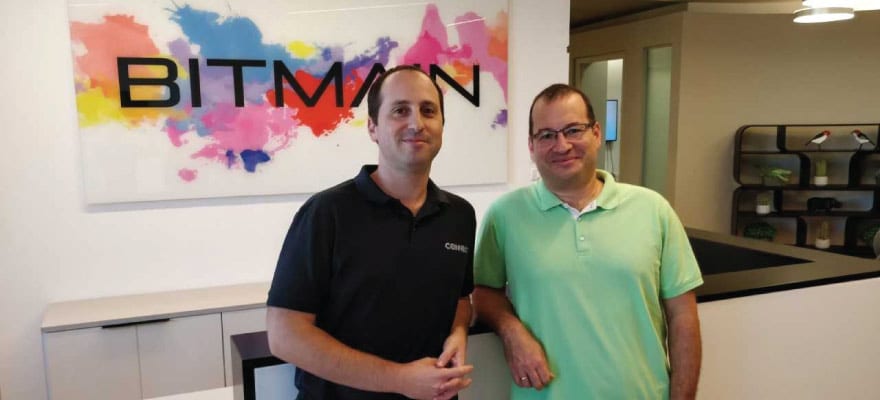
We met with Gadi Glikberg, Bitmain VP International Sales and Marketing, at the Bitmain office in Ra'anana, Israel.
Gadi Glikberg and Offer Ben Zvi at Bitmain office, Israel
Finance Magnates recently visited the office of Bitmain Israel in Ra'anana.
Chinese cryptocurrency mining giant Bitmain opened its Israeli branch in April 2017 after founders Jihan Wu and Micree Zhan visited the country. "They saw 30 startups in 3 days and decided that it was very interesting what is happening in Israel and that they need boots on the ground," said Gadi Glikberg, Bitmain VP International Sales and Marketing.
The branch has two purposes: it manages a mining pool called Connect BTC, and is a development hub aiding Bitmain's AI ambitions.

Ra'anana building that holds Bitmain office
Mining pool
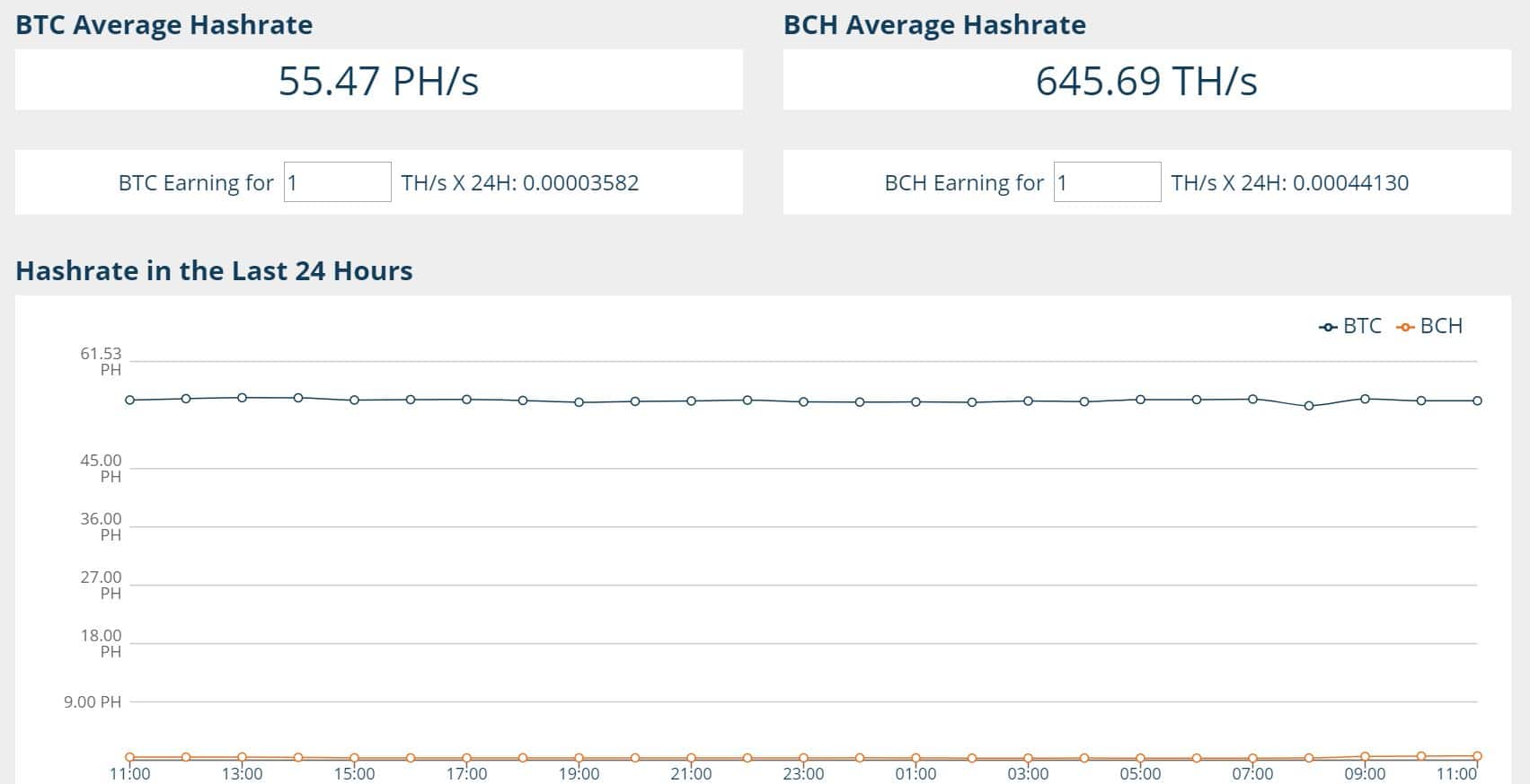
Connect BTC mines Bitcoin and Bitcoin Cash. We asked Glikberg about the pool's policy regarding the two competing coins, and he stressed that it is the miners that decide what they mine. Bitcoin Cash was added to their options because it can be mined using the same machines that mine Bitcoin.
Users of the pool can choose the 'automatic' option, which means that their machines will mine the most profitable coin at that time. The pool also displays detailed performance statistics.
He said that the Israeli pool's marketing budget is set to rise significantly in the near future.
According to at statistics published on btc.com, ConnectBTC users tend to prefer Bitcoin to Bitcoin Cash; in the last six months, the pool has mined 0.14 percent of the former and 0.04 percent of the latter.
Interestingly, when asked about the location of Connect BTC miners, Glikberg said that the pool doesn't accept Israelis.
Security concerns
We asked about hacking concerns. Glikberg said: "It's an issue. At the end of the day, wherever there is cryptocurrency there is an issue of hacks. It's not something that was invented with cryptocurrency, people also hack banks and steal lots of money - people just talk about it less because it's less interesting, less sexy."
Bitmain's mining operations control around 48 percent of all Bitcoin mining. As we have reported in the past, this raises worries of a 51 percent attack. Glikberg expressed his opinion that this is not a cause for concern: "Bitcoin is not susceptible to a 51 percent attack because of the amount of dedicated hardware. If someone has laid out such a large amount of money on such a large amount of hardware, executing a 51 percent attack which will only lower the value of the coin is like throwing your investment away."
He added: "Security is always a a game of cat and mouse. There is never 100 percent security, and if someone says that there is they apparently are just not seeing the gaps." The bottom line though, he said, is that the while pool may 'roll' a lot of money over, it doesn't hold large amounts itself.
The mining pool is "just business", according to Glikberg. The main purpose of the centre is development. Specifically, the Israel team supports Bitmain's AI ambitions with an algorithm development team, working on things such as image capturing and recognition. Glikberg said that this is an expanding market which he expects to become a major one.
Notably, there is an entire wing of the office which is currently unoccupied, earmarked for future employees, of which the branch currently has 21. The team aims for 30 by the end of the year, and hopes to continue growing next year too.
Mining equipment sales
We asked Glikberg how ASIC device sales are responding to Bitcoin's lower price and higher difficulty.
"There is an influence on the unit sales. We sell the units according to their profitability, that is, according to the difficulty of the mining and according to the price of the coin. And so of course the price of the coin influences the price at which the units will be sold," he said. "But where there is money, the market will find a way to perfect itself, and I believe that this market still has a lot of room to grow."
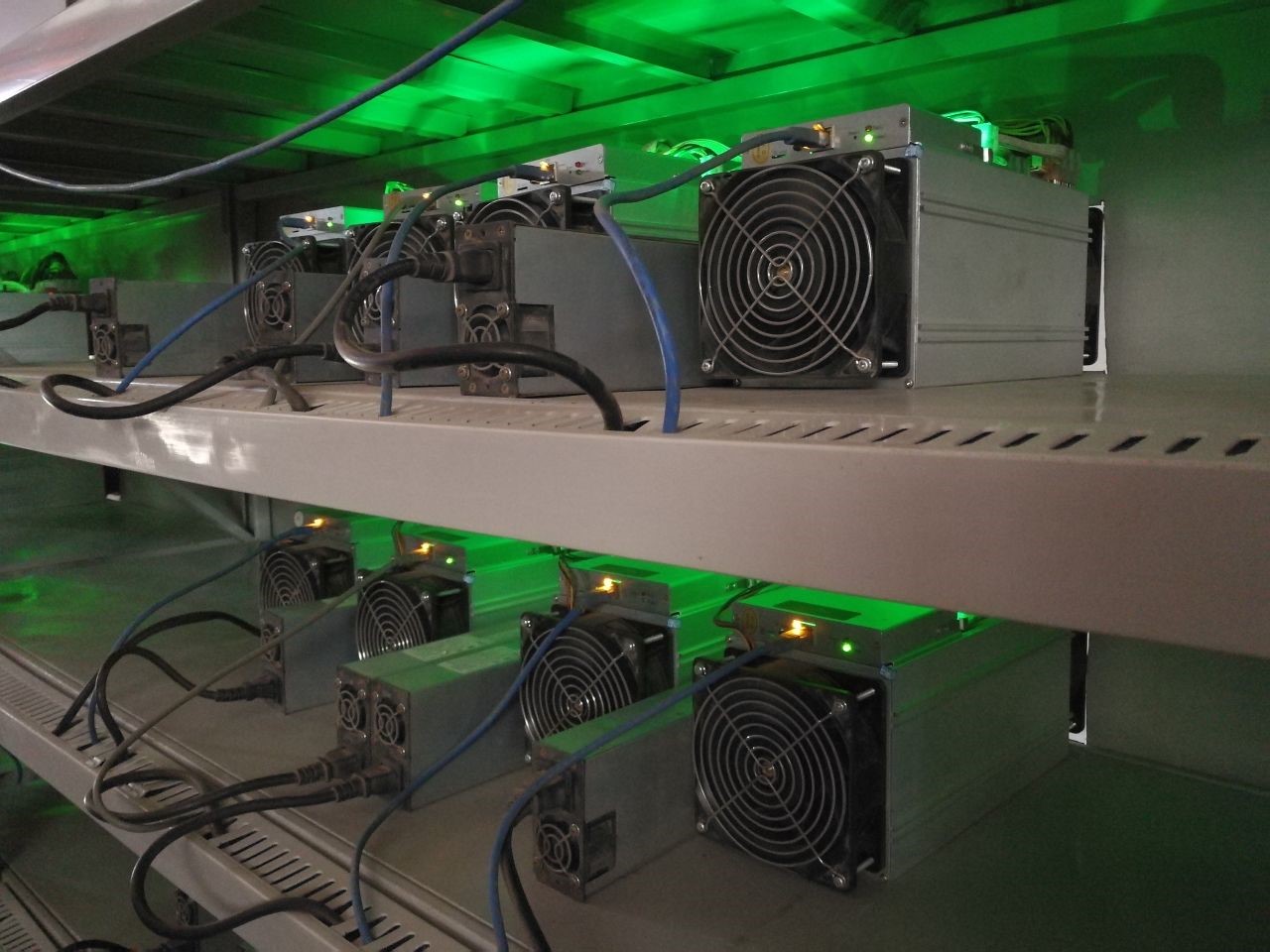
Bitmain ASIC devices. Source: Bitmain Israel
Regulation in Israel
We asked the team about how they deal with customer complaints; they said that no such situation has occurred, because everything is completely transparent and miners can immediately switch to a different pool if they aren't happy.
Finally, we asked about how they deal with Israeli financial regulation. Glikberg said: "We have to report our income like every other company. We are only a service provider, so we don't go into more complicated regulation."
Finance Magnates recently visited the office of Bitmain Israel in Ra'anana.
Chinese cryptocurrency mining giant Bitmain opened its Israeli branch in April 2017 after founders Jihan Wu and Micree Zhan visited the country. "They saw 30 startups in 3 days and decided that it was very interesting what is happening in Israel and that they need boots on the ground," said Gadi Glikberg, Bitmain VP International Sales and Marketing.
The branch has two purposes: it manages a mining pool called Connect BTC, and is a development hub aiding Bitmain's AI ambitions.
Ra'anana building that holds Bitmain office
Mining pool
Connect BTC mines Bitcoin and Bitcoin Cash. We asked Glikberg about the pool's policy regarding the two competing coins, and he stressed that it is the miners that decide what they mine. Bitcoin Cash was added to their options because it can be mined using the same machines that mine Bitcoin.
Users of the pool can choose the 'automatic' option, which means that their machines will mine the most profitable coin at that time. The pool also displays detailed performance statistics.
He said that the Israeli pool's marketing budget is set to rise significantly in the near future.
According to at statistics published on btc.com, ConnectBTC users tend to prefer Bitcoin to Bitcoin Cash; in the last six months, the pool has mined 0.14 percent of the former and 0.04 percent of the latter.
Interestingly, when asked about the location of Connect BTC miners, Glikberg said that the pool doesn't accept Israelis.
Security concerns
We asked about hacking concerns. Glikberg said: "It's an issue. At the end of the day, wherever there is cryptocurrency there is an issue of hacks. It's not something that was invented with cryptocurrency, people also hack banks and steal lots of money - people just talk about it less because it's less interesting, less sexy."
Bitmain's mining operations control around 48 percent of all Bitcoin mining. As we have reported in the past, this raises worries of a 51 percent attack. Glikberg expressed his opinion that this is not a cause for concern: "Bitcoin is not susceptible to a 51 percent attack because of the amount of dedicated hardware. If someone has laid out such a large amount of money on such a large amount of hardware, executing a 51 percent attack which will only lower the value of the coin is like throwing your investment away."
He added: "Security is always a a game of cat and mouse. There is never 100 percent security, and if someone says that there is they apparently are just not seeing the gaps." The bottom line though, he said, is that the while pool may 'roll' a lot of money over, it doesn't hold large amounts itself.
The mining pool is "just business", according to Glikberg. The main purpose of the centre is development. Specifically, the Israel team supports Bitmain's AI ambitions with an algorithm development team, working on things such as image capturing and recognition. Glikberg said that this is an expanding market which he expects to become a major one.
Notably, there is an entire wing of the office which is currently unoccupied, earmarked for future employees, of which the branch currently has 21. The team aims for 30 by the end of the year, and hopes to continue growing next year too.
Mining equipment sales
We asked Glikberg how ASIC device sales are responding to Bitcoin's lower price and higher difficulty.
"There is an influence on the unit sales. We sell the units according to their profitability, that is, according to the difficulty of the mining and according to the price of the coin. And so of course the price of the coin influences the price at which the units will be sold," he said. "But where there is money, the market will find a way to perfect itself, and I believe that this market still has a lot of room to grow."
Bitmain ASIC devices. Source: Bitmain Israel
Regulation in Israel
We asked the team about how they deal with customer complaints; they said that no such situation has occurred, because everything is completely transparent and miners can immediately switch to a different pool if they aren't happy.
Finally, we asked about how they deal with Israeli financial regulation. Glikberg said: "We have to report our income like every other company. We are only a service provider, so we don't go into more complicated regulation."
Kalshi Prediction Market and TRON Integration Bridges Traditional Finance with Crypto
Featured Videos
Executive Interview | Charlotte Bullock | Chief Product Officer, Bank of London | FMLS:25
In this interview, we sat down with Charlotte Bullock, Head of Product at The Bank of London, previously at SAP and now shaping product at one of the sector’s most ambitious new banking players.
Charlotte reflects on the Summit so far and talks about the culture inside fintech banks today. We look at the pressures that come with scaling, and how firms can hold onto the nimble approach that made them stand out early on.
We also cover the state of payments ahead of her appearance on the payments roundtable: the blockages financial firms face, the areas that still need fixing, and what a realistic solution looks like in 2026.
In this interview, we sat down with Charlotte Bullock, Head of Product at The Bank of London, previously at SAP and now shaping product at one of the sector’s most ambitious new banking players.
Charlotte reflects on the Summit so far and talks about the culture inside fintech banks today. We look at the pressures that come with scaling, and how firms can hold onto the nimble approach that made them stand out early on.
We also cover the state of payments ahead of her appearance on the payments roundtable: the blockages financial firms face, the areas that still need fixing, and what a realistic solution looks like in 2026.
In this interview, we sat down with Charlotte Bullock, Head of Product at The Bank of London, previously at SAP and now shaping product at one of the sector’s most ambitious new banking players.
Charlotte reflects on the Summit so far and talks about the culture inside fintech banks today. We look at the pressures that come with scaling, and how firms can hold onto the nimble approach that made them stand out early on.
We also cover the state of payments ahead of her appearance on the payments roundtable: the blockages financial firms face, the areas that still need fixing, and what a realistic solution looks like in 2026.
In this interview, we sat down with Charlotte Bullock, Head of Product at The Bank of London, previously at SAP and now shaping product at one of the sector’s most ambitious new banking players.
Charlotte reflects on the Summit so far and talks about the culture inside fintech banks today. We look at the pressures that come with scaling, and how firms can hold onto the nimble approach that made them stand out early on.
We also cover the state of payments ahead of her appearance on the payments roundtable: the blockages financial firms face, the areas that still need fixing, and what a realistic solution looks like in 2026.
In this conversation, we sit down with Drew Niv, CSO at ATFX Connect and one of the most influential figures in modern FX.
We speak about market structure, the institutional view on liquidity, and the sharp rise of prop trading, a sector Drew has been commenting on in recent months. Drew explains why he once dismissed prop trading, why his view changed, and what he now thinks the model means for brokers, clients and risk managers.
We explore subscription-fee dependency, the high reneging rate, and the long-term challenge: how brokers can build a more stable and honest version of the model. Drew also talks about the traffic advantage standalone prop firms have built and why brokers may still win in the long run if they take the right approach.
In this conversation, we sit down with Drew Niv, CSO at ATFX Connect and one of the most influential figures in modern FX.
We speak about market structure, the institutional view on liquidity, and the sharp rise of prop trading, a sector Drew has been commenting on in recent months. Drew explains why he once dismissed prop trading, why his view changed, and what he now thinks the model means for brokers, clients and risk managers.
We explore subscription-fee dependency, the high reneging rate, and the long-term challenge: how brokers can build a more stable and honest version of the model. Drew also talks about the traffic advantage standalone prop firms have built and why brokers may still win in the long run if they take the right approach.
In this conversation, we sit down with Drew Niv, CSO at ATFX Connect and one of the most influential figures in modern FX.
We speak about market structure, the institutional view on liquidity, and the sharp rise of prop trading, a sector Drew has been commenting on in recent months. Drew explains why he once dismissed prop trading, why his view changed, and what he now thinks the model means for brokers, clients and risk managers.
We explore subscription-fee dependency, the high reneging rate, and the long-term challenge: how brokers can build a more stable and honest version of the model. Drew also talks about the traffic advantage standalone prop firms have built and why brokers may still win in the long run if they take the right approach.
In this conversation, we sit down with Drew Niv, CSO at ATFX Connect and one of the most influential figures in modern FX.
We speak about market structure, the institutional view on liquidity, and the sharp rise of prop trading, a sector Drew has been commenting on in recent months. Drew explains why he once dismissed prop trading, why his view changed, and what he now thinks the model means for brokers, clients and risk managers.
We explore subscription-fee dependency, the high reneging rate, and the long-term challenge: how brokers can build a more stable and honest version of the model. Drew also talks about the traffic advantage standalone prop firms have built and why brokers may still win in the long run if they take the right approach.
In this conversation, we sit down with Drew Niv, CSO at ATFX Connect and one of the most influential figures in modern FX.
We speak about market structure, the institutional view on liquidity, and the sharp rise of prop trading, a sector Drew has been commenting on in recent months. Drew explains why he once dismissed prop trading, why his view changed, and what he now thinks the model means for brokers, clients and risk managers.
We explore subscription-fee dependency, the high reneging rate, and the long-term challenge: how brokers can build a more stable and honest version of the model. Drew also talks about the traffic advantage standalone prop firms have built and why brokers may still win in the long run if they take the right approach.
In this conversation, we sit down with Drew Niv, CSO at ATFX Connect and one of the most influential figures in modern FX.
We speak about market structure, the institutional view on liquidity, and the sharp rise of prop trading, a sector Drew has been commenting on in recent months. Drew explains why he once dismissed prop trading, why his view changed, and what he now thinks the model means for brokers, clients and risk managers.
We explore subscription-fee dependency, the high reneging rate, and the long-term challenge: how brokers can build a more stable and honest version of the model. Drew also talks about the traffic advantage standalone prop firms have built and why brokers may still win in the long run if they take the right approach.
Executive Interview | Remonda Z. Kirketerp Møller| CEO & Founder Muinmos | FMLS:25
In this interview, Remonda Z. Kirketerp Møller, founder of Muinmos, breaks down the state of AI in regtech and what responsible adoption really looks like for brokers. We talk about rising fragmentation, the pressures around compliance accuracy, and why most firms are still in the early stages of AI maturity.
Ramanda also shares insights on regulator sandboxes, shifting expectations around accountability, and the current reality of MiCA licensing and passporting in Europe.
A concise look at where compliance, onboarding, and AI-driven processes are heading next.
In this interview, Remonda Z. Kirketerp Møller, founder of Muinmos, breaks down the state of AI in regtech and what responsible adoption really looks like for brokers. We talk about rising fragmentation, the pressures around compliance accuracy, and why most firms are still in the early stages of AI maturity.
Ramanda also shares insights on regulator sandboxes, shifting expectations around accountability, and the current reality of MiCA licensing and passporting in Europe.
A concise look at where compliance, onboarding, and AI-driven processes are heading next.
In this interview, Remonda Z. Kirketerp Møller, founder of Muinmos, breaks down the state of AI in regtech and what responsible adoption really looks like for brokers. We talk about rising fragmentation, the pressures around compliance accuracy, and why most firms are still in the early stages of AI maturity.
Ramanda also shares insights on regulator sandboxes, shifting expectations around accountability, and the current reality of MiCA licensing and passporting in Europe.
A concise look at where compliance, onboarding, and AI-driven processes are heading next.
In this interview, Remonda Z. Kirketerp Møller, founder of Muinmos, breaks down the state of AI in regtech and what responsible adoption really looks like for brokers. We talk about rising fragmentation, the pressures around compliance accuracy, and why most firms are still in the early stages of AI maturity.
Ramanda also shares insights on regulator sandboxes, shifting expectations around accountability, and the current reality of MiCA licensing and passporting in Europe.
A concise look at where compliance, onboarding, and AI-driven processes are heading next.
In this interview, Remonda Z. Kirketerp Møller, founder of Muinmos, breaks down the state of AI in regtech and what responsible adoption really looks like for brokers. We talk about rising fragmentation, the pressures around compliance accuracy, and why most firms are still in the early stages of AI maturity.
Ramanda also shares insights on regulator sandboxes, shifting expectations around accountability, and the current reality of MiCA licensing and passporting in Europe.
A concise look at where compliance, onboarding, and AI-driven processes are heading next.
In this interview, Remonda Z. Kirketerp Møller, founder of Muinmos, breaks down the state of AI in regtech and what responsible adoption really looks like for brokers. We talk about rising fragmentation, the pressures around compliance accuracy, and why most firms are still in the early stages of AI maturity.
Ramanda also shares insights on regulator sandboxes, shifting expectations around accountability, and the current reality of MiCA licensing and passporting in Europe.
A concise look at where compliance, onboarding, and AI-driven processes are heading next.
In this conversation, we speak with Aydin Bonabi, CEO and co-founder of Surveill, a firm focused on fraud detection and AI-driven compliance tools for financial institutions.
We start with Aydin’s view of the Summit and the challenges brokers face as fraud tactics grow more complex. He explains how firms can stay ahead through real-time signals, data patterns, and early-stage detection.
We also talk about AI training and why compliance teams often struggle to keep models accurate, fair, and aligned with regulatory expectations. Aydin breaks down what “good” AI training looks like inside a financial environment, including the importance of clean data, domain expertise, and human oversight.
He closes with a clear message: fraud is scaling, and so must the tools that stop it.
In this conversation, we speak with Aydin Bonabi, CEO and co-founder of Surveill, a firm focused on fraud detection and AI-driven compliance tools for financial institutions.
We start with Aydin’s view of the Summit and the challenges brokers face as fraud tactics grow more complex. He explains how firms can stay ahead through real-time signals, data patterns, and early-stage detection.
We also talk about AI training and why compliance teams often struggle to keep models accurate, fair, and aligned with regulatory expectations. Aydin breaks down what “good” AI training looks like inside a financial environment, including the importance of clean data, domain expertise, and human oversight.
He closes with a clear message: fraud is scaling, and so must the tools that stop it.
In this conversation, we speak with Aydin Bonabi, CEO and co-founder of Surveill, a firm focused on fraud detection and AI-driven compliance tools for financial institutions.
We start with Aydin’s view of the Summit and the challenges brokers face as fraud tactics grow more complex. He explains how firms can stay ahead through real-time signals, data patterns, and early-stage detection.
We also talk about AI training and why compliance teams often struggle to keep models accurate, fair, and aligned with regulatory expectations. Aydin breaks down what “good” AI training looks like inside a financial environment, including the importance of clean data, domain expertise, and human oversight.
He closes with a clear message: fraud is scaling, and so must the tools that stop it.
In this conversation, we speak with Aydin Bonabi, CEO and co-founder of Surveill, a firm focused on fraud detection and AI-driven compliance tools for financial institutions.
We start with Aydin’s view of the Summit and the challenges brokers face as fraud tactics grow more complex. He explains how firms can stay ahead through real-time signals, data patterns, and early-stage detection.
We also talk about AI training and why compliance teams often struggle to keep models accurate, fair, and aligned with regulatory expectations. Aydin breaks down what “good” AI training looks like inside a financial environment, including the importance of clean data, domain expertise, and human oversight.
He closes with a clear message: fraud is scaling, and so must the tools that stop it.
In this conversation, we speak with Aydin Bonabi, CEO and co-founder of Surveill, a firm focused on fraud detection and AI-driven compliance tools for financial institutions.
We start with Aydin’s view of the Summit and the challenges brokers face as fraud tactics grow more complex. He explains how firms can stay ahead through real-time signals, data patterns, and early-stage detection.
We also talk about AI training and why compliance teams often struggle to keep models accurate, fair, and aligned with regulatory expectations. Aydin breaks down what “good” AI training looks like inside a financial environment, including the importance of clean data, domain expertise, and human oversight.
He closes with a clear message: fraud is scaling, and so must the tools that stop it.
In this conversation, we speak with Aydin Bonabi, CEO and co-founder of Surveill, a firm focused on fraud detection and AI-driven compliance tools for financial institutions.
We start with Aydin’s view of the Summit and the challenges brokers face as fraud tactics grow more complex. He explains how firms can stay ahead through real-time signals, data patterns, and early-stage detection.
We also talk about AI training and why compliance teams often struggle to keep models accurate, fair, and aligned with regulatory expectations. Aydin breaks down what “good” AI training looks like inside a financial environment, including the importance of clean data, domain expertise, and human oversight.
He closes with a clear message: fraud is scaling, and so must the tools that stop it.
Exness expands its presence in Africa: Inside our interview with Paul Margarites in Cape Town
Finance Magnates met with Paul Margarites, Exness regional commercial director for Sub-Saharan Africa, during a visit to the firm’s office opening in Cape Town. In this talk, led by Andrea Badiola Mateos, Co-CEO at Finance Magnates, Paul shares views on the South African trading space, local user behavior, mobile trends, regulation, team growth, and how Exness plans to grow in more markets across the region. @Exness
Read the article at: https://www.financemagnates.com/thought-leadership/exness-expands-its-presence-in-africa-inside-our-interview-with-paul-margarites/
#exness #financemagnates #exnesstrading #CFDtrading #tradeonline #africanews #capetown
Finance Magnates met with Paul Margarites, Exness regional commercial director for Sub-Saharan Africa, during a visit to the firm’s office opening in Cape Town. In this talk, led by Andrea Badiola Mateos, Co-CEO at Finance Magnates, Paul shares views on the South African trading space, local user behavior, mobile trends, regulation, team growth, and how Exness plans to grow in more markets across the region. @Exness
Read the article at: https://www.financemagnates.com/thought-leadership/exness-expands-its-presence-in-africa-inside-our-interview-with-paul-margarites/
#exness #financemagnates #exnesstrading #CFDtrading #tradeonline #africanews #capetown
Finance Magnates met with Paul Margarites, Exness regional commercial director for Sub-Saharan Africa, during a visit to the firm’s office opening in Cape Town. In this talk, led by Andrea Badiola Mateos, Co-CEO at Finance Magnates, Paul shares views on the South African trading space, local user behavior, mobile trends, regulation, team growth, and how Exness plans to grow in more markets across the region. @Exness
Read the article at: https://www.financemagnates.com/thought-leadership/exness-expands-its-presence-in-africa-inside-our-interview-with-paul-margarites/
#exness #financemagnates #exnesstrading #CFDtrading #tradeonline #africanews #capetown
Finance Magnates met with Paul Margarites, Exness regional commercial director for Sub-Saharan Africa, during a visit to the firm’s office opening in Cape Town. In this talk, led by Andrea Badiola Mateos, Co-CEO at Finance Magnates, Paul shares views on the South African trading space, local user behavior, mobile trends, regulation, team growth, and how Exness plans to grow in more markets across the region. @Exness
Read the article at: https://www.financemagnates.com/thought-leadership/exness-expands-its-presence-in-africa-inside-our-interview-with-paul-margarites/
#exness #financemagnates #exnesstrading #CFDtrading #tradeonline #africanews #capetown
Finance Magnates met with Paul Margarites, Exness regional commercial director for Sub-Saharan Africa, during a visit to the firm’s office opening in Cape Town. In this talk, led by Andrea Badiola Mateos, Co-CEO at Finance Magnates, Paul shares views on the South African trading space, local user behavior, mobile trends, regulation, team growth, and how Exness plans to grow in more markets across the region. @Exness
Read the article at: https://www.financemagnates.com/thought-leadership/exness-expands-its-presence-in-africa-inside-our-interview-with-paul-margarites/
#exness #financemagnates #exnesstrading #CFDtrading #tradeonline #africanews #capetown
Finance Magnates met with Paul Margarites, Exness regional commercial director for Sub-Saharan Africa, during a visit to the firm’s office opening in Cape Town. In this talk, led by Andrea Badiola Mateos, Co-CEO at Finance Magnates, Paul shares views on the South African trading space, local user behavior, mobile trends, regulation, team growth, and how Exness plans to grow in more markets across the region. @Exness
Read the article at: https://www.financemagnates.com/thought-leadership/exness-expands-its-presence-in-africa-inside-our-interview-with-paul-margarites/
#exness #financemagnates #exnesstrading #CFDtrading #tradeonline #africanews #capetown