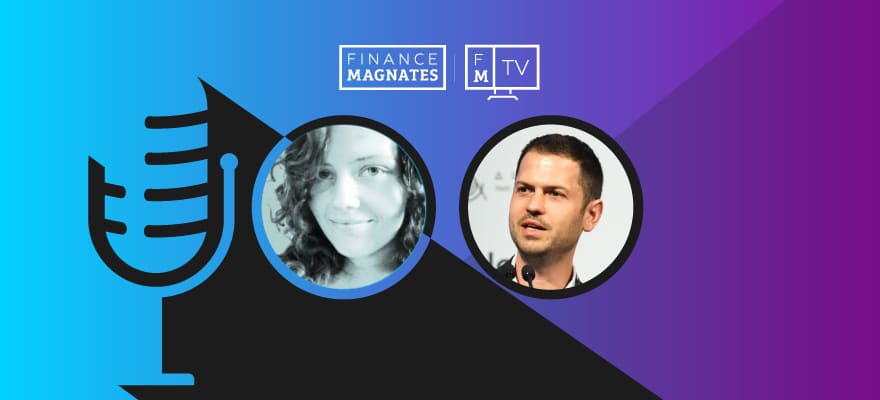
Finance Magnates spoke with Dave Shrier, founder and CEO of Distilled Analytics, about trends in regulatory compliance in the cryptocurrency industry. Dave is also a lecturer at MIT and an associate fellow at Oxford University.
”The Crypto Industry Has Struggled” With KYC and AML “For a Long Time”
“The crypto space absolutely has a significant need for better AML/KYC (anti-money laundering/know your customer,” Dave said. “These are standard regulations in the industry that help govern compliance with law. The crypto industry has struggled with this for a long time.”
“New solutions are needed,” he continued, “so Distilled Analytics is building those solutions around AML/KYC. There’s certainly an opportunity to help within the crypto space, although we as a company are not directly involved in that area today.”
“There are a couple of major issues. The first is that we say a couple of folks within the crypto space essentially seek to defy the laws of gravity. They say, 'we’re building something new that’s outside of government control, and so it doesn’t have to comply with government regulation--that’s for old people'.”
“I’m paraphrasing, but not too much,” he continued. “I’ve had some pretty heated arguments with people operating in this sector because I say, ‘look, that’s fine if you’re not the citizen of any country and do business outside of the purview of any country on the planet, and that’s very difficult to do.’”
Dave explained that in order to remain out of the scope of regulation, a company would have to establish itself somewhere outside of the planet earth. “As soon as you start paying for goods or services, moving money into or taking money out of crypto technology into other forms of currency or money or goods or services, you now are in the scope or purview of government.”
Essentially, “whether (these people) like it or not, Bitcoin is regulated in a number of domiciles. There are just a lot of people who are not complying with regulations.”
Some Regulators Expect the Crypto Industry to Push Legal Boundaries
“This is not uncommon in any new technology adoption scheme,” Dave continued. “For example, according to reports that I’ve read, Uber knowingly violated a number of local taxi license requirements. Their strategy was ‘we’re gonna do things quickly and in some places fly under the radar so that we’ll get so big and essential that governments will be forced to change the regulations to let us operate.’”
“In the crypto space, several government regulators I have spoken to have expressed the philosophy that they like to see innovation happen around the edges, and they try to not intervene too early...and when it gets bigger, that’s when they step in to regulate it.”
“What we’re seeing with Bitcoin is (that) it’s been regulated, but no enforcement has occurred. Now, enforcement is starting to occur."
Regulators are Taking “Fairly Progressive” Approaches
“I’ve spent a lot of time talking to regulators policy makers, and among others, the OECD and the EU are trying to do what I consider to be fairly progressive approaches to thinking about crypto or blockchain, and trying to actually enable a new economy and not quash innovation.”
Could use your help - I’m working with the OECD - OCDE on supply chain & #blockchain particularly around Responsible Business Conduct. Please, tell us about relevant blockchain projects and companies here: https://t.co/Ri9gxvh0Ht
Crypto Companies Don’t Comply with Governments and Don’t Follow Industry Security Practices
“So today, a lot of companies say that on the one hand, they don’t have to comply with any government regulation, and on the other hand, they don’t have a lot of the risk management controls in place that conventional institutions do.”
“So if you’re a bank, you’re a vendor to a bank, you typically have to comply with something called SOC2, which is a set of requirements around cybersecurity that ensure that your organization is complying with best practices."
“A bunch of crypto companies just ignore that,” he explained. “And (when I say) crypto companies, I include wallets and exchanges. So we have seen some pretty substantial thefts and pretty overt breaches of crypto through weak cybersecurity. It’s particularly embarrassing when you see people who are themselves running security technology companies who do things like use an old password that’s been published already on password hack lists.”
”There’s a Lot of Manipulation That’s There’s no Protection Against”
Dave explained that good security practices come down to a few basic principles: “A), using basic cybersecurity practices in running your business is important. B) complying with a rigorous set of cyber risk management policies like SOC2 is important, but then C) we get into market and control risk.”
“A lot of crypto exchanges allow completely free flow of tokens. This means that unlike Nasdaq, or the NYSE, or Deutsche Borse, or the LSS, if there are wild fluctuations in price and clear price manipulation, the exchange has the ability to detect it and step in and intervene and freeze trading or unwind trading, or whatever is necessary to clean up the problem.”
“That doesn’t exist in the crypto exchange world to any meaningful degree, if at all. There’s kind of a libertarian view that it should not exist, but what it means is that it’s really hard to use this stuff to buy bread or pay your employees, because it’s so volatile. And based on what I understand from people who are insiders, there is a lot of manipulation going on that there’s no protection against, really.”
“A wealth of information creates a poverty of attention” - Herbert Simon
“I don’t mean that this is true for every cryptocurrency all the time,” he added, “but I have been told that there have been notable price movements that have been structured.”
This is an excerpt. To hear the full interview with Dave Shrier, please click the Soundcloud or Youtube links.
Finance Magnates spoke with Dave Shrier, founder and CEO of Distilled Analytics, about trends in regulatory compliance in the cryptocurrency industry. Dave is also a lecturer at MIT and an associate fellow at Oxford University.
”The Crypto Industry Has Struggled” With KYC and AML “For a Long Time”
“The crypto space absolutely has a significant need for better AML/KYC (anti-money laundering/know your customer,” Dave said. “These are standard regulations in the industry that help govern compliance with law. The crypto industry has struggled with this for a long time.”
“New solutions are needed,” he continued, “so Distilled Analytics is building those solutions around AML/KYC. There’s certainly an opportunity to help within the crypto space, although we as a company are not directly involved in that area today.”
“There are a couple of major issues. The first is that we say a couple of folks within the crypto space essentially seek to defy the laws of gravity. They say, 'we’re building something new that’s outside of government control, and so it doesn’t have to comply with government regulation--that’s for old people'.”
“I’m paraphrasing, but not too much,” he continued. “I’ve had some pretty heated arguments with people operating in this sector because I say, ‘look, that’s fine if you’re not the citizen of any country and do business outside of the purview of any country on the planet, and that’s very difficult to do.’”
Dave explained that in order to remain out of the scope of regulation, a company would have to establish itself somewhere outside of the planet earth. “As soon as you start paying for goods or services, moving money into or taking money out of crypto technology into other forms of currency or money or goods or services, you now are in the scope or purview of government.”
Essentially, “whether (these people) like it or not, Bitcoin is regulated in a number of domiciles. There are just a lot of people who are not complying with regulations.”
Some Regulators Expect the Crypto Industry to Push Legal Boundaries
“This is not uncommon in any new technology adoption scheme,” Dave continued. “For example, according to reports that I’ve read, Uber knowingly violated a number of local taxi license requirements. Their strategy was ‘we’re gonna do things quickly and in some places fly under the radar so that we’ll get so big and essential that governments will be forced to change the regulations to let us operate.’”
“In the crypto space, several government regulators I have spoken to have expressed the philosophy that they like to see innovation happen around the edges, and they try to not intervene too early...and when it gets bigger, that’s when they step in to regulate it.”
“What we’re seeing with Bitcoin is (that) it’s been regulated, but no enforcement has occurred. Now, enforcement is starting to occur."
Regulators are Taking “Fairly Progressive” Approaches
“I’ve spent a lot of time talking to regulators policy makers, and among others, the OECD and the EU are trying to do what I consider to be fairly progressive approaches to thinking about crypto or blockchain, and trying to actually enable a new economy and not quash innovation.”
Could use your help - I’m working with the OECD - OCDE on supply chain & #blockchain particularly around Responsible Business Conduct. Please, tell us about relevant blockchain projects and companies here: https://t.co/Ri9gxvh0Ht
Crypto Companies Don’t Comply with Governments and Don’t Follow Industry Security Practices
“So today, a lot of companies say that on the one hand, they don’t have to comply with any government regulation, and on the other hand, they don’t have a lot of the risk management controls in place that conventional institutions do.”
“So if you’re a bank, you’re a vendor to a bank, you typically have to comply with something called SOC2, which is a set of requirements around cybersecurity that ensure that your organization is complying with best practices."
“A bunch of crypto companies just ignore that,” he explained. “And (when I say) crypto companies, I include wallets and exchanges. So we have seen some pretty substantial thefts and pretty overt breaches of crypto through weak cybersecurity. It’s particularly embarrassing when you see people who are themselves running security technology companies who do things like use an old password that’s been published already on password hack lists.”
”There’s a Lot of Manipulation That’s There’s no Protection Against”
Dave explained that good security practices come down to a few basic principles: “A), using basic cybersecurity practices in running your business is important. B) complying with a rigorous set of cyber risk management policies like SOC2 is important, but then C) we get into market and control risk.”
“A lot of crypto exchanges allow completely free flow of tokens. This means that unlike Nasdaq, or the NYSE, or Deutsche Borse, or the LSS, if there are wild fluctuations in price and clear price manipulation, the exchange has the ability to detect it and step in and intervene and freeze trading or unwind trading, or whatever is necessary to clean up the problem.”
“That doesn’t exist in the crypto exchange world to any meaningful degree, if at all. There’s kind of a libertarian view that it should not exist, but what it means is that it’s really hard to use this stuff to buy bread or pay your employees, because it’s so volatile. And based on what I understand from people who are insiders, there is a lot of manipulation going on that there’s no protection against, really.”
“A wealth of information creates a poverty of attention” - Herbert Simon
“I don’t mean that this is true for every cryptocurrency all the time,” he added, “but I have been told that there have been notable price movements that have been structured.”
Rachel is a self-taught crypto geek and a passionate writer. She believes in the power that the written word has to educate, connect and empower individuals to make positive and powerful financial choices. She is the Podcast Host and a Cryptocurrency Editor at Finance Magnates.
Moomoo Adds Crossover’s Crypto Execution Network for US Retail Traders
Featured Videos
AvaTrade to Acquire Most of FXCM; NAGA Raises $8M
AvaTrade to Acquire Most of FXCM; NAGA Raises $8M
AvaTrade to Acquire Most of FXCM; NAGA Raises $8M
AvaTrade to Acquire Most of FXCM; NAGA Raises $8M
Today’s financial news recap covers AvaTrade agrees to acquire most of FXCM, NAGA secures eight million dollars in new financing, and Wise seeks a tax settlement in the UK.
Finance Magnates Daily Recap brings you the latest news from forex and CFD brokers, fintech, payments, cryptocurrency, digital assets, trading platforms, financial regulation and global markets.
Get the key company news, executive moves, deals, regulatory updates and market developments of the day, in just a few minutes. New episodes published every weekday.
Read more: https://www.financemagnates.com
#FinanceMagnates #ForexNews #FintechNews
Today’s financial news recap covers AvaTrade agrees to acquire most of FXCM, NAGA secures eight million dollars in new financing, and Wise seeks a tax settlement in the UK.
Finance Magnates Daily Recap brings you the latest news from forex and CFD brokers, fintech, payments, cryptocurrency, digital assets, trading platforms, financial regulation and global markets.
Get the key company news, executive moves, deals, regulatory updates and market developments of the day, in just a few minutes. New episodes published every weekday.
Read more: https://www.financemagnates.com
#FinanceMagnates #ForexNews #FintechNews
Today’s financial news recap covers AvaTrade agrees to acquire most of FXCM, NAGA secures eight million dollars in new financing, and Wise seeks a tax settlement in the UK.
Finance Magnates Daily Recap brings you the latest news from forex and CFD brokers, fintech, payments, cryptocurrency, digital assets, trading platforms, financial regulation and global markets.
Get the key company news, executive moves, deals, regulatory updates and market developments of the day, in just a few minutes. New episodes published every weekday.
Read more: https://www.financemagnates.com
#FinanceMagnates #ForexNews #FintechNews
Today’s financial news recap covers AvaTrade agrees to acquire most of FXCM, NAGA secures eight million dollars in new financing, and Wise seeks a tax settlement in the UK.
Finance Magnates Daily Recap brings you the latest news from forex and CFD brokers, fintech, payments, cryptocurrency, digital assets, trading platforms, financial regulation and global markets.
Get the key company news, executive moves, deals, regulatory updates and market developments of the day, in just a few minutes. New episodes published every weekday.
Read more: https://www.financemagnates.com
#FinanceMagnates #ForexNews #FintechNews
XTB Adds Overnight US Stock Trading; Nasdaq Ventures Invests in One Trading
XTB Adds Overnight US Stock Trading; Nasdaq Ventures Invests in One Trading
XTB Adds Overnight US Stock Trading; Nasdaq Ventures Invests in One Trading
XTB Adds Overnight US Stock Trading; Nasdaq Ventures Invests in One Trading
XTB Adds Overnight US Stock Trading; Nasdaq Ventures Invests in One Trading
XTB Adds Overnight US Stock Trading; Nasdaq Ventures Invests in One Trading
Today’s financial news recap covers XTB expands overnight US stock trading, Fortrade reports higher revenue, Nasdaq backs One Trading, and Vest Labs raises 13 million dollars.
Finance Magnates Daily Recap brings you the latest news from forex and CFD brokers, fintech, payments, cryptocurrency, digital assets, trading platforms, financial regulation and global markets.
Get the key company news, executive moves, deals, regulatory updates and market developments of the day, in just a few minutes. New episodes published every weekday.
Read more: https://www.financemagnates.com
#FinanceMagnates #ForexNews #FintechNews
Today’s financial news recap covers XTB expands overnight US stock trading, Fortrade reports higher revenue, Nasdaq backs One Trading, and Vest Labs raises 13 million dollars.
Finance Magnates Daily Recap brings you the latest news from forex and CFD brokers, fintech, payments, cryptocurrency, digital assets, trading platforms, financial regulation and global markets.
Get the key company news, executive moves, deals, regulatory updates and market developments of the day, in just a few minutes. New episodes published every weekday.
Read more: https://www.financemagnates.com
#FinanceMagnates #ForexNews #FintechNews
Today’s financial news recap covers XTB expands overnight US stock trading, Fortrade reports higher revenue, Nasdaq backs One Trading, and Vest Labs raises 13 million dollars.
Finance Magnates Daily Recap brings you the latest news from forex and CFD brokers, fintech, payments, cryptocurrency, digital assets, trading platforms, financial regulation and global markets.
Get the key company news, executive moves, deals, regulatory updates and market developments of the day, in just a few minutes. New episodes published every weekday.
Read more: https://www.financemagnates.com
#FinanceMagnates #ForexNews #FintechNews
Today’s financial news recap covers XTB expands overnight US stock trading, Fortrade reports higher revenue, Nasdaq backs One Trading, and Vest Labs raises 13 million dollars.
Finance Magnates Daily Recap brings you the latest news from forex and CFD brokers, fintech, payments, cryptocurrency, digital assets, trading platforms, financial regulation and global markets.
Get the key company news, executive moves, deals, regulatory updates and market developments of the day, in just a few minutes. New episodes published every weekday.
Read more: https://www.financemagnates.com
#FinanceMagnates #ForexNews #FintechNews
Today’s financial news recap covers XTB expands overnight US stock trading, Fortrade reports higher revenue, Nasdaq backs One Trading, and Vest Labs raises 13 million dollars.
Finance Magnates Daily Recap brings you the latest news from forex and CFD brokers, fintech, payments, cryptocurrency, digital assets, trading platforms, financial regulation and global markets.
Get the key company news, executive moves, deals, regulatory updates and market developments of the day, in just a few minutes. New episodes published every weekday.
Read more: https://www.financemagnates.com
#FinanceMagnates #ForexNews #FintechNews
Today’s financial news recap covers XTB expands overnight US stock trading, Fortrade reports higher revenue, Nasdaq backs One Trading, and Vest Labs raises 13 million dollars.
Finance Magnates Daily Recap brings you the latest news from forex and CFD brokers, fintech, payments, cryptocurrency, digital assets, trading platforms, financial regulation and global markets.
Get the key company news, executive moves, deals, regulatory updates and market developments of the day, in just a few minutes. New episodes published every weekday.
Read more: https://www.financemagnates.com
#FinanceMagnates #ForexNews #FintechNews
CMC Founder Downplays Volatility Hit; Devexperts Names CEO
CMC Founder Downplays Volatility Hit; Devexperts Names CEO
CMC Founder Downplays Volatility Hit; Devexperts Names CEO
CMC Founder Downplays Volatility Hit; Devexperts Names CEO
CMC Founder Downplays Volatility Hit; Devexperts Names CEO
CMC Founder Downplays Volatility Hit; Devexperts Names CEO
Today’s financial news recap covers low volatility pressures brokers, Devexperts names a new CEO, Saxo cuts onboarding time, and OKX reaches a 25 billion dollar valuation.
Finance Magnates Daily Recap brings you the latest news from forex and CFD brokers, fintech, payments, cryptocurrency, digital assets, trading platforms, financial regulation and global markets.
Get the key company news, executive moves, deals, regulatory updates and market developments of the day, in just a few minutes. New episodes published every weekday.
Read more: https://www.financemagnates.com
#FinanceMagnates #ForexNews #FintechNews
Today’s financial news recap covers low volatility pressures brokers, Devexperts names a new CEO, Saxo cuts onboarding time, and OKX reaches a 25 billion dollar valuation.
Finance Magnates Daily Recap brings you the latest news from forex and CFD brokers, fintech, payments, cryptocurrency, digital assets, trading platforms, financial regulation and global markets.
Get the key company news, executive moves, deals, regulatory updates and market developments of the day, in just a few minutes. New episodes published every weekday.
Read more: https://www.financemagnates.com
#FinanceMagnates #ForexNews #FintechNews
Today’s financial news recap covers low volatility pressures brokers, Devexperts names a new CEO, Saxo cuts onboarding time, and OKX reaches a 25 billion dollar valuation.
Finance Magnates Daily Recap brings you the latest news from forex and CFD brokers, fintech, payments, cryptocurrency, digital assets, trading platforms, financial regulation and global markets.
Get the key company news, executive moves, deals, regulatory updates and market developments of the day, in just a few minutes. New episodes published every weekday.
Read more: https://www.financemagnates.com
#FinanceMagnates #ForexNews #FintechNews
Today’s financial news recap covers low volatility pressures brokers, Devexperts names a new CEO, Saxo cuts onboarding time, and OKX reaches a 25 billion dollar valuation.
Finance Magnates Daily Recap brings you the latest news from forex and CFD brokers, fintech, payments, cryptocurrency, digital assets, trading platforms, financial regulation and global markets.
Get the key company news, executive moves, deals, regulatory updates and market developments of the day, in just a few minutes. New episodes published every weekday.
Read more: https://www.financemagnates.com
#FinanceMagnates #ForexNews #FintechNews
Today’s financial news recap covers low volatility pressures brokers, Devexperts names a new CEO, Saxo cuts onboarding time, and OKX reaches a 25 billion dollar valuation.
Finance Magnates Daily Recap brings you the latest news from forex and CFD brokers, fintech, payments, cryptocurrency, digital assets, trading platforms, financial regulation and global markets.
Get the key company news, executive moves, deals, regulatory updates and market developments of the day, in just a few minutes. New episodes published every weekday.
Read more: https://www.financemagnates.com
#FinanceMagnates #ForexNews #FintechNews
Today’s financial news recap covers low volatility pressures brokers, Devexperts names a new CEO, Saxo cuts onboarding time, and OKX reaches a 25 billion dollar valuation.
Finance Magnates Daily Recap brings you the latest news from forex and CFD brokers, fintech, payments, cryptocurrency, digital assets, trading platforms, financial regulation and global markets.
Get the key company news, executive moves, deals, regulatory updates and market developments of the day, in just a few minutes. New episodes published every weekday.
Read more: https://www.financemagnates.com
#FinanceMagnates #ForexNews #FintechNews
Today’s financial news recap covers Trade Nation buys FXCM's UK client book, Trading 212 reports higher revenue, the CFTC's move to allow perpetual index futures.
Finance Magnates Daily Recap brings you the latest news from forex and CFD brokers, fintech, payments, cryptocurrency, digital assets, trading platforms, financial regulation and global markets.
Get the key company news, executive moves, deals, regulatory updates and market developments of the day, in just a few minutes. New episodes published every weekday.
Read more: https://www.financemagnates.com
#FinanceMagnates #ForexNews #FintechNews
Today’s financial news recap covers Trade Nation buys FXCM's UK client book, Trading 212 reports higher revenue, the CFTC's move to allow perpetual index futures.
Finance Magnates Daily Recap brings you the latest news from forex and CFD brokers, fintech, payments, cryptocurrency, digital assets, trading platforms, financial regulation and global markets.
Get the key company news, executive moves, deals, regulatory updates and market developments of the day, in just a few minutes. New episodes published every weekday.
Read more: https://www.financemagnates.com
#FinanceMagnates #ForexNews #FintechNews
Today’s financial news recap covers Trade Nation buys FXCM's UK client book, Trading 212 reports higher revenue, the CFTC's move to allow perpetual index futures.
Finance Magnates Daily Recap brings you the latest news from forex and CFD brokers, fintech, payments, cryptocurrency, digital assets, trading platforms, financial regulation and global markets.
Get the key company news, executive moves, deals, regulatory updates and market developments of the day, in just a few minutes. New episodes published every weekday.
Read more: https://www.financemagnates.com
#FinanceMagnates #ForexNews #FintechNews
Today’s financial news recap covers Trade Nation buys FXCM's UK client book, Trading 212 reports higher revenue, the CFTC's move to allow perpetual index futures.
Finance Magnates Daily Recap brings you the latest news from forex and CFD brokers, fintech, payments, cryptocurrency, digital assets, trading platforms, financial regulation and global markets.
Get the key company news, executive moves, deals, regulatory updates and market developments of the day, in just a few minutes. New episodes published every weekday.
Read more: https://www.financemagnates.com
#FinanceMagnates #ForexNews #FintechNews
Today’s financial news recap covers Trade Nation buys FXCM's UK client book, Trading 212 reports higher revenue, the CFTC's move to allow perpetual index futures.
Finance Magnates Daily Recap brings you the latest news from forex and CFD brokers, fintech, payments, cryptocurrency, digital assets, trading platforms, financial regulation and global markets.
Get the key company news, executive moves, deals, regulatory updates and market developments of the day, in just a few minutes. New episodes published every weekday.
Read more: https://www.financemagnates.com
#FinanceMagnates #ForexNews #FintechNews
Today’s financial news recap covers Trade Nation buys FXCM's UK client book, Trading 212 reports higher revenue, the CFTC's move to allow perpetual index futures.
Finance Magnates Daily Recap brings you the latest news from forex and CFD brokers, fintech, payments, cryptocurrency, digital assets, trading platforms, financial regulation and global markets.
Get the key company news, executive moves, deals, regulatory updates and market developments of the day, in just a few minutes. New episodes published every weekday.
Read more: https://www.financemagnates.com
#FinanceMagnates #ForexNews #FintechNews
Your career isn’t a linear path.
Your career isn’t a linear path.
Your career isn’t a linear path.
Your career isn’t a linear path.
Your career isn’t a linear path.
Your career isn’t a linear path.
Roles change. Career goals change. Sometimes you want a completely new challenge.
But the skills and knowledge you build along the way can stay with you and give you something to build on.
For Jeff Patterson, that continued growth is key to long-term career development.
You bring the skills. FM Academy helps you build the knowledge.
#FMAcademy #FinanceMagnates #FinanceCareers #ProfessionalDevelopment #Fintech
Roles change. Career goals change. Sometimes you want a completely new challenge.
But the skills and knowledge you build along the way can stay with you and give you something to build on.
For Jeff Patterson, that continued growth is key to long-term career development.
You bring the skills. FM Academy helps you build the knowledge.
#FMAcademy #FinanceMagnates #FinanceCareers #ProfessionalDevelopment #Fintech
Roles change. Career goals change. Sometimes you want a completely new challenge.
But the skills and knowledge you build along the way can stay with you and give you something to build on.
For Jeff Patterson, that continued growth is key to long-term career development.
You bring the skills. FM Academy helps you build the knowledge.
#FMAcademy #FinanceMagnates #FinanceCareers #ProfessionalDevelopment #Fintech
Roles change. Career goals change. Sometimes you want a completely new challenge.
But the skills and knowledge you build along the way can stay with you and give you something to build on.
For Jeff Patterson, that continued growth is key to long-term career development.
You bring the skills. FM Academy helps you build the knowledge.
#FMAcademy #FinanceMagnates #FinanceCareers #ProfessionalDevelopment #Fintech
Roles change. Career goals change. Sometimes you want a completely new challenge.
But the skills and knowledge you build along the way can stay with you and give you something to build on.
For Jeff Patterson, that continued growth is key to long-term career development.
You bring the skills. FM Academy helps you build the knowledge.
#FMAcademy #FinanceMagnates #FinanceCareers #ProfessionalDevelopment #Fintech
Roles change. Career goals change. Sometimes you want a completely new challenge.
But the skills and knowledge you build along the way can stay with you and give you something to build on.
For Jeff Patterson, that continued growth is key to long-term career development.
You bring the skills. FM Academy helps you build the knowledge.
#FMAcademy #FinanceMagnates #FinanceCareers #ProfessionalDevelopment #Fintech