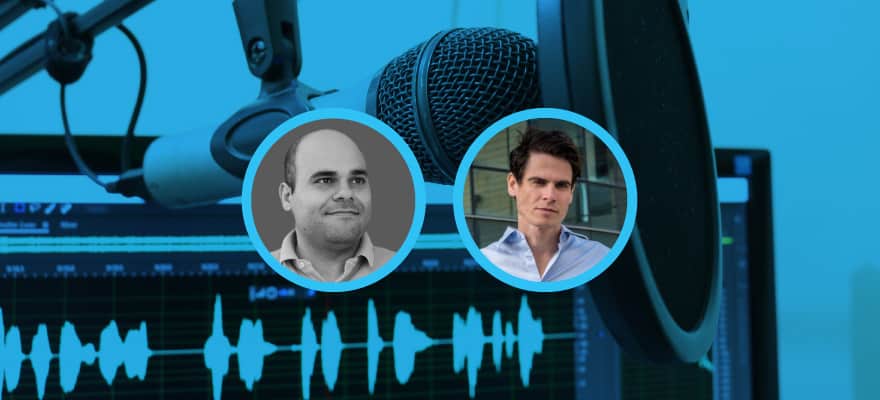
FX veteran and current Chairman of the Board of Advisors for Gatecoin talks about Bitcoin exchanges and FX brokers.
Gatecoin
George Popescu is the current Chairman of the Board of Advisors for Gatecoin, the regulated cryptocurrency exchange based in Hong Kong that also partners with banks to develop blockchain remittance solutions. At the same time, he is also the founder, CEO and Editor in Chief of Lending Times, a media and affiliate marketing company. And a partner in LunaCap Ventures, an early venture-debt fund.
The new world of online trading, fintech and marketing – register now for the Finance Magnates Tel Aviv Conference, June 29th 2016.
Popescu has a long history as a serial entrepreneur creating ventures in diverse fields from craft beer brewery to exotic sports car rental. However, he will be most familiar to our readers from the online trading industry as the founder of Boston Technologies (BT) group. BT was a technology, market maker, high-frequency trading and inter-broker broker-dealer in the FX Spot, precious metals and CFDs space which he sold in 2014.
Gatecoin's co-founder is a friend of one of my old colleagues at Boston Technologies, Simon Leger (Simon runs eComm at FXCM now). He introduced me to Aurelien, CEO and co-founder last year when I was working with Techstars to help them find companies for their Fintech Accelerator in New York. (The Techstars NY accelerator is going on again this year) .
What does your role as Chairman of the Board of Advisors entail?
As often as necessary, help the CEO and the executive team with tasks like strategy: which direction to go towards, what products to launch, what metrics matter etc.
Tactics: how to deal with particular situation, tricks and ways to cut costs, to be more effective, to test something, how to launch into a new market, how to recruit people, how do we think of a deal that's being offered.
Share information and past experiences: what worked, what doesn't work. Show different options for different choices the company has to make.
Introductions: for people, for capital, for clients, for partners. Help find other advisors that are relevant.
Provide other points of view. provide a sounding board. Help come up with answers to problems.
Sometimes even personal advice on how to have an equilibrium between life and work. Being an entrepreneur is a roller-coaster of emotions.
There are so many crypto exchanges now around the world, what sets Gatecoin apart?
While it is among the best crypto exchange services it is much more than just a crypto exchange.
George Popescu
First it is based in HK, in the middle of Asia, where crypto currencies and blockchain have the best prospects short term. And unlike the majority of companies in Asia it is extremely regulated and very focused on AML, KYC and compliance standards both legal and operational. It is, I believe, only 1 of the 2 regulated HK crypto exchanges and it was the only regulated HK crypto exchange as late as 1 year ago.
But beyond that, we are looking at the very early stages for smart contracts, and all the world beyond that. Smart contracts will revolutionize how companies are formed, how they are run, how they operate, and it all resides on top of the blockchain, the core know how of Gatecoin.
What are the realistic goals for Gatecoin in (let’s say) five years?
Gatecoin will eventually be seen as a technology, infrastructure and services provides in the blockchain space and will power, beyond exchanges, other functions. It may for example also serve as a crowdfunding platforms for DAOs (Decentralized autonomous organizations). Or maybe a marketplace for smart contract writers. Or it may also help power a cloud infrastructure designed especially for DAOs and smart contracts.
The technology is still at its infancy and it is hard to guess what will be needed when. We are setting up to be flexible, to react fast and learn fast. It is by getting ready to seize opportunities that you stay ahead. I believe that client demand will be driving what happens next. And I mean clients who vote with their wallets, not their dreams.
An an expert on lending, what are some of the best applications of cryptocurrencies that you see in the realm of possibility?
Lending Times has indeed gotten me a great point of view. I have 5000 daily readers and connections with most CEOs in the p2p space. I also have a lot of data about the lending space. So far in lending I have only seen BTC as being a remittance system helping p2p lenders fund loans around the world in clips of $100. Without BTC, transferring $100 from 30 people to fund a $3,000 loan would be impossible due to wire fees.
On the more creative part I have seen Sun Exchange in South Africa who allows lending of BTC to companies who build solar panels setups to be used for BTC mining. An interesting system which allows to transform BTC into solar panels, into electricity which with PCs makes more BTCs. While exotic and charming I am not sure it's actually profitable given the BTC complexity growth and comparing the cost of solar vs hydro power generators.
What similarities do you see between the development of the retail FX trading industry in the 2000s and the cryptocurrencies trading industry now?
I think they are completely different. Spot FX trading is in large majority (95%) speculative. I think that speculative crypto trading volume is a small minority. The main difference on the other side is that one doesn't need prime brokers to trade crypto. And prime brokers are these days very hard to find and, when found, very expensive. So many banks have exited the FX prime brokerage space that the remaining even raised the minimum capital requirements to become a client.
I believe that the really interesting business to do is to use blockchain to clear EURUSD trades and replace and kill the prime brokerage function in the fiat currency trading space.
The only catch is that you need a block, in the blockchain, to settle much faster than the 10 minutes of Bitcoin. How fast? Maybe sub second. Is that feasible? I think it is. If anybody is working on blockchain for fiat currency prime brokerage please contact me. I'll help you find funding for it.
Do you think these two industries serve the same types of clients?
I think they are very different. Retail FX spot fiat serves right now a majority of speculators who hope to make 20% per month profit. The risk of ruin on that is so high that I am still to see to this day 1 FX spot trader who makes money for more than 18 months in a row through technical analysis or algo trading.
The only people who make money in FX Spot FX are the ones who make commission, spread, or who arbitrage computers (network latency, computer latency, pricing latency...).
In crypto I think we are solving a real problem. It is the same problem that was solved once by moving from gold coin to paper money 300 years ago. And this problem re-appeared in the ecommerce space due to credit cards and wire transfers not being adapted for it.
Crypto currencies are a great anonymous, nearly instant and extremely cheap way to make payments, all over the world, in 100% confidence between complete strangers. That is the same as paying with paper money a random person on the street when you buy tomatoes on the market. So crypto currencies are here to stay.
What needs to be done for retail brokers to start offering real cryptocurrency trading (not just bitcoin CFDs)?
I think that traders can already trade real crypto on the exchanges. So if somebody wants to trade real crypto they don't need an FX broker. In fact, the FX broker has to make a living so their fees can only be higher because they need to markup the exchange fees.
I think the FX brokers don't have anything to add to what an exchange is already offering in order to attract traders to their businesses beyond high leverage. But then you are stuck in a CFD as there are no giveup agreements in BTC... yet. Maybe there will be some soon. I am also interested in this business if anybody else is interested in discussing.
George Popescu is the current Chairman of the Board of Advisors for Gatecoin, the regulated cryptocurrency exchange based in Hong Kong that also partners with banks to develop blockchain remittance solutions. At the same time, he is also the founder, CEO and Editor in Chief of Lending Times, a media and affiliate marketing company. And a partner in LunaCap Ventures, an early venture-debt fund.
The new world of online trading, fintech and marketing – register now for the Finance Magnates Tel Aviv Conference, June 29th 2016.
Popescu has a long history as a serial entrepreneur creating ventures in diverse fields from craft beer brewery to exotic sports car rental. However, he will be most familiar to our readers from the online trading industry as the founder of Boston Technologies (BT) group. BT was a technology, market maker, high-frequency trading and inter-broker broker-dealer in the FX Spot, precious metals and CFDs space which he sold in 2014.
Gatecoin's co-founder is a friend of one of my old colleagues at Boston Technologies, Simon Leger (Simon runs eComm at FXCM now). He introduced me to Aurelien, CEO and co-founder last year when I was working with Techstars to help them find companies for their Fintech Accelerator in New York. (The Techstars NY accelerator is going on again this year) .
What does your role as Chairman of the Board of Advisors entail?
As often as necessary, help the CEO and the executive team with tasks like strategy: which direction to go towards, what products to launch, what metrics matter etc.
Tactics: how to deal with particular situation, tricks and ways to cut costs, to be more effective, to test something, how to launch into a new market, how to recruit people, how do we think of a deal that's being offered.
Share information and past experiences: what worked, what doesn't work. Show different options for different choices the company has to make.
Introductions: for people, for capital, for clients, for partners. Help find other advisors that are relevant.
Provide other points of view. provide a sounding board. Help come up with answers to problems.
Sometimes even personal advice on how to have an equilibrium between life and work. Being an entrepreneur is a roller-coaster of emotions.
There are so many crypto exchanges now around the world, what sets Gatecoin apart?
While it is among the best crypto exchange services it is much more than just a crypto exchange.
George Popescu
First it is based in HK, in the middle of Asia, where crypto currencies and blockchain have the best prospects short term. And unlike the majority of companies in Asia it is extremely regulated and very focused on AML, KYC and compliance standards both legal and operational. It is, I believe, only 1 of the 2 regulated HK crypto exchanges and it was the only regulated HK crypto exchange as late as 1 year ago.
But beyond that, we are looking at the very early stages for smart contracts, and all the world beyond that. Smart contracts will revolutionize how companies are formed, how they are run, how they operate, and it all resides on top of the blockchain, the core know how of Gatecoin.
What are the realistic goals for Gatecoin in (let’s say) five years?
Gatecoin will eventually be seen as a technology, infrastructure and services provides in the blockchain space and will power, beyond exchanges, other functions. It may for example also serve as a crowdfunding platforms for DAOs (Decentralized autonomous organizations). Or maybe a marketplace for smart contract writers. Or it may also help power a cloud infrastructure designed especially for DAOs and smart contracts.
The technology is still at its infancy and it is hard to guess what will be needed when. We are setting up to be flexible, to react fast and learn fast. It is by getting ready to seize opportunities that you stay ahead. I believe that client demand will be driving what happens next. And I mean clients who vote with their wallets, not their dreams.
An an expert on lending, what are some of the best applications of cryptocurrencies that you see in the realm of possibility?
Lending Times has indeed gotten me a great point of view. I have 5000 daily readers and connections with most CEOs in the p2p space. I also have a lot of data about the lending space. So far in lending I have only seen BTC as being a remittance system helping p2p lenders fund loans around the world in clips of $100. Without BTC, transferring $100 from 30 people to fund a $3,000 loan would be impossible due to wire fees.
On the more creative part I have seen Sun Exchange in South Africa who allows lending of BTC to companies who build solar panels setups to be used for BTC mining. An interesting system which allows to transform BTC into solar panels, into electricity which with PCs makes more BTCs. While exotic and charming I am not sure it's actually profitable given the BTC complexity growth and comparing the cost of solar vs hydro power generators.
What similarities do you see between the development of the retail FX trading industry in the 2000s and the cryptocurrencies trading industry now?
I think they are completely different. Spot FX trading is in large majority (95%) speculative. I think that speculative crypto trading volume is a small minority. The main difference on the other side is that one doesn't need prime brokers to trade crypto. And prime brokers are these days very hard to find and, when found, very expensive. So many banks have exited the FX prime brokerage space that the remaining even raised the minimum capital requirements to become a client.
I believe that the really interesting business to do is to use blockchain to clear EURUSD trades and replace and kill the prime brokerage function in the fiat currency trading space.
The only catch is that you need a block, in the blockchain, to settle much faster than the 10 minutes of Bitcoin. How fast? Maybe sub second. Is that feasible? I think it is. If anybody is working on blockchain for fiat currency prime brokerage please contact me. I'll help you find funding for it.
Do you think these two industries serve the same types of clients?
I think they are very different. Retail FX spot fiat serves right now a majority of speculators who hope to make 20% per month profit. The risk of ruin on that is so high that I am still to see to this day 1 FX spot trader who makes money for more than 18 months in a row through technical analysis or algo trading.
The only people who make money in FX Spot FX are the ones who make commission, spread, or who arbitrage computers (network latency, computer latency, pricing latency...).
In crypto I think we are solving a real problem. It is the same problem that was solved once by moving from gold coin to paper money 300 years ago. And this problem re-appeared in the ecommerce space due to credit cards and wire transfers not being adapted for it.
Crypto currencies are a great anonymous, nearly instant and extremely cheap way to make payments, all over the world, in 100% confidence between complete strangers. That is the same as paying with paper money a random person on the street when you buy tomatoes on the market. So crypto currencies are here to stay.
What needs to be done for retail brokers to start offering real cryptocurrency trading (not just bitcoin CFDs)?
I think that traders can already trade real crypto on the exchanges. So if somebody wants to trade real crypto they don't need an FX broker. In fact, the FX broker has to make a living so their fees can only be higher because they need to markup the exchange fees.
I think the FX brokers don't have anything to add to what an exchange is already offering in order to attract traders to their businesses beyond high leverage. But then you are stuck in a CFD as there are no giveup agreements in BTC... yet. Maybe there will be some soon. I am also interested in this business if anybody else is interested in discussing.
Binance Launches Retail AI Assistant, Repackages Existing Trading Tools
Featured Videos
AvaTrade to Acquire Most of FXCM; NAGA Raises $8M
AvaTrade to Acquire Most of FXCM; NAGA Raises $8M
AvaTrade to Acquire Most of FXCM; NAGA Raises $8M
AvaTrade to Acquire Most of FXCM; NAGA Raises $8M
Today’s financial news recap covers AvaTrade agrees to acquire most of FXCM, NAGA secures eight million dollars in new financing, and Wise seeks a tax settlement in the UK.
Finance Magnates Daily Recap brings you the latest news from forex and CFD brokers, fintech, payments, cryptocurrency, digital assets, trading platforms, financial regulation and global markets.
Get the key company news, executive moves, deals, regulatory updates and market developments of the day, in just a few minutes. New episodes published every weekday.
Read more: https://www.financemagnates.com
#FinanceMagnates #ForexNews #FintechNews
Today’s financial news recap covers AvaTrade agrees to acquire most of FXCM, NAGA secures eight million dollars in new financing, and Wise seeks a tax settlement in the UK.
Finance Magnates Daily Recap brings you the latest news from forex and CFD brokers, fintech, payments, cryptocurrency, digital assets, trading platforms, financial regulation and global markets.
Get the key company news, executive moves, deals, regulatory updates and market developments of the day, in just a few minutes. New episodes published every weekday.
Read more: https://www.financemagnates.com
#FinanceMagnates #ForexNews #FintechNews
Today’s financial news recap covers AvaTrade agrees to acquire most of FXCM, NAGA secures eight million dollars in new financing, and Wise seeks a tax settlement in the UK.
Finance Magnates Daily Recap brings you the latest news from forex and CFD brokers, fintech, payments, cryptocurrency, digital assets, trading platforms, financial regulation and global markets.
Get the key company news, executive moves, deals, regulatory updates and market developments of the day, in just a few minutes. New episodes published every weekday.
Read more: https://www.financemagnates.com
#FinanceMagnates #ForexNews #FintechNews
Today’s financial news recap covers AvaTrade agrees to acquire most of FXCM, NAGA secures eight million dollars in new financing, and Wise seeks a tax settlement in the UK.
Finance Magnates Daily Recap brings you the latest news from forex and CFD brokers, fintech, payments, cryptocurrency, digital assets, trading platforms, financial regulation and global markets.
Get the key company news, executive moves, deals, regulatory updates and market developments of the day, in just a few minutes. New episodes published every weekday.
Read more: https://www.financemagnates.com
#FinanceMagnates #ForexNews #FintechNews
XTB Adds Overnight US Stock Trading; Nasdaq Ventures Invests in One Trading
XTB Adds Overnight US Stock Trading; Nasdaq Ventures Invests in One Trading
XTB Adds Overnight US Stock Trading; Nasdaq Ventures Invests in One Trading
XTB Adds Overnight US Stock Trading; Nasdaq Ventures Invests in One Trading
XTB Adds Overnight US Stock Trading; Nasdaq Ventures Invests in One Trading
XTB Adds Overnight US Stock Trading; Nasdaq Ventures Invests in One Trading
Today’s financial news recap covers XTB expands overnight US stock trading, Fortrade reports higher revenue, Nasdaq backs One Trading, and Vest Labs raises 13 million dollars.
Finance Magnates Daily Recap brings you the latest news from forex and CFD brokers, fintech, payments, cryptocurrency, digital assets, trading platforms, financial regulation and global markets.
Get the key company news, executive moves, deals, regulatory updates and market developments of the day, in just a few minutes. New episodes published every weekday.
Read more: https://www.financemagnates.com
#FinanceMagnates #ForexNews #FintechNews
Today’s financial news recap covers XTB expands overnight US stock trading, Fortrade reports higher revenue, Nasdaq backs One Trading, and Vest Labs raises 13 million dollars.
Finance Magnates Daily Recap brings you the latest news from forex and CFD brokers, fintech, payments, cryptocurrency, digital assets, trading platforms, financial regulation and global markets.
Get the key company news, executive moves, deals, regulatory updates and market developments of the day, in just a few minutes. New episodes published every weekday.
Read more: https://www.financemagnates.com
#FinanceMagnates #ForexNews #FintechNews
Today’s financial news recap covers XTB expands overnight US stock trading, Fortrade reports higher revenue, Nasdaq backs One Trading, and Vest Labs raises 13 million dollars.
Finance Magnates Daily Recap brings you the latest news from forex and CFD brokers, fintech, payments, cryptocurrency, digital assets, trading platforms, financial regulation and global markets.
Get the key company news, executive moves, deals, regulatory updates and market developments of the day, in just a few minutes. New episodes published every weekday.
Read more: https://www.financemagnates.com
#FinanceMagnates #ForexNews #FintechNews
Today’s financial news recap covers XTB expands overnight US stock trading, Fortrade reports higher revenue, Nasdaq backs One Trading, and Vest Labs raises 13 million dollars.
Finance Magnates Daily Recap brings you the latest news from forex and CFD brokers, fintech, payments, cryptocurrency, digital assets, trading platforms, financial regulation and global markets.
Get the key company news, executive moves, deals, regulatory updates and market developments of the day, in just a few minutes. New episodes published every weekday.
Read more: https://www.financemagnates.com
#FinanceMagnates #ForexNews #FintechNews
Today’s financial news recap covers XTB expands overnight US stock trading, Fortrade reports higher revenue, Nasdaq backs One Trading, and Vest Labs raises 13 million dollars.
Finance Magnates Daily Recap brings you the latest news from forex and CFD brokers, fintech, payments, cryptocurrency, digital assets, trading platforms, financial regulation and global markets.
Get the key company news, executive moves, deals, regulatory updates and market developments of the day, in just a few minutes. New episodes published every weekday.
Read more: https://www.financemagnates.com
#FinanceMagnates #ForexNews #FintechNews
Today’s financial news recap covers XTB expands overnight US stock trading, Fortrade reports higher revenue, Nasdaq backs One Trading, and Vest Labs raises 13 million dollars.
Finance Magnates Daily Recap brings you the latest news from forex and CFD brokers, fintech, payments, cryptocurrency, digital assets, trading platforms, financial regulation and global markets.
Get the key company news, executive moves, deals, regulatory updates and market developments of the day, in just a few minutes. New episodes published every weekday.
Read more: https://www.financemagnates.com
#FinanceMagnates #ForexNews #FintechNews
CMC Founder Downplays Volatility Hit; Devexperts Names CEO
CMC Founder Downplays Volatility Hit; Devexperts Names CEO
CMC Founder Downplays Volatility Hit; Devexperts Names CEO
CMC Founder Downplays Volatility Hit; Devexperts Names CEO
CMC Founder Downplays Volatility Hit; Devexperts Names CEO
CMC Founder Downplays Volatility Hit; Devexperts Names CEO
Today’s financial news recap covers low volatility pressures brokers, Devexperts names a new CEO, Saxo cuts onboarding time, and OKX reaches a 25 billion dollar valuation.
Finance Magnates Daily Recap brings you the latest news from forex and CFD brokers, fintech, payments, cryptocurrency, digital assets, trading platforms, financial regulation and global markets.
Get the key company news, executive moves, deals, regulatory updates and market developments of the day, in just a few minutes. New episodes published every weekday.
Read more: https://www.financemagnates.com
#FinanceMagnates #ForexNews #FintechNews
Today’s financial news recap covers low volatility pressures brokers, Devexperts names a new CEO, Saxo cuts onboarding time, and OKX reaches a 25 billion dollar valuation.
Finance Magnates Daily Recap brings you the latest news from forex and CFD brokers, fintech, payments, cryptocurrency, digital assets, trading platforms, financial regulation and global markets.
Get the key company news, executive moves, deals, regulatory updates and market developments of the day, in just a few minutes. New episodes published every weekday.
Read more: https://www.financemagnates.com
#FinanceMagnates #ForexNews #FintechNews
Today’s financial news recap covers low volatility pressures brokers, Devexperts names a new CEO, Saxo cuts onboarding time, and OKX reaches a 25 billion dollar valuation.
Finance Magnates Daily Recap brings you the latest news from forex and CFD brokers, fintech, payments, cryptocurrency, digital assets, trading platforms, financial regulation and global markets.
Get the key company news, executive moves, deals, regulatory updates and market developments of the day, in just a few minutes. New episodes published every weekday.
Read more: https://www.financemagnates.com
#FinanceMagnates #ForexNews #FintechNews
Today’s financial news recap covers low volatility pressures brokers, Devexperts names a new CEO, Saxo cuts onboarding time, and OKX reaches a 25 billion dollar valuation.
Finance Magnates Daily Recap brings you the latest news from forex and CFD brokers, fintech, payments, cryptocurrency, digital assets, trading platforms, financial regulation and global markets.
Get the key company news, executive moves, deals, regulatory updates and market developments of the day, in just a few minutes. New episodes published every weekday.
Read more: https://www.financemagnates.com
#FinanceMagnates #ForexNews #FintechNews
Today’s financial news recap covers low volatility pressures brokers, Devexperts names a new CEO, Saxo cuts onboarding time, and OKX reaches a 25 billion dollar valuation.
Finance Magnates Daily Recap brings you the latest news from forex and CFD brokers, fintech, payments, cryptocurrency, digital assets, trading platforms, financial regulation and global markets.
Get the key company news, executive moves, deals, regulatory updates and market developments of the day, in just a few minutes. New episodes published every weekday.
Read more: https://www.financemagnates.com
#FinanceMagnates #ForexNews #FintechNews
Today’s financial news recap covers low volatility pressures brokers, Devexperts names a new CEO, Saxo cuts onboarding time, and OKX reaches a 25 billion dollar valuation.
Finance Magnates Daily Recap brings you the latest news from forex and CFD brokers, fintech, payments, cryptocurrency, digital assets, trading platforms, financial regulation and global markets.
Get the key company news, executive moves, deals, regulatory updates and market developments of the day, in just a few minutes. New episodes published every weekday.
Read more: https://www.financemagnates.com
#FinanceMagnates #ForexNews #FintechNews
Today’s financial news recap covers Trade Nation buys FXCM's UK client book, Trading 212 reports higher revenue, the CFTC's move to allow perpetual index futures.
Finance Magnates Daily Recap brings you the latest news from forex and CFD brokers, fintech, payments, cryptocurrency, digital assets, trading platforms, financial regulation and global markets.
Get the key company news, executive moves, deals, regulatory updates and market developments of the day, in just a few minutes. New episodes published every weekday.
Read more: https://www.financemagnates.com
#FinanceMagnates #ForexNews #FintechNews
Today’s financial news recap covers Trade Nation buys FXCM's UK client book, Trading 212 reports higher revenue, the CFTC's move to allow perpetual index futures.
Finance Magnates Daily Recap brings you the latest news from forex and CFD brokers, fintech, payments, cryptocurrency, digital assets, trading platforms, financial regulation and global markets.
Get the key company news, executive moves, deals, regulatory updates and market developments of the day, in just a few minutes. New episodes published every weekday.
Read more: https://www.financemagnates.com
#FinanceMagnates #ForexNews #FintechNews
Today’s financial news recap covers Trade Nation buys FXCM's UK client book, Trading 212 reports higher revenue, the CFTC's move to allow perpetual index futures.
Finance Magnates Daily Recap brings you the latest news from forex and CFD brokers, fintech, payments, cryptocurrency, digital assets, trading platforms, financial regulation and global markets.
Get the key company news, executive moves, deals, regulatory updates and market developments of the day, in just a few minutes. New episodes published every weekday.
Read more: https://www.financemagnates.com
#FinanceMagnates #ForexNews #FintechNews
Today’s financial news recap covers Trade Nation buys FXCM's UK client book, Trading 212 reports higher revenue, the CFTC's move to allow perpetual index futures.
Finance Magnates Daily Recap brings you the latest news from forex and CFD brokers, fintech, payments, cryptocurrency, digital assets, trading platforms, financial regulation and global markets.
Get the key company news, executive moves, deals, regulatory updates and market developments of the day, in just a few minutes. New episodes published every weekday.
Read more: https://www.financemagnates.com
#FinanceMagnates #ForexNews #FintechNews
Today’s financial news recap covers Trade Nation buys FXCM's UK client book, Trading 212 reports higher revenue, the CFTC's move to allow perpetual index futures.
Finance Magnates Daily Recap brings you the latest news from forex and CFD brokers, fintech, payments, cryptocurrency, digital assets, trading platforms, financial regulation and global markets.
Get the key company news, executive moves, deals, regulatory updates and market developments of the day, in just a few minutes. New episodes published every weekday.
Read more: https://www.financemagnates.com
#FinanceMagnates #ForexNews #FintechNews
Today’s financial news recap covers Trade Nation buys FXCM's UK client book, Trading 212 reports higher revenue, the CFTC's move to allow perpetual index futures.
Finance Magnates Daily Recap brings you the latest news from forex and CFD brokers, fintech, payments, cryptocurrency, digital assets, trading platforms, financial regulation and global markets.
Get the key company news, executive moves, deals, regulatory updates and market developments of the day, in just a few minutes. New episodes published every weekday.
Read more: https://www.financemagnates.com
#FinanceMagnates #ForexNews #FintechNews
Your career isn’t a linear path.
Your career isn’t a linear path.
Your career isn’t a linear path.
Your career isn’t a linear path.
Your career isn’t a linear path.
Your career isn’t a linear path.
Roles change. Career goals change. Sometimes you want a completely new challenge.
But the skills and knowledge you build along the way can stay with you and give you something to build on.
For Jeff Patterson, that continued growth is key to long-term career development.
You bring the skills. FM Academy helps you build the knowledge.
#FMAcademy #FinanceMagnates #FinanceCareers #ProfessionalDevelopment #Fintech
Roles change. Career goals change. Sometimes you want a completely new challenge.
But the skills and knowledge you build along the way can stay with you and give you something to build on.
For Jeff Patterson, that continued growth is key to long-term career development.
You bring the skills. FM Academy helps you build the knowledge.
#FMAcademy #FinanceMagnates #FinanceCareers #ProfessionalDevelopment #Fintech
Roles change. Career goals change. Sometimes you want a completely new challenge.
But the skills and knowledge you build along the way can stay with you and give you something to build on.
For Jeff Patterson, that continued growth is key to long-term career development.
You bring the skills. FM Academy helps you build the knowledge.
#FMAcademy #FinanceMagnates #FinanceCareers #ProfessionalDevelopment #Fintech
Roles change. Career goals change. Sometimes you want a completely new challenge.
But the skills and knowledge you build along the way can stay with you and give you something to build on.
For Jeff Patterson, that continued growth is key to long-term career development.
You bring the skills. FM Academy helps you build the knowledge.
#FMAcademy #FinanceMagnates #FinanceCareers #ProfessionalDevelopment #Fintech
Roles change. Career goals change. Sometimes you want a completely new challenge.
But the skills and knowledge you build along the way can stay with you and give you something to build on.
For Jeff Patterson, that continued growth is key to long-term career development.
You bring the skills. FM Academy helps you build the knowledge.
#FMAcademy #FinanceMagnates #FinanceCareers #ProfessionalDevelopment #Fintech
Roles change. Career goals change. Sometimes you want a completely new challenge.
But the skills and knowledge you build along the way can stay with you and give you something to build on.
For Jeff Patterson, that continued growth is key to long-term career development.
You bring the skills. FM Academy helps you build the knowledge.
#FMAcademy #FinanceMagnates #FinanceCareers #ProfessionalDevelopment #Fintech