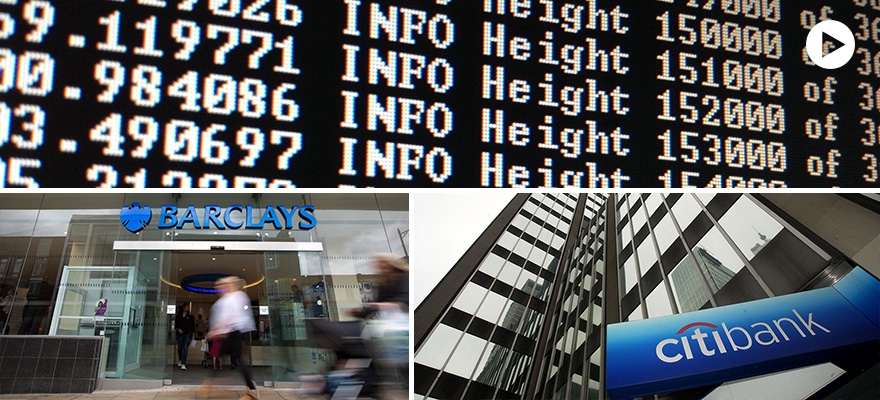
With many global banks relating their interest in blockchain technology, Finance Magnates summarizes which firms are doing what.
Bitcoin, the unregulated, volatile and controversial currency system has influenced coders, activists, entrepreneurs and investors alike. The Blockchain, which is the technology behind Bitcoin, is a public and decentralized online ledger that records all transactions performed with the currency.
This technology would not only change the way currency is transferred, but also the way that transfer is recorded, protected and managed. Although Bitcoin still suffers reputation issues due to its association with tax evasion and fraud, as well as unclear regulatory guidelines, the blockchain system has been drawing more positive attention. As a ledger system, banks in particular have become interested in the technology and see potential in a new opportunity to revolutionize currency and reporting of transactions.
With a slew of banks being connected to the blockchain, below is a summary of who is doing what, and which banks can be considered leaders in this field.
Barclays
In addition to exploring Ethereum with UBS, Barclays has signed a PoC with Safello, a payment platform that will allow donations to be sent to charities using bitcoin. This makes Barclays one of the few banks interested in using bitcoin itself as a currency. Safello has processed over $6 million in transactions and has over 20,000 registered users. The pact with Safello is part of its Fintech Accelerator Program that includes a number of cyrptocurrency startups. Barclays’ VP of Entrepreneurial Partnerships has released a corporate communications paper that indicates Barclays’ interest in using blockchain ledger technology in more physical applications, such as keeping track of the transactions of physical goods, like diamonds.
Wells Fargo
Wells Fargo, which has been known for constantly adapting to new innovations since the Pony Express, is rather cautious around Bitcoin. The bank hosted a summit for Bitcoin in the winter of 2013, and met with entrepreneurs looking to get backing for implementations of Bitcoin technology. The meetings were inconclusive. Wells Fargo is reluctant to invest in Bitcoin technology due to its controversy, particularly around the closing of the Mt Gox Bitcoin exchange and the arrest of a prominent bitcoin entrepreneur on money laundering charges.
JPMorgan & Chase
JPMorgan & Chase, currently the biggest bank in the United States by sales and assets, had patented a system back in 2013 to manage transactions that heavily resembles Bitcoin technology. However, no mention of Bitcoin or the blockchain was made in the patent.
UBS
UBS set up a blockchain research laboratory in London. The lab will occupy a dozen desks at the FinTech accelerator space known as Level39. UBS plans to look into how the blockchain can be used to finance transactions and the banking process, and additionally to analyze large amounts of data and evaluate risk. UBS has also joined Barclays and BNP Paribas in exploring Ethereum, which is a blockchain-based virtual machine used for user-based services. The CIO of UBS has stated that blockchain technology is expected to massively simplify banking.
Citigroup
Citibank’s Research and Development arm, the Citigroup Innovations Lab, has in fact created three blockchains and a currency to run through them, the Citicoin. The Citigroup Innovations Lab is planning to implement blockchain technology to allow transactions to be transparent, international, and nearly instantaneous. Kenneth Moore, Head of Citigroup Innovations Lab, reports that they are still at a pre-production level.
Goldman Sachs
Goldman Sachs participated in the $50 million dollars in blockchain startup Circle Financial. Circle is working on developing technology to send, receive, convert and store wealth. The investment is part of the bank's overall strategy to both develop in-house as well as invest in fintech startups as a potential source for future collaboration and integration of new technology. In a podcast this May, Lloyd Blankfein, CEO and Chairman of Goldman Sachs, stated, "When you ask me...what might this technology be doing to disrupt the industry or our company, it's a little bit of a funny sentence, because we are a technology company."
HSBC
HSBC has in fact closed the bank account of and severed ties with the first regulated Bitcoin fund. HSBC closed the account of Global Advisors Bitcoin Investment fund, run by Global Advisors hedge fund, citing risk of money laundering as its reason.
Santander
Santander, the world’s 10th biggest bank, has expressed interest in using the blockchain system to replace its outdated old system of record-keeping. However, Bitcoin itself is not as accepted as the blockchain technology by Santander. They have not disclosed which of its ventures or accelerators are focusing on blockchain. They have added that they feel that blockchain would only be useful if many banks adopt it, as it will allow better cooperation between banks. Santander's InnoVentures fund has stated that it may invest in blockchain related startups, but has yet to publicize a deal in the sector.
Bank of England
Last september the Bank of England stated that blockchain technology could have far-reaching potential. The UK government announced in March that it would invest £10 million supporting digital currency technology. The Bank of England then stated in July that central banks are looking into hybrid ledger systems through blockchain systems.
Deutsche Bank
Deutsche Bank formally announced they they were exploring commercial applications for ledger and blockchain technology in a response letter to the European Securities and Markets Authority (ESMA). This research is part of their 5 year “Strategy 2020” Plan. They plan to have innovation centers in Berlin, London and Silicon Valley.
Bitcoin, the unregulated, volatile and controversial currency system has influenced coders, activists, entrepreneurs and investors alike. The Blockchain, which is the technology behind Bitcoin, is a public and decentralized online ledger that records all transactions performed with the currency.
This technology would not only change the way currency is transferred, but also the way that transfer is recorded, protected and managed. Although Bitcoin still suffers reputation issues due to its association with tax evasion and fraud, as well as unclear regulatory guidelines, the blockchain system has been drawing more positive attention. As a ledger system, banks in particular have become interested in the technology and see potential in a new opportunity to revolutionize currency and reporting of transactions.
With a slew of banks being connected to the blockchain, below is a summary of who is doing what, and which banks can be considered leaders in this field.
Barclays
In addition to exploring Ethereum with UBS, Barclays has signed a PoC with Safello, a payment platform that will allow donations to be sent to charities using bitcoin. This makes Barclays one of the few banks interested in using bitcoin itself as a currency. Safello has processed over $6 million in transactions and has over 20,000 registered users. The pact with Safello is part of its Fintech Accelerator Program that includes a number of cyrptocurrency startups. Barclays’ VP of Entrepreneurial Partnerships has released a corporate communications paper that indicates Barclays’ interest in using blockchain ledger technology in more physical applications, such as keeping track of the transactions of physical goods, like diamonds.
Wells Fargo
Wells Fargo, which has been known for constantly adapting to new innovations since the Pony Express, is rather cautious around Bitcoin. The bank hosted a summit for Bitcoin in the winter of 2013, and met with entrepreneurs looking to get backing for implementations of Bitcoin technology. The meetings were inconclusive. Wells Fargo is reluctant to invest in Bitcoin technology due to its controversy, particularly around the closing of the Mt Gox Bitcoin exchange and the arrest of a prominent bitcoin entrepreneur on money laundering charges.
JPMorgan & Chase
JPMorgan & Chase, currently the biggest bank in the United States by sales and assets, had patented a system back in 2013 to manage transactions that heavily resembles Bitcoin technology. However, no mention of Bitcoin or the blockchain was made in the patent.
UBS
UBS set up a blockchain research laboratory in London. The lab will occupy a dozen desks at the FinTech accelerator space known as Level39. UBS plans to look into how the blockchain can be used to finance transactions and the banking process, and additionally to analyze large amounts of data and evaluate risk. UBS has also joined Barclays and BNP Paribas in exploring Ethereum, which is a blockchain-based virtual machine used for user-based services. The CIO of UBS has stated that blockchain technology is expected to massively simplify banking.
Citigroup
Citibank’s Research and Development arm, the Citigroup Innovations Lab, has in fact created three blockchains and a currency to run through them, the Citicoin. The Citigroup Innovations Lab is planning to implement blockchain technology to allow transactions to be transparent, international, and nearly instantaneous. Kenneth Moore, Head of Citigroup Innovations Lab, reports that they are still at a pre-production level.
Goldman Sachs
Goldman Sachs participated in the $50 million dollars in blockchain startup Circle Financial. Circle is working on developing technology to send, receive, convert and store wealth. The investment is part of the bank's overall strategy to both develop in-house as well as invest in fintech startups as a potential source for future collaboration and integration of new technology. In a podcast this May, Lloyd Blankfein, CEO and Chairman of Goldman Sachs, stated, "When you ask me...what might this technology be doing to disrupt the industry or our company, it's a little bit of a funny sentence, because we are a technology company."
HSBC
HSBC has in fact closed the bank account of and severed ties with the first regulated Bitcoin fund. HSBC closed the account of Global Advisors Bitcoin Investment fund, run by Global Advisors hedge fund, citing risk of money laundering as its reason.
Santander
Santander, the world’s 10th biggest bank, has expressed interest in using the blockchain system to replace its outdated old system of record-keeping. However, Bitcoin itself is not as accepted as the blockchain technology by Santander. They have not disclosed which of its ventures or accelerators are focusing on blockchain. They have added that they feel that blockchain would only be useful if many banks adopt it, as it will allow better cooperation between banks. Santander's InnoVentures fund has stated that it may invest in blockchain related startups, but has yet to publicize a deal in the sector.
Bank of England
Last september the Bank of England stated that blockchain technology could have far-reaching potential. The UK government announced in March that it would invest £10 million supporting digital currency technology. The Bank of England then stated in July that central banks are looking into hybrid ledger systems through blockchain systems.
Deutsche Bank
Deutsche Bank formally announced they they were exploring commercial applications for ledger and blockchain technology in a response letter to the European Securities and Markets Authority (ESMA). This research is part of their 5 year “Strategy 2020” Plan. They plan to have innovation centers in Berlin, London and Silicon Valley.
Crypto Built More Rails, but the Next Battle Is Over How Much Work a Dollar Can Do
FP Markets Winner Spotlight 🏆 | Global Broker of the Year 2025 #Trading #Broker #Innovation #Shorts
FP Markets Winner Spotlight 🏆 | Global Broker of the Year 2025 #Trading #Broker #Innovation #Shorts
FP Markets takes the spotlight as Global Broker of the Year 2025 at the Finance Magnates Awards.
Martin Stoilov, Head of Client Experience, shares that trust, innovation, and people played a key role in the company’s success, supported by a strong foundation of integrity and client-centricity.
Following this milestone, FP Markets continues to focus on growth, technology investment, and its core values of transparency and excellence.
👉 Be part of FM Awards 2026: https://awards.financemagnates.com/#nominate
FP Markets takes the spotlight as Global Broker of the Year 2025 at the Finance Magnates Awards.
Martin Stoilov, Head of Client Experience, shares that trust, innovation, and people played a key role in the company’s success, supported by a strong foundation of integrity and client-centricity.
Following this milestone, FP Markets continues to focus on growth, technology investment, and its core values of transparency and excellence.
👉 Be part of FM Awards 2026: https://awards.financemagnates.com/#nominate
In this video, we review @HolaPrimeMarketsOfficial, a multi-asset forex and CFDs broker offering different account types, trading platforms, and flexible trading conditions.
We cover the broker’s overall offering, including account options, trading environment, platforms like MT4 and MT5, and additional services such as managed accounts and fast withdrawals.
Watch the full video to see if Hola Prime Markets fits your trading needs.
📣 Stay up to date with the latest in finance and trading. Follow Finance Magnates for industry news, insights, and global event coverage.
Connect with us:
🔗 LinkedIn: /financemagnates
👍 Facebook: /financemagnates
📸 Instagram: https://www.instagram.com/financemagnates
🐦 X: https://x.com/financemagnates
🎥 TikTok: https://www.tiktok.com/tag/financemagnates
▶️ YouTube: /@financemagnates_official
#HolaPrime #ForexBroker #CFDTrading #FinanceMagnates #Trading #Forex #BrokerReview
In this video, we review @HolaPrimeMarketsOfficial, a multi-asset forex and CFDs broker offering different account types, trading platforms, and flexible trading conditions.
We cover the broker’s overall offering, including account options, trading environment, platforms like MT4 and MT5, and additional services such as managed accounts and fast withdrawals.
Watch the full video to see if Hola Prime Markets fits your trading needs.
📣 Stay up to date with the latest in finance and trading. Follow Finance Magnates for industry news, insights, and global event coverage.
Connect with us:
🔗 LinkedIn: /financemagnates
👍 Facebook: /financemagnates
📸 Instagram: https://www.instagram.com/financemagnates
🐦 X: https://x.com/financemagnates
🎥 TikTok: https://www.tiktok.com/tag/financemagnates
▶️ YouTube: /@financemagnates_official
#HolaPrime #ForexBroker #CFDTrading #FinanceMagnates #Trading #Forex #BrokerReview
Hola Prime Review: What You Need to Know | Full Breakdown by Finance Magnates
Hola Prime Review: What You Need to Know | Full Breakdown by Finance Magnates
In this video, we review @HolaPrime_Global, a proprietary trading firm offering evaluation programs and performance-based payouts in simulated market environments.
We cover how the challenge model works, including account types, profit splits (up to 95%), trading rules, and what it takes to reach a funded account. You’ll also learn about available platforms like MT4, MT5, cTrader, and more, along with insights into payouts, support, and trading conditions.
Watch the full video to see if Hola Prime fits your trading style.
📣 Stay up to date with the latest in finance and trading. Follow Finance Magnates for industry news, insights, and global event coverage.
Connect with us:
🔗 LinkedIn: /financemagnates
👍 Facebook: /financemagnates
📸 Instagram: https://www.instagram.com/financemagnates
🐦 X: https://x.com/financemagnates
🎥 TikTok: https://www.tiktok.com/tag/financemagnates
▶️ YouTube: /@financemagnates_official
#HolaPrime #PropFirm #Trading #FinanceMagnates #Forex #FuturesTrading #TradingReview #PropFirmReview
In this video, we review @HolaPrime_Global, a proprietary trading firm offering evaluation programs and performance-based payouts in simulated market environments.
We cover how the challenge model works, including account types, profit splits (up to 95%), trading rules, and what it takes to reach a funded account. You’ll also learn about available platforms like MT4, MT5, cTrader, and more, along with insights into payouts, support, and trading conditions.
Watch the full video to see if Hola Prime fits your trading style.
📣 Stay up to date with the latest in finance and trading. Follow Finance Magnates for industry news, insights, and global event coverage.
Connect with us:
🔗 LinkedIn: /financemagnates
👍 Facebook: /financemagnates
📸 Instagram: https://www.instagram.com/financemagnates
🐦 X: https://x.com/financemagnates
🎥 TikTok: https://www.tiktok.com/tag/financemagnates
▶️ YouTube: /@financemagnates_official
#HolaPrime #PropFirm #Trading #FinanceMagnates #Forex #FuturesTrading #TradingReview #PropFirmReview
Axi Winner Spotlight 🏆 | Global Most Innovative Broker 2025 #Innovation #Trading #Fintech #Broker
Axi Winner Spotlight 🏆 | Global Most Innovative Broker 2025 #Innovation #Trading #Fintech #Broker
Axi takes the spotlight at the Finance Magnates Awards, winning Global Most Innovative Broker 2025.
Olivia Xenofontos and Ivanna Openko share how the team will feel: proud, motivated, and ready to keep delivering.
They also describe the night as well-organized, focused, and enjoyable for all.
👉 Be part of FM Awards 2026.
Axi takes the spotlight at the Finance Magnates Awards, winning Global Most Innovative Broker 2025.
Olivia Xenofontos and Ivanna Openko share how the team will feel: proud, motivated, and ready to keep delivering.
They also describe the night as well-organized, focused, and enjoyable for all.
👉 Be part of FM Awards 2026.
Recognition that matters.
Built on transparency.
Driven by the industry.
The Finance Magnates Awards 2026.
Nominations are now open.
🔗 https://awards.financemagnates.com/?utm_source=SM&utm_medium=social&utm_campaign=recognition-matters
Recognition that matters.
Built on transparency.
Driven by the industry.
The Finance Magnates Awards 2026.
Nominations are now open.
🔗 https://awards.financemagnates.com/?utm_source=SM&utm_medium=social&utm_campaign=recognition-matters