The AI startup founder was certain it was the $8 million investment offer until scammers siphoned $50,000 out of his crypto wallet.
The scam operation was highly organized and involved a series of video calls with at least four scammers.
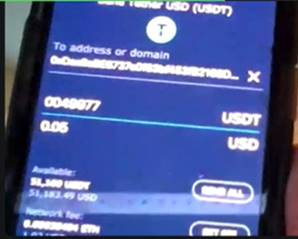
A screenshot from the video when alleged fake investor stole wallet assets from AI startup founder
An AI startup founder was approached by some investors, claiming to have ties with multiple billionaire families, with an offer of a massive investment. Although they were very convincing, the startup founder ended up losing about $50,000 only to realize that he was duped by an alleged organized scammer group.
According to Dr Daniel Veidlinger, a professor at California State University, Chico, and an investor in the unnamed AI startup, the scammers approached the startup’s founder with a $8 million investment proposal and then scammed the founder of about $50,000 in crypto.
The startup CEO coincidently recorded the Zoom call over which the scammers tricked him to send the cryptocurrencies. However, the startup and the founder remained anonymous.
Bait and Hook: A Sophisticated Scam
The scammers’ approach as fake investors was highly organised, Dr Veidlinger's account showed. At least four individuals were involved in the scheme.
In mid-June, one of the scammers, posing as an “International Relationship Manager” of an asset management company, contacted the startup’s CEO, expressing interest in investing in the company.
After further communication and the execution of a non-disclosure agreement (NDA), the initial scammer introduced the startup CEO to another scammer posing as the portfolio manager of the so-called asset management firm. This individual claimed to be a member of two billionaire families, one on his father’s side and the other on his mother’s side.
This second scammer held Zoom calls with the startup CEO and expressed interest in investing USD 5 million in the company. However, he abruptly withdrew from discussions, citing an unspecified “personal emergency.”
The first scammer then introduced a third individual, who presented himself as the CEO of the fake asset management company and claimed to be the “nephew” of a billionaire Swiss art dealer.
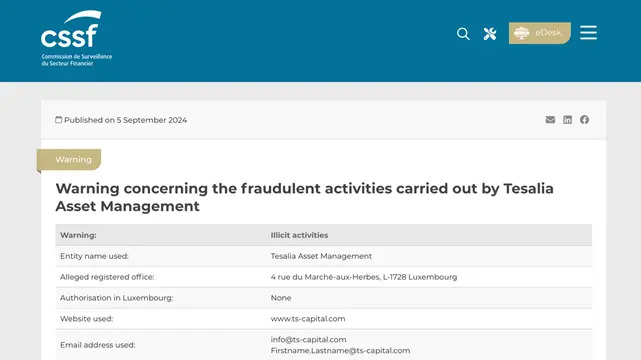
Notably, Luxembourg’s financial regulator had flagged the website of the purported asset management firm for fraudulent activity. However, the regulatory warning came after the people operating the website allegedly scammed the AI startup.
Luxembourg Financial Regulator's (CSSF's) Warning About Tesalia Asset Management
According to Dr Veidlinger, this third scammer continued to promise a USD 5 million investment in the AI startup. He claimed to hold EUR 5 million in cash that he intended to invest via a convertible debt instrument to avoid certain Swiss tax liabilities.
After negotiations over several Zoom calls, the fake investors increased their supposed investment to USD 8 million. The startup CEO even engaged a corporate law firm to draft an investment agreement, which the scammers approved.
A week after receiving the agreement, the scammer posing as the CEO claimed that his CFO had advised him to set aside USD 1.2 million—the total interest on the USD 8 million convertible debt investment—in a cryptocurrency wallet for three months for regulatory compliance. He further stated that this amount would be drawn from his initial investment, presenting this as part of the investment process.
Catch: Fiat Investment to Crypto Wallet Request
The scammers then moved to the “catch” stage, making an unusual request. They asked the startup CEO to create a cryptocurrency wallet and deposit at least USD 400,000 into it to prove the startup’s financial capability, Dr Veidlinger pointed out.
The startup CEO, unable to use company funds, offered to deposit USD 50,000 of his personal funds. At this stage, Dr Veidlinger, an investor in the startup, was asked to assist in setting up the wallet.
Dr Veidlinger initially created a Coinbase wallet, deposited approximately USD 51,000 in USDT, and shared the wallet details with the scammers. However, the scammers claimed the wallet could not be verified on the blockchain and asked for the funds to be transferred to a Trust Wallet address.
Although Dr Veidlinger complied and the funds were verified on Trust Wallet, the scammers then requested the funds be stored on Atomic Wallet. Despite finding this unusual, Dr Veidlinger agreed.
During a subsequent Zoom call, the scammer posing as the CEO introduced another individual, referred to as his nephew, who asked to verify the funds on Atomic Wallet. Although the funds had already been verified on Etherscan, the startup CEO complied.
The scammers then requested a live transaction during the Zoom call, as per Dr Veidlinger. They instructed the startup CEO to send USD 5 in USDT from his wallet to theirs, asking him to manually input the amount and scan a QR code. However, the QR code embedded the transaction amount, overriding the manually entered amount. As a result, the startup CEO inadvertently sent nearly USD 50,000 in USDT.
The scammers exploited a basic vulnerability in Atomic Wallet interface. Although the startup CEO manually entered USD 5, the QR code embedded a higher transfer amount, which appeared as USD 5 on the confirmation screen but sent USD 50,000 in reality.
The startup CEO confronted the scammers, who refused to return the funds and subsequently cut off all communication.
“The day of the theft—August 23, 2024—would have been the last time startup CEO's ever communicated with the scammers,” Dr Veidlinger told Finance Magnates. “They did their best to first deny the theft and then to pressure him (the startup founder) not to public with the details and recordings... When scammers realized they could not dissuade startup's CEO from going public, they broke off all contact.”
Dr Veidlinger confirmed to Finance Magnates that the stolen funds could not be recovered. The funds were moved in small amounts to over a dozen destinations and cashed out on two exchanges: Bitget and Binance. Dr Veidlinger, who managed the crypto wallet, and the startup also filed complaints with the law enforcements in North America and Europe, however, none of them receive any update on the actions. They also reported the interface vulnerability to Atomic Wallet, only to receive a scripted message from the support team.
“Even though the startup has engaged a law firm, it has been advised that probability of funds recovery is practically zero given multiple jurisdictions involved. Never mind the difficulty of bringing litigation against people whose identity and domicile we do not know,” Dr Veidlinger.
Finance Magnates reached out to Atomic Wallet to know about the vulnerability and also Tesalia Asset Management, the platform Dr Veidlinger accused to be operated by the scammers, but did not receive any reply from either.
An AI startup founder was approached by some investors, claiming to have ties with multiple billionaire families, with an offer of a massive investment. Although they were very convincing, the startup founder ended up losing about $50,000 only to realize that he was duped by an alleged organized scammer group.
According to Dr Daniel Veidlinger, a professor at California State University, Chico, and an investor in the unnamed AI startup, the scammers approached the startup’s founder with a $8 million investment proposal and then scammed the founder of about $50,000 in crypto.
The startup CEO coincidently recorded the Zoom call over which the scammers tricked him to send the cryptocurrencies. However, the startup and the founder remained anonymous.
Bait and Hook: A Sophisticated Scam
The scammers’ approach as fake investors was highly organised, Dr Veidlinger's account showed. At least four individuals were involved in the scheme.
In mid-June, one of the scammers, posing as an “International Relationship Manager” of an asset management company, contacted the startup’s CEO, expressing interest in investing in the company.
After further communication and the execution of a non-disclosure agreement (NDA), the initial scammer introduced the startup CEO to another scammer posing as the portfolio manager of the so-called asset management firm. This individual claimed to be a member of two billionaire families, one on his father’s side and the other on his mother’s side.
This second scammer held Zoom calls with the startup CEO and expressed interest in investing USD 5 million in the company. However, he abruptly withdrew from discussions, citing an unspecified “personal emergency.”
The first scammer then introduced a third individual, who presented himself as the CEO of the fake asset management company and claimed to be the “nephew” of a billionaire Swiss art dealer.
Notably, Luxembourg’s financial regulator had flagged the website of the purported asset management firm for fraudulent activity. However, the regulatory warning came after the people operating the website allegedly scammed the AI startup.
Luxembourg Financial Regulator's (CSSF's) Warning About Tesalia Asset Management
According to Dr Veidlinger, this third scammer continued to promise a USD 5 million investment in the AI startup. He claimed to hold EUR 5 million in cash that he intended to invest via a convertible debt instrument to avoid certain Swiss tax liabilities.
After negotiations over several Zoom calls, the fake investors increased their supposed investment to USD 8 million. The startup CEO even engaged a corporate law firm to draft an investment agreement, which the scammers approved.
A week after receiving the agreement, the scammer posing as the CEO claimed that his CFO had advised him to set aside USD 1.2 million—the total interest on the USD 8 million convertible debt investment—in a cryptocurrency wallet for three months for regulatory compliance. He further stated that this amount would be drawn from his initial investment, presenting this as part of the investment process.
Catch: Fiat Investment to Crypto Wallet Request
The scammers then moved to the “catch” stage, making an unusual request. They asked the startup CEO to create a cryptocurrency wallet and deposit at least USD 400,000 into it to prove the startup’s financial capability, Dr Veidlinger pointed out.
The startup CEO, unable to use company funds, offered to deposit USD 50,000 of his personal funds. At this stage, Dr Veidlinger, an investor in the startup, was asked to assist in setting up the wallet.
Dr Veidlinger initially created a Coinbase wallet, deposited approximately USD 51,000 in USDT, and shared the wallet details with the scammers. However, the scammers claimed the wallet could not be verified on the blockchain and asked for the funds to be transferred to a Trust Wallet address.
Although Dr Veidlinger complied and the funds were verified on Trust Wallet, the scammers then requested the funds be stored on Atomic Wallet. Despite finding this unusual, Dr Veidlinger agreed.
During a subsequent Zoom call, the scammer posing as the CEO introduced another individual, referred to as his nephew, who asked to verify the funds on Atomic Wallet. Although the funds had already been verified on Etherscan, the startup CEO complied.
The scammers then requested a live transaction during the Zoom call, as per Dr Veidlinger. They instructed the startup CEO to send USD 5 in USDT from his wallet to theirs, asking him to manually input the amount and scan a QR code. However, the QR code embedded the transaction amount, overriding the manually entered amount. As a result, the startup CEO inadvertently sent nearly USD 50,000 in USDT.
The scammers exploited a basic vulnerability in Atomic Wallet interface. Although the startup CEO manually entered USD 5, the QR code embedded a higher transfer amount, which appeared as USD 5 on the confirmation screen but sent USD 50,000 in reality.
The startup CEO confronted the scammers, who refused to return the funds and subsequently cut off all communication.
“The day of the theft—August 23, 2024—would have been the last time startup CEO's ever communicated with the scammers,” Dr Veidlinger told Finance Magnates. “They did their best to first deny the theft and then to pressure him (the startup founder) not to public with the details and recordings... When scammers realized they could not dissuade startup's CEO from going public, they broke off all contact.”
Dr Veidlinger confirmed to Finance Magnates that the stolen funds could not be recovered. The funds were moved in small amounts to over a dozen destinations and cashed out on two exchanges: Bitget and Binance. Dr Veidlinger, who managed the crypto wallet, and the startup also filed complaints with the law enforcements in North America and Europe, however, none of them receive any update on the actions. They also reported the interface vulnerability to Atomic Wallet, only to receive a scripted message from the support team.
“Even though the startup has engaged a law firm, it has been advised that probability of funds recovery is practically zero given multiple jurisdictions involved. Never mind the difficulty of bringing litigation against people whose identity and domicile we do not know,” Dr Veidlinger.
Finance Magnates reached out to Atomic Wallet to know about the vulnerability and also Tesalia Asset Management, the platform Dr Veidlinger accused to be operated by the scammers, but did not receive any reply from either.
Arnab Shome is an electronics engineer-turned-financial editor. He holds a Bachelor of Technology from the National Institute of Technology, Agartala. He entered the retail trading industry about a decade ago, covering the cryptocurrency market for Finance Magnates, and later expanded his coverage to include forex and CFDs as well.
His work at Finance Magnates includes C-level interviews, data-driven analysis, opinion pieces, and scoops of industry exclusives. He also contributes to Finance Magnates’ quarterly industry report.
Area of coverage:
1. CFD broker-related news
2. Industry-related Regulatory updates and developments
3. New retail trading trends
4. Prop trading industry updates
5. Executive interviews
Education:
Bachelor of Technology - National Institute of Technology, Agartala (India)
Kraken Steps Up Speed Race with New Equinix Colocation Service for Crypto Traders
Featured Videos
FP Markets Winner Spotlight 🏆 | Global Broker of the Year 2025 #Trading #Broker #Innovation #Shorts
FP Markets Winner Spotlight 🏆 | Global Broker of the Year 2025 #Trading #Broker #Innovation #Shorts
FP Markets Winner Spotlight 🏆 | Global Broker of the Year 2025 #Trading #Broker #Innovation #Shorts
FP Markets Winner Spotlight 🏆 | Global Broker of the Year 2025 #Trading #Broker #Innovation #Shorts
FP Markets takes the spotlight as Global Broker of the Year 2025 at the Finance Magnates Awards.
Martin Stoilov, Head of Client Experience, shares that trust, innovation, and people played a key role in the company’s success, supported by a strong foundation of integrity and client-centricity.
Following this milestone, FP Markets continues to focus on growth, technology investment, and its core values of transparency and excellence.
👉 Be part of FM Awards 2026: https://awards.financemagnates.com/#nominate
FP Markets takes the spotlight as Global Broker of the Year 2025 at the Finance Magnates Awards.
Martin Stoilov, Head of Client Experience, shares that trust, innovation, and people played a key role in the company’s success, supported by a strong foundation of integrity and client-centricity.
Following this milestone, FP Markets continues to focus on growth, technology investment, and its core values of transparency and excellence.
👉 Be part of FM Awards 2026: https://awards.financemagnates.com/#nominate
FP Markets takes the spotlight as Global Broker of the Year 2025 at the Finance Magnates Awards.
Martin Stoilov, Head of Client Experience, shares that trust, innovation, and people played a key role in the company’s success, supported by a strong foundation of integrity and client-centricity.
Following this milestone, FP Markets continues to focus on growth, technology investment, and its core values of transparency and excellence.
👉 Be part of FM Awards 2026: https://awards.financemagnates.com/#nominate
FP Markets takes the spotlight as Global Broker of the Year 2025 at the Finance Magnates Awards.
Martin Stoilov, Head of Client Experience, shares that trust, innovation, and people played a key role in the company’s success, supported by a strong foundation of integrity and client-centricity.
Following this milestone, FP Markets continues to focus on growth, technology investment, and its core values of transparency and excellence.
👉 Be part of FM Awards 2026: https://awards.financemagnates.com/#nominate
In this video, we review @HolaPrimeMarketsOfficial, a multi-asset forex and CFDs broker offering different account types, trading platforms, and flexible trading conditions.
We cover the broker’s overall offering, including account options, trading environment, platforms like MT4 and MT5, and additional services such as managed accounts and fast withdrawals.
Watch the full video to see if Hola Prime Markets fits your trading needs.
📣 Stay up to date with the latest in finance and trading. Follow Finance Magnates for industry news, insights, and global event coverage.
Connect with us:
🔗 LinkedIn: /financemagnates
👍 Facebook: /financemagnates
📸 Instagram: https://www.instagram.com/financemagnates
🐦 X: https://x.com/financemagnates
🎥 TikTok: https://www.tiktok.com/tag/financemagnates
▶️ YouTube: /@financemagnates_official
#HolaPrime #ForexBroker #CFDTrading #FinanceMagnates #Trading #Forex #BrokerReview
In this video, we review @HolaPrimeMarketsOfficial, a multi-asset forex and CFDs broker offering different account types, trading platforms, and flexible trading conditions.
We cover the broker’s overall offering, including account options, trading environment, platforms like MT4 and MT5, and additional services such as managed accounts and fast withdrawals.
Watch the full video to see if Hola Prime Markets fits your trading needs.
📣 Stay up to date with the latest in finance and trading. Follow Finance Magnates for industry news, insights, and global event coverage.
Connect with us:
🔗 LinkedIn: /financemagnates
👍 Facebook: /financemagnates
📸 Instagram: https://www.instagram.com/financemagnates
🐦 X: https://x.com/financemagnates
🎥 TikTok: https://www.tiktok.com/tag/financemagnates
▶️ YouTube: /@financemagnates_official
#HolaPrime #ForexBroker #CFDTrading #FinanceMagnates #Trading #Forex #BrokerReview
In this video, we review @HolaPrimeMarketsOfficial, a multi-asset forex and CFDs broker offering different account types, trading platforms, and flexible trading conditions.
We cover the broker’s overall offering, including account options, trading environment, platforms like MT4 and MT5, and additional services such as managed accounts and fast withdrawals.
Watch the full video to see if Hola Prime Markets fits your trading needs.
📣 Stay up to date with the latest in finance and trading. Follow Finance Magnates for industry news, insights, and global event coverage.
Connect with us:
🔗 LinkedIn: /financemagnates
👍 Facebook: /financemagnates
📸 Instagram: https://www.instagram.com/financemagnates
🐦 X: https://x.com/financemagnates
🎥 TikTok: https://www.tiktok.com/tag/financemagnates
▶️ YouTube: /@financemagnates_official
#HolaPrime #ForexBroker #CFDTrading #FinanceMagnates #Trading #Forex #BrokerReview
In this video, we review @HolaPrimeMarketsOfficial, a multi-asset forex and CFDs broker offering different account types, trading platforms, and flexible trading conditions.
We cover the broker’s overall offering, including account options, trading environment, platforms like MT4 and MT5, and additional services such as managed accounts and fast withdrawals.
Watch the full video to see if Hola Prime Markets fits your trading needs.
📣 Stay up to date with the latest in finance and trading. Follow Finance Magnates for industry news, insights, and global event coverage.
Connect with us:
🔗 LinkedIn: /financemagnates
👍 Facebook: /financemagnates
📸 Instagram: https://www.instagram.com/financemagnates
🐦 X: https://x.com/financemagnates
🎥 TikTok: https://www.tiktok.com/tag/financemagnates
▶️ YouTube: /@financemagnates_official
#HolaPrime #ForexBroker #CFDTrading #FinanceMagnates #Trading #Forex #BrokerReview
In this video, we review @HolaPrimeMarketsOfficial, a multi-asset forex and CFDs broker offering different account types, trading platforms, and flexible trading conditions.
We cover the broker’s overall offering, including account options, trading environment, platforms like MT4 and MT5, and additional services such as managed accounts and fast withdrawals.
Watch the full video to see if Hola Prime Markets fits your trading needs.
📣 Stay up to date with the latest in finance and trading. Follow Finance Magnates for industry news, insights, and global event coverage.
Connect with us:
🔗 LinkedIn: /financemagnates
👍 Facebook: /financemagnates
📸 Instagram: https://www.instagram.com/financemagnates
🐦 X: https://x.com/financemagnates
🎥 TikTok: https://www.tiktok.com/tag/financemagnates
▶️ YouTube: /@financemagnates_official
#HolaPrime #ForexBroker #CFDTrading #FinanceMagnates #Trading #Forex #BrokerReview
In this video, we review @HolaPrimeMarketsOfficial, a multi-asset forex and CFDs broker offering different account types, trading platforms, and flexible trading conditions.
We cover the broker’s overall offering, including account options, trading environment, platforms like MT4 and MT5, and additional services such as managed accounts and fast withdrawals.
Watch the full video to see if Hola Prime Markets fits your trading needs.
📣 Stay up to date with the latest in finance and trading. Follow Finance Magnates for industry news, insights, and global event coverage.
Connect with us:
🔗 LinkedIn: /financemagnates
👍 Facebook: /financemagnates
📸 Instagram: https://www.instagram.com/financemagnates
🐦 X: https://x.com/financemagnates
🎥 TikTok: https://www.tiktok.com/tag/financemagnates
▶️ YouTube: /@financemagnates_official
#HolaPrime #ForexBroker #CFDTrading #FinanceMagnates #Trading #Forex #BrokerReview
Hola Prime Review: What You Need to Know | Full Breakdown by Finance Magnates
Hola Prime Review: What You Need to Know | Full Breakdown by Finance Magnates
Hola Prime Review: What You Need to Know | Full Breakdown by Finance Magnates
Hola Prime Review: What You Need to Know | Full Breakdown by Finance Magnates
Hola Prime Review: What You Need to Know | Full Breakdown by Finance Magnates
Hola Prime Review: What You Need to Know | Full Breakdown by Finance Magnates
In this video, we review @HolaPrime_Global, a proprietary trading firm offering evaluation programs and performance-based payouts in simulated market environments.
We cover how the challenge model works, including account types, profit splits (up to 95%), trading rules, and what it takes to reach a funded account. You’ll also learn about available platforms like MT4, MT5, cTrader, and more, along with insights into payouts, support, and trading conditions.
Watch the full video to see if Hola Prime fits your trading style.
📣 Stay up to date with the latest in finance and trading. Follow Finance Magnates for industry news, insights, and global event coverage.
Connect with us:
🔗 LinkedIn: /financemagnates
👍 Facebook: /financemagnates
📸 Instagram: https://www.instagram.com/financemagnates
🐦 X: https://x.com/financemagnates
🎥 TikTok: https://www.tiktok.com/tag/financemagnates
▶️ YouTube: /@financemagnates_official
#HolaPrime #PropFirm #Trading #FinanceMagnates #Forex #FuturesTrading #TradingReview #PropFirmReview
In this video, we review @HolaPrime_Global, a proprietary trading firm offering evaluation programs and performance-based payouts in simulated market environments.
We cover how the challenge model works, including account types, profit splits (up to 95%), trading rules, and what it takes to reach a funded account. You’ll also learn about available platforms like MT4, MT5, cTrader, and more, along with insights into payouts, support, and trading conditions.
Watch the full video to see if Hola Prime fits your trading style.
📣 Stay up to date with the latest in finance and trading. Follow Finance Magnates for industry news, insights, and global event coverage.
Connect with us:
🔗 LinkedIn: /financemagnates
👍 Facebook: /financemagnates
📸 Instagram: https://www.instagram.com/financemagnates
🐦 X: https://x.com/financemagnates
🎥 TikTok: https://www.tiktok.com/tag/financemagnates
▶️ YouTube: /@financemagnates_official
#HolaPrime #PropFirm #Trading #FinanceMagnates #Forex #FuturesTrading #TradingReview #PropFirmReview
In this video, we review @HolaPrime_Global, a proprietary trading firm offering evaluation programs and performance-based payouts in simulated market environments.
We cover how the challenge model works, including account types, profit splits (up to 95%), trading rules, and what it takes to reach a funded account. You’ll also learn about available platforms like MT4, MT5, cTrader, and more, along with insights into payouts, support, and trading conditions.
Watch the full video to see if Hola Prime fits your trading style.
📣 Stay up to date with the latest in finance and trading. Follow Finance Magnates for industry news, insights, and global event coverage.
Connect with us:
🔗 LinkedIn: /financemagnates
👍 Facebook: /financemagnates
📸 Instagram: https://www.instagram.com/financemagnates
🐦 X: https://x.com/financemagnates
🎥 TikTok: https://www.tiktok.com/tag/financemagnates
▶️ YouTube: /@financemagnates_official
#HolaPrime #PropFirm #Trading #FinanceMagnates #Forex #FuturesTrading #TradingReview #PropFirmReview
In this video, we review @HolaPrime_Global, a proprietary trading firm offering evaluation programs and performance-based payouts in simulated market environments.
We cover how the challenge model works, including account types, profit splits (up to 95%), trading rules, and what it takes to reach a funded account. You’ll also learn about available platforms like MT4, MT5, cTrader, and more, along with insights into payouts, support, and trading conditions.
Watch the full video to see if Hola Prime fits your trading style.
📣 Stay up to date with the latest in finance and trading. Follow Finance Magnates for industry news, insights, and global event coverage.
Connect with us:
🔗 LinkedIn: /financemagnates
👍 Facebook: /financemagnates
📸 Instagram: https://www.instagram.com/financemagnates
🐦 X: https://x.com/financemagnates
🎥 TikTok: https://www.tiktok.com/tag/financemagnates
▶️ YouTube: /@financemagnates_official
#HolaPrime #PropFirm #Trading #FinanceMagnates #Forex #FuturesTrading #TradingReview #PropFirmReview
In this video, we review @HolaPrime_Global, a proprietary trading firm offering evaluation programs and performance-based payouts in simulated market environments.
We cover how the challenge model works, including account types, profit splits (up to 95%), trading rules, and what it takes to reach a funded account. You’ll also learn about available platforms like MT4, MT5, cTrader, and more, along with insights into payouts, support, and trading conditions.
Watch the full video to see if Hola Prime fits your trading style.
📣 Stay up to date with the latest in finance and trading. Follow Finance Magnates for industry news, insights, and global event coverage.
Connect with us:
🔗 LinkedIn: /financemagnates
👍 Facebook: /financemagnates
📸 Instagram: https://www.instagram.com/financemagnates
🐦 X: https://x.com/financemagnates
🎥 TikTok: https://www.tiktok.com/tag/financemagnates
▶️ YouTube: /@financemagnates_official
#HolaPrime #PropFirm #Trading #FinanceMagnates #Forex #FuturesTrading #TradingReview #PropFirmReview
In this video, we review @HolaPrime_Global, a proprietary trading firm offering evaluation programs and performance-based payouts in simulated market environments.
We cover how the challenge model works, including account types, profit splits (up to 95%), trading rules, and what it takes to reach a funded account. You’ll also learn about available platforms like MT4, MT5, cTrader, and more, along with insights into payouts, support, and trading conditions.
Watch the full video to see if Hola Prime fits your trading style.
📣 Stay up to date with the latest in finance and trading. Follow Finance Magnates for industry news, insights, and global event coverage.
Connect with us:
🔗 LinkedIn: /financemagnates
👍 Facebook: /financemagnates
📸 Instagram: https://www.instagram.com/financemagnates
🐦 X: https://x.com/financemagnates
🎥 TikTok: https://www.tiktok.com/tag/financemagnates
▶️ YouTube: /@financemagnates_official
#HolaPrime #PropFirm #Trading #FinanceMagnates #Forex #FuturesTrading #TradingReview #PropFirmReview
Axi Winner Spotlight 🏆 | Global Most Innovative Broker 2025 #Innovation #Trading #Fintech #Broker
Axi Winner Spotlight 🏆 | Global Most Innovative Broker 2025 #Innovation #Trading #Fintech #Broker
Axi Winner Spotlight 🏆 | Global Most Innovative Broker 2025 #Innovation #Trading #Fintech #Broker
Axi Winner Spotlight 🏆 | Global Most Innovative Broker 2025 #Innovation #Trading #Fintech #Broker
Axi Winner Spotlight 🏆 | Global Most Innovative Broker 2025 #Innovation #Trading #Fintech #Broker
Axi Winner Spotlight 🏆 | Global Most Innovative Broker 2025 #Innovation #Trading #Fintech #Broker
Axi takes the spotlight at the Finance Magnates Awards, winning Global Most Innovative Broker 2025.
Olivia Xenofontos and Ivanna Openko share how the team will feel: proud, motivated, and ready to keep delivering.
They also describe the night as well-organized, focused, and enjoyable for all.
👉 Be part of FM Awards 2026.
Axi takes the spotlight at the Finance Magnates Awards, winning Global Most Innovative Broker 2025.
Olivia Xenofontos and Ivanna Openko share how the team will feel: proud, motivated, and ready to keep delivering.
They also describe the night as well-organized, focused, and enjoyable for all.
👉 Be part of FM Awards 2026.
Axi takes the spotlight at the Finance Magnates Awards, winning Global Most Innovative Broker 2025.
Olivia Xenofontos and Ivanna Openko share how the team will feel: proud, motivated, and ready to keep delivering.
They also describe the night as well-organized, focused, and enjoyable for all.
👉 Be part of FM Awards 2026.
Axi takes the spotlight at the Finance Magnates Awards, winning Global Most Innovative Broker 2025.
Olivia Xenofontos and Ivanna Openko share how the team will feel: proud, motivated, and ready to keep delivering.
They also describe the night as well-organized, focused, and enjoyable for all.
👉 Be part of FM Awards 2026.
Axi takes the spotlight at the Finance Magnates Awards, winning Global Most Innovative Broker 2025.
Olivia Xenofontos and Ivanna Openko share how the team will feel: proud, motivated, and ready to keep delivering.
They also describe the night as well-organized, focused, and enjoyable for all.
👉 Be part of FM Awards 2026.
Axi takes the spotlight at the Finance Magnates Awards, winning Global Most Innovative Broker 2025.
Olivia Xenofontos and Ivanna Openko share how the team will feel: proud, motivated, and ready to keep delivering.
They also describe the night as well-organized, focused, and enjoyable for all.
👉 Be part of FM Awards 2026.
Recognition that matters.
Built on transparency.
Driven by the industry.
The Finance Magnates Awards 2026.
Nominations are now open.
🔗 https://awards.financemagnates.com/?utm_source=SM&utm_medium=social&utm_campaign=recognition-matters
Recognition that matters.
Built on transparency.
Driven by the industry.
The Finance Magnates Awards 2026.
Nominations are now open.
🔗 https://awards.financemagnates.com/?utm_source=SM&utm_medium=social&utm_campaign=recognition-matters
Recognition that matters.
Built on transparency.
Driven by the industry.
The Finance Magnates Awards 2026.
Nominations are now open.
🔗 https://awards.financemagnates.com/?utm_source=SM&utm_medium=social&utm_campaign=recognition-matters
Recognition that matters.
Built on transparency.
Driven by the industry.
The Finance Magnates Awards 2026.
Nominations are now open.
🔗 https://awards.financemagnates.com/?utm_source=SM&utm_medium=social&utm_campaign=recognition-matters
Recognition that matters.
Built on transparency.
Driven by the industry.
The Finance Magnates Awards 2026.
Nominations are now open.
🔗 https://awards.financemagnates.com/?utm_source=SM&utm_medium=social&utm_campaign=recognition-matters
Recognition that matters.
Built on transparency.
Driven by the industry.
The Finance Magnates Awards 2026.
Nominations are now open.
🔗 https://awards.financemagnates.com/?utm_source=SM&utm_medium=social&utm_campaign=recognition-matters