
>
#RIPTwitter: Can You Still Benefit from the Stock's Volatility?
Wednesday,17/02/2016|14:13GMTby
Vassil Nikolov
One overarching issue with Twitter over the past few years has been its reluctance to invest in mega-product development initiatives.
Bloomberg
Despite the persistent struggles, Twitter has made it clear that a change in the way users view content on the site was necessary. Taking some notes from the O:FB strategy by Facebook, Twitter has now decided to reverse the chronological order it uses to an algorithmic one that will be used to sort content based on an individual’s interest and relevance.
Whereas this makes sense in a theoretical aspect, outraged faithful from Twitter started the #RIPTwitter movement. As a result of that, CEO of Twitter Jack Dorsey reassured users that Twitter is always listening to user feedback, but it still went ahead with its rollout of the algorithmic timeline early today.
The major problem with Twitter is reluctance to invest in mega-product development initiatives. As a media company Twitter is expected to grow its user base consistently by offering fresh and more innovative product changes. Recently, Twitter launched “Moments”, a knockoff of “Stories” by Snapchat, that wound up many irking users and investors. Twitter is now attempting to use the algorithmic timeline that has received a huge backlash already. If Twitter does not invest and resolve into a social media company like Facebook, financial markets may be unkind to the company in terms of share prices.
As a matter of fact, Twitter retains advertising as its primary source of revenue. For a long time, the company has not diversified its revenue streams through strategic partnerships, acquisitions, or diversification of revenue streams. On the contrary, Facebook has improved its revenue base by acquiring WhatsApp, Instagram, and Oculus Rift, which have driven user engagement and spurred Facebook to higher levels of growth.
Currently, Twitter has not made any significant acquisitions as successful as those of Facebook. However, if the advertising element takes a more creative and innovative approach, Twitter may become even more valuable as a company.
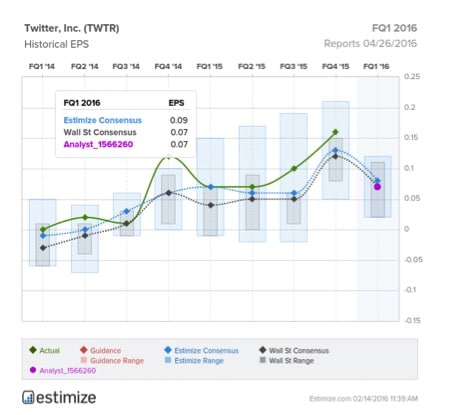
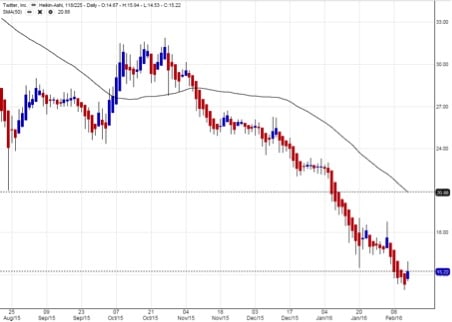
Data for adjusted earnings that came in was slightly better than expected through the earnings report on Wednesday because investors were more concerned about the ability of Twitter to attract more users. Just like the previous quarter, Twitter still reported 320 million active users. This flat growth rate sparked an initial sell-off in the company’s stock that was partially reversed even as the conference calls continued.
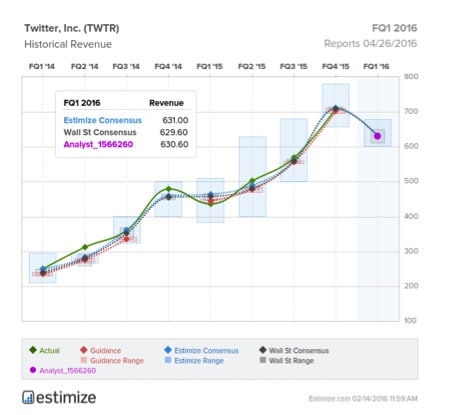
Twitter has failed to meet the revenue expectations that seemed quite possible after a myriad of other advertising companies such as Yahoo, Facebook, and Google beat their revenue expectations in last year’s fourth quarter. The $710 million revenue reported by the company was on target with the consensus revenue but the quarter’s revenue outlook was much lower than expected.
One compelling reason to believe in Twitter is that it is quite valuable as a tool for communication. Breaking news is often released through Twitter first, and prominent personalities like Donald Trump and Kim Kardashian use the network just the same way people used personal blogs about 10 years ago. Even though there are a number of challenges to the platform’s monetization, there is no doubt as to whether Twitter is a valuable source of timely information. The timeliness and convenience in receiving news is the leading value proposition for the company to its advertisers, investors, and consumers.
Despite the persistent struggles, Twitter has made it clear that a change in the way users view content on the site was necessary. Taking some notes from the O:FB strategy by Facebook, Twitter has now decided to reverse the chronological order it uses to an algorithmic one that will be used to sort content based on an individual’s interest and relevance.
Whereas this makes sense in a theoretical aspect, outraged faithful from Twitter started the #RIPTwitter movement. As a result of that, CEO of Twitter Jack Dorsey reassured users that Twitter is always listening to user feedback, but it still went ahead with its rollout of the algorithmic timeline early today.
The major problem with Twitter is reluctance to invest in mega-product development initiatives. As a media company Twitter is expected to grow its user base consistently by offering fresh and more innovative product changes. Recently, Twitter launched “Moments”, a knockoff of “Stories” by Snapchat, that wound up many irking users and investors. Twitter is now attempting to use the algorithmic timeline that has received a huge backlash already. If Twitter does not invest and resolve into a social media company like Facebook, financial markets may be unkind to the company in terms of share prices.
As a matter of fact, Twitter retains advertising as its primary source of revenue. For a long time, the company has not diversified its revenue streams through strategic partnerships, acquisitions, or diversification of revenue streams. On the contrary, Facebook has improved its revenue base by acquiring WhatsApp, Instagram, and Oculus Rift, which have driven user engagement and spurred Facebook to higher levels of growth.
Currently, Twitter has not made any significant acquisitions as successful as those of Facebook. However, if the advertising element takes a more creative and innovative approach, Twitter may become even more valuable as a company.
Data for adjusted earnings that came in was slightly better than expected through the earnings report on Wednesday because investors were more concerned about the ability of Twitter to attract more users. Just like the previous quarter, Twitter still reported 320 million active users. This flat growth rate sparked an initial sell-off in the company’s stock that was partially reversed even as the conference calls continued.
Twitter has failed to meet the revenue expectations that seemed quite possible after a myriad of other advertising companies such as Yahoo, Facebook, and Google beat their revenue expectations in last year’s fourth quarter. The $710 million revenue reported by the company was on target with the consensus revenue but the quarter’s revenue outlook was much lower than expected.
One compelling reason to believe in Twitter is that it is quite valuable as a tool for communication. Breaking news is often released through Twitter first, and prominent personalities like Donald Trump and Kim Kardashian use the network just the same way people used personal blogs about 10 years ago. Even though there are a number of challenges to the platform’s monetization, there is no doubt as to whether Twitter is a valuable source of timely information. The timeliness and convenience in receiving news is the leading value proposition for the company to its advertisers, investors, and consumers.
Transformative, Predictive, Automated - 2024's RegTech AI Revolution
Featured Videos
Precious Insights: APAC's Bullion Market amid Record Volatility
The precious metals rally has challenged how brokers and LPs think about hedging, pricing, and physical delivery. But with regional banks eyeing physical gold retail and bullion brokers across Southeast Asia harnessing new tech, volatility is not only in 'safe havens'.
This session gathers practitioners from across the bullion ecosystem to unpack what the rally means on the ground in APAC.
Attendees will walk away with:
Insight into the physical market dynamics driving retail demand across Southeast Asia, from central bank buying to store-of-value purchases
Understanding of Singapore's distinct role as APAC's bullion gateway, and competition near and far
Perspective on operational challenges unique to APAC: kilogram pricing, local delivery, and bridging CFD and physical bullion infrastructure
The precious metals rally has challenged how brokers and LPs think about hedging, pricing, and physical delivery. But with regional banks eyeing physical gold retail and bullion brokers across Southeast Asia harnessing new tech, volatility is not only in 'safe havens'.
This session gathers practitioners from across the bullion ecosystem to unpack what the rally means on the ground in APAC.
Attendees will walk away with:
Insight into the physical market dynamics driving retail demand across Southeast Asia, from central bank buying to store-of-value purchases
Understanding of Singapore's distinct role as APAC's bullion gateway, and competition near and far
Perspective on operational challenges unique to APAC: kilogram pricing, local delivery, and bridging CFD and physical bullion infrastructure
The precious metals rally has challenged how brokers and LPs think about hedging, pricing, and physical delivery. But with regional banks eyeing physical gold retail and bullion brokers across Southeast Asia harnessing new tech, volatility is not only in 'safe havens'.
This session gathers practitioners from across the bullion ecosystem to unpack what the rally means on the ground in APAC.
Attendees will walk away with:
Insight into the physical market dynamics driving retail demand across Southeast Asia, from central bank buying to store-of-value purchases
Understanding of Singapore's distinct role as APAC's bullion gateway, and competition near and far
Perspective on operational challenges unique to APAC: kilogram pricing, local delivery, and bridging CFD and physical bullion infrastructure
The precious metals rally has challenged how brokers and LPs think about hedging, pricing, and physical delivery. But with regional banks eyeing physical gold retail and bullion brokers across Southeast Asia harnessing new tech, volatility is not only in 'safe havens'.
This session gathers practitioners from across the bullion ecosystem to unpack what the rally means on the ground in APAC.
Attendees will walk away with:
Insight into the physical market dynamics driving retail demand across Southeast Asia, from central bank buying to store-of-value purchases
Understanding of Singapore's distinct role as APAC's bullion gateway, and competition near and far
Perspective on operational challenges unique to APAC: kilogram pricing, local delivery, and bridging CFD and physical bullion infrastructure
License to Fill: Market Liquidity amid Global Turmoil
Asian markets bear unique characteristics, from connectivity to asset preference. The Singapore Summit will connect global executives and local experts across the liquidity chain to discuss volatility fluctuations, diversification vs over-reliance on single assets, and the role of trust and liquidity relationships in an increasingly automated sphere.
Regional Focus: Thailand, Vietnam
Bangkok is consolidating as Southeast Asia's broker hub for CLMV access, while Vietnam's trading volumes have made it harder to ignore from any regional headquarters. Most brokers know both exist. Fewer have tested what operating there actually requires.
This session gathers practitioners with on-the-ground experience in both markets to examine what it takes to build and run operations in Thailand and Vietnam.
Attendees will walk away with:
A clear view of setup requirements in both markets: entity structures, timelines, and what first-time operators tend to get wrong
Understanding of the offshore broker model and how compliant operators work within domestic restrictions in each jurisdiction
Insight into talent acquisition, client onboarding, and distribution in markets where language, culture, and acquisition channels don't follow standard APAC assumptions
Perspective on adjacent Southeast Asian markets worth monitoring for the next regional move
Bangkok is consolidating as Southeast Asia's broker hub for CLMV access, while Vietnam's trading volumes have made it harder to ignore from any regional headquarters. Most brokers know both exist. Fewer have tested what operating there actually requires.
This session gathers practitioners with on-the-ground experience in both markets to examine what it takes to build and run operations in Thailand and Vietnam.
Attendees will walk away with:
A clear view of setup requirements in both markets: entity structures, timelines, and what first-time operators tend to get wrong
Understanding of the offshore broker model and how compliant operators work within domestic restrictions in each jurisdiction
Insight into talent acquisition, client onboarding, and distribution in markets where language, culture, and acquisition channels don't follow standard APAC assumptions
Perspective on adjacent Southeast Asian markets worth monitoring for the next regional move
Bangkok is consolidating as Southeast Asia's broker hub for CLMV access, while Vietnam's trading volumes have made it harder to ignore from any regional headquarters. Most brokers know both exist. Fewer have tested what operating there actually requires.
This session gathers practitioners with on-the-ground experience in both markets to examine what it takes to build and run operations in Thailand and Vietnam.
Attendees will walk away with:
A clear view of setup requirements in both markets: entity structures, timelines, and what first-time operators tend to get wrong
Understanding of the offshore broker model and how compliant operators work within domestic restrictions in each jurisdiction
Insight into talent acquisition, client onboarding, and distribution in markets where language, culture, and acquisition channels don't follow standard APAC assumptions
Perspective on adjacent Southeast Asian markets worth monitoring for the next regional move
Bangkok is consolidating as Southeast Asia's broker hub for CLMV access, while Vietnam's trading volumes have made it harder to ignore from any regional headquarters. Most brokers know both exist. Fewer have tested what operating there actually requires.
This session gathers practitioners with on-the-ground experience in both markets to examine what it takes to build and run operations in Thailand and Vietnam.
Attendees will walk away with:
A clear view of setup requirements in both markets: entity structures, timelines, and what first-time operators tend to get wrong
Understanding of the offshore broker model and how compliant operators work within domestic restrictions in each jurisdiction
Insight into talent acquisition, client onboarding, and distribution in markets where language, culture, and acquisition channels don't follow standard APAC assumptions
Perspective on adjacent Southeast Asian markets worth monitoring for the next regional move
Bangkok is consolidating as Southeast Asia's broker hub for CLMV access, while Vietnam's trading volumes have made it harder to ignore from any regional headquarters. Most brokers know both exist. Fewer have tested what operating there actually requires.
This session gathers practitioners with on-the-ground experience in both markets to examine what it takes to build and run operations in Thailand and Vietnam.
Attendees will walk away with:
A clear view of setup requirements in both markets: entity structures, timelines, and what first-time operators tend to get wrong
Understanding of the offshore broker model and how compliant operators work within domestic restrictions in each jurisdiction
Insight into talent acquisition, client onboarding, and distribution in markets where language, culture, and acquisition channels don't follow standard APAC assumptions
Perspective on adjacent Southeast Asian markets worth monitoring for the next regional move
Bangkok is consolidating as Southeast Asia's broker hub for CLMV access, while Vietnam's trading volumes have made it harder to ignore from any regional headquarters. Most brokers know both exist. Fewer have tested what operating there actually requires.
This session gathers practitioners with on-the-ground experience in both markets to examine what it takes to build and run operations in Thailand and Vietnam.
Attendees will walk away with:
A clear view of setup requirements in both markets: entity structures, timelines, and what first-time operators tend to get wrong
Understanding of the offshore broker model and how compliant operators work within domestic restrictions in each jurisdiction
Insight into talent acquisition, client onboarding, and distribution in markets where language, culture, and acquisition channels don't follow standard APAC assumptions
Perspective on adjacent Southeast Asian markets worth monitoring for the next regional move
Join The Club: What Premium Clients Want
High-net-worth traders account for an outsized portion of revenues for various retail brokers.
This session will gather heads of premium, acquisition, and product experts to reveal how they build their client base in Asia.
Attendees will walk away with:
Understanding of how brokers view premium clients (beyond deposit size).
Insight into which services, products, and benefits increase trust and LTV.
Examples of offerings that scale without inflating cost or operational burden.
Lessons from leading brokers on growing premium segments and what’s next.
High-net-worth traders account for an outsized portion of revenues for various retail brokers.
This session will gather heads of premium, acquisition, and product experts to reveal how they build their client base in Asia.
Attendees will walk away with:
Understanding of how brokers view premium clients (beyond deposit size).
Insight into which services, products, and benefits increase trust and LTV.
Examples of offerings that scale without inflating cost or operational burden.
Lessons from leading brokers on growing premium segments and what’s next.
High-net-worth traders account for an outsized portion of revenues for various retail brokers.
This session will gather heads of premium, acquisition, and product experts to reveal how they build their client base in Asia.
Attendees will walk away with:
Understanding of how brokers view premium clients (beyond deposit size).
Insight into which services, products, and benefits increase trust and LTV.
Examples of offerings that scale without inflating cost or operational burden.
Lessons from leading brokers on growing premium segments and what’s next.
High-net-worth traders account for an outsized portion of revenues for various retail brokers.
This session will gather heads of premium, acquisition, and product experts to reveal how they build their client base in Asia.
Attendees will walk away with:
Understanding of how brokers view premium clients (beyond deposit size).
Insight into which services, products, and benefits increase trust and LTV.
Examples of offerings that scale without inflating cost or operational burden.
Lessons from leading brokers on growing premium segments and what’s next.
High-net-worth traders account for an outsized portion of revenues for various retail brokers.
This session will gather heads of premium, acquisition, and product experts to reveal how they build their client base in Asia.
Attendees will walk away with:
Understanding of how brokers view premium clients (beyond deposit size).
Insight into which services, products, and benefits increase trust and LTV.
Examples of offerings that scale without inflating cost or operational burden.
Lessons from leading brokers on growing premium segments and what’s next.
High-net-worth traders account for an outsized portion of revenues for various retail brokers.
This session will gather heads of premium, acquisition, and product experts to reveal how they build their client base in Asia.
Attendees will walk away with:
Understanding of how brokers view premium clients (beyond deposit size).
Insight into which services, products, and benefits increase trust and LTV.
Examples of offerings that scale without inflating cost or operational burden.
Lessons from leading brokers on growing premium segments and what’s next.
Buying The Deep: Digital Asset Adoption in APAC and Beyond
The persisting price drops test the industry's commitment to crypto adoption. While on-chain innovation is making headway across market mechanics, from stablecoins to tokenization, investors remains cautious.
This session brings together market structure experts and institutional investors to explore how a prolonged bear market affects their long-term strategy, and where the opportunities lie ahead of the next cycle.
Attendees will walk away with:
First-hand account of the bear market's impact on various industry players
Understanding of what custody, connectivity, and settlement gaps still hamper growth in APAC
Insight into how client mandates and operational readiness are shaping who moves and who waits
Perspective on what institutional investors need to move toward actual digital asset capital deployment
The persisting price drops test the industry's commitment to crypto adoption. While on-chain innovation is making headway across market mechanics, from stablecoins to tokenization, investors remains cautious.
This session brings together market structure experts and institutional investors to explore how a prolonged bear market affects their long-term strategy, and where the opportunities lie ahead of the next cycle.
Attendees will walk away with:
First-hand account of the bear market's impact on various industry players
Understanding of what custody, connectivity, and settlement gaps still hamper growth in APAC
Insight into how client mandates and operational readiness are shaping who moves and who waits
Perspective on what institutional investors need to move toward actual digital asset capital deployment
The persisting price drops test the industry's commitment to crypto adoption. While on-chain innovation is making headway across market mechanics, from stablecoins to tokenization, investors remains cautious.
This session brings together market structure experts and institutional investors to explore how a prolonged bear market affects their long-term strategy, and where the opportunities lie ahead of the next cycle.
Attendees will walk away with:
First-hand account of the bear market's impact on various industry players
Understanding of what custody, connectivity, and settlement gaps still hamper growth in APAC
Insight into how client mandates and operational readiness are shaping who moves and who waits
Perspective on what institutional investors need to move toward actual digital asset capital deployment
The persisting price drops test the industry's commitment to crypto adoption. While on-chain innovation is making headway across market mechanics, from stablecoins to tokenization, investors remains cautious.
This session brings together market structure experts and institutional investors to explore how a prolonged bear market affects their long-term strategy, and where the opportunities lie ahead of the next cycle.
Attendees will walk away with:
First-hand account of the bear market's impact on various industry players
Understanding of what custody, connectivity, and settlement gaps still hamper growth in APAC
Insight into how client mandates and operational readiness are shaping who moves and who waits
Perspective on what institutional investors need to move toward actual digital asset capital deployment
The persisting price drops test the industry's commitment to crypto adoption. While on-chain innovation is making headway across market mechanics, from stablecoins to tokenization, investors remains cautious.
This session brings together market structure experts and institutional investors to explore how a prolonged bear market affects their long-term strategy, and where the opportunities lie ahead of the next cycle.
Attendees will walk away with:
First-hand account of the bear market's impact on various industry players
Understanding of what custody, connectivity, and settlement gaps still hamper growth in APAC
Insight into how client mandates and operational readiness are shaping who moves and who waits
Perspective on what institutional investors need to move toward actual digital asset capital deployment
The persisting price drops test the industry's commitment to crypto adoption. While on-chain innovation is making headway across market mechanics, from stablecoins to tokenization, investors remains cautious.
This session brings together market structure experts and institutional investors to explore how a prolonged bear market affects their long-term strategy, and where the opportunities lie ahead of the next cycle.
Attendees will walk away with:
First-hand account of the bear market's impact on various industry players
Understanding of what custody, connectivity, and settlement gaps still hamper growth in APAC
Insight into how client mandates and operational readiness are shaping who moves and who waits
Perspective on what institutional investors need to move toward actual digital asset capital deployment