With the settlement date approaching for June WTI futures contracts, will we see negative prices again?
FM
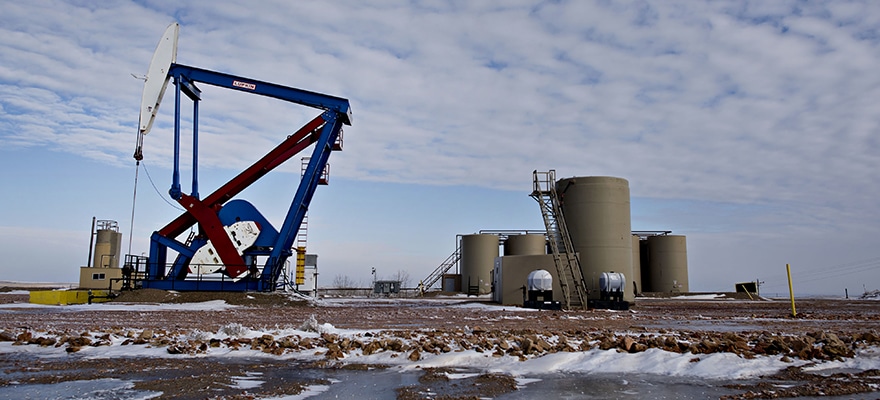
April was a historic month for the trading markets, with the price of oil going negative for the first time in history for not one, but two days in a row. Although the price has since recovered, the same factors that led to April's unprecedented price movement remain in place, which has many people wondering - will history repeat itself?
As Finance Magnates previously analyzed, May WTI futures contracts went into negative territory as the lockdown measures adopted by the coronavirus pandemic significantly reduced the demand for oil, resulting in much higher supply than demand.
With the settlement of the June WTI futures contract set for the 19th of May 2020, the situation has not improved - lockdown measures are still in place, and the demand for oil is still much lower than normal, so should we be preparing for more negative oil prices?
Natallia Hunik, Chief Revenue Officer at Advanced Markets Group
Speaking to Finance Magnates, Natallia Hunik, the Chief Revenue Officer of Advanced Markets, explained that although she can't predict the future, fundamentally, there are still risks of the US oil price going negative.
"While we have seen a short-term oil price rebound this week, driven by stronger Chinese exports and OPEC production cuts, the storage issue is not going away unless we miraculously return to pre-covid19 levels of demand," Hunik said.
"The June expiry is coming up mid-May, but it does look like all the excesses we saw on the downside in oil were firstly due to expiry and it being physically delivered. ETFs imploded and had to roll to second, third and fourth months and it may be that bust is now behind us."
Risks still remain for oil
However, as pointed out by Hunik, it is unlikely that even with the production cuts, oil demand is unlikely to reach 10 million barrels a day straight away, especially as oil tankers continue to overflow around the world. Therefore, storage is likely to remain an issue for the next few months, so although we might not see a real problem in May - it could happen in a couple of months, as oil is on the road to imbalance.
"There are certainly risks that can lead to the structural breaks in the futures markets. No one knows what will really happen for sure, but the risk is definitely there," Hunik continued.
Charalambos Pissouros, Senior Market Analyst at JFD Group
Adding to this, Charalambos Pissouros, the Senior Market Analyst at JFD Group, told Finance Magnates: "Although governments around the globe have eased some restrictions, we are not back to the pre-virus levels. Some measures are still intact, and supply still at high levels. Just for the record, US crude inventories were up for a 15th straight week last week. Thus, we cannot rule out another dive below zero, and the reasons are the same as with last month's tumble."
Oil now has more support
Conversely, Raff Cioffi, the Chief Dealer at Squared Financial, told Finance Magnates that the company doesn't expect that oil prices will go negative again, as the commodity now has more support.
Raff Cioffi, the Chief Dealer at Squared Financial
"Three factors are now supporting oil prices, the gradual recovery of markets as economies come out of lockdown, the production cuts through OPEC + and the reduction of supply through the closing of rigs. These factors have allowed oil to find a base around US$21 so we do not expect the June contracts to turn negative," Cioffi outlined.
"Going forward, and for the oil price to continue to rise we will need to see how quickly economies recover and hope that we don't have a phase 2 of Covid-19. We suspect demand will take a while to get back to levels before the virus however, some demand is better than none. Even though we don't think we will ever see negative rates on oil again there will be but dips lower driven by the overwhelming glut and storage issues."
If, then when?
If oil prices could go negative, when would be the most likely time for them to do so? In April, the WTI May futures contract went negative on Monday, the 20th of April, which was the day before its settlement date, and stayed negative on the settlement date (21st of April). This month, the settlement date is set for the 19th of May 2020 - so should we be watching out for price movements on the 18th and 19th of May?
"The anomaly that happened in April was around the settlement date, and if it were to happen for June contract then it's likely to follow the same pattern," Hunik highlighted. "90% of contracts traded on oil are paper only, there is no intention of delivery. However, with excess oil supply, we may see another phenomenon of oil producers selling into the futures markets trying to offset that extra capacity. That may exacerbate the delivery problem as longs looking to get out and people who own it don't intend to take a delivery."
When asked if oil prices were to go negative, would it be around the settlement date, Pissouros was in the same position as Hunik: "Most probably yes. As the June contracts get closer to expiry, many holders may decide to get rid of them in order to avoid delivery and thus, the extra storage costs. They may be, once again, willing to pay if they can get rid of the contracts for less money than the storage cost."
Will time heal all wounds?
If one of the main contributors to the drop in oil prices was the lower demand as a result of the COVID-19 lockdown measures, as time goes on and people are able to gradually resume normal life, it could be assumed that the risk of negative oil prices would become less and less.
However, Hunik of Advanced Markets pointed out that there are more factors at play at the moment that will keep oil prices volatile and unpredictable and that supply issues will exist for some time, as it may take months, or even until next year until the global economy returns to full capacity.
"The US oil industry is at the existential threat as US oil producers can't drastically reduce production, it's a bit binary due to setup and technology limitations where production can only be reduced to around 60% of maximum capacity without risking the facility and safety," she said.
"The US government has already voiced their intentions to rescue the oil industry, but we don't know how many companies will need a bailout and what the extent of that bailout would be."
However, Hunik also highlighted that if we are about to enter into a depression, oil prices may hold strong as they did during the 2008 crisis, after the initial sell-off and that recent oil moves were technical corrections.
Caution is still needed
When asked the same question - as the months go by, does the risk of negative oil prices lessen, Pissouros of JFD Group commented: "Again yes. Now we are in a countdown mode to return to our normal lives. Scaling back the "stay at home" measures also means that demand for oil could slowly increase, which would be supportive of the black liquid.
"This means lower chances for negative prices as times goes by. However, a level of cautiousness is still needed. If the restrictive measures are lifted too early, the virus may start spreading at an exponential pace again, which could take us back to square one, meaning strict travel bans and thereby diminishing demand for oil."
What are brokers doing to prepare?
When negative prices first went negative, a lot of brokers reacted by closing positions on behalf of their clients or took other measures to try and limit the losses. As Finance Magnates recently reported, since then, a number of brokers have put in emergency measures to prepare for further negative prices.
"If we look at the retail sentiment, unfortunately there is a lot of "buy high, sell low" kind of activity. Plunging oil prices in April prove again how dangerous both the markets, and investor behavior can be," Hunik added.
April was a historic month for the trading markets, with the price of oil going negative for the first time in history for not one, but two days in a row. Although the price has since recovered, the same factors that led to April's unprecedented price movement remain in place, which has many people wondering - will history repeat itself?
As Finance Magnates previously analyzed, May WTI futures contracts went into negative territory as the lockdown measures adopted by the coronavirus pandemic significantly reduced the demand for oil, resulting in much higher supply than demand.
With the settlement of the June WTI futures contract set for the 19th of May 2020, the situation has not improved - lockdown measures are still in place, and the demand for oil is still much lower than normal, so should we be preparing for more negative oil prices?
Natallia Hunik, Chief Revenue Officer at Advanced Markets Group
Speaking to Finance Magnates, Natallia Hunik, the Chief Revenue Officer of Advanced Markets, explained that although she can't predict the future, fundamentally, there are still risks of the US oil price going negative.
"While we have seen a short-term oil price rebound this week, driven by stronger Chinese exports and OPEC production cuts, the storage issue is not going away unless we miraculously return to pre-covid19 levels of demand," Hunik said.
"The June expiry is coming up mid-May, but it does look like all the excesses we saw on the downside in oil were firstly due to expiry and it being physically delivered. ETFs imploded and had to roll to second, third and fourth months and it may be that bust is now behind us."
Risks still remain for oil
However, as pointed out by Hunik, it is unlikely that even with the production cuts, oil demand is unlikely to reach 10 million barrels a day straight away, especially as oil tankers continue to overflow around the world. Therefore, storage is likely to remain an issue for the next few months, so although we might not see a real problem in May - it could happen in a couple of months, as oil is on the road to imbalance.
"There are certainly risks that can lead to the structural breaks in the futures markets. No one knows what will really happen for sure, but the risk is definitely there," Hunik continued.
Charalambos Pissouros, Senior Market Analyst at JFD Group
Adding to this, Charalambos Pissouros, the Senior Market Analyst at JFD Group, told Finance Magnates: "Although governments around the globe have eased some restrictions, we are not back to the pre-virus levels. Some measures are still intact, and supply still at high levels. Just for the record, US crude inventories were up for a 15th straight week last week. Thus, we cannot rule out another dive below zero, and the reasons are the same as with last month's tumble."
Oil now has more support
Conversely, Raff Cioffi, the Chief Dealer at Squared Financial, told Finance Magnates that the company doesn't expect that oil prices will go negative again, as the commodity now has more support.
Raff Cioffi, the Chief Dealer at Squared Financial
"Three factors are now supporting oil prices, the gradual recovery of markets as economies come out of lockdown, the production cuts through OPEC + and the reduction of supply through the closing of rigs. These factors have allowed oil to find a base around US$21 so we do not expect the June contracts to turn negative," Cioffi outlined.
"Going forward, and for the oil price to continue to rise we will need to see how quickly economies recover and hope that we don't have a phase 2 of Covid-19. We suspect demand will take a while to get back to levels before the virus however, some demand is better than none. Even though we don't think we will ever see negative rates on oil again there will be but dips lower driven by the overwhelming glut and storage issues."
If, then when?
If oil prices could go negative, when would be the most likely time for them to do so? In April, the WTI May futures contract went negative on Monday, the 20th of April, which was the day before its settlement date, and stayed negative on the settlement date (21st of April). This month, the settlement date is set for the 19th of May 2020 - so should we be watching out for price movements on the 18th and 19th of May?
"The anomaly that happened in April was around the settlement date, and if it were to happen for June contract then it's likely to follow the same pattern," Hunik highlighted. "90% of contracts traded on oil are paper only, there is no intention of delivery. However, with excess oil supply, we may see another phenomenon of oil producers selling into the futures markets trying to offset that extra capacity. That may exacerbate the delivery problem as longs looking to get out and people who own it don't intend to take a delivery."
When asked if oil prices were to go negative, would it be around the settlement date, Pissouros was in the same position as Hunik: "Most probably yes. As the June contracts get closer to expiry, many holders may decide to get rid of them in order to avoid delivery and thus, the extra storage costs. They may be, once again, willing to pay if they can get rid of the contracts for less money than the storage cost."
Will time heal all wounds?
If one of the main contributors to the drop in oil prices was the lower demand as a result of the COVID-19 lockdown measures, as time goes on and people are able to gradually resume normal life, it could be assumed that the risk of negative oil prices would become less and less.
However, Hunik of Advanced Markets pointed out that there are more factors at play at the moment that will keep oil prices volatile and unpredictable and that supply issues will exist for some time, as it may take months, or even until next year until the global economy returns to full capacity.
"The US oil industry is at the existential threat as US oil producers can't drastically reduce production, it's a bit binary due to setup and technology limitations where production can only be reduced to around 60% of maximum capacity without risking the facility and safety," she said.
"The US government has already voiced their intentions to rescue the oil industry, but we don't know how many companies will need a bailout and what the extent of that bailout would be."
However, Hunik also highlighted that if we are about to enter into a depression, oil prices may hold strong as they did during the 2008 crisis, after the initial sell-off and that recent oil moves were technical corrections.
Caution is still needed
When asked the same question - as the months go by, does the risk of negative oil prices lessen, Pissouros of JFD Group commented: "Again yes. Now we are in a countdown mode to return to our normal lives. Scaling back the "stay at home" measures also means that demand for oil could slowly increase, which would be supportive of the black liquid.
"This means lower chances for negative prices as times goes by. However, a level of cautiousness is still needed. If the restrictive measures are lifted too early, the virus may start spreading at an exponential pace again, which could take us back to square one, meaning strict travel bans and thereby diminishing demand for oil."
What are brokers doing to prepare?
When negative prices first went negative, a lot of brokers reacted by closing positions on behalf of their clients or took other measures to try and limit the losses. As Finance Magnates recently reported, since then, a number of brokers have put in emergency measures to prepare for further negative prices.
"If we look at the retail sentiment, unfortunately there is a lot of "buy high, sell low" kind of activity. Plunging oil prices in April prove again how dangerous both the markets, and investor behavior can be," Hunik added.
Italy’s Consob Tightens Net on AI-Fueled Scams With Fresh Website Bans
Featured Videos
FP Markets Winner Spotlight 🏆 | Global Broker of the Year 2025 #Trading #Broker #Innovation #Shorts
FP Markets Winner Spotlight 🏆 | Global Broker of the Year 2025 #Trading #Broker #Innovation #Shorts
FP Markets Winner Spotlight 🏆 | Global Broker of the Year 2025 #Trading #Broker #Innovation #Shorts
FP Markets Winner Spotlight 🏆 | Global Broker of the Year 2025 #Trading #Broker #Innovation #Shorts
FP Markets takes the spotlight as Global Broker of the Year 2025 at the Finance Magnates Awards.
Martin Stoilov, Head of Client Experience, shares that trust, innovation, and people played a key role in the company’s success, supported by a strong foundation of integrity and client-centricity.
Following this milestone, FP Markets continues to focus on growth, technology investment, and its core values of transparency and excellence.
👉 Be part of FM Awards 2026: https://awards.financemagnates.com/#nominate
FP Markets takes the spotlight as Global Broker of the Year 2025 at the Finance Magnates Awards.
Martin Stoilov, Head of Client Experience, shares that trust, innovation, and people played a key role in the company’s success, supported by a strong foundation of integrity and client-centricity.
Following this milestone, FP Markets continues to focus on growth, technology investment, and its core values of transparency and excellence.
👉 Be part of FM Awards 2026: https://awards.financemagnates.com/#nominate
FP Markets takes the spotlight as Global Broker of the Year 2025 at the Finance Magnates Awards.
Martin Stoilov, Head of Client Experience, shares that trust, innovation, and people played a key role in the company’s success, supported by a strong foundation of integrity and client-centricity.
Following this milestone, FP Markets continues to focus on growth, technology investment, and its core values of transparency and excellence.
👉 Be part of FM Awards 2026: https://awards.financemagnates.com/#nominate
FP Markets takes the spotlight as Global Broker of the Year 2025 at the Finance Magnates Awards.
Martin Stoilov, Head of Client Experience, shares that trust, innovation, and people played a key role in the company’s success, supported by a strong foundation of integrity and client-centricity.
Following this milestone, FP Markets continues to focus on growth, technology investment, and its core values of transparency and excellence.
👉 Be part of FM Awards 2026: https://awards.financemagnates.com/#nominate
In this video, we review @HolaPrimeMarketsOfficial, a multi-asset forex and CFDs broker offering different account types, trading platforms, and flexible trading conditions.
We cover the broker’s overall offering, including account options, trading environment, platforms like MT4 and MT5, and additional services such as managed accounts and fast withdrawals.
Watch the full video to see if Hola Prime Markets fits your trading needs.
📣 Stay up to date with the latest in finance and trading. Follow Finance Magnates for industry news, insights, and global event coverage.
Connect with us:
🔗 LinkedIn: /financemagnates
👍 Facebook: /financemagnates
📸 Instagram: https://www.instagram.com/financemagnates
🐦 X: https://x.com/financemagnates
🎥 TikTok: https://www.tiktok.com/tag/financemagnates
▶️ YouTube: /@financemagnates_official
#HolaPrime #ForexBroker #CFDTrading #FinanceMagnates #Trading #Forex #BrokerReview
In this video, we review @HolaPrimeMarketsOfficial, a multi-asset forex and CFDs broker offering different account types, trading platforms, and flexible trading conditions.
We cover the broker’s overall offering, including account options, trading environment, platforms like MT4 and MT5, and additional services such as managed accounts and fast withdrawals.
Watch the full video to see if Hola Prime Markets fits your trading needs.
📣 Stay up to date with the latest in finance and trading. Follow Finance Magnates for industry news, insights, and global event coverage.
Connect with us:
🔗 LinkedIn: /financemagnates
👍 Facebook: /financemagnates
📸 Instagram: https://www.instagram.com/financemagnates
🐦 X: https://x.com/financemagnates
🎥 TikTok: https://www.tiktok.com/tag/financemagnates
▶️ YouTube: /@financemagnates_official
#HolaPrime #ForexBroker #CFDTrading #FinanceMagnates #Trading #Forex #BrokerReview
In this video, we review @HolaPrimeMarketsOfficial, a multi-asset forex and CFDs broker offering different account types, trading platforms, and flexible trading conditions.
We cover the broker’s overall offering, including account options, trading environment, platforms like MT4 and MT5, and additional services such as managed accounts and fast withdrawals.
Watch the full video to see if Hola Prime Markets fits your trading needs.
📣 Stay up to date with the latest in finance and trading. Follow Finance Magnates for industry news, insights, and global event coverage.
Connect with us:
🔗 LinkedIn: /financemagnates
👍 Facebook: /financemagnates
📸 Instagram: https://www.instagram.com/financemagnates
🐦 X: https://x.com/financemagnates
🎥 TikTok: https://www.tiktok.com/tag/financemagnates
▶️ YouTube: /@financemagnates_official
#HolaPrime #ForexBroker #CFDTrading #FinanceMagnates #Trading #Forex #BrokerReview
In this video, we review @HolaPrimeMarketsOfficial, a multi-asset forex and CFDs broker offering different account types, trading platforms, and flexible trading conditions.
We cover the broker’s overall offering, including account options, trading environment, platforms like MT4 and MT5, and additional services such as managed accounts and fast withdrawals.
Watch the full video to see if Hola Prime Markets fits your trading needs.
📣 Stay up to date with the latest in finance and trading. Follow Finance Magnates for industry news, insights, and global event coverage.
Connect with us:
🔗 LinkedIn: /financemagnates
👍 Facebook: /financemagnates
📸 Instagram: https://www.instagram.com/financemagnates
🐦 X: https://x.com/financemagnates
🎥 TikTok: https://www.tiktok.com/tag/financemagnates
▶️ YouTube: /@financemagnates_official
#HolaPrime #ForexBroker #CFDTrading #FinanceMagnates #Trading #Forex #BrokerReview
In this video, we review @HolaPrimeMarketsOfficial, a multi-asset forex and CFDs broker offering different account types, trading platforms, and flexible trading conditions.
We cover the broker’s overall offering, including account options, trading environment, platforms like MT4 and MT5, and additional services such as managed accounts and fast withdrawals.
Watch the full video to see if Hola Prime Markets fits your trading needs.
📣 Stay up to date with the latest in finance and trading. Follow Finance Magnates for industry news, insights, and global event coverage.
Connect with us:
🔗 LinkedIn: /financemagnates
👍 Facebook: /financemagnates
📸 Instagram: https://www.instagram.com/financemagnates
🐦 X: https://x.com/financemagnates
🎥 TikTok: https://www.tiktok.com/tag/financemagnates
▶️ YouTube: /@financemagnates_official
#HolaPrime #ForexBroker #CFDTrading #FinanceMagnates #Trading #Forex #BrokerReview
In this video, we review @HolaPrimeMarketsOfficial, a multi-asset forex and CFDs broker offering different account types, trading platforms, and flexible trading conditions.
We cover the broker’s overall offering, including account options, trading environment, platforms like MT4 and MT5, and additional services such as managed accounts and fast withdrawals.
Watch the full video to see if Hola Prime Markets fits your trading needs.
📣 Stay up to date with the latest in finance and trading. Follow Finance Magnates for industry news, insights, and global event coverage.
Connect with us:
🔗 LinkedIn: /financemagnates
👍 Facebook: /financemagnates
📸 Instagram: https://www.instagram.com/financemagnates
🐦 X: https://x.com/financemagnates
🎥 TikTok: https://www.tiktok.com/tag/financemagnates
▶️ YouTube: /@financemagnates_official
#HolaPrime #ForexBroker #CFDTrading #FinanceMagnates #Trading #Forex #BrokerReview
Hola Prime Review: What You Need to Know | Full Breakdown by Finance Magnates
Hola Prime Review: What You Need to Know | Full Breakdown by Finance Magnates
Hola Prime Review: What You Need to Know | Full Breakdown by Finance Magnates
Hola Prime Review: What You Need to Know | Full Breakdown by Finance Magnates
Hola Prime Review: What You Need to Know | Full Breakdown by Finance Magnates
Hola Prime Review: What You Need to Know | Full Breakdown by Finance Magnates
In this video, we review @HolaPrime_Global, a proprietary trading firm offering evaluation programs and performance-based payouts in simulated market environments.
We cover how the challenge model works, including account types, profit splits (up to 95%), trading rules, and what it takes to reach a funded account. You’ll also learn about available platforms like MT4, MT5, cTrader, and more, along with insights into payouts, support, and trading conditions.
Watch the full video to see if Hola Prime fits your trading style.
📣 Stay up to date with the latest in finance and trading. Follow Finance Magnates for industry news, insights, and global event coverage.
Connect with us:
🔗 LinkedIn: /financemagnates
👍 Facebook: /financemagnates
📸 Instagram: https://www.instagram.com/financemagnates
🐦 X: https://x.com/financemagnates
🎥 TikTok: https://www.tiktok.com/tag/financemagnates
▶️ YouTube: /@financemagnates_official
#HolaPrime #PropFirm #Trading #FinanceMagnates #Forex #FuturesTrading #TradingReview #PropFirmReview
In this video, we review @HolaPrime_Global, a proprietary trading firm offering evaluation programs and performance-based payouts in simulated market environments.
We cover how the challenge model works, including account types, profit splits (up to 95%), trading rules, and what it takes to reach a funded account. You’ll also learn about available platforms like MT4, MT5, cTrader, and more, along with insights into payouts, support, and trading conditions.
Watch the full video to see if Hola Prime fits your trading style.
📣 Stay up to date with the latest in finance and trading. Follow Finance Magnates for industry news, insights, and global event coverage.
Connect with us:
🔗 LinkedIn: /financemagnates
👍 Facebook: /financemagnates
📸 Instagram: https://www.instagram.com/financemagnates
🐦 X: https://x.com/financemagnates
🎥 TikTok: https://www.tiktok.com/tag/financemagnates
▶️ YouTube: /@financemagnates_official
#HolaPrime #PropFirm #Trading #FinanceMagnates #Forex #FuturesTrading #TradingReview #PropFirmReview
In this video, we review @HolaPrime_Global, a proprietary trading firm offering evaluation programs and performance-based payouts in simulated market environments.
We cover how the challenge model works, including account types, profit splits (up to 95%), trading rules, and what it takes to reach a funded account. You’ll also learn about available platforms like MT4, MT5, cTrader, and more, along with insights into payouts, support, and trading conditions.
Watch the full video to see if Hola Prime fits your trading style.
📣 Stay up to date with the latest in finance and trading. Follow Finance Magnates for industry news, insights, and global event coverage.
Connect with us:
🔗 LinkedIn: /financemagnates
👍 Facebook: /financemagnates
📸 Instagram: https://www.instagram.com/financemagnates
🐦 X: https://x.com/financemagnates
🎥 TikTok: https://www.tiktok.com/tag/financemagnates
▶️ YouTube: /@financemagnates_official
#HolaPrime #PropFirm #Trading #FinanceMagnates #Forex #FuturesTrading #TradingReview #PropFirmReview
In this video, we review @HolaPrime_Global, a proprietary trading firm offering evaluation programs and performance-based payouts in simulated market environments.
We cover how the challenge model works, including account types, profit splits (up to 95%), trading rules, and what it takes to reach a funded account. You’ll also learn about available platforms like MT4, MT5, cTrader, and more, along with insights into payouts, support, and trading conditions.
Watch the full video to see if Hola Prime fits your trading style.
📣 Stay up to date with the latest in finance and trading. Follow Finance Magnates for industry news, insights, and global event coverage.
Connect with us:
🔗 LinkedIn: /financemagnates
👍 Facebook: /financemagnates
📸 Instagram: https://www.instagram.com/financemagnates
🐦 X: https://x.com/financemagnates
🎥 TikTok: https://www.tiktok.com/tag/financemagnates
▶️ YouTube: /@financemagnates_official
#HolaPrime #PropFirm #Trading #FinanceMagnates #Forex #FuturesTrading #TradingReview #PropFirmReview
In this video, we review @HolaPrime_Global, a proprietary trading firm offering evaluation programs and performance-based payouts in simulated market environments.
We cover how the challenge model works, including account types, profit splits (up to 95%), trading rules, and what it takes to reach a funded account. You’ll also learn about available platforms like MT4, MT5, cTrader, and more, along with insights into payouts, support, and trading conditions.
Watch the full video to see if Hola Prime fits your trading style.
📣 Stay up to date with the latest in finance and trading. Follow Finance Magnates for industry news, insights, and global event coverage.
Connect with us:
🔗 LinkedIn: /financemagnates
👍 Facebook: /financemagnates
📸 Instagram: https://www.instagram.com/financemagnates
🐦 X: https://x.com/financemagnates
🎥 TikTok: https://www.tiktok.com/tag/financemagnates
▶️ YouTube: /@financemagnates_official
#HolaPrime #PropFirm #Trading #FinanceMagnates #Forex #FuturesTrading #TradingReview #PropFirmReview
In this video, we review @HolaPrime_Global, a proprietary trading firm offering evaluation programs and performance-based payouts in simulated market environments.
We cover how the challenge model works, including account types, profit splits (up to 95%), trading rules, and what it takes to reach a funded account. You’ll also learn about available platforms like MT4, MT5, cTrader, and more, along with insights into payouts, support, and trading conditions.
Watch the full video to see if Hola Prime fits your trading style.
📣 Stay up to date with the latest in finance and trading. Follow Finance Magnates for industry news, insights, and global event coverage.
Connect with us:
🔗 LinkedIn: /financemagnates
👍 Facebook: /financemagnates
📸 Instagram: https://www.instagram.com/financemagnates
🐦 X: https://x.com/financemagnates
🎥 TikTok: https://www.tiktok.com/tag/financemagnates
▶️ YouTube: /@financemagnates_official
#HolaPrime #PropFirm #Trading #FinanceMagnates #Forex #FuturesTrading #TradingReview #PropFirmReview
Axi Winner Spotlight 🏆 | Global Most Innovative Broker 2025 #Innovation #Trading #Fintech #Broker
Axi Winner Spotlight 🏆 | Global Most Innovative Broker 2025 #Innovation #Trading #Fintech #Broker
Axi Winner Spotlight 🏆 | Global Most Innovative Broker 2025 #Innovation #Trading #Fintech #Broker
Axi Winner Spotlight 🏆 | Global Most Innovative Broker 2025 #Innovation #Trading #Fintech #Broker
Axi Winner Spotlight 🏆 | Global Most Innovative Broker 2025 #Innovation #Trading #Fintech #Broker
Axi Winner Spotlight 🏆 | Global Most Innovative Broker 2025 #Innovation #Trading #Fintech #Broker
Axi takes the spotlight at the Finance Magnates Awards, winning Global Most Innovative Broker 2025.
Olivia Xenofontos and Ivanna Openko share how the team will feel: proud, motivated, and ready to keep delivering.
They also describe the night as well-organized, focused, and enjoyable for all.
👉 Be part of FM Awards 2026.
Axi takes the spotlight at the Finance Magnates Awards, winning Global Most Innovative Broker 2025.
Olivia Xenofontos and Ivanna Openko share how the team will feel: proud, motivated, and ready to keep delivering.
They also describe the night as well-organized, focused, and enjoyable for all.
👉 Be part of FM Awards 2026.
Axi takes the spotlight at the Finance Magnates Awards, winning Global Most Innovative Broker 2025.
Olivia Xenofontos and Ivanna Openko share how the team will feel: proud, motivated, and ready to keep delivering.
They also describe the night as well-organized, focused, and enjoyable for all.
👉 Be part of FM Awards 2026.
Axi takes the spotlight at the Finance Magnates Awards, winning Global Most Innovative Broker 2025.
Olivia Xenofontos and Ivanna Openko share how the team will feel: proud, motivated, and ready to keep delivering.
They also describe the night as well-organized, focused, and enjoyable for all.
👉 Be part of FM Awards 2026.
Axi takes the spotlight at the Finance Magnates Awards, winning Global Most Innovative Broker 2025.
Olivia Xenofontos and Ivanna Openko share how the team will feel: proud, motivated, and ready to keep delivering.
They also describe the night as well-organized, focused, and enjoyable for all.
👉 Be part of FM Awards 2026.
Axi takes the spotlight at the Finance Magnates Awards, winning Global Most Innovative Broker 2025.
Olivia Xenofontos and Ivanna Openko share how the team will feel: proud, motivated, and ready to keep delivering.
They also describe the night as well-organized, focused, and enjoyable for all.
👉 Be part of FM Awards 2026.
Recognition that matters.
Built on transparency.
Driven by the industry.
The Finance Magnates Awards 2026.
Nominations are now open.
🔗 https://awards.financemagnates.com/?utm_source=SM&utm_medium=social&utm_campaign=recognition-matters
Recognition that matters.
Built on transparency.
Driven by the industry.
The Finance Magnates Awards 2026.
Nominations are now open.
🔗 https://awards.financemagnates.com/?utm_source=SM&utm_medium=social&utm_campaign=recognition-matters
Recognition that matters.
Built on transparency.
Driven by the industry.
The Finance Magnates Awards 2026.
Nominations are now open.
🔗 https://awards.financemagnates.com/?utm_source=SM&utm_medium=social&utm_campaign=recognition-matters
Recognition that matters.
Built on transparency.
Driven by the industry.
The Finance Magnates Awards 2026.
Nominations are now open.
🔗 https://awards.financemagnates.com/?utm_source=SM&utm_medium=social&utm_campaign=recognition-matters
Recognition that matters.
Built on transparency.
Driven by the industry.
The Finance Magnates Awards 2026.
Nominations are now open.
🔗 https://awards.financemagnates.com/?utm_source=SM&utm_medium=social&utm_campaign=recognition-matters
Recognition that matters.
Built on transparency.
Driven by the industry.
The Finance Magnates Awards 2026.
Nominations are now open.
🔗 https://awards.financemagnates.com/?utm_source=SM&utm_medium=social&utm_campaign=recognition-matters