Hemp prospects from cannabis hit milestone as Seed SEF LLC seeks approval by CFTC.
Bloomberg
According to filings with the US Commodity Futures Trading Commission (CFTC), US-based Seed CX (short for Seed Commodities eXchange) has filed an application to become a Swap Execution Facility (SEF) under the name Seed SEF LLC where it aims to act as an institutional trading platform for hemp-related commodity derivatives contracts, among other tradable instruments.
The filings – accepted early February and still pending by the CFTC - were signed by the company’s president Brian Liston whose background includes investigating market efficiency of Asian exchanges and optimal portfolio construction techniques for risky assets, and who achieved an impressive 5.0 GPA from Massachusetts Institute of Technology (MIT) in his Master of Finance under the guidance of former CFTC Chief Economist Andrei Kirilenko, according to information on his company website.
Seed CX’s site describes that there are idiosyncratic risks in unique underserved markets (such as hemp), and how its goal is to use financial engineering tools to create financial security in such marketplaces.
The expected financial trading products include weather derivatives and industrial hemp swaps, options and forwards, and which the company aims to transact after regulatory approval.
Backers and leadership: consortium of investors and GMEX stake
Regarding Mr. Liston’s background, it appears he has probably the best set of credentials you could look for in someone tasked with leading an effort like this. Seed CX is aiming to “become the first trading platform for hemp” (as it retweeted from one of its followers ), and along with the other nine people on the SeedCX team including the two co-founders.
The Seed CX platform technology is powered by GMEX Technologies based in the UK. Finance Magnates obtained comments from their group CEO regarding the news – including about their 20% stake - as part of the deal to support Seed CX, as described in detail further below.
A Fortune magazine article highlighted the first round of funding that Seed CX secured for $3.42 million as a convertible note, announced yesterday, and how while many of the 50 investors backing the effort had not made their names public yet, several did take the spotlight including individuals from Struck Capital, 500 Startups, iAngels, Charlie O’Donnell from Brooklyn Bridge Ventures, Ron Geffner, David Adler, Christopher Lee, Darren Herman, Tom Sosnoff, and Julien Codorniou.
Seed CX co-founder and CEO Edward Woodford told Fortune: “The perception of cannabis - sometimes it widens peoples’ eyes and sometimes it narrows them,” and added, “In Silicon Valley, it is a real turnoff.”
Hemp market could also attract scalpers and speculators
Moreover, the driving purpose behind the establishment of a futures or derivatives market is to transfer risk away from hedgers to speculators, or for speculators to be able to take the risks that hedgers (suppliers and users) are looking to avoid (for example, when a speculator is on the other side of a trade with a hedger, where the hedger has no risk on the trade because they own the underlying as well – whereas the speculator has a naked position and has risk).
Mr. Woodford said in a company statement regarding the news: “We are excited to have developed the world’s first industrial hemp derivative. We have worked closely with hemp farmers and processors throughout the US, who want access to important hedging tools to protect this growing agricultural commodity.”
Before paving the way for hemp, at least initially, in its filing with the CFTC as an SEF, in response to Core Principle 3 regarding “swaps not readily susceptible to manipulation”, SEED SEF provided the example how a singled legged fixed or floating weather swap that is cash settled based on the San Joaquin Valley Water Supply Index (WSI) which is designed to measure water flows at 8 key intersection points in the river system and is published by the California Department of Water Resources (WSI Swap), proposed to meet Core principle 3, according to the regulatory filing. The ability for an SEF to have a central limit order book and related mechanisms provides potential advantages structurally.
Trading technology for hemp derivatives and Seed CX effort
The Fortune article cited a number of trading platforms that provided commitments to support the Seed CX effort, including GMEX Technologies (mentioned above), that also released a press release regarding the news, and which is providing platform technology related services to Seed CX in return for a 20% option stake and a board (observer) position.
The deal with SEED was aligned to options and cash flow

GMEX Group’s stakeholders include Deutsche Börse AG, Société Générale Corporate & Investment Banking and Forum Trading Holdings Limited, as per their website description.
Mr. Misra added in response to questions posed by our reporters about its background with the needs of an SEF: “This is the first SEF that GMEX has provided services for but this is not a great departure in terms of the fully functioning exchange front end (ForumTader), APIs, matching engine (ForumMatch), surveillance platform (ForumMatch) and reports (ForumReports) (all of which were the needs of SEED and are being provided to them), which GMEX runs for its own interest rate swap futures market in London based on underlying SEF and MTF data as well as auction, central limit order book and quote driven models for other exchanges.”
Hemp and cannabis in the media, differentiating between them
There is cannabis, and then there is hemp, but aren’t they the same thing? Hemp is any cannabis plant that contains less than 0.3% tetrahydrocannabinol (THC) on a dry-weight basis. The 2014 farm act in the US federally legalized the cultivation of hemp in states where the legislature allows it to be grown. While hemp may be legal everywhere, growing it is not. In Colorado, for example, both hemp and cannabis are big business already. Seed CX would need to focus on nearly 28 states where farmers or suppliers could participate in the market.
As far as meeting the hemp definition, the application and use of hemp can become widespread and a useful and valuable commodity across numerous industries, including for farmers, end-users, because of the plant's strong ability to capture carbon. It has already surpassed the billion dollar mark after its first year of legalized cultivation, according to a 2015 US congressional research report referenced by Seed CX.
The additional uses of the plant - beyond what is normally associated with this commodity- have been largely underserved and are the apparent focus of the Seed CX effort.
Related products: from taboo to new normal
The already huge wave of interest and media attention on cannabis in recent years – almost entirely related to the THC and nearly 85 other cannabinoids found in the plant – focused on the expected medical benefits and recreational use, with some governments and societies changing their positions on this often controversial subject and with many new laws proposed and enacted already in different parts of the world regarding the plant's legal status and usage.
In most other parts of the world both cultivation and use are illegal or restricted. Nonetheless, the landscape for cannabis has been increasingly changing, and putting all cannabinoids (and jokes) aside, the plant itself has a vast number of uses not related to its psychoactive ingredients, and remains a potential game changer for a number of key industries, including as a financial markets product.
Potential for hemp market: in its first year of legal cultivation over $1.5 billion
There are already a number of legal cannabis/hemp related public companies (and securities) that are traded on the US financial markets, and thus provide investors the ability to speculate - albeit indirectly - on the commodity; therefore it seems plausible as a derivative or any other financial instrument too, or at least initially the hemp side of the spectrum that Seed CX is spearheading. The prospects for the industrial hemp industry seem to be improving across several mediums- this could help further pave the way.
Initially, after approval, Seed CX plans to target its offering through its SEF, and offering a cash-settled contact. Mr. Mishra explained to Finance Magnates regarding the target market focus: “The target is the whole liquidity supply chain to run as an institutional market much like any other SEF in terms of client potential with the added advantages of the commodity supply chain related to the products.”
“In terms of liquidity there will be a liquidity provision scheme to ensure the right market makers are onboard as well as work to then ensure the is the right form of natural liquidity to interact with this,” he concluded.
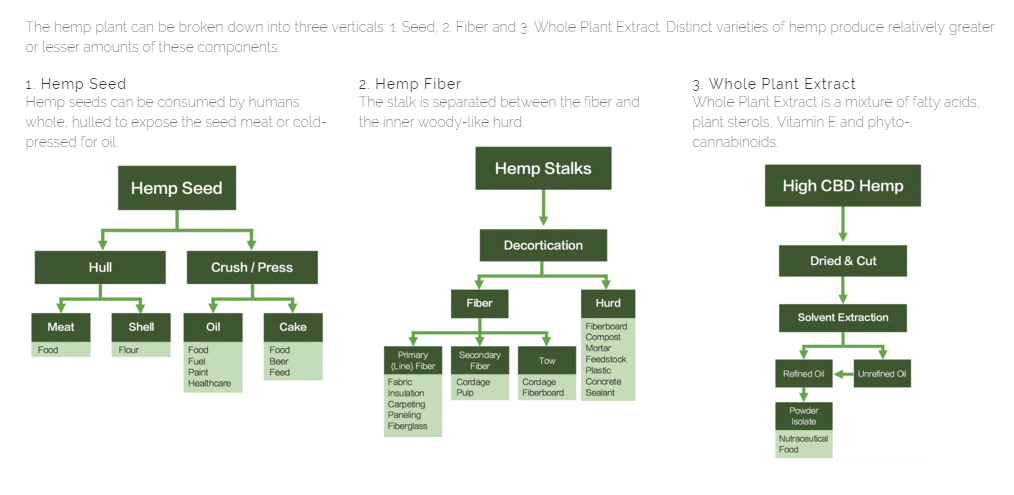
Hemp Parts Diagram Source: Seedcx.com
According to filings with the US Commodity Futures Trading Commission (CFTC), US-based Seed CX (short for Seed Commodities eXchange) has filed an application to become a Swap Execution Facility (SEF) under the name Seed SEF LLC where it aims to act as an institutional trading platform for hemp-related commodity derivatives contracts, among other tradable instruments.
The filings – accepted early February and still pending by the CFTC - were signed by the company’s president Brian Liston whose background includes investigating market efficiency of Asian exchanges and optimal portfolio construction techniques for risky assets, and who achieved an impressive 5.0 GPA from Massachusetts Institute of Technology (MIT) in his Master of Finance under the guidance of former CFTC Chief Economist Andrei Kirilenko, according to information on his company website.
Seed CX’s site describes that there are idiosyncratic risks in unique underserved markets (such as hemp), and how its goal is to use financial engineering tools to create financial security in such marketplaces.
The expected financial trading products include weather derivatives and industrial hemp swaps, options and forwards, and which the company aims to transact after regulatory approval.
Backers and leadership: consortium of investors and GMEX stake
Regarding Mr. Liston’s background, it appears he has probably the best set of credentials you could look for in someone tasked with leading an effort like this. Seed CX is aiming to “become the first trading platform for hemp” (as it retweeted from one of its followers ), and along with the other nine people on the SeedCX team including the two co-founders.
The Seed CX platform technology is powered by GMEX Technologies based in the UK. Finance Magnates obtained comments from their group CEO regarding the news – including about their 20% stake - as part of the deal to support Seed CX, as described in detail further below.
A Fortune magazine article highlighted the first round of funding that Seed CX secured for $3.42 million as a convertible note, announced yesterday, and how while many of the 50 investors backing the effort had not made their names public yet, several did take the spotlight including individuals from Struck Capital, 500 Startups, iAngels, Charlie O’Donnell from Brooklyn Bridge Ventures, Ron Geffner, David Adler, Christopher Lee, Darren Herman, Tom Sosnoff, and Julien Codorniou.
Seed CX co-founder and CEO Edward Woodford told Fortune: “The perception of cannabis - sometimes it widens peoples’ eyes and sometimes it narrows them,” and added, “In Silicon Valley, it is a real turnoff.”
Hemp market could also attract scalpers and speculators
Moreover, the driving purpose behind the establishment of a futures or derivatives market is to transfer risk away from hedgers to speculators, or for speculators to be able to take the risks that hedgers (suppliers and users) are looking to avoid (for example, when a speculator is on the other side of a trade with a hedger, where the hedger has no risk on the trade because they own the underlying as well – whereas the speculator has a naked position and has risk).
Mr. Woodford said in a company statement regarding the news: “We are excited to have developed the world’s first industrial hemp derivative. We have worked closely with hemp farmers and processors throughout the US, who want access to important hedging tools to protect this growing agricultural commodity.”
Before paving the way for hemp, at least initially, in its filing with the CFTC as an SEF, in response to Core Principle 3 regarding “swaps not readily susceptible to manipulation”, SEED SEF provided the example how a singled legged fixed or floating weather swap that is cash settled based on the San Joaquin Valley Water Supply Index (WSI) which is designed to measure water flows at 8 key intersection points in the river system and is published by the California Department of Water Resources (WSI Swap), proposed to meet Core principle 3, according to the regulatory filing. The ability for an SEF to have a central limit order book and related mechanisms provides potential advantages structurally.
Trading technology for hemp derivatives and Seed CX effort
The Fortune article cited a number of trading platforms that provided commitments to support the Seed CX effort, including GMEX Technologies (mentioned above), that also released a press release regarding the news, and which is providing platform technology related services to Seed CX in return for a 20% option stake and a board (observer) position.
The deal with SEED was aligned to options and cash flow
GMEX Group’s stakeholders include Deutsche Börse AG, Société Générale Corporate & Investment Banking and Forum Trading Holdings Limited, as per their website description.
Mr. Misra added in response to questions posed by our reporters about its background with the needs of an SEF: “This is the first SEF that GMEX has provided services for but this is not a great departure in terms of the fully functioning exchange front end (ForumTader), APIs, matching engine (ForumMatch), surveillance platform (ForumMatch) and reports (ForumReports) (all of which were the needs of SEED and are being provided to them), which GMEX runs for its own interest rate swap futures market in London based on underlying SEF and MTF data as well as auction, central limit order book and quote driven models for other exchanges.”
Hemp and cannabis in the media, differentiating between them
There is cannabis, and then there is hemp, but aren’t they the same thing? Hemp is any cannabis plant that contains less than 0.3% tetrahydrocannabinol (THC) on a dry-weight basis. The 2014 farm act in the US federally legalized the cultivation of hemp in states where the legislature allows it to be grown. While hemp may be legal everywhere, growing it is not. In Colorado, for example, both hemp and cannabis are big business already. Seed CX would need to focus on nearly 28 states where farmers or suppliers could participate in the market.
As far as meeting the hemp definition, the application and use of hemp can become widespread and a useful and valuable commodity across numerous industries, including for farmers, end-users, because of the plant's strong ability to capture carbon. It has already surpassed the billion dollar mark after its first year of legalized cultivation, according to a 2015 US congressional research report referenced by Seed CX.
The additional uses of the plant - beyond what is normally associated with this commodity- have been largely underserved and are the apparent focus of the Seed CX effort.
Related products: from taboo to new normal
The already huge wave of interest and media attention on cannabis in recent years – almost entirely related to the THC and nearly 85 other cannabinoids found in the plant – focused on the expected medical benefits and recreational use, with some governments and societies changing their positions on this often controversial subject and with many new laws proposed and enacted already in different parts of the world regarding the plant's legal status and usage.
In most other parts of the world both cultivation and use are illegal or restricted. Nonetheless, the landscape for cannabis has been increasingly changing, and putting all cannabinoids (and jokes) aside, the plant itself has a vast number of uses not related to its psychoactive ingredients, and remains a potential game changer for a number of key industries, including as a financial markets product.
Potential for hemp market: in its first year of legal cultivation over $1.5 billion
There are already a number of legal cannabis/hemp related public companies (and securities) that are traded on the US financial markets, and thus provide investors the ability to speculate - albeit indirectly - on the commodity; therefore it seems plausible as a derivative or any other financial instrument too, or at least initially the hemp side of the spectrum that Seed CX is spearheading. The prospects for the industrial hemp industry seem to be improving across several mediums- this could help further pave the way.
Initially, after approval, Seed CX plans to target its offering through its SEF, and offering a cash-settled contact. Mr. Mishra explained to Finance Magnates regarding the target market focus: “The target is the whole liquidity supply chain to run as an institutional market much like any other SEF in terms of client potential with the added advantages of the commodity supply chain related to the products.”
“In terms of liquidity there will be a liquidity provision scheme to ensure the right market makers are onboard as well as work to then ensure the is the right form of natural liquidity to interact with this,” he concluded.
ASX Faces $150M Capital Charge After Scathing Inquiry Finds Years of Neglect
Featured Videos
Executive Interview | Charlotte Bullock | Chief Product Officer, Bank of London | FMLS:25
In this interview, we sat down with Charlotte Bullock, Head of Product at The Bank of London, previously at SAP and now shaping product at one of the sector’s most ambitious new banking players.
Charlotte reflects on the Summit so far and talks about the culture inside fintech banks today. We look at the pressures that come with scaling, and how firms can hold onto the nimble approach that made them stand out early on.
We also cover the state of payments ahead of her appearance on the payments roundtable: the blockages financial firms face, the areas that still need fixing, and what a realistic solution looks like in 2026.
In this interview, we sat down with Charlotte Bullock, Head of Product at The Bank of London, previously at SAP and now shaping product at one of the sector’s most ambitious new banking players.
Charlotte reflects on the Summit so far and talks about the culture inside fintech banks today. We look at the pressures that come with scaling, and how firms can hold onto the nimble approach that made them stand out early on.
We also cover the state of payments ahead of her appearance on the payments roundtable: the blockages financial firms face, the areas that still need fixing, and what a realistic solution looks like in 2026.
In this interview, we sat down with Charlotte Bullock, Head of Product at The Bank of London, previously at SAP and now shaping product at one of the sector’s most ambitious new banking players.
Charlotte reflects on the Summit so far and talks about the culture inside fintech banks today. We look at the pressures that come with scaling, and how firms can hold onto the nimble approach that made them stand out early on.
We also cover the state of payments ahead of her appearance on the payments roundtable: the blockages financial firms face, the areas that still need fixing, and what a realistic solution looks like in 2026.
In this interview, we sat down with Charlotte Bullock, Head of Product at The Bank of London, previously at SAP and now shaping product at one of the sector’s most ambitious new banking players.
Charlotte reflects on the Summit so far and talks about the culture inside fintech banks today. We look at the pressures that come with scaling, and how firms can hold onto the nimble approach that made them stand out early on.
We also cover the state of payments ahead of her appearance on the payments roundtable: the blockages financial firms face, the areas that still need fixing, and what a realistic solution looks like in 2026.
In this conversation, we sit down with Drew Niv, CSO at ATFX Connect and one of the most influential figures in modern FX.
We speak about market structure, the institutional view on liquidity, and the sharp rise of prop trading, a sector Drew has been commenting on in recent months. Drew explains why he once dismissed prop trading, why his view changed, and what he now thinks the model means for brokers, clients and risk managers.
We explore subscription-fee dependency, the high reneging rate, and the long-term challenge: how brokers can build a more stable and honest version of the model. Drew also talks about the traffic advantage standalone prop firms have built and why brokers may still win in the long run if they take the right approach.
In this conversation, we sit down with Drew Niv, CSO at ATFX Connect and one of the most influential figures in modern FX.
We speak about market structure, the institutional view on liquidity, and the sharp rise of prop trading, a sector Drew has been commenting on in recent months. Drew explains why he once dismissed prop trading, why his view changed, and what he now thinks the model means for brokers, clients and risk managers.
We explore subscription-fee dependency, the high reneging rate, and the long-term challenge: how brokers can build a more stable and honest version of the model. Drew also talks about the traffic advantage standalone prop firms have built and why brokers may still win in the long run if they take the right approach.
In this conversation, we sit down with Drew Niv, CSO at ATFX Connect and one of the most influential figures in modern FX.
We speak about market structure, the institutional view on liquidity, and the sharp rise of prop trading, a sector Drew has been commenting on in recent months. Drew explains why he once dismissed prop trading, why his view changed, and what he now thinks the model means for brokers, clients and risk managers.
We explore subscription-fee dependency, the high reneging rate, and the long-term challenge: how brokers can build a more stable and honest version of the model. Drew also talks about the traffic advantage standalone prop firms have built and why brokers may still win in the long run if they take the right approach.
In this conversation, we sit down with Drew Niv, CSO at ATFX Connect and one of the most influential figures in modern FX.
We speak about market structure, the institutional view on liquidity, and the sharp rise of prop trading, a sector Drew has been commenting on in recent months. Drew explains why he once dismissed prop trading, why his view changed, and what he now thinks the model means for brokers, clients and risk managers.
We explore subscription-fee dependency, the high reneging rate, and the long-term challenge: how brokers can build a more stable and honest version of the model. Drew also talks about the traffic advantage standalone prop firms have built and why brokers may still win in the long run if they take the right approach.
In this conversation, we sit down with Drew Niv, CSO at ATFX Connect and one of the most influential figures in modern FX.
We speak about market structure, the institutional view on liquidity, and the sharp rise of prop trading, a sector Drew has been commenting on in recent months. Drew explains why he once dismissed prop trading, why his view changed, and what he now thinks the model means for brokers, clients and risk managers.
We explore subscription-fee dependency, the high reneging rate, and the long-term challenge: how brokers can build a more stable and honest version of the model. Drew also talks about the traffic advantage standalone prop firms have built and why brokers may still win in the long run if they take the right approach.
In this conversation, we sit down with Drew Niv, CSO at ATFX Connect and one of the most influential figures in modern FX.
We speak about market structure, the institutional view on liquidity, and the sharp rise of prop trading, a sector Drew has been commenting on in recent months. Drew explains why he once dismissed prop trading, why his view changed, and what he now thinks the model means for brokers, clients and risk managers.
We explore subscription-fee dependency, the high reneging rate, and the long-term challenge: how brokers can build a more stable and honest version of the model. Drew also talks about the traffic advantage standalone prop firms have built and why brokers may still win in the long run if they take the right approach.
Executive Interview | Remonda Z. Kirketerp Møller| CEO & Founder Muinmos | FMLS:25
In this interview, Remonda Z. Kirketerp Møller, founder of Muinmos, breaks down the state of AI in regtech and what responsible adoption really looks like for brokers. We talk about rising fragmentation, the pressures around compliance accuracy, and why most firms are still in the early stages of AI maturity.
Ramanda also shares insights on regulator sandboxes, shifting expectations around accountability, and the current reality of MiCA licensing and passporting in Europe.
A concise look at where compliance, onboarding, and AI-driven processes are heading next.
In this interview, Remonda Z. Kirketerp Møller, founder of Muinmos, breaks down the state of AI in regtech and what responsible adoption really looks like for brokers. We talk about rising fragmentation, the pressures around compliance accuracy, and why most firms are still in the early stages of AI maturity.
Ramanda also shares insights on regulator sandboxes, shifting expectations around accountability, and the current reality of MiCA licensing and passporting in Europe.
A concise look at where compliance, onboarding, and AI-driven processes are heading next.
In this interview, Remonda Z. Kirketerp Møller, founder of Muinmos, breaks down the state of AI in regtech and what responsible adoption really looks like for brokers. We talk about rising fragmentation, the pressures around compliance accuracy, and why most firms are still in the early stages of AI maturity.
Ramanda also shares insights on regulator sandboxes, shifting expectations around accountability, and the current reality of MiCA licensing and passporting in Europe.
A concise look at where compliance, onboarding, and AI-driven processes are heading next.
In this interview, Remonda Z. Kirketerp Møller, founder of Muinmos, breaks down the state of AI in regtech and what responsible adoption really looks like for brokers. We talk about rising fragmentation, the pressures around compliance accuracy, and why most firms are still in the early stages of AI maturity.
Ramanda also shares insights on regulator sandboxes, shifting expectations around accountability, and the current reality of MiCA licensing and passporting in Europe.
A concise look at where compliance, onboarding, and AI-driven processes are heading next.
In this interview, Remonda Z. Kirketerp Møller, founder of Muinmos, breaks down the state of AI in regtech and what responsible adoption really looks like for brokers. We talk about rising fragmentation, the pressures around compliance accuracy, and why most firms are still in the early stages of AI maturity.
Ramanda also shares insights on regulator sandboxes, shifting expectations around accountability, and the current reality of MiCA licensing and passporting in Europe.
A concise look at where compliance, onboarding, and AI-driven processes are heading next.
In this interview, Remonda Z. Kirketerp Møller, founder of Muinmos, breaks down the state of AI in regtech and what responsible adoption really looks like for brokers. We talk about rising fragmentation, the pressures around compliance accuracy, and why most firms are still in the early stages of AI maturity.
Ramanda also shares insights on regulator sandboxes, shifting expectations around accountability, and the current reality of MiCA licensing and passporting in Europe.
A concise look at where compliance, onboarding, and AI-driven processes are heading next.
In this conversation, we speak with Aydin Bonabi, CEO and co-founder of Surveill, a firm focused on fraud detection and AI-driven compliance tools for financial institutions.
We start with Aydin’s view of the Summit and the challenges brokers face as fraud tactics grow more complex. He explains how firms can stay ahead through real-time signals, data patterns, and early-stage detection.
We also talk about AI training and why compliance teams often struggle to keep models accurate, fair, and aligned with regulatory expectations. Aydin breaks down what “good” AI training looks like inside a financial environment, including the importance of clean data, domain expertise, and human oversight.
He closes with a clear message: fraud is scaling, and so must the tools that stop it.
In this conversation, we speak with Aydin Bonabi, CEO and co-founder of Surveill, a firm focused on fraud detection and AI-driven compliance tools for financial institutions.
We start with Aydin’s view of the Summit and the challenges brokers face as fraud tactics grow more complex. He explains how firms can stay ahead through real-time signals, data patterns, and early-stage detection.
We also talk about AI training and why compliance teams often struggle to keep models accurate, fair, and aligned with regulatory expectations. Aydin breaks down what “good” AI training looks like inside a financial environment, including the importance of clean data, domain expertise, and human oversight.
He closes with a clear message: fraud is scaling, and so must the tools that stop it.
In this conversation, we speak with Aydin Bonabi, CEO and co-founder of Surveill, a firm focused on fraud detection and AI-driven compliance tools for financial institutions.
We start with Aydin’s view of the Summit and the challenges brokers face as fraud tactics grow more complex. He explains how firms can stay ahead through real-time signals, data patterns, and early-stage detection.
We also talk about AI training and why compliance teams often struggle to keep models accurate, fair, and aligned with regulatory expectations. Aydin breaks down what “good” AI training looks like inside a financial environment, including the importance of clean data, domain expertise, and human oversight.
He closes with a clear message: fraud is scaling, and so must the tools that stop it.
In this conversation, we speak with Aydin Bonabi, CEO and co-founder of Surveill, a firm focused on fraud detection and AI-driven compliance tools for financial institutions.
We start with Aydin’s view of the Summit and the challenges brokers face as fraud tactics grow more complex. He explains how firms can stay ahead through real-time signals, data patterns, and early-stage detection.
We also talk about AI training and why compliance teams often struggle to keep models accurate, fair, and aligned with regulatory expectations. Aydin breaks down what “good” AI training looks like inside a financial environment, including the importance of clean data, domain expertise, and human oversight.
He closes with a clear message: fraud is scaling, and so must the tools that stop it.
In this conversation, we speak with Aydin Bonabi, CEO and co-founder of Surveill, a firm focused on fraud detection and AI-driven compliance tools for financial institutions.
We start with Aydin’s view of the Summit and the challenges brokers face as fraud tactics grow more complex. He explains how firms can stay ahead through real-time signals, data patterns, and early-stage detection.
We also talk about AI training and why compliance teams often struggle to keep models accurate, fair, and aligned with regulatory expectations. Aydin breaks down what “good” AI training looks like inside a financial environment, including the importance of clean data, domain expertise, and human oversight.
He closes with a clear message: fraud is scaling, and so must the tools that stop it.
In this conversation, we speak with Aydin Bonabi, CEO and co-founder of Surveill, a firm focused on fraud detection and AI-driven compliance tools for financial institutions.
We start with Aydin’s view of the Summit and the challenges brokers face as fraud tactics grow more complex. He explains how firms can stay ahead through real-time signals, data patterns, and early-stage detection.
We also talk about AI training and why compliance teams often struggle to keep models accurate, fair, and aligned with regulatory expectations. Aydin breaks down what “good” AI training looks like inside a financial environment, including the importance of clean data, domain expertise, and human oversight.
He closes with a clear message: fraud is scaling, and so must the tools that stop it.
Exness expands its presence in Africa: Inside our interview with Paul Margarites in Cape Town
Finance Magnates met with Paul Margarites, Exness regional commercial director for Sub-Saharan Africa, during a visit to the firm’s office opening in Cape Town. In this talk, led by Andrea Badiola Mateos, Co-CEO at Finance Magnates, Paul shares views on the South African trading space, local user behavior, mobile trends, regulation, team growth, and how Exness plans to grow in more markets across the region. @Exness
Read the article at: https://www.financemagnates.com/thought-leadership/exness-expands-its-presence-in-africa-inside-our-interview-with-paul-margarites/
#exness #financemagnates #exnesstrading #CFDtrading #tradeonline #africanews #capetown
Finance Magnates met with Paul Margarites, Exness regional commercial director for Sub-Saharan Africa, during a visit to the firm’s office opening in Cape Town. In this talk, led by Andrea Badiola Mateos, Co-CEO at Finance Magnates, Paul shares views on the South African trading space, local user behavior, mobile trends, regulation, team growth, and how Exness plans to grow in more markets across the region. @Exness
Read the article at: https://www.financemagnates.com/thought-leadership/exness-expands-its-presence-in-africa-inside-our-interview-with-paul-margarites/
#exness #financemagnates #exnesstrading #CFDtrading #tradeonline #africanews #capetown
Finance Magnates met with Paul Margarites, Exness regional commercial director for Sub-Saharan Africa, during a visit to the firm’s office opening in Cape Town. In this talk, led by Andrea Badiola Mateos, Co-CEO at Finance Magnates, Paul shares views on the South African trading space, local user behavior, mobile trends, regulation, team growth, and how Exness plans to grow in more markets across the region. @Exness
Read the article at: https://www.financemagnates.com/thought-leadership/exness-expands-its-presence-in-africa-inside-our-interview-with-paul-margarites/
#exness #financemagnates #exnesstrading #CFDtrading #tradeonline #africanews #capetown
Finance Magnates met with Paul Margarites, Exness regional commercial director for Sub-Saharan Africa, during a visit to the firm’s office opening in Cape Town. In this talk, led by Andrea Badiola Mateos, Co-CEO at Finance Magnates, Paul shares views on the South African trading space, local user behavior, mobile trends, regulation, team growth, and how Exness plans to grow in more markets across the region. @Exness
Read the article at: https://www.financemagnates.com/thought-leadership/exness-expands-its-presence-in-africa-inside-our-interview-with-paul-margarites/
#exness #financemagnates #exnesstrading #CFDtrading #tradeonline #africanews #capetown
Finance Magnates met with Paul Margarites, Exness regional commercial director for Sub-Saharan Africa, during a visit to the firm’s office opening in Cape Town. In this talk, led by Andrea Badiola Mateos, Co-CEO at Finance Magnates, Paul shares views on the South African trading space, local user behavior, mobile trends, regulation, team growth, and how Exness plans to grow in more markets across the region. @Exness
Read the article at: https://www.financemagnates.com/thought-leadership/exness-expands-its-presence-in-africa-inside-our-interview-with-paul-margarites/
#exness #financemagnates #exnesstrading #CFDtrading #tradeonline #africanews #capetown
Finance Magnates met with Paul Margarites, Exness regional commercial director for Sub-Saharan Africa, during a visit to the firm’s office opening in Cape Town. In this talk, led by Andrea Badiola Mateos, Co-CEO at Finance Magnates, Paul shares views on the South African trading space, local user behavior, mobile trends, regulation, team growth, and how Exness plans to grow in more markets across the region. @Exness
Read the article at: https://www.financemagnates.com/thought-leadership/exness-expands-its-presence-in-africa-inside-our-interview-with-paul-margarites/
#exness #financemagnates #exnesstrading #CFDtrading #tradeonline #africanews #capetown