Following our post about Alpari’s sponsorship of English Premier League West Ham United, we received tremendous comment feedback and it was one of our most popular articles for February. The post created triggered a discussion on the effects of sports sponsorships and costs.
If FX companies were ranked according to the size of investment into sports sponsorship then the top two companies would definitely be FXpro, followed closely by AlpariFX.
There has been no sign of any let up in the investment by FX companies into sports sponsorship and it’s easy to understand why. Sports sponsorship provides a series of benefits to FX companies:
- Global brand awareness through a “one stop shop”
- A predominantly male demograph in line with the core make up of FX traders.
- Sport offers “big brand status” where the FX company sits aside more established blue chip global sponsors
- A combination of offline and online media elements enhance the marketing mix and opportunity for ROI
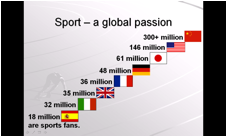
Source: WPP
Sports Media Gaming also see a strong parallel between the FX trading market and the online betting sector where brands like BWIN, 888.com, Betfair, and a host of others have used sport to create standout and target key markets. Both sectors are comparatively new to market when compared to more established brands in sports sponsorship, target the same demograph and both sectors have become quickly saturated, requiring brands to find unique ways to create standout.
Of course one of the key benefits of sports sponsorship, is to circumvent any national advertising regulations by sponsorship of non domicile rights that happen to be broadcast back into the territory. This is one reason that Premier League Football has proved to be so popular with Asian bookies like and the enormous exposure the League gets into markets like Asia.
Who is Doing What in Sports Sponsorship ?
Football and Formula1 have proved to be the key drivers when it comes to sports sponsorship, followed by sailing and rugby. These are all natural sports to target the male demograph and achieve global exposure.
Additionally there is a very good synergy in the case of Formula1 as FX promotes its core values of speed and technical superior products with high performance cars. The provision of high quality hospitality facilities permits high value promotional opportunities to generate new sign ups.
Until the start of last season the top three teams on the grid were all sponsored by FX brands. Red Bull & FXDD, Mercedes & MIG Bank, McClaren & XTB
The English Premier League currently has two teams bearing FX trading company logos for the start of the 2013/14 season with Fulham & FXPro and now West Ham United & Alpari. It is worth noting that FX companies can only be involved with Premier League teams as the main shirt sponsor and at no lower level. This is because Barclays Bank who sponsor the League (The Barclays Premier League) to the tune of £48million per season have wide ranging exclusive rights. The average shirt sponsorship at this level in the Premier League is approximately £3million per annum, whilst a team like Manchester United or Liverpool are currently commanding over £20million per annum.
A typical Formula1 sponsorship which includes branding on the car will be in the region of £2.5-£4million for one of the leading cars on the grid.
FXPro
The clear leaders in sports investment, we estimate are investing approximately $20mill per year and have presently in their portfolio the following:
Main shirt sponsor of Premier League team Fulham FC
Official partner of the Asian Champions League Football
Naming Rights partner to Australian Super Rugby
(plus previously sponsors of Virgin F1 team, Sauber F1 , Aston Villa FC and World Rally Championships)
AlpariFX
Have also recently invested heavily into sports sponsorship and have in their portfolio the following:
Naming sponsor of sailing’s World Match Racing Tour
Main shirt sponsor of Premier League team West Ham United
Official Partner of the New York Knicks, New York Rangers and Madison Square Garden
FXDD
They are formerly sponsors of the Red Bull Racing Formula 1 team
Current sponsors of Malta Football Association and Maltese Referees
Aim Autosport Team FXDD competing in Rolex Sports Cars Series, the Star Mazda Series and the USF2000 Series . The company which has a mandate to identify, train and manage emerging motorsport talent.
XTB
They are current sponsors of the McClaren Formula 1 team
MIG Bank
They are current sponsors of the Mercedes Formula 1 team
AFX Capital
Title Sponsors of the AFX Capital Sailing Team
A range of other FX companies such as Instaforex and FXPrimus have become involved in sponsorship on a local level in key markets like Asia.
At present the market is very competitive, it is very much a buyers market in sports as there are so many rights available concurrently on the market. These include F1 teams, football teams in leading leagues like England, Spain and Italy, high profile sailing, international rugby and sports that FX companies have not yet aligned with which still remain highly relevant such as tennis and golf.
About Sports Media Gaming Ltd
Sports Media Gaming Ltd is a leading independent sports marketing agency, headquartered in London and operating internationally. The Founder and CEO, Stephen Pearson has a background spanning over 25 years in international sports marketing, including Board level roles at organisations like UEFA Champions League and the FA Premier League. He has acted for a wide range of brands in sport such as PlayStation, Coca-Cola, McDonalds, Visa, Electronic Arts, TUI Group, JVC and many more.
Following our post about Alpari’s sponsorship of English Premier League West Ham United, we received tremendous comment feedback and it was one of our most popular articles for February. The post created triggered a discussion on the effects of sports sponsorships and costs.
If FX companies were ranked according to the size of investment into sports sponsorship then the top two companies would definitely be FXpro, followed closely by AlpariFX.
There has been no sign of any let up in the investment by FX companies into sports sponsorship and it’s easy to understand why. Sports sponsorship provides a series of benefits to FX companies:
- Global brand awareness through a “one stop shop”
- A predominantly male demograph in line with the core make up of FX traders.
- Sport offers “big brand status” where the FX company sits aside more established blue chip global sponsors
- A combination of offline and online media elements enhance the marketing mix and opportunity for ROI
Source: WPP
Sports Media Gaming also see a strong parallel between the FX trading market and the online betting sector where brands like BWIN, 888.com, Betfair, and a host of others have used sport to create standout and target key markets. Both sectors are comparatively new to market when compared to more established brands in sports sponsorship, target the same demograph and both sectors have become quickly saturated, requiring brands to find unique ways to create standout.
Of course one of the key benefits of sports sponsorship, is to circumvent any national advertising regulations by sponsorship of non domicile rights that happen to be broadcast back into the territory. This is one reason that Premier League Football has proved to be so popular with Asian bookies like and the enormous exposure the League gets into markets like Asia.
Who is Doing What in Sports Sponsorship ?
Football and Formula1 have proved to be the key drivers when it comes to sports sponsorship, followed by sailing and rugby. These are all natural sports to target the male demograph and achieve global exposure.
Additionally there is a very good synergy in the case of Formula1 as FX promotes its core values of speed and technical superior products with high performance cars. The provision of high quality hospitality facilities permits high value promotional opportunities to generate new sign ups.
Until the start of last season the top three teams on the grid were all sponsored by FX brands. Red Bull & FXDD, Mercedes & MIG Bank, McClaren & XTB
The English Premier League currently has two teams bearing FX trading company logos for the start of the 2013/14 season with Fulham & FXPro and now West Ham United & Alpari. It is worth noting that FX companies can only be involved with Premier League teams as the main shirt sponsor and at no lower level. This is because Barclays Bank who sponsor the League (The Barclays Premier League) to the tune of £48million per season have wide ranging exclusive rights. The average shirt sponsorship at this level in the Premier League is approximately £3million per annum, whilst a team like Manchester United or Liverpool are currently commanding over £20million per annum.
A typical Formula1 sponsorship which includes branding on the car will be in the region of £2.5-£4million for one of the leading cars on the grid.
FXPro
The clear leaders in sports investment, we estimate are investing approximately $20mill per year and have presently in their portfolio the following:
Main shirt sponsor of Premier League team Fulham FC
Official partner of the Asian Champions League Football
Naming Rights partner to Australian Super Rugby
(plus previously sponsors of Virgin F1 team, Sauber F1 , Aston Villa FC and World Rally Championships)
AlpariFX
Have also recently invested heavily into sports sponsorship and have in their portfolio the following:
Naming sponsor of sailing’s World Match Racing Tour
Main shirt sponsor of Premier League team West Ham United
Official Partner of the New York Knicks, New York Rangers and Madison Square Garden
FXDD
They are formerly sponsors of the Red Bull Racing Formula 1 team
Current sponsors of Malta Football Association and Maltese Referees
Aim Autosport Team FXDD competing in Rolex Sports Cars Series, the Star Mazda Series and the USF2000 Series . The company which has a mandate to identify, train and manage emerging motorsport talent.
XTB
They are current sponsors of the McClaren Formula 1 team
MIG Bank
They are current sponsors of the Mercedes Formula 1 team
AFX Capital
Title Sponsors of the AFX Capital Sailing Team
A range of other FX companies such as Instaforex and FXPrimus have become involved in sponsorship on a local level in key markets like Asia.
At present the market is very competitive, it is very much a buyers market in sports as there are so many rights available concurrently on the market. These include F1 teams, football teams in leading leagues like England, Spain and Italy, high profile sailing, international rugby and sports that FX companies have not yet aligned with which still remain highly relevant such as tennis and golf.
About Sports Media Gaming Ltd
Sports Media Gaming Ltd is a leading independent sports marketing agency, headquartered in London and operating internationally. The Founder and CEO, Stephen Pearson has a background spanning over 25 years in international sports marketing, including Board level roles at organisations like UEFA Champions League and the FA Premier League. He has acted for a wide range of brands in sport such as PlayStation, Coca-Cola, McDonalds, Visa, Electronic Arts, TUI Group, JVC and many more.
73% of Young Investors Say Traditional Wealth Building Is Broken – Here’s How They Trade Instead
Featured Videos
Executive Interview | Charlotte Bullock | Chief Product Officer, Bank of London | FMLS:25
In this interview, we sat down with Charlotte Bullock, Head of Product at The Bank of London, previously at SAP and now shaping product at one of the sector’s most ambitious new banking players.
Charlotte reflects on the Summit so far and talks about the culture inside fintech banks today. We look at the pressures that come with scaling, and how firms can hold onto the nimble approach that made them stand out early on.
We also cover the state of payments ahead of her appearance on the payments roundtable: the blockages financial firms face, the areas that still need fixing, and what a realistic solution looks like in 2026.
In this interview, we sat down with Charlotte Bullock, Head of Product at The Bank of London, previously at SAP and now shaping product at one of the sector’s most ambitious new banking players.
Charlotte reflects on the Summit so far and talks about the culture inside fintech banks today. We look at the pressures that come with scaling, and how firms can hold onto the nimble approach that made them stand out early on.
We also cover the state of payments ahead of her appearance on the payments roundtable: the blockages financial firms face, the areas that still need fixing, and what a realistic solution looks like in 2026.
In this interview, we sat down with Charlotte Bullock, Head of Product at The Bank of London, previously at SAP and now shaping product at one of the sector’s most ambitious new banking players.
Charlotte reflects on the Summit so far and talks about the culture inside fintech banks today. We look at the pressures that come with scaling, and how firms can hold onto the nimble approach that made them stand out early on.
We also cover the state of payments ahead of her appearance on the payments roundtable: the blockages financial firms face, the areas that still need fixing, and what a realistic solution looks like in 2026.
In this interview, we sat down with Charlotte Bullock, Head of Product at The Bank of London, previously at SAP and now shaping product at one of the sector’s most ambitious new banking players.
Charlotte reflects on the Summit so far and talks about the culture inside fintech banks today. We look at the pressures that come with scaling, and how firms can hold onto the nimble approach that made them stand out early on.
We also cover the state of payments ahead of her appearance on the payments roundtable: the blockages financial firms face, the areas that still need fixing, and what a realistic solution looks like in 2026.
In this conversation, we sit down with Drew Niv, CSO at ATFX Connect and one of the most influential figures in modern FX.
We speak about market structure, the institutional view on liquidity, and the sharp rise of prop trading, a sector Drew has been commenting on in recent months. Drew explains why he once dismissed prop trading, why his view changed, and what he now thinks the model means for brokers, clients and risk managers.
We explore subscription-fee dependency, the high reneging rate, and the long-term challenge: how brokers can build a more stable and honest version of the model. Drew also talks about the traffic advantage standalone prop firms have built and why brokers may still win in the long run if they take the right approach.
In this conversation, we sit down with Drew Niv, CSO at ATFX Connect and one of the most influential figures in modern FX.
We speak about market structure, the institutional view on liquidity, and the sharp rise of prop trading, a sector Drew has been commenting on in recent months. Drew explains why he once dismissed prop trading, why his view changed, and what he now thinks the model means for brokers, clients and risk managers.
We explore subscription-fee dependency, the high reneging rate, and the long-term challenge: how brokers can build a more stable and honest version of the model. Drew also talks about the traffic advantage standalone prop firms have built and why brokers may still win in the long run if they take the right approach.
In this conversation, we sit down with Drew Niv, CSO at ATFX Connect and one of the most influential figures in modern FX.
We speak about market structure, the institutional view on liquidity, and the sharp rise of prop trading, a sector Drew has been commenting on in recent months. Drew explains why he once dismissed prop trading, why his view changed, and what he now thinks the model means for brokers, clients and risk managers.
We explore subscription-fee dependency, the high reneging rate, and the long-term challenge: how brokers can build a more stable and honest version of the model. Drew also talks about the traffic advantage standalone prop firms have built and why brokers may still win in the long run if they take the right approach.
In this conversation, we sit down with Drew Niv, CSO at ATFX Connect and one of the most influential figures in modern FX.
We speak about market structure, the institutional view on liquidity, and the sharp rise of prop trading, a sector Drew has been commenting on in recent months. Drew explains why he once dismissed prop trading, why his view changed, and what he now thinks the model means for brokers, clients and risk managers.
We explore subscription-fee dependency, the high reneging rate, and the long-term challenge: how brokers can build a more stable and honest version of the model. Drew also talks about the traffic advantage standalone prop firms have built and why brokers may still win in the long run if they take the right approach.
In this conversation, we sit down with Drew Niv, CSO at ATFX Connect and one of the most influential figures in modern FX.
We speak about market structure, the institutional view on liquidity, and the sharp rise of prop trading, a sector Drew has been commenting on in recent months. Drew explains why he once dismissed prop trading, why his view changed, and what he now thinks the model means for brokers, clients and risk managers.
We explore subscription-fee dependency, the high reneging rate, and the long-term challenge: how brokers can build a more stable and honest version of the model. Drew also talks about the traffic advantage standalone prop firms have built and why brokers may still win in the long run if they take the right approach.
In this conversation, we sit down with Drew Niv, CSO at ATFX Connect and one of the most influential figures in modern FX.
We speak about market structure, the institutional view on liquidity, and the sharp rise of prop trading, a sector Drew has been commenting on in recent months. Drew explains why he once dismissed prop trading, why his view changed, and what he now thinks the model means for brokers, clients and risk managers.
We explore subscription-fee dependency, the high reneging rate, and the long-term challenge: how brokers can build a more stable and honest version of the model. Drew also talks about the traffic advantage standalone prop firms have built and why brokers may still win in the long run if they take the right approach.
Executive Interview | Remonda Z. Kirketerp Møller| CEO & Founder Muinmos | FMLS:25
In this interview, Remonda Z. Kirketerp Møller, founder of Muinmos, breaks down the state of AI in regtech and what responsible adoption really looks like for brokers. We talk about rising fragmentation, the pressures around compliance accuracy, and why most firms are still in the early stages of AI maturity.
Ramanda also shares insights on regulator sandboxes, shifting expectations around accountability, and the current reality of MiCA licensing and passporting in Europe.
A concise look at where compliance, onboarding, and AI-driven processes are heading next.
In this interview, Remonda Z. Kirketerp Møller, founder of Muinmos, breaks down the state of AI in regtech and what responsible adoption really looks like for brokers. We talk about rising fragmentation, the pressures around compliance accuracy, and why most firms are still in the early stages of AI maturity.
Ramanda also shares insights on regulator sandboxes, shifting expectations around accountability, and the current reality of MiCA licensing and passporting in Europe.
A concise look at where compliance, onboarding, and AI-driven processes are heading next.
In this interview, Remonda Z. Kirketerp Møller, founder of Muinmos, breaks down the state of AI in regtech and what responsible adoption really looks like for brokers. We talk about rising fragmentation, the pressures around compliance accuracy, and why most firms are still in the early stages of AI maturity.
Ramanda also shares insights on regulator sandboxes, shifting expectations around accountability, and the current reality of MiCA licensing and passporting in Europe.
A concise look at where compliance, onboarding, and AI-driven processes are heading next.
In this interview, Remonda Z. Kirketerp Møller, founder of Muinmos, breaks down the state of AI in regtech and what responsible adoption really looks like for brokers. We talk about rising fragmentation, the pressures around compliance accuracy, and why most firms are still in the early stages of AI maturity.
Ramanda also shares insights on regulator sandboxes, shifting expectations around accountability, and the current reality of MiCA licensing and passporting in Europe.
A concise look at where compliance, onboarding, and AI-driven processes are heading next.
In this interview, Remonda Z. Kirketerp Møller, founder of Muinmos, breaks down the state of AI in regtech and what responsible adoption really looks like for brokers. We talk about rising fragmentation, the pressures around compliance accuracy, and why most firms are still in the early stages of AI maturity.
Ramanda also shares insights on regulator sandboxes, shifting expectations around accountability, and the current reality of MiCA licensing and passporting in Europe.
A concise look at where compliance, onboarding, and AI-driven processes are heading next.
In this interview, Remonda Z. Kirketerp Møller, founder of Muinmos, breaks down the state of AI in regtech and what responsible adoption really looks like for brokers. We talk about rising fragmentation, the pressures around compliance accuracy, and why most firms are still in the early stages of AI maturity.
Ramanda also shares insights on regulator sandboxes, shifting expectations around accountability, and the current reality of MiCA licensing and passporting in Europe.
A concise look at where compliance, onboarding, and AI-driven processes are heading next.
In this conversation, we speak with Aydin Bonabi, CEO and co-founder of Surveill, a firm focused on fraud detection and AI-driven compliance tools for financial institutions.
We start with Aydin’s view of the Summit and the challenges brokers face as fraud tactics grow more complex. He explains how firms can stay ahead through real-time signals, data patterns, and early-stage detection.
We also talk about AI training and why compliance teams often struggle to keep models accurate, fair, and aligned with regulatory expectations. Aydin breaks down what “good” AI training looks like inside a financial environment, including the importance of clean data, domain expertise, and human oversight.
He closes with a clear message: fraud is scaling, and so must the tools that stop it.
In this conversation, we speak with Aydin Bonabi, CEO and co-founder of Surveill, a firm focused on fraud detection and AI-driven compliance tools for financial institutions.
We start with Aydin’s view of the Summit and the challenges brokers face as fraud tactics grow more complex. He explains how firms can stay ahead through real-time signals, data patterns, and early-stage detection.
We also talk about AI training and why compliance teams often struggle to keep models accurate, fair, and aligned with regulatory expectations. Aydin breaks down what “good” AI training looks like inside a financial environment, including the importance of clean data, domain expertise, and human oversight.
He closes with a clear message: fraud is scaling, and so must the tools that stop it.
In this conversation, we speak with Aydin Bonabi, CEO and co-founder of Surveill, a firm focused on fraud detection and AI-driven compliance tools for financial institutions.
We start with Aydin’s view of the Summit and the challenges brokers face as fraud tactics grow more complex. He explains how firms can stay ahead through real-time signals, data patterns, and early-stage detection.
We also talk about AI training and why compliance teams often struggle to keep models accurate, fair, and aligned with regulatory expectations. Aydin breaks down what “good” AI training looks like inside a financial environment, including the importance of clean data, domain expertise, and human oversight.
He closes with a clear message: fraud is scaling, and so must the tools that stop it.
In this conversation, we speak with Aydin Bonabi, CEO and co-founder of Surveill, a firm focused on fraud detection and AI-driven compliance tools for financial institutions.
We start with Aydin’s view of the Summit and the challenges brokers face as fraud tactics grow more complex. He explains how firms can stay ahead through real-time signals, data patterns, and early-stage detection.
We also talk about AI training and why compliance teams often struggle to keep models accurate, fair, and aligned with regulatory expectations. Aydin breaks down what “good” AI training looks like inside a financial environment, including the importance of clean data, domain expertise, and human oversight.
He closes with a clear message: fraud is scaling, and so must the tools that stop it.
In this conversation, we speak with Aydin Bonabi, CEO and co-founder of Surveill, a firm focused on fraud detection and AI-driven compliance tools for financial institutions.
We start with Aydin’s view of the Summit and the challenges brokers face as fraud tactics grow more complex. He explains how firms can stay ahead through real-time signals, data patterns, and early-stage detection.
We also talk about AI training and why compliance teams often struggle to keep models accurate, fair, and aligned with regulatory expectations. Aydin breaks down what “good” AI training looks like inside a financial environment, including the importance of clean data, domain expertise, and human oversight.
He closes with a clear message: fraud is scaling, and so must the tools that stop it.
In this conversation, we speak with Aydin Bonabi, CEO and co-founder of Surveill, a firm focused on fraud detection and AI-driven compliance tools for financial institutions.
We start with Aydin’s view of the Summit and the challenges brokers face as fraud tactics grow more complex. He explains how firms can stay ahead through real-time signals, data patterns, and early-stage detection.
We also talk about AI training and why compliance teams often struggle to keep models accurate, fair, and aligned with regulatory expectations. Aydin breaks down what “good” AI training looks like inside a financial environment, including the importance of clean data, domain expertise, and human oversight.
He closes with a clear message: fraud is scaling, and so must the tools that stop it.
Exness expands its presence in Africa: Inside our interview with Paul Margarites in Cape Town
Finance Magnates met with Paul Margarites, Exness regional commercial director for Sub-Saharan Africa, during a visit to the firm’s office opening in Cape Town. In this talk, led by Andrea Badiola Mateos, Co-CEO at Finance Magnates, Paul shares views on the South African trading space, local user behavior, mobile trends, regulation, team growth, and how Exness plans to grow in more markets across the region. @Exness
Read the article at: https://www.financemagnates.com/thought-leadership/exness-expands-its-presence-in-africa-inside-our-interview-with-paul-margarites/
#exness #financemagnates #exnesstrading #CFDtrading #tradeonline #africanews #capetown
Finance Magnates met with Paul Margarites, Exness regional commercial director for Sub-Saharan Africa, during a visit to the firm’s office opening in Cape Town. In this talk, led by Andrea Badiola Mateos, Co-CEO at Finance Magnates, Paul shares views on the South African trading space, local user behavior, mobile trends, regulation, team growth, and how Exness plans to grow in more markets across the region. @Exness
Read the article at: https://www.financemagnates.com/thought-leadership/exness-expands-its-presence-in-africa-inside-our-interview-with-paul-margarites/
#exness #financemagnates #exnesstrading #CFDtrading #tradeonline #africanews #capetown
Finance Magnates met with Paul Margarites, Exness regional commercial director for Sub-Saharan Africa, during a visit to the firm’s office opening in Cape Town. In this talk, led by Andrea Badiola Mateos, Co-CEO at Finance Magnates, Paul shares views on the South African trading space, local user behavior, mobile trends, regulation, team growth, and how Exness plans to grow in more markets across the region. @Exness
Read the article at: https://www.financemagnates.com/thought-leadership/exness-expands-its-presence-in-africa-inside-our-interview-with-paul-margarites/
#exness #financemagnates #exnesstrading #CFDtrading #tradeonline #africanews #capetown
Finance Magnates met with Paul Margarites, Exness regional commercial director for Sub-Saharan Africa, during a visit to the firm’s office opening in Cape Town. In this talk, led by Andrea Badiola Mateos, Co-CEO at Finance Magnates, Paul shares views on the South African trading space, local user behavior, mobile trends, regulation, team growth, and how Exness plans to grow in more markets across the region. @Exness
Read the article at: https://www.financemagnates.com/thought-leadership/exness-expands-its-presence-in-africa-inside-our-interview-with-paul-margarites/
#exness #financemagnates #exnesstrading #CFDtrading #tradeonline #africanews #capetown
Finance Magnates met with Paul Margarites, Exness regional commercial director for Sub-Saharan Africa, during a visit to the firm’s office opening in Cape Town. In this talk, led by Andrea Badiola Mateos, Co-CEO at Finance Magnates, Paul shares views on the South African trading space, local user behavior, mobile trends, regulation, team growth, and how Exness plans to grow in more markets across the region. @Exness
Read the article at: https://www.financemagnates.com/thought-leadership/exness-expands-its-presence-in-africa-inside-our-interview-with-paul-margarites/
#exness #financemagnates #exnesstrading #CFDtrading #tradeonline #africanews #capetown
Finance Magnates met with Paul Margarites, Exness regional commercial director for Sub-Saharan Africa, during a visit to the firm’s office opening in Cape Town. In this talk, led by Andrea Badiola Mateos, Co-CEO at Finance Magnates, Paul shares views on the South African trading space, local user behavior, mobile trends, regulation, team growth, and how Exness plans to grow in more markets across the region. @Exness
Read the article at: https://www.financemagnates.com/thought-leadership/exness-expands-its-presence-in-africa-inside-our-interview-with-paul-margarites/
#exness #financemagnates #exnesstrading #CFDtrading #tradeonline #africanews #capetown