It looks like the oil market could be in for a good time in 2017.
Martin Bishop @flickr Title: "Engine oil"
This article was written by David Belle, a contributor at www.connectfx.org.
Oil has had a very tough time over the past few years after dropping from its 2014 high of
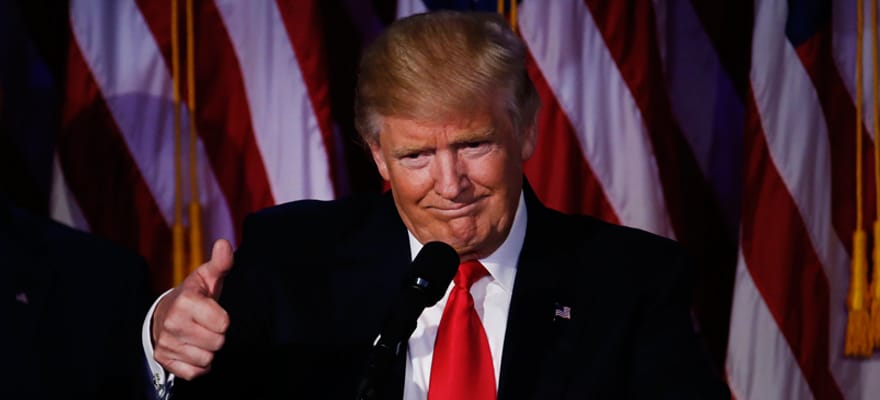
[gptAdvertisement]$106.60. Trump’s new policies are pro-US oil production, and expansionary towards furthering fracking, which is more efficient and with recent comments coming out of Saudi Arabia, the Saudis don't seem to want to curb production.
However, there is a meeting at the end of November where an agreement could be met regarding a production curb, with Iraq leading the proposal for the curb. The biggest aspect here though is the sway that Putin may have over this meeting. Putin has also said that he is partial to a production curb and ‘sees no reason’ why an agreement cannot be met (with Russia's current involvement in the Middle East, you may start wondering whether it's very convenient that he wants to raise the oil price, however that is slightly tin foil hat wearing time...).
This puts upward pressure on price in the longer term due to time lags in production and already pumped oil still having an effect on supply. Shorter term, however, a drop in oil prices could certainly occur, and we can possibly see why from looking at a few charts.
Below in the first chart we have WTI (USOIL) on the weekly time frame. I follow Wyckoff logic of sentiment changes in the market, which can be viewed by changes in volume and price action. The reason for this is because it implies heavy emphasis on market psychology stages via examining volume in combination with price action, which seems to be ignored quite a bit when reading analysis pieces.
Short term, I see the USD strengthening. This implies WTI would fall due to having an inverse relationship with the USD. It’s a pretty bold statement to say that it will get to $90, however I am simply basing this on past structures that I have seen and the potential for WTI to do the same. I evaluate at every phase to see whether the idea is still valid.
Shorter term, I am looking at the wedge structure break (red trend lines), but to the downside, where this usual structure would expect an upside break. This is because I feel a shakeout is due to the downside in order to rebalance demand and supply for the move up.
Price action rejection to the downside (big pinbars/wicks) above $30 as well as a volume pick up at these levels will provide ample confidence that we will head higher to break the 2016 highs and trade up to higher price structure at $70. Previously we have seen bullish accumulation at $28-$40 and it occurred again at the end of August at the $39-$40 range. We therefore know that bulls are in the market at these price levels.
Note the sharp decline in open interest on Crude Jan ‘17 contracts:
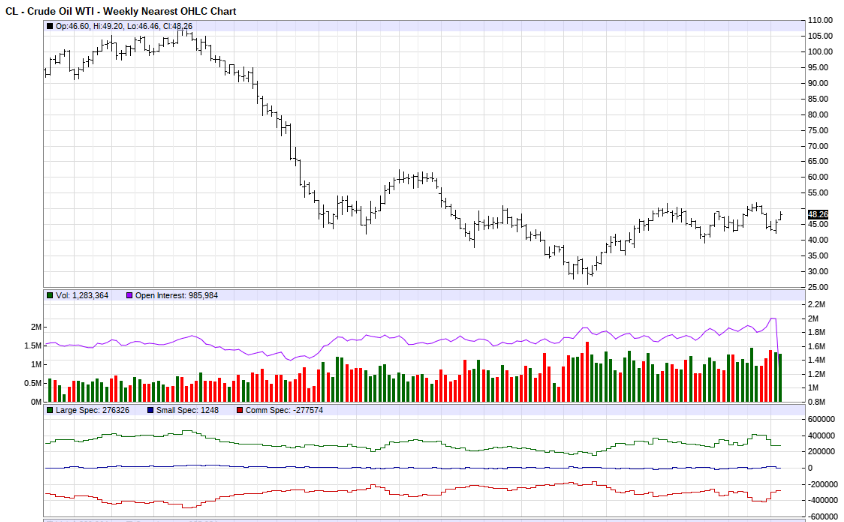
It’s too early to say, however open interest on crude Jan’17 contracts decreased by 1 million contracts the week before last. I say it’s too early to say because we had the Trump election and a shock to the market like this requires some time to restabilise sentiment. However, this could indicate a trend change with such a steep decline, as contract holders liquidate their positions.
What’s more, USD/CAD looks like it wants to push higher to 1.43/42, which would indicate a short term bearish oil market. USD/CAD and WTI have a strong negatively correlated relationship, since CAD is an oil backed currency and strengthens and weakens with the rise and fall of oil. We can also see a Wyckoff topping pattern forming here at these intra-year highs; I look for an area where bulls or bears were temporarily introduced while coming off of a major high or low respectively and then being taken out with the resuming trend reversal. This identifies an area of contention and an area that the market will be looking to retest. If we break above the highs at 1.468, however, this structure will be void and a reassessment will be made. Essentially, USD/CAD is facing the opposite of WTI with both exhibiting a Wyckoff top and bottom respectively.
In addition, counter to economic theory about the exchange rate mechanism, the USD actually tends to be flat or fall after a rate hike. With this in mind, it could be that if we do get a hike in December, that the market will already have priced in this hike and we could see it fall off over the following 6-9 months. Furthermore, in the shorter term, end of year flows could see portfolio rebalancing. This would certainly indicate dollar selling where agents will seek to take some profits and reassess which would increase USD supply, weakening it.
I’ll be updating this in further articles due to the scope and timescale I am looking at this on, but it looks like the oil market could be in for a good time in 2017.
This article was written by David Belle, a contributor at www.connectfx.org.
Oil has had a very tough time over the past few years after dropping from its 2014 high of
[gptAdvertisement]$106.60. Trump’s new policies are pro-US oil production, and expansionary towards furthering fracking, which is more efficient and with recent comments coming out of Saudi Arabia, the Saudis don't seem to want to curb production.
However, there is a meeting at the end of November where an agreement could be met regarding a production curb, with Iraq leading the proposal for the curb. The biggest aspect here though is the sway that Putin may have over this meeting. Putin has also said that he is partial to a production curb and ‘sees no reason’ why an agreement cannot be met (with Russia's current involvement in the Middle East, you may start wondering whether it's very convenient that he wants to raise the oil price, however that is slightly tin foil hat wearing time...).
This puts upward pressure on price in the longer term due to time lags in production and already pumped oil still having an effect on supply. Shorter term, however, a drop in oil prices could certainly occur, and we can possibly see why from looking at a few charts.
Below in the first chart we have WTI (USOIL) on the weekly time frame. I follow Wyckoff logic of sentiment changes in the market, which can be viewed by changes in volume and price action. The reason for this is because it implies heavy emphasis on market psychology stages via examining volume in combination with price action, which seems to be ignored quite a bit when reading analysis pieces.
Short term, I see the USD strengthening. This implies WTI would fall due to having an inverse relationship with the USD. It’s a pretty bold statement to say that it will get to $90, however I am simply basing this on past structures that I have seen and the potential for WTI to do the same. I evaluate at every phase to see whether the idea is still valid.
Shorter term, I am looking at the wedge structure break (red trend lines), but to the downside, where this usual structure would expect an upside break. This is because I feel a shakeout is due to the downside in order to rebalance demand and supply for the move up.
Price action rejection to the downside (big pinbars/wicks) above $30 as well as a volume pick up at these levels will provide ample confidence that we will head higher to break the 2016 highs and trade up to higher price structure at $70. Previously we have seen bullish accumulation at $28-$40 and it occurred again at the end of August at the $39-$40 range. We therefore know that bulls are in the market at these price levels.
Note the sharp decline in open interest on Crude Jan ‘17 contracts:
It’s too early to say, however open interest on crude Jan’17 contracts decreased by 1 million contracts the week before last. I say it’s too early to say because we had the Trump election and a shock to the market like this requires some time to restabilise sentiment. However, this could indicate a trend change with such a steep decline, as contract holders liquidate their positions.
What’s more, USD/CAD looks like it wants to push higher to 1.43/42, which would indicate a short term bearish oil market. USD/CAD and WTI have a strong negatively correlated relationship, since CAD is an oil backed currency and strengthens and weakens with the rise and fall of oil. We can also see a Wyckoff topping pattern forming here at these intra-year highs; I look for an area where bulls or bears were temporarily introduced while coming off of a major high or low respectively and then being taken out with the resuming trend reversal. This identifies an area of contention and an area that the market will be looking to retest. If we break above the highs at 1.468, however, this structure will be void and a reassessment will be made. Essentially, USD/CAD is facing the opposite of WTI with both exhibiting a Wyckoff top and bottom respectively.
In addition, counter to economic theory about the exchange rate mechanism, the USD actually tends to be flat or fall after a rate hike. With this in mind, it could be that if we do get a hike in December, that the market will already have priced in this hike and we could see it fall off over the following 6-9 months. Furthermore, in the shorter term, end of year flows could see portfolio rebalancing. This would certainly indicate dollar selling where agents will seek to take some profits and reassess which would increase USD supply, weakening it.
I’ll be updating this in further articles due to the scope and timescale I am looking at this on, but it looks like the oil market could be in for a good time in 2017.
Retail Trading & Prop Firms in 2025: Five Defining Trends - And One Prediction for 2026
Featured Videos
Executive Interview | Charlotte Bullock | Chief Product Officer, Bank of London | FMLS:25
In this interview, we sat down with Charlotte Bullock, Head of Product at The Bank of London, previously at SAP and now shaping product at one of the sector’s most ambitious new banking players.
Charlotte reflects on the Summit so far and talks about the culture inside fintech banks today. We look at the pressures that come with scaling, and how firms can hold onto the nimble approach that made them stand out early on.
We also cover the state of payments ahead of her appearance on the payments roundtable: the blockages financial firms face, the areas that still need fixing, and what a realistic solution looks like in 2026.
In this interview, we sat down with Charlotte Bullock, Head of Product at The Bank of London, previously at SAP and now shaping product at one of the sector’s most ambitious new banking players.
Charlotte reflects on the Summit so far and talks about the culture inside fintech banks today. We look at the pressures that come with scaling, and how firms can hold onto the nimble approach that made them stand out early on.
We also cover the state of payments ahead of her appearance on the payments roundtable: the blockages financial firms face, the areas that still need fixing, and what a realistic solution looks like in 2026.
In this interview, we sat down with Charlotte Bullock, Head of Product at The Bank of London, previously at SAP and now shaping product at one of the sector’s most ambitious new banking players.
Charlotte reflects on the Summit so far and talks about the culture inside fintech banks today. We look at the pressures that come with scaling, and how firms can hold onto the nimble approach that made them stand out early on.
We also cover the state of payments ahead of her appearance on the payments roundtable: the blockages financial firms face, the areas that still need fixing, and what a realistic solution looks like in 2026.
In this interview, we sat down with Charlotte Bullock, Head of Product at The Bank of London, previously at SAP and now shaping product at one of the sector’s most ambitious new banking players.
Charlotte reflects on the Summit so far and talks about the culture inside fintech banks today. We look at the pressures that come with scaling, and how firms can hold onto the nimble approach that made them stand out early on.
We also cover the state of payments ahead of her appearance on the payments roundtable: the blockages financial firms face, the areas that still need fixing, and what a realistic solution looks like in 2026.
In this conversation, we sit down with Drew Niv, CSO at ATFX Connect and one of the most influential figures in modern FX.
We speak about market structure, the institutional view on liquidity, and the sharp rise of prop trading, a sector Drew has been commenting on in recent months. Drew explains why he once dismissed prop trading, why his view changed, and what he now thinks the model means for brokers, clients and risk managers.
We explore subscription-fee dependency, the high reneging rate, and the long-term challenge: how brokers can build a more stable and honest version of the model. Drew also talks about the traffic advantage standalone prop firms have built and why brokers may still win in the long run if they take the right approach.
In this conversation, we sit down with Drew Niv, CSO at ATFX Connect and one of the most influential figures in modern FX.
We speak about market structure, the institutional view on liquidity, and the sharp rise of prop trading, a sector Drew has been commenting on in recent months. Drew explains why he once dismissed prop trading, why his view changed, and what he now thinks the model means for brokers, clients and risk managers.
We explore subscription-fee dependency, the high reneging rate, and the long-term challenge: how brokers can build a more stable and honest version of the model. Drew also talks about the traffic advantage standalone prop firms have built and why brokers may still win in the long run if they take the right approach.
In this conversation, we sit down with Drew Niv, CSO at ATFX Connect and one of the most influential figures in modern FX.
We speak about market structure, the institutional view on liquidity, and the sharp rise of prop trading, a sector Drew has been commenting on in recent months. Drew explains why he once dismissed prop trading, why his view changed, and what he now thinks the model means for brokers, clients and risk managers.
We explore subscription-fee dependency, the high reneging rate, and the long-term challenge: how brokers can build a more stable and honest version of the model. Drew also talks about the traffic advantage standalone prop firms have built and why brokers may still win in the long run if they take the right approach.
In this conversation, we sit down with Drew Niv, CSO at ATFX Connect and one of the most influential figures in modern FX.
We speak about market structure, the institutional view on liquidity, and the sharp rise of prop trading, a sector Drew has been commenting on in recent months. Drew explains why he once dismissed prop trading, why his view changed, and what he now thinks the model means for brokers, clients and risk managers.
We explore subscription-fee dependency, the high reneging rate, and the long-term challenge: how brokers can build a more stable and honest version of the model. Drew also talks about the traffic advantage standalone prop firms have built and why brokers may still win in the long run if they take the right approach.
In this conversation, we sit down with Drew Niv, CSO at ATFX Connect and one of the most influential figures in modern FX.
We speak about market structure, the institutional view on liquidity, and the sharp rise of prop trading, a sector Drew has been commenting on in recent months. Drew explains why he once dismissed prop trading, why his view changed, and what he now thinks the model means for brokers, clients and risk managers.
We explore subscription-fee dependency, the high reneging rate, and the long-term challenge: how brokers can build a more stable and honest version of the model. Drew also talks about the traffic advantage standalone prop firms have built and why brokers may still win in the long run if they take the right approach.
In this conversation, we sit down with Drew Niv, CSO at ATFX Connect and one of the most influential figures in modern FX.
We speak about market structure, the institutional view on liquidity, and the sharp rise of prop trading, a sector Drew has been commenting on in recent months. Drew explains why he once dismissed prop trading, why his view changed, and what he now thinks the model means for brokers, clients and risk managers.
We explore subscription-fee dependency, the high reneging rate, and the long-term challenge: how brokers can build a more stable and honest version of the model. Drew also talks about the traffic advantage standalone prop firms have built and why brokers may still win in the long run if they take the right approach.
Executive Interview | Remonda Z. Kirketerp Møller| CEO & Founder Muinmos | FMLS:25
In this interview, Remonda Z. Kirketerp Møller, founder of Muinmos, breaks down the state of AI in regtech and what responsible adoption really looks like for brokers. We talk about rising fragmentation, the pressures around compliance accuracy, and why most firms are still in the early stages of AI maturity.
Ramanda also shares insights on regulator sandboxes, shifting expectations around accountability, and the current reality of MiCA licensing and passporting in Europe.
A concise look at where compliance, onboarding, and AI-driven processes are heading next.
In this interview, Remonda Z. Kirketerp Møller, founder of Muinmos, breaks down the state of AI in regtech and what responsible adoption really looks like for brokers. We talk about rising fragmentation, the pressures around compliance accuracy, and why most firms are still in the early stages of AI maturity.
Ramanda also shares insights on regulator sandboxes, shifting expectations around accountability, and the current reality of MiCA licensing and passporting in Europe.
A concise look at where compliance, onboarding, and AI-driven processes are heading next.
In this interview, Remonda Z. Kirketerp Møller, founder of Muinmos, breaks down the state of AI in regtech and what responsible adoption really looks like for brokers. We talk about rising fragmentation, the pressures around compliance accuracy, and why most firms are still in the early stages of AI maturity.
Ramanda also shares insights on regulator sandboxes, shifting expectations around accountability, and the current reality of MiCA licensing and passporting in Europe.
A concise look at where compliance, onboarding, and AI-driven processes are heading next.
In this interview, Remonda Z. Kirketerp Møller, founder of Muinmos, breaks down the state of AI in regtech and what responsible adoption really looks like for brokers. We talk about rising fragmentation, the pressures around compliance accuracy, and why most firms are still in the early stages of AI maturity.
Ramanda also shares insights on regulator sandboxes, shifting expectations around accountability, and the current reality of MiCA licensing and passporting in Europe.
A concise look at where compliance, onboarding, and AI-driven processes are heading next.
In this interview, Remonda Z. Kirketerp Møller, founder of Muinmos, breaks down the state of AI in regtech and what responsible adoption really looks like for brokers. We talk about rising fragmentation, the pressures around compliance accuracy, and why most firms are still in the early stages of AI maturity.
Ramanda also shares insights on regulator sandboxes, shifting expectations around accountability, and the current reality of MiCA licensing and passporting in Europe.
A concise look at where compliance, onboarding, and AI-driven processes are heading next.
In this interview, Remonda Z. Kirketerp Møller, founder of Muinmos, breaks down the state of AI in regtech and what responsible adoption really looks like for brokers. We talk about rising fragmentation, the pressures around compliance accuracy, and why most firms are still in the early stages of AI maturity.
Ramanda also shares insights on regulator sandboxes, shifting expectations around accountability, and the current reality of MiCA licensing and passporting in Europe.
A concise look at where compliance, onboarding, and AI-driven processes are heading next.
In this conversation, we speak with Aydin Bonabi, CEO and co-founder of Surveill, a firm focused on fraud detection and AI-driven compliance tools for financial institutions.
We start with Aydin’s view of the Summit and the challenges brokers face as fraud tactics grow more complex. He explains how firms can stay ahead through real-time signals, data patterns, and early-stage detection.
We also talk about AI training and why compliance teams often struggle to keep models accurate, fair, and aligned with regulatory expectations. Aydin breaks down what “good” AI training looks like inside a financial environment, including the importance of clean data, domain expertise, and human oversight.
He closes with a clear message: fraud is scaling, and so must the tools that stop it.
In this conversation, we speak with Aydin Bonabi, CEO and co-founder of Surveill, a firm focused on fraud detection and AI-driven compliance tools for financial institutions.
We start with Aydin’s view of the Summit and the challenges brokers face as fraud tactics grow more complex. He explains how firms can stay ahead through real-time signals, data patterns, and early-stage detection.
We also talk about AI training and why compliance teams often struggle to keep models accurate, fair, and aligned with regulatory expectations. Aydin breaks down what “good” AI training looks like inside a financial environment, including the importance of clean data, domain expertise, and human oversight.
He closes with a clear message: fraud is scaling, and so must the tools that stop it.
In this conversation, we speak with Aydin Bonabi, CEO and co-founder of Surveill, a firm focused on fraud detection and AI-driven compliance tools for financial institutions.
We start with Aydin’s view of the Summit and the challenges brokers face as fraud tactics grow more complex. He explains how firms can stay ahead through real-time signals, data patterns, and early-stage detection.
We also talk about AI training and why compliance teams often struggle to keep models accurate, fair, and aligned with regulatory expectations. Aydin breaks down what “good” AI training looks like inside a financial environment, including the importance of clean data, domain expertise, and human oversight.
He closes with a clear message: fraud is scaling, and so must the tools that stop it.
In this conversation, we speak with Aydin Bonabi, CEO and co-founder of Surveill, a firm focused on fraud detection and AI-driven compliance tools for financial institutions.
We start with Aydin’s view of the Summit and the challenges brokers face as fraud tactics grow more complex. He explains how firms can stay ahead through real-time signals, data patterns, and early-stage detection.
We also talk about AI training and why compliance teams often struggle to keep models accurate, fair, and aligned with regulatory expectations. Aydin breaks down what “good” AI training looks like inside a financial environment, including the importance of clean data, domain expertise, and human oversight.
He closes with a clear message: fraud is scaling, and so must the tools that stop it.
In this conversation, we speak with Aydin Bonabi, CEO and co-founder of Surveill, a firm focused on fraud detection and AI-driven compliance tools for financial institutions.
We start with Aydin’s view of the Summit and the challenges brokers face as fraud tactics grow more complex. He explains how firms can stay ahead through real-time signals, data patterns, and early-stage detection.
We also talk about AI training and why compliance teams often struggle to keep models accurate, fair, and aligned with regulatory expectations. Aydin breaks down what “good” AI training looks like inside a financial environment, including the importance of clean data, domain expertise, and human oversight.
He closes with a clear message: fraud is scaling, and so must the tools that stop it.
In this conversation, we speak with Aydin Bonabi, CEO and co-founder of Surveill, a firm focused on fraud detection and AI-driven compliance tools for financial institutions.
We start with Aydin’s view of the Summit and the challenges brokers face as fraud tactics grow more complex. He explains how firms can stay ahead through real-time signals, data patterns, and early-stage detection.
We also talk about AI training and why compliance teams often struggle to keep models accurate, fair, and aligned with regulatory expectations. Aydin breaks down what “good” AI training looks like inside a financial environment, including the importance of clean data, domain expertise, and human oversight.
He closes with a clear message: fraud is scaling, and so must the tools that stop it.
Exness expands its presence in Africa: Inside our interview with Paul Margarites in Cape Town
Finance Magnates met with Paul Margarites, Exness regional commercial director for Sub-Saharan Africa, during a visit to the firm’s office opening in Cape Town. In this talk, led by Andrea Badiola Mateos, Co-CEO at Finance Magnates, Paul shares views on the South African trading space, local user behavior, mobile trends, regulation, team growth, and how Exness plans to grow in more markets across the region. @Exness
Read the article at: https://www.financemagnates.com/thought-leadership/exness-expands-its-presence-in-africa-inside-our-interview-with-paul-margarites/
#exness #financemagnates #exnesstrading #CFDtrading #tradeonline #africanews #capetown
Finance Magnates met with Paul Margarites, Exness regional commercial director for Sub-Saharan Africa, during a visit to the firm’s office opening in Cape Town. In this talk, led by Andrea Badiola Mateos, Co-CEO at Finance Magnates, Paul shares views on the South African trading space, local user behavior, mobile trends, regulation, team growth, and how Exness plans to grow in more markets across the region. @Exness
Read the article at: https://www.financemagnates.com/thought-leadership/exness-expands-its-presence-in-africa-inside-our-interview-with-paul-margarites/
#exness #financemagnates #exnesstrading #CFDtrading #tradeonline #africanews #capetown
Finance Magnates met with Paul Margarites, Exness regional commercial director for Sub-Saharan Africa, during a visit to the firm’s office opening in Cape Town. In this talk, led by Andrea Badiola Mateos, Co-CEO at Finance Magnates, Paul shares views on the South African trading space, local user behavior, mobile trends, regulation, team growth, and how Exness plans to grow in more markets across the region. @Exness
Read the article at: https://www.financemagnates.com/thought-leadership/exness-expands-its-presence-in-africa-inside-our-interview-with-paul-margarites/
#exness #financemagnates #exnesstrading #CFDtrading #tradeonline #africanews #capetown
Finance Magnates met with Paul Margarites, Exness regional commercial director for Sub-Saharan Africa, during a visit to the firm’s office opening in Cape Town. In this talk, led by Andrea Badiola Mateos, Co-CEO at Finance Magnates, Paul shares views on the South African trading space, local user behavior, mobile trends, regulation, team growth, and how Exness plans to grow in more markets across the region. @Exness
Read the article at: https://www.financemagnates.com/thought-leadership/exness-expands-its-presence-in-africa-inside-our-interview-with-paul-margarites/
#exness #financemagnates #exnesstrading #CFDtrading #tradeonline #africanews #capetown
Finance Magnates met with Paul Margarites, Exness regional commercial director for Sub-Saharan Africa, during a visit to the firm’s office opening in Cape Town. In this talk, led by Andrea Badiola Mateos, Co-CEO at Finance Magnates, Paul shares views on the South African trading space, local user behavior, mobile trends, regulation, team growth, and how Exness plans to grow in more markets across the region. @Exness
Read the article at: https://www.financemagnates.com/thought-leadership/exness-expands-its-presence-in-africa-inside-our-interview-with-paul-margarites/
#exness #financemagnates #exnesstrading #CFDtrading #tradeonline #africanews #capetown
Finance Magnates met with Paul Margarites, Exness regional commercial director for Sub-Saharan Africa, during a visit to the firm’s office opening in Cape Town. In this talk, led by Andrea Badiola Mateos, Co-CEO at Finance Magnates, Paul shares views on the South African trading space, local user behavior, mobile trends, regulation, team growth, and how Exness plans to grow in more markets across the region. @Exness
Read the article at: https://www.financemagnates.com/thought-leadership/exness-expands-its-presence-in-africa-inside-our-interview-with-paul-margarites/
#exness #financemagnates #exnesstrading #CFDtrading #tradeonline #africanews #capetown