>
CitiFX Wire Replaces Bloomberg Chat Function at Citi's FX Trading Desks
Friday,17/05/2013|09:16GMTby
Adil Siddiqui
In a week of controversy regarding news and the security of content, Citi's trading desks shift from Bloomberg's chat function to in-house chat service operated under the banks service called CitiFX Wire,
Updated: Citi's FX trading desks will be making use of the bank's in-house chat function that is part of the banks FX news wire, in a step which will be replacing Bloomberg's chat tool, according to a report in The Financial Times. Citi's in-house news wire service provides news; a range of reports from short-term intra-day commentary to longer-term macro research; G10 coverage and onshore and offshore emerging markets. It has been established since 2010 and is provided to the bank's institutional client base.
The move comes in when premier news provider, Bloomberg, was caught in the act of 'snooping' around client data. The news and information company that supplies data to the world's leading banks, hedge funds and government offices, found journalists had access to sensitive client data, however they are not linked together. In a statement given to Forex Magnates, Citi confirms that the migration from CitiFX Wire to Bloomberg is not linked to concerns over sensitivity: “This has been in the works for some time and is unrelated to recent issues."
The service has been growing as volatility and key events keep markets upbeat and traders are on the look out for important & useful information. In March 2013, the news service hit a record number of viewings on its portal on the 25th of March the service recorded a 95% YoY growth rate.
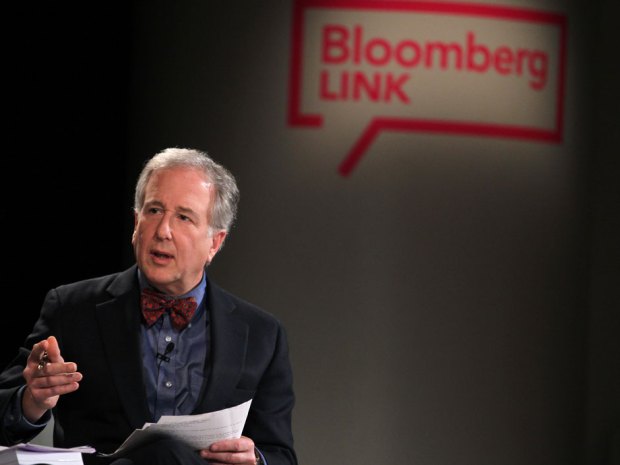
Matthew Winkler, Editor in Chief at Bloomberg
It makes sense for Citi's trading team to utilise content from their in-house researchers. A Bloomberg terminal costs around $2000 per month. CitiFX Wire is an ideal replacement, apart from CitiFX's analysts providing content, CitiFX Wire also receives content from Dow Jones's DJ FX Trader.
Since the journalistic breach of confidentiality & privacy was unveiled last week by Bloomberg, the news provider has changed access rights for reporters. It was revealed that Bloomberg's journalists had access to high level customer data, including;
Login Creation Date – this provides information on when a client initiated usage of a Bloomberg terminal.
Login History – this provides information on when a user logged into the terminal.
High Level Usage Data – this provides information on functions used — aggregated over time — with no ability to look into specific security information.
Help Desk Inquiries – this contains information about customer inquiries and requests. This was typically used to answer client inquiries to reporters about news stories.
Bloomberg acted immediately after the news broke out and now journalists have the same rights as clients. In a statement by editor in chief Matthew Winkler on the firm's website, the editor explains the new measures taken: "we immediately changed our policy so that reporters now have no greater access to information than our customers have. Removing this access will have no effect on Bloomberg news-gathering.”
Mr Matthew further stated that the “error is inexcusable and the firm is sorry about what happened". Reporters had access to certain amount of discrete data including a clients history of logging in and out, as well as the number of times the help desk was inquired.
Wall Street has raised its concerns over the information leakage, JP Morgan made a statement on Wednesday (according to Reuters), the bank has requested for Bloomberg to provide details of the logs of all staff members since 2008 who used the company's data terminals to search activities of J.P. Morgan subscribers.
Mr Eaglstein, adds, that "garnering trust and protecting credibility are the most important qualities of any successful financial information service”.

Rupert Murdoch was questioned by the High Court
Journalists have to remain credible and follow the rules and regulations applied by industry bodies, especially in financial markets where sensitive data can be used and misused for a monetary benefit and potentially impact the markets. In the UK, the Press Complaints Commission (PCC) identifies key areas a news business needs to adhere to remain transparent and compliant, the PCC states on its website in regards to the Editors Code; “All members of the press have a duty to maintain the highest professional standards. The Code, which includes this preamble and the public interest exceptions below, sets the benchmark for those ethical standards, protecting both the rights of the individual and the public's right to know. It is the cornerstone of the system of self-regulation to which the industry has made a binding commitment.”
In the UK, a major news related scandal was unfolded where journalists of the News of the World (a UK based tabloid which is part of News International owned by Rupert Murdoch) were using ill-tactics to gain sensitive information. Employees of the newspaper were accused of engaging in; phone hacking, police bribery, and exercising improper influence in the pursuit of publishing stories. Investigations conducted from 2005 to 2007 concluded that the paper's phone hacking activities were limited to celebrities, politicians and members of the British Royal Family.
The scandal had detrimental effects for the news publication; senior people had to resign, were dismissed and even legally cautioned.
This article has been updated since it was first published on Friday the 17th of May 2013.
Updated: Citi's FX trading desks will be making use of the bank's in-house chat function that is part of the banks FX news wire, in a step which will be replacing Bloomberg's chat tool, according to a report in The Financial Times. Citi's in-house news wire service provides news; a range of reports from short-term intra-day commentary to longer-term macro research; G10 coverage and onshore and offshore emerging markets. It has been established since 2010 and is provided to the bank's institutional client base.
The move comes in when premier news provider, Bloomberg, was caught in the act of 'snooping' around client data. The news and information company that supplies data to the world's leading banks, hedge funds and government offices, found journalists had access to sensitive client data, however they are not linked together. In a statement given to Forex Magnates, Citi confirms that the migration from CitiFX Wire to Bloomberg is not linked to concerns over sensitivity: “This has been in the works for some time and is unrelated to recent issues."
The service has been growing as volatility and key events keep markets upbeat and traders are on the look out for important & useful information. In March 2013, the news service hit a record number of viewings on its portal on the 25th of March the service recorded a 95% YoY growth rate.
Matthew Winkler, Editor in Chief at Bloomberg
It makes sense for Citi's trading team to utilise content from their in-house researchers. A Bloomberg terminal costs around $2000 per month. CitiFX Wire is an ideal replacement, apart from CitiFX's analysts providing content, CitiFX Wire also receives content from Dow Jones's DJ FX Trader.
Since the journalistic breach of confidentiality & privacy was unveiled last week by Bloomberg, the news provider has changed access rights for reporters. It was revealed that Bloomberg's journalists had access to high level customer data, including;
Login Creation Date – this provides information on when a client initiated usage of a Bloomberg terminal.
Login History – this provides information on when a user logged into the terminal.
High Level Usage Data – this provides information on functions used — aggregated over time — with no ability to look into specific security information.
Help Desk Inquiries – this contains information about customer inquiries and requests. This was typically used to answer client inquiries to reporters about news stories.
Bloomberg acted immediately after the news broke out and now journalists have the same rights as clients. In a statement by editor in chief Matthew Winkler on the firm's website, the editor explains the new measures taken: "we immediately changed our policy so that reporters now have no greater access to information than our customers have. Removing this access will have no effect on Bloomberg news-gathering.”
Mr Matthew further stated that the “error is inexcusable and the firm is sorry about what happened". Reporters had access to certain amount of discrete data including a clients history of logging in and out, as well as the number of times the help desk was inquired.
Wall Street has raised its concerns over the information leakage, JP Morgan made a statement on Wednesday (according to Reuters), the bank has requested for Bloomberg to provide details of the logs of all staff members since 2008 who used the company's data terminals to search activities of J.P. Morgan subscribers.
Mr Eaglstein, adds, that "garnering trust and protecting credibility are the most important qualities of any successful financial information service”.
Rupert Murdoch was questioned by the High Court
Journalists have to remain credible and follow the rules and regulations applied by industry bodies, especially in financial markets where sensitive data can be used and misused for a monetary benefit and potentially impact the markets. In the UK, the Press Complaints Commission (PCC) identifies key areas a news business needs to adhere to remain transparent and compliant, the PCC states on its website in regards to the Editors Code; “All members of the press have a duty to maintain the highest professional standards. The Code, which includes this preamble and the public interest exceptions below, sets the benchmark for those ethical standards, protecting both the rights of the individual and the public's right to know. It is the cornerstone of the system of self-regulation to which the industry has made a binding commitment.”
In the UK, a major news related scandal was unfolded where journalists of the News of the World (a UK based tabloid which is part of News International owned by Rupert Murdoch) were using ill-tactics to gain sensitive information. Employees of the newspaper were accused of engaging in; phone hacking, police bribery, and exercising improper influence in the pursuit of publishing stories. Investigations conducted from 2005 to 2007 concluded that the paper's phone hacking activities were limited to celebrities, politicians and members of the British Royal Family.
The scandal had detrimental effects for the news publication; senior people had to resign, were dismissed and even legally cautioned.
This article has been updated since it was first published on Friday the 17th of May 2013.
iFOREX Adds Saudi and South Korean Equity CFDs as IPO Is Delayed
Featured Videos
Executive Interview | Charlotte Bullock | Chief Product Officer, Bank of London | FMLS:25
In this interview, we sat down with Charlotte Bullock, Head of Product at The Bank of London, previously at SAP and now shaping product at one of the sector’s most ambitious new banking players.
Charlotte reflects on the Summit so far and talks about the culture inside fintech banks today. We look at the pressures that come with scaling, and how firms can hold onto the nimble approach that made them stand out early on.
We also cover the state of payments ahead of her appearance on the payments roundtable: the blockages financial firms face, the areas that still need fixing, and what a realistic solution looks like in 2026.
In this interview, we sat down with Charlotte Bullock, Head of Product at The Bank of London, previously at SAP and now shaping product at one of the sector’s most ambitious new banking players.
Charlotte reflects on the Summit so far and talks about the culture inside fintech banks today. We look at the pressures that come with scaling, and how firms can hold onto the nimble approach that made them stand out early on.
We also cover the state of payments ahead of her appearance on the payments roundtable: the blockages financial firms face, the areas that still need fixing, and what a realistic solution looks like in 2026.
In this interview, we sat down with Charlotte Bullock, Head of Product at The Bank of London, previously at SAP and now shaping product at one of the sector’s most ambitious new banking players.
Charlotte reflects on the Summit so far and talks about the culture inside fintech banks today. We look at the pressures that come with scaling, and how firms can hold onto the nimble approach that made them stand out early on.
We also cover the state of payments ahead of her appearance on the payments roundtable: the blockages financial firms face, the areas that still need fixing, and what a realistic solution looks like in 2026.
In this interview, we sat down with Charlotte Bullock, Head of Product at The Bank of London, previously at SAP and now shaping product at one of the sector’s most ambitious new banking players.
Charlotte reflects on the Summit so far and talks about the culture inside fintech banks today. We look at the pressures that come with scaling, and how firms can hold onto the nimble approach that made them stand out early on.
We also cover the state of payments ahead of her appearance on the payments roundtable: the blockages financial firms face, the areas that still need fixing, and what a realistic solution looks like in 2026.
In this conversation, we sit down with Drew Niv, CSO at ATFX Connect and one of the most influential figures in modern FX.
We speak about market structure, the institutional view on liquidity, and the sharp rise of prop trading, a sector Drew has been commenting on in recent months. Drew explains why he once dismissed prop trading, why his view changed, and what he now thinks the model means for brokers, clients and risk managers.
We explore subscription-fee dependency, the high reneging rate, and the long-term challenge: how brokers can build a more stable and honest version of the model. Drew also talks about the traffic advantage standalone prop firms have built and why brokers may still win in the long run if they take the right approach.
In this conversation, we sit down with Drew Niv, CSO at ATFX Connect and one of the most influential figures in modern FX.
We speak about market structure, the institutional view on liquidity, and the sharp rise of prop trading, a sector Drew has been commenting on in recent months. Drew explains why he once dismissed prop trading, why his view changed, and what he now thinks the model means for brokers, clients and risk managers.
We explore subscription-fee dependency, the high reneging rate, and the long-term challenge: how brokers can build a more stable and honest version of the model. Drew also talks about the traffic advantage standalone prop firms have built and why brokers may still win in the long run if they take the right approach.
In this conversation, we sit down with Drew Niv, CSO at ATFX Connect and one of the most influential figures in modern FX.
We speak about market structure, the institutional view on liquidity, and the sharp rise of prop trading, a sector Drew has been commenting on in recent months. Drew explains why he once dismissed prop trading, why his view changed, and what he now thinks the model means for brokers, clients and risk managers.
We explore subscription-fee dependency, the high reneging rate, and the long-term challenge: how brokers can build a more stable and honest version of the model. Drew also talks about the traffic advantage standalone prop firms have built and why brokers may still win in the long run if they take the right approach.
In this conversation, we sit down with Drew Niv, CSO at ATFX Connect and one of the most influential figures in modern FX.
We speak about market structure, the institutional view on liquidity, and the sharp rise of prop trading, a sector Drew has been commenting on in recent months. Drew explains why he once dismissed prop trading, why his view changed, and what he now thinks the model means for brokers, clients and risk managers.
We explore subscription-fee dependency, the high reneging rate, and the long-term challenge: how brokers can build a more stable and honest version of the model. Drew also talks about the traffic advantage standalone prop firms have built and why brokers may still win in the long run if they take the right approach.
In this conversation, we sit down with Drew Niv, CSO at ATFX Connect and one of the most influential figures in modern FX.
We speak about market structure, the institutional view on liquidity, and the sharp rise of prop trading, a sector Drew has been commenting on in recent months. Drew explains why he once dismissed prop trading, why his view changed, and what he now thinks the model means for brokers, clients and risk managers.
We explore subscription-fee dependency, the high reneging rate, and the long-term challenge: how brokers can build a more stable and honest version of the model. Drew also talks about the traffic advantage standalone prop firms have built and why brokers may still win in the long run if they take the right approach.
In this conversation, we sit down with Drew Niv, CSO at ATFX Connect and one of the most influential figures in modern FX.
We speak about market structure, the institutional view on liquidity, and the sharp rise of prop trading, a sector Drew has been commenting on in recent months. Drew explains why he once dismissed prop trading, why his view changed, and what he now thinks the model means for brokers, clients and risk managers.
We explore subscription-fee dependency, the high reneging rate, and the long-term challenge: how brokers can build a more stable and honest version of the model. Drew also talks about the traffic advantage standalone prop firms have built and why brokers may still win in the long run if they take the right approach.
Executive Interview | Remonda Z. Kirketerp Møller| CEO & Founder Muinmos | FMLS:25
In this interview, Remonda Z. Kirketerp Møller, founder of Muinmos, breaks down the state of AI in regtech and what responsible adoption really looks like for brokers. We talk about rising fragmentation, the pressures around compliance accuracy, and why most firms are still in the early stages of AI maturity.
Ramanda also shares insights on regulator sandboxes, shifting expectations around accountability, and the current reality of MiCA licensing and passporting in Europe.
A concise look at where compliance, onboarding, and AI-driven processes are heading next.
In this interview, Remonda Z. Kirketerp Møller, founder of Muinmos, breaks down the state of AI in regtech and what responsible adoption really looks like for brokers. We talk about rising fragmentation, the pressures around compliance accuracy, and why most firms are still in the early stages of AI maturity.
Ramanda also shares insights on regulator sandboxes, shifting expectations around accountability, and the current reality of MiCA licensing and passporting in Europe.
A concise look at where compliance, onboarding, and AI-driven processes are heading next.
In this interview, Remonda Z. Kirketerp Møller, founder of Muinmos, breaks down the state of AI in regtech and what responsible adoption really looks like for brokers. We talk about rising fragmentation, the pressures around compliance accuracy, and why most firms are still in the early stages of AI maturity.
Ramanda also shares insights on regulator sandboxes, shifting expectations around accountability, and the current reality of MiCA licensing and passporting in Europe.
A concise look at where compliance, onboarding, and AI-driven processes are heading next.
In this interview, Remonda Z. Kirketerp Møller, founder of Muinmos, breaks down the state of AI in regtech and what responsible adoption really looks like for brokers. We talk about rising fragmentation, the pressures around compliance accuracy, and why most firms are still in the early stages of AI maturity.
Ramanda also shares insights on regulator sandboxes, shifting expectations around accountability, and the current reality of MiCA licensing and passporting in Europe.
A concise look at where compliance, onboarding, and AI-driven processes are heading next.
In this interview, Remonda Z. Kirketerp Møller, founder of Muinmos, breaks down the state of AI in regtech and what responsible adoption really looks like for brokers. We talk about rising fragmentation, the pressures around compliance accuracy, and why most firms are still in the early stages of AI maturity.
Ramanda also shares insights on regulator sandboxes, shifting expectations around accountability, and the current reality of MiCA licensing and passporting in Europe.
A concise look at where compliance, onboarding, and AI-driven processes are heading next.
In this interview, Remonda Z. Kirketerp Møller, founder of Muinmos, breaks down the state of AI in regtech and what responsible adoption really looks like for brokers. We talk about rising fragmentation, the pressures around compliance accuracy, and why most firms are still in the early stages of AI maturity.
Ramanda also shares insights on regulator sandboxes, shifting expectations around accountability, and the current reality of MiCA licensing and passporting in Europe.
A concise look at where compliance, onboarding, and AI-driven processes are heading next.
In this conversation, we speak with Aydin Bonabi, CEO and co-founder of Surveill, a firm focused on fraud detection and AI-driven compliance tools for financial institutions.
We start with Aydin’s view of the Summit and the challenges brokers face as fraud tactics grow more complex. He explains how firms can stay ahead through real-time signals, data patterns, and early-stage detection.
We also talk about AI training and why compliance teams often struggle to keep models accurate, fair, and aligned with regulatory expectations. Aydin breaks down what “good” AI training looks like inside a financial environment, including the importance of clean data, domain expertise, and human oversight.
He closes with a clear message: fraud is scaling, and so must the tools that stop it.
In this conversation, we speak with Aydin Bonabi, CEO and co-founder of Surveill, a firm focused on fraud detection and AI-driven compliance tools for financial institutions.
We start with Aydin’s view of the Summit and the challenges brokers face as fraud tactics grow more complex. He explains how firms can stay ahead through real-time signals, data patterns, and early-stage detection.
We also talk about AI training and why compliance teams often struggle to keep models accurate, fair, and aligned with regulatory expectations. Aydin breaks down what “good” AI training looks like inside a financial environment, including the importance of clean data, domain expertise, and human oversight.
He closes with a clear message: fraud is scaling, and so must the tools that stop it.
In this conversation, we speak with Aydin Bonabi, CEO and co-founder of Surveill, a firm focused on fraud detection and AI-driven compliance tools for financial institutions.
We start with Aydin’s view of the Summit and the challenges brokers face as fraud tactics grow more complex. He explains how firms can stay ahead through real-time signals, data patterns, and early-stage detection.
We also talk about AI training and why compliance teams often struggle to keep models accurate, fair, and aligned with regulatory expectations. Aydin breaks down what “good” AI training looks like inside a financial environment, including the importance of clean data, domain expertise, and human oversight.
He closes with a clear message: fraud is scaling, and so must the tools that stop it.
In this conversation, we speak with Aydin Bonabi, CEO and co-founder of Surveill, a firm focused on fraud detection and AI-driven compliance tools for financial institutions.
We start with Aydin’s view of the Summit and the challenges brokers face as fraud tactics grow more complex. He explains how firms can stay ahead through real-time signals, data patterns, and early-stage detection.
We also talk about AI training and why compliance teams often struggle to keep models accurate, fair, and aligned with regulatory expectations. Aydin breaks down what “good” AI training looks like inside a financial environment, including the importance of clean data, domain expertise, and human oversight.
He closes with a clear message: fraud is scaling, and so must the tools that stop it.
In this conversation, we speak with Aydin Bonabi, CEO and co-founder of Surveill, a firm focused on fraud detection and AI-driven compliance tools for financial institutions.
We start with Aydin’s view of the Summit and the challenges brokers face as fraud tactics grow more complex. He explains how firms can stay ahead through real-time signals, data patterns, and early-stage detection.
We also talk about AI training and why compliance teams often struggle to keep models accurate, fair, and aligned with regulatory expectations. Aydin breaks down what “good” AI training looks like inside a financial environment, including the importance of clean data, domain expertise, and human oversight.
He closes with a clear message: fraud is scaling, and so must the tools that stop it.
In this conversation, we speak with Aydin Bonabi, CEO and co-founder of Surveill, a firm focused on fraud detection and AI-driven compliance tools for financial institutions.
We start with Aydin’s view of the Summit and the challenges brokers face as fraud tactics grow more complex. He explains how firms can stay ahead through real-time signals, data patterns, and early-stage detection.
We also talk about AI training and why compliance teams often struggle to keep models accurate, fair, and aligned with regulatory expectations. Aydin breaks down what “good” AI training looks like inside a financial environment, including the importance of clean data, domain expertise, and human oversight.
He closes with a clear message: fraud is scaling, and so must the tools that stop it.
Exness expands its presence in Africa: Inside our interview with Paul Margarites in Cape Town
Finance Magnates met with Paul Margarites, Exness regional commercial director for Sub-Saharan Africa, during a visit to the firm’s office opening in Cape Town. In this talk, led by Andrea Badiola Mateos, Co-CEO at Finance Magnates, Paul shares views on the South African trading space, local user behavior, mobile trends, regulation, team growth, and how Exness plans to grow in more markets across the region. @Exness
Read the article at: https://www.financemagnates.com/thought-leadership/exness-expands-its-presence-in-africa-inside-our-interview-with-paul-margarites/
#exness #financemagnates #exnesstrading #CFDtrading #tradeonline #africanews #capetown
Finance Magnates met with Paul Margarites, Exness regional commercial director for Sub-Saharan Africa, during a visit to the firm’s office opening in Cape Town. In this talk, led by Andrea Badiola Mateos, Co-CEO at Finance Magnates, Paul shares views on the South African trading space, local user behavior, mobile trends, regulation, team growth, and how Exness plans to grow in more markets across the region. @Exness
Read the article at: https://www.financemagnates.com/thought-leadership/exness-expands-its-presence-in-africa-inside-our-interview-with-paul-margarites/
#exness #financemagnates #exnesstrading #CFDtrading #tradeonline #africanews #capetown
Finance Magnates met with Paul Margarites, Exness regional commercial director for Sub-Saharan Africa, during a visit to the firm’s office opening in Cape Town. In this talk, led by Andrea Badiola Mateos, Co-CEO at Finance Magnates, Paul shares views on the South African trading space, local user behavior, mobile trends, regulation, team growth, and how Exness plans to grow in more markets across the region. @Exness
Read the article at: https://www.financemagnates.com/thought-leadership/exness-expands-its-presence-in-africa-inside-our-interview-with-paul-margarites/
#exness #financemagnates #exnesstrading #CFDtrading #tradeonline #africanews #capetown
Finance Magnates met with Paul Margarites, Exness regional commercial director for Sub-Saharan Africa, during a visit to the firm’s office opening in Cape Town. In this talk, led by Andrea Badiola Mateos, Co-CEO at Finance Magnates, Paul shares views on the South African trading space, local user behavior, mobile trends, regulation, team growth, and how Exness plans to grow in more markets across the region. @Exness
Read the article at: https://www.financemagnates.com/thought-leadership/exness-expands-its-presence-in-africa-inside-our-interview-with-paul-margarites/
#exness #financemagnates #exnesstrading #CFDtrading #tradeonline #africanews #capetown
Finance Magnates met with Paul Margarites, Exness regional commercial director for Sub-Saharan Africa, during a visit to the firm’s office opening in Cape Town. In this talk, led by Andrea Badiola Mateos, Co-CEO at Finance Magnates, Paul shares views on the South African trading space, local user behavior, mobile trends, regulation, team growth, and how Exness plans to grow in more markets across the region. @Exness
Read the article at: https://www.financemagnates.com/thought-leadership/exness-expands-its-presence-in-africa-inside-our-interview-with-paul-margarites/
#exness #financemagnates #exnesstrading #CFDtrading #tradeonline #africanews #capetown
Finance Magnates met with Paul Margarites, Exness regional commercial director for Sub-Saharan Africa, during a visit to the firm’s office opening in Cape Town. In this talk, led by Andrea Badiola Mateos, Co-CEO at Finance Magnates, Paul shares views on the South African trading space, local user behavior, mobile trends, regulation, team growth, and how Exness plans to grow in more markets across the region. @Exness
Read the article at: https://www.financemagnates.com/thought-leadership/exness-expands-its-presence-in-africa-inside-our-interview-with-paul-margarites/
#exness #financemagnates #exnesstrading #CFDtrading #tradeonline #africanews #capetown