On the other side are fintech firms whose underlying technology isn’t much different from their competitors, and may be sourced from a third party. Without a unique solution, these firms risk becoming commoditized. Nonetheless, many such fintech startups do command impressive valuations thanks to their marketing prowess that has allowed them to attract growing groups of clients.
Also, the line between creating your own technology and using third party solutions has been thinning. While white label turnkey products that just have different skins will never be confused with proprietary solutions, many technology firms license modules to complement their overall products. Within fintech, this often takes the form of charting and other data visualization tools which make more sense to license then to develop internally, but that don’t detract from a startup’s overall control of their technology.
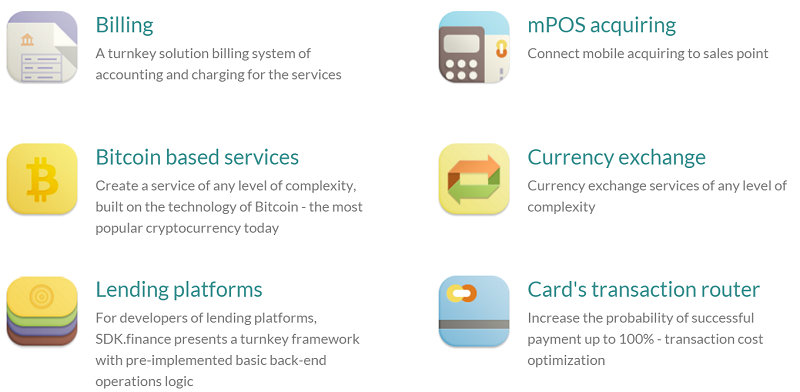
Aiming to service this fast growing sector, and lowering the barriers to entering the industry, is SDK.finance, a creation of Czech Republic based Cyber Force Group. Rather than offering solutions to consumers, SDK.finance provides backend technology that enables other businesses to operate digital fintech services. Among their products are backend components for E-Wallets, prepaid bank cards, online lending, mPOS acquiring, and P2P money transfer payment systems that are used to assist firms in launching their own digital solutions.
It’s not just saving time in development but also recruiting employees and training them
SDK.finance’s philosophy is that they believe that many firms are better suited saving their time and money on building their business instead of developing all of their technology. The company’s offering focuses on backend infrastructure. The solution is offered as a software as a service (SaaS) product, with customers paying a subscription fee to use the underlying backend infrastructure which connects with their frontend product and database.
Alexey Malyshev, CMO at SDK.finance, explained that “their clients are looking for full control”. To do this, SDK.finance provides the backend infrastructure to help power the fintech products, but their customers are responsible for the development of the front-end client facing interface as well as their database. The result is that even though SDK.finance may provide assistance or introduce partners to help with frontend and database building, the ownership of the database and frontend customizations of the product are in the full control of the client.
Through this model, Malyshev expressed that he believes firms can save three to six months of their development time by sourcing backend solutions from SDK.finance. He explained that “it’s not just saving time in development but also recruiting employees and training them” that adds up.
Why is SDK.finance important? Because everyone is a fintech firm
One of the results of the migration of banking, payments and overall finance to a digital and mobile world is the emergence of new players. The best example is Kenya’s successful mobile payments network, mPesa, which is the product of telecom carriers and not financial institutions. Using their telecom network, mPesa has become a ‘bank of sorts’, and is used as an alternative for not just transferring payments, but also to store deposits.
Elsewhere, well before global giants Samsung and Apple, who also aren’t financial firms, launched their payment initiatives, Starbucks was leading the way in app based mobile payments. The common denominator of these alternative fintech entrants is a large customer base that is being leveraged to introduce a financial product.
Overall, taking advantage of a pre-existing client base to upsell financial products isn’t necessarily a new thing. The prime example is offering credit, where scores of retailers have partnered with banks and credit card companies to provide branded cards to their customers. Also, many hardware and automobile firms have similarly launched financing units to provide new sources of revenues.
Alexey Malyshev, CMO at SDK.finance
Looking ahead, with SaaS turnkey fintech solutions, the next generation of these forays into finance should have an even easier time launching products that compete with traditional financial firms. Following mPesa’s success, several telecom firms are trying to replicate a mobile based payment network for cross border transfer.
Other potential examples can be a global convenience store such as 7/11 that creates a money transfer and eWallet system to compete with firms such as Western Union. In addition, a large accounting firm servicing SMEs could use solutions from SDK.finance or other similar companies to start offering billing and invoicing solutions. In addition, they could partner with investors to add online lending services.
The bottom line trend is that innovations in financial technology are allowing practically any firm to become a fintech player. For companies with entrenched customer bases, adding fintech services is a potential source for new revenues. In SDK.finance’s case, Malyshev stated that although initial demand for their solutions has been from startups, they are also gaining interest from more established firms as well as banks.
Revenues vs proprietary systems
Returning to the question of whether a firm is best suited to own their technology is one that needs to be answered. Malyshev answered that “the idea to own your own technology isn’t always right” adding that “you need to own market share and have customers”. He further explained that a firm can always make the leap to fully own all of their source code in the future. But, using solutions such as those from SDK.finance are a great way for a firm to get to market quickly to validate their business and begin to acquire customers.
Fintech Spotlight is a new column on Finance Magnates devoted to reviewing innovative financial technology companies and sector trends.
On the other side are fintech firms whose underlying technology isn’t much different from their competitors, and may be sourced from a third party. Without a unique solution, these firms risk becoming commoditized. Nonetheless, many such fintech startups do command impressive valuations thanks to their marketing prowess that has allowed them to attract growing groups of clients.
Also, the line between creating your own technology and using third party solutions has been thinning. While white label turnkey products that just have different skins will never be confused with proprietary solutions, many technology firms license modules to complement their overall products. Within fintech, this often takes the form of charting and other data visualization tools which make more sense to license then to develop internally, but that don’t detract from a startup’s overall control of their technology.
Aiming to service this fast growing sector, and lowering the barriers to entering the industry, is SDK.finance, a creation of Czech Republic based Cyber Force Group. Rather than offering solutions to consumers, SDK.finance provides backend technology that enables other businesses to operate digital fintech services. Among their products are backend components for E-Wallets, prepaid bank cards, online lending, mPOS acquiring, and P2P money transfer payment systems that are used to assist firms in launching their own digital solutions.
It’s not just saving time in development but also recruiting employees and training them
SDK.finance’s philosophy is that they believe that many firms are better suited saving their time and money on building their business instead of developing all of their technology. The company’s offering focuses on backend infrastructure. The solution is offered as a software as a service (SaaS) product, with customers paying a subscription fee to use the underlying backend infrastructure which connects with their frontend product and database.
Alexey Malyshev, CMO at SDK.finance, explained that “their clients are looking for full control”. To do this, SDK.finance provides the backend infrastructure to help power the fintech products, but their customers are responsible for the development of the front-end client facing interface as well as their database. The result is that even though SDK.finance may provide assistance or introduce partners to help with frontend and database building, the ownership of the database and frontend customizations of the product are in the full control of the client.
Through this model, Malyshev expressed that he believes firms can save three to six months of their development time by sourcing backend solutions from SDK.finance. He explained that “it’s not just saving time in development but also recruiting employees and training them” that adds up.
Why is SDK.finance important? Because everyone is a fintech firm
One of the results of the migration of banking, payments and overall finance to a digital and mobile world is the emergence of new players. The best example is Kenya’s successful mobile payments network, mPesa, which is the product of telecom carriers and not financial institutions. Using their telecom network, mPesa has become a ‘bank of sorts’, and is used as an alternative for not just transferring payments, but also to store deposits.
Elsewhere, well before global giants Samsung and Apple, who also aren’t financial firms, launched their payment initiatives, Starbucks was leading the way in app based mobile payments. The common denominator of these alternative fintech entrants is a large customer base that is being leveraged to introduce a financial product.
Overall, taking advantage of a pre-existing client base to upsell financial products isn’t necessarily a new thing. The prime example is offering credit, where scores of retailers have partnered with banks and credit card companies to provide branded cards to their customers. Also, many hardware and automobile firms have similarly launched financing units to provide new sources of revenues.
Alexey Malyshev, CMO at SDK.finance
Looking ahead, with SaaS turnkey fintech solutions, the next generation of these forays into finance should have an even easier time launching products that compete with traditional financial firms. Following mPesa’s success, several telecom firms are trying to replicate a mobile based payment network for cross border transfer.
Other potential examples can be a global convenience store such as 7/11 that creates a money transfer and eWallet system to compete with firms such as Western Union. In addition, a large accounting firm servicing SMEs could use solutions from SDK.finance or other similar companies to start offering billing and invoicing solutions. In addition, they could partner with investors to add online lending services.
The bottom line trend is that innovations in financial technology are allowing practically any firm to become a fintech player. For companies with entrenched customer bases, adding fintech services is a potential source for new revenues. In SDK.finance’s case, Malyshev stated that although initial demand for their solutions has been from startups, they are also gaining interest from more established firms as well as banks.
Revenues vs proprietary systems
Returning to the question of whether a firm is best suited to own their technology is one that needs to be answered. Malyshev answered that “the idea to own your own technology isn’t always right” adding that “you need to own market share and have customers”. He further explained that a firm can always make the leap to fully own all of their source code in the future. But, using solutions such as those from SDK.finance are a great way for a firm to get to market quickly to validate their business and begin to acquire customers.
Fintech Spotlight is a new column on Finance Magnates devoted to reviewing innovative financial technology companies and sector trends.
Visa Brings Stablecoins to Main Street Banking With U.S. Rollout
Featured Videos
How FYNXT is Transforming Brokerages with Modular Tech | Executive Interview with Stephen Miles
How FYNXT is Transforming Brokerages with Modular Tech | Executive Interview with Stephen Miles
How FYNXT is Transforming Brokerages with Modular Tech | Executive Interview with Stephen Miles
How FYNXT is Transforming Brokerages with Modular Tech | Executive Interview with Stephen Miles
Join us for an exclusive interview with Stephen Miles, Chief Revenue Officer at FYNXT, recorded live at FMLS:25. In this conversation, Stephen breaks down how modular brokerage technology is driving growth, retention, and efficiency across the brokerage industry.
Learn how FYNXT's unified yet modular platform is giving brokers a competitive edge—powering faster onboarding, increased trading volumes, and dramatically improved IB performance.
🔑 What You'll Learn in This Video:
- The biggest challenges brokerages face going into 2026
- Why FYNXT’s modular platform is outperforming in-house builds
- How automation is transforming IB channels
- The real ROI: 11x LTV increases and reduced acquisition costs
👉 Don’t forget to like, comment, and subscribe.
#FYNXT #StephenMiles #FMLS2025 #BrokerageTechnology #ModularTech #FintechInterview #DigitalTransformation #FinancialMarkets #CROInterview #FintechInnovation #TradingTechnology #IndependentBrokers #FinanceLeaders
Join us for an exclusive interview with Stephen Miles, Chief Revenue Officer at FYNXT, recorded live at FMLS:25. In this conversation, Stephen breaks down how modular brokerage technology is driving growth, retention, and efficiency across the brokerage industry.
Learn how FYNXT's unified yet modular platform is giving brokers a competitive edge—powering faster onboarding, increased trading volumes, and dramatically improved IB performance.
🔑 What You'll Learn in This Video:
- The biggest challenges brokerages face going into 2026
- Why FYNXT’s modular platform is outperforming in-house builds
- How automation is transforming IB channels
- The real ROI: 11x LTV increases and reduced acquisition costs
👉 Don’t forget to like, comment, and subscribe.
#FYNXT #StephenMiles #FMLS2025 #BrokerageTechnology #ModularTech #FintechInterview #DigitalTransformation #FinancialMarkets #CROInterview #FintechInnovation #TradingTechnology #IndependentBrokers #FinanceLeaders
Join us for an exclusive interview with Stephen Miles, Chief Revenue Officer at FYNXT, recorded live at FMLS:25. In this conversation, Stephen breaks down how modular brokerage technology is driving growth, retention, and efficiency across the brokerage industry.
Learn how FYNXT's unified yet modular platform is giving brokers a competitive edge—powering faster onboarding, increased trading volumes, and dramatically improved IB performance.
🔑 What You'll Learn in This Video:
- The biggest challenges brokerages face going into 2026
- Why FYNXT’s modular platform is outperforming in-house builds
- How automation is transforming IB channels
- The real ROI: 11x LTV increases and reduced acquisition costs
👉 Don’t forget to like, comment, and subscribe.
#FYNXT #StephenMiles #FMLS2025 #BrokerageTechnology #ModularTech #FintechInterview #DigitalTransformation #FinancialMarkets #CROInterview #FintechInnovation #TradingTechnology #IndependentBrokers #FinanceLeaders
Join us for an exclusive interview with Stephen Miles, Chief Revenue Officer at FYNXT, recorded live at FMLS:25. In this conversation, Stephen breaks down how modular brokerage technology is driving growth, retention, and efficiency across the brokerage industry.
Learn how FYNXT's unified yet modular platform is giving brokers a competitive edge—powering faster onboarding, increased trading volumes, and dramatically improved IB performance.
🔑 What You'll Learn in This Video:
- The biggest challenges brokerages face going into 2026
- Why FYNXT’s modular platform is outperforming in-house builds
- How automation is transforming IB channels
- The real ROI: 11x LTV increases and reduced acquisition costs
👉 Don’t forget to like, comment, and subscribe.
#FYNXT #StephenMiles #FMLS2025 #BrokerageTechnology #ModularTech #FintechInterview #DigitalTransformation #FinancialMarkets #CROInterview #FintechInnovation #TradingTechnology #IndependentBrokers #FinanceLeaders
Executive Interview | Charlotte Bullock | Chief Product Officer, Bank of London | FMLS:25
Executive Interview | Charlotte Bullock | Chief Product Officer, Bank of London | FMLS:25
Executive Interview | Charlotte Bullock | Chief Product Officer, Bank of London | FMLS:25
Executive Interview | Charlotte Bullock | Chief Product Officer, Bank of London | FMLS:25
Executive Interview | Charlotte Bullock | Chief Product Officer, Bank of London | FMLS:25
Executive Interview | Charlotte Bullock | Chief Product Officer, Bank of London | FMLS:25
In this interview, we sat down with Charlotte Bullock, Head of Product at The Bank of London, previously at SAP and now shaping product at one of the sector’s most ambitious new banking players.
Charlotte reflects on the Summit so far and talks about the culture inside fintech banks today. We look at the pressures that come with scaling, and how firms can hold onto the nimble approach that made them stand out early on.
We also cover the state of payments ahead of her appearance on the payments roundtable: the blockages financial firms face, the areas that still need fixing, and what a realistic solution looks like in 2026.
In this interview, we sat down with Charlotte Bullock, Head of Product at The Bank of London, previously at SAP and now shaping product at one of the sector’s most ambitious new banking players.
Charlotte reflects on the Summit so far and talks about the culture inside fintech banks today. We look at the pressures that come with scaling, and how firms can hold onto the nimble approach that made them stand out early on.
We also cover the state of payments ahead of her appearance on the payments roundtable: the blockages financial firms face, the areas that still need fixing, and what a realistic solution looks like in 2026.
In this interview, we sat down with Charlotte Bullock, Head of Product at The Bank of London, previously at SAP and now shaping product at one of the sector’s most ambitious new banking players.
Charlotte reflects on the Summit so far and talks about the culture inside fintech banks today. We look at the pressures that come with scaling, and how firms can hold onto the nimble approach that made them stand out early on.
We also cover the state of payments ahead of her appearance on the payments roundtable: the blockages financial firms face, the areas that still need fixing, and what a realistic solution looks like in 2026.
In this interview, we sat down with Charlotte Bullock, Head of Product at The Bank of London, previously at SAP and now shaping product at one of the sector’s most ambitious new banking players.
Charlotte reflects on the Summit so far and talks about the culture inside fintech banks today. We look at the pressures that come with scaling, and how firms can hold onto the nimble approach that made them stand out early on.
We also cover the state of payments ahead of her appearance on the payments roundtable: the blockages financial firms face, the areas that still need fixing, and what a realistic solution looks like in 2026.
In this interview, we sat down with Charlotte Bullock, Head of Product at The Bank of London, previously at SAP and now shaping product at one of the sector’s most ambitious new banking players.
Charlotte reflects on the Summit so far and talks about the culture inside fintech banks today. We look at the pressures that come with scaling, and how firms can hold onto the nimble approach that made them stand out early on.
We also cover the state of payments ahead of her appearance on the payments roundtable: the blockages financial firms face, the areas that still need fixing, and what a realistic solution looks like in 2026.
In this interview, we sat down with Charlotte Bullock, Head of Product at The Bank of London, previously at SAP and now shaping product at one of the sector’s most ambitious new banking players.
Charlotte reflects on the Summit so far and talks about the culture inside fintech banks today. We look at the pressures that come with scaling, and how firms can hold onto the nimble approach that made them stand out early on.
We also cover the state of payments ahead of her appearance on the payments roundtable: the blockages financial firms face, the areas that still need fixing, and what a realistic solution looks like in 2026.
In this conversation, we sit down with Drew Niv, CSO at ATFX Connect and one of the most influential figures in modern FX.
We speak about market structure, the institutional view on liquidity, and the sharp rise of prop trading, a sector Drew has been commenting on in recent months. Drew explains why he once dismissed prop trading, why his view changed, and what he now thinks the model means for brokers, clients and risk managers.
We explore subscription-fee dependency, the high reneging rate, and the long-term challenge: how brokers can build a more stable and honest version of the model. Drew also talks about the traffic advantage standalone prop firms have built and why brokers may still win in the long run if they take the right approach.
In this conversation, we sit down with Drew Niv, CSO at ATFX Connect and one of the most influential figures in modern FX.
We speak about market structure, the institutional view on liquidity, and the sharp rise of prop trading, a sector Drew has been commenting on in recent months. Drew explains why he once dismissed prop trading, why his view changed, and what he now thinks the model means for brokers, clients and risk managers.
We explore subscription-fee dependency, the high reneging rate, and the long-term challenge: how brokers can build a more stable and honest version of the model. Drew also talks about the traffic advantage standalone prop firms have built and why brokers may still win in the long run if they take the right approach.
In this conversation, we sit down with Drew Niv, CSO at ATFX Connect and one of the most influential figures in modern FX.
We speak about market structure, the institutional view on liquidity, and the sharp rise of prop trading, a sector Drew has been commenting on in recent months. Drew explains why he once dismissed prop trading, why his view changed, and what he now thinks the model means for brokers, clients and risk managers.
We explore subscription-fee dependency, the high reneging rate, and the long-term challenge: how brokers can build a more stable and honest version of the model. Drew also talks about the traffic advantage standalone prop firms have built and why brokers may still win in the long run if they take the right approach.
In this conversation, we sit down with Drew Niv, CSO at ATFX Connect and one of the most influential figures in modern FX.
We speak about market structure, the institutional view on liquidity, and the sharp rise of prop trading, a sector Drew has been commenting on in recent months. Drew explains why he once dismissed prop trading, why his view changed, and what he now thinks the model means for brokers, clients and risk managers.
We explore subscription-fee dependency, the high reneging rate, and the long-term challenge: how brokers can build a more stable and honest version of the model. Drew also talks about the traffic advantage standalone prop firms have built and why brokers may still win in the long run if they take the right approach.
In this conversation, we sit down with Drew Niv, CSO at ATFX Connect and one of the most influential figures in modern FX.
We speak about market structure, the institutional view on liquidity, and the sharp rise of prop trading, a sector Drew has been commenting on in recent months. Drew explains why he once dismissed prop trading, why his view changed, and what he now thinks the model means for brokers, clients and risk managers.
We explore subscription-fee dependency, the high reneging rate, and the long-term challenge: how brokers can build a more stable and honest version of the model. Drew also talks about the traffic advantage standalone prop firms have built and why brokers may still win in the long run if they take the right approach.
In this conversation, we sit down with Drew Niv, CSO at ATFX Connect and one of the most influential figures in modern FX.
We speak about market structure, the institutional view on liquidity, and the sharp rise of prop trading, a sector Drew has been commenting on in recent months. Drew explains why he once dismissed prop trading, why his view changed, and what he now thinks the model means for brokers, clients and risk managers.
We explore subscription-fee dependency, the high reneging rate, and the long-term challenge: how brokers can build a more stable and honest version of the model. Drew also talks about the traffic advantage standalone prop firms have built and why brokers may still win in the long run if they take the right approach.
Executive Interview | Remonda Z. Kirketerp Møller| CEO & Founder Muinmos | FMLS:25
Executive Interview | Remonda Z. Kirketerp Møller| CEO & Founder Muinmos | FMLS:25
Executive Interview | Remonda Z. Kirketerp Møller| CEO & Founder Muinmos | FMLS:25
Executive Interview | Remonda Z. Kirketerp Møller| CEO & Founder Muinmos | FMLS:25
Executive Interview | Remonda Z. Kirketerp Møller| CEO & Founder Muinmos | FMLS:25
Executive Interview | Remonda Z. Kirketerp Møller| CEO & Founder Muinmos | FMLS:25
In this interview, Remonda Z. Kirketerp Møller, founder of Muinmos, breaks down the state of AI in regtech and what responsible adoption really looks like for brokers. We talk about rising fragmentation, the pressures around compliance accuracy, and why most firms are still in the early stages of AI maturity.
Ramanda also shares insights on regulator sandboxes, shifting expectations around accountability, and the current reality of MiCA licensing and passporting in Europe.
A concise look at where compliance, onboarding, and AI-driven processes are heading next.
In this interview, Remonda Z. Kirketerp Møller, founder of Muinmos, breaks down the state of AI in regtech and what responsible adoption really looks like for brokers. We talk about rising fragmentation, the pressures around compliance accuracy, and why most firms are still in the early stages of AI maturity.
Ramanda also shares insights on regulator sandboxes, shifting expectations around accountability, and the current reality of MiCA licensing and passporting in Europe.
A concise look at where compliance, onboarding, and AI-driven processes are heading next.
In this interview, Remonda Z. Kirketerp Møller, founder of Muinmos, breaks down the state of AI in regtech and what responsible adoption really looks like for brokers. We talk about rising fragmentation, the pressures around compliance accuracy, and why most firms are still in the early stages of AI maturity.
Ramanda also shares insights on regulator sandboxes, shifting expectations around accountability, and the current reality of MiCA licensing and passporting in Europe.
A concise look at where compliance, onboarding, and AI-driven processes are heading next.
In this interview, Remonda Z. Kirketerp Møller, founder of Muinmos, breaks down the state of AI in regtech and what responsible adoption really looks like for brokers. We talk about rising fragmentation, the pressures around compliance accuracy, and why most firms are still in the early stages of AI maturity.
Ramanda also shares insights on regulator sandboxes, shifting expectations around accountability, and the current reality of MiCA licensing and passporting in Europe.
A concise look at where compliance, onboarding, and AI-driven processes are heading next.
In this interview, Remonda Z. Kirketerp Møller, founder of Muinmos, breaks down the state of AI in regtech and what responsible adoption really looks like for brokers. We talk about rising fragmentation, the pressures around compliance accuracy, and why most firms are still in the early stages of AI maturity.
Ramanda also shares insights on regulator sandboxes, shifting expectations around accountability, and the current reality of MiCA licensing and passporting in Europe.
A concise look at where compliance, onboarding, and AI-driven processes are heading next.
In this interview, Remonda Z. Kirketerp Møller, founder of Muinmos, breaks down the state of AI in regtech and what responsible adoption really looks like for brokers. We talk about rising fragmentation, the pressures around compliance accuracy, and why most firms are still in the early stages of AI maturity.
Ramanda also shares insights on regulator sandboxes, shifting expectations around accountability, and the current reality of MiCA licensing and passporting in Europe.
A concise look at where compliance, onboarding, and AI-driven processes are heading next.
In this conversation, we speak with Aydin Bonabi, CEO and co-founder of Surveill, a firm focused on fraud detection and AI-driven compliance tools for financial institutions.
We start with Aydin’s view of the Summit and the challenges brokers face as fraud tactics grow more complex. He explains how firms can stay ahead through real-time signals, data patterns, and early-stage detection.
We also talk about AI training and why compliance teams often struggle to keep models accurate, fair, and aligned with regulatory expectations. Aydin breaks down what “good” AI training looks like inside a financial environment, including the importance of clean data, domain expertise, and human oversight.
He closes with a clear message: fraud is scaling, and so must the tools that stop it.
In this conversation, we speak with Aydin Bonabi, CEO and co-founder of Surveill, a firm focused on fraud detection and AI-driven compliance tools for financial institutions.
We start with Aydin’s view of the Summit and the challenges brokers face as fraud tactics grow more complex. He explains how firms can stay ahead through real-time signals, data patterns, and early-stage detection.
We also talk about AI training and why compliance teams often struggle to keep models accurate, fair, and aligned with regulatory expectations. Aydin breaks down what “good” AI training looks like inside a financial environment, including the importance of clean data, domain expertise, and human oversight.
He closes with a clear message: fraud is scaling, and so must the tools that stop it.
In this conversation, we speak with Aydin Bonabi, CEO and co-founder of Surveill, a firm focused on fraud detection and AI-driven compliance tools for financial institutions.
We start with Aydin’s view of the Summit and the challenges brokers face as fraud tactics grow more complex. He explains how firms can stay ahead through real-time signals, data patterns, and early-stage detection.
We also talk about AI training and why compliance teams often struggle to keep models accurate, fair, and aligned with regulatory expectations. Aydin breaks down what “good” AI training looks like inside a financial environment, including the importance of clean data, domain expertise, and human oversight.
He closes with a clear message: fraud is scaling, and so must the tools that stop it.
In this conversation, we speak with Aydin Bonabi, CEO and co-founder of Surveill, a firm focused on fraud detection and AI-driven compliance tools for financial institutions.
We start with Aydin’s view of the Summit and the challenges brokers face as fraud tactics grow more complex. He explains how firms can stay ahead through real-time signals, data patterns, and early-stage detection.
We also talk about AI training and why compliance teams often struggle to keep models accurate, fair, and aligned with regulatory expectations. Aydin breaks down what “good” AI training looks like inside a financial environment, including the importance of clean data, domain expertise, and human oversight.
He closes with a clear message: fraud is scaling, and so must the tools that stop it.
In this conversation, we speak with Aydin Bonabi, CEO and co-founder of Surveill, a firm focused on fraud detection and AI-driven compliance tools for financial institutions.
We start with Aydin’s view of the Summit and the challenges brokers face as fraud tactics grow more complex. He explains how firms can stay ahead through real-time signals, data patterns, and early-stage detection.
We also talk about AI training and why compliance teams often struggle to keep models accurate, fair, and aligned with regulatory expectations. Aydin breaks down what “good” AI training looks like inside a financial environment, including the importance of clean data, domain expertise, and human oversight.
He closes with a clear message: fraud is scaling, and so must the tools that stop it.
In this conversation, we speak with Aydin Bonabi, CEO and co-founder of Surveill, a firm focused on fraud detection and AI-driven compliance tools for financial institutions.
We start with Aydin’s view of the Summit and the challenges brokers face as fraud tactics grow more complex. He explains how firms can stay ahead through real-time signals, data patterns, and early-stage detection.
We also talk about AI training and why compliance teams often struggle to keep models accurate, fair, and aligned with regulatory expectations. Aydin breaks down what “good” AI training looks like inside a financial environment, including the importance of clean data, domain expertise, and human oversight.
He closes with a clear message: fraud is scaling, and so must the tools that stop it.