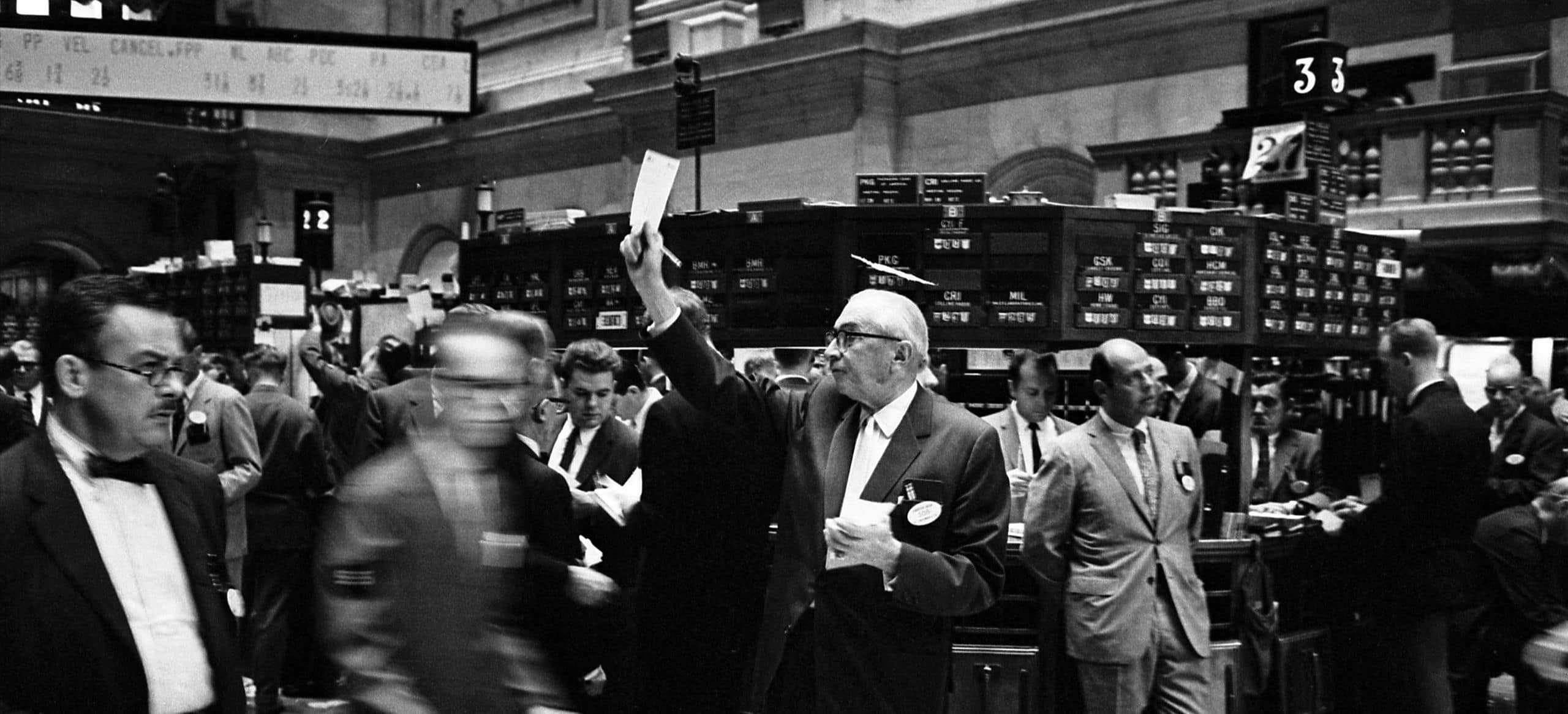
Execution management has matured from laying the foundation for electronification by automating repetitive workflows to extracting progressively more value from the infrastructure as it evolves. Each generation in execution management technology has pushed automation one level higher in the decision hierarchy.

Today, we are seeing the dawning of the next generation of execution management systems: one where AI works with the trader to combine the best of quantitative optimization (at speed and at scale) and the trader’s domain knowledge.
While the domain of automated trading has expanded and that of the human trader may seem to have narrowed, for large firms, the presence of humans on the desk remains essential.
Humans handle unforeseen events the machines were not trained for, potential technology failures that would require rolling back to older technologies to keep operating, or—in more normal conditions—just being someone the portfolio manager can shout to when things don't work out as desired, and who has the knowledge to change settings on the machines or explain why it is best not to change them.
Predicting the Ordinary
To understand the role of the trader in the trading desk of tomorrow, we need to take a detour and contemplate the differences between machine learning and human intelligence.
Machines used in quantitative asset management, statistical arbitrage trading, or automated market making all have one thing in common: they are designed to be optimal at predicting the ordinary, while not failing too badly during rare and unpredictable events that have already been experienced in the past.
They are statistical models, trained to make observations based on statistically significant training data that appear likely to generalize in the future. The slightest differences in fair price predictions can support an automated trading strategy; profits are made on a small statistical bias of winners over losers.
Tiger in the Bush
In contrast, human intelligence has automated the ordinary and tucked it into the unconscious. The mechanisms for breathing, heartbeat, and walking are very primitive and in some cases only remotely controlled by the brain. Our conscious mind is primarily concerned with exception-handling.
Is a tiger about to leap out of the bush? No living person (or perhaps just a handful) has a statistically significant dataset of examples to learn the answer to such a question, so the brain needs to interpret unique experiences and generalize very broadly, but not indiscriminately.
We accomplish this primarily through spatiotemporal pattern recognition and focusing attention on things that are not behaving as expected. If it is windy we expect leaves to ruffle everywhere, but on a quiet day if leaves are ruffling in a particular part of the bush we know something is amiss.
For machines to become 'intelligent', they need to be able to predict the exception—not just the ordinary. For this they require a broad set of sensory organs to capture the earliest cues that something exceptional is about to happen—just like humans—and a learning architecture able to predict everything all the time, as we do, and identify anomalies that warrant alerting the trader.
Then, to be useful, an intelligent system must be trained to recommend an optimal intervention, perhaps switching from a plan that was designed for the ordinary and is now likely to fail, to an appropriate response strategy.
The human trader, of course, then applies the artistry and instinct afforded by experience to that recommendation, either accepting it or rejecting it for another course of action.
But the key here is that the machine can perform more analyses per second and present the most relevant intervention opportunities to the trader for approval, meaning that the trader spends more time on higher value decisions.
Financial Markets
Nothing like this exists today. There is much talk of artificial intelligence, but most machine learning systems are primarily focused on predicting the ordinary: a smart phone will give you optimal directions based on current traffic but does not anticipate when an accident is most likely to occur or even when a past accident is most likely to be cleared.
In the financial markets, machines produce a very accurate short-term relative pricing (the heartbeat), but seldom have much to say about whether a tiger is about to leap out of the bush. We learned this lesson in 2008, and then again in the flash crash of May 2010.
In this article we tackled the question of defining what it means for a machine to be 'intelligent'. There is no consensus on how to define the frontier between machine learning and artificial intelligence, and the term used is more related to one's educational background than any attempt to define what constitutes intelligent behavior.
I believe that user interfaces of the future will be powered by intelligent machines that are able to both automate the trading desk’s underlying workflows through statistical optimization (heartbeat), and provide a stream of filtered alerts with quantitative insights (tiger in the bush) that draw the trader's attention to the most economically valuable intervention opportunities.
Execution management has matured from laying the foundation for electronification by automating repetitive workflows to extracting progressively more value from the infrastructure as it evolves. Each generation in execution management technology has pushed automation one level higher in the decision hierarchy.
Today, we are seeing the dawning of the next generation of execution management systems: one where AI works with the trader to combine the best of quantitative optimization (at speed and at scale) and the trader’s domain knowledge.
While the domain of automated trading has expanded and that of the human trader may seem to have narrowed, for large firms, the presence of humans on the desk remains essential.
Humans handle unforeseen events the machines were not trained for, potential technology failures that would require rolling back to older technologies to keep operating, or—in more normal conditions—just being someone the portfolio manager can shout to when things don't work out as desired, and who has the knowledge to change settings on the machines or explain why it is best not to change them.
Predicting the Ordinary
To understand the role of the trader in the trading desk of tomorrow, we need to take a detour and contemplate the differences between machine learning and human intelligence.
Machines used in quantitative asset management, statistical arbitrage trading, or automated market making all have one thing in common: they are designed to be optimal at predicting the ordinary, while not failing too badly during rare and unpredictable events that have already been experienced in the past.
They are statistical models, trained to make observations based on statistically significant training data that appear likely to generalize in the future. The slightest differences in fair price predictions can support an automated trading strategy; profits are made on a small statistical bias of winners over losers.
Tiger in the Bush
In contrast, human intelligence has automated the ordinary and tucked it into the unconscious. The mechanisms for breathing, heartbeat, and walking are very primitive and in some cases only remotely controlled by the brain. Our conscious mind is primarily concerned with exception-handling.
Is a tiger about to leap out of the bush? No living person (or perhaps just a handful) has a statistically significant dataset of examples to learn the answer to such a question, so the brain needs to interpret unique experiences and generalize very broadly, but not indiscriminately.
We accomplish this primarily through spatiotemporal pattern recognition and focusing attention on things that are not behaving as expected. If it is windy we expect leaves to ruffle everywhere, but on a quiet day if leaves are ruffling in a particular part of the bush we know something is amiss.
For machines to become 'intelligent', they need to be able to predict the exception—not just the ordinary. For this they require a broad set of sensory organs to capture the earliest cues that something exceptional is about to happen—just like humans—and a learning architecture able to predict everything all the time, as we do, and identify anomalies that warrant alerting the trader.
Then, to be useful, an intelligent system must be trained to recommend an optimal intervention, perhaps switching from a plan that was designed for the ordinary and is now likely to fail, to an appropriate response strategy.
The human trader, of course, then applies the artistry and instinct afforded by experience to that recommendation, either accepting it or rejecting it for another course of action.
But the key here is that the machine can perform more analyses per second and present the most relevant intervention opportunities to the trader for approval, meaning that the trader spends more time on higher value decisions.
Financial Markets
Nothing like this exists today. There is much talk of artificial intelligence, but most machine learning systems are primarily focused on predicting the ordinary: a smart phone will give you optimal directions based on current traffic but does not anticipate when an accident is most likely to occur or even when a past accident is most likely to be cleared.
In the financial markets, machines produce a very accurate short-term relative pricing (the heartbeat), but seldom have much to say about whether a tiger is about to leap out of the bush. We learned this lesson in 2008, and then again in the flash crash of May 2010.
In this article we tackled the question of defining what it means for a machine to be 'intelligent'. There is no consensus on how to define the frontier between machine learning and artificial intelligence, and the term used is more related to one's educational background than any attempt to define what constitutes intelligent behavior.
I believe that user interfaces of the future will be powered by intelligent machines that are able to both automate the trading desk’s underlying workflows through statistical optimization (heartbeat), and provide a stream of filtered alerts with quantitative insights (tiger in the bush) that draw the trader's attention to the most economically valuable intervention opportunities.
In this conversation, we sit down with Drew Niv, CSO at ATFX Connect and one of the most influential figures in modern FX.
We speak about market structure, the institutional view on liquidity, and the sharp rise of prop trading, a sector Drew has been commenting on in recent months. Drew explains why he once dismissed prop trading, why his view changed, and what he now thinks the model means for brokers, clients and risk managers.
We explore subscription-fee dependency, the high reneging rate, and the long-term challenge: how brokers can build a more stable and honest version of the model. Drew also talks about the traffic advantage standalone prop firms have built and why brokers may still win in the long run if they take the right approach.
In this conversation, we sit down with Drew Niv, CSO at ATFX Connect and one of the most influential figures in modern FX.
We speak about market structure, the institutional view on liquidity, and the sharp rise of prop trading, a sector Drew has been commenting on in recent months. Drew explains why he once dismissed prop trading, why his view changed, and what he now thinks the model means for brokers, clients and risk managers.
We explore subscription-fee dependency, the high reneging rate, and the long-term challenge: how brokers can build a more stable and honest version of the model. Drew also talks about the traffic advantage standalone prop firms have built and why brokers may still win in the long run if they take the right approach.
In this conversation, we sit down with Drew Niv, CSO at ATFX Connect and one of the most influential figures in modern FX.
We speak about market structure, the institutional view on liquidity, and the sharp rise of prop trading, a sector Drew has been commenting on in recent months. Drew explains why he once dismissed prop trading, why his view changed, and what he now thinks the model means for brokers, clients and risk managers.
We explore subscription-fee dependency, the high reneging rate, and the long-term challenge: how brokers can build a more stable and honest version of the model. Drew also talks about the traffic advantage standalone prop firms have built and why brokers may still win in the long run if they take the right approach.
In this conversation, we sit down with Drew Niv, CSO at ATFX Connect and one of the most influential figures in modern FX.
We speak about market structure, the institutional view on liquidity, and the sharp rise of prop trading, a sector Drew has been commenting on in recent months. Drew explains why he once dismissed prop trading, why his view changed, and what he now thinks the model means for brokers, clients and risk managers.
We explore subscription-fee dependency, the high reneging rate, and the long-term challenge: how brokers can build a more stable and honest version of the model. Drew also talks about the traffic advantage standalone prop firms have built and why brokers may still win in the long run if they take the right approach.
Executive Interview | Remonda Z. Kirketerp Møller| CEO & Founder Muinmos | FMLS:25
In this interview, Remonda Z. Kirketerp Møller, founder of Muinmos, breaks down the state of AI in regtech and what responsible adoption really looks like for brokers. We talk about rising fragmentation, the pressures around compliance accuracy, and why most firms are still in the early stages of AI maturity.
Ramanda also shares insights on regulator sandboxes, shifting expectations around accountability, and the current reality of MiCA licensing and passporting in Europe.
A concise look at where compliance, onboarding, and AI-driven processes are heading next.
In this interview, Remonda Z. Kirketerp Møller, founder of Muinmos, breaks down the state of AI in regtech and what responsible adoption really looks like for brokers. We talk about rising fragmentation, the pressures around compliance accuracy, and why most firms are still in the early stages of AI maturity.
Ramanda also shares insights on regulator sandboxes, shifting expectations around accountability, and the current reality of MiCA licensing and passporting in Europe.
A concise look at where compliance, onboarding, and AI-driven processes are heading next.
In this interview, Remonda Z. Kirketerp Møller, founder of Muinmos, breaks down the state of AI in regtech and what responsible adoption really looks like for brokers. We talk about rising fragmentation, the pressures around compliance accuracy, and why most firms are still in the early stages of AI maturity.
Ramanda also shares insights on regulator sandboxes, shifting expectations around accountability, and the current reality of MiCA licensing and passporting in Europe.
A concise look at where compliance, onboarding, and AI-driven processes are heading next.
In this interview, Remonda Z. Kirketerp Møller, founder of Muinmos, breaks down the state of AI in regtech and what responsible adoption really looks like for brokers. We talk about rising fragmentation, the pressures around compliance accuracy, and why most firms are still in the early stages of AI maturity.
Ramanda also shares insights on regulator sandboxes, shifting expectations around accountability, and the current reality of MiCA licensing and passporting in Europe.
A concise look at where compliance, onboarding, and AI-driven processes are heading next.
In this interview, Remonda Z. Kirketerp Møller, founder of Muinmos, breaks down the state of AI in regtech and what responsible adoption really looks like for brokers. We talk about rising fragmentation, the pressures around compliance accuracy, and why most firms are still in the early stages of AI maturity.
Ramanda also shares insights on regulator sandboxes, shifting expectations around accountability, and the current reality of MiCA licensing and passporting in Europe.
A concise look at where compliance, onboarding, and AI-driven processes are heading next.
In this interview, Remonda Z. Kirketerp Møller, founder of Muinmos, breaks down the state of AI in regtech and what responsible adoption really looks like for brokers. We talk about rising fragmentation, the pressures around compliance accuracy, and why most firms are still in the early stages of AI maturity.
Ramanda also shares insights on regulator sandboxes, shifting expectations around accountability, and the current reality of MiCA licensing and passporting in Europe.
A concise look at where compliance, onboarding, and AI-driven processes are heading next.
In this conversation, we speak with Aydin Bonabi, CEO and co-founder of Surveill, a firm focused on fraud detection and AI-driven compliance tools for financial institutions.
We start with Aydin’s view of the Summit and the challenges brokers face as fraud tactics grow more complex. He explains how firms can stay ahead through real-time signals, data patterns, and early-stage detection.
We also talk about AI training and why compliance teams often struggle to keep models accurate, fair, and aligned with regulatory expectations. Aydin breaks down what “good” AI training looks like inside a financial environment, including the importance of clean data, domain expertise, and human oversight.
He closes with a clear message: fraud is scaling, and so must the tools that stop it.
In this conversation, we speak with Aydin Bonabi, CEO and co-founder of Surveill, a firm focused on fraud detection and AI-driven compliance tools for financial institutions.
We start with Aydin’s view of the Summit and the challenges brokers face as fraud tactics grow more complex. He explains how firms can stay ahead through real-time signals, data patterns, and early-stage detection.
We also talk about AI training and why compliance teams often struggle to keep models accurate, fair, and aligned with regulatory expectations. Aydin breaks down what “good” AI training looks like inside a financial environment, including the importance of clean data, domain expertise, and human oversight.
He closes with a clear message: fraud is scaling, and so must the tools that stop it.
In this conversation, we speak with Aydin Bonabi, CEO and co-founder of Surveill, a firm focused on fraud detection and AI-driven compliance tools for financial institutions.
We start with Aydin’s view of the Summit and the challenges brokers face as fraud tactics grow more complex. He explains how firms can stay ahead through real-time signals, data patterns, and early-stage detection.
We also talk about AI training and why compliance teams often struggle to keep models accurate, fair, and aligned with regulatory expectations. Aydin breaks down what “good” AI training looks like inside a financial environment, including the importance of clean data, domain expertise, and human oversight.
He closes with a clear message: fraud is scaling, and so must the tools that stop it.
In this conversation, we speak with Aydin Bonabi, CEO and co-founder of Surveill, a firm focused on fraud detection and AI-driven compliance tools for financial institutions.
We start with Aydin’s view of the Summit and the challenges brokers face as fraud tactics grow more complex. He explains how firms can stay ahead through real-time signals, data patterns, and early-stage detection.
We also talk about AI training and why compliance teams often struggle to keep models accurate, fair, and aligned with regulatory expectations. Aydin breaks down what “good” AI training looks like inside a financial environment, including the importance of clean data, domain expertise, and human oversight.
He closes with a clear message: fraud is scaling, and so must the tools that stop it.
In this conversation, we speak with Aydin Bonabi, CEO and co-founder of Surveill, a firm focused on fraud detection and AI-driven compliance tools for financial institutions.
We start with Aydin’s view of the Summit and the challenges brokers face as fraud tactics grow more complex. He explains how firms can stay ahead through real-time signals, data patterns, and early-stage detection.
We also talk about AI training and why compliance teams often struggle to keep models accurate, fair, and aligned with regulatory expectations. Aydin breaks down what “good” AI training looks like inside a financial environment, including the importance of clean data, domain expertise, and human oversight.
He closes with a clear message: fraud is scaling, and so must the tools that stop it.
In this conversation, we speak with Aydin Bonabi, CEO and co-founder of Surveill, a firm focused on fraud detection and AI-driven compliance tools for financial institutions.
We start with Aydin’s view of the Summit and the challenges brokers face as fraud tactics grow more complex. He explains how firms can stay ahead through real-time signals, data patterns, and early-stage detection.
We also talk about AI training and why compliance teams often struggle to keep models accurate, fair, and aligned with regulatory expectations. Aydin breaks down what “good” AI training looks like inside a financial environment, including the importance of clean data, domain expertise, and human oversight.
He closes with a clear message: fraud is scaling, and so must the tools that stop it.
Exness expands its presence in Africa: Inside our interview with Paul Margarites in Cape Town
Finance Magnates met with Paul Margarites, Exness regional commercial director for Sub-Saharan Africa, during a visit to the firm’s office opening in Cape Town. In this talk, led by Andrea Badiola Mateos, Co-CEO at Finance Magnates, Paul shares views on the South African trading space, local user behavior, mobile trends, regulation, team growth, and how Exness plans to grow in more markets across the region. @Exness
Read the article at: https://www.financemagnates.com/thought-leadership/exness-expands-its-presence-in-africa-inside-our-interview-with-paul-margarites/
#exness #financemagnates #exnesstrading #CFDtrading #tradeonline #africanews #capetown
Finance Magnates met with Paul Margarites, Exness regional commercial director for Sub-Saharan Africa, during a visit to the firm’s office opening in Cape Town. In this talk, led by Andrea Badiola Mateos, Co-CEO at Finance Magnates, Paul shares views on the South African trading space, local user behavior, mobile trends, regulation, team growth, and how Exness plans to grow in more markets across the region. @Exness
Read the article at: https://www.financemagnates.com/thought-leadership/exness-expands-its-presence-in-africa-inside-our-interview-with-paul-margarites/
#exness #financemagnates #exnesstrading #CFDtrading #tradeonline #africanews #capetown
Finance Magnates met with Paul Margarites, Exness regional commercial director for Sub-Saharan Africa, during a visit to the firm’s office opening in Cape Town. In this talk, led by Andrea Badiola Mateos, Co-CEO at Finance Magnates, Paul shares views on the South African trading space, local user behavior, mobile trends, regulation, team growth, and how Exness plans to grow in more markets across the region. @Exness
Read the article at: https://www.financemagnates.com/thought-leadership/exness-expands-its-presence-in-africa-inside-our-interview-with-paul-margarites/
#exness #financemagnates #exnesstrading #CFDtrading #tradeonline #africanews #capetown
Finance Magnates met with Paul Margarites, Exness regional commercial director for Sub-Saharan Africa, during a visit to the firm’s office opening in Cape Town. In this talk, led by Andrea Badiola Mateos, Co-CEO at Finance Magnates, Paul shares views on the South African trading space, local user behavior, mobile trends, regulation, team growth, and how Exness plans to grow in more markets across the region. @Exness
Read the article at: https://www.financemagnates.com/thought-leadership/exness-expands-its-presence-in-africa-inside-our-interview-with-paul-margarites/
#exness #financemagnates #exnesstrading #CFDtrading #tradeonline #africanews #capetown
Finance Magnates met with Paul Margarites, Exness regional commercial director for Sub-Saharan Africa, during a visit to the firm’s office opening in Cape Town. In this talk, led by Andrea Badiola Mateos, Co-CEO at Finance Magnates, Paul shares views on the South African trading space, local user behavior, mobile trends, regulation, team growth, and how Exness plans to grow in more markets across the region. @Exness
Read the article at: https://www.financemagnates.com/thought-leadership/exness-expands-its-presence-in-africa-inside-our-interview-with-paul-margarites/
#exness #financemagnates #exnesstrading #CFDtrading #tradeonline #africanews #capetown
Finance Magnates met with Paul Margarites, Exness regional commercial director for Sub-Saharan Africa, during a visit to the firm’s office opening in Cape Town. In this talk, led by Andrea Badiola Mateos, Co-CEO at Finance Magnates, Paul shares views on the South African trading space, local user behavior, mobile trends, regulation, team growth, and how Exness plans to grow in more markets across the region. @Exness
Read the article at: https://www.financemagnates.com/thought-leadership/exness-expands-its-presence-in-africa-inside-our-interview-with-paul-margarites/
#exness #financemagnates #exnesstrading #CFDtrading #tradeonline #africanews #capetown
Executive Interview | Jas Shah | FMLS:25
Interview with Jas Shah
Builder | Adviser | Fintech Writer | Product Strategist
In this episode, Jonathan Fine sat down with Jas Shah, one of the most thoughtful voices in global fintech. Known for his work across advisory, product, stablecoins, and his widely read writing, Jas brings a rare combination of industry insight and plain-spoken clarity.
We talk about his first impression of the Summit, the projects that keep him busy today, and how they connect to the stablecoin panel he joined. Jas shares his view on the link between fintech, wealthtech and retail brokers, especially as firms like Revolut, eToro and Trading212 blur long-standing lines in the market.
We also explore what stablecoin adoption might look like for retail investment platforms, including a few product and UX angles that are not obvious at first glance.
To close, Jas explains how he thinks about writing, and how he approaches “shipping” pieces that spark debate across the industry.
Interview with Jas Shah
Builder | Adviser | Fintech Writer | Product Strategist
In this episode, Jonathan Fine sat down with Jas Shah, one of the most thoughtful voices in global fintech. Known for his work across advisory, product, stablecoins, and his widely read writing, Jas brings a rare combination of industry insight and plain-spoken clarity.
We talk about his first impression of the Summit, the projects that keep him busy today, and how they connect to the stablecoin panel he joined. Jas shares his view on the link between fintech, wealthtech and retail brokers, especially as firms like Revolut, eToro and Trading212 blur long-standing lines in the market.
We also explore what stablecoin adoption might look like for retail investment platforms, including a few product and UX angles that are not obvious at first glance.
To close, Jas explains how he thinks about writing, and how he approaches “shipping” pieces that spark debate across the industry.
Interview with Jas Shah
Builder | Adviser | Fintech Writer | Product Strategist
In this episode, Jonathan Fine sat down with Jas Shah, one of the most thoughtful voices in global fintech. Known for his work across advisory, product, stablecoins, and his widely read writing, Jas brings a rare combination of industry insight and plain-spoken clarity.
We talk about his first impression of the Summit, the projects that keep him busy today, and how they connect to the stablecoin panel he joined. Jas shares his view on the link between fintech, wealthtech and retail brokers, especially as firms like Revolut, eToro and Trading212 blur long-standing lines in the market.
We also explore what stablecoin adoption might look like for retail investment platforms, including a few product and UX angles that are not obvious at first glance.
To close, Jas explains how he thinks about writing, and how he approaches “shipping” pieces that spark debate across the industry.
Interview with Jas Shah
Builder | Adviser | Fintech Writer | Product Strategist
In this episode, Jonathan Fine sat down with Jas Shah, one of the most thoughtful voices in global fintech. Known for his work across advisory, product, stablecoins, and his widely read writing, Jas brings a rare combination of industry insight and plain-spoken clarity.
We talk about his first impression of the Summit, the projects that keep him busy today, and how they connect to the stablecoin panel he joined. Jas shares his view on the link between fintech, wealthtech and retail brokers, especially as firms like Revolut, eToro and Trading212 blur long-standing lines in the market.
We also explore what stablecoin adoption might look like for retail investment platforms, including a few product and UX angles that are not obvious at first glance.
To close, Jas explains how he thinks about writing, and how he approaches “shipping” pieces that spark debate across the industry.
Interview with Jas Shah
Builder | Adviser | Fintech Writer | Product Strategist
In this episode, Jonathan Fine sat down with Jas Shah, one of the most thoughtful voices in global fintech. Known for his work across advisory, product, stablecoins, and his widely read writing, Jas brings a rare combination of industry insight and plain-spoken clarity.
We talk about his first impression of the Summit, the projects that keep him busy today, and how they connect to the stablecoin panel he joined. Jas shares his view on the link between fintech, wealthtech and retail brokers, especially as firms like Revolut, eToro and Trading212 blur long-standing lines in the market.
We also explore what stablecoin adoption might look like for retail investment platforms, including a few product and UX angles that are not obvious at first glance.
To close, Jas explains how he thinks about writing, and how he approaches “shipping” pieces that spark debate across the industry.
Interview with Jas Shah
Builder | Adviser | Fintech Writer | Product Strategist
In this episode, Jonathan Fine sat down with Jas Shah, one of the most thoughtful voices in global fintech. Known for his work across advisory, product, stablecoins, and his widely read writing, Jas brings a rare combination of industry insight and plain-spoken clarity.
We talk about his first impression of the Summit, the projects that keep him busy today, and how they connect to the stablecoin panel he joined. Jas shares his view on the link between fintech, wealthtech and retail brokers, especially as firms like Revolut, eToro and Trading212 blur long-standing lines in the market.
We also explore what stablecoin adoption might look like for retail investment platforms, including a few product and UX angles that are not obvious at first glance.
To close, Jas explains how he thinks about writing, and how he approaches “shipping” pieces that spark debate across the industry.