Traders Securities' President Isao Kanamaru sheds light on the challenging Japanese market and the broker's future plans.
Photo: Bloomberg
Traders Securities originally forged a role in the financial services industry through the Japanese retail market. The genesis of the company itself is reflective in the path of its President, Isao Kanamaru. “Commodity futures in overseas and retail forex business have been the core of my career for many years. Seeing the demands for trading venues for futures contract from individual investors was on the increase, I had a strong conviction that this market would be expanding in much larger scale if online trading were put into practice in near future,” noted Mr. Kanamaru in an interview with Finance Magnates.
As such, “I came to a decision to provide a pioneering financial instrument of global market to domestic investors by founding Traders Securities Co., Ltd., one of the first securities to specialize in trading derivatives online.
Back then when we started as Traders Securities, the general recognition of derivatives including forex trading were very little in Japan but with legal framework for investor protection established and a transition of the consumer`s view to their asset management from life savings to investments, derivatives market in Japan have achieved significant progress within a very short period.”
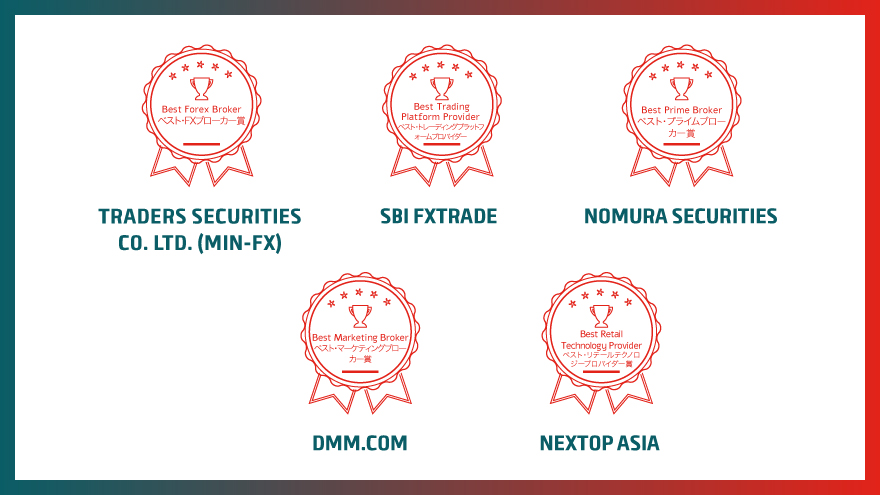
Winners of Finance Magnates' Tokyo Summit 2015
Winners of Finance
Retail forex in Japan is a hugely popular construct. Indeed, the competition prevalent in the country requires brokers and companies to maintain a unique and successful approach in their business. Traders Securities boasts a number of versatile products in its suite, with an emphasis on trader education.
Moreover, “We also have been putting a great effort in marketing to encourage people to start off their participation in the forex market by promoting various campaigns and inviting notable individuals to our online seminars. On the other hand, our services are valued by our competent clients who seek the narrowest spread for major currency pairs in the industry.”
Other professionals and traders in the industry, who recently voted Traders Securities as the Best Broker in 2015 at the Finance Magnates Tokyo Summit, echoed this endorsement and sentiment. Commenting on the award reception, Mr. Kanamaru noted, “We believe we are given this award for our determined policy, which is, our client needs are always our first priority.”
Challenges of the Japanese FX Market
However, despite the successful stint of Traders Securities, the Japanese retail foreign exchange (FX) market presents a number of challenges for existing and incoming brokers.
Perhaps most strikingly, “Client anticipations for the forex brokers are the highest standard amongst the world. It is definitely the biggest challenge for us to provide the ideal trading environment for our clients including narrow spreads, low rejection rates, and low slippages,” noted Mr. Kanamaru.
However, moving forward, “We intend to distinguish ourselves from other brokers by making the best trading experience, together with seminars, appealing campaigns and refined trading platforms, as possible available,” reiterated Mr. Kanamaru.
Irrespective of the challenges, foreign FX brokers face perhaps the most daunting task of all: penetrating the Japanese market. Additionally, the country has experienced varied levels of success by both B2B and B2C firms.
“Localization is particularly important part of B2C business. It is not only about translating websites into Japanese but also furnishing the products, which correspond to Japanese look-and-feel. Moreover you need to pursue the investors with marketing that is appropriate to Japan.”
With an eye on the future, Traders Securities has already looked beyond Japan to sustain its growth trajectory. According to Mr. Kanamaru, “We have already advanced to Indonesia as our first overseas expansion, providing commodity futures via local exchange.”
Furthermore, “We are planning to expand our line-ups with FX and CFDs in the future, focusing at present on a system for the trading of these instruments. We consider it crucial to not only distribute our services that were indeed a success in Japan but also to contribute financial products fitted to needs of local investors through relevant channel by cooperation with local firms and human resources.”
Japanese markets are known as cutthroat in terms of competition and spreads, which inherently places a disadvantage on foreign brokers. Indeed, “After the successful marketing of narrow spread towards Japanese investors, many brokers in Japan have started to pledge narrow spread for most currency pairs which eventually led to intensive competitions amongst brokers.” Conversely, other regions such as Europe or the United States are opting to pursue profits through other means, i.e. algorithmic trading, etc.
Client Snapshot
Every broker’s clientele is different, with Traders Securities being no exception. Like many other brokers in Japan, the company maintains some acute similarities, notwithstanding the popularity of select currency pairs.
“The most traded asset by our clients is the USDJPY. However, in recent years the trading volume for the USDJPY is declining somewhat and other currency pairs like the AUDJPY or EURUSD are increasingly traded instead. We believe this is owing to the fact that we are providing narrower spread for those pairs since last year and favorably received from our clients. Also, there is a contribution of a highly volatile market for EUR pairs with the Greek financial crisis behind, leading to the increase of trading volume from many traders," noted Mr. Kanamaru.
Traders Securities originally forged a role in the financial services industry through the Japanese retail market. The genesis of the company itself is reflective in the path of its President, Isao Kanamaru. “Commodity futures in overseas and retail forex business have been the core of my career for many years. Seeing the demands for trading venues for futures contract from individual investors was on the increase, I had a strong conviction that this market would be expanding in much larger scale if online trading were put into practice in near future,” noted Mr. Kanamaru in an interview with Finance Magnates.
As such, “I came to a decision to provide a pioneering financial instrument of global market to domestic investors by founding Traders Securities Co., Ltd., one of the first securities to specialize in trading derivatives online.
Back then when we started as Traders Securities, the general recognition of derivatives including forex trading were very little in Japan but with legal framework for investor protection established and a transition of the consumer`s view to their asset management from life savings to investments, derivatives market in Japan have achieved significant progress within a very short period.”
Winners of Finance Magnates' Tokyo Summit 2015
Winners of Finance
Retail forex in Japan is a hugely popular construct. Indeed, the competition prevalent in the country requires brokers and companies to maintain a unique and successful approach in their business. Traders Securities boasts a number of versatile products in its suite, with an emphasis on trader education.
Moreover, “We also have been putting a great effort in marketing to encourage people to start off their participation in the forex market by promoting various campaigns and inviting notable individuals to our online seminars. On the other hand, our services are valued by our competent clients who seek the narrowest spread for major currency pairs in the industry.”
Other professionals and traders in the industry, who recently voted Traders Securities as the Best Broker in 2015 at the Finance Magnates Tokyo Summit, echoed this endorsement and sentiment. Commenting on the award reception, Mr. Kanamaru noted, “We believe we are given this award for our determined policy, which is, our client needs are always our first priority.”
Challenges of the Japanese FX Market
However, despite the successful stint of Traders Securities, the Japanese retail foreign exchange (FX) market presents a number of challenges for existing and incoming brokers.
Perhaps most strikingly, “Client anticipations for the forex brokers are the highest standard amongst the world. It is definitely the biggest challenge for us to provide the ideal trading environment for our clients including narrow spreads, low rejection rates, and low slippages,” noted Mr. Kanamaru.
However, moving forward, “We intend to distinguish ourselves from other brokers by making the best trading experience, together with seminars, appealing campaigns and refined trading platforms, as possible available,” reiterated Mr. Kanamaru.
Irrespective of the challenges, foreign FX brokers face perhaps the most daunting task of all: penetrating the Japanese market. Additionally, the country has experienced varied levels of success by both B2B and B2C firms.
“Localization is particularly important part of B2C business. It is not only about translating websites into Japanese but also furnishing the products, which correspond to Japanese look-and-feel. Moreover you need to pursue the investors with marketing that is appropriate to Japan.”
With an eye on the future, Traders Securities has already looked beyond Japan to sustain its growth trajectory. According to Mr. Kanamaru, “We have already advanced to Indonesia as our first overseas expansion, providing commodity futures via local exchange.”
Furthermore, “We are planning to expand our line-ups with FX and CFDs in the future, focusing at present on a system for the trading of these instruments. We consider it crucial to not only distribute our services that were indeed a success in Japan but also to contribute financial products fitted to needs of local investors through relevant channel by cooperation with local firms and human resources.”
Japanese markets are known as cutthroat in terms of competition and spreads, which inherently places a disadvantage on foreign brokers. Indeed, “After the successful marketing of narrow spread towards Japanese investors, many brokers in Japan have started to pledge narrow spread for most currency pairs which eventually led to intensive competitions amongst brokers.” Conversely, other regions such as Europe or the United States are opting to pursue profits through other means, i.e. algorithmic trading, etc.
Client Snapshot
Every broker’s clientele is different, with Traders Securities being no exception. Like many other brokers in Japan, the company maintains some acute similarities, notwithstanding the popularity of select currency pairs.
“The most traded asset by our clients is the USDJPY. However, in recent years the trading volume for the USDJPY is declining somewhat and other currency pairs like the AUDJPY or EURUSD are increasingly traded instead. We believe this is owing to the fact that we are providing narrower spread for those pairs since last year and favorably received from our clients. Also, there is a contribution of a highly volatile market for EUR pairs with the Greek financial crisis behind, leading to the increase of trading volume from many traders," noted Mr. Kanamaru.
Axi Taps Andrea Rebusco as Regional Head for UK, EU and LATAM
Featured Videos
Paytiko CEO Razi Salih on Why Payment Orchestration is a MUST-HAVE for Brokers in 2026
Paytiko CEO Razi Salih on Why Payment Orchestration is a MUST-HAVE for Brokers in 2026
Paytiko CEO Razi Salih on Why Payment Orchestration is a MUST-HAVE for Brokers in 2026
Paytiko CEO Razi Salih on Why Payment Orchestration is a MUST-HAVE for Brokers in 2026
At iFX Expo Dubai, Finance Magnates spoke with Razi Salih, CEO at Paytiko, about the evolution of the payments ecosystem and why payment orchestration has shifted from an option to a necessity for brokers, prop firms, and exchanges.
Mr. Salih explains how global expansion, the need for deep localisation, and the sheer number of new payment methods, from instant banking to stablecoins, are driving this critical infrastructure shift.
#PaymentOrchestration #Fintech #Brokerage #TradingPayments #RaziSalih #Paytiko #iFXExpoDubai #Stablecoins #AIinFintech
At iFX Expo Dubai, Finance Magnates spoke with Razi Salih, CEO at Paytiko, about the evolution of the payments ecosystem and why payment orchestration has shifted from an option to a necessity for brokers, prop firms, and exchanges.
Mr. Salih explains how global expansion, the need for deep localisation, and the sheer number of new payment methods, from instant banking to stablecoins, are driving this critical infrastructure shift.
#PaymentOrchestration #Fintech #Brokerage #TradingPayments #RaziSalih #Paytiko #iFXExpoDubai #Stablecoins #AIinFintech
At iFX Expo Dubai, Finance Magnates spoke with Razi Salih, CEO at Paytiko, about the evolution of the payments ecosystem and why payment orchestration has shifted from an option to a necessity for brokers, prop firms, and exchanges.
Mr. Salih explains how global expansion, the need for deep localisation, and the sheer number of new payment methods, from instant banking to stablecoins, are driving this critical infrastructure shift.
#PaymentOrchestration #Fintech #Brokerage #TradingPayments #RaziSalih #Paytiko #iFXExpoDubai #Stablecoins #AIinFintech
At iFX Expo Dubai, Finance Magnates spoke with Razi Salih, CEO at Paytiko, about the evolution of the payments ecosystem and why payment orchestration has shifted from an option to a necessity for brokers, prop firms, and exchanges.
Mr. Salih explains how global expansion, the need for deep localisation, and the sheer number of new payment methods, from instant banking to stablecoins, are driving this critical infrastructure shift.
#PaymentOrchestration #Fintech #Brokerage #TradingPayments #RaziSalih #Paytiko #iFXExpoDubai #Stablecoins #AIinFintech
Altima CTO Sunil Jadhav: Solving Data Fragmentation & Lag for Brokers & Prop Firms
Altima CTO Sunil Jadhav: Solving Data Fragmentation & Lag for Brokers & Prop Firms
Altima CTO Sunil Jadhav: Solving Data Fragmentation & Lag for Brokers & Prop Firms
Altima CTO Sunil Jadhav: Solving Data Fragmentation & Lag for Brokers & Prop Firms
Altima CTO Sunil Jadhav: Solving Data Fragmentation & Lag for Brokers & Prop Firms
Altima CTO Sunil Jadhav: Solving Data Fragmentation & Lag for Brokers & Prop Firms
Altima CTO Sunil Jadhav sits down with Finance Magnates to discuss the core technology challenges facing CFD brokers and proprietary trading firms today.
Jadhav explains how the industry's reliance on batch processing and fragmented systems (where CRMs, risk tools, and trading platforms operate with separate 'sources of truth') leads to delayed data and inconsistent operational decisions. He argues that real-time event processing is essential for managing fast-moving trading activity and risk.
Learn how Altima's unified, event-driven architecture, connecting Altima CRM, Altima Prop, IB systems, and risk management through a single backbone, is designed to provide synchronous data and better operational coordination for modern brokerage and prop firm stacks.
Key Topics:
- Broker and Prop Firm Data Challenges
- The problem of delayed data processing (batch processing vs. real-time events)
- Fragmented systems and conflicting data sources
- Altima's unified, event-driven solution architecture
- The concept of a "risk-aware CRM"
- Built-in risk management in Altima Prop
#Altima #financemagnates #iFXDubai #FinTech #BrokerTech #PropFirm #CFDBroker #TradingTechnology #RealTimeData #RiskManagement #CRM #FinancialMarkets #EventDrivenArchitecture
Altima CTO Sunil Jadhav sits down with Finance Magnates to discuss the core technology challenges facing CFD brokers and proprietary trading firms today.
Jadhav explains how the industry's reliance on batch processing and fragmented systems (where CRMs, risk tools, and trading platforms operate with separate 'sources of truth') leads to delayed data and inconsistent operational decisions. He argues that real-time event processing is essential for managing fast-moving trading activity and risk.
Learn how Altima's unified, event-driven architecture, connecting Altima CRM, Altima Prop, IB systems, and risk management through a single backbone, is designed to provide synchronous data and better operational coordination for modern brokerage and prop firm stacks.
Key Topics:
- Broker and Prop Firm Data Challenges
- The problem of delayed data processing (batch processing vs. real-time events)
- Fragmented systems and conflicting data sources
- Altima's unified, event-driven solution architecture
- The concept of a "risk-aware CRM"
- Built-in risk management in Altima Prop
#Altima #financemagnates #iFXDubai #FinTech #BrokerTech #PropFirm #CFDBroker #TradingTechnology #RealTimeData #RiskManagement #CRM #FinancialMarkets #EventDrivenArchitecture
Altima CTO Sunil Jadhav sits down with Finance Magnates to discuss the core technology challenges facing CFD brokers and proprietary trading firms today.
Jadhav explains how the industry's reliance on batch processing and fragmented systems (where CRMs, risk tools, and trading platforms operate with separate 'sources of truth') leads to delayed data and inconsistent operational decisions. He argues that real-time event processing is essential for managing fast-moving trading activity and risk.
Learn how Altima's unified, event-driven architecture, connecting Altima CRM, Altima Prop, IB systems, and risk management through a single backbone, is designed to provide synchronous data and better operational coordination for modern brokerage and prop firm stacks.
Key Topics:
- Broker and Prop Firm Data Challenges
- The problem of delayed data processing (batch processing vs. real-time events)
- Fragmented systems and conflicting data sources
- Altima's unified, event-driven solution architecture
- The concept of a "risk-aware CRM"
- Built-in risk management in Altima Prop
#Altima #financemagnates #iFXDubai #FinTech #BrokerTech #PropFirm #CFDBroker #TradingTechnology #RealTimeData #RiskManagement #CRM #FinancialMarkets #EventDrivenArchitecture
Altima CTO Sunil Jadhav sits down with Finance Magnates to discuss the core technology challenges facing CFD brokers and proprietary trading firms today.
Jadhav explains how the industry's reliance on batch processing and fragmented systems (where CRMs, risk tools, and trading platforms operate with separate 'sources of truth') leads to delayed data and inconsistent operational decisions. He argues that real-time event processing is essential for managing fast-moving trading activity and risk.
Learn how Altima's unified, event-driven architecture, connecting Altima CRM, Altima Prop, IB systems, and risk management through a single backbone, is designed to provide synchronous data and better operational coordination for modern brokerage and prop firm stacks.
Key Topics:
- Broker and Prop Firm Data Challenges
- The problem of delayed data processing (batch processing vs. real-time events)
- Fragmented systems and conflicting data sources
- Altima's unified, event-driven solution architecture
- The concept of a "risk-aware CRM"
- Built-in risk management in Altima Prop
#Altima #financemagnates #iFXDubai #FinTech #BrokerTech #PropFirm #CFDBroker #TradingTechnology #RealTimeData #RiskManagement #CRM #FinancialMarkets #EventDrivenArchitecture
Altima CTO Sunil Jadhav sits down with Finance Magnates to discuss the core technology challenges facing CFD brokers and proprietary trading firms today.
Jadhav explains how the industry's reliance on batch processing and fragmented systems (where CRMs, risk tools, and trading platforms operate with separate 'sources of truth') leads to delayed data and inconsistent operational decisions. He argues that real-time event processing is essential for managing fast-moving trading activity and risk.
Learn how Altima's unified, event-driven architecture, connecting Altima CRM, Altima Prop, IB systems, and risk management through a single backbone, is designed to provide synchronous data and better operational coordination for modern brokerage and prop firm stacks.
Key Topics:
- Broker and Prop Firm Data Challenges
- The problem of delayed data processing (batch processing vs. real-time events)
- Fragmented systems and conflicting data sources
- Altima's unified, event-driven solution architecture
- The concept of a "risk-aware CRM"
- Built-in risk management in Altima Prop
#Altima #financemagnates #iFXDubai #FinTech #BrokerTech #PropFirm #CFDBroker #TradingTechnology #RealTimeData #RiskManagement #CRM #FinancialMarkets #EventDrivenArchitecture
Altima CTO Sunil Jadhav sits down with Finance Magnates to discuss the core technology challenges facing CFD brokers and proprietary trading firms today.
Jadhav explains how the industry's reliance on batch processing and fragmented systems (where CRMs, risk tools, and trading platforms operate with separate 'sources of truth') leads to delayed data and inconsistent operational decisions. He argues that real-time event processing is essential for managing fast-moving trading activity and risk.
Learn how Altima's unified, event-driven architecture, connecting Altima CRM, Altima Prop, IB systems, and risk management through a single backbone, is designed to provide synchronous data and better operational coordination for modern brokerage and prop firm stacks.
Key Topics:
- Broker and Prop Firm Data Challenges
- The problem of delayed data processing (batch processing vs. real-time events)
- Fragmented systems and conflicting data sources
- Altima's unified, event-driven solution architecture
- The concept of a "risk-aware CRM"
- Built-in risk management in Altima Prop
#Altima #financemagnates #iFXDubai #FinTech #BrokerTech #PropFirm #CFDBroker #TradingTechnology #RealTimeData #RiskManagement #CRM #FinancialMarkets #EventDrivenArchitecture
Why Brokers Choose Modular Platforms: Scale Trade on Fast Launch & 'Control Without Complexity'
Why Brokers Choose Modular Platforms: Scale Trade on Fast Launch & 'Control Without Complexity'
Why Brokers Choose Modular Platforms: Scale Trade on Fast Launch & 'Control Without Complexity'
Why Brokers Choose Modular Platforms: Scale Trade on Fast Launch & 'Control Without Complexity'
Why Brokers Choose Modular Platforms: Scale Trade on Fast Launch & 'Control Without Complexity'
Why Brokers Choose Modular Platforms: Scale Trade on Fast Launch & 'Control Without Complexity'
At iFX Dubai, Scale Trade CEO Arutyun Iskandaryan and Senior Sales Manager Daniel Kovalenko break down why brokerages are ditching the "build-it-yourself" approach for modular, self-hosted trading platforms like ST Trader. @scaletrade2101
Discover what the fastest route to market looks like for new and established brokers seeking control without complexity.
In this executive interview, you'll learn:
- Why the demand for multi-asset trading and tighter regulation is forcing brokers to adopt flexible, scalable platforms.
- How Scale Trade ensures fast launch (1-2 weeks) and seamless migration without operational downtime.
- The key regional differences driving platform requirements (Compliance in Europe, Mobile in Asia, Payments in the Middle East).
- Scale Trade's four major trends shaping broker technology, including the role of AI in risk management.
Scale Trade's ready-made, self-hosted ecosystem delivers everything a broker needs—from price feeds and risk management to flexible liquidity, allowing them to focus on business growth, not becoming a software company.
#financemagnates #ScaleTrade #BrokerTechnology #TradingPlatform #FinTech #ModularPlatform #STTrader #GoToMarket
At iFX Dubai, Scale Trade CEO Arutyun Iskandaryan and Senior Sales Manager Daniel Kovalenko break down why brokerages are ditching the "build-it-yourself" approach for modular, self-hosted trading platforms like ST Trader. @scaletrade2101
Discover what the fastest route to market looks like for new and established brokers seeking control without complexity.
In this executive interview, you'll learn:
- Why the demand for multi-asset trading and tighter regulation is forcing brokers to adopt flexible, scalable platforms.
- How Scale Trade ensures fast launch (1-2 weeks) and seamless migration without operational downtime.
- The key regional differences driving platform requirements (Compliance in Europe, Mobile in Asia, Payments in the Middle East).
- Scale Trade's four major trends shaping broker technology, including the role of AI in risk management.
Scale Trade's ready-made, self-hosted ecosystem delivers everything a broker needs—from price feeds and risk management to flexible liquidity, allowing them to focus on business growth, not becoming a software company.
#financemagnates #ScaleTrade #BrokerTechnology #TradingPlatform #FinTech #ModularPlatform #STTrader #GoToMarket
At iFX Dubai, Scale Trade CEO Arutyun Iskandaryan and Senior Sales Manager Daniel Kovalenko break down why brokerages are ditching the "build-it-yourself" approach for modular, self-hosted trading platforms like ST Trader. @scaletrade2101
Discover what the fastest route to market looks like for new and established brokers seeking control without complexity.
In this executive interview, you'll learn:
- Why the demand for multi-asset trading and tighter regulation is forcing brokers to adopt flexible, scalable platforms.
- How Scale Trade ensures fast launch (1-2 weeks) and seamless migration without operational downtime.
- The key regional differences driving platform requirements (Compliance in Europe, Mobile in Asia, Payments in the Middle East).
- Scale Trade's four major trends shaping broker technology, including the role of AI in risk management.
Scale Trade's ready-made, self-hosted ecosystem delivers everything a broker needs—from price feeds and risk management to flexible liquidity, allowing them to focus on business growth, not becoming a software company.
#financemagnates #ScaleTrade #BrokerTechnology #TradingPlatform #FinTech #ModularPlatform #STTrader #GoToMarket
At iFX Dubai, Scale Trade CEO Arutyun Iskandaryan and Senior Sales Manager Daniel Kovalenko break down why brokerages are ditching the "build-it-yourself" approach for modular, self-hosted trading platforms like ST Trader. @scaletrade2101
Discover what the fastest route to market looks like for new and established brokers seeking control without complexity.
In this executive interview, you'll learn:
- Why the demand for multi-asset trading and tighter regulation is forcing brokers to adopt flexible, scalable platforms.
- How Scale Trade ensures fast launch (1-2 weeks) and seamless migration without operational downtime.
- The key regional differences driving platform requirements (Compliance in Europe, Mobile in Asia, Payments in the Middle East).
- Scale Trade's four major trends shaping broker technology, including the role of AI in risk management.
Scale Trade's ready-made, self-hosted ecosystem delivers everything a broker needs—from price feeds and risk management to flexible liquidity, allowing them to focus on business growth, not becoming a software company.
#financemagnates #ScaleTrade #BrokerTechnology #TradingPlatform #FinTech #ModularPlatform #STTrader #GoToMarket
At iFX Dubai, Scale Trade CEO Arutyun Iskandaryan and Senior Sales Manager Daniel Kovalenko break down why brokerages are ditching the "build-it-yourself" approach for modular, self-hosted trading platforms like ST Trader. @scaletrade2101
Discover what the fastest route to market looks like for new and established brokers seeking control without complexity.
In this executive interview, you'll learn:
- Why the demand for multi-asset trading and tighter regulation is forcing brokers to adopt flexible, scalable platforms.
- How Scale Trade ensures fast launch (1-2 weeks) and seamless migration without operational downtime.
- The key regional differences driving platform requirements (Compliance in Europe, Mobile in Asia, Payments in the Middle East).
- Scale Trade's four major trends shaping broker technology, including the role of AI in risk management.
Scale Trade's ready-made, self-hosted ecosystem delivers everything a broker needs—from price feeds and risk management to flexible liquidity, allowing them to focus on business growth, not becoming a software company.
#financemagnates #ScaleTrade #BrokerTechnology #TradingPlatform #FinTech #ModularPlatform #STTrader #GoToMarket
At iFX Dubai, Scale Trade CEO Arutyun Iskandaryan and Senior Sales Manager Daniel Kovalenko break down why brokerages are ditching the "build-it-yourself" approach for modular, self-hosted trading platforms like ST Trader. @scaletrade2101
Discover what the fastest route to market looks like for new and established brokers seeking control without complexity.
In this executive interview, you'll learn:
- Why the demand for multi-asset trading and tighter regulation is forcing brokers to adopt flexible, scalable platforms.
- How Scale Trade ensures fast launch (1-2 weeks) and seamless migration without operational downtime.
- The key regional differences driving platform requirements (Compliance in Europe, Mobile in Asia, Payments in the Middle East).
- Scale Trade's four major trends shaping broker technology, including the role of AI in risk management.
Scale Trade's ready-made, self-hosted ecosystem delivers everything a broker needs—from price feeds and risk management to flexible liquidity, allowing them to focus on business growth, not becoming a software company.
#financemagnates #ScaleTrade #BrokerTechnology #TradingPlatform #FinTech #ModularPlatform #STTrader #GoToMarket
How Prop Firms Scale Without Breaking Tech Stacks | Axcera Executive Interview
How Prop Firms Scale Without Breaking Tech Stacks | Axcera Executive Interview
How Prop Firms Scale Without Breaking Tech Stacks | Axcera Executive Interview
How Prop Firms Scale Without Breaking Tech Stacks | Axcera Executive Interview
How Prop Firms Scale Without Breaking Tech Stacks | Axcera Executive Interview
How Prop Firms Scale Without Breaking Tech Stacks | Axcera Executive Interview
In this Finance Magnates executive interview, Dora Christofi, Head of Marketing at Finance Magnates, speaks with Herman Shaho, Co-Founder & CPO at Axcera, about what prop firms often get wrong when scaling, and how the right CRM infrastructure can support growth.
Shaho explains why many prop firms break once they grow beyond the early stage, after stacking too many disconnected tools. He also shares how Axcera approaches customisation, with technology that fits the firm’s needs rather than forcing the firm to fit a template.
“The firm doesn’t need to adapt to the software, our software adapts to the firm,” Shaho says.
The interview follows Axcera’s recognition at the Finance Magnates Awards 2025, where the company won Best Prop Trading Technology Provider.
#FinanceMagnates #axcera #PropTrading #ProprietaryTrading #PropFirms #Fintech #TradingTechnology #CRM #Brokerage #WhiteLabel #Automation #AIinFintech #RiskManagement #DubaiFintech #CyprusFintech
In this Finance Magnates executive interview, Dora Christofi, Head of Marketing at Finance Magnates, speaks with Herman Shaho, Co-Founder & CPO at Axcera, about what prop firms often get wrong when scaling, and how the right CRM infrastructure can support growth.
Shaho explains why many prop firms break once they grow beyond the early stage, after stacking too many disconnected tools. He also shares how Axcera approaches customisation, with technology that fits the firm’s needs rather than forcing the firm to fit a template.
“The firm doesn’t need to adapt to the software, our software adapts to the firm,” Shaho says.
The interview follows Axcera’s recognition at the Finance Magnates Awards 2025, where the company won Best Prop Trading Technology Provider.
#FinanceMagnates #axcera #PropTrading #ProprietaryTrading #PropFirms #Fintech #TradingTechnology #CRM #Brokerage #WhiteLabel #Automation #AIinFintech #RiskManagement #DubaiFintech #CyprusFintech
In this Finance Magnates executive interview, Dora Christofi, Head of Marketing at Finance Magnates, speaks with Herman Shaho, Co-Founder & CPO at Axcera, about what prop firms often get wrong when scaling, and how the right CRM infrastructure can support growth.
Shaho explains why many prop firms break once they grow beyond the early stage, after stacking too many disconnected tools. He also shares how Axcera approaches customisation, with technology that fits the firm’s needs rather than forcing the firm to fit a template.
“The firm doesn’t need to adapt to the software, our software adapts to the firm,” Shaho says.
The interview follows Axcera’s recognition at the Finance Magnates Awards 2025, where the company won Best Prop Trading Technology Provider.
#FinanceMagnates #axcera #PropTrading #ProprietaryTrading #PropFirms #Fintech #TradingTechnology #CRM #Brokerage #WhiteLabel #Automation #AIinFintech #RiskManagement #DubaiFintech #CyprusFintech
In this Finance Magnates executive interview, Dora Christofi, Head of Marketing at Finance Magnates, speaks with Herman Shaho, Co-Founder & CPO at Axcera, about what prop firms often get wrong when scaling, and how the right CRM infrastructure can support growth.
Shaho explains why many prop firms break once they grow beyond the early stage, after stacking too many disconnected tools. He also shares how Axcera approaches customisation, with technology that fits the firm’s needs rather than forcing the firm to fit a template.
“The firm doesn’t need to adapt to the software, our software adapts to the firm,” Shaho says.
The interview follows Axcera’s recognition at the Finance Magnates Awards 2025, where the company won Best Prop Trading Technology Provider.
#FinanceMagnates #axcera #PropTrading #ProprietaryTrading #PropFirms #Fintech #TradingTechnology #CRM #Brokerage #WhiteLabel #Automation #AIinFintech #RiskManagement #DubaiFintech #CyprusFintech
In this Finance Magnates executive interview, Dora Christofi, Head of Marketing at Finance Magnates, speaks with Herman Shaho, Co-Founder & CPO at Axcera, about what prop firms often get wrong when scaling, and how the right CRM infrastructure can support growth.
Shaho explains why many prop firms break once they grow beyond the early stage, after stacking too many disconnected tools. He also shares how Axcera approaches customisation, with technology that fits the firm’s needs rather than forcing the firm to fit a template.
“The firm doesn’t need to adapt to the software, our software adapts to the firm,” Shaho says.
The interview follows Axcera’s recognition at the Finance Magnates Awards 2025, where the company won Best Prop Trading Technology Provider.
#FinanceMagnates #axcera #PropTrading #ProprietaryTrading #PropFirms #Fintech #TradingTechnology #CRM #Brokerage #WhiteLabel #Automation #AIinFintech #RiskManagement #DubaiFintech #CyprusFintech
In this Finance Magnates executive interview, Dora Christofi, Head of Marketing at Finance Magnates, speaks with Herman Shaho, Co-Founder & CPO at Axcera, about what prop firms often get wrong when scaling, and how the right CRM infrastructure can support growth.
Shaho explains why many prop firms break once they grow beyond the early stage, after stacking too many disconnected tools. He also shares how Axcera approaches customisation, with technology that fits the firm’s needs rather than forcing the firm to fit a template.
“The firm doesn’t need to adapt to the software, our software adapts to the firm,” Shaho says.
The interview follows Axcera’s recognition at the Finance Magnates Awards 2025, where the company won Best Prop Trading Technology Provider.
#FinanceMagnates #axcera #PropTrading #ProprietaryTrading #PropFirms #Fintech #TradingTechnology #CRM #Brokerage #WhiteLabel #Automation #AIinFintech #RiskManagement #DubaiFintech #CyprusFintech
Sami Saleh from Hola Prime on Fast Payouts and Full Transparency @HolaPrime_Global
Sami Saleh from Hola Prime on Fast Payouts and Full Transparency @HolaPrime_Global
Sami Saleh from Hola Prime on Fast Payouts and Full Transparency @HolaPrime_Global
Sami Saleh from Hola Prime on Fast Payouts and Full Transparency @HolaPrime_Global
Sami Saleh from Hola Prime on Fast Payouts and Full Transparency @HolaPrime_Global
Sami Saleh from Hola Prime on Fast Payouts and Full Transparency @HolaPrime_Global
In this Finance Magnates interview, Sami Saleh, Director of Growth at Hola Prime, shares what sets the firm apart, with a strong focus on one-hour payouts. @HolaPrime_Global
Sami Saleh also explains Hola Prime’s recently introduced Payout Transparency Report, giving traders clear, date-wise visibility into payout processing timings.
Watch the full interview to learn how Hola Prime approaches payout speed, transparency, and trader experience.
#FinanceMagnates #HolaPrime #SamiSaleh #PropTrading #Trading #Traders #Payouts #FastPayouts #Transparency #Forex #CFDTrading #Fintech #OnlineTrading #TradingCommunity #Interview
In this Finance Magnates interview, Sami Saleh, Director of Growth at Hola Prime, shares what sets the firm apart, with a strong focus on one-hour payouts. @HolaPrime_Global
Sami Saleh also explains Hola Prime’s recently introduced Payout Transparency Report, giving traders clear, date-wise visibility into payout processing timings.
Watch the full interview to learn how Hola Prime approaches payout speed, transparency, and trader experience.
#FinanceMagnates #HolaPrime #SamiSaleh #PropTrading #Trading #Traders #Payouts #FastPayouts #Transparency #Forex #CFDTrading #Fintech #OnlineTrading #TradingCommunity #Interview
In this Finance Magnates interview, Sami Saleh, Director of Growth at Hola Prime, shares what sets the firm apart, with a strong focus on one-hour payouts. @HolaPrime_Global
Sami Saleh also explains Hola Prime’s recently introduced Payout Transparency Report, giving traders clear, date-wise visibility into payout processing timings.
Watch the full interview to learn how Hola Prime approaches payout speed, transparency, and trader experience.
#FinanceMagnates #HolaPrime #SamiSaleh #PropTrading #Trading #Traders #Payouts #FastPayouts #Transparency #Forex #CFDTrading #Fintech #OnlineTrading #TradingCommunity #Interview
In this Finance Magnates interview, Sami Saleh, Director of Growth at Hola Prime, shares what sets the firm apart, with a strong focus on one-hour payouts. @HolaPrime_Global
Sami Saleh also explains Hola Prime’s recently introduced Payout Transparency Report, giving traders clear, date-wise visibility into payout processing timings.
Watch the full interview to learn how Hola Prime approaches payout speed, transparency, and trader experience.
#FinanceMagnates #HolaPrime #SamiSaleh #PropTrading #Trading #Traders #Payouts #FastPayouts #Transparency #Forex #CFDTrading #Fintech #OnlineTrading #TradingCommunity #Interview
In this Finance Magnates interview, Sami Saleh, Director of Growth at Hola Prime, shares what sets the firm apart, with a strong focus on one-hour payouts. @HolaPrime_Global
Sami Saleh also explains Hola Prime’s recently introduced Payout Transparency Report, giving traders clear, date-wise visibility into payout processing timings.
Watch the full interview to learn how Hola Prime approaches payout speed, transparency, and trader experience.
#FinanceMagnates #HolaPrime #SamiSaleh #PropTrading #Trading #Traders #Payouts #FastPayouts #Transparency #Forex #CFDTrading #Fintech #OnlineTrading #TradingCommunity #Interview
In this Finance Magnates interview, Sami Saleh, Director of Growth at Hola Prime, shares what sets the firm apart, with a strong focus on one-hour payouts. @HolaPrime_Global
Sami Saleh also explains Hola Prime’s recently introduced Payout Transparency Report, giving traders clear, date-wise visibility into payout processing timings.
Watch the full interview to learn how Hola Prime approaches payout speed, transparency, and trader experience.
#FinanceMagnates #HolaPrime #SamiSaleh #PropTrading #Trading #Traders #Payouts #FastPayouts #Transparency #Forex #CFDTrading #Fintech #OnlineTrading #TradingCommunity #Interview