>
Israeli Financial Watchdog to Evaluate Legitimacy of ICOs
Wednesday,30/08/2017|09:50GMTby
Dan Magen
An ISA committee will evaluate if ICOs fall under securities laws.
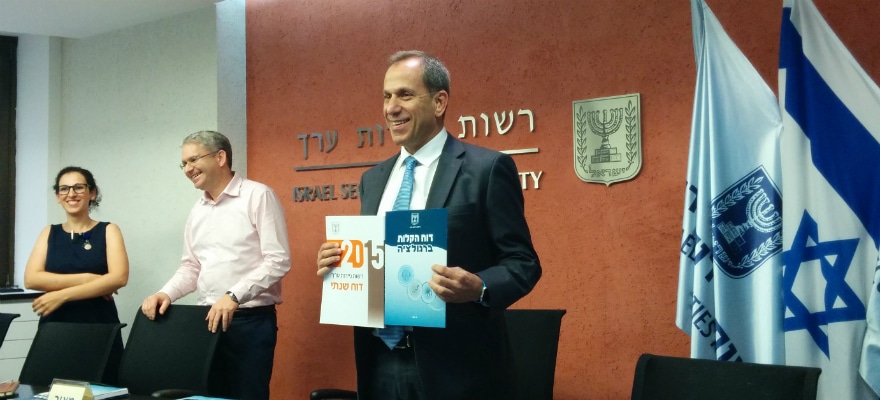
Prof. Shmuel Hauser, Chairman of the ISA - FM
Prof. Shmuel Hauser, head of the Israeli Securities Authority (ISA), announced today the establishment of a committee that will review the need to regulate initial coin offerings (ICO). The committee's mandate is to examine whether ICOs and cryptocurrency trading are subject to Israeli securities laws.
ICOs, also known as token sales, have become a popular way for startups to raise funding and a lucrative investment opportunity for investors. Following a number of high profile ICOs in recent months, interest is rising among regulators across the globe. Yesterday the US Securities and Exchange Commission issued a warning against the practice, stating that initial coin offerings are sometimes used to “convince potential victims to invest their money in scams.”
The committee will be headed by attorney Moti Yamin, Head of the ISA Corporate Department, and Dr. Gitit Gur-Gershgoren, the financial watchdog's Chief Economist . The committee is due to submit its initial recommendations by December 31st, 2017.
Over $1 billion raised through ICOs in H1 2017
The committee's mandate is to:
Evaluate the financial essence of ICOs and whether it overlaps with other financial activity under Israeli law;
Make a comparative analysis of cryptocurrency regulations in various countries to evaluate the legitimacy of Bitcoin;
Examine if cryptocurrency trading and ICOs should be watched by the ISA;
Devise a new regulatory policy balancing between alternative funding channels and technological innovation while protecting Israeli investors from unsupervised investments; and
According to the ISA, in H1 2017 over $1 billion was raised using through ICOs. “Israel is considered as a leading country in blockchcin technology development with a flourishing industry,” the ISA states. Recent local coin offerings have been successful but not flawless - in mid-July, a blockchain startup focused on cryptocurrency social trading, CoinDash, had its ICO hacked and more than $7 million worth of Ethereum stolen, which forced the company to compensate investors.
The biggest local success story in terms of fundraising was definitely that of Bancor Protocol. This blockchain startup raised 396,619 ETH, which at the time was worth over $142 million. In exchange for the ETH that investors sent, Bancor issued them its own native token, BANCOR (BNT) – the first blockchain currency issued using its protocol.
Follow the Blockchain Podcast for exclusive interviews
These examples demonstrate the complex task that the ISA has undertaken. Bancor's successful ICO also suffered numerous hacking attempts as the it unfolded, with massive malicious cyberattacks on its network. Though ultimately unsuccessful, hacking attempts could nonetheless undermine the firm’s ICO, which in turn would have exposed investors to theft. The ISA is addressing this issue, saying that some ICOs turned out to be fraudulent actions, damaging innocent investors, while others went wrong, with breaches exploited by hackers to steal money.
“In addition to that,” ISA's announcement states, “some see ICOs as a financial bubble lacking any financial reasoning, and participating in some ICOs as a way to bypass current IPO regulations.”
"99.9% of these ICO companies will disappear"

Ofir Beigel
Ofir Beigel, CEO of cryptocurrency information source 99Bitcoins, pours some cold water on the ICO hype: “The ICO market has become some sort of an OTC stock market which allows everyone to ‘join the party’. However, odds are that 99.9% of these ICO companies will disappear in the long run and so will their funding. While I really think this is a great and innovative way to raise funds, most of the public is still unaware of the huge risks it entails.
Nir Porat, Managing Partner at Porat and Co. Law Firm, which specializes in international trading, technology and internet, blockchain technology and cryptocurrencies, said: "Blockchain technology and other related initiatives stand to bring real improvements to our lives by offering solutions to problems that we are seeing in the technology-driven world of today.
Having said that, if left to operate without regulation and supervision, negative influences are sure to enter this realm, be they illegitimate coin offerings without sufficient foundation, hacking attacks, or thefts from digital wallets. We thus welcome the ISA's initiative in flagging this issue with the goal of suggesting long term solutions.
There is no doubt that the process of setting up appropriate regulatory procedures will bring with it many difficulties, not least among them the challenges of detection and enforcement. The Israeli authorities (in common with authorities worldwide) do not necessarily have the ability to monitor every one of the countless transactions that are executed through the internet, which is the realm in which the blockchain is located.
The Israeli regulator needs to set appropriate monitoring and enforcement guidelines, while at the same time checking that it is creating a fair and balanced regulatory framework. This framework should protect the public but not apply unfair weight upon companies in the market, lest it stifle innovation and profitability."
Prof. Shmuel Hauser, head of the Israeli Securities Authority (ISA), announced today the establishment of a committee that will review the need to regulate initial coin offerings (ICO). The committee's mandate is to examine whether ICOs and cryptocurrency trading are subject to Israeli securities laws.
ICOs, also known as token sales, have become a popular way for startups to raise funding and a lucrative investment opportunity for investors. Following a number of high profile ICOs in recent months, interest is rising among regulators across the globe. Yesterday the US Securities and Exchange Commission issued a warning against the practice, stating that initial coin offerings are sometimes used to “convince potential victims to invest their money in scams.”
The committee will be headed by attorney Moti Yamin, Head of the ISA Corporate Department, and Dr. Gitit Gur-Gershgoren, the financial watchdog's Chief Economist . The committee is due to submit its initial recommendations by December 31st, 2017.
Over $1 billion raised through ICOs in H1 2017
The committee's mandate is to:
Evaluate the financial essence of ICOs and whether it overlaps with other financial activity under Israeli law;
Make a comparative analysis of cryptocurrency regulations in various countries to evaluate the legitimacy of Bitcoin;
Examine if cryptocurrency trading and ICOs should be watched by the ISA;
Devise a new regulatory policy balancing between alternative funding channels and technological innovation while protecting Israeli investors from unsupervised investments; and
According to the ISA, in H1 2017 over $1 billion was raised using through ICOs. “Israel is considered as a leading country in blockchcin technology development with a flourishing industry,” the ISA states. Recent local coin offerings have been successful but not flawless - in mid-July, a blockchain startup focused on cryptocurrency social trading, CoinDash, had its ICO hacked and more than $7 million worth of Ethereum stolen, which forced the company to compensate investors.
The biggest local success story in terms of fundraising was definitely that of Bancor Protocol. This blockchain startup raised 396,619 ETH, which at the time was worth over $142 million. In exchange for the ETH that investors sent, Bancor issued them its own native token, BANCOR (BNT) – the first blockchain currency issued using its protocol.
Follow the Blockchain Podcast for exclusive interviews
These examples demonstrate the complex task that the ISA has undertaken. Bancor's successful ICO also suffered numerous hacking attempts as the it unfolded, with massive malicious cyberattacks on its network. Though ultimately unsuccessful, hacking attempts could nonetheless undermine the firm’s ICO, which in turn would have exposed investors to theft. The ISA is addressing this issue, saying that some ICOs turned out to be fraudulent actions, damaging innocent investors, while others went wrong, with breaches exploited by hackers to steal money.
“In addition to that,” ISA's announcement states, “some see ICOs as a financial bubble lacking any financial reasoning, and participating in some ICOs as a way to bypass current IPO regulations.”
"99.9% of these ICO companies will disappear"
Ofir Beigel
Ofir Beigel, CEO of cryptocurrency information source 99Bitcoins, pours some cold water on the ICO hype: “The ICO market has become some sort of an OTC stock market which allows everyone to ‘join the party’. However, odds are that 99.9% of these ICO companies will disappear in the long run and so will their funding. While I really think this is a great and innovative way to raise funds, most of the public is still unaware of the huge risks it entails.
Nir Porat, Managing Partner at Porat and Co. Law Firm, which specializes in international trading, technology and internet, blockchain technology and cryptocurrencies, said: "Blockchain technology and other related initiatives stand to bring real improvements to our lives by offering solutions to problems that we are seeing in the technology-driven world of today.
Having said that, if left to operate without regulation and supervision, negative influences are sure to enter this realm, be they illegitimate coin offerings without sufficient foundation, hacking attacks, or thefts from digital wallets. We thus welcome the ISA's initiative in flagging this issue with the goal of suggesting long term solutions.
There is no doubt that the process of setting up appropriate regulatory procedures will bring with it many difficulties, not least among them the challenges of detection and enforcement. The Israeli authorities (in common with authorities worldwide) do not necessarily have the ability to monitor every one of the countless transactions that are executed through the internet, which is the realm in which the blockchain is located.
The Israeli regulator needs to set appropriate monitoring and enforcement guidelines, while at the same time checking that it is creating a fair and balanced regulatory framework. This framework should protect the public but not apply unfair weight upon companies in the market, lest it stifle innovation and profitability."
Crypto Industry in 2025: Five Defining Trends – And One Prediction for 2026
Featured Videos
Executive Interview | Charlotte Bullock | Chief Product Officer, Bank of London | FMLS:25
In this interview, we sat down with Charlotte Bullock, Head of Product at The Bank of London, previously at SAP and now shaping product at one of the sector’s most ambitious new banking players.
Charlotte reflects on the Summit so far and talks about the culture inside fintech banks today. We look at the pressures that come with scaling, and how firms can hold onto the nimble approach that made them stand out early on.
We also cover the state of payments ahead of her appearance on the payments roundtable: the blockages financial firms face, the areas that still need fixing, and what a realistic solution looks like in 2026.
In this interview, we sat down with Charlotte Bullock, Head of Product at The Bank of London, previously at SAP and now shaping product at one of the sector’s most ambitious new banking players.
Charlotte reflects on the Summit so far and talks about the culture inside fintech banks today. We look at the pressures that come with scaling, and how firms can hold onto the nimble approach that made them stand out early on.
We also cover the state of payments ahead of her appearance on the payments roundtable: the blockages financial firms face, the areas that still need fixing, and what a realistic solution looks like in 2026.
In this interview, we sat down with Charlotte Bullock, Head of Product at The Bank of London, previously at SAP and now shaping product at one of the sector’s most ambitious new banking players.
Charlotte reflects on the Summit so far and talks about the culture inside fintech banks today. We look at the pressures that come with scaling, and how firms can hold onto the nimble approach that made them stand out early on.
We also cover the state of payments ahead of her appearance on the payments roundtable: the blockages financial firms face, the areas that still need fixing, and what a realistic solution looks like in 2026.
In this interview, we sat down with Charlotte Bullock, Head of Product at The Bank of London, previously at SAP and now shaping product at one of the sector’s most ambitious new banking players.
Charlotte reflects on the Summit so far and talks about the culture inside fintech banks today. We look at the pressures that come with scaling, and how firms can hold onto the nimble approach that made them stand out early on.
We also cover the state of payments ahead of her appearance on the payments roundtable: the blockages financial firms face, the areas that still need fixing, and what a realistic solution looks like in 2026.
In this conversation, we sit down with Drew Niv, CSO at ATFX Connect and one of the most influential figures in modern FX.
We speak about market structure, the institutional view on liquidity, and the sharp rise of prop trading, a sector Drew has been commenting on in recent months. Drew explains why he once dismissed prop trading, why his view changed, and what he now thinks the model means for brokers, clients and risk managers.
We explore subscription-fee dependency, the high reneging rate, and the long-term challenge: how brokers can build a more stable and honest version of the model. Drew also talks about the traffic advantage standalone prop firms have built and why brokers may still win in the long run if they take the right approach.
In this conversation, we sit down with Drew Niv, CSO at ATFX Connect and one of the most influential figures in modern FX.
We speak about market structure, the institutional view on liquidity, and the sharp rise of prop trading, a sector Drew has been commenting on in recent months. Drew explains why he once dismissed prop trading, why his view changed, and what he now thinks the model means for brokers, clients and risk managers.
We explore subscription-fee dependency, the high reneging rate, and the long-term challenge: how brokers can build a more stable and honest version of the model. Drew also talks about the traffic advantage standalone prop firms have built and why brokers may still win in the long run if they take the right approach.
In this conversation, we sit down with Drew Niv, CSO at ATFX Connect and one of the most influential figures in modern FX.
We speak about market structure, the institutional view on liquidity, and the sharp rise of prop trading, a sector Drew has been commenting on in recent months. Drew explains why he once dismissed prop trading, why his view changed, and what he now thinks the model means for brokers, clients and risk managers.
We explore subscription-fee dependency, the high reneging rate, and the long-term challenge: how brokers can build a more stable and honest version of the model. Drew also talks about the traffic advantage standalone prop firms have built and why brokers may still win in the long run if they take the right approach.
In this conversation, we sit down with Drew Niv, CSO at ATFX Connect and one of the most influential figures in modern FX.
We speak about market structure, the institutional view on liquidity, and the sharp rise of prop trading, a sector Drew has been commenting on in recent months. Drew explains why he once dismissed prop trading, why his view changed, and what he now thinks the model means for brokers, clients and risk managers.
We explore subscription-fee dependency, the high reneging rate, and the long-term challenge: how brokers can build a more stable and honest version of the model. Drew also talks about the traffic advantage standalone prop firms have built and why brokers may still win in the long run if they take the right approach.
In this conversation, we sit down with Drew Niv, CSO at ATFX Connect and one of the most influential figures in modern FX.
We speak about market structure, the institutional view on liquidity, and the sharp rise of prop trading, a sector Drew has been commenting on in recent months. Drew explains why he once dismissed prop trading, why his view changed, and what he now thinks the model means for brokers, clients and risk managers.
We explore subscription-fee dependency, the high reneging rate, and the long-term challenge: how brokers can build a more stable and honest version of the model. Drew also talks about the traffic advantage standalone prop firms have built and why brokers may still win in the long run if they take the right approach.
In this conversation, we sit down with Drew Niv, CSO at ATFX Connect and one of the most influential figures in modern FX.
We speak about market structure, the institutional view on liquidity, and the sharp rise of prop trading, a sector Drew has been commenting on in recent months. Drew explains why he once dismissed prop trading, why his view changed, and what he now thinks the model means for brokers, clients and risk managers.
We explore subscription-fee dependency, the high reneging rate, and the long-term challenge: how brokers can build a more stable and honest version of the model. Drew also talks about the traffic advantage standalone prop firms have built and why brokers may still win in the long run if they take the right approach.
Executive Interview | Remonda Z. Kirketerp Møller| CEO & Founder Muinmos | FMLS:25
In this interview, Remonda Z. Kirketerp Møller, founder of Muinmos, breaks down the state of AI in regtech and what responsible adoption really looks like for brokers. We talk about rising fragmentation, the pressures around compliance accuracy, and why most firms are still in the early stages of AI maturity.
Ramanda also shares insights on regulator sandboxes, shifting expectations around accountability, and the current reality of MiCA licensing and passporting in Europe.
A concise look at where compliance, onboarding, and AI-driven processes are heading next.
In this interview, Remonda Z. Kirketerp Møller, founder of Muinmos, breaks down the state of AI in regtech and what responsible adoption really looks like for brokers. We talk about rising fragmentation, the pressures around compliance accuracy, and why most firms are still in the early stages of AI maturity.
Ramanda also shares insights on regulator sandboxes, shifting expectations around accountability, and the current reality of MiCA licensing and passporting in Europe.
A concise look at where compliance, onboarding, and AI-driven processes are heading next.
In this interview, Remonda Z. Kirketerp Møller, founder of Muinmos, breaks down the state of AI in regtech and what responsible adoption really looks like for brokers. We talk about rising fragmentation, the pressures around compliance accuracy, and why most firms are still in the early stages of AI maturity.
Ramanda also shares insights on regulator sandboxes, shifting expectations around accountability, and the current reality of MiCA licensing and passporting in Europe.
A concise look at where compliance, onboarding, and AI-driven processes are heading next.
In this interview, Remonda Z. Kirketerp Møller, founder of Muinmos, breaks down the state of AI in regtech and what responsible adoption really looks like for brokers. We talk about rising fragmentation, the pressures around compliance accuracy, and why most firms are still in the early stages of AI maturity.
Ramanda also shares insights on regulator sandboxes, shifting expectations around accountability, and the current reality of MiCA licensing and passporting in Europe.
A concise look at where compliance, onboarding, and AI-driven processes are heading next.
In this interview, Remonda Z. Kirketerp Møller, founder of Muinmos, breaks down the state of AI in regtech and what responsible adoption really looks like for brokers. We talk about rising fragmentation, the pressures around compliance accuracy, and why most firms are still in the early stages of AI maturity.
Ramanda also shares insights on regulator sandboxes, shifting expectations around accountability, and the current reality of MiCA licensing and passporting in Europe.
A concise look at where compliance, onboarding, and AI-driven processes are heading next.
In this interview, Remonda Z. Kirketerp Møller, founder of Muinmos, breaks down the state of AI in regtech and what responsible adoption really looks like for brokers. We talk about rising fragmentation, the pressures around compliance accuracy, and why most firms are still in the early stages of AI maturity.
Ramanda also shares insights on regulator sandboxes, shifting expectations around accountability, and the current reality of MiCA licensing and passporting in Europe.
A concise look at where compliance, onboarding, and AI-driven processes are heading next.
In this conversation, we speak with Aydin Bonabi, CEO and co-founder of Surveill, a firm focused on fraud detection and AI-driven compliance tools for financial institutions.
We start with Aydin’s view of the Summit and the challenges brokers face as fraud tactics grow more complex. He explains how firms can stay ahead through real-time signals, data patterns, and early-stage detection.
We also talk about AI training and why compliance teams often struggle to keep models accurate, fair, and aligned with regulatory expectations. Aydin breaks down what “good” AI training looks like inside a financial environment, including the importance of clean data, domain expertise, and human oversight.
He closes with a clear message: fraud is scaling, and so must the tools that stop it.
In this conversation, we speak with Aydin Bonabi, CEO and co-founder of Surveill, a firm focused on fraud detection and AI-driven compliance tools for financial institutions.
We start with Aydin’s view of the Summit and the challenges brokers face as fraud tactics grow more complex. He explains how firms can stay ahead through real-time signals, data patterns, and early-stage detection.
We also talk about AI training and why compliance teams often struggle to keep models accurate, fair, and aligned with regulatory expectations. Aydin breaks down what “good” AI training looks like inside a financial environment, including the importance of clean data, domain expertise, and human oversight.
He closes with a clear message: fraud is scaling, and so must the tools that stop it.
In this conversation, we speak with Aydin Bonabi, CEO and co-founder of Surveill, a firm focused on fraud detection and AI-driven compliance tools for financial institutions.
We start with Aydin’s view of the Summit and the challenges brokers face as fraud tactics grow more complex. He explains how firms can stay ahead through real-time signals, data patterns, and early-stage detection.
We also talk about AI training and why compliance teams often struggle to keep models accurate, fair, and aligned with regulatory expectations. Aydin breaks down what “good” AI training looks like inside a financial environment, including the importance of clean data, domain expertise, and human oversight.
He closes with a clear message: fraud is scaling, and so must the tools that stop it.
In this conversation, we speak with Aydin Bonabi, CEO and co-founder of Surveill, a firm focused on fraud detection and AI-driven compliance tools for financial institutions.
We start with Aydin’s view of the Summit and the challenges brokers face as fraud tactics grow more complex. He explains how firms can stay ahead through real-time signals, data patterns, and early-stage detection.
We also talk about AI training and why compliance teams often struggle to keep models accurate, fair, and aligned with regulatory expectations. Aydin breaks down what “good” AI training looks like inside a financial environment, including the importance of clean data, domain expertise, and human oversight.
He closes with a clear message: fraud is scaling, and so must the tools that stop it.
In this conversation, we speak with Aydin Bonabi, CEO and co-founder of Surveill, a firm focused on fraud detection and AI-driven compliance tools for financial institutions.
We start with Aydin’s view of the Summit and the challenges brokers face as fraud tactics grow more complex. He explains how firms can stay ahead through real-time signals, data patterns, and early-stage detection.
We also talk about AI training and why compliance teams often struggle to keep models accurate, fair, and aligned with regulatory expectations. Aydin breaks down what “good” AI training looks like inside a financial environment, including the importance of clean data, domain expertise, and human oversight.
He closes with a clear message: fraud is scaling, and so must the tools that stop it.
In this conversation, we speak with Aydin Bonabi, CEO and co-founder of Surveill, a firm focused on fraud detection and AI-driven compliance tools for financial institutions.
We start with Aydin’s view of the Summit and the challenges brokers face as fraud tactics grow more complex. He explains how firms can stay ahead through real-time signals, data patterns, and early-stage detection.
We also talk about AI training and why compliance teams often struggle to keep models accurate, fair, and aligned with regulatory expectations. Aydin breaks down what “good” AI training looks like inside a financial environment, including the importance of clean data, domain expertise, and human oversight.
He closes with a clear message: fraud is scaling, and so must the tools that stop it.
Exness expands its presence in Africa: Inside our interview with Paul Margarites in Cape Town
Finance Magnates met with Paul Margarites, Exness regional commercial director for Sub-Saharan Africa, during a visit to the firm’s office opening in Cape Town. In this talk, led by Andrea Badiola Mateos, Co-CEO at Finance Magnates, Paul shares views on the South African trading space, local user behavior, mobile trends, regulation, team growth, and how Exness plans to grow in more markets across the region. @Exness
Read the article at: https://www.financemagnates.com/thought-leadership/exness-expands-its-presence-in-africa-inside-our-interview-with-paul-margarites/
#exness #financemagnates #exnesstrading #CFDtrading #tradeonline #africanews #capetown
Finance Magnates met with Paul Margarites, Exness regional commercial director for Sub-Saharan Africa, during a visit to the firm’s office opening in Cape Town. In this talk, led by Andrea Badiola Mateos, Co-CEO at Finance Magnates, Paul shares views on the South African trading space, local user behavior, mobile trends, regulation, team growth, and how Exness plans to grow in more markets across the region. @Exness
Read the article at: https://www.financemagnates.com/thought-leadership/exness-expands-its-presence-in-africa-inside-our-interview-with-paul-margarites/
#exness #financemagnates #exnesstrading #CFDtrading #tradeonline #africanews #capetown
Finance Magnates met with Paul Margarites, Exness regional commercial director for Sub-Saharan Africa, during a visit to the firm’s office opening in Cape Town. In this talk, led by Andrea Badiola Mateos, Co-CEO at Finance Magnates, Paul shares views on the South African trading space, local user behavior, mobile trends, regulation, team growth, and how Exness plans to grow in more markets across the region. @Exness
Read the article at: https://www.financemagnates.com/thought-leadership/exness-expands-its-presence-in-africa-inside-our-interview-with-paul-margarites/
#exness #financemagnates #exnesstrading #CFDtrading #tradeonline #africanews #capetown
Finance Magnates met with Paul Margarites, Exness regional commercial director for Sub-Saharan Africa, during a visit to the firm’s office opening in Cape Town. In this talk, led by Andrea Badiola Mateos, Co-CEO at Finance Magnates, Paul shares views on the South African trading space, local user behavior, mobile trends, regulation, team growth, and how Exness plans to grow in more markets across the region. @Exness
Read the article at: https://www.financemagnates.com/thought-leadership/exness-expands-its-presence-in-africa-inside-our-interview-with-paul-margarites/
#exness #financemagnates #exnesstrading #CFDtrading #tradeonline #africanews #capetown
Finance Magnates met with Paul Margarites, Exness regional commercial director for Sub-Saharan Africa, during a visit to the firm’s office opening in Cape Town. In this talk, led by Andrea Badiola Mateos, Co-CEO at Finance Magnates, Paul shares views on the South African trading space, local user behavior, mobile trends, regulation, team growth, and how Exness plans to grow in more markets across the region. @Exness
Read the article at: https://www.financemagnates.com/thought-leadership/exness-expands-its-presence-in-africa-inside-our-interview-with-paul-margarites/
#exness #financemagnates #exnesstrading #CFDtrading #tradeonline #africanews #capetown
Finance Magnates met with Paul Margarites, Exness regional commercial director for Sub-Saharan Africa, during a visit to the firm’s office opening in Cape Town. In this talk, led by Andrea Badiola Mateos, Co-CEO at Finance Magnates, Paul shares views on the South African trading space, local user behavior, mobile trends, regulation, team growth, and how Exness plans to grow in more markets across the region. @Exness
Read the article at: https://www.financemagnates.com/thought-leadership/exness-expands-its-presence-in-africa-inside-our-interview-with-paul-margarites/
#exness #financemagnates #exnesstrading #CFDtrading #tradeonline #africanews #capetown