Why bitcoin and public blockchains trump trusting the banks, by First Global Credit CEO Gavin Smith.
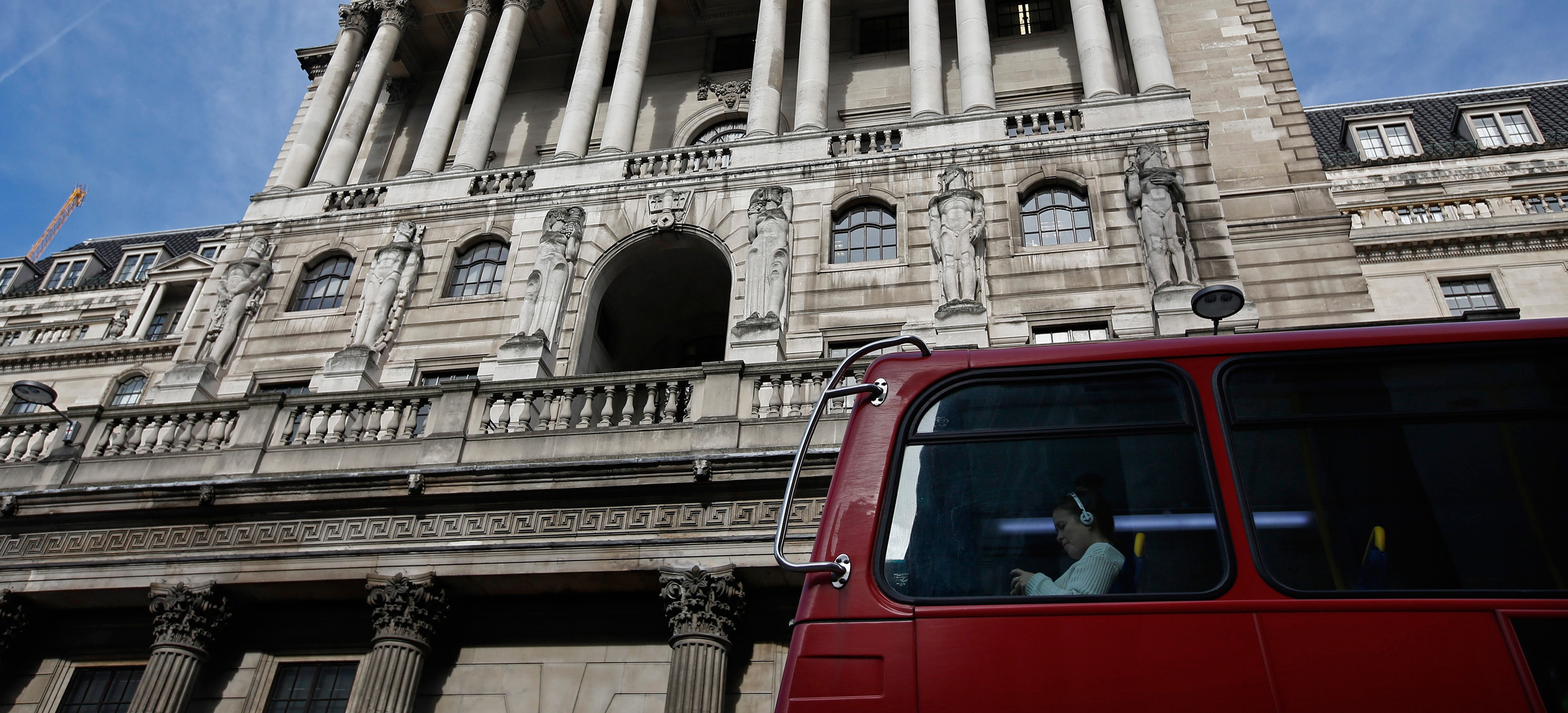
Bloomberg, Bank of England
Gavin Smith
This guest article was written by Gavin Smith. With 25 years’ experience working in financial markets, Gavin Smith is First Global Credit’s CEO and the futurist guiding the company so that it will grow alongside the developing digital currency capital market. His experience developing and managing global risk for one of the world’s largest physical commodity traders, has given him the skills to build the risk management framework that underpins all First Global services.
The covert strategies are typified by a three pronged approach: (1) Exploit any opportunity to denigrate bitcoin regardless of accuracy usually based on the stability of bitcoins or legitimacy of use. For instance, linking bitcoins to terrorism or drug purchase. (2) Broadcast generalised statements supporting the idea that private blockchains have all the benefits of the public blockchains and that banks are better custodians of the public’s welfare than the inexperienced organizations driving public blockchain development. (3) Then into this framework, publicize specific initiatives like RSCoin, a centrally controlled digital currency created by the Bank of England. The claim is being made that RSCoin is a panacea that will solve all the problems that have shadowed banks over the past decade.
RSCoin
While RSCoin does show some incremental improvements to the transaction flow currently in use in the conventional banking industry, it lacks many of the benefits offered to the public by a genuine, independent digital currency. However, this is not what is being broadcast by the media, who in all probability lack an understanding of the relationship between central and commercial banks, which is why RSCoin does nothing to change what has gone on in the banking industry over the past decade. For instance, in a recent article published in the Business Section of The Telegraph it has been claimed that RSCoin will “erode the exorbitant privilege enjoyed by commercial banks of creating money out of thin air under a fractional reserve system.” The same article also claims that RSCoin would allow central banks to “turn the money tap on and off with calibrated precision.”
RSCoin is new technology being built to support a flawed system that ultimately burdens the tax payer and distorts saving and investment markets (ask any pensioner who has been forced to survive on near zero interest rates over the past 10 years). It is policy, not precision or technical superiority, that is the problem that needs addressing to dis-intermediate commercial banks. It is therefore no wonder that commercial banks are jumping on board to support RSCoin which can be viewed as a wonderful way to maintain the status quo while showing a public face that appears to support a new ‘fairer’ type of banking.
The information cited in the paragraphs above can be verified through a variety of sources (for instance). That is why it is the duty of those of us who have an in-depth understanding of the relationship between central and commercial banks to make that information available to the general public to encourage a dispassionate assessment of initiatives like RSCoin.
The Real Deal
Public digital currency, such as bitcoin, has no tap for the central bank to turn on or off. Commercial banks would be forced to manage their affairs more in line with their customer’s best interests because there is no central bank spigot to pump liquidity into an organisation that has behaved imprudently with its customers' funds.
The very fact that this is the case would force banking regulators to ensure that banks had sufficient short term capital to meet customer demands and disengage from risky business areas which, because the public purse can be called upon to bail out the banks, are nothing more than 'heads we win, tails you lose' speculation with customer money.
Who can tell if fiat currencies will continue to dominate regular day to day transactions? But the fact that there is an alternative store of value for customers that is independent of central bank / commercial bank influence is a positive factor and something that is completely lost with centrally controlled digital currency.
These are some of the touchpoints that having public blockchains will affect:
- Central banks will no longer have the flexibility to manipulate money supply in a way that disadvantages the tax paying public.
- Central banks will no longer be able to force interest rates to zero; there is a growing bitcoin money market that enables savers to achieve a return on their bitcoins even when fiat interest rates have been driven into negative territory.
- Commercial banks will no longer be provided with a free pass to borrow from the tax payer at 0% while charging those same tax payers 7% to 39.9% on retail borrowing.
Public blockchains will have the ultimate effect of forcing banks to behave as genuine commercial entities instead of being part of a monopolistic, protected industry as is currently the case.
Gavin Smith
This guest article was written by Gavin Smith. With 25 years’ experience working in financial markets, Gavin Smith is First Global Credit’s CEO and the futurist guiding the company so that it will grow alongside the developing digital currency capital market. His experience developing and managing global risk for one of the world’s largest physical commodity traders, has given him the skills to build the risk management framework that underpins all First Global services.
The covert strategies are typified by a three pronged approach: (1) Exploit any opportunity to denigrate bitcoin regardless of accuracy usually based on the stability of bitcoins or legitimacy of use. For instance, linking bitcoins to terrorism or drug purchase. (2) Broadcast generalised statements supporting the idea that private blockchains have all the benefits of the public blockchains and that banks are better custodians of the public’s welfare than the inexperienced organizations driving public blockchain development. (3) Then into this framework, publicize specific initiatives like RSCoin, a centrally controlled digital currency created by the Bank of England. The claim is being made that RSCoin is a panacea that will solve all the problems that have shadowed banks over the past decade.
RSCoin
While RSCoin does show some incremental improvements to the transaction flow currently in use in the conventional banking industry, it lacks many of the benefits offered to the public by a genuine, independent digital currency. However, this is not what is being broadcast by the media, who in all probability lack an understanding of the relationship between central and commercial banks, which is why RSCoin does nothing to change what has gone on in the banking industry over the past decade. For instance, in a recent article published in the Business Section of The Telegraph it has been claimed that RSCoin will “erode the exorbitant privilege enjoyed by commercial banks of creating money out of thin air under a fractional reserve system.” The same article also claims that RSCoin would allow central banks to “turn the money tap on and off with calibrated precision.”
RSCoin is new technology being built to support a flawed system that ultimately burdens the tax payer and distorts saving and investment markets (ask any pensioner who has been forced to survive on near zero interest rates over the past 10 years). It is policy, not precision or technical superiority, that is the problem that needs addressing to dis-intermediate commercial banks. It is therefore no wonder that commercial banks are jumping on board to support RSCoin which can be viewed as a wonderful way to maintain the status quo while showing a public face that appears to support a new ‘fairer’ type of banking.
The information cited in the paragraphs above can be verified through a variety of sources (for instance). That is why it is the duty of those of us who have an in-depth understanding of the relationship between central and commercial banks to make that information available to the general public to encourage a dispassionate assessment of initiatives like RSCoin.
The Real Deal
Public digital currency, such as bitcoin, has no tap for the central bank to turn on or off. Commercial banks would be forced to manage their affairs more in line with their customer’s best interests because there is no central bank spigot to pump liquidity into an organisation that has behaved imprudently with its customers' funds.
The very fact that this is the case would force banking regulators to ensure that banks had sufficient short term capital to meet customer demands and disengage from risky business areas which, because the public purse can be called upon to bail out the banks, are nothing more than 'heads we win, tails you lose' speculation with customer money.
Who can tell if fiat currencies will continue to dominate regular day to day transactions? But the fact that there is an alternative store of value for customers that is independent of central bank / commercial bank influence is a positive factor and something that is completely lost with centrally controlled digital currency.
These are some of the touchpoints that having public blockchains will affect:
- Central banks will no longer have the flexibility to manipulate money supply in a way that disadvantages the tax paying public.
- Central banks will no longer be able to force interest rates to zero; there is a growing bitcoin money market that enables savers to achieve a return on their bitcoins even when fiat interest rates have been driven into negative territory.
- Commercial banks will no longer be provided with a free pass to borrow from the tax payer at 0% while charging those same tax payers 7% to 39.9% on retail borrowing.
Public blockchains will have the ultimate effect of forcing banks to behave as genuine commercial entities instead of being part of a monopolistic, protected industry as is currently the case.
BitMEX Is Closing, but the Perpetual Swap Is Just Getting Started
Featured Videos
FM Daily Brief – 27 July 2026
FM Daily Brief – 27 July 2026
FM Daily Brief – 27 July 2026
FM Daily Brief – 27 July 2026
Today's Monday, the 27th of July 2026, and these are our main stories: iFOREX reports stronger client growth despite currency headwinds, BlackBull's New Zealand business expands, and the FCA highlights Consumer Duty good practice.
Today's Monday, the 27th of July 2026, and these are our main stories: iFOREX reports stronger client growth despite currency headwinds, BlackBull's New Zealand business expands, and the FCA highlights Consumer Duty good practice.
Today's Monday, the 27th of July 2026, and these are our main stories: iFOREX reports stronger client growth despite currency headwinds, BlackBull's New Zealand business expands, and the FCA highlights Consumer Duty good practice.
Today's Monday, the 27th of July 2026, and these are our main stories: iFOREX reports stronger client growth despite currency headwinds, BlackBull's New Zealand business expands, and the FCA highlights Consumer Duty good practice.
Today's Friday, the 24th of July 2026, and these are our main stories: the FCA finds major gaps in anti-money laundering controls at alternative asset managers, Wise shares tumble after a US banking licence setback, and Google's EU fines could benefit fintech apps.
Today's Friday, the 24th of July 2026, and these are our main stories: the FCA finds major gaps in anti-money laundering controls at alternative asset managers, Wise shares tumble after a US banking licence setback, and Google's EU fines could benefit fintech apps.
Today's Friday, the 24th of July 2026, and these are our main stories: the FCA finds major gaps in anti-money laundering controls at alternative asset managers, Wise shares tumble after a US banking licence setback, and Google's EU fines could benefit fintech apps.
Today's Friday, the 24th of July 2026, and these are our main stories: the FCA finds major gaps in anti-money laundering controls at alternative asset managers, Wise shares tumble after a US banking licence setback, and Google's EU fines could benefit fintech apps.
Today's Friday, the 24th of July 2026, and these are our main stories: the FCA finds major gaps in anti-money laundering controls at alternative asset managers, Wise shares tumble after a US banking licence setback, and Google's EU fines could benefit fintech apps.
Today's Friday, the 24th of July 2026, and these are our main stories: the FCA finds major gaps in anti-money laundering controls at alternative asset managers, Wise shares tumble after a US banking licence setback, and Google's EU fines could benefit fintech apps.
FM Daily Brief – 23 July 2026
FM Daily Brief – 23 July 2026
FM Daily Brief – 23 July 2026
FM Daily Brief – 23 July 2026
FM Daily Brief – 23 July 2026
FM Daily Brief – 23 July 2026
Today's Thursday, the 23rd of July 2026, and these are our main stories: BitMEX announces it will shut down its crypto trading platform, the Financial Commission launches a certification programme for prop firms, and the SEC settles a records lawsuit with Coinbase.
Today's Thursday, the 23rd of July 2026, and these are our main stories: BitMEX announces it will shut down its crypto trading platform, the Financial Commission launches a certification programme for prop firms, and the SEC settles a records lawsuit with Coinbase.
Today's Thursday, the 23rd of July 2026, and these are our main stories: BitMEX announces it will shut down its crypto trading platform, the Financial Commission launches a certification programme for prop firms, and the SEC settles a records lawsuit with Coinbase.
Today's Thursday, the 23rd of July 2026, and these are our main stories: BitMEX announces it will shut down its crypto trading platform, the Financial Commission launches a certification programme for prop firms, and the SEC settles a records lawsuit with Coinbase.
Today's Thursday, the 23rd of July 2026, and these are our main stories: BitMEX announces it will shut down its crypto trading platform, the Financial Commission launches a certification programme for prop firms, and the SEC settles a records lawsuit with Coinbase.
Today's Thursday, the 23rd of July 2026, and these are our main stories: BitMEX announces it will shut down its crypto trading platform, the Financial Commission launches a certification programme for prop firms, and the SEC settles a records lawsuit with Coinbase.
FM Daily Brief – 22 July 2026
FM Daily Brief – 22 July 2026
FM Daily Brief – 22 July 2026
FM Daily Brief – 22 July 2026
FM Daily Brief – 22 July 2026
FM Daily Brief – 22 July 2026
Today's Wednesday, the 22nd of July 2026, and these are our main stories: retail CFD broker trading volumes ease in the second quarter, Interactive Brokers posts strong quarterly results, and tastytrade faces a Finra fine.
Today's Wednesday, the 22nd of July 2026, and these are our main stories: retail CFD broker trading volumes ease in the second quarter, Interactive Brokers posts strong quarterly results, and tastytrade faces a Finra fine.
Today's Wednesday, the 22nd of July 2026, and these are our main stories: retail CFD broker trading volumes ease in the second quarter, Interactive Brokers posts strong quarterly results, and tastytrade faces a Finra fine.
Today's Wednesday, the 22nd of July 2026, and these are our main stories: retail CFD broker trading volumes ease in the second quarter, Interactive Brokers posts strong quarterly results, and tastytrade faces a Finra fine.
Today's Wednesday, the 22nd of July 2026, and these are our main stories: retail CFD broker trading volumes ease in the second quarter, Interactive Brokers posts strong quarterly results, and tastytrade faces a Finra fine.
Today's Wednesday, the 22nd of July 2026, and these are our main stories: retail CFD broker trading volumes ease in the second quarter, Interactive Brokers posts strong quarterly results, and tastytrade faces a Finra fine.
FM Daily Brief – 21 July 2026
FM Daily Brief – 21 July 2026
FM Daily Brief – 21 July 2026
FM Daily Brief – 21 July 2026
FM Daily Brief – 21 July 2026
FM Daily Brief – 21 July 2026
Today's Tuesday, the 21st of July 2026, and these are our main stories: has BDSwiss’s offshore been shuttered? Esma reports strong growth in cross border retail investing across Europe, and the London Stock Exchange plans overnight trading.
Today's Tuesday, the 21st of July 2026, and these are our main stories: has BDSwiss’s offshore been shuttered? Esma reports strong growth in cross border retail investing across Europe, and the London Stock Exchange plans overnight trading.
Today's Tuesday, the 21st of July 2026, and these are our main stories: has BDSwiss’s offshore been shuttered? Esma reports strong growth in cross border retail investing across Europe, and the London Stock Exchange plans overnight trading.
Today's Tuesday, the 21st of July 2026, and these are our main stories: has BDSwiss’s offshore been shuttered? Esma reports strong growth in cross border retail investing across Europe, and the London Stock Exchange plans overnight trading.
Today's Tuesday, the 21st of July 2026, and these are our main stories: has BDSwiss’s offshore been shuttered? Esma reports strong growth in cross border retail investing across Europe, and the London Stock Exchange plans overnight trading.
Today's Tuesday, the 21st of July 2026, and these are our main stories: has BDSwiss’s offshore been shuttered? Esma reports strong growth in cross border retail investing across Europe, and the London Stock Exchange plans overnight trading.