Huang sold a significant amount of stock, capitalizing on NVIDIA's soaring market value.
The sale is part of a broader trend among chip industry executives.
This likely reflects confidence in market highs and personal financial planning.
NVIDIA CEO Jensen Huang has recently
made headlines by selling a substantial portion of his company stock, amounting
to $229 million. This move comes on the heels of NVIDIA’s stock rally, driven
by robust demand for its AI and data center chips and reflects broader trends in the
sector.
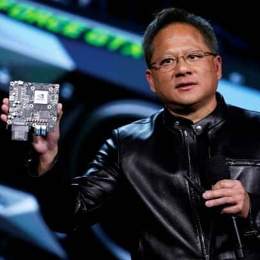
Jensen Huang and his famed leather jacket (Reuters).
The semiconductor sector has been on
a tear recently, with
stocks like NVIDIA leading the charge due to their critical role in
powering next-generation technologies. As the demand for AI capabilities, data
centers, and high-performance computing continues to skyrocket, companies in
this space have seen their valuations soar. NVIDIA, in particular, has become a
cornerstone of the AI revolution, with its GPUs serving as the backbone for
countless AI applications.
Joining the Ranks of Chip Industry
Sellers
Huang isn't alone in this sell-off
spree. Other top executives in the chip industry, such as Micron’s Sanjay
Mehrotra and Qualcomm’s Cristiano Amon, have also capitalized on their
companies' stock surges by selling off their holdings. This pattern among
industry leaders signals a shared strategy: taking advantage of peak market
valuations to secure personal financial gains.
It takes a while, but you can just skip to the end.
These sales are not random acts, but
are well-timed moves aligned with market conditions. Mehrotra, for instance,
sold shares amidst Micron’s rise, driven by memory chip demand and data storage
needs. Similarly, Qualcomm’s Amon executed sales following the company's
advances in 5G technology and mobile processor dominance. These actions reflect
a calculated approach to personal wealth management against the backdrop of
their companies' successes.
The Strategic Timing
The timing of these sales is
crucial. NVIDIA’s stock has seen an extraordinary rise, buoyed by the company’s
advancements and dominant position in the artificial intelligence (AI) hardware market. By cashing in
during these high times, executives like Huang are ensuring they reap maximum
benefits. The rationale is clear: strike while the iron is hot. With stock
prices at historic highs, it’s a prime opportunity to lock in profits.
NVIDIA's growth has been nothing
short of meteoric, with its market capitalization reaching unprecedented
levels. This has been driven by the company's strategic investments in artificial intelligence (AI),
machine learning, and high-performance computing.
Implications for Investors
For investors, these high-profile
stock sales might raise eyebrows. Does the sell-off indicate that these
executives anticipate a potential plateau or decline in stock value? Or is it
simply a prudent financial decision to diversify their assets after a period of
unprecedented growth?
The truth likely lies somewhere in
between. While the sales do not necessarily predict a downturn, they highlight
the fact that executives are constantly considering their stock management.
It’s about balancing personal financial security with corporate stewardship.
Executives selling shares is a common practice, often planned months in
advance, and typically doesn’t reflect a lack of confidence in the company’s
future. However, it's worth noting that such moves can create a perception
issue. Investors might worry about the timing and rationale behind these sales.
The Bigger Picture
This trend of stock sales among chip
executives underscores a broader theme in the tech industry: the maturation and
stabilization of the market. As companies like NVIDIA, Micron, and Qualcomm
continue to innovate and expand, their leaders are increasingly looking to
secure personal financial gains. This move can be seen as a testament to the
companies’ success and the executives' confidence in their long-term prospects.
Moreover, these sales reflect a
broader industry trend where leaders take advantage of high valuations to
diversify their financial portfolios. This strategy not only safeguards their
personal wealth, but also shows a level of financial acumen in leveraging
market conditions.
Jensen Huang’s stock sale is a
strategic move, mirroring actions taken by his peers in the semiconductor
industry. As the semiconductor market continues to evolve, such moves will
likely remain a common narrative, reflecting both the health of the industry
and the savvy financial planning of its leaders.
NVIDIA CEO Jensen Huang has recently
made headlines by selling a substantial portion of his company stock, amounting
to $229 million. This move comes on the heels of NVIDIA’s stock rally, driven
by robust demand for its AI and data center chips and reflects broader trends in the
sector.
Jensen Huang and his famed leather jacket (Reuters).
The semiconductor sector has been on
a tear recently, with
stocks like NVIDIA leading the charge due to their critical role in
powering next-generation technologies. As the demand for AI capabilities, data
centers, and high-performance computing continues to skyrocket, companies in
this space have seen their valuations soar. NVIDIA, in particular, has become a
cornerstone of the AI revolution, with its GPUs serving as the backbone for
countless AI applications.
Joining the Ranks of Chip Industry
Sellers
Huang isn't alone in this sell-off
spree. Other top executives in the chip industry, such as Micron’s Sanjay
Mehrotra and Qualcomm’s Cristiano Amon, have also capitalized on their
companies' stock surges by selling off their holdings. This pattern among
industry leaders signals a shared strategy: taking advantage of peak market
valuations to secure personal financial gains.
It takes a while, but you can just skip to the end.
These sales are not random acts, but
are well-timed moves aligned with market conditions. Mehrotra, for instance,
sold shares amidst Micron’s rise, driven by memory chip demand and data storage
needs. Similarly, Qualcomm’s Amon executed sales following the company's
advances in 5G technology and mobile processor dominance. These actions reflect
a calculated approach to personal wealth management against the backdrop of
their companies' successes.
The Strategic Timing
The timing of these sales is
crucial. NVIDIA’s stock has seen an extraordinary rise, buoyed by the company’s
advancements and dominant position in the artificial intelligence (AI) hardware market. By cashing in
during these high times, executives like Huang are ensuring they reap maximum
benefits. The rationale is clear: strike while the iron is hot. With stock
prices at historic highs, it’s a prime opportunity to lock in profits.
NVIDIA's growth has been nothing
short of meteoric, with its market capitalization reaching unprecedented
levels. This has been driven by the company's strategic investments in artificial intelligence (AI),
machine learning, and high-performance computing.
Implications for Investors
For investors, these high-profile
stock sales might raise eyebrows. Does the sell-off indicate that these
executives anticipate a potential plateau or decline in stock value? Or is it
simply a prudent financial decision to diversify their assets after a period of
unprecedented growth?
The truth likely lies somewhere in
between. While the sales do not necessarily predict a downturn, they highlight
the fact that executives are constantly considering their stock management.
It’s about balancing personal financial security with corporate stewardship.
Executives selling shares is a common practice, often planned months in
advance, and typically doesn’t reflect a lack of confidence in the company’s
future. However, it's worth noting that such moves can create a perception
issue. Investors might worry about the timing and rationale behind these sales.
The Bigger Picture
This trend of stock sales among chip
executives underscores a broader theme in the tech industry: the maturation and
stabilization of the market. As companies like NVIDIA, Micron, and Qualcomm
continue to innovate and expand, their leaders are increasingly looking to
secure personal financial gains. This move can be seen as a testament to the
companies’ success and the executives' confidence in their long-term prospects.
Moreover, these sales reflect a
broader industry trend where leaders take advantage of high valuations to
diversify their financial portfolios. This strategy not only safeguards their
personal wealth, but also shows a level of financial acumen in leveraging
market conditions.
Jensen Huang’s stock sale is a
strategic move, mirroring actions taken by his peers in the semiconductor
industry. As the semiconductor market continues to evolve, such moves will
likely remain a common narrative, reflecting both the health of the industry
and the savvy financial planning of its leaders.
Louis Parks has lived and worked in and around the Middle East for much of his professional career. He writes about the meeting of the tech and finance worlds.
In this video, we review @HolaPrimeMarketsOfficial, a multi-asset forex and CFDs broker offering different account types, trading platforms, and flexible trading conditions.
We cover the broker’s overall offering, including account options, trading environment, platforms like MT4 and MT5, and additional services such as managed accounts and fast withdrawals.
Watch the full video to see if Hola Prime Markets fits your trading needs.
📣 Stay up to date with the latest in finance and trading. Follow Finance Magnates for industry news, insights, and global event coverage.
Connect with us:
🔗 LinkedIn: /financemagnates
👍 Facebook: /financemagnates
📸 Instagram: https://www.instagram.com/financemagnates
🐦 X: https://x.com/financemagnates
🎥 TikTok: https://www.tiktok.com/tag/financemagnates
▶️ YouTube: /@financemagnates_official
#HolaPrime #ForexBroker #CFDTrading #FinanceMagnates #Trading #Forex #BrokerReview
In this video, we review @HolaPrimeMarketsOfficial, a multi-asset forex and CFDs broker offering different account types, trading platforms, and flexible trading conditions.
We cover the broker’s overall offering, including account options, trading environment, platforms like MT4 and MT5, and additional services such as managed accounts and fast withdrawals.
Watch the full video to see if Hola Prime Markets fits your trading needs.
📣 Stay up to date with the latest in finance and trading. Follow Finance Magnates for industry news, insights, and global event coverage.
Connect with us:
🔗 LinkedIn: /financemagnates
👍 Facebook: /financemagnates
📸 Instagram: https://www.instagram.com/financemagnates
🐦 X: https://x.com/financemagnates
🎥 TikTok: https://www.tiktok.com/tag/financemagnates
▶️ YouTube: /@financemagnates_official
#HolaPrime #ForexBroker #CFDTrading #FinanceMagnates #Trading #Forex #BrokerReview
Hola Prime Review: What You Need to Know | Full Breakdown by Finance Magnates
Hola Prime Review: What You Need to Know | Full Breakdown by Finance Magnates
In this video, we review @HolaPrime_Global, a proprietary trading firm offering evaluation programs and performance-based payouts in simulated market environments.
We cover how the challenge model works, including account types, profit splits (up to 95%), trading rules, and what it takes to reach a funded account. You’ll also learn about available platforms like MT4, MT5, cTrader, and more, along with insights into payouts, support, and trading conditions.
Watch the full video to see if Hola Prime fits your trading style.
📣 Stay up to date with the latest in finance and trading. Follow Finance Magnates for industry news, insights, and global event coverage.
Connect with us:
🔗 LinkedIn: /financemagnates
👍 Facebook: /financemagnates
📸 Instagram: https://www.instagram.com/financemagnates
🐦 X: https://x.com/financemagnates
🎥 TikTok: https://www.tiktok.com/tag/financemagnates
▶️ YouTube: /@financemagnates_official
#HolaPrime #PropFirm #Trading #FinanceMagnates #Forex #FuturesTrading #TradingReview #PropFirmReview
In this video, we review @HolaPrime_Global, a proprietary trading firm offering evaluation programs and performance-based payouts in simulated market environments.
We cover how the challenge model works, including account types, profit splits (up to 95%), trading rules, and what it takes to reach a funded account. You’ll also learn about available platforms like MT4, MT5, cTrader, and more, along with insights into payouts, support, and trading conditions.
Watch the full video to see if Hola Prime fits your trading style.
📣 Stay up to date with the latest in finance and trading. Follow Finance Magnates for industry news, insights, and global event coverage.
Connect with us:
🔗 LinkedIn: /financemagnates
👍 Facebook: /financemagnates
📸 Instagram: https://www.instagram.com/financemagnates
🐦 X: https://x.com/financemagnates
🎥 TikTok: https://www.tiktok.com/tag/financemagnates
▶️ YouTube: /@financemagnates_official
#HolaPrime #PropFirm #Trading #FinanceMagnates #Forex #FuturesTrading #TradingReview #PropFirmReview
Axi Winner Spotlight 🏆 | Global Most Innovative Broker 2025 #Innovation #Trading #Fintech #Broker
Axi Winner Spotlight 🏆 | Global Most Innovative Broker 2025 #Innovation #Trading #Fintech #Broker
Axi takes the spotlight at the Finance Magnates Awards, winning Global Most Innovative Broker 2025.
Olivia Xenofontos and Ivanna Openko share how the team will feel: proud, motivated, and ready to keep delivering.
They also describe the night as well-organized, focused, and enjoyable for all.
👉 Be part of FM Awards 2026.
Axi takes the spotlight at the Finance Magnates Awards, winning Global Most Innovative Broker 2025.
Olivia Xenofontos and Ivanna Openko share how the team will feel: proud, motivated, and ready to keep delivering.
They also describe the night as well-organized, focused, and enjoyable for all.
👉 Be part of FM Awards 2026.
Recognition that matters.
Built on transparency.
Driven by the industry.
The Finance Magnates Awards 2026.
Nominations are now open.
🔗 https://awards.financemagnates.com/?utm_source=SM&utm_medium=social&utm_campaign=recognition-matters
Recognition that matters.
Built on transparency.
Driven by the industry.
The Finance Magnates Awards 2026.
Nominations are now open.
🔗 https://awards.financemagnates.com/?utm_source=SM&utm_medium=social&utm_campaign=recognition-matters
Tickmill Winner Spotlight | Broker of the Year 2025 (LATAM) 🏆 | Finance Magnates Awards #Trading
Tickmill Winner Spotlight | Broker of the Year 2025 (LATAM) 🏆 | Finance Magnates Awards #Trading
What helped Tickmill stand out this year?
In this Winner Spotlight, Johnny Khalil, Executive Director at Tickmill Europe, shares how listening closely to clients and delivering strong trading conditions made the difference.
A big thank you to the community whose support continues to drive progress every day.
👉 Think your brand has what it takes? Nominate for the 2026 Finance Magnates Awards: https://awards.financemagnates.com/#nominate
What helped Tickmill stand out this year?
In this Winner Spotlight, Johnny Khalil, Executive Director at Tickmill Europe, shares how listening closely to clients and delivering strong trading conditions made the difference.
A big thank you to the community whose support continues to drive progress every day.
👉 Think your brand has what it takes? Nominate for the 2026 Finance Magnates Awards: https://awards.financemagnates.com/#nominate