
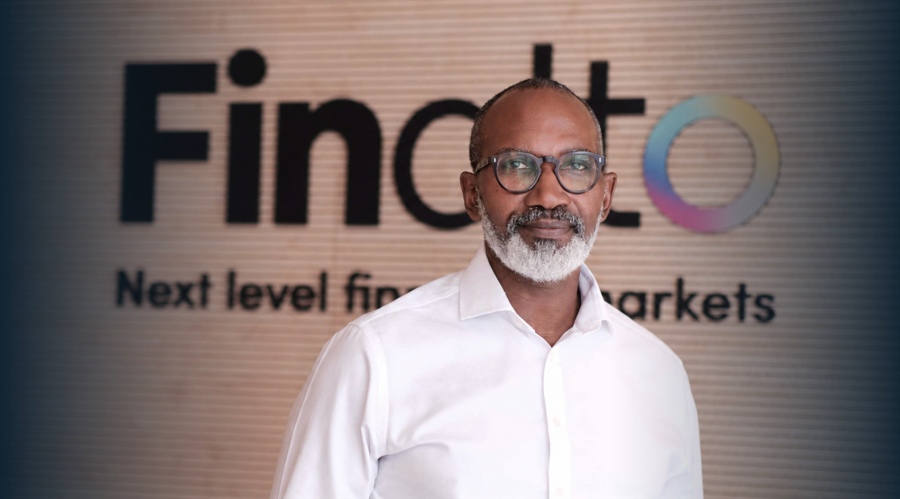
Eric Odotei is Group Head of Regulatory Reporting at Finalto, a leading liquidity and fintech company that delivers best-in-class pricing, execution and prime broker solutions across multiple assets, including CFDs on Equities, Indices, Commodities, Cryptos and rolling spot FX, Precious and Base Metals, and bespoke products such as NDFs.
The FCA has just published The Mills Review, led by FCA executive director Sheldon Mills, to review the impact of AI on retail financial services. The report's arrival is timely and important. Artificial intelligence is moving rapidly from the margins of financial services into the heart of how consumers save, borrow and invest. The Review rightly argues that regulators must adapt to increasingly AI-enabled and autonomous financial services.
While the report deals with urgent and critical subject matter, the larger challenge posed by AI goes beyond regulating the technology itself. We need to appreciate that AI is changing the assumptions upon which financial regulation was built and respond accordingly.
Industrial paradigm shift
To take a momentous technological transformation, the introduction of electrification was never simply about the introduction of a new technology. The bigger challenge was redesigning the institutions that grew around it. Consider the effects on railways. As networks transitioned from fossil fuel-powered locomotives to electrified systems, the question was not simply whether electricity itself should be regulated. It was whether the regulatory framework governing the railway industry remained appropriate for an entirely different technological infrastructure. Electricity changed the operating model of the industry, and regulation ultimately had to evolve with it. Factories were reorganised. Cities expanded exponentially and in new ways. Working practices evolved. Labour laws eventually adapted. Electrification was transformative as a technological innovation, but its lasting impact came from the way it reshaped the architecture of the economy.
Much of today's regulatory architecture still assumes a financial system organised around firms, products and discrete customer interactions. Increasingly, consumers rely on AI before engaging with regulated firms, while those firms themselves depend on shared cloud infrastructure, common data providers and a handful of frontier AI models. Financial services are evolving from a collection of institutions into an ecosystem of shared technological dependencies.
That shift has implications far beyond AI.
A new landscape of risk
Consumer Duty, the FCA's operational resilience agenda and the EU's Digital Operational Resilience Act (DORA) already point in the same direction. Each reflects a gradual move away from supervising isolated firms towards understanding interconnected systems. AI accelerates that transition.
Consumer Duty illustrates the point. It assumes firms remain the primary architects of consumer outcomes. Increasingly, they may not. If consumers arrive having already relied upon AI to understand products, assess risks and compare providers, good outcomes become the product of an ecosystem involving regulated firms, AI models, third-party data and consumer behaviour. Responsibility becomes correspondingly harder to define.
Operational resilience faces a similar evolution. Traditionally it has focused on ensuring critical services remain available during disruption. AI changes the nature of disruption itself. The most significant failures may involve systems continuing to operate but offering service that is warped or degraded in ways that may not be immediately apparent. In this scenario, availability is preserved but with a critical failure in quality or integrity.
The same applies to concentration risk. Regulators have rightly focused on cloud providers and Critical Third Parties. AI introduces something different: cognitive concentration. Millions of apparently independent financial decisions may increasingly depend on a relatively small number of reasoning architectures. Unlike traditional infrastructure failures, these systems continue functioning. The failure, if it comes, is one of judgement rather than availability.
These developments suggest a subtle but important shift in regulatory thinking. Rather than asking how existing frameworks should supervise AI, regulators may need to ask whether the assumptions underpinning those frameworks still hold. Consumer Duty assumes firms shape consumer outcomes. Operational resilience assumes firms can meaningfully observe the dependencies supporting important business services. The opaque, complex and probabilistic nature of AI decision-making may have the potential to stretch that framework to breaking point.
A history of evolution
Financial regulation has always evolved in response to structural change rather than technology alone. Derivatives reshaped market regulation. The financial crisis reshaped prudential supervision. Cloud computing prompted new approaches to operational resilience and third-party oversight. AI belongs in that tradition. The technology matters less than the institutional changes it creates.
That is why the FCA's next task is not simply to supervise AI, but to observe how AI is reshaping the financial system itself. As frontier models become embedded across markets, supervision must extend beyond firms towards the evolving ecosystem of shared infrastructure, common intelligence and emerging dependencies.
The FCA already possesses many of the foundations. Consumer Duty focuses on outcomes. Operational resilience focuses on systems. Critical Third Party oversight recognises external dependencies.
The challenge now is to bring those strands together into a coherent philosophy for supervising an increasingly AI-mediated financial system.
The greatest regulatory risk is not that AI moves faster than the rulebook. It is that regulation continues to supervise a financial system organised around assumptions that are quietly ceasing to be true.
All opinions, news, research, analysis, prices or other information is provided as general market commentary and not as investment advice and all potential results discussed are not guaranteed to be achieved. The information may have been derived from publicly available sources, company reports, personal research, or surveys. Past performance is not indicative of future performance. Trading carries risk of capital loss. Service available to professional clients only.


