Why are we so careless when it comes to our (very valuable) digital information?
Bloomberg
Imagine stumbling across a well of oil on your property. What would your reaction be? Would you throw a party? Start firing guns in the air and screaming ‘yee-haw!’?
Most likely, your priorities would be to protect and sell it, in that order. At the very least, you’d invest considerable time in finding out your legal rights and options.
You certainly wouldn’t just hand it over to a third party, no questions asked, for free. So why do we do exactly that with our personal data? How does it relates to advertising?
“Data is the new oil.” The phrase has been floating around the media for some time, but is it anything more than clichéd hyperbole?
For sure, it’s slightly sensational. Data isn’t oil, and finding a reservoir of oil in your backyard is obviously very different from generating personal data online.
But the main point still stands: why are we so careless when it comes to our (very valuable) digital information?
And data is becoming unfathomably valuable. Our personal data is the lifeblood of the internet; our digital DNA that contains all the information anyone would ever need about our online habits.
By 2020, it’s thought that each one of us will generate, on average, 1.7MB of data every second. Just like oil, our data is plentiful, precious, and useful. So why aren’t we taking it seriously?
Why Our Data Matters
Our data is important because, when deciphered properly, it can be used to paint a very accurate picture of our online lives. What we like, what we buy, where we spend our time.
This information is highly useful to marketers because it allows them to target ads at people who will be most likely to respond to them.
This helps achieve high conversion rates, maximizing sales and minimizing spend. Right now, though, our data is largely owned by third-party companies like Google and Facebook.
If marketers want to access our data, they have to go through these middlemen. They pay handsomely for our data, and we get nothing.
In fact, this method can even result in worse advertising. Accessing data via a third party is less accurate than getting it directly from the source (the users), and the result is that ads are often targeted inaccurately.
In other words, we’re spammed with irrelevant and annoying advertising while marketers fail to reach their desired audience. Everyone loses.
That’s annoying, but there’s an even more sinister side to this. The tech giants mentioned above aren’t particularly responsible custodians of our data.
One example of this is the Cambridge Analytica scandal, where Facebook allowed a third-party app to access a huge reservoir of users’ sensitive personal data which was then used in political campaigning.
So why do we keep allowing this to happen? And what’s the alternative?
Kind Ads is one project that’s changing the way we handle personal data. In their platform, content publishers can decide which advertisers they want to work with and users get to decide who uses their data.
In a blockchain-based network, there’s no need for a central point, which means users, publishers, and marketers can interact without the need for a middleman.
Users will get to choose which ads they see, and marketers will be able to target their ads more accurately.
This will allow them to shift to more friendly modes of advertising like chatbots and build more mutually rewarding relationships with users as well as content publishers.
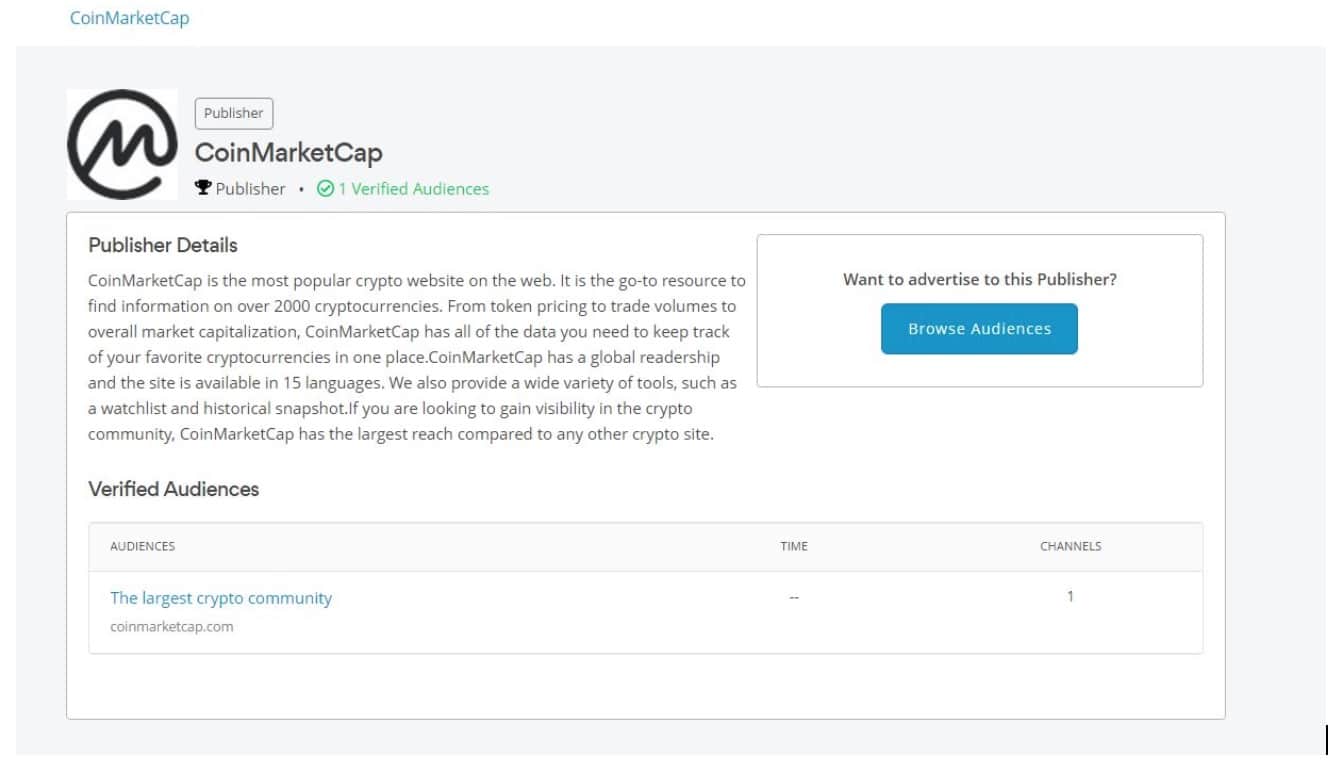
Kind Ads have been up and running for a while now under the radar, with several big publishers already on board such as CoinMarketCap.
Advertisers can literally purchase advertising space on CMC through the Kind Ads platform. Recently, they added two big Brazilian publishers: the course creator Money Radar and the relationship advice resource Online Esposas.
The platform is clearly expending a lot of energy into branching out and growing their list of publishers, and this looks set to carry on.
Another option is Basic Attention Token, or BAT. Their platform, also built using blockchain technology, uses its own crypto token to reward advertisers when users give their attention to certain ads.
Working alongside its own Brave browser, the system aims to provide users with a more rewarding and fair advertising experience.
A Shift in Mindset
Ultimately, though, no amount of innovative projects will help without a collective shift in the way we think about our personal information.
Data might not be exactly the same as oil, but we still need to start seeing our personal data as the valuable resource it is.
That means taking proactive steps to claim ownership of it, protect it, and actually benefit from its use in a more meaningful way than receiving clumsily targeted ads.
Blockchain is proving to be one way of doing this, and it’s a move that can benefit almost everyone. But what’s more important than any technology is education and awareness on a mass scale.
Disclaimer: This is a contributed article and should not be taken as investment advice
Imagine stumbling across a well of oil on your property. What would your reaction be? Would you throw a party? Start firing guns in the air and screaming ‘yee-haw!’?
Most likely, your priorities would be to protect and sell it, in that order. At the very least, you’d invest considerable time in finding out your legal rights and options.
You certainly wouldn’t just hand it over to a third party, no questions asked, for free. So why do we do exactly that with our personal data? How does it relates to advertising?
“Data is the new oil.” The phrase has been floating around the media for some time, but is it anything more than clichéd hyperbole?
For sure, it’s slightly sensational. Data isn’t oil, and finding a reservoir of oil in your backyard is obviously very different from generating personal data online.
But the main point still stands: why are we so careless when it comes to our (very valuable) digital information?
And data is becoming unfathomably valuable. Our personal data is the lifeblood of the internet; our digital DNA that contains all the information anyone would ever need about our online habits.
By 2020, it’s thought that each one of us will generate, on average, 1.7MB of data every second. Just like oil, our data is plentiful, precious, and useful. So why aren’t we taking it seriously?
Why Our Data Matters
Our data is important because, when deciphered properly, it can be used to paint a very accurate picture of our online lives. What we like, what we buy, where we spend our time.
This information is highly useful to marketers because it allows them to target ads at people who will be most likely to respond to them.
This helps achieve high conversion rates, maximizing sales and minimizing spend. Right now, though, our data is largely owned by third-party companies like Google and Facebook.
If marketers want to access our data, they have to go through these middlemen. They pay handsomely for our data, and we get nothing.
In fact, this method can even result in worse advertising. Accessing data via a third party is less accurate than getting it directly from the source (the users), and the result is that ads are often targeted inaccurately.
In other words, we’re spammed with irrelevant and annoying advertising while marketers fail to reach their desired audience. Everyone loses.
That’s annoying, but there’s an even more sinister side to this. The tech giants mentioned above aren’t particularly responsible custodians of our data.
One example of this is the Cambridge Analytica scandal, where Facebook allowed a third-party app to access a huge reservoir of users’ sensitive personal data which was then used in political campaigning.
So why do we keep allowing this to happen? And what’s the alternative?
Kind Ads is one project that’s changing the way we handle personal data. In their platform, content publishers can decide which advertisers they want to work with and users get to decide who uses their data.
In a blockchain-based network, there’s no need for a central point, which means users, publishers, and marketers can interact without the need for a middleman.
Users will get to choose which ads they see, and marketers will be able to target their ads more accurately.
This will allow them to shift to more friendly modes of advertising like chatbots and build more mutually rewarding relationships with users as well as content publishers.
Kind Ads have been up and running for a while now under the radar, with several big publishers already on board such as CoinMarketCap.
Advertisers can literally purchase advertising space on CMC through the Kind Ads platform. Recently, they added two big Brazilian publishers: the course creator Money Radar and the relationship advice resource Online Esposas.
The platform is clearly expending a lot of energy into branching out and growing their list of publishers, and this looks set to carry on.
Another option is Basic Attention Token, or BAT. Their platform, also built using blockchain technology, uses its own crypto token to reward advertisers when users give their attention to certain ads.
Working alongside its own Brave browser, the system aims to provide users with a more rewarding and fair advertising experience.
A Shift in Mindset
Ultimately, though, no amount of innovative projects will help without a collective shift in the way we think about our personal information.
Data might not be exactly the same as oil, but we still need to start seeing our personal data as the valuable resource it is.
That means taking proactive steps to claim ownership of it, protect it, and actually benefit from its use in a more meaningful way than receiving clumsily targeted ads.
Blockchain is proving to be one way of doing this, and it’s a move that can benefit almost everyone. But what’s more important than any technology is education and awareness on a mass scale.
Disclaimer: This is a contributed article and should not be taken as investment advice
Hantec Financial Nominated for Most Trusted Broker at UF AWARDS APAC 2026
Featured Videos
AvaTrade to Acquire Most of FXCM; NAGA Raises $8M
AvaTrade to Acquire Most of FXCM; NAGA Raises $8M
AvaTrade to Acquire Most of FXCM; NAGA Raises $8M
AvaTrade to Acquire Most of FXCM; NAGA Raises $8M
Today’s financial news recap covers AvaTrade agrees to acquire most of FXCM, NAGA secures eight million dollars in new financing, and Wise seeks a tax settlement in the UK.
Finance Magnates Daily Recap brings you the latest news from forex and CFD brokers, fintech, payments, cryptocurrency, digital assets, trading platforms, financial regulation and global markets.
Get the key company news, executive moves, deals, regulatory updates and market developments of the day, in just a few minutes. New episodes published every weekday.
Read more: https://www.financemagnates.com
#FinanceMagnates #ForexNews #FintechNews
Today’s financial news recap covers AvaTrade agrees to acquire most of FXCM, NAGA secures eight million dollars in new financing, and Wise seeks a tax settlement in the UK.
Finance Magnates Daily Recap brings you the latest news from forex and CFD brokers, fintech, payments, cryptocurrency, digital assets, trading platforms, financial regulation and global markets.
Get the key company news, executive moves, deals, regulatory updates and market developments of the day, in just a few minutes. New episodes published every weekday.
Read more: https://www.financemagnates.com
#FinanceMagnates #ForexNews #FintechNews
Today’s financial news recap covers AvaTrade agrees to acquire most of FXCM, NAGA secures eight million dollars in new financing, and Wise seeks a tax settlement in the UK.
Finance Magnates Daily Recap brings you the latest news from forex and CFD brokers, fintech, payments, cryptocurrency, digital assets, trading platforms, financial regulation and global markets.
Get the key company news, executive moves, deals, regulatory updates and market developments of the day, in just a few minutes. New episodes published every weekday.
Read more: https://www.financemagnates.com
#FinanceMagnates #ForexNews #FintechNews
Today’s financial news recap covers AvaTrade agrees to acquire most of FXCM, NAGA secures eight million dollars in new financing, and Wise seeks a tax settlement in the UK.
Finance Magnates Daily Recap brings you the latest news from forex and CFD brokers, fintech, payments, cryptocurrency, digital assets, trading platforms, financial regulation and global markets.
Get the key company news, executive moves, deals, regulatory updates and market developments of the day, in just a few minutes. New episodes published every weekday.
Read more: https://www.financemagnates.com
#FinanceMagnates #ForexNews #FintechNews
XTB Adds Overnight US Stock Trading; Nasdaq Ventures Invests in One Trading
XTB Adds Overnight US Stock Trading; Nasdaq Ventures Invests in One Trading
XTB Adds Overnight US Stock Trading; Nasdaq Ventures Invests in One Trading
XTB Adds Overnight US Stock Trading; Nasdaq Ventures Invests in One Trading
XTB Adds Overnight US Stock Trading; Nasdaq Ventures Invests in One Trading
XTB Adds Overnight US Stock Trading; Nasdaq Ventures Invests in One Trading
Today’s financial news recap covers XTB expands overnight US stock trading, Fortrade reports higher revenue, Nasdaq backs One Trading, and Vest Labs raises 13 million dollars.
Finance Magnates Daily Recap brings you the latest news from forex and CFD brokers, fintech, payments, cryptocurrency, digital assets, trading platforms, financial regulation and global markets.
Get the key company news, executive moves, deals, regulatory updates and market developments of the day, in just a few minutes. New episodes published every weekday.
Read more: https://www.financemagnates.com
#FinanceMagnates #ForexNews #FintechNews
Today’s financial news recap covers XTB expands overnight US stock trading, Fortrade reports higher revenue, Nasdaq backs One Trading, and Vest Labs raises 13 million dollars.
Finance Magnates Daily Recap brings you the latest news from forex and CFD brokers, fintech, payments, cryptocurrency, digital assets, trading platforms, financial regulation and global markets.
Get the key company news, executive moves, deals, regulatory updates and market developments of the day, in just a few minutes. New episodes published every weekday.
Read more: https://www.financemagnates.com
#FinanceMagnates #ForexNews #FintechNews
Today’s financial news recap covers XTB expands overnight US stock trading, Fortrade reports higher revenue, Nasdaq backs One Trading, and Vest Labs raises 13 million dollars.
Finance Magnates Daily Recap brings you the latest news from forex and CFD brokers, fintech, payments, cryptocurrency, digital assets, trading platforms, financial regulation and global markets.
Get the key company news, executive moves, deals, regulatory updates and market developments of the day, in just a few minutes. New episodes published every weekday.
Read more: https://www.financemagnates.com
#FinanceMagnates #ForexNews #FintechNews
Today’s financial news recap covers XTB expands overnight US stock trading, Fortrade reports higher revenue, Nasdaq backs One Trading, and Vest Labs raises 13 million dollars.
Finance Magnates Daily Recap brings you the latest news from forex and CFD brokers, fintech, payments, cryptocurrency, digital assets, trading platforms, financial regulation and global markets.
Get the key company news, executive moves, deals, regulatory updates and market developments of the day, in just a few minutes. New episodes published every weekday.
Read more: https://www.financemagnates.com
#FinanceMagnates #ForexNews #FintechNews
Today’s financial news recap covers XTB expands overnight US stock trading, Fortrade reports higher revenue, Nasdaq backs One Trading, and Vest Labs raises 13 million dollars.
Finance Magnates Daily Recap brings you the latest news from forex and CFD brokers, fintech, payments, cryptocurrency, digital assets, trading platforms, financial regulation and global markets.
Get the key company news, executive moves, deals, regulatory updates and market developments of the day, in just a few minutes. New episodes published every weekday.
Read more: https://www.financemagnates.com
#FinanceMagnates #ForexNews #FintechNews
Today’s financial news recap covers XTB expands overnight US stock trading, Fortrade reports higher revenue, Nasdaq backs One Trading, and Vest Labs raises 13 million dollars.
Finance Magnates Daily Recap brings you the latest news from forex and CFD brokers, fintech, payments, cryptocurrency, digital assets, trading platforms, financial regulation and global markets.
Get the key company news, executive moves, deals, regulatory updates and market developments of the day, in just a few minutes. New episodes published every weekday.
Read more: https://www.financemagnates.com
#FinanceMagnates #ForexNews #FintechNews
CMC Founder Downplays Volatility Hit; Devexperts Names CEO
CMC Founder Downplays Volatility Hit; Devexperts Names CEO
CMC Founder Downplays Volatility Hit; Devexperts Names CEO
CMC Founder Downplays Volatility Hit; Devexperts Names CEO
CMC Founder Downplays Volatility Hit; Devexperts Names CEO
CMC Founder Downplays Volatility Hit; Devexperts Names CEO
Today’s financial news recap covers low volatility pressures brokers, Devexperts names a new CEO, Saxo cuts onboarding time, and OKX reaches a 25 billion dollar valuation.
Finance Magnates Daily Recap brings you the latest news from forex and CFD brokers, fintech, payments, cryptocurrency, digital assets, trading platforms, financial regulation and global markets.
Get the key company news, executive moves, deals, regulatory updates and market developments of the day, in just a few minutes. New episodes published every weekday.
Read more: https://www.financemagnates.com
#FinanceMagnates #ForexNews #FintechNews
Today’s financial news recap covers low volatility pressures brokers, Devexperts names a new CEO, Saxo cuts onboarding time, and OKX reaches a 25 billion dollar valuation.
Finance Magnates Daily Recap brings you the latest news from forex and CFD brokers, fintech, payments, cryptocurrency, digital assets, trading platforms, financial regulation and global markets.
Get the key company news, executive moves, deals, regulatory updates and market developments of the day, in just a few minutes. New episodes published every weekday.
Read more: https://www.financemagnates.com
#FinanceMagnates #ForexNews #FintechNews
Today’s financial news recap covers low volatility pressures brokers, Devexperts names a new CEO, Saxo cuts onboarding time, and OKX reaches a 25 billion dollar valuation.
Finance Magnates Daily Recap brings you the latest news from forex and CFD brokers, fintech, payments, cryptocurrency, digital assets, trading platforms, financial regulation and global markets.
Get the key company news, executive moves, deals, regulatory updates and market developments of the day, in just a few minutes. New episodes published every weekday.
Read more: https://www.financemagnates.com
#FinanceMagnates #ForexNews #FintechNews
Today’s financial news recap covers low volatility pressures brokers, Devexperts names a new CEO, Saxo cuts onboarding time, and OKX reaches a 25 billion dollar valuation.
Finance Magnates Daily Recap brings you the latest news from forex and CFD brokers, fintech, payments, cryptocurrency, digital assets, trading platforms, financial regulation and global markets.
Get the key company news, executive moves, deals, regulatory updates and market developments of the day, in just a few minutes. New episodes published every weekday.
Read more: https://www.financemagnates.com
#FinanceMagnates #ForexNews #FintechNews
Today’s financial news recap covers low volatility pressures brokers, Devexperts names a new CEO, Saxo cuts onboarding time, and OKX reaches a 25 billion dollar valuation.
Finance Magnates Daily Recap brings you the latest news from forex and CFD brokers, fintech, payments, cryptocurrency, digital assets, trading platforms, financial regulation and global markets.
Get the key company news, executive moves, deals, regulatory updates and market developments of the day, in just a few minutes. New episodes published every weekday.
Read more: https://www.financemagnates.com
#FinanceMagnates #ForexNews #FintechNews
Today’s financial news recap covers low volatility pressures brokers, Devexperts names a new CEO, Saxo cuts onboarding time, and OKX reaches a 25 billion dollar valuation.
Finance Magnates Daily Recap brings you the latest news from forex and CFD brokers, fintech, payments, cryptocurrency, digital assets, trading platforms, financial regulation and global markets.
Get the key company news, executive moves, deals, regulatory updates and market developments of the day, in just a few minutes. New episodes published every weekday.
Read more: https://www.financemagnates.com
#FinanceMagnates #ForexNews #FintechNews
Today’s financial news recap covers Trade Nation buys FXCM's UK client book, Trading 212 reports higher revenue, the CFTC's move to allow perpetual index futures.
Finance Magnates Daily Recap brings you the latest news from forex and CFD brokers, fintech, payments, cryptocurrency, digital assets, trading platforms, financial regulation and global markets.
Get the key company news, executive moves, deals, regulatory updates and market developments of the day, in just a few minutes. New episodes published every weekday.
Read more: https://www.financemagnates.com
#FinanceMagnates #ForexNews #FintechNews
Today’s financial news recap covers Trade Nation buys FXCM's UK client book, Trading 212 reports higher revenue, the CFTC's move to allow perpetual index futures.
Finance Magnates Daily Recap brings you the latest news from forex and CFD brokers, fintech, payments, cryptocurrency, digital assets, trading platforms, financial regulation and global markets.
Get the key company news, executive moves, deals, regulatory updates and market developments of the day, in just a few minutes. New episodes published every weekday.
Read more: https://www.financemagnates.com
#FinanceMagnates #ForexNews #FintechNews
Today’s financial news recap covers Trade Nation buys FXCM's UK client book, Trading 212 reports higher revenue, the CFTC's move to allow perpetual index futures.
Finance Magnates Daily Recap brings you the latest news from forex and CFD brokers, fintech, payments, cryptocurrency, digital assets, trading platforms, financial regulation and global markets.
Get the key company news, executive moves, deals, regulatory updates and market developments of the day, in just a few minutes. New episodes published every weekday.
Read more: https://www.financemagnates.com
#FinanceMagnates #ForexNews #FintechNews
Today’s financial news recap covers Trade Nation buys FXCM's UK client book, Trading 212 reports higher revenue, the CFTC's move to allow perpetual index futures.
Finance Magnates Daily Recap brings you the latest news from forex and CFD brokers, fintech, payments, cryptocurrency, digital assets, trading platforms, financial regulation and global markets.
Get the key company news, executive moves, deals, regulatory updates and market developments of the day, in just a few minutes. New episodes published every weekday.
Read more: https://www.financemagnates.com
#FinanceMagnates #ForexNews #FintechNews
Today’s financial news recap covers Trade Nation buys FXCM's UK client book, Trading 212 reports higher revenue, the CFTC's move to allow perpetual index futures.
Finance Magnates Daily Recap brings you the latest news from forex and CFD brokers, fintech, payments, cryptocurrency, digital assets, trading platforms, financial regulation and global markets.
Get the key company news, executive moves, deals, regulatory updates and market developments of the day, in just a few minutes. New episodes published every weekday.
Read more: https://www.financemagnates.com
#FinanceMagnates #ForexNews #FintechNews
Today’s financial news recap covers Trade Nation buys FXCM's UK client book, Trading 212 reports higher revenue, the CFTC's move to allow perpetual index futures.
Finance Magnates Daily Recap brings you the latest news from forex and CFD brokers, fintech, payments, cryptocurrency, digital assets, trading platforms, financial regulation and global markets.
Get the key company news, executive moves, deals, regulatory updates and market developments of the day, in just a few minutes. New episodes published every weekday.
Read more: https://www.financemagnates.com
#FinanceMagnates #ForexNews #FintechNews
Your career isn’t a linear path.
Your career isn’t a linear path.
Your career isn’t a linear path.
Your career isn’t a linear path.
Your career isn’t a linear path.
Your career isn’t a linear path.
Roles change. Career goals change. Sometimes you want a completely new challenge.
But the skills and knowledge you build along the way can stay with you and give you something to build on.
For Jeff Patterson, that continued growth is key to long-term career development.
You bring the skills. FM Academy helps you build the knowledge.
#FMAcademy #FinanceMagnates #FinanceCareers #ProfessionalDevelopment #Fintech
Roles change. Career goals change. Sometimes you want a completely new challenge.
But the skills and knowledge you build along the way can stay with you and give you something to build on.
For Jeff Patterson, that continued growth is key to long-term career development.
You bring the skills. FM Academy helps you build the knowledge.
#FMAcademy #FinanceMagnates #FinanceCareers #ProfessionalDevelopment #Fintech
Roles change. Career goals change. Sometimes you want a completely new challenge.
But the skills and knowledge you build along the way can stay with you and give you something to build on.
For Jeff Patterson, that continued growth is key to long-term career development.
You bring the skills. FM Academy helps you build the knowledge.
#FMAcademy #FinanceMagnates #FinanceCareers #ProfessionalDevelopment #Fintech
Roles change. Career goals change. Sometimes you want a completely new challenge.
But the skills and knowledge you build along the way can stay with you and give you something to build on.
For Jeff Patterson, that continued growth is key to long-term career development.
You bring the skills. FM Academy helps you build the knowledge.
#FMAcademy #FinanceMagnates #FinanceCareers #ProfessionalDevelopment #Fintech
Roles change. Career goals change. Sometimes you want a completely new challenge.
But the skills and knowledge you build along the way can stay with you and give you something to build on.
For Jeff Patterson, that continued growth is key to long-term career development.
You bring the skills. FM Academy helps you build the knowledge.
#FMAcademy #FinanceMagnates #FinanceCareers #ProfessionalDevelopment #Fintech
Roles change. Career goals change. Sometimes you want a completely new challenge.
But the skills and knowledge you build along the way can stay with you and give you something to build on.
For Jeff Patterson, that continued growth is key to long-term career development.
You bring the skills. FM Academy helps you build the knowledge.
#FMAcademy #FinanceMagnates #FinanceCareers #ProfessionalDevelopment #Fintech