Why are rate cut prospects in the United States so supportive of Gold prices?
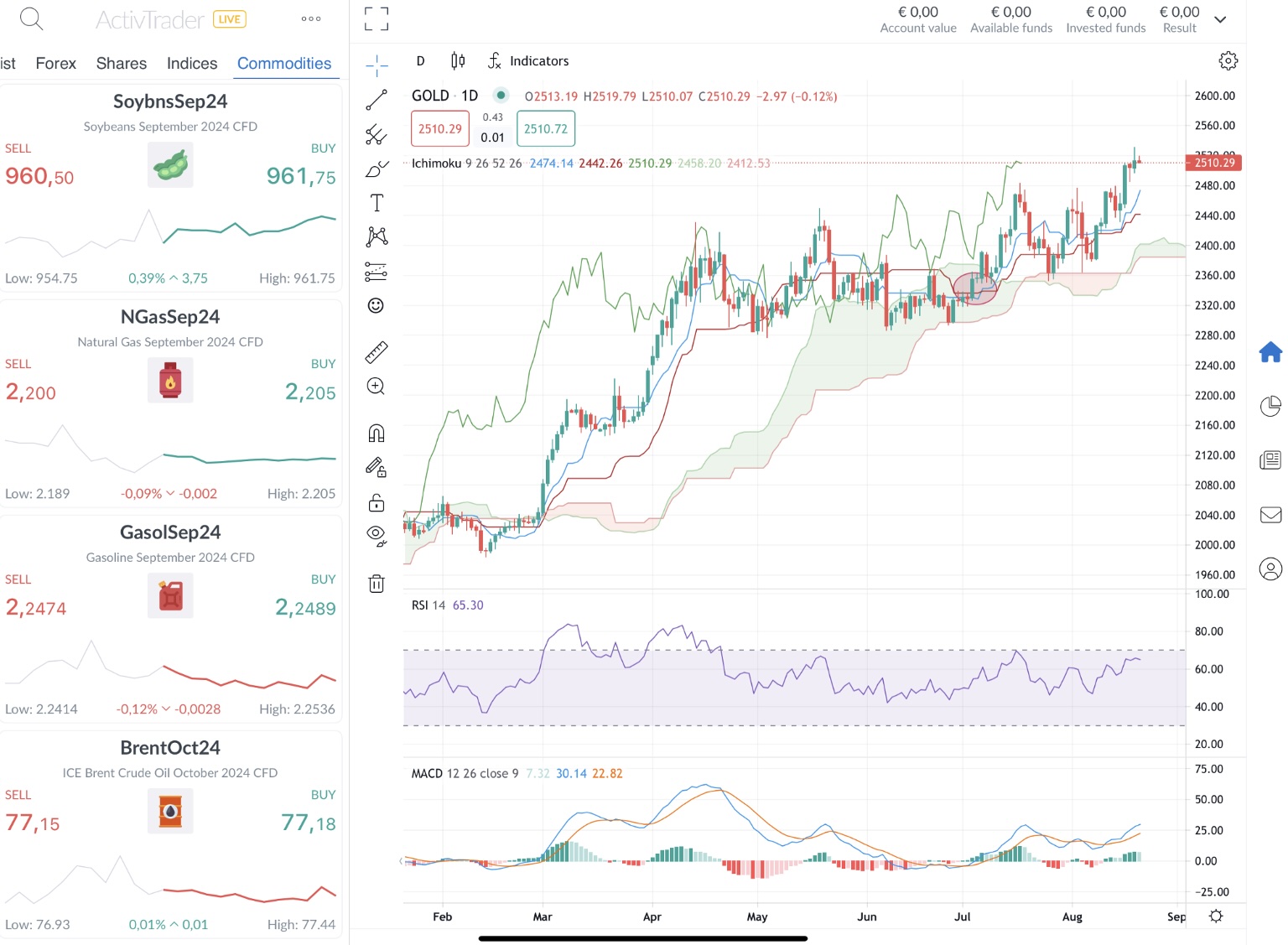
The price of Gold has been on a tear in recent weeks, surging by over 22% since the start of 2024 and reaching a new all-time high of $2,531.52 per ounce on August 20th, according to ActivTrades data. Gold prices have also been supported by geopolitical tensions in the Middle East and in Ukraine.
Daily Gold Chart - Source: ActivTrader
This rally is fueled by growing expectations that the Federal Reserve will cut interest rates in September and continue to do so throughout 2024 and 2025.
Investors are increasingly turning to Gold as a safe haven asset, as evidenced by the surge in holdings of the world's largest Gold-backed ETF, SPDR Gold Trust GLD, which hit a seven-month high earlier this week.
But why are rate cut prospects in the United States so supportive of Gold prices? And how far could Gold go in 2024?
Market Participants Are Pricing a 70% Change of a 25 bps Rate Cut in September
According to the CME FedWatch tool at the time of writing, market sentiment has shifted with investors now assigning a 69.5% probability to a 25 basis point (bps) reduction in the federal funds rate to the range of 5.00% to 5.25% in the next Federal Reserve’s meeting.
But this represents a decrease from the 94.2% probability assigned on July 19th and from the 76% chance recorded only yesterday, suggesting that market participants have become slightly less optimistic about the upcoming rate cut.
Conversely, the odds of a more substantial 50 bps rate cut have risen to 30.5% from 3.9% on July 19th, and 24% on August 19th. This suggests a growing consensus among market watchers that the Fed may need to take more decisive action to address economic concerns.
The Fed is expected to cut interest rates by 25 basis points at each of the remaining three meetings of 2024, according to economists polled by Reuters. This represents a slight increase from last month's poll, which predicted only two rate cuts for the rest of the year.
Several Federal Reserve officials are advocating for a shift in the American monetary policy, signalling a potential pivot away from high interest rate hikes, especially as other developed countries have started to lower their key interest rates.
Mary Daly, President of the Federal Reserve Bank of San Francisco, for example, has expressed the need for a recalibration of monetary policy in light of current economic conditions, as Fed officials are gaining confidence that inflation is heading to their 2% target.
Neel Kashkari, President of the Federal Reserve Bank of Minneapolis, and former President of the Federal Reserve Bank of Chicago, Charles Evans, have suggested that a rate cut in September might be warranted if the labour market continues to weaken.
Despite some hints from Fed officials that rate cuts are coming, most economists in the poll do not anticipate a rapid series of reductions.
Looking ahead to 2025, the Fed is expected to deliver a 25 basis point cut each in all four quarters. This implies a total of 100 basis points of reductions in 2025. However, market expectations are currently pricing in around 200 basis points of cuts by the end of the third quarter of 2025.
This suggests that markets are more optimistic about the Fed's willingness to ease monetary policy than economists.
Investors and analysts will closely monitor Fed Chair Jerome Powell's speech and comments at the Jackson Hole economic symposium on Friday for insights into the future direction of the US economy.
Understanding the Relationship Between Interest Rates, Gold and the USD
Gold, as a non-interest-bearing asset, becomes more attractive to investors when interest rates are low, as the opportunity cost of holding it compared to interest-bearing assets like bonds decreases.
The relationship between US interest rates, the US dollar, and Gold is interconnected.
When the Federal Reserve lowers interest rates, it typically weakens the US dollar. This occurs because foreign investors may find US-denominated assets less appealing compared to higher-yielding currencies, leading to decreased demand for the dollar. As a result, the US dollar's value decreases, and the supply of dollars in the foreign exchange market increases.
Since Gold is primarily priced in US dollars, fluctuations in the dollar's value can significantly impact Gold demand.
A weaker US dollar makes Gold more attractive to foreign investors seeking to diversify their portfolios away from a potentially depreciating currency - and vice-versa. This inverse relationship between Gold and the US dollar is often referred to as a negative correlation.
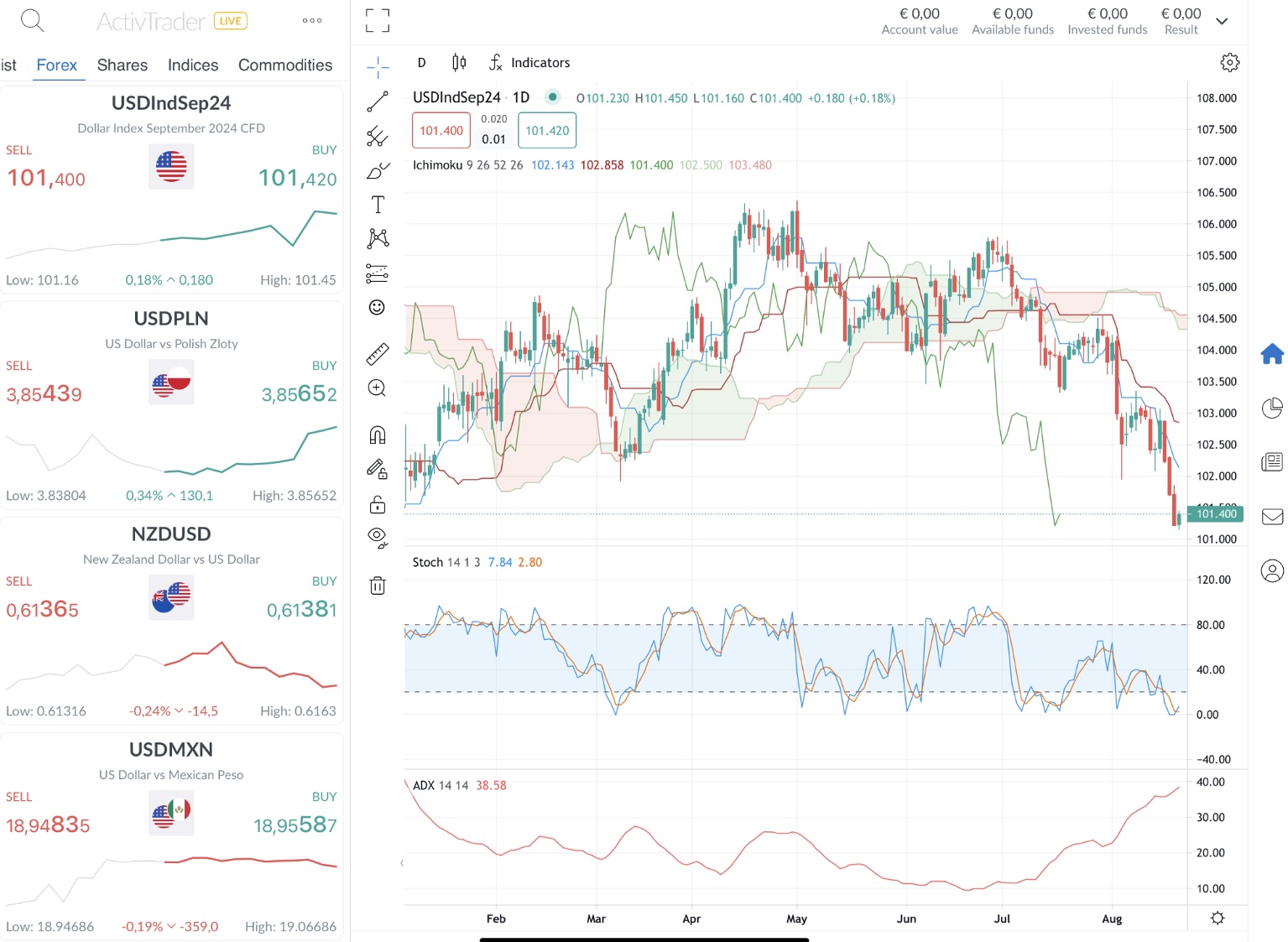
Earlier this week, the Dollar Index reached its lowest level since early 2024, overly supporting Gold prices.
Daily Dollar Index Chart - Source: ActivTrader
How Far Can Gold Go in 2024?
While Gold prices have hit a fresh high yesterday, Aakash Doshi, head of commodities, North America at Citi Research, could see Gold reach $2,600 by the end of 2024 and $3,000 per ounce by mid-2025.
In addition to economic conditions, US monetary policy and geopolitical tensions, traders should also keep an eye on central bank purchases of Gold, as they’ve been sharply rising in recent years.
Following a record-breaking year in 2022 with purchases of 1,082 tonnes of Gold, central banks continued to bolster their Gold reserves in 2023 by adding 1,037 tonnes of Gold. A June survey about the Central Bank Gold Reserves from the World Gold Council suggests that this trend is likely to continue, as nearly one-third of central banks plan to increase their Gold holdings.
The information provided does not constitute investment research. The material has not been prepared in accordance with the legal requirements designed to promote the independence of investment research and as such is to be considered to be a marketing communication.
All information has been prepared by ActivTrades (“AT”). The information does not contain a record of AT’s prices, or an offer of or solicitation for a transaction in any financial instrument. No representation or warranty is given as to the accuracy or completeness of this information.
Any material provided does not have regard to the specific investment objective and financial situation of any person who may receive it. Past performance is not a reliable indicator of future performance. AT provides an execution-only service. Consequently, any person acting on the information provided does so at their own risk.
The price of Gold has been on a tear in recent weeks, surging by over 22% since the start of 2024 and reaching a new all-time high of $2,531.52 per ounce on August 20th, according to ActivTrades data. Gold prices have also been supported by geopolitical tensions in the Middle East and in Ukraine.
Daily Gold Chart - Source: ActivTrader
This rally is fueled by growing expectations that the Federal Reserve will cut interest rates in September and continue to do so throughout 2024 and 2025.
Investors are increasingly turning to Gold as a safe haven asset, as evidenced by the surge in holdings of the world's largest Gold-backed ETF, SPDR Gold Trust GLD, which hit a seven-month high earlier this week.
But why are rate cut prospects in the United States so supportive of Gold prices? And how far could Gold go in 2024?
Market Participants Are Pricing a 70% Change of a 25 bps Rate Cut in September
According to the CME FedWatch tool at the time of writing, market sentiment has shifted with investors now assigning a 69.5% probability to a 25 basis point (bps) reduction in the federal funds rate to the range of 5.00% to 5.25% in the next Federal Reserve’s meeting.
But this represents a decrease from the 94.2% probability assigned on July 19th and from the 76% chance recorded only yesterday, suggesting that market participants have become slightly less optimistic about the upcoming rate cut.
Conversely, the odds of a more substantial 50 bps rate cut have risen to 30.5% from 3.9% on July 19th, and 24% on August 19th. This suggests a growing consensus among market watchers that the Fed may need to take more decisive action to address economic concerns.
The Fed is expected to cut interest rates by 25 basis points at each of the remaining three meetings of 2024, according to economists polled by Reuters. This represents a slight increase from last month's poll, which predicted only two rate cuts for the rest of the year.
Several Federal Reserve officials are advocating for a shift in the American monetary policy, signalling a potential pivot away from high interest rate hikes, especially as other developed countries have started to lower their key interest rates.
Mary Daly, President of the Federal Reserve Bank of San Francisco, for example, has expressed the need for a recalibration of monetary policy in light of current economic conditions, as Fed officials are gaining confidence that inflation is heading to their 2% target.
Neel Kashkari, President of the Federal Reserve Bank of Minneapolis, and former President of the Federal Reserve Bank of Chicago, Charles Evans, have suggested that a rate cut in September might be warranted if the labour market continues to weaken.
Despite some hints from Fed officials that rate cuts are coming, most economists in the poll do not anticipate a rapid series of reductions.
Looking ahead to 2025, the Fed is expected to deliver a 25 basis point cut each in all four quarters. This implies a total of 100 basis points of reductions in 2025. However, market expectations are currently pricing in around 200 basis points of cuts by the end of the third quarter of 2025.
This suggests that markets are more optimistic about the Fed's willingness to ease monetary policy than economists.
Investors and analysts will closely monitor Fed Chair Jerome Powell's speech and comments at the Jackson Hole economic symposium on Friday for insights into the future direction of the US economy.
Understanding the Relationship Between Interest Rates, Gold and the USD
Gold, as a non-interest-bearing asset, becomes more attractive to investors when interest rates are low, as the opportunity cost of holding it compared to interest-bearing assets like bonds decreases.
The relationship between US interest rates, the US dollar, and Gold is interconnected.
When the Federal Reserve lowers interest rates, it typically weakens the US dollar. This occurs because foreign investors may find US-denominated assets less appealing compared to higher-yielding currencies, leading to decreased demand for the dollar. As a result, the US dollar's value decreases, and the supply of dollars in the foreign exchange market increases.
Since Gold is primarily priced in US dollars, fluctuations in the dollar's value can significantly impact Gold demand.
A weaker US dollar makes Gold more attractive to foreign investors seeking to diversify their portfolios away from a potentially depreciating currency - and vice-versa. This inverse relationship between Gold and the US dollar is often referred to as a negative correlation.
Earlier this week, the Dollar Index reached its lowest level since early 2024, overly supporting Gold prices.
Daily Dollar Index Chart - Source: ActivTrader
How Far Can Gold Go in 2024?
While Gold prices have hit a fresh high yesterday, Aakash Doshi, head of commodities, North America at Citi Research, could see Gold reach $2,600 by the end of 2024 and $3,000 per ounce by mid-2025.
In addition to economic conditions, US monetary policy and geopolitical tensions, traders should also keep an eye on central bank purchases of Gold, as they’ve been sharply rising in recent years.
Following a record-breaking year in 2022 with purchases of 1,082 tonnes of Gold, central banks continued to bolster their Gold reserves in 2023 by adding 1,037 tonnes of Gold. A June survey about the Central Bank Gold Reserves from the World Gold Council suggests that this trend is likely to continue, as nearly one-third of central banks plan to increase their Gold holdings.
The information provided does not constitute investment research. The material has not been prepared in accordance with the legal requirements designed to promote the independence of investment research and as such is to be considered to be a marketing communication.
All information has been prepared by ActivTrades (“AT”). The information does not contain a record of AT’s prices, or an offer of or solicitation for a transaction in any financial instrument. No representation or warranty is given as to the accuracy or completeness of this information.
Any material provided does not have regard to the specific investment objective and financial situation of any person who may receive it. Past performance is not a reliable indicator of future performance. AT provides an execution-only service. Consequently, any person acting on the information provided does so at their own risk.
Hantec Financial Nominated for Most Trusted Broker at UF AWARDS APAC 2026
Featured Videos
AvaTrade to Acquire Most of FXCM; NAGA Raises $8M
AvaTrade to Acquire Most of FXCM; NAGA Raises $8M
AvaTrade to Acquire Most of FXCM; NAGA Raises $8M
AvaTrade to Acquire Most of FXCM; NAGA Raises $8M
Today’s financial news recap covers AvaTrade agrees to acquire most of FXCM, NAGA secures eight million dollars in new financing, and Wise seeks a tax settlement in the UK.
Finance Magnates Daily Recap brings you the latest news from forex and CFD brokers, fintech, payments, cryptocurrency, digital assets, trading platforms, financial regulation and global markets.
Get the key company news, executive moves, deals, regulatory updates and market developments of the day, in just a few minutes. New episodes published every weekday.
Read more: https://www.financemagnates.com
#FinanceMagnates #ForexNews #FintechNews
Today’s financial news recap covers AvaTrade agrees to acquire most of FXCM, NAGA secures eight million dollars in new financing, and Wise seeks a tax settlement in the UK.
Finance Magnates Daily Recap brings you the latest news from forex and CFD brokers, fintech, payments, cryptocurrency, digital assets, trading platforms, financial regulation and global markets.
Get the key company news, executive moves, deals, regulatory updates and market developments of the day, in just a few minutes. New episodes published every weekday.
Read more: https://www.financemagnates.com
#FinanceMagnates #ForexNews #FintechNews
Today’s financial news recap covers AvaTrade agrees to acquire most of FXCM, NAGA secures eight million dollars in new financing, and Wise seeks a tax settlement in the UK.
Finance Magnates Daily Recap brings you the latest news from forex and CFD brokers, fintech, payments, cryptocurrency, digital assets, trading platforms, financial regulation and global markets.
Get the key company news, executive moves, deals, regulatory updates and market developments of the day, in just a few minutes. New episodes published every weekday.
Read more: https://www.financemagnates.com
#FinanceMagnates #ForexNews #FintechNews
Today’s financial news recap covers AvaTrade agrees to acquire most of FXCM, NAGA secures eight million dollars in new financing, and Wise seeks a tax settlement in the UK.
Finance Magnates Daily Recap brings you the latest news from forex and CFD brokers, fintech, payments, cryptocurrency, digital assets, trading platforms, financial regulation and global markets.
Get the key company news, executive moves, deals, regulatory updates and market developments of the day, in just a few minutes. New episodes published every weekday.
Read more: https://www.financemagnates.com
#FinanceMagnates #ForexNews #FintechNews
XTB Adds Overnight US Stock Trading; Nasdaq Ventures Invests in One Trading
XTB Adds Overnight US Stock Trading; Nasdaq Ventures Invests in One Trading
XTB Adds Overnight US Stock Trading; Nasdaq Ventures Invests in One Trading
XTB Adds Overnight US Stock Trading; Nasdaq Ventures Invests in One Trading
XTB Adds Overnight US Stock Trading; Nasdaq Ventures Invests in One Trading
XTB Adds Overnight US Stock Trading; Nasdaq Ventures Invests in One Trading
Today’s financial news recap covers XTB expands overnight US stock trading, Fortrade reports higher revenue, Nasdaq backs One Trading, and Vest Labs raises 13 million dollars.
Finance Magnates Daily Recap brings you the latest news from forex and CFD brokers, fintech, payments, cryptocurrency, digital assets, trading platforms, financial regulation and global markets.
Get the key company news, executive moves, deals, regulatory updates and market developments of the day, in just a few minutes. New episodes published every weekday.
Read more: https://www.financemagnates.com
#FinanceMagnates #ForexNews #FintechNews
Today’s financial news recap covers XTB expands overnight US stock trading, Fortrade reports higher revenue, Nasdaq backs One Trading, and Vest Labs raises 13 million dollars.
Finance Magnates Daily Recap brings you the latest news from forex and CFD brokers, fintech, payments, cryptocurrency, digital assets, trading platforms, financial regulation and global markets.
Get the key company news, executive moves, deals, regulatory updates and market developments of the day, in just a few minutes. New episodes published every weekday.
Read more: https://www.financemagnates.com
#FinanceMagnates #ForexNews #FintechNews
Today’s financial news recap covers XTB expands overnight US stock trading, Fortrade reports higher revenue, Nasdaq backs One Trading, and Vest Labs raises 13 million dollars.
Finance Magnates Daily Recap brings you the latest news from forex and CFD brokers, fintech, payments, cryptocurrency, digital assets, trading platforms, financial regulation and global markets.
Get the key company news, executive moves, deals, regulatory updates and market developments of the day, in just a few minutes. New episodes published every weekday.
Read more: https://www.financemagnates.com
#FinanceMagnates #ForexNews #FintechNews
Today’s financial news recap covers XTB expands overnight US stock trading, Fortrade reports higher revenue, Nasdaq backs One Trading, and Vest Labs raises 13 million dollars.
Finance Magnates Daily Recap brings you the latest news from forex and CFD brokers, fintech, payments, cryptocurrency, digital assets, trading platforms, financial regulation and global markets.
Get the key company news, executive moves, deals, regulatory updates and market developments of the day, in just a few minutes. New episodes published every weekday.
Read more: https://www.financemagnates.com
#FinanceMagnates #ForexNews #FintechNews
Today’s financial news recap covers XTB expands overnight US stock trading, Fortrade reports higher revenue, Nasdaq backs One Trading, and Vest Labs raises 13 million dollars.
Finance Magnates Daily Recap brings you the latest news from forex and CFD brokers, fintech, payments, cryptocurrency, digital assets, trading platforms, financial regulation and global markets.
Get the key company news, executive moves, deals, regulatory updates and market developments of the day, in just a few minutes. New episodes published every weekday.
Read more: https://www.financemagnates.com
#FinanceMagnates #ForexNews #FintechNews
Today’s financial news recap covers XTB expands overnight US stock trading, Fortrade reports higher revenue, Nasdaq backs One Trading, and Vest Labs raises 13 million dollars.
Finance Magnates Daily Recap brings you the latest news from forex and CFD brokers, fintech, payments, cryptocurrency, digital assets, trading platforms, financial regulation and global markets.
Get the key company news, executive moves, deals, regulatory updates and market developments of the day, in just a few minutes. New episodes published every weekday.
Read more: https://www.financemagnates.com
#FinanceMagnates #ForexNews #FintechNews
CMC Founder Downplays Volatility Hit; Devexperts Names CEO
CMC Founder Downplays Volatility Hit; Devexperts Names CEO
CMC Founder Downplays Volatility Hit; Devexperts Names CEO
CMC Founder Downplays Volatility Hit; Devexperts Names CEO
CMC Founder Downplays Volatility Hit; Devexperts Names CEO
CMC Founder Downplays Volatility Hit; Devexperts Names CEO
Today’s financial news recap covers low volatility pressures brokers, Devexperts names a new CEO, Saxo cuts onboarding time, and OKX reaches a 25 billion dollar valuation.
Finance Magnates Daily Recap brings you the latest news from forex and CFD brokers, fintech, payments, cryptocurrency, digital assets, trading platforms, financial regulation and global markets.
Get the key company news, executive moves, deals, regulatory updates and market developments of the day, in just a few minutes. New episodes published every weekday.
Read more: https://www.financemagnates.com
#FinanceMagnates #ForexNews #FintechNews
Today’s financial news recap covers low volatility pressures brokers, Devexperts names a new CEO, Saxo cuts onboarding time, and OKX reaches a 25 billion dollar valuation.
Finance Magnates Daily Recap brings you the latest news from forex and CFD brokers, fintech, payments, cryptocurrency, digital assets, trading platforms, financial regulation and global markets.
Get the key company news, executive moves, deals, regulatory updates and market developments of the day, in just a few minutes. New episodes published every weekday.
Read more: https://www.financemagnates.com
#FinanceMagnates #ForexNews #FintechNews
Today’s financial news recap covers low volatility pressures brokers, Devexperts names a new CEO, Saxo cuts onboarding time, and OKX reaches a 25 billion dollar valuation.
Finance Magnates Daily Recap brings you the latest news from forex and CFD brokers, fintech, payments, cryptocurrency, digital assets, trading platforms, financial regulation and global markets.
Get the key company news, executive moves, deals, regulatory updates and market developments of the day, in just a few minutes. New episodes published every weekday.
Read more: https://www.financemagnates.com
#FinanceMagnates #ForexNews #FintechNews
Today’s financial news recap covers low volatility pressures brokers, Devexperts names a new CEO, Saxo cuts onboarding time, and OKX reaches a 25 billion dollar valuation.
Finance Magnates Daily Recap brings you the latest news from forex and CFD brokers, fintech, payments, cryptocurrency, digital assets, trading platforms, financial regulation and global markets.
Get the key company news, executive moves, deals, regulatory updates and market developments of the day, in just a few minutes. New episodes published every weekday.
Read more: https://www.financemagnates.com
#FinanceMagnates #ForexNews #FintechNews
Today’s financial news recap covers low volatility pressures brokers, Devexperts names a new CEO, Saxo cuts onboarding time, and OKX reaches a 25 billion dollar valuation.
Finance Magnates Daily Recap brings you the latest news from forex and CFD brokers, fintech, payments, cryptocurrency, digital assets, trading platforms, financial regulation and global markets.
Get the key company news, executive moves, deals, regulatory updates and market developments of the day, in just a few minutes. New episodes published every weekday.
Read more: https://www.financemagnates.com
#FinanceMagnates #ForexNews #FintechNews
Today’s financial news recap covers low volatility pressures brokers, Devexperts names a new CEO, Saxo cuts onboarding time, and OKX reaches a 25 billion dollar valuation.
Finance Magnates Daily Recap brings you the latest news from forex and CFD brokers, fintech, payments, cryptocurrency, digital assets, trading platforms, financial regulation and global markets.
Get the key company news, executive moves, deals, regulatory updates and market developments of the day, in just a few minutes. New episodes published every weekday.
Read more: https://www.financemagnates.com
#FinanceMagnates #ForexNews #FintechNews
Today’s financial news recap covers Trade Nation buys FXCM's UK client book, Trading 212 reports higher revenue, the CFTC's move to allow perpetual index futures.
Finance Magnates Daily Recap brings you the latest news from forex and CFD brokers, fintech, payments, cryptocurrency, digital assets, trading platforms, financial regulation and global markets.
Get the key company news, executive moves, deals, regulatory updates and market developments of the day, in just a few minutes. New episodes published every weekday.
Read more: https://www.financemagnates.com
#FinanceMagnates #ForexNews #FintechNews
Today’s financial news recap covers Trade Nation buys FXCM's UK client book, Trading 212 reports higher revenue, the CFTC's move to allow perpetual index futures.
Finance Magnates Daily Recap brings you the latest news from forex and CFD brokers, fintech, payments, cryptocurrency, digital assets, trading platforms, financial regulation and global markets.
Get the key company news, executive moves, deals, regulatory updates and market developments of the day, in just a few minutes. New episodes published every weekday.
Read more: https://www.financemagnates.com
#FinanceMagnates #ForexNews #FintechNews
Today’s financial news recap covers Trade Nation buys FXCM's UK client book, Trading 212 reports higher revenue, the CFTC's move to allow perpetual index futures.
Finance Magnates Daily Recap brings you the latest news from forex and CFD brokers, fintech, payments, cryptocurrency, digital assets, trading platforms, financial regulation and global markets.
Get the key company news, executive moves, deals, regulatory updates and market developments of the day, in just a few minutes. New episodes published every weekday.
Read more: https://www.financemagnates.com
#FinanceMagnates #ForexNews #FintechNews
Today’s financial news recap covers Trade Nation buys FXCM's UK client book, Trading 212 reports higher revenue, the CFTC's move to allow perpetual index futures.
Finance Magnates Daily Recap brings you the latest news from forex and CFD brokers, fintech, payments, cryptocurrency, digital assets, trading platforms, financial regulation and global markets.
Get the key company news, executive moves, deals, regulatory updates and market developments of the day, in just a few minutes. New episodes published every weekday.
Read more: https://www.financemagnates.com
#FinanceMagnates #ForexNews #FintechNews
Today’s financial news recap covers Trade Nation buys FXCM's UK client book, Trading 212 reports higher revenue, the CFTC's move to allow perpetual index futures.
Finance Magnates Daily Recap brings you the latest news from forex and CFD brokers, fintech, payments, cryptocurrency, digital assets, trading platforms, financial regulation and global markets.
Get the key company news, executive moves, deals, regulatory updates and market developments of the day, in just a few minutes. New episodes published every weekday.
Read more: https://www.financemagnates.com
#FinanceMagnates #ForexNews #FintechNews
Today’s financial news recap covers Trade Nation buys FXCM's UK client book, Trading 212 reports higher revenue, the CFTC's move to allow perpetual index futures.
Finance Magnates Daily Recap brings you the latest news from forex and CFD brokers, fintech, payments, cryptocurrency, digital assets, trading platforms, financial regulation and global markets.
Get the key company news, executive moves, deals, regulatory updates and market developments of the day, in just a few minutes. New episodes published every weekday.
Read more: https://www.financemagnates.com
#FinanceMagnates #ForexNews #FintechNews
Your career isn’t a linear path.
Your career isn’t a linear path.
Your career isn’t a linear path.
Your career isn’t a linear path.
Your career isn’t a linear path.
Your career isn’t a linear path.
Roles change. Career goals change. Sometimes you want a completely new challenge.
But the skills and knowledge you build along the way can stay with you and give you something to build on.
For Jeff Patterson, that continued growth is key to long-term career development.
You bring the skills. FM Academy helps you build the knowledge.
#FMAcademy #FinanceMagnates #FinanceCareers #ProfessionalDevelopment #Fintech
Roles change. Career goals change. Sometimes you want a completely new challenge.
But the skills and knowledge you build along the way can stay with you and give you something to build on.
For Jeff Patterson, that continued growth is key to long-term career development.
You bring the skills. FM Academy helps you build the knowledge.
#FMAcademy #FinanceMagnates #FinanceCareers #ProfessionalDevelopment #Fintech
Roles change. Career goals change. Sometimes you want a completely new challenge.
But the skills and knowledge you build along the way can stay with you and give you something to build on.
For Jeff Patterson, that continued growth is key to long-term career development.
You bring the skills. FM Academy helps you build the knowledge.
#FMAcademy #FinanceMagnates #FinanceCareers #ProfessionalDevelopment #Fintech
Roles change. Career goals change. Sometimes you want a completely new challenge.
But the skills and knowledge you build along the way can stay with you and give you something to build on.
For Jeff Patterson, that continued growth is key to long-term career development.
You bring the skills. FM Academy helps you build the knowledge.
#FMAcademy #FinanceMagnates #FinanceCareers #ProfessionalDevelopment #Fintech
Roles change. Career goals change. Sometimes you want a completely new challenge.
But the skills and knowledge you build along the way can stay with you and give you something to build on.
For Jeff Patterson, that continued growth is key to long-term career development.
You bring the skills. FM Academy helps you build the knowledge.
#FMAcademy #FinanceMagnates #FinanceCareers #ProfessionalDevelopment #Fintech
Roles change. Career goals change. Sometimes you want a completely new challenge.
But the skills and knowledge you build along the way can stay with you and give you something to build on.
For Jeff Patterson, that continued growth is key to long-term career development.
You bring the skills. FM Academy helps you build the knowledge.
#FMAcademy #FinanceMagnates #FinanceCareers #ProfessionalDevelopment #Fintech