
B-Book Risk Management: Five Questions Your Desk Should Answer Every Week

Monday, 26/10/2026 | 10:28 GMT by Brokerpilot
Disclaimer
  • Ask 5 weekly questions to master B-book risk management and protect your brokerage.
brokerpilot

Most B-book brokers judge their book by one number: what it made last month. If the number is positive, the desk relaxes. If it is negative, someone writes "difficult market conditions" into a management report. Either way, the number tells you whether the book made money. It says almost nothing about why, or whether next month will look the same.

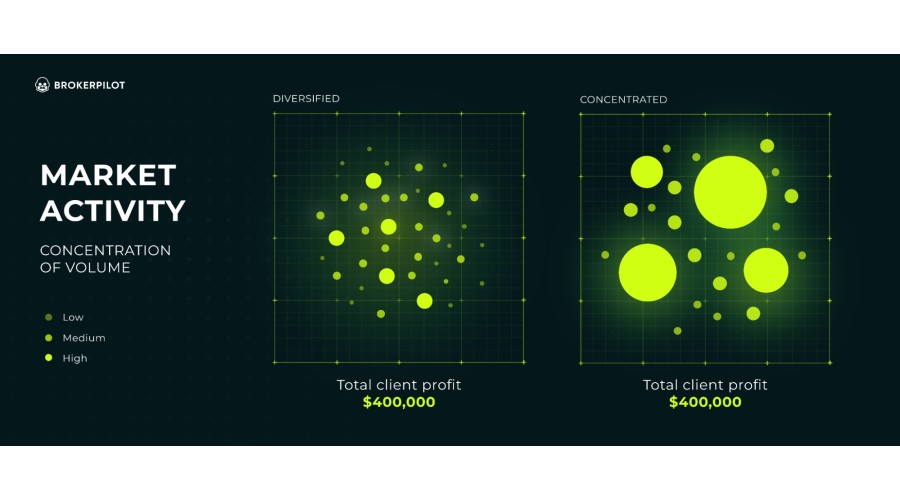
Take two brokers that both close a month with $400,000 of B-book profit (the figures are illustrative). At the first, the result comes from thousands of client accounts losing small amounts across a dozen instruments, and the largest single winner took $15,000. At the second, the same total is what remained after eight accounts took $350,000 out of the book, mostly on gold, during two news releases.

On a monthly report the two brokers look identical. One has a healthy book. The other has a problem that simply has not arrived yet.

B-book risk management is the work of telling those two months apart while they are still happening. The five questions below are the ones experienced dealing desks ask every week. None of them needs a new model. All of them need data most brokers already own but rarely see in one place.

1. How concentrated is client profit?

A B-book earns its money from the law of large numbers. Many clients, many trades, outcomes that average out in the broker's favour. The moment client profit starts to come from a small group of accounts, that law stops working for you.

So the first number to watch is not total client P&L but its concentration. What share of this week's client profit went to the top 1% of accounts? To the top twenty? There is no universal safe level, because every book is different. What matters is the trend against your own history. A share that climbs from 30% to 55% over six weeks is an early warning, even while monthly profit still looks fine.

Concentration also tells you where to look next. Twenty accounts can be reviewed by a person in an afternoon. Twenty thousand cannot.
Brokerpilot

2. Which instruments made or lost money for the book?

The aggregate result hides the instrument mix, and the mix changes faster than most risk settings do. Retail flow moves to wherever the story is: gold during a rally, indices around earnings season, crypto when it is in the headlines. Many brokers built their exposure limits and alert thresholds years ago, around EUR/USD and the other majors, and have rarely revisited them since.

Those instruments do not behave alike. Metals and indices gap at session opens. Retail clients tend to crowd into the same direction on them at the same time. Single stocks carry earnings risk and, at some brokers, overnight sessions. A threshold that is sensible on a major currency pair can be pure noise on one symbol and complete blindness on another.

The weekly check is simple: the B-book result per symbol, next to each symbol's share of client volume. If one instrument has quietly grown to a third of the flow and turned negative for the book, you want to see that in week two, not in the quarterly review.

3. Which client profit came from behaviour, not the market?

Not every winning account is a problem. Some clients are simply good traders, and a broker that treats every winner as an enemy will lose its best customers along with its worst.

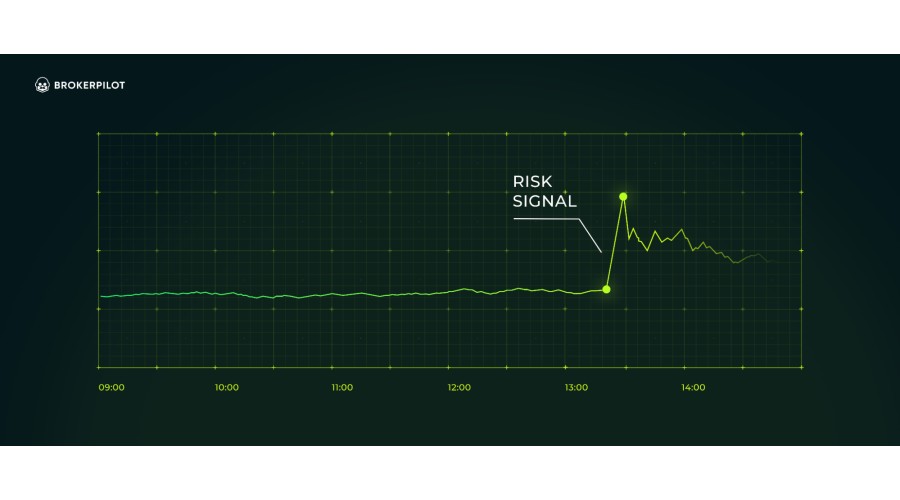
The question is where the profit comes from. A trader who reads the market well wins on direction, holds positions for hours or days, and has losing streaks like anyone else. Toxic flow looks different. It shows up in the pattern rather than the result: entries a fraction of a second before the price feed updates, profits concentrated in the first moments after a news release, very short holding times with an unusually high win rate, or several accounts opening the same trades from the same IP range.

Latency arbitrage, news trading against stale quotes and coordinated account groups all leave this kind of trace. None of them is obvious from P&L alone, and all of them are visible in trade-level data. A weekly review that separates "won on the market" from "won on our infrastructure" is one of the most valuable hours a dealing desk can spend.
Brokerpilot

4. Was the exposure you held a decision?

Every B-book result is partly a result of the desk's own choices: when net exposure was hedged, at what level, how much of it, and how much was left open. These are judgement calls, and on any given day most of them are reasonable.

The risk lies in the calls nobody remembers making. A limit widened during a quiet week and never tightened. A hedge that was planned for the morning and placed after the London open. A large position on one symbol that built up across three trade servers, so no single screen ever showed it whole.

The weekly question is how much of the book's P&L came from exposure the desk chose to hold, and how much from exposure it did not see in time. If you cannot split the two, you cannot tell whether a bad week was bad luck or a gap in visibility. The first needs patience. The second needs fixing.

5. Could you explain a bad month by Monday?

This is the test that sums up the other four. Imagine the book closes a month well below plan. The CEO asks why. Could the desk answer within one working day, in terms of specific accounts, symbols and sessions?

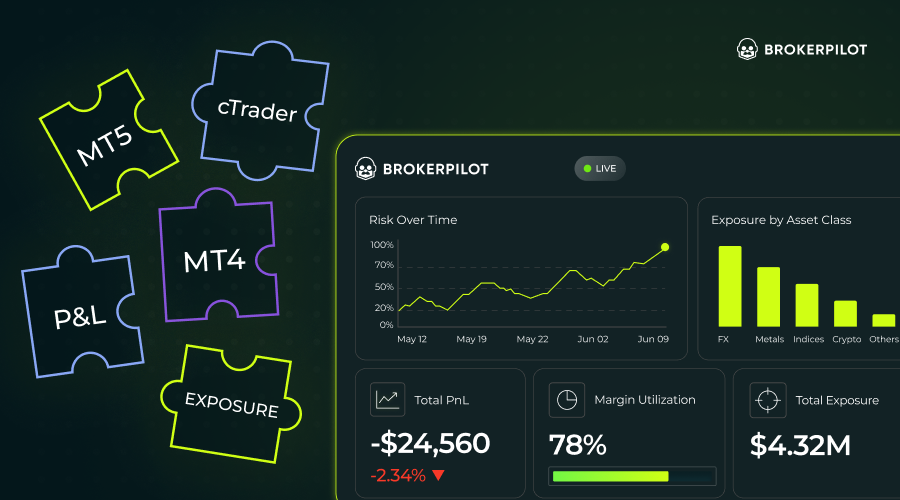
At many brokers the honest answer is no. The data exists, but it sits in separate exports from MT4, MT5 and cTrader, in the bridge logs and in spreadsheets someone builds by hand at month-end. By the time it is stitched together, the positions have closed and the explanation turns into a story about "the market".

Quiet markets make this harder, not easier. When volatility is low, there is less small, random trading to cushion the book. Results start to depend on fewer, larger, longer-held positions, and the book becomes more concentrated without looking any more dangerous. Exposure looks calm while the distribution of client profit is shifting underneath it.
Brokerpilot

What it takes to answer these questions every week

None of the five questions is exotic. Most heads of dealing would agree with every one of them. The reason they are asked monthly, or only after a bad result, is practical: answering them means pulling data from several servers and systems and rebuilding the picture by hand.

The fix is not to hand the book to an algorithm. Automated rules work well in normal conditions and badly in exactly the moments that decide a month, when the market does something unusual. What a desk needs is a single, live view of the whole book (every server, every symbol, every account cluster), so that the person responsible can see the pattern and make the call with evidence in front of them.

That is what Brokerpilot is built for. It brings exposure, client P&L and trading behaviour across MT4, MT5 and cTrader into one real-time view, so the five questions above take minutes rather than a month-end project. The decisions stay with your dealers. They simply get to make them on Tuesday, not explain them in the quarterly review.

If you want to see what your own book looks like through these five questions, book a presentation with our team.

Marina Koltsova leads marketing at Brokerpilot, a risk management and dealing desk platform for FX and CFD brokers on MT4, MT5 and cTrader.

Most B-book brokers judge their book by one number: what it made last month. If the number is positive, the desk relaxes. If it is negative, someone writes "difficult market conditions" into a management report. Either way, the number tells you whether the book made money. It says almost nothing about why, or whether next month will look the same.

Take two brokers that both close a month with $400,000 of B-book profit (the figures are illustrative). At the first, the result comes from thousands of client accounts losing small amounts across a dozen instruments, and the largest single winner took $15,000. At the second, the same total is what remained after eight accounts took $350,000 out of the book, mostly on gold, during two news releases.

On a monthly report the two brokers look identical. One has a healthy book. The other has a problem that simply has not arrived yet.

B-book risk management is the work of telling those two months apart while they are still happening. The five questions below are the ones experienced dealing desks ask every week. None of them needs a new model. All of them need data most brokers already own but rarely see in one place.

1. How concentrated is client profit?

A B-book earns its money from the law of large numbers. Many clients, many trades, outcomes that average out in the broker's favour. The moment client profit starts to come from a small group of accounts, that law stops working for you.

So the first number to watch is not total client P&L but its concentration. What share of this week's client profit went to the top 1% of accounts? To the top twenty? There is no universal safe level, because every book is different. What matters is the trend against your own history. A share that climbs from 30% to 55% over six weeks is an early warning, even while monthly profit still looks fine.

Concentration also tells you where to look next. Twenty accounts can be reviewed by a person in an afternoon. Twenty thousand cannot.

Brokerpilot

2. Which instruments made or lost money for the book?

The aggregate result hides the instrument mix, and the mix changes faster than most risk settings do. Retail flow moves to wherever the story is: gold during a rally, indices around earnings season, crypto when it is in the headlines. Many brokers built their exposure limits and alert thresholds years ago, around EUR/USD and the other majors, and have rarely revisited them since.

Those instruments do not behave alike. Metals and indices gap at session opens. Retail clients tend to crowd into the same direction on them at the same time. Single stocks carry earnings risk and, at some brokers, overnight sessions. A threshold that is sensible on a major currency pair can be pure noise on one symbol and complete blindness on another.

The weekly check is simple: the B-book result per symbol, next to each symbol's share of client volume. If one instrument has quietly grown to a third of the flow and turned negative for the book, you want to see that in week two, not in the quarterly review.

3. Which client profit came from behaviour, not the market?

Not every winning account is a problem. Some clients are simply good traders, and a broker that treats every winner as an enemy will lose its best customers along with its worst.

The question is where the profit comes from. A trader who reads the market well wins on direction, holds positions for hours or days, and has losing streaks like anyone else. Toxic flow looks different. It shows up in the pattern rather than the result: entries a fraction of a second before the price feed updates, profits concentrated in the first moments after a news release, very short holding times with an unusually high win rate, or several accounts opening the same trades from the same IP range.

Latency arbitrage, news trading against stale quotes and coordinated account groups all leave this kind of trace. None of them is obvious from P&L alone, and all of them are visible in trade-level data. A weekly review that separates "won on the market" from "won on our infrastructure" is one of the most valuable hours a dealing desk can spend.

Brokerpilot

4. Was the exposure you held a decision?

Every B-book result is partly a result of the desk's own choices: when net exposure was hedged, at what level, how much of it, and how much was left open. These are judgement calls, and on any given day most of them are reasonable.

The risk lies in the calls nobody remembers making. A limit widened during a quiet week and never tightened. A hedge that was planned for the morning and placed after the London open. A large position on one symbol that built up across three trade servers, so no single screen ever showed it whole.

The weekly question is how much of the book's P&L came from exposure the desk chose to hold, and how much from exposure it did not see in time. If you cannot split the two, you cannot tell whether a bad week was bad luck or a gap in visibility. The first needs patience. The second needs fixing.

5. Could you explain a bad month by Monday?

This is the test that sums up the other four. Imagine the book closes a month well below plan. The CEO asks why. Could the desk answer within one working day, in terms of specific accounts, symbols and sessions?

At many brokers the honest answer is no. The data exists, but it sits in separate exports from MT4, MT5 and cTrader, in the bridge logs and in spreadsheets someone builds by hand at month-end. By the time it is stitched together, the positions have closed and the explanation turns into a story about "the market".

Quiet markets make this harder, not easier. When volatility is low, there is less small, random trading to cushion the book. Results start to depend on fewer, larger, longer-held positions, and the book becomes more concentrated without looking any more dangerous. Exposure looks calm while the distribution of client profit is shifting underneath it.

Brokerpilot

What it takes to answer these questions every week

None of the five questions is exotic. Most heads of dealing would agree with every one of them. The reason they are asked monthly, or only after a bad result, is practical: answering them means pulling data from several servers and systems and rebuilding the picture by hand.

The fix is not to hand the book to an algorithm. Automated rules work well in normal conditions and badly in exactly the moments that decide a month, when the market does something unusual. What a desk needs is a single, live view of the whole book (every server, every symbol, every account cluster), so that the person responsible can see the pattern and make the call with evidence in front of them.

That is what Brokerpilot is built for. It brings exposure, client P&L and trading behaviour across MT4, MT5 and cTrader into one real-time view, so the five questions above take minutes rather than a month-end project. The decisions stay with your dealers. They simply get to make them on Tuesday, not explain them in the quarterly review.

If you want to see what your own book looks like through these five questions, book a presentation with our team.

Marina Koltsova leads marketing at Brokerpilot, a risk management and dealing desk platform for FX and CFD brokers on MT4, MT5 and cTrader.

Disclaimer

Thought Leadership

!"#$%&'()*+,-./0123456789:;<=>?@ABCDEFGHIJKLMNOPQRSTUVWXYZ[\]^_`abcdefghijklmnopqrstuvwxyz{|} !"#$%&'()*+,-./0123456789:;<=>?@ABCDEFGHIJKLMNOPQRSTUVWXYZ[\]^_`abcdefghijklmnopqrstuvwxyz{|}