High Frequency Trading (HFT) has had its fair share of 'moaners and groaners' since the flash crash in 2010. The mighty trading style has managed to collect a large amount of players who wave the anti-HFT card, is it fair for the high frequency trading community to suffer so much abuse? Does the market really understand this ultra fast trading mechanism? The simple fact is no one likes change and as markets are divulging away from the traditional voice and open e cry methods to pure e-trading, the market needs to get a grip and act fast to manage as opposed to prevent.
In essence high frequency trading has its added value, apart from Liquidity (in illiquid instruments) it also creates a new batch of market makers, on the other hand it can be detrimental to the market as witnessed with the flash crash where the US stock index suffered heavily in a short preiod of time.
OTC markets have been the focus of new regulatory talk with Dodd Frank and MIFID 2, high frequency trading is high on the agenda with european law makers looking at ways to police, micro manage or completely extinct HFT.
Furthermore, policy makers in Europe have been working extra hard to pull the plug on high frequency trading, one suggestion put forward by the ECON (Economic & Monetary Affairs Committee) was to implement a 500 millisecond resting period for all orders before they are cancelled or modified.
European politicians are keen to see the back of high frequency trading and have been pushing the European Parliament to take action, MIFID 2 which is still in its review stage will have a crucial impact on the future of financial markets in europe, high frequency trading accounts for around 40% of orders in UK equites.
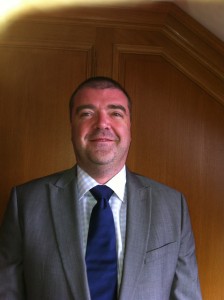
Matthew Clark, Director of Trading and Partner from Currency Capital Management
Matthew Clark, Director of Trading and Partner from Currency Capital Management in Switzerland doesn't see the 'reducing latency' as a major breakthrough, he says "the minimum resting time is not a problem in our eyes, although the market may change momentarily as the high frequency guys learn to adapt their algos and find new ways to bring in money in this new scenario, they will be very aggressive and continue to find ways to snipe and front run order books more than anyone else in the market place."
British MEP's have been defending the rights of HFT and belive it can be better managed as opposed to an outright ban. The treasury along with the regulator, FSA, have made firm comments in favor of a structured system that acknowledges HFT as a part of the new trading revolution fuelled about technological advancement.
The UK’s official response, made jointly through the Treasury and the Financial Services Authority, supports HFT, arguing it increases liquidity and cuts trading costs. While supporting ‘steps to enhance stability and protect against market abuse’, the Treasury does not support European moves requiring HFT firms to hold equities for a minimum period.
The Treasury commissioned a research project on high frequency trading from the office of science known as the Foresight Group.
Major economic centres from across the globe have been investigating the effects of HFT in their domestic markets, Germany has shied away from HFT and the Federal Financial Supervisory Authority was looking to introduce fees and circuit breakers to avoid any major pitfalls.
Stephane Leroy, Head of Sales & Marketing at QuantHouse, a systematic
trading solutions firm, which is a part of S&P Capital IQ, is in favour of
Risk Management tools to enhance the trading environment; however he believes the wider market needs to do more to understand what HFT is really about, he says "what makes the system safe is the control which can be put in place in all venues. Technology is here and ready to be used today to help regulators and market participants evolve in a reliable environment".
High frequency trading is increasingly becoming a major part of global financial markets as more and more firms use high frequency strategies, the market needs to ensure it understands the dynamics from both spectrums to ensure any action taken does not affect the market in a negative manner by driving down volumes and minimising innovation.
Stephane Leroy, Head of Sales & Marketing, QuantHouse
Stephane concludes " the banking sector is going through a necessary evolution from manual trading to automated trading as many other sectors went through in the past. We call it the Quantum Gap!"
High Frequency Trading (HFT) has had its fair share of 'moaners and groaners' since the flash crash in 2010. The mighty trading style has managed to collect a large amount of players who wave the anti-HFT card, is it fair for the high frequency trading community to suffer so much abuse? Does the market really understand this ultra fast trading mechanism? The simple fact is no one likes change and as markets are divulging away from the traditional voice and open e cry methods to pure e-trading, the market needs to get a grip and act fast to manage as opposed to prevent.
In essence high frequency trading has its added value, apart from Liquidity (in illiquid instruments) it also creates a new batch of market makers, on the other hand it can be detrimental to the market as witnessed with the flash crash where the US stock index suffered heavily in a short preiod of time.
OTC markets have been the focus of new regulatory talk with Dodd Frank and MIFID 2, high frequency trading is high on the agenda with european law makers looking at ways to police, micro manage or completely extinct HFT.
Furthermore, policy makers in Europe have been working extra hard to pull the plug on high frequency trading, one suggestion put forward by the ECON (Economic & Monetary Affairs Committee) was to implement a 500 millisecond resting period for all orders before they are cancelled or modified.
European politicians are keen to see the back of high frequency trading and have been pushing the European Parliament to take action, MIFID 2 which is still in its review stage will have a crucial impact on the future of financial markets in europe, high frequency trading accounts for around 40% of orders in UK equites.
Matthew Clark, Director of Trading and Partner from Currency Capital Management
Matthew Clark, Director of Trading and Partner from Currency Capital Management in Switzerland doesn't see the 'reducing latency' as a major breakthrough, he says "the minimum resting time is not a problem in our eyes, although the market may change momentarily as the high frequency guys learn to adapt their algos and find new ways to bring in money in this new scenario, they will be very aggressive and continue to find ways to snipe and front run order books more than anyone else in the market place."
British MEP's have been defending the rights of HFT and belive it can be better managed as opposed to an outright ban. The treasury along with the regulator, FSA, have made firm comments in favor of a structured system that acknowledges HFT as a part of the new trading revolution fuelled about technological advancement.
The UK’s official response, made jointly through the Treasury and the Financial Services Authority, supports HFT, arguing it increases liquidity and cuts trading costs. While supporting ‘steps to enhance stability and protect against market abuse’, the Treasury does not support European moves requiring HFT firms to hold equities for a minimum period.
The Treasury commissioned a research project on high frequency trading from the office of science known as the Foresight Group.
Major economic centres from across the globe have been investigating the effects of HFT in their domestic markets, Germany has shied away from HFT and the Federal Financial Supervisory Authority was looking to introduce fees and circuit breakers to avoid any major pitfalls.
Stephane Leroy, Head of Sales & Marketing at QuantHouse, a systematic
trading solutions firm, which is a part of S&P Capital IQ, is in favour of
Risk Management tools to enhance the trading environment; however he believes the wider market needs to do more to understand what HFT is really about, he says "what makes the system safe is the control which can be put in place in all venues. Technology is here and ready to be used today to help regulators and market participants evolve in a reliable environment".
High frequency trading is increasingly becoming a major part of global financial markets as more and more firms use high frequency strategies, the market needs to ensure it understands the dynamics from both spectrums to ensure any action taken does not affect the market in a negative manner by driving down volumes and minimising innovation.
Stephane Leroy, Head of Sales & Marketing, QuantHouse
Stephane concludes " the banking sector is going through a necessary evolution from manual trading to automated trading as many other sectors went through in the past. We call it the Quantum Gap!"
Singapore Independent Wealth Sector Has Less Than 10% Market Share, but Vast Room for Growth
FP Markets Winner Spotlight 🏆 | Global Broker of the Year 2025 #Trading #Broker #Innovation #Shorts
FP Markets Winner Spotlight 🏆 | Global Broker of the Year 2025 #Trading #Broker #Innovation #Shorts
FP Markets takes the spotlight as Global Broker of the Year 2025 at the Finance Magnates Awards.
Martin Stoilov, Head of Client Experience, shares that trust, innovation, and people played a key role in the company’s success, supported by a strong foundation of integrity and client-centricity.
Following this milestone, FP Markets continues to focus on growth, technology investment, and its core values of transparency and excellence.
👉 Be part of FM Awards 2026: https://awards.financemagnates.com/#nominate
FP Markets takes the spotlight as Global Broker of the Year 2025 at the Finance Magnates Awards.
Martin Stoilov, Head of Client Experience, shares that trust, innovation, and people played a key role in the company’s success, supported by a strong foundation of integrity and client-centricity.
Following this milestone, FP Markets continues to focus on growth, technology investment, and its core values of transparency and excellence.
👉 Be part of FM Awards 2026: https://awards.financemagnates.com/#nominate
In this video, we review @HolaPrimeMarketsOfficial, a multi-asset forex and CFDs broker offering different account types, trading platforms, and flexible trading conditions.
We cover the broker’s overall offering, including account options, trading environment, platforms like MT4 and MT5, and additional services such as managed accounts and fast withdrawals.
Watch the full video to see if Hola Prime Markets fits your trading needs.
📣 Stay up to date with the latest in finance and trading. Follow Finance Magnates for industry news, insights, and global event coverage.
Connect with us:
🔗 LinkedIn: /financemagnates
👍 Facebook: /financemagnates
📸 Instagram: https://www.instagram.com/financemagnates
🐦 X: https://x.com/financemagnates
🎥 TikTok: https://www.tiktok.com/tag/financemagnates
▶️ YouTube: /@financemagnates_official
#HolaPrime #ForexBroker #CFDTrading #FinanceMagnates #Trading #Forex #BrokerReview
In this video, we review @HolaPrimeMarketsOfficial, a multi-asset forex and CFDs broker offering different account types, trading platforms, and flexible trading conditions.
We cover the broker’s overall offering, including account options, trading environment, platforms like MT4 and MT5, and additional services such as managed accounts and fast withdrawals.
Watch the full video to see if Hola Prime Markets fits your trading needs.
📣 Stay up to date with the latest in finance and trading. Follow Finance Magnates for industry news, insights, and global event coverage.
Connect with us:
🔗 LinkedIn: /financemagnates
👍 Facebook: /financemagnates
📸 Instagram: https://www.instagram.com/financemagnates
🐦 X: https://x.com/financemagnates
🎥 TikTok: https://www.tiktok.com/tag/financemagnates
▶️ YouTube: /@financemagnates_official
#HolaPrime #ForexBroker #CFDTrading #FinanceMagnates #Trading #Forex #BrokerReview
Hola Prime Review: What You Need to Know | Full Breakdown by Finance Magnates
Hola Prime Review: What You Need to Know | Full Breakdown by Finance Magnates
In this video, we review @HolaPrime_Global, a proprietary trading firm offering evaluation programs and performance-based payouts in simulated market environments.
We cover how the challenge model works, including account types, profit splits (up to 95%), trading rules, and what it takes to reach a funded account. You’ll also learn about available platforms like MT4, MT5, cTrader, and more, along with insights into payouts, support, and trading conditions.
Watch the full video to see if Hola Prime fits your trading style.
📣 Stay up to date with the latest in finance and trading. Follow Finance Magnates for industry news, insights, and global event coverage.
Connect with us:
🔗 LinkedIn: /financemagnates
👍 Facebook: /financemagnates
📸 Instagram: https://www.instagram.com/financemagnates
🐦 X: https://x.com/financemagnates
🎥 TikTok: https://www.tiktok.com/tag/financemagnates
▶️ YouTube: /@financemagnates_official
#HolaPrime #PropFirm #Trading #FinanceMagnates #Forex #FuturesTrading #TradingReview #PropFirmReview
In this video, we review @HolaPrime_Global, a proprietary trading firm offering evaluation programs and performance-based payouts in simulated market environments.
We cover how the challenge model works, including account types, profit splits (up to 95%), trading rules, and what it takes to reach a funded account. You’ll also learn about available platforms like MT4, MT5, cTrader, and more, along with insights into payouts, support, and trading conditions.
Watch the full video to see if Hola Prime fits your trading style.
📣 Stay up to date with the latest in finance and trading. Follow Finance Magnates for industry news, insights, and global event coverage.
Connect with us:
🔗 LinkedIn: /financemagnates
👍 Facebook: /financemagnates
📸 Instagram: https://www.instagram.com/financemagnates
🐦 X: https://x.com/financemagnates
🎥 TikTok: https://www.tiktok.com/tag/financemagnates
▶️ YouTube: /@financemagnates_official
#HolaPrime #PropFirm #Trading #FinanceMagnates #Forex #FuturesTrading #TradingReview #PropFirmReview
Axi Winner Spotlight 🏆 | Global Most Innovative Broker 2025 #Innovation #Trading #Fintech #Broker
Axi Winner Spotlight 🏆 | Global Most Innovative Broker 2025 #Innovation #Trading #Fintech #Broker
Axi takes the spotlight at the Finance Magnates Awards, winning Global Most Innovative Broker 2025.
Olivia Xenofontos and Ivanna Openko share how the team will feel: proud, motivated, and ready to keep delivering.
They also describe the night as well-organized, focused, and enjoyable for all.
👉 Be part of FM Awards 2026.
Axi takes the spotlight at the Finance Magnates Awards, winning Global Most Innovative Broker 2025.
Olivia Xenofontos and Ivanna Openko share how the team will feel: proud, motivated, and ready to keep delivering.
They also describe the night as well-organized, focused, and enjoyable for all.
👉 Be part of FM Awards 2026.
Recognition that matters.
Built on transparency.
Driven by the industry.
The Finance Magnates Awards 2026.
Nominations are now open.
🔗 https://awards.financemagnates.com/?utm_source=SM&utm_medium=social&utm_campaign=recognition-matters
Recognition that matters.
Built on transparency.
Driven by the industry.
The Finance Magnates Awards 2026.
Nominations are now open.
🔗 https://awards.financemagnates.com/?utm_source=SM&utm_medium=social&utm_campaign=recognition-matters