Cheap Gold Prompts New Deutsche Bank Bullion Vault in Singapore
Tuesday,11/06/2013|19:37GMTby
Adil Siddiqui
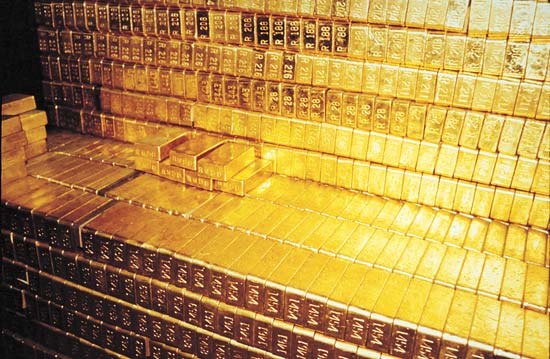
Deutsche Bank has announced the establishment of a new custodial and vaulting service for bullion in Singapore on the back of physical gold buying in Asia due to volatility in the yellow metal.
Deutsche Bank has announced the establishment of a new custodial and vaulting service in Singapore on the back of physical gold buying in Asia. The recent plunge in the price of gold has triggered investor demand as buyers enter the market to soak up what might be the right time to buy before another rally.
The vault which is located in Singapore Freeport will be able to handle 200 tonnes of gold bullion. The move puts Deutsche Bank, a clearing member of the London Bullion Market Association in top spot as a full service provide of; hedging, financing, trading and physical distribution of precious metals.
Ronan Donohoe, Deutsche Bank's Global Head of Metals and Dry Bulk Trading, said in a statement: "The new facility enables us to provide best-in-class precious metals storage and confirms our strategy to offer clients solutions they require to protect their wealth."
Safe haven
In times of economic gloom gold is seen as a safe haven for investors, during the height of the economic crisis analysts at major banks expected the precious metal to reach the all important $2000 mark. Between 2008 and the metal's record highs of around $1,920 an ounce in September 2011, the value of gold has almost tripled due to financial uncertainty, with the help of the Greek debt debacle.
The Federal Reserve's QE3 program as well the recent bull moves in the US equity markets have put downward pressure on gold and hence the yellow metal is floating around $1400.
Singapore premier destination for gold
Singapore, one of Asia's leading financial centres has been battling with rival Hong Kong to secure the top spot, the new vault will open up doors to new wealth in Thailand, Vietnam and Indonesia. Last year Singapore removed a tax of 7% on the sale of bullion, Finance Minister Tharman Shanmugaratnam removed the tax to make Singapore more competitive and the prefered destination in the region for physical gold.
Mr. Donohoe added: “This offering will encourage a significant development in a Singapore-based precious metals market. Holding gold in an allocated account in Singapore is an effective way of protecting your wealth against unforeseen external shocks. Given Singapore's exceptional transportation linkages along with the International Enterprise Agency's objective to make Singapore a global hub for gold, the establishment of Deutsche's facility is a natural progression.”
In December (2012) the Royal Mint, supplier of gold coins in the United Kingdom, launched a new vault. Barclays and JP Morgan have also been setting up new facilities to cater for the demand in gold buying.
Mark Smallwood, head of Wealth Planning within Deutsche Asset & Wealth Management, APAC, said in the official press release: “We are seeing considerable interest on the part of our Ultra High Net Worth clients in this asset class for its well known qualities. Through this new platform, our private clients have the ability to achieve three vital objectives when seeking exposure to this asset class, namely a highly regulated and stable jurisdiction in which to custody these assets, the ability to store their gold holdings in its physical form, and finally to use their physical gold holdings as collateral against loans."
Singapore Mercantile Exchange (SMX) launched its first US dollar denominated gold contract which is based on the MCX priced in INR. The contract opens up Arbitrage opportunities between the exchanges, in addition to new trade opportunities in INR currency futures or the NDF contract.
Deutsche Bank's commitment to emerging market currencies was extended when the bank carried out the first Singapore Dollar/Offshore Renminbi (SGD/RMB) spot trade that was cleared in Singapore. This came on the back of the country's financial watchdog's decision to go live with RMB clearing in Singapore in May 2013.
Deutsche Bank has announced the establishment of a new custodial and vaulting service in Singapore on the back of physical gold buying in Asia. The recent plunge in the price of gold has triggered investor demand as buyers enter the market to soak up what might be the right time to buy before another rally.
The vault which is located in Singapore Freeport will be able to handle 200 tonnes of gold bullion. The move puts Deutsche Bank, a clearing member of the London Bullion Market Association in top spot as a full service provide of; hedging, financing, trading and physical distribution of precious metals.
Ronan Donohoe, Deutsche Bank's Global Head of Metals and Dry Bulk Trading, said in a statement: "The new facility enables us to provide best-in-class precious metals storage and confirms our strategy to offer clients solutions they require to protect their wealth."
Safe haven
In times of economic gloom gold is seen as a safe haven for investors, during the height of the economic crisis analysts at major banks expected the precious metal to reach the all important $2000 mark. Between 2008 and the metal's record highs of around $1,920 an ounce in September 2011, the value of gold has almost tripled due to financial uncertainty, with the help of the Greek debt debacle.
The Federal Reserve's QE3 program as well the recent bull moves in the US equity markets have put downward pressure on gold and hence the yellow metal is floating around $1400.
Singapore premier destination for gold
Singapore, one of Asia's leading financial centres has been battling with rival Hong Kong to secure the top spot, the new vault will open up doors to new wealth in Thailand, Vietnam and Indonesia. Last year Singapore removed a tax of 7% on the sale of bullion, Finance Minister Tharman Shanmugaratnam removed the tax to make Singapore more competitive and the prefered destination in the region for physical gold.
Mr. Donohoe added: “This offering will encourage a significant development in a Singapore-based precious metals market. Holding gold in an allocated account in Singapore is an effective way of protecting your wealth against unforeseen external shocks. Given Singapore's exceptional transportation linkages along with the International Enterprise Agency's objective to make Singapore a global hub for gold, the establishment of Deutsche's facility is a natural progression.”
In December (2012) the Royal Mint, supplier of gold coins in the United Kingdom, launched a new vault. Barclays and JP Morgan have also been setting up new facilities to cater for the demand in gold buying.
Mark Smallwood, head of Wealth Planning within Deutsche Asset & Wealth Management, APAC, said in the official press release: “We are seeing considerable interest on the part of our Ultra High Net Worth clients in this asset class for its well known qualities. Through this new platform, our private clients have the ability to achieve three vital objectives when seeking exposure to this asset class, namely a highly regulated and stable jurisdiction in which to custody these assets, the ability to store their gold holdings in its physical form, and finally to use their physical gold holdings as collateral against loans."
Singapore Mercantile Exchange (SMX) launched its first US dollar denominated gold contract which is based on the MCX priced in INR. The contract opens up Arbitrage opportunities between the exchanges, in addition to new trade opportunities in INR currency futures or the NDF contract.
Deutsche Bank's commitment to emerging market currencies was extended when the bank carried out the first Singapore Dollar/Offshore Renminbi (SGD/RMB) spot trade that was cleared in Singapore. This came on the back of the country's financial watchdog's decision to go live with RMB clearing in Singapore in May 2013.
FIS Adds Clearing for Prediction Market Contracts, Building on OTC Trading
CMC Markets’ Artur Delijergijevs on Metals Demand, Volatility, & Stable Execution
CMC Markets’ Artur Delijergijevs on Metals Demand, Volatility, & Stable Execution
In this exclusive Executive Interview, Finance Magnates speaks with Artur Delijergijevs, Head of Systematic Market Making at CMC Markets, about the current state of metals demand and market volatility.
Delijergijevs offers a desk-level view on:
- Metals Demand: Why metals are seeing the strongest demand from both retail and institutional clients right now.
- The Safe-Haven Debate: Questioning whether gold still fits the classic safe-haven definition given large daily price movements.
- Volatile Market Prep: How a market-making desk prepares its systems and pricing for stressed market conditions and high-impact economic events.
- Hybrid Execution: Why the best execution model combines electronic speed with human relationship support, especially during volatility.
- AI in Workflow: Where CMC Markets is integrating machine learning for risk management and pricing, and the limitations of AI during stressed markets.
- Dubai's Role: The strategic importance of Dubai’s location for covering global trading sessions across Asia, Europe, and the US.
Watch to understand how CMC Markets maintains stable pricing and reliable execution quality in high-volatility environments.
#CMCmarkets #forex #metals #gold #trading #volatility #MarketMaking #iFXDubai #FinanceMagnates #Finance #Fintech #Execution #AlgorithmicTrading #RiskManagement
In this exclusive Executive Interview, Finance Magnates speaks with Artur Delijergijevs, Head of Systematic Market Making at CMC Markets, about the current state of metals demand and market volatility.
Delijergijevs offers a desk-level view on:
- Metals Demand: Why metals are seeing the strongest demand from both retail and institutional clients right now.
- The Safe-Haven Debate: Questioning whether gold still fits the classic safe-haven definition given large daily price movements.
- Volatile Market Prep: How a market-making desk prepares its systems and pricing for stressed market conditions and high-impact economic events.
- Hybrid Execution: Why the best execution model combines electronic speed with human relationship support, especially during volatility.
- AI in Workflow: Where CMC Markets is integrating machine learning for risk management and pricing, and the limitations of AI during stressed markets.
- Dubai's Role: The strategic importance of Dubai’s location for covering global trading sessions across Asia, Europe, and the US.
Watch to understand how CMC Markets maintains stable pricing and reliable execution quality in high-volatility environments.
#CMCmarkets #forex #metals #gold #trading #volatility #MarketMaking #iFXDubai #FinanceMagnates #Finance #Fintech #Execution #AlgorithmicTrading #RiskManagement
Finance Magnates Awards 2026 – Nominations Now Open
Finance Magnates Awards 2026 – Nominations Now Open
The Finance Magnates Awards 2026 nominations are now open. 🏆
From fintech innovators to leading brokers, this is where the finance industry celebrates its biggest achievements.
Winners will be announced at the Cyprus Gala Dinner on November 6, 2026.
Nominate your brand now.
https://awards.financemagnates.com/?utm_source=linkedin&utm_medium=video&utm_campaign=nominations-open
#FMAwards #FinanceMagnates #FintechAwards #Fintech #FinanceIndustry
The Finance Magnates Awards 2026 nominations are now open. 🏆
From fintech innovators to leading brokers, this is where the finance industry celebrates its biggest achievements.
Winners will be announced at the Cyprus Gala Dinner on November 6, 2026.
Nominate your brand now.
https://awards.financemagnates.com/?utm_source=linkedin&utm_medium=video&utm_campaign=nominations-open
#FMAwards #FinanceMagnates #FintechAwards #Fintech #FinanceIndustry
Finance Magnates Awards 2026 | Nominations Now Open 🏆#Fintech #FMAwards #TradingIndustry
Finance Magnates Awards 2026 | Nominations Now Open 🏆#Fintech #FMAwards #TradingIndustry
Lights on. Cameras ready. 🎬
Finance Magnates Awards 2026 nominations are now open. 🏆
#FMAwards #FinanceMagnates #FintechAwards #Fintech
Lights on. Cameras ready. 🎬
Finance Magnates Awards 2026 nominations are now open. 🏆
#FMAwards #FinanceMagnates #FintechAwards #Fintech
Exness sees trust as the key theme for growth in MENA Trading Growth for 2026
Exness sees trust as the key theme for growth in MENA Trading Growth for 2026
Mohammad Amer, Regional Commercial Director at Exness, sits down to discuss the booming MENA financial trading market. Find out why Dubai is key to the company's growth strategy, how a mobile-first generation is changing expectations, and why trust will be the defining theme for traders in 2026.
In this interview, you'll learn:
* Why Dubai and the MENA region are critical growth markets for fintech and online trading.
* How Exness is addressing the demands of mobile-first, younger traders through engineering, platform stability, and transparent conditions.
* The essential role local talent plays in providing a culturally relevant and compliant user experience.
* Mohammad Amer's outlook on the future of the online trading industry and why stronger controls and systems are necessary.
* Why "trust" isn't just a brand value, but has commercial value—and why he predicts 2026 will be the "Year of Trust."
Key Takeaways:
➡️ The MENA region is rapidly shaping global financial markets.
➡️ New traders expect stability, precise execution, and transparency.
➡️ Local expertise is key to regulatory compliance and user experience.
➡️ Future success belongs to firms capable of meeting rising standards across regulation and platform consistency.
Read the full article at: https://www.financemagnates.com/thought-leadership/exness-sees-trust-as-the-key-theme-for-growth-in-mena-trading-growth-for-2026/
#Exness #MENA #Trading #FinTech #Dubai #OnlineTrading #FinanceMagnates #MohammadAmer #Trust #MobileTrading
Mohammad Amer, Regional Commercial Director at Exness, sits down to discuss the booming MENA financial trading market. Find out why Dubai is key to the company's growth strategy, how a mobile-first generation is changing expectations, and why trust will be the defining theme for traders in 2026.
In this interview, you'll learn:
* Why Dubai and the MENA region are critical growth markets for fintech and online trading.
* How Exness is addressing the demands of mobile-first, younger traders through engineering, platform stability, and transparent conditions.
* The essential role local talent plays in providing a culturally relevant and compliant user experience.
* Mohammad Amer's outlook on the future of the online trading industry and why stronger controls and systems are necessary.
* Why "trust" isn't just a brand value, but has commercial value—and why he predicts 2026 will be the "Year of Trust."
Key Takeaways:
➡️ The MENA region is rapidly shaping global financial markets.
➡️ New traders expect stability, precise execution, and transparency.
➡️ Local expertise is key to regulatory compliance and user experience.
➡️ Future success belongs to firms capable of meeting rising standards across regulation and platform consistency.
Read the full article at: https://www.financemagnates.com/thought-leadership/exness-sees-trust-as-the-key-theme-for-growth-in-mena-trading-growth-for-2026/
#Exness #MENA #Trading #FinTech #Dubai #OnlineTrading #FinanceMagnates #MohammadAmer #Trust #MobileTrading
Paytiko CEO Razi Salih on Why Payment Orchestration is a MUST-HAVE for Brokers in 2026
Paytiko CEO Razi Salih on Why Payment Orchestration is a MUST-HAVE for Brokers in 2026
At iFX Expo Dubai, Finance Magnates spoke with Razi Salih, CEO at Paytiko, about the evolution of the payments ecosystem and why payment orchestration has shifted from an option to a necessity for brokers, prop firms, and exchanges.
Mr. Salih explains how global expansion, the need for deep localisation, and the sheer number of new payment methods, from instant banking to stablecoins, are driving this critical infrastructure shift.
#PaymentOrchestration #Fintech #Brokerage #TradingPayments #RaziSalih #Paytiko #iFXExpoDubai #Stablecoins #AIinFintech
At iFX Expo Dubai, Finance Magnates spoke with Razi Salih, CEO at Paytiko, about the evolution of the payments ecosystem and why payment orchestration has shifted from an option to a necessity for brokers, prop firms, and exchanges.
Mr. Salih explains how global expansion, the need for deep localisation, and the sheer number of new payment methods, from instant banking to stablecoins, are driving this critical infrastructure shift.
#PaymentOrchestration #Fintech #Brokerage #TradingPayments #RaziSalih #Paytiko #iFXExpoDubai #Stablecoins #AIinFintech