Saeed Amen, author of “Trading Thalesians: What the Ancient World Can Teach Us About Trading Today”, discusses the past, present and future of FX trading.
One of the first things people want to know when they meet Saeed Amen, Co-Founder and Consulting Quant for The Thalesians, is: what does Thalesians mean?
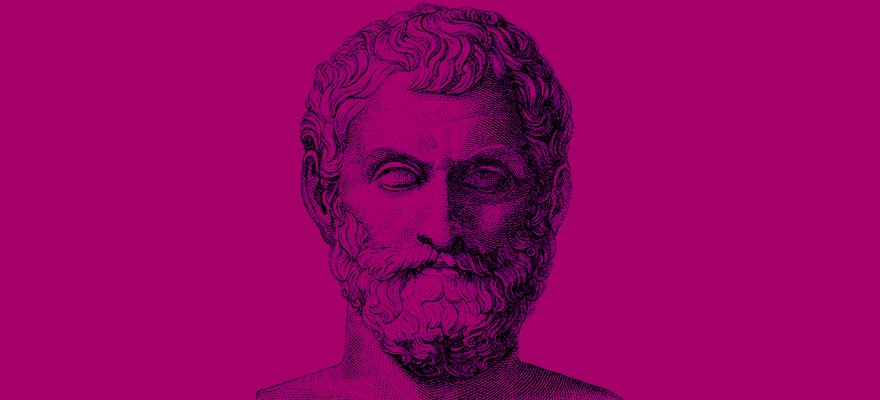
The puzzling name refers to the Greek philosopher, Thales of Miletus, the first options trader.
Mythology has it that after becoming fed up with being ridiculed for being an impractical philosopher, an occupation suited only for poverty, Thales made a fortune by forecasting a good olive harvest and cornering the press market.
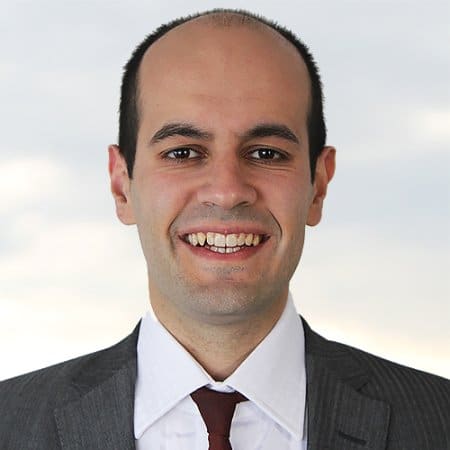
Saeed Amen, Author and Consulting Quant, The Thalesians
“I’ve been working in markets for 10 years, and it was a natural extension to write about I’d seen, but at the same time, I wanted to have a spin on it,” said Amen. “I didn’t know too much about the ancient world before I started the book, so it was a good opportunity to find out what’s happened in history.”
Amen’s decade in the financial industry includes working in major investment banks like Nomura and Morgan Stanley, but his most memorable experience may have been watching Lehman Brothers implode from the inside as a young quant strategist.
Risk has been transferred from sell side to buy side in Execution
That catastrophe served as a catalyst to start the Thalesians, along with his colleagues Paul Bilokon, currently a director at Deutsche Bank, and Matthew Dixon, currently an academic in Chicago.
“We were trying to work out what went wrong, so we started The Thalesians seminars, and it built up into a big community,” said Amen. The Meetup group has just over 1,800 members with branches in London, New York, San Francisco and Budapest.
It’s also grown into a research and consultancy with an office in Level39, a fintech hub in London’s financial district, Canary Wharf, and Amen is a regular commentator on the markets for major media outlets.
And just as looking back at ancient wisdom can teach us about how we got here, and where we might be going, so too can speculating about the future. The next big thing in Institutional FX, said Amen, is going to be in the execution space.
“It’s not going to be the case that you are just going to a broker and get a price for your $1 billion order because banks will charge you, they can’t take as much risk as they used to,” said Amen.
A few years ago, most orders were manual but things are changing: ticket sizes are going lower, more and more is being transacted on electronic platforms, and it costs more for the buy side to get prices in big sizes. In other words, execution risk is going up.
When buy side uses trading algorithms, there’s no way of knowing what the price will be at the end of the fill. It’s a whole new way of thinking from going to a broker and getting a price up front, Amen noted.
It also means buy side will need to manage and optimize execution risk: “That part’s (about) going to the right venue, what type of execution algorithms you are using, and whether your bank’s giving you the best Liquidity .”
“Risk has been transferred from sell side to buy side in execution,” said Amen. “There’s also a lot more scrutiny of this as well in terms of best execution, there’s regulatory pressure to make sure buy side get the best price.”
One of the first things people want to know when they meet Saeed Amen, Co-Founder and Consulting Quant for The Thalesians, is: what does Thalesians mean?
The puzzling name refers to the Greek philosopher, Thales of Miletus, the first options trader.
Mythology has it that after becoming fed up with being ridiculed for being an impractical philosopher, an occupation suited only for poverty, Thales made a fortune by forecasting a good olive harvest and cornering the press market.
Saeed Amen, Author and Consulting Quant, The Thalesians
“I’ve been working in markets for 10 years, and it was a natural extension to write about I’d seen, but at the same time, I wanted to have a spin on it,” said Amen. “I didn’t know too much about the ancient world before I started the book, so it was a good opportunity to find out what’s happened in history.”
Amen’s decade in the financial industry includes working in major investment banks like Nomura and Morgan Stanley, but his most memorable experience may have been watching Lehman Brothers implode from the inside as a young quant strategist.
Risk has been transferred from sell side to buy side in Execution
That catastrophe served as a catalyst to start the Thalesians, along with his colleagues Paul Bilokon, currently a director at Deutsche Bank, and Matthew Dixon, currently an academic in Chicago.
“We were trying to work out what went wrong, so we started The Thalesians seminars, and it built up into a big community,” said Amen. The Meetup group has just over 1,800 members with branches in London, New York, San Francisco and Budapest.
It’s also grown into a research and consultancy with an office in Level39, a fintech hub in London’s financial district, Canary Wharf, and Amen is a regular commentator on the markets for major media outlets.
And just as looking back at ancient wisdom can teach us about how we got here, and where we might be going, so too can speculating about the future. The next big thing in Institutional FX, said Amen, is going to be in the execution space.
“It’s not going to be the case that you are just going to a broker and get a price for your $1 billion order because banks will charge you, they can’t take as much risk as they used to,” said Amen.
A few years ago, most orders were manual but things are changing: ticket sizes are going lower, more and more is being transacted on electronic platforms, and it costs more for the buy side to get prices in big sizes. In other words, execution risk is going up.
When buy side uses trading algorithms, there’s no way of knowing what the price will be at the end of the fill. It’s a whole new way of thinking from going to a broker and getting a price up front, Amen noted.
It also means buy side will need to manage and optimize execution risk: “That part’s (about) going to the right venue, what type of execution algorithms you are using, and whether your bank’s giving you the best Liquidity .”
“Risk has been transferred from sell side to buy side in execution,” said Amen. “There’s also a lot more scrutiny of this as well in terms of best execution, there’s regulatory pressure to make sure buy side get the best price.”
Singapore Independent Wealth Sector Has Less Than 10% Market Share, but Vast Room for Growth
FP Markets Winner Spotlight 🏆 | Global Broker of the Year 2025 #Trading #Broker #Innovation #Shorts
FP Markets Winner Spotlight 🏆 | Global Broker of the Year 2025 #Trading #Broker #Innovation #Shorts
FP Markets takes the spotlight as Global Broker of the Year 2025 at the Finance Magnates Awards.
Martin Stoilov, Head of Client Experience, shares that trust, innovation, and people played a key role in the company’s success, supported by a strong foundation of integrity and client-centricity.
Following this milestone, FP Markets continues to focus on growth, technology investment, and its core values of transparency and excellence.
👉 Be part of FM Awards 2026: https://awards.financemagnates.com/#nominate
FP Markets takes the spotlight as Global Broker of the Year 2025 at the Finance Magnates Awards.
Martin Stoilov, Head of Client Experience, shares that trust, innovation, and people played a key role in the company’s success, supported by a strong foundation of integrity and client-centricity.
Following this milestone, FP Markets continues to focus on growth, technology investment, and its core values of transparency and excellence.
👉 Be part of FM Awards 2026: https://awards.financemagnates.com/#nominate
In this video, we review @HolaPrimeMarketsOfficial, a multi-asset forex and CFDs broker offering different account types, trading platforms, and flexible trading conditions.
We cover the broker’s overall offering, including account options, trading environment, platforms like MT4 and MT5, and additional services such as managed accounts and fast withdrawals.
Watch the full video to see if Hola Prime Markets fits your trading needs.
📣 Stay up to date with the latest in finance and trading. Follow Finance Magnates for industry news, insights, and global event coverage.
Connect with us:
🔗 LinkedIn: /financemagnates
👍 Facebook: /financemagnates
📸 Instagram: https://www.instagram.com/financemagnates
🐦 X: https://x.com/financemagnates
🎥 TikTok: https://www.tiktok.com/tag/financemagnates
▶️ YouTube: /@financemagnates_official
#HolaPrime #ForexBroker #CFDTrading #FinanceMagnates #Trading #Forex #BrokerReview
In this video, we review @HolaPrimeMarketsOfficial, a multi-asset forex and CFDs broker offering different account types, trading platforms, and flexible trading conditions.
We cover the broker’s overall offering, including account options, trading environment, platforms like MT4 and MT5, and additional services such as managed accounts and fast withdrawals.
Watch the full video to see if Hola Prime Markets fits your trading needs.
📣 Stay up to date with the latest in finance and trading. Follow Finance Magnates for industry news, insights, and global event coverage.
Connect with us:
🔗 LinkedIn: /financemagnates
👍 Facebook: /financemagnates
📸 Instagram: https://www.instagram.com/financemagnates
🐦 X: https://x.com/financemagnates
🎥 TikTok: https://www.tiktok.com/tag/financemagnates
▶️ YouTube: /@financemagnates_official
#HolaPrime #ForexBroker #CFDTrading #FinanceMagnates #Trading #Forex #BrokerReview
Hola Prime Review: What You Need to Know | Full Breakdown by Finance Magnates
Hola Prime Review: What You Need to Know | Full Breakdown by Finance Magnates
In this video, we review @HolaPrime_Global, a proprietary trading firm offering evaluation programs and performance-based payouts in simulated market environments.
We cover how the challenge model works, including account types, profit splits (up to 95%), trading rules, and what it takes to reach a funded account. You’ll also learn about available platforms like MT4, MT5, cTrader, and more, along with insights into payouts, support, and trading conditions.
Watch the full video to see if Hola Prime fits your trading style.
📣 Stay up to date with the latest in finance and trading. Follow Finance Magnates for industry news, insights, and global event coverage.
Connect with us:
🔗 LinkedIn: /financemagnates
👍 Facebook: /financemagnates
📸 Instagram: https://www.instagram.com/financemagnates
🐦 X: https://x.com/financemagnates
🎥 TikTok: https://www.tiktok.com/tag/financemagnates
▶️ YouTube: /@financemagnates_official
#HolaPrime #PropFirm #Trading #FinanceMagnates #Forex #FuturesTrading #TradingReview #PropFirmReview
In this video, we review @HolaPrime_Global, a proprietary trading firm offering evaluation programs and performance-based payouts in simulated market environments.
We cover how the challenge model works, including account types, profit splits (up to 95%), trading rules, and what it takes to reach a funded account. You’ll also learn about available platforms like MT4, MT5, cTrader, and more, along with insights into payouts, support, and trading conditions.
Watch the full video to see if Hola Prime fits your trading style.
📣 Stay up to date with the latest in finance and trading. Follow Finance Magnates for industry news, insights, and global event coverage.
Connect with us:
🔗 LinkedIn: /financemagnates
👍 Facebook: /financemagnates
📸 Instagram: https://www.instagram.com/financemagnates
🐦 X: https://x.com/financemagnates
🎥 TikTok: https://www.tiktok.com/tag/financemagnates
▶️ YouTube: /@financemagnates_official
#HolaPrime #PropFirm #Trading #FinanceMagnates #Forex #FuturesTrading #TradingReview #PropFirmReview
Axi Winner Spotlight 🏆 | Global Most Innovative Broker 2025 #Innovation #Trading #Fintech #Broker
Axi Winner Spotlight 🏆 | Global Most Innovative Broker 2025 #Innovation #Trading #Fintech #Broker
Axi takes the spotlight at the Finance Magnates Awards, winning Global Most Innovative Broker 2025.
Olivia Xenofontos and Ivanna Openko share how the team will feel: proud, motivated, and ready to keep delivering.
They also describe the night as well-organized, focused, and enjoyable for all.
👉 Be part of FM Awards 2026.
Axi takes the spotlight at the Finance Magnates Awards, winning Global Most Innovative Broker 2025.
Olivia Xenofontos and Ivanna Openko share how the team will feel: proud, motivated, and ready to keep delivering.
They also describe the night as well-organized, focused, and enjoyable for all.
👉 Be part of FM Awards 2026.
Recognition that matters.
Built on transparency.
Driven by the industry.
The Finance Magnates Awards 2026.
Nominations are now open.
🔗 https://awards.financemagnates.com/?utm_source=SM&utm_medium=social&utm_campaign=recognition-matters
Recognition that matters.
Built on transparency.
Driven by the industry.
The Finance Magnates Awards 2026.
Nominations are now open.
🔗 https://awards.financemagnates.com/?utm_source=SM&utm_medium=social&utm_campaign=recognition-matters