Financial and Business News

ESMA Seeks Feedback on Draft EMIR 3 Standards for Post-Trade Risk Reduction

Thursday, 26/02/2026 | 11:29 GMT by Tareq Sikder
  • Consultation addresses overlapping reporting under EMIR, MiFIR, and SFTR, proposing a “report once” model.
  • Draft RTS define conditions for PTRR services to qualify for clearing obligation exemptions.
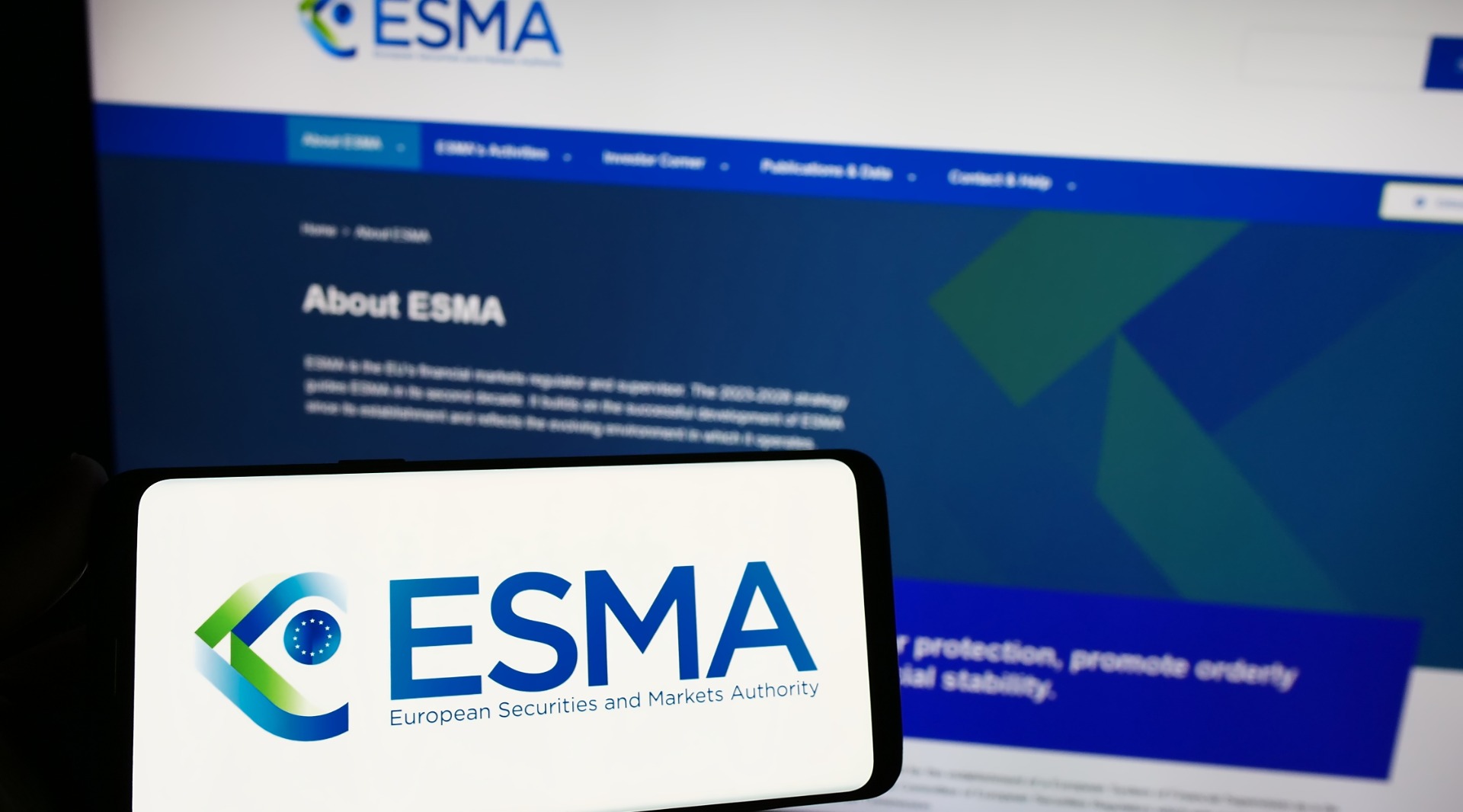
ESMA (shutterstock)

The European Securities and Markets Authority has launched a consultation on how post-trade risk reduction services can use a conditioned exemption from the clearing obligation under the European Market Infrastructure Regulation 3.

The consultation also builds on ESMA’s earlier work to simplify financial transaction reporting across MiFIR, EMIR, and SFTR. Reporting overlaps currently require firms, including forex and derivatives brokers, to submit the same transaction under multiple regimes.

ESMA estimates that about one-third of EMIR reports overlap with MiFIR, with total industry costs between €1 billion and €4 billion annually. Two simplification options are proposed, including a “report once” model. Feedback on this aspect is open until 19 September 2025.

ESMA Seeks Feedback on PTRR Framework

The consultation presents draft Regulatory Technical Standards (RTS) that define the conditions under which OTC derivatives executed via PTRR services may qualify for the exemption.

ESMA is seeking input on several elements of the proposed PTRR framework. These include transparency towards participants, safeguards for algorithms, the execution of PTRR exercises, internal controls, and record-keeping requirements. The consultation also outlines how national competent authorities should monitor compliance .

Stakeholders Can Comment on PTRR Framework

The draft RTS focus on three types of PTRR services currently used in the market: compression, portfolio rebalancing, and basis risk optimisation. ESMA said the standards are intended “to ensure that the exemption is not used to circumvent the clearing obligation.” The framework is also designed to reflect existing market practices since the start of EMIR 3 and to support simplification and burden reduction.

Stakeholders can submit feedback on the draft proposals until 20 April 2026. ESMA plans to submit the final RTS to the European Commission in the fourth quarter of 2026.

ESMA Issues EU Algorithmic Trading Guidance

Separately, ESMA published a supervisory briefing to support National Competent Authorities in supervising algorithmic trading under MiFID II. The nonbinding guidance covers pre-trade controls, governance, testing, outsourcing, and the use of artificial intelligence, with the goal of promoting consistent oversight across the EU.

ESMA Publishes Final EMIR 3 RTS

In a separate but related update under EMIR 3, ESMA has published its final report on clearing thresholds for OTC derivatives. The revised framework updates calculation methods for cleared and uncleared positions and adjusts thresholds across key asset classes.

Non-financial counterparties calculate positions based on uncleared derivatives, while financial firms apply dual calculations. Changes reflect market conditions, inflation, and systemic risk. Feedback influenced the scope, but virtual power purchase agreements remain outside the RTS.

The European Securities and Markets Authority has launched a consultation on how post-trade risk reduction services can use a conditioned exemption from the clearing obligation under the European Market Infrastructure Regulation 3.

The consultation also builds on ESMA’s earlier work to simplify financial transaction reporting across MiFIR, EMIR, and SFTR. Reporting overlaps currently require firms, including forex and derivatives brokers, to submit the same transaction under multiple regimes.

ESMA estimates that about one-third of EMIR reports overlap with MiFIR, with total industry costs between €1 billion and €4 billion annually. Two simplification options are proposed, including a “report once” model. Feedback on this aspect is open until 19 September 2025.

ESMA Seeks Feedback on PTRR Framework

The consultation presents draft Regulatory Technical Standards (RTS) that define the conditions under which OTC derivatives executed via PTRR services may qualify for the exemption.

ESMA is seeking input on several elements of the proposed PTRR framework. These include transparency towards participants, safeguards for algorithms, the execution of PTRR exercises, internal controls, and record-keeping requirements. The consultation also outlines how national competent authorities should monitor compliance .

Stakeholders Can Comment on PTRR Framework

The draft RTS focus on three types of PTRR services currently used in the market: compression, portfolio rebalancing, and basis risk optimisation. ESMA said the standards are intended “to ensure that the exemption is not used to circumvent the clearing obligation.” The framework is also designed to reflect existing market practices since the start of EMIR 3 and to support simplification and burden reduction.

Stakeholders can submit feedback on the draft proposals until 20 April 2026. ESMA plans to submit the final RTS to the European Commission in the fourth quarter of 2026.

ESMA Issues EU Algorithmic Trading Guidance

Separately, ESMA published a supervisory briefing to support National Competent Authorities in supervising algorithmic trading under MiFID II. The nonbinding guidance covers pre-trade controls, governance, testing, outsourcing, and the use of artificial intelligence, with the goal of promoting consistent oversight across the EU.

ESMA Publishes Final EMIR 3 RTS

In a separate but related update under EMIR 3, ESMA has published its final report on clearing thresholds for OTC derivatives. The revised framework updates calculation methods for cleared and uncleared positions and adjusts thresholds across key asset classes.

Non-financial counterparties calculate positions based on uncleared derivatives, while financial firms apply dual calculations. Changes reflect market conditions, inflation, and systemic risk. Feedback influenced the scope, but virtual power purchase agreements remain outside the RTS.

About the Author: Tareq Sikder
Tareq Sikder
  • 2163 Articles
  • 39 Followers
A Forex technical analyst and writer who has been engaged in financial writing for 12 years.

More from the Author

Institutional FX