Solid market making at HSBC highlights the company as one of the few banks that have performed well in a challenging quarterץ
Reuters
HSBC’s Global Markets division has posted a solid quarter despite industry-wide headwinds. A number of investment banks have already reported significant declines in revenue this year due to low Volatility. Fixed income and currencies have been particularly hard hit in an environment of continually compressing client activity.
Adjusted revenues at the Global Markets division increased by 7 percent to $5.4 billion. Trading at the Fixed Income, Currencies and Commodities unit generated $4.4 billion which is higher by 2 percent year-on-year. Foreign exchange declined 3 percent to account for $1.95 billion.
Compensation at HSBC Remains Competitive
Many peers of HSBC in the UK, Europe, and the US have materially underperformed when compared to last year, losing between 20 and 40 percent of revenues on a year-on-year basis. The London-headquartered bank has managed to hold its positions solid.
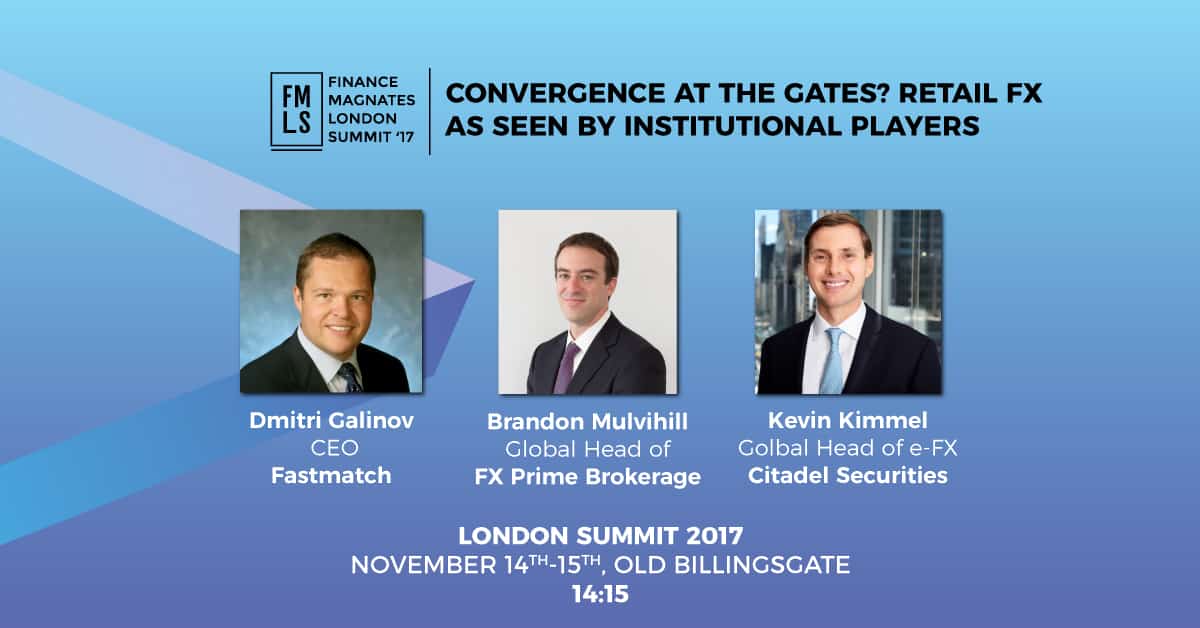
Not only that but the company marked an increase in costs which was primarily driven by higher compensation. HSBC’s operating expenses were higher by 4 percent, reflecting higher performance-based pay, pension and severance costs. The company also continued strategic investment into its foreign exchange business. A broader synopsis of the institutional and retail industry will be a marquee topic of discussion at the 2017 Finance Magnates London Summit this November.
Commenting on the results during the company’s earnings call, CFO Iain James Mackay said: “Global Banking & Markets continued to grow revenue despite a challenging quarter for the industry, demonstrating the benefits of its differentiated business model.”
“It achieved this largely through growth in Global Liquidity and Cash Management, Equities and Securities Services, which exceeded the impact of subdued market activity on our banking and fixed income businesses,” he elaborated.
Despite subdued market activity, HSBC’s continuing market share gains contributed to a very positive quarter when compared to industry peers. A material, 25% increase in equities revenue was all but eliminated from the impact of lower fixed income revenues.
HSBC’s Global Markets division has posted a solid quarter despite industry-wide headwinds. A number of investment banks have already reported significant declines in revenue this year due to low Volatility. Fixed income and currencies have been particularly hard hit in an environment of continually compressing client activity.
Adjusted revenues at the Global Markets division increased by 7 percent to $5.4 billion. Trading at the Fixed Income, Currencies and Commodities unit generated $4.4 billion which is higher by 2 percent year-on-year. Foreign exchange declined 3 percent to account for $1.95 billion.
Compensation at HSBC Remains Competitive
Many peers of HSBC in the UK, Europe, and the US have materially underperformed when compared to last year, losing between 20 and 40 percent of revenues on a year-on-year basis. The London-headquartered bank has managed to hold its positions solid.
Not only that but the company marked an increase in costs which was primarily driven by higher compensation. HSBC’s operating expenses were higher by 4 percent, reflecting higher performance-based pay, pension and severance costs. The company also continued strategic investment into its foreign exchange business. A broader synopsis of the institutional and retail industry will be a marquee topic of discussion at the 2017 Finance Magnates London Summit this November.
Commenting on the results during the company’s earnings call, CFO Iain James Mackay said: “Global Banking & Markets continued to grow revenue despite a challenging quarter for the industry, demonstrating the benefits of its differentiated business model.”
“It achieved this largely through growth in Global Liquidity and Cash Management, Equities and Securities Services, which exceeded the impact of subdued market activity on our banking and fixed income businesses,” he elaborated.
Despite subdued market activity, HSBC’s continuing market share gains contributed to a very positive quarter when compared to industry peers. A material, 25% increase in equities revenue was all but eliminated from the impact of lower fixed income revenues.
FIS Adds Clearing for Prediction Market Contracts, Building on OTC Trading
CMC Markets’ Artur Delijergijevs on Metals Demand, Volatility, & Stable Execution
CMC Markets’ Artur Delijergijevs on Metals Demand, Volatility, & Stable Execution
In this exclusive Executive Interview, Finance Magnates speaks with Artur Delijergijevs, Head of Systematic Market Making at CMC Markets, about the current state of metals demand and market volatility.
Delijergijevs offers a desk-level view on:
- Metals Demand: Why metals are seeing the strongest demand from both retail and institutional clients right now.
- The Safe-Haven Debate: Questioning whether gold still fits the classic safe-haven definition given large daily price movements.
- Volatile Market Prep: How a market-making desk prepares its systems and pricing for stressed market conditions and high-impact economic events.
- Hybrid Execution: Why the best execution model combines electronic speed with human relationship support, especially during volatility.
- AI in Workflow: Where CMC Markets is integrating machine learning for risk management and pricing, and the limitations of AI during stressed markets.
- Dubai's Role: The strategic importance of Dubai’s location for covering global trading sessions across Asia, Europe, and the US.
Watch to understand how CMC Markets maintains stable pricing and reliable execution quality in high-volatility environments.
#CMCmarkets #forex #metals #gold #trading #volatility #MarketMaking #iFXDubai #FinanceMagnates #Finance #Fintech #Execution #AlgorithmicTrading #RiskManagement
In this exclusive Executive Interview, Finance Magnates speaks with Artur Delijergijevs, Head of Systematic Market Making at CMC Markets, about the current state of metals demand and market volatility.
Delijergijevs offers a desk-level view on:
- Metals Demand: Why metals are seeing the strongest demand from both retail and institutional clients right now.
- The Safe-Haven Debate: Questioning whether gold still fits the classic safe-haven definition given large daily price movements.
- Volatile Market Prep: How a market-making desk prepares its systems and pricing for stressed market conditions and high-impact economic events.
- Hybrid Execution: Why the best execution model combines electronic speed with human relationship support, especially during volatility.
- AI in Workflow: Where CMC Markets is integrating machine learning for risk management and pricing, and the limitations of AI during stressed markets.
- Dubai's Role: The strategic importance of Dubai’s location for covering global trading sessions across Asia, Europe, and the US.
Watch to understand how CMC Markets maintains stable pricing and reliable execution quality in high-volatility environments.
#CMCmarkets #forex #metals #gold #trading #volatility #MarketMaking #iFXDubai #FinanceMagnates #Finance #Fintech #Execution #AlgorithmicTrading #RiskManagement
Finance Magnates Awards 2026 – Nominations Now Open
Finance Magnates Awards 2026 – Nominations Now Open
The Finance Magnates Awards 2026 nominations are now open. 🏆
From fintech innovators to leading brokers, this is where the finance industry celebrates its biggest achievements.
Winners will be announced at the Cyprus Gala Dinner on November 6, 2026.
Nominate your brand now.
https://awards.financemagnates.com/?utm_source=linkedin&utm_medium=video&utm_campaign=nominations-open
#FMAwards #FinanceMagnates #FintechAwards #Fintech #FinanceIndustry
The Finance Magnates Awards 2026 nominations are now open. 🏆
From fintech innovators to leading brokers, this is where the finance industry celebrates its biggest achievements.
Winners will be announced at the Cyprus Gala Dinner on November 6, 2026.
Nominate your brand now.
https://awards.financemagnates.com/?utm_source=linkedin&utm_medium=video&utm_campaign=nominations-open
#FMAwards #FinanceMagnates #FintechAwards #Fintech #FinanceIndustry
Finance Magnates Awards 2026 | Nominations Now Open 🏆#Fintech #FMAwards #TradingIndustry
Finance Magnates Awards 2026 | Nominations Now Open 🏆#Fintech #FMAwards #TradingIndustry
Lights on. Cameras ready. 🎬
Finance Magnates Awards 2026 nominations are now open. 🏆
#FMAwards #FinanceMagnates #FintechAwards #Fintech
Lights on. Cameras ready. 🎬
Finance Magnates Awards 2026 nominations are now open. 🏆
#FMAwards #FinanceMagnates #FintechAwards #Fintech
Exness sees trust as the key theme for growth in MENA Trading Growth for 2026
Exness sees trust as the key theme for growth in MENA Trading Growth for 2026
Mohammad Amer, Regional Commercial Director at Exness, sits down to discuss the booming MENA financial trading market. Find out why Dubai is key to the company's growth strategy, how a mobile-first generation is changing expectations, and why trust will be the defining theme for traders in 2026.
In this interview, you'll learn:
* Why Dubai and the MENA region are critical growth markets for fintech and online trading.
* How Exness is addressing the demands of mobile-first, younger traders through engineering, platform stability, and transparent conditions.
* The essential role local talent plays in providing a culturally relevant and compliant user experience.
* Mohammad Amer's outlook on the future of the online trading industry and why stronger controls and systems are necessary.
* Why "trust" isn't just a brand value, but has commercial value—and why he predicts 2026 will be the "Year of Trust."
Key Takeaways:
➡️ The MENA region is rapidly shaping global financial markets.
➡️ New traders expect stability, precise execution, and transparency.
➡️ Local expertise is key to regulatory compliance and user experience.
➡️ Future success belongs to firms capable of meeting rising standards across regulation and platform consistency.
Read the full article at: https://www.financemagnates.com/thought-leadership/exness-sees-trust-as-the-key-theme-for-growth-in-mena-trading-growth-for-2026/
#Exness #MENA #Trading #FinTech #Dubai #OnlineTrading #FinanceMagnates #MohammadAmer #Trust #MobileTrading
Mohammad Amer, Regional Commercial Director at Exness, sits down to discuss the booming MENA financial trading market. Find out why Dubai is key to the company's growth strategy, how a mobile-first generation is changing expectations, and why trust will be the defining theme for traders in 2026.
In this interview, you'll learn:
* Why Dubai and the MENA region are critical growth markets for fintech and online trading.
* How Exness is addressing the demands of mobile-first, younger traders through engineering, platform stability, and transparent conditions.
* The essential role local talent plays in providing a culturally relevant and compliant user experience.
* Mohammad Amer's outlook on the future of the online trading industry and why stronger controls and systems are necessary.
* Why "trust" isn't just a brand value, but has commercial value—and why he predicts 2026 will be the "Year of Trust."
Key Takeaways:
➡️ The MENA region is rapidly shaping global financial markets.
➡️ New traders expect stability, precise execution, and transparency.
➡️ Local expertise is key to regulatory compliance and user experience.
➡️ Future success belongs to firms capable of meeting rising standards across regulation and platform consistency.
Read the full article at: https://www.financemagnates.com/thought-leadership/exness-sees-trust-as-the-key-theme-for-growth-in-mena-trading-growth-for-2026/
#Exness #MENA #Trading #FinTech #Dubai #OnlineTrading #FinanceMagnates #MohammadAmer #Trust #MobileTrading
Paytiko CEO Razi Salih on Why Payment Orchestration is a MUST-HAVE for Brokers in 2026
Paytiko CEO Razi Salih on Why Payment Orchestration is a MUST-HAVE for Brokers in 2026
At iFX Expo Dubai, Finance Magnates spoke with Razi Salih, CEO at Paytiko, about the evolution of the payments ecosystem and why payment orchestration has shifted from an option to a necessity for brokers, prop firms, and exchanges.
Mr. Salih explains how global expansion, the need for deep localisation, and the sheer number of new payment methods, from instant banking to stablecoins, are driving this critical infrastructure shift.
#PaymentOrchestration #Fintech #Brokerage #TradingPayments #RaziSalih #Paytiko #iFXExpoDubai #Stablecoins #AIinFintech
At iFX Expo Dubai, Finance Magnates spoke with Razi Salih, CEO at Paytiko, about the evolution of the payments ecosystem and why payment orchestration has shifted from an option to a necessity for brokers, prop firms, and exchanges.
Mr. Salih explains how global expansion, the need for deep localisation, and the sheer number of new payment methods, from instant banking to stablecoins, are driving this critical infrastructure shift.
#PaymentOrchestration #Fintech #Brokerage #TradingPayments #RaziSalih #Paytiko #iFXExpoDubai #Stablecoins #AIinFintech