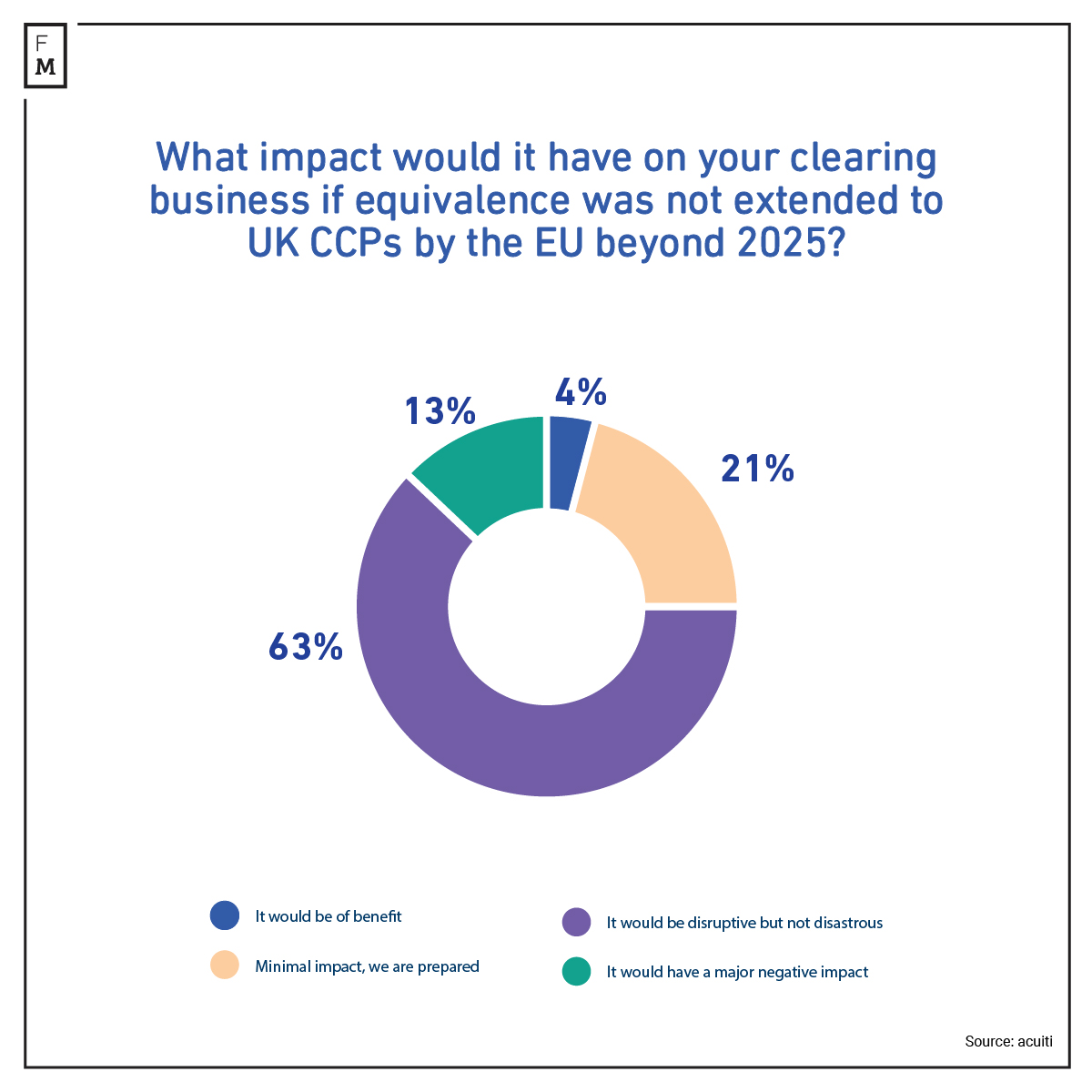
Among participants, 63% view the potential end to UK-EU equivalence in 2025 as disruptive but not disastrous.
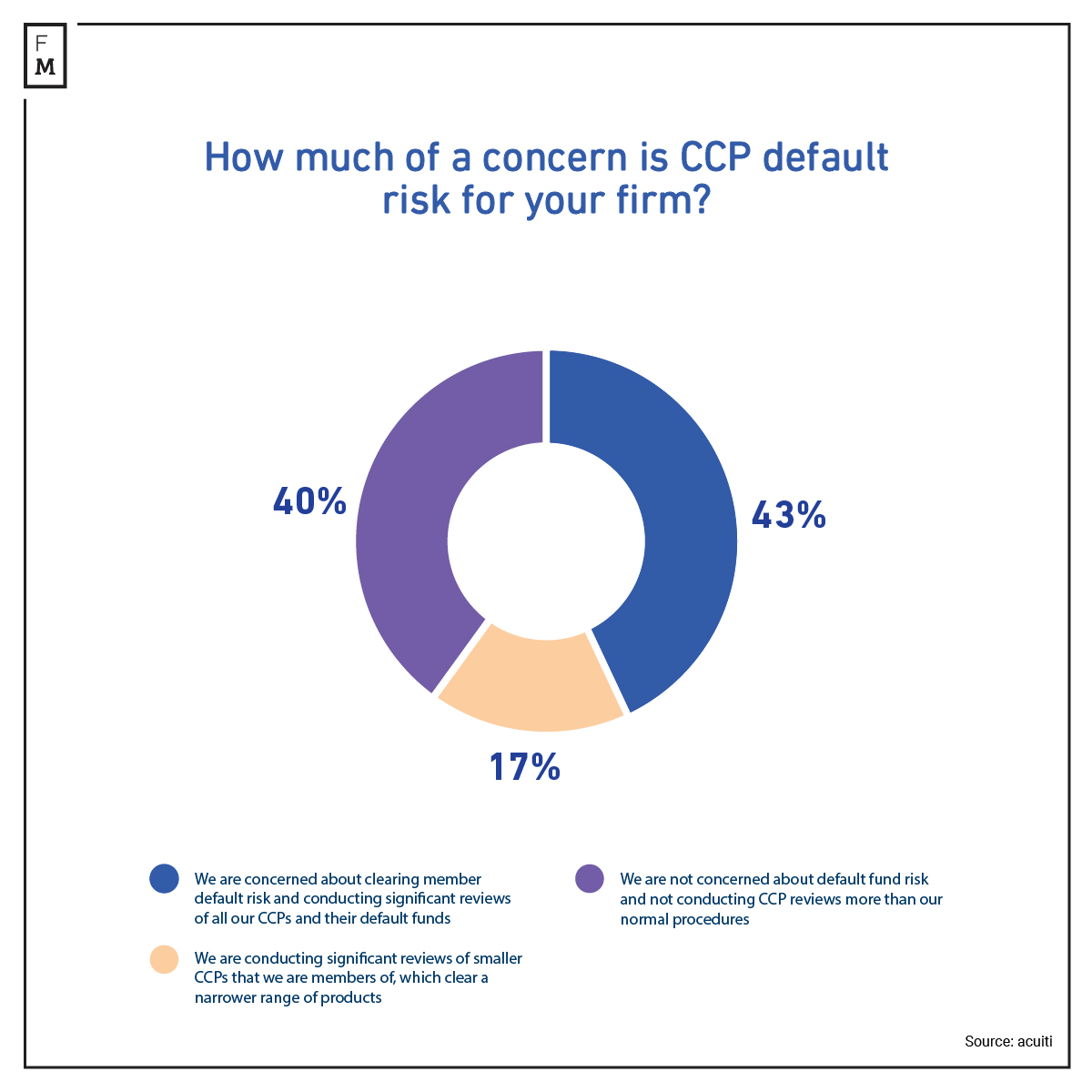
Less than half are reviewing default risk across all CCPs and default funds.
FM
The Q4 Sell-Side Clearing
Management Insight Report, produced in collaboration with report partner
HelloZero, focuses on streamlining futures and options data processing. This
quarter's analysis delves into EMIR 3.0, CCP default risk, DORA, manual
clearing training, and the Basel III endgame impact.
A comprehensive
examination of reconciliations explores changes and remaining challenges in
reducing operational risk and enhancing efficiency and customer service since
the 2021 study on sell-side listed derivatives market reconciliations.
Insights from the Sell-Side Clearing Industry
European regulators are
conducting a review of the EMIR framework, aiming to strengthen European
derivatives markets through central clearing of OTC instruments and reduce
reliance on third-country clearing houses post-Brexit.
The UK and EU, after agreeing on
equivalence to avoid regulatory disruptions, face a potential end to
equivalence in 2025. While the risk has diminished, market participants are
better prepared for a break, with 63% assuming it is disruptive but not
disastrous, signaling improved readiness compared to previous years.
EU Equivalence for UK CCPs
The increased volatility in
various asset classes has heightened the risk of defaulting on trading
positions, prompting clearing firms to focus on Central Counterparties (CCPs)
and the potential of default fund contributions.
Concerns about clearing member
default risk are widespread, with 43% conducting significant reviews of all
CCPs and their default funds. Some are particularly focused on
smaller CCPs, susceptible to volatility in a narrower range of products.
Overall, 40% express no concern about default fund risk and are not conducting
CCP reviews beyond normal procedures.
CCP Default Risk
Exchanges have been increasingly aiming
to establish a direct connection with end clients rather than relying on the
traditional sell-side intermediary. This shift has been driven by a desire to enhance
the visibility of who is trading on the exchange and to stimulate client demand
for new products and services.
While 55% of the network
acknowledges increased requests from exchanges for greater transparency and
visibility, concerns about the competitive threat from exchanges exist among
some, with almost half not entirely comfortable providing such information.
The EU's Digital Operational
Resilience Act (DORA), effective in early 2025, necessitates firms to map
third-party relationships and conduct extensive due diligence on digital supply
chains. Challenges in preparing for DORA
include operational resource allocation, understanding threat analysis
criteria, and obtaining information from vendors. Despite the compliance task's
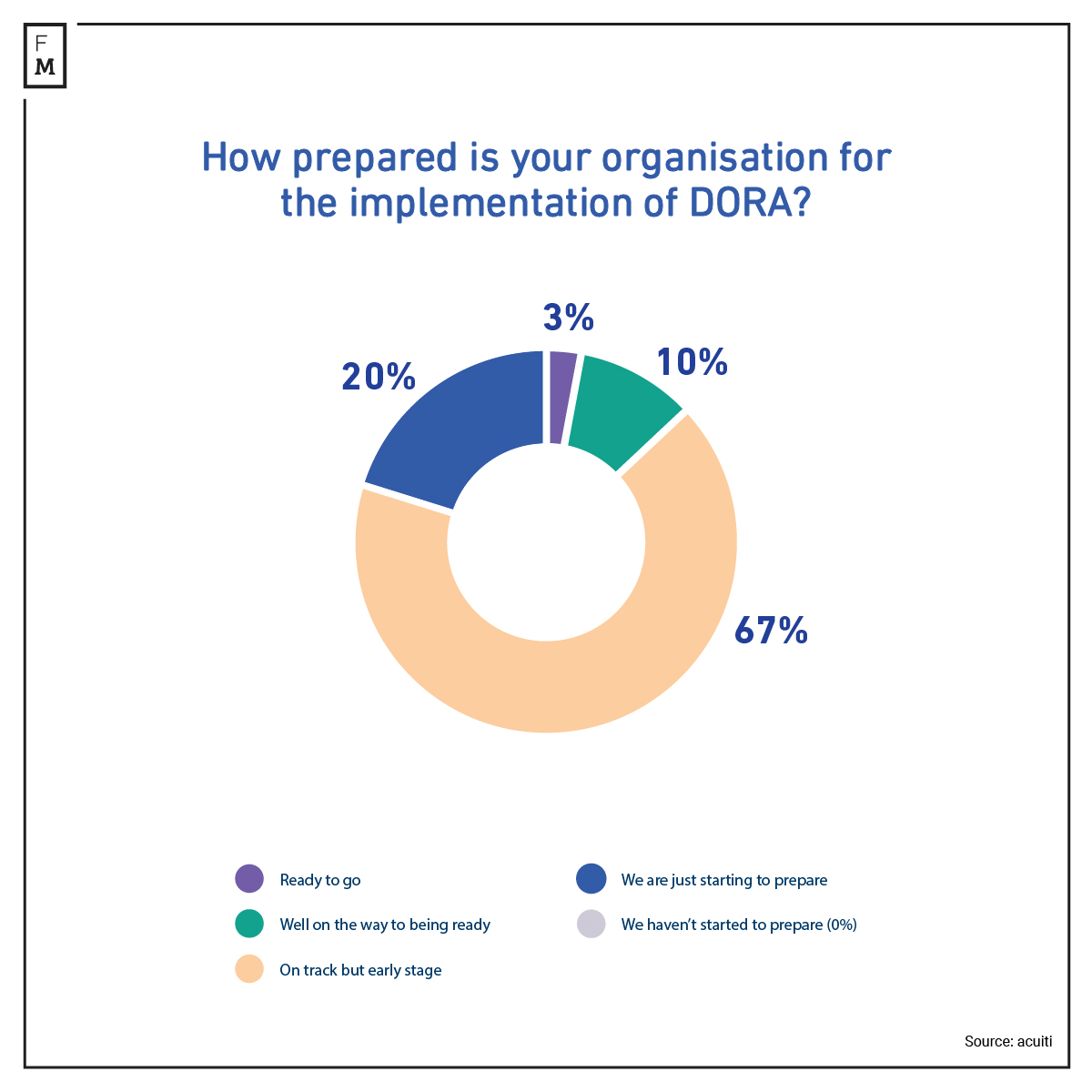
magnitude, a majority, 67% of the network believes they are on track for DORA
readiness, with varying levels of preparation.
DORA Implementation
Banks,
alongside preparing for DORA, are anticipating the impact of the Basel III
endgame regulation. Global systemically important banks (G-SIBs) express concerns about potential increases in
regulatory capital requirements, with counterparty risk requirements identified
as having the most significant cost implications for clearing services. While
44% foresee cost implications, 25%currently see no significant
impact on the cost of clearing services from the Basel III endgame.
Since
March 2020, post the surge of Covid-19, clearing firms prioritized reconciliation system improvements. The 2021
Acuiti and HelloZero study highlighted industry-wide efforts, with a "good enough" attitude, and reliance on manual processes, and
spreadsheets, especially among tier 1 banks.
In
the last two years, 39% of firms, including 44% of tier 1 banks, fully
automated reconciliation processes, focusing on day-to-day efficiency, cost
reduction, and resource allocation to higher-value tasks. Significant
investments in reconciliation software, driven by the goal of increasing
efficiency and capacity, have been made by over two-thirds of respondents.
Larger
firms have shifted investment focus from headcount to automation. Currently, 2%
predominantly use manual processes, 59% partially automate, and 39% use fully
automated reconciliation for derivatives trades, showcasing widespread
integration of automated processes.
The
adoption of artificial
intelligence (AI) for reconciliation processes is in its early stages, with
58% of respondents in the investigation stage, 13% in early implementation, and
only 8% having fully implemented AI. This indicates a cautious approach to
leveraging AI to reduce dependencies, wage pressures, and operational
vulnerabilities in reconciliation systems.
Sell-side
firms in the derivatives industry have made significant strides in improving
reconciliation software efficiency since the 2021 Acuiti report. The use of
spreadsheets has decreased, automation has increased, and reliance on key staff
members has diminished.
While
not fully automated across the market, the continual investment in
reconciliations is having a positive impact on satisfaction levels, with over half of the respondents expressing satisfaction with their processes. However, intentions
to invest in reconciliation software are declining, with just under a fifth
planning to invest and over half not considering it, indicating a potential
risk despite the progress made since 2020.
The
network has expressed optimism about the next three months' business prospects in
derivatives clearing, with a sentiment score of 73, marking an increase from
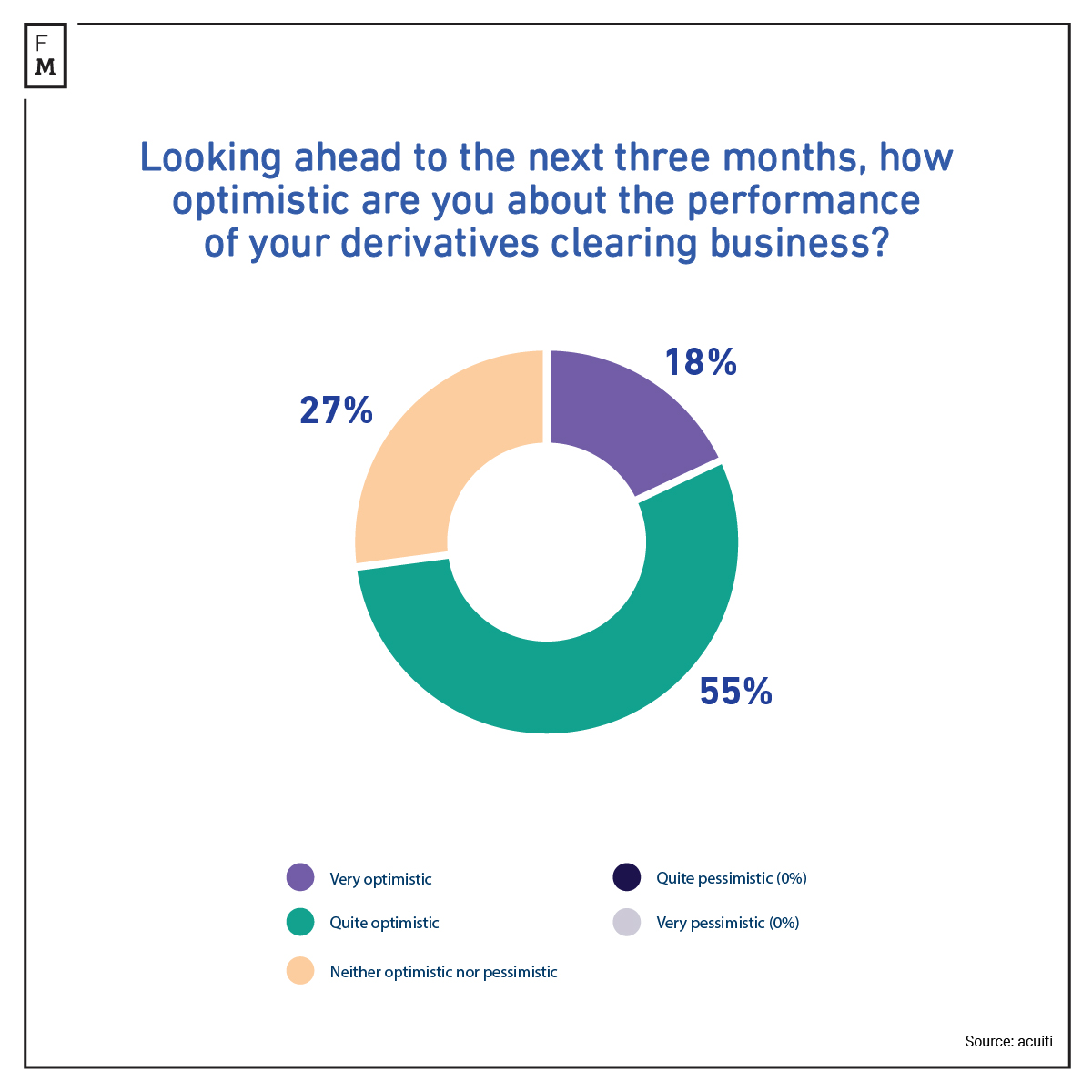
the previous quarter's score of 68. Among respondents, 18% are very optimistic, 55% are quite optimistic, although 27% remain neutral about the outlook.
Derivatives Clearing Business Performance
Sell-side
firms in derivatives have improved reconciliation software efficiency, reducing
reliance on spreadsheets and increasing automation. While
progress is evident, achieving a fully automated environment remains ongoing,
emphasizing continuous investment.
High
satisfaction levels suggest positive strides, but declining intentions to
invest pose risks, including capacity issues in volatile markets. Maintaining a
competitive edge requires ongoing investment, recognizing reconciliations as
crucial for success. Despite challenges, the overall optimism about business
prospects for the next three months indicates a positive outlook for the industry.
The Q4 Sell-Side Clearing
Management Insight Report, produced in collaboration with report partner
HelloZero, focuses on streamlining futures and options data processing. This
quarter's analysis delves into EMIR 3.0, CCP default risk, DORA, manual
clearing training, and the Basel III endgame impact.
A comprehensive
examination of reconciliations explores changes and remaining challenges in
reducing operational risk and enhancing efficiency and customer service since
the 2021 study on sell-side listed derivatives market reconciliations.
Insights from the Sell-Side Clearing Industry
European regulators are
conducting a review of the EMIR framework, aiming to strengthen European
derivatives markets through central clearing of OTC instruments and reduce
reliance on third-country clearing houses post-Brexit.
The UK and EU, after agreeing on
equivalence to avoid regulatory disruptions, face a potential end to
equivalence in 2025. While the risk has diminished, market participants are
better prepared for a break, with 63% assuming it is disruptive but not
disastrous, signaling improved readiness compared to previous years.
EU Equivalence for UK CCPs
The increased volatility in
various asset classes has heightened the risk of defaulting on trading
positions, prompting clearing firms to focus on Central Counterparties (CCPs)
and the potential of default fund contributions.
Concerns about clearing member
default risk are widespread, with 43% conducting significant reviews of all
CCPs and their default funds. Some are particularly focused on
smaller CCPs, susceptible to volatility in a narrower range of products.
Overall, 40% express no concern about default fund risk and are not conducting
CCP reviews beyond normal procedures.
CCP Default Risk
Exchanges have been increasingly aiming
to establish a direct connection with end clients rather than relying on the
traditional sell-side intermediary. This shift has been driven by a desire to enhance
the visibility of who is trading on the exchange and to stimulate client demand
for new products and services.
While 55% of the network
acknowledges increased requests from exchanges for greater transparency and
visibility, concerns about the competitive threat from exchanges exist among
some, with almost half not entirely comfortable providing such information.
The EU's Digital Operational
Resilience Act (DORA), effective in early 2025, necessitates firms to map
third-party relationships and conduct extensive due diligence on digital supply
chains. Challenges in preparing for DORA
include operational resource allocation, understanding threat analysis
criteria, and obtaining information from vendors. Despite the compliance task's
magnitude, a majority, 67% of the network believes they are on track for DORA
readiness, with varying levels of preparation.
DORA Implementation
Banks,
alongside preparing for DORA, are anticipating the impact of the Basel III
endgame regulation. Global systemically important banks (G-SIBs) express concerns about potential increases in
regulatory capital requirements, with counterparty risk requirements identified
as having the most significant cost implications for clearing services. While
44% foresee cost implications, 25%currently see no significant
impact on the cost of clearing services from the Basel III endgame.
Since
March 2020, post the surge of Covid-19, clearing firms prioritized reconciliation system improvements. The 2021
Acuiti and HelloZero study highlighted industry-wide efforts, with a "good enough" attitude, and reliance on manual processes, and
spreadsheets, especially among tier 1 banks.
In
the last two years, 39% of firms, including 44% of tier 1 banks, fully
automated reconciliation processes, focusing on day-to-day efficiency, cost
reduction, and resource allocation to higher-value tasks. Significant
investments in reconciliation software, driven by the goal of increasing
efficiency and capacity, have been made by over two-thirds of respondents.
Larger
firms have shifted investment focus from headcount to automation. Currently, 2%
predominantly use manual processes, 59% partially automate, and 39% use fully
automated reconciliation for derivatives trades, showcasing widespread
integration of automated processes.
The
adoption of artificial
intelligence (AI) for reconciliation processes is in its early stages, with
58% of respondents in the investigation stage, 13% in early implementation, and
only 8% having fully implemented AI. This indicates a cautious approach to
leveraging AI to reduce dependencies, wage pressures, and operational
vulnerabilities in reconciliation systems.
Sell-side
firms in the derivatives industry have made significant strides in improving
reconciliation software efficiency since the 2021 Acuiti report. The use of
spreadsheets has decreased, automation has increased, and reliance on key staff
members has diminished.
While
not fully automated across the market, the continual investment in
reconciliations is having a positive impact on satisfaction levels, with over half of the respondents expressing satisfaction with their processes. However, intentions
to invest in reconciliation software are declining, with just under a fifth
planning to invest and over half not considering it, indicating a potential
risk despite the progress made since 2020.
The
network has expressed optimism about the next three months' business prospects in
derivatives clearing, with a sentiment score of 73, marking an increase from
the previous quarter's score of 68. Among respondents, 18% are very optimistic, 55% are quite optimistic, although 27% remain neutral about the outlook.
Derivatives Clearing Business Performance
Sell-side
firms in derivatives have improved reconciliation software efficiency, reducing
reliance on spreadsheets and increasing automation. While
progress is evident, achieving a fully automated environment remains ongoing,
emphasizing continuous investment.
High
satisfaction levels suggest positive strides, but declining intentions to
invest pose risks, including capacity issues in volatile markets. Maintaining a
competitive edge requires ongoing investment, recognizing reconciliations as
crucial for success. Despite challenges, the overall optimism about business
prospects for the next three months indicates a positive outlook for the industry.
Tareq is a financial writer with 15 years of experience covering global markets. His work spans technical analysis, forex broker reviews, and market sentiment, with a focus on topics relevant to retail traders. He joined Finance Magnates in 2023.
At Finance Magnates, he serves as News Editor, covering retail forex and CFD brokers, cryptocurrency exchanges, fintech firms, and regulatory developments shaping the trading industry. He holds an Honours degree in Information Technology from Anfell College, London.
Education:
Honours degree Information Technology, Anfell College, London
"Ensuring Seamless Execution": Nick Twidale on ATFX Connect’s Strategy for 2026
FP Markets Winner Spotlight 🏆 | Global Broker of the Year 2025 #Trading #Broker #Innovation #Shorts
FP Markets Winner Spotlight 🏆 | Global Broker of the Year 2025 #Trading #Broker #Innovation #Shorts
FP Markets takes the spotlight as Global Broker of the Year 2025 at the Finance Magnates Awards.
Martin Stoilov, Head of Client Experience, shares that trust, innovation, and people played a key role in the company’s success, supported by a strong foundation of integrity and client-centricity.
Following this milestone, FP Markets continues to focus on growth, technology investment, and its core values of transparency and excellence.
👉 Be part of FM Awards 2026: https://awards.financemagnates.com/#nominate
FP Markets takes the spotlight as Global Broker of the Year 2025 at the Finance Magnates Awards.
Martin Stoilov, Head of Client Experience, shares that trust, innovation, and people played a key role in the company’s success, supported by a strong foundation of integrity and client-centricity.
Following this milestone, FP Markets continues to focus on growth, technology investment, and its core values of transparency and excellence.
👉 Be part of FM Awards 2026: https://awards.financemagnates.com/#nominate
In this video, we review @HolaPrimeMarketsOfficial, a multi-asset forex and CFDs broker offering different account types, trading platforms, and flexible trading conditions.
We cover the broker’s overall offering, including account options, trading environment, platforms like MT4 and MT5, and additional services such as managed accounts and fast withdrawals.
Watch the full video to see if Hola Prime Markets fits your trading needs.
📣 Stay up to date with the latest in finance and trading. Follow Finance Magnates for industry news, insights, and global event coverage.
Connect with us:
🔗 LinkedIn: /financemagnates
👍 Facebook: /financemagnates
📸 Instagram: https://www.instagram.com/financemagnates
🐦 X: https://x.com/financemagnates
🎥 TikTok: https://www.tiktok.com/tag/financemagnates
▶️ YouTube: /@financemagnates_official
#HolaPrime #ForexBroker #CFDTrading #FinanceMagnates #Trading #Forex #BrokerReview
In this video, we review @HolaPrimeMarketsOfficial, a multi-asset forex and CFDs broker offering different account types, trading platforms, and flexible trading conditions.
We cover the broker’s overall offering, including account options, trading environment, platforms like MT4 and MT5, and additional services such as managed accounts and fast withdrawals.
Watch the full video to see if Hola Prime Markets fits your trading needs.
📣 Stay up to date with the latest in finance and trading. Follow Finance Magnates for industry news, insights, and global event coverage.
Connect with us:
🔗 LinkedIn: /financemagnates
👍 Facebook: /financemagnates
📸 Instagram: https://www.instagram.com/financemagnates
🐦 X: https://x.com/financemagnates
🎥 TikTok: https://www.tiktok.com/tag/financemagnates
▶️ YouTube: /@financemagnates_official
#HolaPrime #ForexBroker #CFDTrading #FinanceMagnates #Trading #Forex #BrokerReview
Hola Prime Review: What You Need to Know | Full Breakdown by Finance Magnates
Hola Prime Review: What You Need to Know | Full Breakdown by Finance Magnates
In this video, we review @HolaPrime_Global, a proprietary trading firm offering evaluation programs and performance-based payouts in simulated market environments.
We cover how the challenge model works, including account types, profit splits (up to 95%), trading rules, and what it takes to reach a funded account. You’ll also learn about available platforms like MT4, MT5, cTrader, and more, along with insights into payouts, support, and trading conditions.
Watch the full video to see if Hola Prime fits your trading style.
📣 Stay up to date with the latest in finance and trading. Follow Finance Magnates for industry news, insights, and global event coverage.
Connect with us:
🔗 LinkedIn: /financemagnates
👍 Facebook: /financemagnates
📸 Instagram: https://www.instagram.com/financemagnates
🐦 X: https://x.com/financemagnates
🎥 TikTok: https://www.tiktok.com/tag/financemagnates
▶️ YouTube: /@financemagnates_official
#HolaPrime #PropFirm #Trading #FinanceMagnates #Forex #FuturesTrading #TradingReview #PropFirmReview
In this video, we review @HolaPrime_Global, a proprietary trading firm offering evaluation programs and performance-based payouts in simulated market environments.
We cover how the challenge model works, including account types, profit splits (up to 95%), trading rules, and what it takes to reach a funded account. You’ll also learn about available platforms like MT4, MT5, cTrader, and more, along with insights into payouts, support, and trading conditions.
Watch the full video to see if Hola Prime fits your trading style.
📣 Stay up to date with the latest in finance and trading. Follow Finance Magnates for industry news, insights, and global event coverage.
Connect with us:
🔗 LinkedIn: /financemagnates
👍 Facebook: /financemagnates
📸 Instagram: https://www.instagram.com/financemagnates
🐦 X: https://x.com/financemagnates
🎥 TikTok: https://www.tiktok.com/tag/financemagnates
▶️ YouTube: /@financemagnates_official
#HolaPrime #PropFirm #Trading #FinanceMagnates #Forex #FuturesTrading #TradingReview #PropFirmReview
Axi Winner Spotlight 🏆 | Global Most Innovative Broker 2025 #Innovation #Trading #Fintech #Broker
Axi Winner Spotlight 🏆 | Global Most Innovative Broker 2025 #Innovation #Trading #Fintech #Broker
Axi takes the spotlight at the Finance Magnates Awards, winning Global Most Innovative Broker 2025.
Olivia Xenofontos and Ivanna Openko share how the team will feel: proud, motivated, and ready to keep delivering.
They also describe the night as well-organized, focused, and enjoyable for all.
👉 Be part of FM Awards 2026.
Axi takes the spotlight at the Finance Magnates Awards, winning Global Most Innovative Broker 2025.
Olivia Xenofontos and Ivanna Openko share how the team will feel: proud, motivated, and ready to keep delivering.
They also describe the night as well-organized, focused, and enjoyable for all.
👉 Be part of FM Awards 2026.
Recognition that matters.
Built on transparency.
Driven by the industry.
The Finance Magnates Awards 2026.
Nominations are now open.
🔗 https://awards.financemagnates.com/?utm_source=SM&utm_medium=social&utm_campaign=recognition-matters
Recognition that matters.
Built on transparency.
Driven by the industry.
The Finance Magnates Awards 2026.
Nominations are now open.
🔗 https://awards.financemagnates.com/?utm_source=SM&utm_medium=social&utm_campaign=recognition-matters