1 in 20 online ID checks in finance is now fraudulent, says Veriff report.
Deepfake scams are surging, and AI is both the weapon and the shield.
Finance Magnates
Financial institutions are under siege as artificial
intelligence fuels a new wave of fraud. A recent report by identity
verification firm Veriff reveals a troubling surge in online ID scams—one in
every 20 verification attempts in financial services is now fraudulent.
With deepfakes and AI-powered deception on the rise,
the cost is hitting both consumers and companies hard. According to Veriff’s
latest “Future of Finance” report, identity fraud in the financial sector rose
by 21% over the past year.
A 21% Yearly Spike in Identity Fraud
The study, which combines in-house data and survey
responses from professionals and consumers, paints a picture of an ecosystem
increasingly manipulated by deepfakes and AI-generated content.
Fraud has become personal. Over a third of U.S.
consumers surveyed said they suffered financial losses that couldn’t be
recovered. The damage is not limited to individuals.
One-third of fraud professionals report their firms
lost between 3% and 5% of annual revenue to fraud, an unsustainable so-called
“fraud tax.”
Iryna Bondar, Source: LinkedIn
“Financial services organizations are natural targets for
sophisticated fraudsters. But by embracing technological evolution in AI,
biometrics, and identity verification (IDV), financial services leaders can
protect their companies and their customers—and seize the opportunities the
ever-evolving digital world will bring,” said Ira Bondar, Senior Fraud Group
Manager at Veriff.
Among the most concerning trends is the rise of
“authorized fraud,” where scammers trick victims into participating in identity
verification, often by impersonating banks or officials.
Authorized Fraud Is the Fastest-Rising Threat
This form of fraud has grown alongside AI
capabilities, making it easier for attackers to insert themselves digitally
between the user and a financial institution.
These adversary-in-the-middle attacks, whether
physical or digital, enable fraudsters to seize control of legitimate accounts.
Veriff found that authorized fraud now accounts for 1.5% of all fraud attacks
in financial services, much higher than in sectors like gambling or HR, where
it’s virtually non-existent.
AI Arms Both Sides of the Battle
The same technology that enables fraud is also being
used to fight it. Nearly two-thirds (64%) of U.S. fraud professionals already
deploy AI and machine learning tools in prevention efforts, with another 20%
planning to adopt such tools within a year. In the UK and Brazil, similar
adoption rates are observed.
Trust plays a central role. Over 82% of consumers say
they won’t register with financial platforms they believe have weak fraud
prevention systems. Biometrics, especially facial recognition, emerged as the
preferred method of secure interaction for 38% of respondents.
Most companies have already taken action: 83% of
financial firms now use some form of identity verification or biometric
solution, and 81% plan to increase investment in such tools. Early adopters
report a noticeable drop in fraud rates.
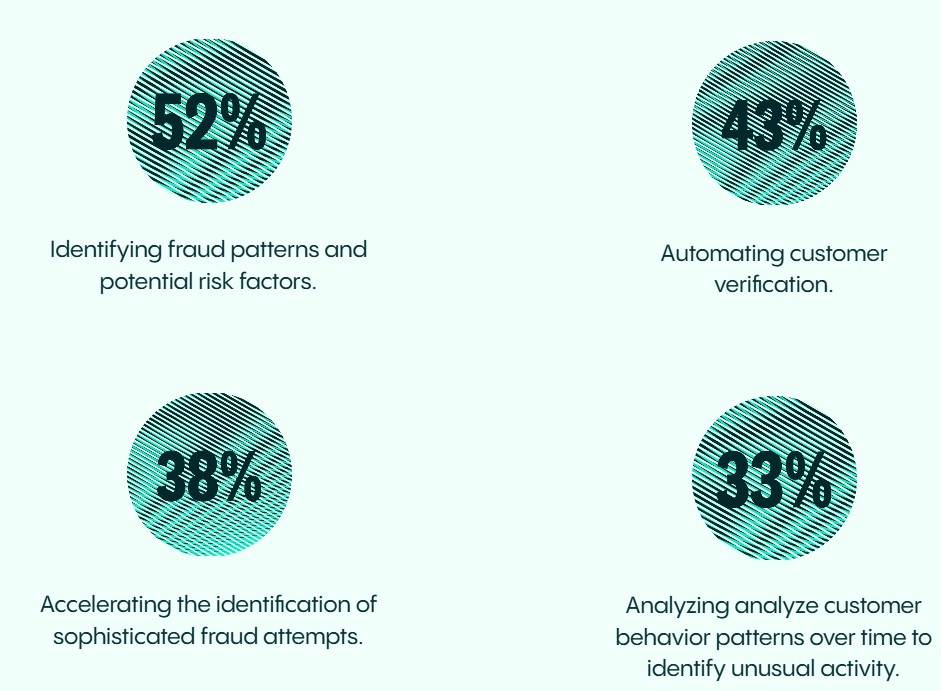
How AI helps in the fight against fraud. Source: veriff
More Fraud, Smarter Defenses
A majority of fraud professionals, 89%, expect attacks
to intensify in 2025. Malware, impersonation, authorized fraud, account
takeovers, and document forgery rank among the top concerns. AI, while a driver
of these threats, also remains their best hope for defense.
The report underscores that financial services are
natural targets for organized fraud networks. With growing access to powerful
AI tools, fraud-as-a-service has become a booming underground economy.
Still, Veriff insists the path forward is not entirely
bleak. By doubling down on AI-driven ID verification and consumer education,
firms can better safeguard their systems and restore consumer trust in the
digital age.
Financial institutions are under siege as artificial
intelligence fuels a new wave of fraud. A recent report by identity
verification firm Veriff reveals a troubling surge in online ID scams—one in
every 20 verification attempts in financial services is now fraudulent.
With deepfakes and AI-powered deception on the rise,
the cost is hitting both consumers and companies hard. According to Veriff’s
latest “Future of Finance” report, identity fraud in the financial sector rose
by 21% over the past year.
A 21% Yearly Spike in Identity Fraud
The study, which combines in-house data and survey
responses from professionals and consumers, paints a picture of an ecosystem
increasingly manipulated by deepfakes and AI-generated content.
Fraud has become personal. Over a third of U.S.
consumers surveyed said they suffered financial losses that couldn’t be
recovered. The damage is not limited to individuals.
One-third of fraud professionals report their firms
lost between 3% and 5% of annual revenue to fraud, an unsustainable so-called
“fraud tax.”
Iryna Bondar, Source: LinkedIn
“Financial services organizations are natural targets for
sophisticated fraudsters. But by embracing technological evolution in AI,
biometrics, and identity verification (IDV), financial services leaders can
protect their companies and their customers—and seize the opportunities the
ever-evolving digital world will bring,” said Ira Bondar, Senior Fraud Group
Manager at Veriff.
Among the most concerning trends is the rise of
“authorized fraud,” where scammers trick victims into participating in identity
verification, often by impersonating banks or officials.
Authorized Fraud Is the Fastest-Rising Threat
This form of fraud has grown alongside AI
capabilities, making it easier for attackers to insert themselves digitally
between the user and a financial institution.
These adversary-in-the-middle attacks, whether
physical or digital, enable fraudsters to seize control of legitimate accounts.
Veriff found that authorized fraud now accounts for 1.5% of all fraud attacks
in financial services, much higher than in sectors like gambling or HR, where
it’s virtually non-existent.
AI Arms Both Sides of the Battle
The same technology that enables fraud is also being
used to fight it. Nearly two-thirds (64%) of U.S. fraud professionals already
deploy AI and machine learning tools in prevention efforts, with another 20%
planning to adopt such tools within a year. In the UK and Brazil, similar
adoption rates are observed.
Trust plays a central role. Over 82% of consumers say
they won’t register with financial platforms they believe have weak fraud
prevention systems. Biometrics, especially facial recognition, emerged as the
preferred method of secure interaction for 38% of respondents.
Most companies have already taken action: 83% of
financial firms now use some form of identity verification or biometric
solution, and 81% plan to increase investment in such tools. Early adopters
report a noticeable drop in fraud rates.
How AI helps in the fight against fraud. Source: veriff
More Fraud, Smarter Defenses
A majority of fraud professionals, 89%, expect attacks
to intensify in 2025. Malware, impersonation, authorized fraud, account
takeovers, and document forgery rank among the top concerns. AI, while a driver
of these threats, also remains their best hope for defense.
The report underscores that financial services are
natural targets for organized fraud networks. With growing access to powerful
AI tools, fraud-as-a-service has become a booming underground economy.
Still, Veriff insists the path forward is not entirely
bleak. By doubling down on AI-driven ID verification and consumer education,
firms can better safeguard their systems and restore consumer trust in the
digital age.
Jared Kirui is an Editor at Finance Magnates with more than five years of experience in financial journalism. He covers online trading, fintech, payments, and crypto industries with a focus on companies, regulation and compliance, executive moves, trading technology, and market analysis.
His work has been featured in other media outlets, including Benzinga, ZyCrypto, The Distributed, and The Daily Hodl.
Education:
Bachelor of Commerce degree (Finance option), University of Nairobi
Retail Traders Can Now Access Prediction Markets Through Binance Wallet
FP Markets Winner Spotlight 🏆 | Global Broker of the Year 2025 #Trading #Broker #Innovation #Shorts
FP Markets Winner Spotlight 🏆 | Global Broker of the Year 2025 #Trading #Broker #Innovation #Shorts
FP Markets takes the spotlight as Global Broker of the Year 2025 at the Finance Magnates Awards.
Martin Stoilov, Head of Client Experience, shares that trust, innovation, and people played a key role in the company’s success, supported by a strong foundation of integrity and client-centricity.
Following this milestone, FP Markets continues to focus on growth, technology investment, and its core values of transparency and excellence.
👉 Be part of FM Awards 2026: https://awards.financemagnates.com/#nominate
FP Markets takes the spotlight as Global Broker of the Year 2025 at the Finance Magnates Awards.
Martin Stoilov, Head of Client Experience, shares that trust, innovation, and people played a key role in the company’s success, supported by a strong foundation of integrity and client-centricity.
Following this milestone, FP Markets continues to focus on growth, technology investment, and its core values of transparency and excellence.
👉 Be part of FM Awards 2026: https://awards.financemagnates.com/#nominate
In this video, we review @HolaPrimeMarketsOfficial, a multi-asset forex and CFDs broker offering different account types, trading platforms, and flexible trading conditions.
We cover the broker’s overall offering, including account options, trading environment, platforms like MT4 and MT5, and additional services such as managed accounts and fast withdrawals.
Watch the full video to see if Hola Prime Markets fits your trading needs.
📣 Stay up to date with the latest in finance and trading. Follow Finance Magnates for industry news, insights, and global event coverage.
Connect with us:
🔗 LinkedIn: /financemagnates
👍 Facebook: /financemagnates
📸 Instagram: https://www.instagram.com/financemagnates
🐦 X: https://x.com/financemagnates
🎥 TikTok: https://www.tiktok.com/tag/financemagnates
▶️ YouTube: /@financemagnates_official
#HolaPrime #ForexBroker #CFDTrading #FinanceMagnates #Trading #Forex #BrokerReview
In this video, we review @HolaPrimeMarketsOfficial, a multi-asset forex and CFDs broker offering different account types, trading platforms, and flexible trading conditions.
We cover the broker’s overall offering, including account options, trading environment, platforms like MT4 and MT5, and additional services such as managed accounts and fast withdrawals.
Watch the full video to see if Hola Prime Markets fits your trading needs.
📣 Stay up to date with the latest in finance and trading. Follow Finance Magnates for industry news, insights, and global event coverage.
Connect with us:
🔗 LinkedIn: /financemagnates
👍 Facebook: /financemagnates
📸 Instagram: https://www.instagram.com/financemagnates
🐦 X: https://x.com/financemagnates
🎥 TikTok: https://www.tiktok.com/tag/financemagnates
▶️ YouTube: /@financemagnates_official
#HolaPrime #ForexBroker #CFDTrading #FinanceMagnates #Trading #Forex #BrokerReview
Hola Prime Review: What You Need to Know | Full Breakdown by Finance Magnates
Hola Prime Review: What You Need to Know | Full Breakdown by Finance Magnates
In this video, we review @HolaPrime_Global, a proprietary trading firm offering evaluation programs and performance-based payouts in simulated market environments.
We cover how the challenge model works, including account types, profit splits (up to 95%), trading rules, and what it takes to reach a funded account. You’ll also learn about available platforms like MT4, MT5, cTrader, and more, along with insights into payouts, support, and trading conditions.
Watch the full video to see if Hola Prime fits your trading style.
📣 Stay up to date with the latest in finance and trading. Follow Finance Magnates for industry news, insights, and global event coverage.
Connect with us:
🔗 LinkedIn: /financemagnates
👍 Facebook: /financemagnates
📸 Instagram: https://www.instagram.com/financemagnates
🐦 X: https://x.com/financemagnates
🎥 TikTok: https://www.tiktok.com/tag/financemagnates
▶️ YouTube: /@financemagnates_official
#HolaPrime #PropFirm #Trading #FinanceMagnates #Forex #FuturesTrading #TradingReview #PropFirmReview
In this video, we review @HolaPrime_Global, a proprietary trading firm offering evaluation programs and performance-based payouts in simulated market environments.
We cover how the challenge model works, including account types, profit splits (up to 95%), trading rules, and what it takes to reach a funded account. You’ll also learn about available platforms like MT4, MT5, cTrader, and more, along with insights into payouts, support, and trading conditions.
Watch the full video to see if Hola Prime fits your trading style.
📣 Stay up to date with the latest in finance and trading. Follow Finance Magnates for industry news, insights, and global event coverage.
Connect with us:
🔗 LinkedIn: /financemagnates
👍 Facebook: /financemagnates
📸 Instagram: https://www.instagram.com/financemagnates
🐦 X: https://x.com/financemagnates
🎥 TikTok: https://www.tiktok.com/tag/financemagnates
▶️ YouTube: /@financemagnates_official
#HolaPrime #PropFirm #Trading #FinanceMagnates #Forex #FuturesTrading #TradingReview #PropFirmReview
Axi Winner Spotlight 🏆 | Global Most Innovative Broker 2025 #Innovation #Trading #Fintech #Broker
Axi Winner Spotlight 🏆 | Global Most Innovative Broker 2025 #Innovation #Trading #Fintech #Broker
Axi takes the spotlight at the Finance Magnates Awards, winning Global Most Innovative Broker 2025.
Olivia Xenofontos and Ivanna Openko share how the team will feel: proud, motivated, and ready to keep delivering.
They also describe the night as well-organized, focused, and enjoyable for all.
👉 Be part of FM Awards 2026.
Axi takes the spotlight at the Finance Magnates Awards, winning Global Most Innovative Broker 2025.
Olivia Xenofontos and Ivanna Openko share how the team will feel: proud, motivated, and ready to keep delivering.
They also describe the night as well-organized, focused, and enjoyable for all.
👉 Be part of FM Awards 2026.
Recognition that matters.
Built on transparency.
Driven by the industry.
The Finance Magnates Awards 2026.
Nominations are now open.
🔗 https://awards.financemagnates.com/?utm_source=SM&utm_medium=social&utm_campaign=recognition-matters
Recognition that matters.
Built on transparency.
Driven by the industry.
The Finance Magnates Awards 2026.
Nominations are now open.
🔗 https://awards.financemagnates.com/?utm_source=SM&utm_medium=social&utm_campaign=recognition-matters