Futures prop net margins fell from about 25-30% to 10-15%, according to TradersYard’s CEO, as challenge prices dropped while data and platform costs held or rose.
Payout ratios of 70-80% sit on top of per-user platform and data fees. FundingTicks, Rev One, FundedSeat and Alpha’s Premium Plan all closed in 2026.
This is the second part of a two-part series on prop futures business models.
A screenshot of TopStep's $49 prop futures challenge
Futures prop firms have cut the price of a challenge while the bills behind it have held steady. Net margins have fallen from about 25-30% to 10-15%, according to Manuel Sonnleithner, co-founder and CEO of TradersYard, who cited internal industry data. The squeeze is coming from three directions at once: what a trader pays, what each account costs to run, and what the firm pays out.
Manuel Sonnleithner, Co-founder and CEO of TradersYard
The price of entry has dropped quickly. Topstep’s 50K account was $49 a month plus a $149 activation fee, which brought in about $200 from a trader who passed in the first month, excluding resets, Sonnleithner said. No-activation-fee models, which do not have any subscription fee, spread through 2025, with Lucid among the firms that popularised them, and promotions pushed the effective cost of some 50K accounts to $90-$100, “significantly reducing revenue per funded conversion.”
Competition drove part of that. “Every few months we see firms stripping out trading guidelines and offering ridiculous discounts,” said Gil Ben Hur, founder of The5ers, who described a “race to the bottom” fed by new entrants with a “me-too product strategy.”
Gil Ben Hur, Founder of The5ers, speaking at an FMLS:25 panel
The cost side has not moved the same way. Platform fees are charged per user per month, and “if you pay $30/user/month to your tech-provider you will have a hard time offering lower-price challenges (e.g. $49),” Sonnleithner said.
Ruben Abitbol of RUBIK added that the operating cost of a futures prop firm is “generally way higher” than a CFD firm’s, citing platform costs around Tradovate and NinjaTrader as well as CME market-data fees. Anish Lal of Blackbull Markets also pointed to rising professional-tier data classification, which can take all-in data costs to $2,000 a month.
Ruben Abitbol, Founder at RUBIK
As reported in part one of this series, CME bills those fees monthly per active user, while challenges are increasingly sold once.
The payout side adds to it. Abitbol’s broad benchmark puts CFD prop payout ratios at 40-50% and futures at 70-80%, with futures firms making up the difference through “significantly higher volume.” Futures traders also tend to be more sophisticated, he said, and profitable traders “can represent a much larger liability” while they remain in a simulated environment.
Tradeify’s Vinan Mistry told Finance Magnates that fraud is the firm’s biggest internal risk, including hedging groups that are getting harder to catch, while Shervin Arian put the dividing line in pricing of liabilities: the firms that hold margin “price payout liability accurately rather than cutting fees.”
Where the Squeeze Shows Up
Firms have responded by tightening the payout side. Lower payout caps and tighter payout structures followed, Sonnleithner said, and as deferred liabilities built up, firms moved consistently profitable traders to live accounts earlier. Abitbol noted that this step is “much more embedded” in the futures model than in CFD prop.
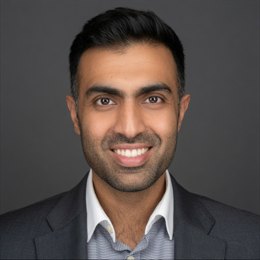
Anish Lal, Chief Business Development Officer at BlackBull Markets
Several 2026 exits fit that pattern. FundingTicks, FundingPips’ futures arm, launched in July 2025 and began winding down in January 2026. The move followed December changes that added a one-minute minimum hold, higher daily profit requirements and reduced profit splits. Sonnleithner read it as a case of fee cuts “in an attempt to gain market share” followed by “significant financial losses,” though he said pricing was “not necessarily the sole cause.”
Shervin Arian, OmegaRatio Advisors, Founder and CEO
Platform cost and access show up in the other closures. Because providers charge per user, they hold “a lot of market-power,” Sonnleithner said. Three firms tied their exits to that dependence. Alpha Futures closed its Premium Plan in July after NinjaTrader terminated the partnership, with accounts refunded and pending payouts beyond those already paid not honoured. The firm continues with its other plans.
Angelo Ciaramello, founder of The Funded Trader, shut futures firm Rev One in August because it did “not have a top platform option,” a lack that he said stopped the firm from scaling. FundedSeat followed in late September, after two years and monthly payouts of nearly $700,000, without support for NinjaTrader or Tradovate. Its letter to traders cited “limitations from big trading platforms.”
Platform options have also narrowed. Finance Magnates reported that ProjectX planned to end its third-party service at the end of February 2026, leaving the platform exclusive to Topstep. Several firms rebuilt their stacks and stayed open: Tradeify, Bulenox, Alpha Futures, Lucid and Top One Futures migrated rather than closed.
Some of the larger firms are building their own platforms, which Abitbol said gives more control over costs, data and risk management. He expects the risk-management gap to narrow as futures firms invest in behavioural analysis and trader verification. Ben Hur takes a harder line on the current state of the sector: running a futures prop firm is “a very risky business under today’s competitive environment.”
Arnab Shome is an electronics engineer-turned-financial editor. He holds a Bachelor of Technology from the National Institute of Technology, Agartala. He entered the retail trading industry about a decade ago, covering the cryptocurrency market for Finance Magnates, and later expanded his coverage to include forex and CFDs as well.
His work at Finance Magnates includes C-level interviews, data-driven analysis, opinion pieces, and scoops of industry exclusives. He also contributes to Finance Magnates’ quarterly industry report.
Area of coverage:
1. CFD broker-related news
2. Industry-related Regulatory updates and developments
3. New retail trading trends
4. Prop trading industry updates
5. Executive interviews
Education:
Bachelor of Technology - National Institute of Technology, Agartala (India)
eToro Adds 65 Exchange-Traded Futures in Australia, Where It Holds 45% of CFD Traders
Featured Videos
IG Group Wins Court Approval; eToro Expands Australian Futures Offering
IG Group Wins Court Approval; eToro Expands Australian Futures Offering
IG Group Wins Court Approval; eToro Expands Australian Futures Offering
IG Group Wins Court Approval; eToro Expands Australian Futures Offering
Today’s financial news recap covers IG Group secures court approval for its Jersey move, eToro adds 65 futures contracts in Australia, Moomoo prepares to offer binary stock options, and the SEC backs the CFTC in a dispute over perpetual futures.
Finance Magnates Daily Recap brings you the latest news from forex and CFD brokers, fintech, payments, cryptocurrency, digital assets, trading platforms, financial regulation and global markets.
Get the key company news, executive moves, deals, regulatory updates and market developments of the day, in just a few minutes. New episodes published every weekday.
Read more: https://www.financemagnates.com
#FinanceMagnates #ForexNews #FintechNews
eToro Expands in Argentina; Revolut Receives Israeli Banking Licence
eToro Expands in Argentina; Revolut Receives Israeli Banking Licence
eToro Expands in Argentina; Revolut Receives Israeli Banking Licence
eToro Expands in Argentina; Revolut Receives Israeli Banking Licence
eToro Expands in Argentina; Revolut Receives Israeli Banking Licence
eToro Expands in Argentina; Revolut Receives Israeli Banking Licence
Today’s financial news recap covers eToro's Latin American expansion, a sharp fall in crypto trading, Revolut's Israeli banking licence, and South Korea's record bond-rigging fine.
Finance Magnates Daily Recap brings you the latest news from forex and CFD brokers, fintech, payments, cryptocurrency, digital assets, trading platforms, financial regulation and global markets.
Get the key company news, executive moves, deals, regulatory updates and market developments of the day, in just a few minutes. New episodes published every weekday.
Read more: https://www.financemagnates.com
#FinanceMagnates #ForexNews #FintechNews
Former iS Prime Founders Launch JT Prime; CFI Chairman Explains Governance Approach
Former iS Prime Founders Launch JT Prime; CFI Chairman Explains Governance Approach
Former iS Prime Founders Launch JT Prime; CFI Chairman Explains Governance Approach
Former iS Prime Founders Launch JT Prime; CFI Chairman Explains Governance Approach
Former iS Prime Founders Launch JT Prime; CFI Chairman Explains Governance Approach
Former iS Prime Founders Launch JT Prime; CFI Chairman Explains Governance Approach
Today’s financial news recap covers former iS Prime founders launch a new liquidity business, CFI outlines its independent governance model, the CFTC bars eight Americans over offshore forex sales, and Spotware brings AI assistants into broker operations.
Finance Magnates Daily Recap brings you the latest news from forex and CFD brokers, fintech, payments, cryptocurrency, digital assets, trading platforms, financial regulation and global markets.
Get the key company news, executive moves, deals, regulatory updates and market developments of the day, in just a few minutes. New episodes published every weekday.
Read more: https://www.financemagnates.com
#FinanceMagnates #ForexNews #FintechNews
Safeheron: Institutional Crypto Custody and the Future of Stablecoin Payments | Adam Dai
Safeheron: Institutional Crypto Custody and the Future of Stablecoin Payments | Adam Dai
Safeheron: Institutional Crypto Custody and the Future of Stablecoin Payments | Adam Dai
Safeheron: Institutional Crypto Custody and the Future of Stablecoin Payments | Adam Dai
Safeheron: Institutional Crypto Custody and the Future of Stablecoin Payments | Adam Dai
Safeheron: Institutional Crypto Custody and the Future of Stablecoin Payments | Adam Dai
How are institutions approaching crypto custody and stablecoin payments?
In this interview from Hong Kong, Nick Assimenos of Finance Magnates speaks with Adam Dai, General Manager of East Asia at Safeheron, about institutional digital asset custody, MPC wallet security and the growing adoption of stablecoins.
The conversation explores Safeheron's self-custody approach, the role of open-source security technology, and the regulatory and compliance challenges facing digital asset businesses.
In this interview:
✅ How MPC wallets give institutions control over their digital assets
✅ Why stablecoins are gaining traction in cross-border payments
✅ The challenges of banking access and regulatory compliance in Hong Kong
✅ What could accelerate institutional stablecoin adoption
#Safeheron #AdamDai #CryptoCustody #Stablecoins #DigitalAssets #FinTech #FinanceMagnates
CFI Secures Preliminary Dubai Approval; Leverate Adds AI to CRM
CFI Secures Preliminary Dubai Approval; Leverate Adds AI to CRM
CFI Secures Preliminary Dubai Approval; Leverate Adds AI to CRM
CFI Secures Preliminary Dubai Approval; Leverate Adds AI to CRM
CFI Secures Preliminary Dubai Approval; Leverate Adds AI to CRM
CFI Secures Preliminary Dubai Approval; Leverate Adds AI to CRM
Today’s financial news recap covers CFI receives preliminary approval in Dubai for its crypto brokerage arm, Leverate launches an AI-powered CRM for MetaTrader brokers, and Robinhood opens US IPOs to UK retail investors without commission.
Finance Magnates Daily Recap brings you the latest news from forex and CFD brokers, fintech, payments, cryptocurrency, digital assets, trading platforms, financial regulation and global markets.
Get the key company news, executive moves, deals, regulatory updates and market developments of the day, in just a few minutes. New episodes published every weekday.
Read more: https://www.financemagnates.com
#FinanceMagnates #ForexNews #FintechNews